For more than fifty years, the woman discovered in a wooded area of Howard County, Maryland, had no name.
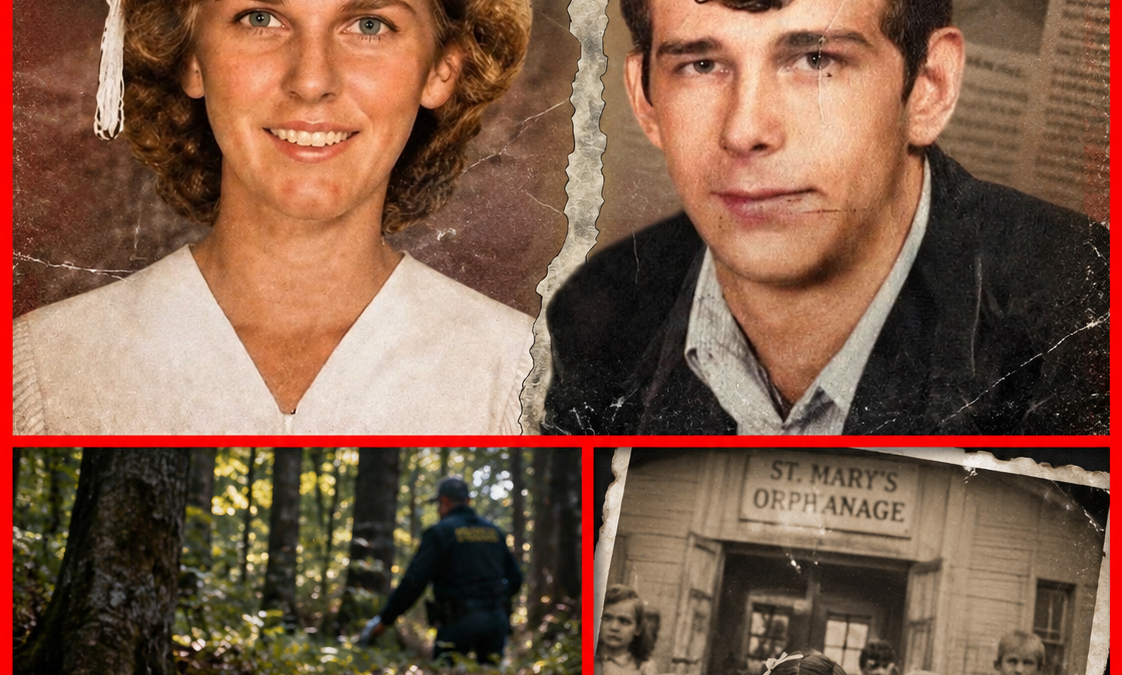
For more than fifty years, the woman discovered in a wooded area of Howard County, Maryland, had no name.
She was found during the summer of 1971 by two young men riding motorcycles.
Police discovered that she was semiconscious, dehydrated, and suffering from injuries consistent with a violent assault.
She was taken to a hospital.
Despite attempts to identify her, investigators could not locate her family or establish where she had come from.
In September 1971, she died after suffering a stroke.
The medical examiner classified her death as a homicide.
Her death certificate identified her as Jane Doe.
For decades, the case remained unresolved.
Then Detective Wade Zufall began reviewing the investigation in 2019.
Among the surviving evidence were histology slides containing tissue collected during the original autopsy.
Those slides became the key to identifying the woman.
In October 2024, the case was submitted to Othram, where forensic specialists worked to recover genetic information from the decades-old material.
The analysis eventually led investigators toward Charles L. Sharkey, known as Chuck.
Chuck had been separated from his family during childhood.
He and his sisters, Marie and Judith, had been placed in an orphanage when they were very young.
He remembered little about his parents.
For years, one of the few details he believed he knew was that his mother’s first name might have been Sarah.
When Detective Zufall contacted him, Chuck initially suspected a scam.
After confirming that the call came from law enforcement, he agreed to provide a DNA sample.
The laboratory compared his genetic profile with the unidentified woman’s DNA.
The result established a parent-child relationship.
The woman found in Maryland was his mother.
Her name was Sarah Belle Sharkey.
The identification restored something that had been missing from the investigation since 1971.
Sarah was no longer simply an unidentified homicide victim.
She was a mother whose children had grown up without knowing what happened to her.
For Chuck, the discovery was complicated.
He had spent much of his childhood separated from his parents and sisters.
He had lived with uncertainty about his family for decades.
Now he learned that his mother had died violently more than fifty years earlier.
The DNA discovery also brought renewed attention to the siblings’ long separation.
The documentary describes the family’s attempts to reconnect and the emotional impact of discovering relationships that had been obscured by childhood placements and missing records.
For investigators, the case illustrated how forensic identification could uncover more than a victim’s name.
It could reveal an entire family history.
But Sarah’s identification did not mean her homicide had been solved.
The source account does not establish who attacked her, why she was left in the wooded area, or whether anyone was ever prosecuted.
Those questions remained distinct from the successful DNA identification.
The breakthrough gave Chuck an answer about his mother.
It gave investigators a name to place on a case that had remained open for decades.
And it allowed Sarah Belle Sharkey to be remembered as a person rather than an anonymous victim.
The mystery of her identity was finally resolved.
The mystery of who caused her death was not.