On September 14, 1974, Catherine Mary Doyle left a bakery in Rozelle, Sydney, after finishing her Saturday shift.
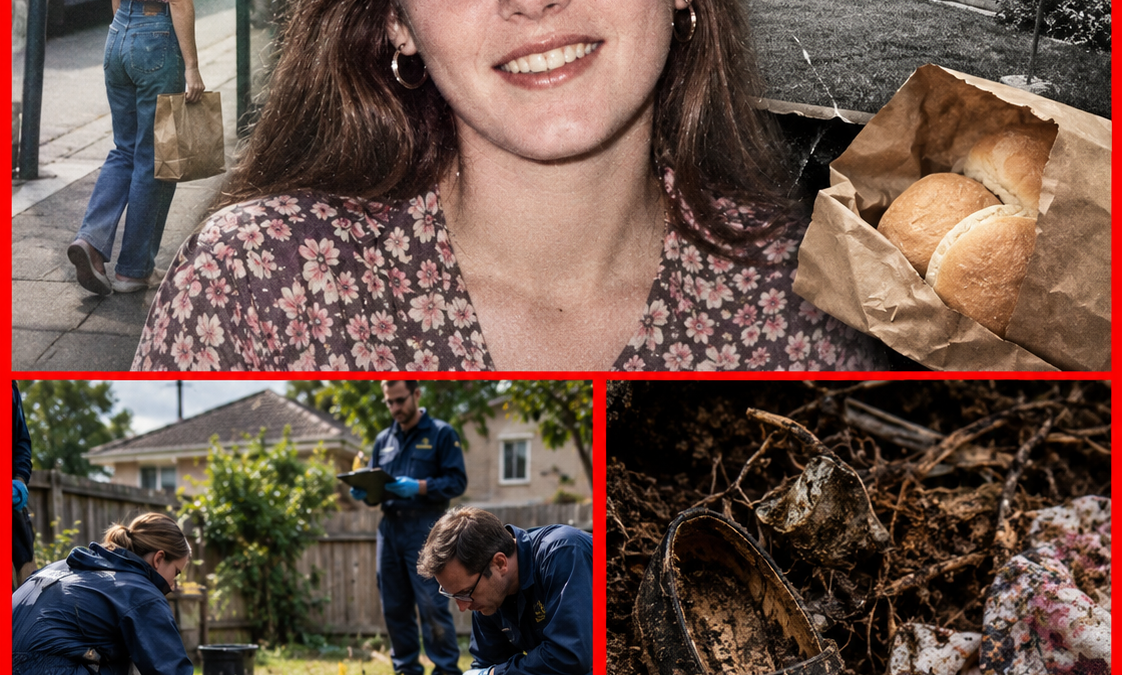
On September 14, 1974, Catherine Mary Doyle left a bakery in Rozelle, Sydney, after finishing her Saturday shift.
She was twenty-one years old.
She carried a brown paper bag containing leftover bread rolls and had plans to attend a concert with friends that evening.
She never arrived.
For more than five decades, her family searched for an explanation.
According to the documentary narrative, the answer finally emerged in April 2026 when forensic investigators examined a backyard on Marion Street in Leichhardt.
Human remains were reportedly recovered from the property.
Specialists compared DNA from the remains with reference samples provided by Catherine’s relatives.
The documentary states that her identity was confirmed on April 19, 2026.
For Catherine’s family, the discovery ended the uncertainty about whether she was still alive.
But it also revealed that her disappearance was connected to a residential property.
Investigators turned their attention to Douglas Prentice, whose name reportedly appeared in the original investigative notes.
Detective Sergeant Joanna Park had been reviewing the cold case since 2019.
After receiving the forensic identification, she reportedly traveled to Penrith, where Prentice was living in a retirement community.
The documentary describes his arrest on April 19, 2026.
He was charged with Catherine’s murder.
Initially, according to the source account, Prentice contested the allegation.
The documentary then claims that he pleaded guilty in September 2026 and received a life sentence.
These reported legal developments have not been independently verified here and should not be presented as established court records.
The narrative also describes the discovery’s effect on Prentice’s daughter, Sandra Prentice Walsh.
She had grown up around the property where Catherine’s remains were reportedly discovered.
The backyard had been part of her childhood.
The area beneath a rosebush had seemed like an ordinary part of the family home.
According to the account, she learned about the remains and her father’s arrest through a telephone call from investigators.
The revelation forced her to reconsider memories of a place she had always regarded as familiar.
For Catherine’s relatives, the case carried a different kind of grief.
Her brother, Paul Doyle, had spent more than fifty years without knowing what happened to his sister.
The documentary describes him addressing the court during sentencing.
His recollections returned to Catherine’s final afternoon.
She had finished work.
She had plans with friends.
She was carrying bread rolls home for her roommates.
Those ordinary details had survived long after the investigation lost its direction.
The source narrative presents the discovery beneath the garden as the evidence that finally resolved the disappearance.
But the available transcript alone cannot establish that the reported prosecution and sentence occurred.
The story therefore has two distinct conclusions.
Within the documentary’s account, Catherine was identified, a suspect was arrested, and the case ended with a guilty plea.
As a matter of independent verification, those claims require corroborating police or court records.
What makes the narrative memorable is the distance between Catherine’s final known movements and the location where her remains were reportedly discovered.
She vanished during a routine journey home from work.
Her family searched for decades.
And according to the documentary, evidence of her fate remained beneath an ordinary suburban garden throughout those years.
The woman who left work carrying a paper bag of bread never reached the concert she had planned to attend.