When Detective Wade Zufall received the results of the DNA comparison, he finally had the answer investigators had sought since 1971.
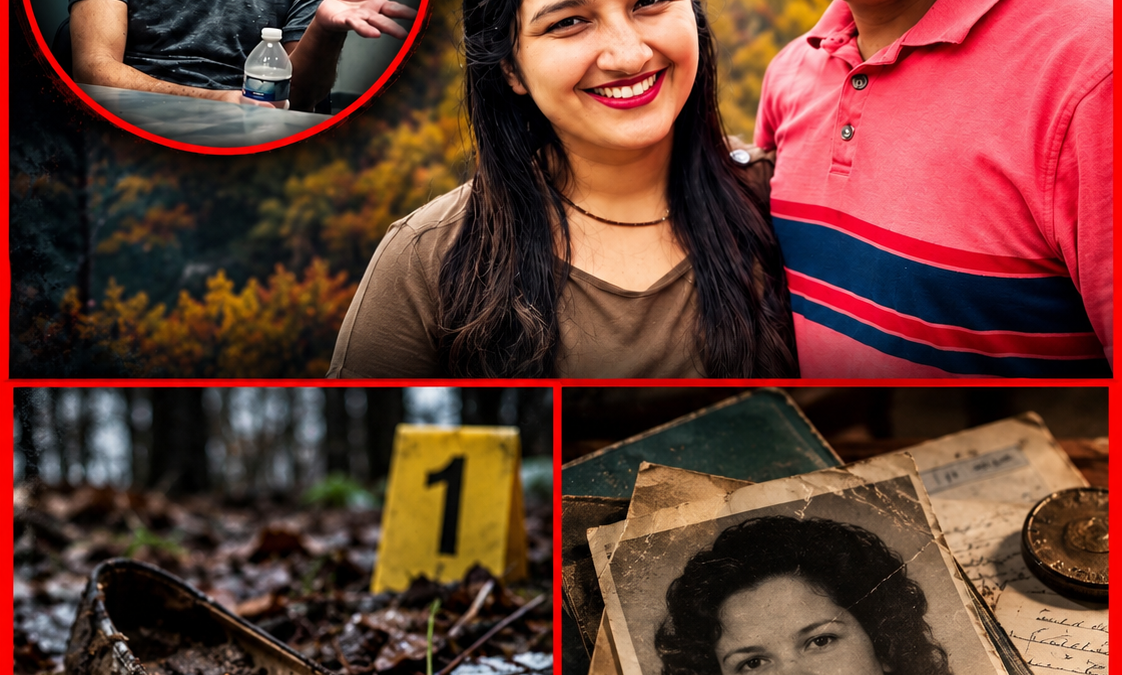
When Detective Wade Zufall received the results of the DNA comparison, he finally had the answer investigators had sought since 1971.
The unidentified woman found severely injured in Howard County, Maryland, was Sarah Belle Sharkey.
For more than five decades, she had been known only as Jane Doe.
Her identity was established through a genetic comparison with Charles L. Sharkey, a man who had spent much of his life knowing almost nothing about his mother.
The discovery was extraordinary because Charles, known as Chuck, had not been searching for a woman who disappeared in Maryland.
He had been trying to understand the family from which he and his sisters had been separated during childhood.
Chuck remembered being placed in foster care and later an orphanage. His memories included his sister Marie, but he knew little about his parents. For years, he believed his mother’s name might have been Sarah.
That small detail eventually proved significant.
After forensic specialists at Othram recovered DNA from preserved autopsy tissue, investigators identified possible biological relatives.
Detective Zufall contacted Chuck, who initially suspected the telephone calls were fraudulent. Once he understood that police were investigating a decades-old homicide, he agreed to provide a cheek swab.
The comparison established a parent-child relationship.
Chuck was the son of the unidentified woman.
For the detective, the result meant that the oldest cold case in his department finally had a victim’s name.
For Chuck, the news carried a different meaning.
He learned that his mother had been found alive but gravely injured in the summer of 1971. She had been taken to a hospital, where she died in September.
The medical examiner had classified her death as a homicide.
Chuck had spent decades without knowing where she had gone or what had happened to her.
Now he knew that she had died violently, alone and unidentified.
The discovery also prompted investigators to examine the family’s earlier separation.
Chuck and his sisters, Marie and Judith, had been placed in an orphanage while still very young. Their childhood experiences had separated them from their parents and, eventually, from one another.
The documentary describes the siblings’ long efforts to reconnect, including searches undertaken by the next generation.
DNA had answered the question of Sarah’s identity, but it did not explain every circumstance of the family’s separation.
Nor did it establish who attacked Sarah in 1971.
Those remained separate investigative questions.
The most important achievement was that Sarah was no longer an unnamed victim in a decades-old file.
She was a woman with a history, a family, and children who had spent their lives wondering about her.
A small collection of tissue samples, preserved on microscope slides for more than fifty years, had restored the connection.
Yet the identity of the person responsible for Sarah Belle Sharkey’s death remained unresolved in the source account.
The investigation had finally answered who she was.
It had not fully answered what happened to her.