Single Dad Took a Drunk Stranger Home—Not Knowing She Was His New Boss’s Daughter
Part 1
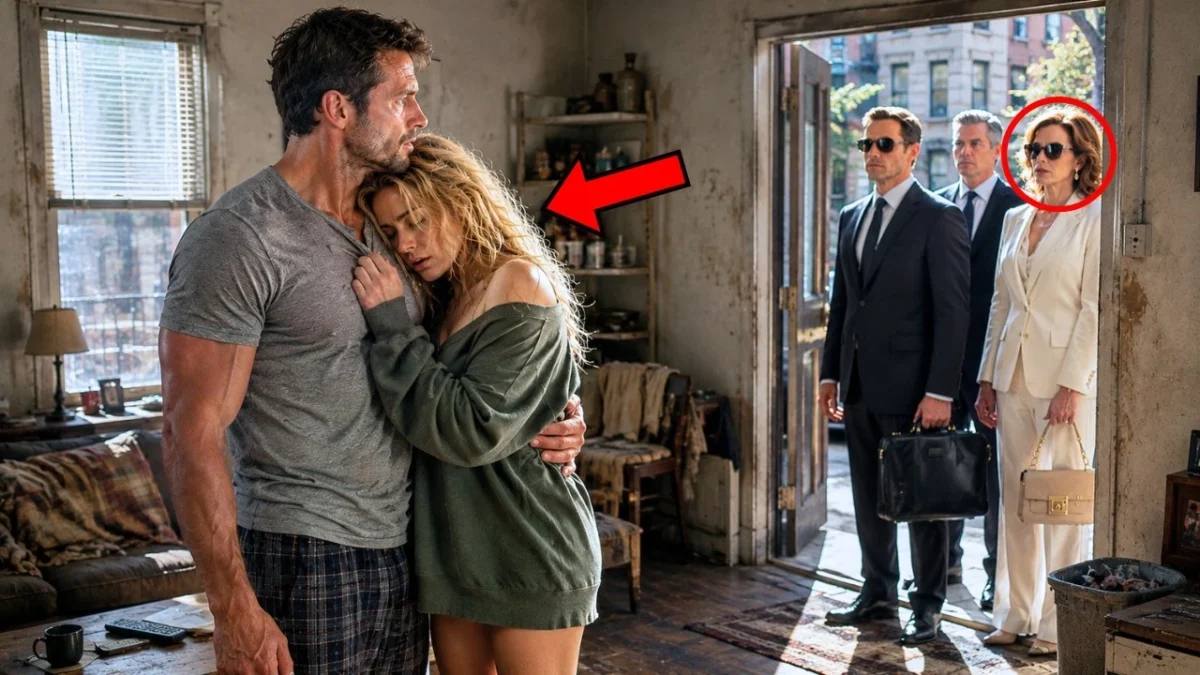
Nobody wants to be the guy who has to scrape a drunk stranger off the wet city sidewalk at two in the morning. It is not a cute romantic comedy meet cute; it is a massive, stressful liability. You never truly know if she is going to suddenly throw up all over your only decent shoes, loudly accuse you of attempted kidnapping, or simply pass out and bleed from a hidden scraped knee. Arthur Pendleton just wanted to go home, relieve his exhausted and overworked babysitter, and finally get four uninterrupted hours of sleep before the sun rose. But life rarely gives you a warning when it pulls the pin and drops a live grenade right into the middle of your carefully managed routine.
The October night air smelled sharply of wet garbage, diesel exhaust, and cheap asphalt. It was precisely 2:15 a.m. on a freezing Friday, the kind of desolate hour where the only people left wandering the streets were the desperate souls who simply could not afford to be asleep. Arthur’s knees popped like cheap bubble wrap as he slowly climbed the concrete steps leading out of the subway station. He had just finished a grueling fourteen-hour shift down at the fulfillment warehouse, which happened to be his very final shift before he finally started his new corporate office job on Monday morning. His lower back screamed with a dull, sickeningly familiar ache that throbbed right down to his heels.
He dug his cold hands deep into the frayed pockets of his worn-out jacket, bracing his broad shoulders against the sharp, biting autumn wind. As he walked, his mind automatically started calculating the remaining balance in his checking account. Rent was due in three days. Six-year-old Sophie desperately needed new winter boots because her old ones were pinching her little toes, leaving angry red welts that she tried to hide whenever he helped her pull them off after school. He turned the sharp corner onto his residential block, his head down against the gale, and that was precisely when he saw her.
She was slumped heavily against a rusted, dented mailbox, half sitting and half sprawled awkwardly across the damp, freezing concrete. She wore a tailored black wool coat that looked sleek enough to cost more than Arthur’s entire used car, but right then, it was busy soaking up a deep puddle of oily rainwater. One of her expensive designer high heels was completely missing, leaving her stockinged foot exposed to the slush. Her head hung forward limply, a curtain of dark, glossy hair obscuring her face from view.
Arthur paused on the sidewalk, his feet freezing in place. He looked slowly up and down the empty street. Absolutely nobody else was around. The smart, sensible thing to do was to simply keep walking and ignore her. He had a young daughter sleeping soundly in his cramped apartment just fifty yards away, and a neighbor who charged twelve dollars an hour just to sit on his lumpy sofa and watch late-night television. Every single minute he wasted standing out here in the freezing cold cost him money he didn’t have.
He stubbornly took two steps past her, trying to harden his heart. Then she groaned, a low, wretched, guttural sound that tore right through his resolve. Arthur stopped dead in his tracks, squeezing his eyes tightly shut in sheer frustration. He cursed quietly under his breath, releasing a harsh exhale of white steam into the freezing air, before slowly turning back around.
“Hey,” he called out, keeping a safe, respectful distance. “Are you still alive down there?”
She didn’t move an inch. Arthur stepped closer, crouching down awkwardly so he was at eye level with her slumped form. The pungent smell hit him instantly. Gin. Expensive, high-end gin mixed with something sharp and floral that felt entirely out of place in this neighborhood. He reached out with two fingers and tapped her shoulder gently.
“Hey lady, you can’t sleep here on the concrete. It’s freezing.”
She shifted sluggishly, her head rolling back with a soft thud against the cold metal of the mailbox. The yellow glare of the overhead street light spilled directly across her pale face. She was young, maybe in her early thirties, but her features were drawn and exhausted. Her expensive mascara was smeared in dark, jagged lines down her damp cheeks. Her eyes fluttered open slowly, looking completely glassy, unfocused, and entirely empty. She stared right at him as if she were trying to decipher a complex, impossible math problem written in a foreign language.
“Tell the board,” she slurred, her voice thick, hoarse, and remarkably raspy. “Tell them to shove it right up their…”
“Right. Consider them thoroughly told,” Arthur muttered, shaking his head. “Where is your phone? Let’s call somebody to come pick you up.”
He didn’t touch her body, instead letting her fumble clumsily with the deep pockets of her expensive coat. She managed to pull out a sleek, modern smartphone, but the screen was completely black and spiderwebbed with a dense maze of cracks from a hard impact. She stared at it blankly for a second before dropping it straight onto the concrete sidewalk, where it made a pathetic, hollow clatter.
“Did…” she whispered, her eyes rolling back, before she suddenly let out a sharp, dry heave.
Arthur instinctively jerked backward on his heels. “Whoa, whoa, keep it down. Literally.”
She immediately wrapped her arms tightly around her knees, shivering violently from head to toe. Her teeth were chattering together, making a rapid, clicking sound in the profound silence of the empty street. The temperature was dropping fast toward freezing, and in a couple of hours, the cold rain was predicted to turn into heavy sleet. If he left her out here on the pavement, she would undoubtedly freeze to death or worse before sunrise.
“Where do you even live?” Arthur asked, his voice laced with heavy resignation.
“Penthouse,” she mumbled incoherently. “High up… way too high up…”
“Okay, where? What street?”
She didn’t answer. Instead, her eyes rolled entirely back, and she tilted sideways, her cheek coming to rest softly against the wet pavement. She was completely out cold. Arthur scrubbed a tired hand over his rough face, feeling the crushing weight of exhaustion settle deep into his bones. He looked up at his own apartment building across the street—third floor walk-up, absolutely no elevator. Then he looked back down at the unconscious woman shivering in the dirt.
“I am going to regret this for the rest of my life,” he muttered to the empty night.
He reached down, grabbed her securely by the upper arms, and hauled her upward. She was pure dead weight, completely limp and totally uncooperative. He slung one of her arms over his narrow shoulder, firmly gripping her waist with his other arm to keep her upright as she stumbled. She mumbled something completely incoherent, her hot breath—still heavily laced with alcohol—fanning against the bare skin of his neck.
They walked, or rather, Arthur walked while dragging her dead weight along the cracked pavement. Every single step felt like an agonizing negotiation with the laws of gravity. When they finally reached the heavy glass front door of his apartment building, he had to carefully prop her upright against the cold brick wall just to free up one hand to turn his brass key in the sticky lock.
The interior stairwell smelled permanently of boiled cabbage, cheap disinfectant, and old floor wax.
“Come on,” Arthur grunted under his breath, taking the first wooden step with a sharp wince. “Help me out here just a little bit. Please pick up your feet.”
She didn’t. Her remaining high heel dragged miserably against the worn linoleum steps all the way up. By the time they finally reached the third-floor landing, Arthur was sweating profusely right through his shirt. He fumbled frantically with his keys once more, pushed his apartment door open, and half-carried her inside the dark space.
The television was murmuring quietly in the corner on a low muted channel. Mrs. Gable, his elderly neighbor who babysat on weekends, was fast asleep in his only comfortable armchair, her glasses resting crookedly on the bridge of her nose. Arthur expertly bypassed the living room, hauling the unconscious stranger straight down the narrow hallway toward the small, cramped bathroom.
He lowered her gently onto the tiled floor right next to the base of the toilet bowl.
“If you’re going to throw up again, please for the love of God aim for the porcelain,” he told her unconscious form with absolute deadpan seriousness.
Without hesitation, he stripped her wet, ruined coat off her shoulders, leaving her dressed only in a crumpled silk blouse and tailored trousers. He grabbed a faded, slightly threadbare wool blanket from the hallway linen closet and tossed it securely over her shivering shoulders to trap whatever body heat she had left. Then, he filled a clean glass with cool tap water and set it carefully on the edge of the sink within arm’s reach.
He walked back out into the living room, gently woke Mrs. Gable, handed her fifty crisp dollars in cash for her time, and locked the heavy front door securely behind her as she left. Arthur stood alone in the profound quiet of his tiny apartment. He walked softly over to check on Sophie. His daughter was sprawled diagonally across her small twin bed, her mouth slightly open in peaceful sleep, tightly clutching a stuffed rabbit that was missing one of its plush ears. Arthur tenderly pulled the floral duvet up to her chin, making sure she was warm.
He stood there in the dark for a long, quiet moment, watching the steady rise and fall of her chest. It grounded him completely. It always did. Finally, he walked back out into the living room, fell face-first onto the worn-out sofa, and didn’t even bother taking off his scuffed boots before he instantly passed out from sheer, utter exhaustion.
The harsh sound of violent retching woke him up abruptly hours later. Arthur blinked his heavy eyes open against the glare of gray morning light filtering through the cheap plastic blinds. His neck was locked rigidly in a painful, unnatural angle from sleeping awkwardly on the wooden armrest. He glanced up at the digital clock glowing on the microwave across the room: 7:30 a.m. sharp.
He dragged his heavy body up from the couch and walked slowly down the hall toward the bathroom. The door was cracked slightly open. The mysterious woman was hunched miserably over the toilet bowl. She wasn’t throwing up anymore, just suffering through dry heaving, her knuckles turning bone-white as she gripped the cold porcelain rim for dear life.
Arthur leaned casually against the wooden door frame, crossing his arms over his chest.
“Morning,” he said flatly.
She flinched violently, her head snapping up so fast she nearly hit the wall. She looked at him with wide, bloodshot, terrified eyes, sheer panic instantly registering across her pale features. She scrambled backward on the tiled floor like a trapped animal, hitting her back hard against the side of the bathtub. She pulled her knees tightly up to her chest, crossing her arms defensively over her stomach as if bracing for a physical blow.
“Who the hell are you?” she rasped, her voice cracking harshly. “Where am I? Don’t you dare touch me!”
“I didn’t touch you, except to drag your unconscious body off the freezing sidewalk before you turned into a human icicle,” Arthur cut her off sharply, having zero patience for early-morning drama when he had a schedule to keep. “You were completely passed out by the mailboxes with a broken phone. You couldn’t tell me where you lived if your life depended on it. Your choices last night were basically my apartment floor or the city morgue.”
She stared at him hard, her chest heaving as she tried to process his words. Slowly, she looked around the small bathroom. It was impeccably clean, but it was undeniably cheap. The tile grout was stained yellow with age, the shower curtain was cheap clear plastic, and the overhead light fixture emitted an annoying, steady buzz. This was clearly not a place she had ever been in her entire life, nor was it a place she ever intended to set foot in.
“I… I don’t remember any of this,” she whispered in a tiny voice, pressing a trembling hand against her throbbing temple.
“Well, that tends to happen when you drink an entire distiller’s worth of expensive gin,” Arthur replied dryly. He turned around and walked away toward the tiny kitchen. “Come on out to the kitchen whenever you’re finally done hugging my toilet.”
He opened the refrigerator and stared blankly inside. Half a carton of generic eggs, a hardened block of cheddar cheese, and a wilting bag of soggy spinach. He sighed, grabbed a ceramic bowl, and started cracking eggs into it one by one.
A few minutes later, he heard slow, incredibly hesitant footsteps padding softly down the hallway. She stood in the narrow threshold of the kitchen doorway. In the unforgiving morning daylight, stripped of the smeared makeup that she had clearly tried to scrub off with water, she looked striking. Even pale, exhausted, and severely hungover, she possessed the kind of sharp, aristocratic bone structure that naturally commanded attention in any room.
However, right now, she was looking around his modest apartment with a mixture of barely concealed horror and disgust. Her bloodshot eyes lingered uncomfortably on the messy stack of unpaid utility bills sitting on the counter, drifted across the mismatched plastic dining chairs, and finally landed directly on Sophie.
Sophie was sitting quietly at the small laminate kitchen table, wearing bright dinosaur pajamas, happily eating dry fruit loops out of a plastic bowl with a cartoon spoon. She paused mid-bite, staring directly at the strange woman with wide, unblinking, curious eyes.
“Are you my new mom?” Sophie asked casually, tilting her head.
The woman looked like she had just been physically slapped across the face. “What? No. Absolutely not. Never.”
Arthur let out a soft smirk, pouring the whisked eggs into a hot, buttered skillet where they immediately began to hiss. “Don’t mind her too much. She asks that to every single female guest we have. She keeps the grocery cashiers constantly on their toes.”
He grabbed two white ibuprofen tablets from a plastic bottle sitting on the counter, poured a fresh glass of cold tap water, and slid them across the laminate table toward the woman.
“Take those right now. And sit down before you literally fall flat on your face.”
She hesitated for a long second, staring at the medicine as if it were poison, then slowly approached the table. She picked up the pills, sniffed the glass of water suspiciously for a moment, and swallowed the tablets completely dry before finally taking a small sip to wash them down. She pulled out a chair and sat down opposite Sophie, looking like she was sitting on an anthill.
“I need to leave right this second,” she said, her voice attempting to find its usual authoritative corporate cadence, though it faltered badly on the vowels. “I need to call a car service immediately.”
“The phone is right there on the counter. It’s a landline. It’s a bit vintage, but it actually works,” Arthur said casually, expertly flipping the golden eggs in the pan.
She grabbed the heavy plastic landline receiver, punched in a sequence of numbers with rapid, aggressive taps of her finger, and waited impatiently. Arthur watched her carefully out of the corner of his eye. She was tapping her barefoot angrily against the linoleum floor, completely forgetting that her missing high heel from last night was still sitting in a gutter somewhere on Fourth Street.
“Pick up,” she muttered under her breath, her jaw clenching. “Pick up, damn it.”
She slammed the heavy receiver back down onto its cradle with a loud clatter. Voicemail again. She stood up abruptly, wrapping her trembling arms tightly around herself.
“Do you have any spare clothes? I obviously can’t walk out onto the street looking like this.”
Arthur glanced over his shoulder at her ruined silk blouse. It was heavily wrinkled, stained with dried brown liquid on the cuff, and completely ruined.
“I don’t run a high-end boutique out of my hallway, lady. I have clean sweatpants and an old hoodie.”
“Fine, whatever. Just give me something.”
Her demanding tone grated harshly on his already frayed nerves. It was the distinct tone of someone who was entirely used to snapping their fingers and having the entire world instantly bend to their absolute will.
Arthur plated the steaming eggs, set half of them in front of Sophie, and turned deliberately to face the stranger.
“Look, lady, I didn’t ask to drag you into my home last night,” Arthur said, his voice dropping an octave, losing all its warmth. “I did it because I have a little kid sleeping in the next room, and I couldn’t live with myself knowing I left someone’s daughter to freeze to death on the dirty pavement. I don’t want a medal for it. I certainly don’t want your money, but I do expect you to lower your voice while you are standing inside my house.”
She blinked rapidly, momentarily stunned into complete silence. It had clearly been a very, very long time since anyone had spoken to her with such blunt, unfiltered candor. She opened her mouth to snap right back at him with a scathing retort, but the throbbing pain hammering inside her skull and the sheer, absurd humiliation of the situation stopped her cold. She looked closely at his tired eyes, noticing the deep lines of chronic exhaustion bracketing his mouth.
“I’m sorry,” she managed to say, the words sounding entirely foreign and awkward on her tongue. “I’m just… I am having a uniquely terrible morning.”
“Yeah, well, join the club,” Arthur said, his tone softening just a tiny fraction.
He walked down the narrow hall to his bedroom and came back a minute later carrying a pair of clean, faded gray sweatpants and a heavy zip-up black hoodie. He tossed them unceremoniously onto the sofa.
“The bathroom is all yours. Change your clothes. Use the landline phone again if you need to. But then I need you completely out of my apartment. I have to walk my daughter to school and get to my own errands.”
Ten minutes later, she emerged from the bathroom. She looked objectively ridiculous. The oversized sweatpants pooled and bunched around her narrow ankles, and the heavy black hoodie swallowed her slender frame completely, but she undeniably looked much warmer. She walked slowly over toward the front door, stopping with her hand resting hesitantly on the brass doorknob. She turned her head to look back at Arthur, who was now quietly wiping down the laminate kitchen counter with a damp rag.
“Thank you,” she said quietly. This time, the words carried a genuine, unmistakable weight. “For… not leaving me out there to freeze.”
Arthur didn’t stop wiping the counter. “Don’t drink massive amounts of gin alone on the street. It’s a really bad habit.”
She nodded slowly, her expression unreadable. She instinctively reached deep into her pocket to grab her phone, only to realize with a flash of frustration that she didn’t have her wallet, her bag, or her cards.
“I will… I will find a way to properly repay you for this.”
“Don’t bother,” Arthur said, tossing the dirty rag into the sink with a wet slap. “Just lock the heavy door behind you on your way out.”
She walked out into the narrow hallway, and the heavy apartment door clicked shut behind her with a definitive thud. Arthur leaned heavily against the kitchen counter, closing his eyes to steal a moment of peace.
“Daddy?” Sophie tugged persistently at the hem of his faded pant leg. “She looked kind of sad.”
“Yeah, bug,” Arthur sighed softly, lifting his daughter up into his arms and setting her comfortably on his hip. “A lot of people in this big city are sad. Now come on, let’s get your shoes on before we miss the bell.”
He deliberately pushed the bizarre morning encounter out of his mind. He simply could not afford the mental bandwidth to dwell on it. He had a massive, life-altering weekend ahead of him, and he needed every ounce of focus to prepare for Monday.
On Monday morning, Arthur’s entire life was supposedly going to change for the better. Arthur genuinely hated wearing suits; he owned exactly one in his entire wardrobe. It was a cheap navy blue number he had bought off the rack three years ago for a family funeral, and it felt stiff and restrictive across his broad shoulders. He nervously adjusted his crooked, inexpensive tie in the tiny mirror of the employee restroom on the twentieth floor of the massive downtown skyscraper, running a trembling hand through his short hair.
“Just breathe,” he whispered softly to his own reflection. “Today is day one at Hayes Global Logistics. You earned this.”
It was a massive, terrifying leap away from the grueling warehouse floor. It was a mid-level data analytics position with a real salary and full corporate health insurance—the exact kind of comprehensive insurance that would finally cover Sophie’s impending dental work without completely bankrupting him. He had spent six grueling months studying late into the night, taking intense online coding and data courses after Sophie went to sleep, fighting through blinding exhaustion just to land this specific, life-changing job.
He walked out of the restroom and stepped onto the sprawling twentieth floor. The corporate office was a sterile, intimidating expanse of polished glass, gleaming concrete, and aggressive natural sunlight pouring through floor-to-ceiling windows. People moved about with intense purpose, clutching expensive tablets, file folders, and oversized gourmet coffees. The ambient air hummed quietly with low, hurried voices and the rhythmic clicking of a hundred computer keyboards.
Arthur finally found his designated desk tucked away in a massive, sprawling open-plan section. His direct supervisor, a perpetually nervous man named Greg who seemed permanently wired on espresso, gave him a whirlwind three-minute tour before abruptly abandoning him with a towering stack of boring onboarding manuals.
“Town hall meeting at 10:00 a.m. sharp in Conference Room A,” Greg tossed carelessly over his shoulder as he hurried away. “Don’t be late, Pendleton. The old man is finally stepping down today, and the new blood is taking over the throne.”
At 9:55 a.m., Arthur quietly filed into Conference Room A along with a hundred other anxious employees. It was a massive, sloping amphitheater-style room designed to hold a crowd. He found an empty seat near the very back row, quietly observing the tense room. Up at the front, standing by a sleek wooden podium, was William Hayes himself. Arthur instantly recognized him from the company’s official website and annual reports. He was a legendary silver-haired titan, a self-made man who had built a multi-national logistics empire out of a single shipping container decades ago.
Today, however, William looked remarkably frail, leaning heavily on an ornate wooden cane for physical support. The massive room fell utterly dead silent as William slowly tapped the metal microphone.
“Good morning, everyone,” William’s voice boomed slightly, though it carried a distinct gravelly edge. “I won’t waste your valuable time with pleasantries. You all already know why we’re gathered here today. My health is simply not what it used to be. After months of deliberation, the board of directors and I have finally reached a definitive decision regarding the company’s executive succession.”
A low, collective ripple of nervous energy instantly moved through the packed crowd. The corporate gossip mill had been churning furiously all morning long. The rumor mill whispered that the heir apparent was notorious, ruthless—a corporate sniper who fired executives over minor operational inefficiencies without blinking an eye.
“I am stepping back into the purely ceremonial role of chairman,” William continued steadily. “Effective immediately, the title of Chief Executive Officer passes to the one person I trust completely to drag this archaic company kicking and screaming into the modern era.”
William gestured with his hand toward the heavy oak double doors located at the side of the stage. The doors swung open smoothly. Arthur leaned back slightly in his chair, half-listening while mentally calculating how long this pointless meeting would take before he could slip back to his desk and actually learn the proprietary software he was supposed to manage.
A woman walked purposefully through the open doors.
She moved with absolute, terrifying precision. She wore a tailored white pantsuit that cut a razor-sharp, intimidating silhouette against the dark wood paneling. Her dark hair was pulled back tightly into a severe, flawless knot at the exact nape of her neck. Her stiletto heels clicked rhythmically and sharply against the hardwood floor, echoing through the silent room.
Arthur’s heart completely stopped beating in his chest. The ambient air vanished entirely from his lungs. He blinked once, then twice, desperately hoping his sleep-deprived brain was playing tricks on him.
It was the hair. It was the sharp bone structure. But most undeniably of all, it was the cold, calculating, piercing eyes.
It was the woman from the pavement. The woman who had violently thrown up inside his cheap plastic bathtub. The woman who had worn his oversized, faded gray sweatpants and looked at his chipped coffee mugs with undisguised disdain.
She wasn’t just some randomly wealthy, troubled drunk.
She was Clara Hayes.
Part 2
Clara stepped smoothly up to the podium, her posture rigid and commanding. She didn’t look remotely nervous; instead, she looked like she completely owned every single molecule of oxygen in the room. She adjusted the microphone with a steady hand, her sharp gaze sweeping slowly over the terrified audience like a predator sizing up a herd.
“Thank you, William,” Clara said. Her voice was smooth, commanding, crystalline, and completely devoid of the raspy, broken edge it had carried on Saturday morning. “Let me be entirely clear from the outset. The era of comfortable complacency here at Hayes Global is officially over. We are currently bleeding capital rapidly in our European operational sectors, and our domestic supply chains are laughably archaic. We are going to trim the operational fat. We are going to aggressively restructure, and above all else, we are going to expect absolute perfection from every single employee.”
The silence in the massive room was absolute, suffocating. People looked genuinely terrified to even breathe too loudly. Arthur sat perfectly still in his seat in the back row, his hands gripping the vinyl armrests of his chair so tightly that his knuckles turned stark white. He was currently on a strict ninety-day probationary period. One single wrong move, one bad impression, and he would find himself right back out on the freezing street with nothing.
Clara continued outlining her brutal, aggressive ninety-day turnaround plan without glancing down at a single note once. She rattled off complex financial statistics, quarterly loss margins, and logistics failures with terrifying, machine-like efficiency. Then, mid-sentence, her sharp eyes swept back toward the rear of the amphitheater.
She paused. It was a microscopic hesitation—a mere fraction of a second—but Arthur caught it instantly. Her gaze locked directly onto him in the back row. He saw the exact moment of recognition hit her like a physical blow. It was subtle: a slight, imperceptible widening of her eyes, a sharp tightening of her jaw, and a momentary break in her flawless corporate armor.
She was staring straight at the man in the cheap, ill-fitting navy suit who had witnessed her at absolute rock bottom just forty-eight hours prior. The man who knew she was a complete mess, the man who had ordered her to lower her voice inside his cramped kitchen.
Arthur didn’t look away from her stare. He forced himself to hold her gaze, keeping his facial expression completely neutral and deadpan, even though his stomach was doing violent somersaults.
Clara forced her eyes away from him, snapping her attention back to her prepared notes. She cleared her throat—a sharp, entirely uncharacteristic sound that betrayed her fleeting inner turmoil.
“As I was saying,” she continued, her voice just a fraction tighter and sharper than before. “Absolute efficiency is our new god.”
When the town hall meeting finally ended, the entire room exhaled a collective, ragged breath. Employees began filing out of the rows hurriedly, whispering frantically to one another in hushed, nervous tones. Arthur deliberately stayed seated in his chair, letting the massive crowd thin out completely. He desperately needed a minute for his heart rate to normalize. His corporate career here felt effectively over before it had even truly begun. Everyone in the business world knew the golden rule: you do not get to keep your job when you accidentally know the CEO’s deepest, dirtiest secret.
He finally stood up, smoothed down the front of his cheap tie, and headed slowly for the exit.
“Mr. Pendleton.”
Arthur froze mid-step. He turned around slowly. Clara Hayes was standing barely ten feet away from him in the emptying aisle. The amphitheater was mostly empty now, save for a few high-tier executives nervously clustered near the front stage. She wasn’t looking at them at all; she was looking squarely, piercingly at him. Her executive assistant, a nervous-looking young man clutching an expensive iPad like a shield, hovered anxiously a few paces behind her.
“Yes, Ms. Hayes?” Arthur said, forcing his voice to remain steady and professional.
Clara took a deliberate step closer to him. The familiar scent of her sharp floral perfume hit him instantly—the exact same scent that had been sickeningly mixed with cheap gin two nights ago.
“I see that you are newly assigned to the data analytics department,” she said, her tone perfectly professional, cold as Arctic ice, though her eyes burned with hidden fire. “I expect a full, comprehensive review of the Q3 European data sitting on my desk by the end of this week.”
“I haven’t actually been given official system access to the Q3 files yet, Ms. Hayes,” Arthur replied evenly, refusing to cower.
“Then get access immediately,” she commanded. She leaned in just an inch closer, dropping her voice to a harsh, low whisper that only he could hear. “My office. Today. 3:00 p.m. sharp.”
She didn’t wait for his acknowledgement or response. She turned sharply on her stiletto heels and walked away, her assistant scurrying frantically to keep pace behind her. Arthur stood completely alone in the empty aisle, looking down at his scuffed, cheap dress shoes.
“Well,” he muttered quietly to himself, “this is definitely going to be an unmitigated disaster.”
The executive elevator ride to the forty-second floor took precisely twenty-eight seconds. Arthur counted every single agonizing second in his head, his stomach feeling like a heavy lead weight. The executive level of the building looked nothing like the rest of the corporate floors. Down on floor twenty, the carpets were thin and gray, specifically designed to hide inevitable coffee spills from tired workers. Up here, the floors were wide, immaculate planks of reclaimed white oak. The air smelled faintly of expensive ozone, fresh cedar, and quiet power. There was no chaotic hum of chatter, just an oppressive, heavily insulated silence.
Clara’s assistant, a nervous young guy named Ben who looked like he was about to throw up, didn’t even bother asking Arthur for his name. He just swallowed hard, pointed a trembling finger toward a set of imposing frosted glass double doors, and whispered, “Go right on in. She’s waiting.”
Arthur pushed the heavy glass door open. The corner office was massive, flanked entirely by floor-to-ceiling glass windows offering a sweeping, vertigo-inducing panoramic view of the glittering city skyline below.
Clara sat behind a monumental desk carved from a single, unbroken slab of black marble. She had already shed the formal white suit jacket. Her crisp white shirtsleeves were rolled neatly up to her elbows, revealing stark, thin wrists. She didn’t bother looking up when he walked in; she kept furiously writing on a heavy legal pad with a sleek silver fountain pen.
“Close the door behind you,” she instructed coldly.
Arthur pushed the heavy door shut. It clicked securely into place with a heavy, satisfying magnetic seal. He stood firmly in the absolute center of the room, his hands shoved deep into his pants pockets. He deliberately refused to sit down in the plush chairs until he was explicitly told to do so.
Clara finally capped her fountain pen with a sharp click. She set it down so it rested perfectly parallel to the edge of the legal pad. Then, she finally looked up at him.
The vulnerable, broken woman from Saturday morning was entirely gone. In her place stood a cold, impenetrable fortress. She wasn’t the shivering wreck hugging a toilet bowl anymore; she was a calculated, lethal corporate weapon.
She pulled open a top drawer of her marble desk, withdrew a thick manila folder, and slid it smoothly across the polished surface toward him.
“Sit down, Mr. Pendleton,” she commanded.
Arthur finally took the seat opposite her. The chair was made of supple black leather, deep, and uncomfortably soft. He leaned forward, keeping his posture rigidly upright. He looked down at the closed folder, then slowly back up into her unblinking eyes.
“Open it,” she said.
Arthur flipped the cover open. Inside lay a crisp, five-page legal document. At the top, printed in bold, capitalized letters, were the words: NON-DISCLOSURE AND CONFIDENTIALITY AGREEMENT. Neatly paper-clipped to the very front page was a bank cashier’s check.
Arthur’s eyes dropped automatically to the numbers printed on the check.
$50,000.
He stared hard at the trailing zeros. Fifty thousand dollars. That was an entire year of rent for his apartment. That was Sophie’s expensive dental braces paid in full. That was a reliable, safe used car that wouldn’t constantly stall out at red traffic lights. For ten long seconds, he allowed himself to imagine what freedom that money would actually buy. He let himself feel the immense, crushing weight it would instantly lift off his tired chest.
Then, his eyes drifted down to the formal signature line waiting at the bottom of the legal page.
“You sign the agreement, you take the check, and you permanently forget that you ever saw me outside the sterile walls of this building,” Clara said, her voice entirely flat, purely transactional, and devoid of any human warmth. “You will not speak to a single soul about my personal life. You will not post about it online, you will not hint at it, and you will certainly never leverage it. If you breach this agreement by even a fraction, my aggressive legal team will bury you so deep in litigation you won’t see daylight for a decade.”
Arthur slowly, deliberately closed the manila folder. He carefully unclipped the cashier’s check, picked it up by the very corner as if it were contaminated, and set it right back down on the black marble directly in front of her.
“No.”
Clara’s eyes narrowed instantly to sharp slits. A flicker of genuine irritation and surprise crossed her pristine face.
“Excuse me?”
“I’m not taking your money,” Arthur said, his voice surprisingly steady and calm. “And I am definitely not signing that piece of paper.”
She leaned forward abruptly, bracing her elbows heavily on the marble desk and interlacing her fingers tightly.
“Everyone has a price, Mr. Pendleton. Everyone. If fifty thousand isn’t your number, just name your figure. Let’s not waste each other’s time with false pride.”
“It’s not about the damn number,” Arthur sighed, dragging a tired hand down his face. “Look, you obviously don’t know me at all. You live way up here in the clouds, completely detached from reality. I live down on the ground, where things actually matter. Down there, fifty grand handed over by a billionaire isn’t a generous gift. It’s a shiny leash.”
Clara scoffed—a short, sharp, defensive sound. “It is standard corporate procedure for sensitive security matters.”
“No, it’s a trap,” Arthur corrected bluntly, his eyes flashing. “If I take that money, I instantly become your liability. You’ll spend the entire next month wondering if I’m going to come back and ask for another fifty. Then your lawyers will find some tiny, obscure technicality in my work performance, fire me with cause, and use that ironclad NDA to make damn sure I can’t sue for wrongful termination. I’d be out of a job and blacklisted before Thanksgiving.”
Clara stared at him in stunned silence. She didn’t blink once. He had just laid out, word for word, the exact strategy her high-priced corporate counsel had advised her to execute that morning.
“So, what is it that you actually want then?” she asked, her tone dropping a full octave, deep suspicion dripping from every single word. “You have undeniable leverage over me. People in your position always cash in their leverage.”
“I don’t want your leverage,” Arthur said firmly, leaning closer across the desk. “I just want my normal job—the exact one I actually interviewed and tested for. I spent six grueling months taking late-night online classes just to get out of a freezing warehouse. I have a young daughter to raise. I need a steady paycheck, and more importantly, I need the company dental insurance. That’s it. That’s my big, extortionate demand. I get to sit at my desk and do my job, and you pretend I don’t exist outside of it.”
“You expect me to just blindly trust you?” she challenged.
“I expect you to realize that I have literally nothing to gain by destroying the company I just started working for,” Arthur countered sharply. He stood up straight, pushing his chair back. He pointed a finger down at the closed manila folder. “Keep your hush money. I honestly don’t care that you got blindingly drunk and passed out on a public sidewalk. I only care about my quarterly performance reviews. We pretend Saturday morning never happened. That is the deal.”
He turned on his heel and walked toward the door.
“Pendleton.”
Clara’s voice cracked like a leather whip behind him. He stopped dead in his tracks, his hand resting firmly on the brushed steel door handle. He looked back over his shoulder. She was still staring intently down at the cashier’s check left stranded on her marble desk. Slowly, she looked up at him. Her expression was completely unreadable—a tight, impenetrable mask of cold calculation.
“You have full European Q3 supply chain data access unlocked now,” she said smoothly. It wasn’t a question. “I want your comprehensive preliminary analysis sitting on my desk by Friday at 6:00 p.m. sharp. Do not be late.”
“I won’t be,” Arthur said quietly.
He pulled the heavy door open and walked out. The heavy door sealed shut behind him with a soft click, cutting off the oppressive silence of the executive suite and thrusting him back into the low, chaotic hum of the twentieth floor. He exhaled a massive breath that he felt like he’d been holding tightly inside his chest since Saturday.
He had just deliberately turned down fifty thousand dollars in cash.
He felt physically sick to his stomach at the sheer madness of it, but beneath the nausea, he also felt safe. He had drawn a hard line in the sand. Now, he just had to prove to everyone—and to himself—that he was actually worth keeping around.
Three long, grueling weeks passed in a blur. The office on the twentieth floor was an absolute meat grinder. Clara Hayes was systematically, ruthlessly dismantling the old corporate structure brick by brick. She fired two underperforming vice presidents, completely restructured the entire domestic logistics branch, and demanded an unsustainable level of output that had the entire building running purely on high caffeine, adrenaline, and lingering fear.
Arthur kept his head firmly down in the trenches. He arrived at his desk by 7:00 a.m. every day, ate a stale turkey sandwich while staring at spreadsheets, and left promptly at 6:00 p.m. to relieve his babysitter. Then, after Sophie was finally tucked into bed asleep, he opened his personal laptop at the kitchen table and worked tirelessly until 2:00 a.m.
He was completely drowning in the European Q3 data. It was an absolute disaster zone. Shipments were delayed across multiple borders, operational costs were bleeding out into the red, and the numbers coming out of the Berlin logistics hub made absolutely no sense whatsoever. Whoever had been running that specific sector before the corporate restructure had been systematically covering up massive, systemic inefficiencies with brazen, creative accounting tricks.
It was Thursday night, exactly 8:15 p.m. The open-plan office on the twentieth floor was completely dark and deserted, save for the solitary, harsh glow of Arthur’s computer monitor. He was furiously rubbing his tired temples, staring blankly at an Excel pivot table that stubbornly refused to reconcile, when his desk phone suddenly shattered the quiet silence.
He jumped violently in his seat, accidentally knocking a plastic pen off his desk. He snatched up the heavy receiver.
“Pendleton.”
“Mr. Pendleton, this is Ben up from the forty-second floor,” the assistant’s voice sounded breathless and intensely anxious. “Ms. Hayes is currently reviewing your mid-quarter European projections. She wants you up in her office right this second.”
Arthur groaned loudly, looking up at the office wall clock. “Ben, come on, I’m off the clock. I only stayed late to finish a routine data pull—”
“She said now, Arthur.”
The line went dead with a click. Arthur let out a long, defeated sigh. He grabbed his tablet, shoved his arms into the sleeves of his cheap suit jacket, and headed wearily for the elevators.
Clara’s vast corner office was dimly lit, illuminated only by the harsh, icy-blue glare of her massive dual desktop monitors and the sprawling, hypnotic sea of city lights burning beyond the towering glass windows. She was pacing restlessly back and forth behind her marble desk, tightly holding a freshly printed copy of Arthur’s analytical report in her hand. Even from across the room, she looked utterly exhausted.
Part 3
Clara stopped pacing the moment the heavy glass door clicked shut behind him. She dropped the printed report onto the marble desk with a sharp slap that echoed in the quiet room.
“Explain this to me like I am five years old, Mr. Pendleton,” she said, her voice dangerously quiet, carrying a razor-sharp edge that could cut glass. “Because according to these numbers you pulled from the Berlin hub, we aren’t just losing money on delayed shipments. Someone has been bleeding this company dry from the inside out for the past eighteen months.”
Arthur stepped closer to the edge of the desk, keeping his posture calm despite the exhaustion pulling at his eyelids. He tapped the screen of his tablet, bringing up a complex digital ledger.
“They weren’t just covering up shipping delays, Ms. Hayes,” Arthur explained steadily, swiping to a new data visualization. “Look at the customs clearance fees routed through the Frankfurt sub-station. Every single quarter, exactly twelve percent of our heavy freight budget vanishes into a shell company registered under a holding firm called Meridian Logistics. On paper, it looks like routing insurance. In reality, it’s a ghost account.”
Clara stared down at the highlighted data points, her sharp eyes darting across the rows of figures with terrifying speed. The color slowly drained from her face, replaced by a cold, hardened fury.
“Meridian Logistics,” she whispered, her voice dropping to a dangerous hiss. “That subsidiary was signed off by the chief financial officer himself. Julian Vance.”
“Well, whoever signed off on it was either grossly incompetent or taking a very generous cut,” Arthur said bluntly.
Clara looked up from the tablet, her gaze locking onto his with an intensity that made the hair on the back of his neck stand up. For a fraction of a second, the iron wall she always wore cracked just enough for raw, human exhaustion to show through.
“You’re good at this,” she murmured, almost to herself. “Too good to be sitting down in a mid-level analytics bullpen.”
“I’m good at finding patterns because I spent years tracking freight manifests in freezing warehouses where a single misplaced pallet meant someone lost their job,” Arthur replied without missing a beat. “I know how people hide things when they’re desperate.”
Clara stood up slowly, leaning her weight against the edge of the marble desk. “Julian is presenting the final fiscal audit to the board of directors on Monday morning. If he controls the narrative before I can submit this proof, the board will use these exact discrepancies to strip my executive authority and force an emergency restructuring—one that puts Julian right in my seat.”
“Then we don’t wait until Monday morning,” Arthur said firmly.
Clara raised a perfectly sculpted eyebrow. “And what do you propose we do instead?”
“We pull the original shipping manifests directly from the port authorities before the weekend hits,” Arthur said, tapping his tablet with renewed energy. “Digital logs can be manipulated and scrubbed by anyone with root admin access inside the firewall. But physical port receipts stamped by customs agents? Those are much harder to erase in forty-eight hours.”
Clara stared at him for a long, silent moment, weighing the risk, the audacity, and the sheer competence of the man standing before her. A slow, rare, almost imperceptible smile touched the corners of her lips.
“You really don’t want that fifty thousand dollars, do you, Arthur?” she asked softly, using his first name for the very first time.
“I want my health insurance, and I want to go home and get four hours of uninterrupted sleep,” Arthur deadpanned. “Everything else is just paperwork.”
She let out a short, genuine laugh—a sound that felt entirely foreign in the sterile corporate penthouse.
“Get your coat, Mr. Pendleton,” Clara said, her voice snapping back into its crisp, authoritative CEO rhythm. “We’re going down to the docks.”
By midnight, the rain had started up again, battering relentlessly against the tinted windows of Clara’s sleek black town car as it idled outside a massive, dimly lit shipping warehouse down at the municipal docks. Arthur sat in the passenger seat, his laptop glowing brightly in his lap as he cross-referenced port entry logs against Julian’s internal corporate ledgers.
“Got it,” Arthur said suddenly, pointing a finger at the screen. “Look at this timestamp. A freight container marked as ’empty transit’ cleared customs on October twelfth. But according to the physical weight sensor logs from the dock crane, it was carrying four tons of high-grade microchips.”
Clara leaned over the center console, her shoulder brushing against his arm as she peered closely at the screen. Her perfume—that sharp, expensive floral scent—filled the cramped interior of the car.
“That shipment was supposed to be delivered directly to our Berlin assembly plant,” Clara said, her voice tightening with cold fury. “Instead, it was diverted. Julian has been running a parallel secondary supply chain using our own logistics network, pocketing the resale profits.”
“And framing you for corporate mismanagement while he does it,” Arthur added quietly.
Clara straightened up, sitting back in her seat. She looked at Arthur through the dim dashboard light, her expression a complex mix of professional respect and genuine gratitude.
“When this audit drops on Monday, Julian and his co-conspirators are going down permanently. And when the board asks who uncovered the systematic fraud…” She paused, looking him dead in the eye. “Your name goes on the front page of the report, Arthur. Head of Global Data Integrity. A promotion, a substantial salary increase, and a bonus that will cover Sophie’s dental work ten times over.”
Arthur looked back at her, letting out a slow, relieved breath. He closed his laptop screen with a soft snap.
“Just make sure the health insurance kicks in on day one,” he said with a faint smirk.
Monday morning arrived with the heavy, tense atmosphere of an impending storm. The grand mahogany boardroom on the forty-second floor was packed to absolute capacity. Panicked investors, hostile board members, and sweating executives sat around the massive oval table. Julian Vance sat near the head of the table, flanked by two corporate attorneys, looking entirely composed and smug as he shuffled a stack of neatly bound financial papers.
Clara walked into the boardroom precisely at 9:00 a.m. She wore a sharp charcoal-gray suit, her posture immaculate, her expression like carved marble. Arthur followed closely behind her, carrying a sleek leather portfolio case, dressed in his single, slightly ill-fitting navy blue suit. He took a quiet seat in the back corner of the room.
Julian cleared his throat loudly, standing up to address the packed room with a theatrical sigh of faux disappointment.
“Ladies and gentlemen, we are unfortunately here today to discuss the ongoing operational failures and catastrophic capital bleed under Ms. Hayes’s leadership,” Julian announced, pitching his voice for maximum dramatic effect. “The Q3 European logistics reports clearly demonstrate a systemic collapse that requires immediate executive intervention.”
“Before we vote on any emergency restructuring, Julian, perhaps you’d care to look at an addendum,” Clara said smoothly, her voice cutting cleanly through the murmur of the room.
Julian frowned, narrowing his eyes at her. “An addendum? There is no addendum scheduled on this docket—”
“There is now,” Arthur interrupted quietly, standing up from his corner seat.
He walked to the front of the boardroom, plugged a flash drive into the main AV console, and projected a massive, crystal-clear data dashboard onto the smart screen behind the head table.
The room went instantly dead silent.
Splashed across the giant screen were the unedited port authority weight logs, the ghost shell company registries, and the exact financial trails proving Julian’s parallel supply chain operation down to the last dollar.
Julian’s face drained of all color in a terrifying instant. His mouth opened slightly, but no words came out. His hands began to shake violently as he fumbled with the papers on the table before him.
“These… these are fabricated documents!” Julian stammered, his professional composure shattering completely as corporate security guards quietly stepped into the room behind him.
“They’re authenticated by municipal port authorities and physical weight sensors, Julian,” Clara stated coldly, locking eyes with her treacherous executive. “Security, escort Mr. Vance out of this building immediately. Confiscate his badge and lock down his digital credentials.”
As a pale, shaking Julian was hauled out of the boardroom in absolute disgrace, the remaining board members sat in stunned, respectful silence. Whispers of awe and shock rippled through the investors as they realized how close they had come to executing a hostile internal coup.
Later that afternoon, after the corporate crisis had been entirely neutralized and the dust had finally settled, Arthur stood in front of Clara’s massive glass-walled office, holding his worn leather portfolio.
Clara stood by her marble desk, looking out at the glittering city skyline as the afternoon sun began to dip below the horizon. She turned to face him, a faint, genuine smile softening her striking features.
“Well, Mr. Pendleton,” she said quietly, walking over toward him. “It turns out dragging a drunk stranger off the pavement was the best business decision this company has made in a decade.”
“I’m just glad I get to keep my health insurance, Ms. Hayes,” Arthur replied with a dry, tired smile.
“Call me Clara,” she corrected gently. She extended her hand across the space between them. “And welcome to your new office on the thirtieth floor, Arthur. You’ve more than earned every single bit of it.”
Arthur shook her hand firmly, feeling the heavy, suffocating weight of financial anxiety finally lift completely off his chest for the first time in years. He smiled back, knowing that while his life had certainly taken a wildly unexpected turn since 2:00 a.m. on a rainy Friday sidewalk, some grenades dropped into your routine actually blew open the doors to a brand new beginning.
Disclaimer: This story is fictional and created for entertainment purposes only.
Any names, characters, places, or events are fictitious or used fictitiously.
No real person or organization is intended to be portrayed.








