Cowboy Rescues a Wounded Apache Woman—A Choice That Shook the Frontier Forever
Cowboy Rescues a Wounded Apache Woman—A Choice That Shook the Frontier Forever
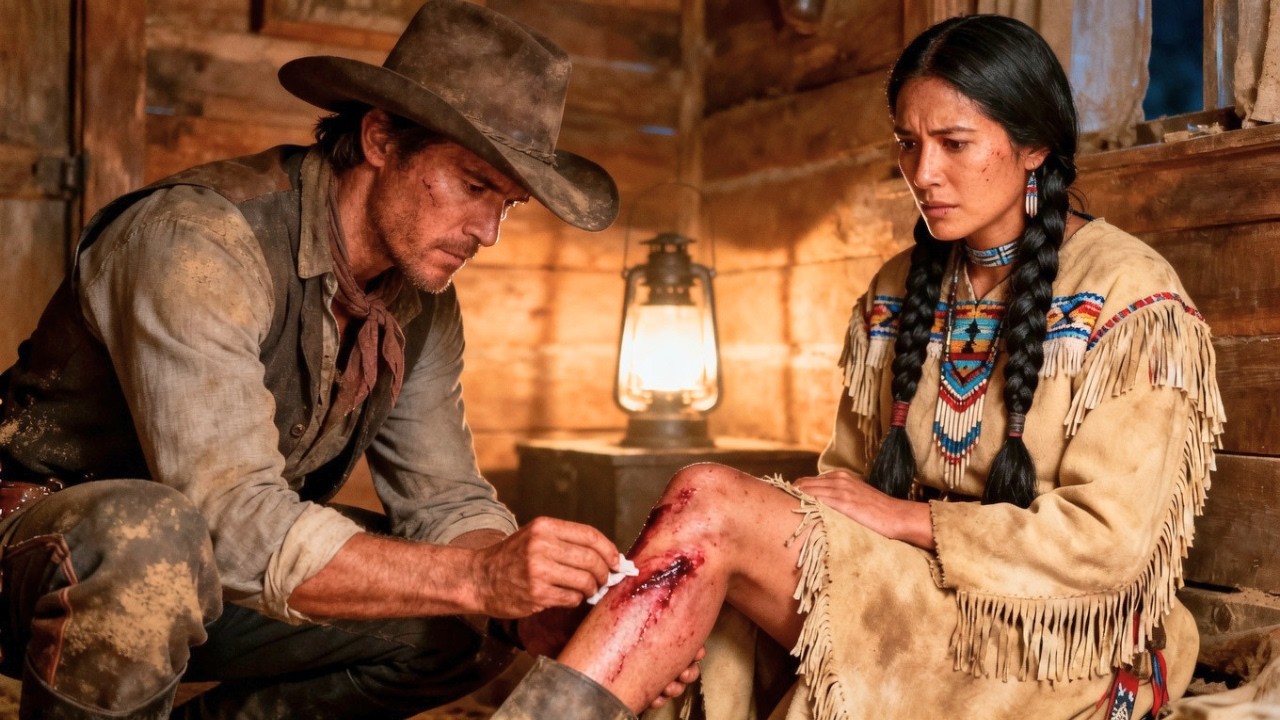
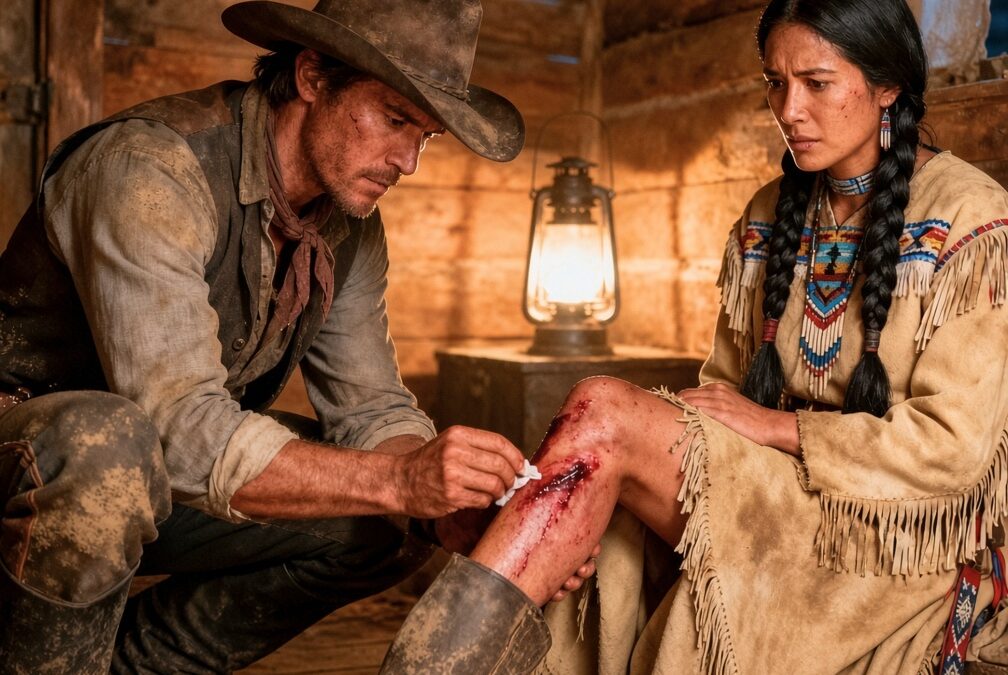
A cowboy finds a dying woman in the desert and makes one choice that destroys the life he knew.
Now two tribes want blood. Settlers are loading rifles and the woman he saved believes they’re bound forever.
He can run, he can fight, or he can face the truth that saving her might have been the biggest mistake of his life.
Or the only thing he ever did right. If you want to see how far one decision can take a man, stay until the end.
And drop a like and tell me what city you’re watching from. I want to see how far this story travels.
The desert didn’t forgive mistakes. Caleb Roark had learned that early, back when he still thought the frontier owed him something.
It didn’t. The land took what it wanted, water, cattle, men, and gave nothing back but dust and silence.
He’d made peace with that. Somewhere between his 20th year and his 32nd, he’d stopped expecting anything different.
He rode alone through the canyon that afternoon. The sun beating down like a hammer on an anvil.
His horse, a roan mare named Dust, picked her way over the red rock with the careful gait of an animal that knew a broken leg meant death.
Caleb kept his eyes on the ground, scanning for tracks. Three head of cattle had wandered off two days ago.
And if he didn’t find them soon, the coyotes would. The canyon walls rose high on either side, jagged and orange in the light.
It was quiet except for the creak of leather and the occasional scrape of Dust’s hooves on stone.
Caleb liked the quiet. It didn’t ask questions. It didn’t expect answers. Then he heard it.
A sound so faint he almost missed it. A low rasping cry that barely carried over the wind.
Caleb reined in Dust and listened. Nothing. He waited. One hand resting on the stock of his rifle.
The desert played tricks sometimes. Wind through the rocks could sound like voices. He’d heard men swear they’d found water, only to dig into dry sand.
But then it came again. Weaker this time, human. Caleb’s jaw tightened. He didn’t want to know what made that sound.
Out here, finding someone usually meant finding trouble. But he’d been raised by a man who said you didn’t leave people to die, no matter who they were.
That man was 10 years in the ground now, and Caleb had spent most of those years wishing he’d learned to be more practical.
He dismounted and looped Dust’s reins over a low juniper. The cry had come from deeper in the canyon, past a tumble of boulders that looked like they’d fallen a thousand years ago and decided to stay.
Caleb pulled his rifle free and moved forward, his boots crunching softly on the gravel.
The smell hit him first. Blood and something else. Sickness, maybe. He rounded the boulders and stopped.
She was lying in the shade of an overhang, half hidden by a tangle of creosote bush.
At first he thought she was dead. Her skin was the color of ochre, her long black hair matted with dirt and what looked like dried blood.
She wore a torn deerskin dress, and her left leg was wrapped in a crude bandage made from strips of fabric.
The bandage was soaked through. Caleb didn’t move. His mind was already working through the options, cold and methodical.
Apache, most likely. Maybe maybe Yavapai. Either way, she wasn’t supposed to be here, not this close to settler land, not alone.
He should leave, mount up, ride back, forget he’d ever heard that cry. If anyone found out he’d even seen her, there’d be questions, accusations, the kind that ended with ropes and torches.
But then her eyes opened. They were dark, almost black, and filled with something Caleb recognized because he’d felt it himself more times than he could count.
Fear. Not the kind that made you scream, but the kind that settled in your bones and told you this was the end.
She didn’t speak, just looked at him, waiting. Caleb cursed under his breath and lowered the rifle.
“Don’t suppose you speak English?” He said. No response. Her breathing was shallow, uneven. He crouched down beside her, careful to keep his movements slow.
The bandage on her leg was falling apart, and when he peeled it back, he saw the wound underneath, a deep gash, infected and swollen.
She must have been out here for days. “You’re in bad shape,” he said, more to himself than to her.
“Real bad.” She said something in a language he didn’t understand. Her voice was hoarse, barely a whisper.
Caleb shook his head. “I don’t know what you’re saying.” She tried again, the same words, and this time her hand moved weakly toward him, not reaching, exactly.
More like asking. Caleb sat back on his heels and looked at her. Really looked.
She couldn’t have been more than 25. Young. Too young to die alone in a canyon with the buzzards circling overhead.
He thought about his ranch, 12 miles south. Thought about the empty cabin and the empty corral and the life he’d built around not needing anyone.
Thought about what would happen if someone saw him ride in with her. Then he thought about his father’s voice, rough and steady.
“You don’t leave people to die.” “Hell,” Caleb muttered. He stood and went back to Dust, pulling his canteen free.
When he returned, the woman’s eyes were closed again. He tilted her head up gently and brought the canteen to her lips.
She drank, coughing at first, then greedily. He let her have a few swallows before pulling it away.
“That’s enough for now,” he said. “You drink too fast, you’ll just bring it back up.”
She looked at him again, and this time there was something else in her expression.
Not fear. Not quite trust, either. Just recognition. Like she understood he wasn’t going to hurt her.
Caleb examined the wound again. It needed cleaning, stitches, and probably more doctoring than he had the skill for.
But if he didn’t do something now, she’d be dead by morning. He worked quickly, tearing a strip of cloth from his own shirt to make a fresh bandage.
She didn’t cry out, but he felt her body go rigid when he touched the wound.
Tough then. Or maybe just too far gone to feel much of anything. When he was finished, he sat back and wiped the sweat from his forehead.
“I’m going to take you with me.” He said. “Don’t know if you understand, but I can’t leave you here.
You’d be dead by sundown.” She didn’t respond. Maybe she didn’t have the strength. Maybe she just didn’t care.
Caleb lifted her carefully, surprised at how light she was. She made a small sound, something between a gasp and a groan, but she didn’t fight him.
He carried her back to Dust, who eyed them both with what he swore was suspicion.
“Don’t start.” Caleb told the mare. Getting the woman onto the horse was harder than he’d expected.
She couldn’t sit upright, so he had to settle her across the saddle like cargo.
It wasn’t dignified, but it was the best he could do. He tied her in place with a length of rope, making sure it wasn’t too tight, then mounted up behind her.
The ride back was slow. Caleb kept one arm around her to keep her from sliding off, the other hand holding the reins.
She drifted in and out of consciousness, her head lolling against his chest. Once, she murmured something he didn’t catch.
He didn’t ask her to repeat it. The sun was low on the horizon by the time they reached his ranch.
It wasn’t much. A small cabin, a corral, a barn that leaned slightly to the left.
The cattle he’d been looking for were nowhere in sight, but Caleb had stopped caring about that hours ago.
He dismounted and untied the woman, lifting her down as gently as he could. She was barely conscious now, her skin hot to the touch.
Fever then. He’d have to work fast. Inside the cabin, he laid her on his bed, the only bed, and started pulling supplies from the shelf.
Whiskey for the wound, a needle and thread, clean water if he could get the pump working.
He lit a lamp and set it on the table, then rolled up his sleeves.
The woman watched him through half-closed eyes as he worked. He cleaned the wound again, this time with whiskey, and she hissed but didn’t pull away.
The stitching was rough. Caleb had sewn up horses and once a man who’d gotten on the wrong side of a knife, but he’d never claimed to be good at it.
Still, it held. When he was done, he covered her with a blanket and stepped back.
She was shivering now despite the heat. The fever would get worse before it got better.
Caleb poured himself a cup of coffee and sat down at the table. He didn’t drink it, just held it and stared at the woman lying in his bed.
“What the hell did I just do?” He said aloud. No answer, not that he’d expected one.
He thought about the settlers in town, the ones who’d look at him like he’d lost his mind if they knew what he’d brought home.
Thought about the stories he’d heard, Apache raiding parties, burned homesteads, bodies left in the sun.
Thought about the fact that this woman’s people might come looking for her, and when they did, they wouldn’t care that he’d saved her life.
But he also thought about the way she’d looked at him in that canyon, the way she’d waited, quiet and still, for him to make a choice.
He’d made it. Now he’d have to live with it. The woman stirred, turning her head slightly.
Her lips moved, forming words he couldn’t understand. Caleb leaned forward, trying to catch them.
“What are you saying?” He asked. She said it again, clearer this time, and though he didn’t know the language, he thought he heard something that might have been a name, or a question, or maybe just a sound she needed to make to know she was still alive.
Caleb set the cup down and rubbed his face. The lamplight flickered, throwing shadows across the walls.
“You’re safe here,” he said, knowing she probably didn’t understand. “I don’t know what happens next, but you’re safe tonight.”
She closed her eyes, and for a moment Caleb thought she might have drifted off, but then her hand moved just slightly, reaching toward him.
He hesitated, then slowly he took it. Her grip was weak, but it was there, real, human.
Caleb sat like that for a long time, holding the hand of a woman whose name he didn’t know, whose people he’d been taught to fear, whose presence in his home could cost him everything.
Outside the wind picked up, rattling the shutters. The desert night settled in, vast and indifferent, and somewhere in the back of Caleb’s mind a voice whispered that he’d just crossed a line he couldn’t uncross.
Kicks. The next morning came hard and bright. Caleb woke in the chair by the table, his neck stiff and his back aching.
He hadn’t meant to fall asleep, but exhaustion had pulled him under sometime before dawn.
The woman was still in the bed, her breathing more even now. The fever hadn’t broken, but it hadn’t gotten worse, either.
That was something. Caleb stood and stretched, wincing as his joints protested. He walked to the bed and checked the bandage.
No fresh blood. The stitches were holding. She opened her eyes and looked at him.
There was no fear this time, just a kind of quiet weariness, like she was trying to figure out who he was and what he wanted.
“Morning,” Caleb said. “You feel any better?” She didn’t answer. He hadn’t expected her to.
He brought her water and watched as she drank. Her hands were steadier than they’d been the night before.
A good sign. “I’m going to make something to eat,” he said. “You should try to get some down.
Keep your strength up.” He moved to the stove and started a fire, then pulled out a pan and some salted pork.
The smell filled the cabin, rich and smoky. He fried up a few strips and set them on a plate with some hardtack.
It wasn’t much, but it was what he had. When he brought the plate to the bed, the woman pushed herself up slightly, wincing at the effort.
Caleb set the plate beside her and handed her a piece of pork. She took it, sniffed it, then ate slowly.
“You’re welcome.” Caleb said dryly. She looked at him, and for the first time he thought he saw the faintest trace of something that might have been a smile.
Or maybe he was imagining it. He sat back down at the table and ate his own meal, keeping one eye on her.
She finished the pork and picked at the hardtack, but she didn’t eat much. Probably still too weak.
When she was done, she lay back down and closed her eyes. Caleb cleared the plate and went outside.
The morning air was cool, a brief reprieve before the heat set in. He walked to the corral and checked on Dust, who was grazing contentedly.
The cattle were still missing, but Caleb figured they’d either turn up or they wouldn’t.
Right now, he had bigger problems. He spent the rest of the morning doing the chores he’d been putting off, fixing a fence post, mucking out the barn, hauling water from the pump.
Physical work, the kind that kept his hands busy and his mind from wandering too far.
But no matter what he did, he kept thinking about the woman in his cabin, about what would happen when she was strong enough to leave, about whether her people would come looking, about what the settlers would say if they found out.
By midday, the heat was unbearable. Caleb went back inside and found the woman awake, her eyes following him as he moved around the cabin.
“You got a name?” He asked, not really expecting an answer. She said something in her language, soft and lilting.
“I’ll take that as a yes.” Caleb said. “Mine’s [clears throat] Caleb, Caleb Roark.” She repeated his name, stumbling over the syllables.
“Ka-leb.” He almost laughed. “Close enough.” She pointed to herself and said her name again, slower this time.
It sounded like Ayla, though Caleb wasn’t sure he was hearing it right. “Ayla.” He repeated.
She nodded. It wasn’t much, but it was a start. The days that followed settled into a strange rhythm.
Caleb worked the ranch during the day, and in the evenings, he tended to Ayla.
Her fever broke on the third day, and by the end of the week, she was strong enough to sit up on her own.
She didn’t talk much, couldn’t really given the language barrier, but she watched everything he did with a kind of intense focus.
When he cooked, she watched. When he mended a harness, she watched. When he sat by the fire and cleaned his rifle, she watched.
It unnerved him at first, but after a while, he got used to it. One evening, as he was frying up some beans, Ayla stood and walked to the table.
It was the first time she’d been on her feet since he’d brought her in, and she moved slowly, favoring her injured leg.
“You should be resting,” Caleb said. She ignored him and picked up a rag from the counter.
Before he could stop her, she started wiping down the table. “What are you doing?”
Caleb asked. She didn’t answer, just kept cleaning. When the table was done, she moved to the shelves, straightening the cans and jars he’d left in haphazard piles.
Caleb watched her, unsure whether to be annoyed or amused. “You don’t have to do that,” he said.
She looked at him, then back at the shelves, and kept working. “Stubborn,” Caleb muttered.
Over the next few days, she did more. She washed the dishes. She swept the floor.
She even tried to milk the goat he kept behind the barn, though she gave up after the animal kicked over the bucket twice.
Caleb didn’t ask her to do any of it. Hell, he didn’t even want her to, but she did it anyway, and after a while, he stopped trying to stop her.
It was easier that way. Two weeks after he’d found her, Caleb rode into town for supplies.
He didn’t like going, too many people, too many questions, but he was running low on flour and coffee, and the goat wasn’t producing enough milk to make up the difference.
The general store was crowded when he arrived. He kept his head down and grabbed what he needed hoping to get in and out without drawing attention.
But Frank Delaney had other ideas. Caleb Roark, Frank called from across the store. Didn’t expect to see you in town.
Caleb turned slowly. Frank was a big man, broad-shouldered and loud with a mustache that looked like it had its own agenda.
He ran a cattle operation north of Caleb’s ranch and had a habit of sticking his nose where it didn’t belong.
Just picking up supplies, Caleb said. Frank walked over grinning. You look like hell, Roark.
You’ve been sleeping? Enough. Heard you lost some cattle a few weeks back. Ever find them?
No. Frank nodded sagely, like this confirmed something he’d been thinking. Damn shame. Probably coyotes.
Or worse. Caleb didn’t rise to the bait. He paid for his supplies and turned to leave.
Hey, Roark, Frank called after him. You see anything strange out your way? Heard there’s been Apache sightings near the canyon.
Caleb’s hand tightened on the sack of flour. Haven’t seen anything. You sure? Cuz if they’re moving this far south, we might need to organize a b- I’m sure, Caleb said, his voice flat.
Frank studied him for a moment, then shrugged. All right. Just thought I’d ask. Caleb left before Frank could say anything else.
The ride back to the ranch felt longer than usual. His mind was turning over Frank’s words, the implications buried underneath.
If people were talking about Apache sightings, it was only a matter of time before someone came sniffing around.
And if they found Ayla, Caleb pushed the thought away. When he got back to the cabin, Ayla was sitting outside, her leg propped up on a stump.
She’d been doing that more often, spending time in the sun. Caleb figured it was better than being cooped up inside.
She looked up as he approached and he thought he saw something like relief cross her face.
“Missed me?” Caleb said, half joking. She didn’t understand the words, but she smiled. It was a small thing, barely there, but it hit Caleb harder than he’d expected.
He carried the supplies inside and started unpacking. Ayla followed, moving slower than she used to, but steadier.
She took the flour from him and set it on the shelf, then reached for the coffee.
“You’re getting bossy,” Caleb said. She shot him a look that might have been indignation and he almost laughed.
That night, they ate together at the table. Caleb had made stew, nothing fancy, just meat and potatoes, and Ayla ate like she’d been hungry for days.
He watched her, surprised at how normal it felt, like they’d been doing this for years instead of weeks.
After dinner, she started clearing the dishes. Caleb stood to help, but she waved him off.
“All right, all right,” he said, holding up his hands. “I know when I’m not wanted.”
He sat back down and pulled out his knife, running the whetstone along the blade.
Ayla washed the dishes in the basin, her movements careful and deliberate. The lamplight caught the curve of her neck, the way her hair fell over her shoulder.
Caleb looked away. When she was done, she dried her hands and came to sit across from him.
She pointed to the knife, then to him, her expression curious. “You want to know what I’m doing?”
Caleb asked. She nodded. He held up the knife and the stone. “Sharpening. Keeps [clears throat] the blade useful.”
She reached out and he hesitated before handing her the knife. She turned it over in her hands, testing the weight, then ran her thumb lightly along the edge.
“Careful,” Caleb said. “It’s sharp.” She looked at him, then back at the knife and said something in her language.
It sounded like approval. Caleb took the knife back and set it on the table.
“You ever use one of these?” She nodded and mimed a cutting motion. “Figured,” Caleb said.
They sat in silence for a while, the kind that didn’t need filling. Outside the wind picked up, and somewhere in the distance a coyote howled.
Ayla stood and walked to the window, looking out into the darkness. Caleb watched her, wondering what she was thinking.
Whether she missed her people, whether she regretted being here. She turned and said something, her voice quiet.
“I don’t understand.” Caleb said. She pointed to herself, then to him, then to the cabin.
Then she placed her hand over her heart. Caleb frowned, trying to piece it together.
“You you’re saying you’re safe here?” She nodded, and the look in her eyes was so earnest it made his chest tighten.
“Yeah.” Caleb said quietly. “You’re safe.” She smiled again, and this time it stayed. Caleb turned back to his knife, running the stone along the blade with slow, even strokes.
He told himself it didn’t mean anything, that she was just grateful. That once she was healed, she’d leave, and things would go back to the way they were.
But deep down, he knew that wasn’t true. Something had changed. Something he couldn’t name and didn’t want to.
And as the lamplight flickered and the wind rattled the shutters, Caleb Roark realized he was in deeper than he’d ever meant to be.
The morning Ayla started cooking, Caleb knew something had shifted. He woke to the smell of cornmeal and something else he couldn’t place.
Herbs, maybe, or wild onions. He sat up in the chair where he’d been sleeping for the past 3 weeks, and saw her standing at the stove, her back to him, stirring something in his cast iron pan.
“What are you doing?” He asked, his voice rough from sleep. She turned, startled, then gestured to the pan with a wooden spoon.
She said something in her language, quick and matter-of-fact, like it should have been obvious.
“I can see you’re cooking.” Caleb said. “Question is why?” She gave him a look that suggested he was being deliberately obtuse, then turned back to the stove.
A moment later, she scooped whatever she’d made onto a plate and brought it to the table.
It looked like some kind of flatbread mixed with bits of meat and greens he didn’t recognize.
Caleb stared at it. “Where’d you get the greens?” Ayla pointed toward the door. “You went outside?
Alone?” She nodded, unbothered. “Your leg’s barely healed,” Caleb said. “You shouldn’t be wandering around.”
She said something that sounded like a mild rebuke and pushed the plate toward him.
Caleb picked up a piece of the flatbread and took a bite. The flavor hit him immediately, savory, earthy, with a slight bitterness that wasn’t unpleasant.
It was better than anything he’d made in months. “Hell,” he muttered. Ayla smiled, satisfied, and went back to the stove to make her own portion.
Caleb watched her move around the cabin like she’d been doing it all her life.
Like this was her space now, not just his. He should have said something, should have reminded her that this was temporary, that she’d leave eventually, and he’d go back to eating burned beans and stale coffee.
But he didn’t. Instead, he finished the flatbread and told himself it didn’t matter. Over the next few days, Ayla took over more of the cooking.
She made things Caleb had never tasted, stews flavored with wild roots, bread cooked on hot stones, dried meat seasoned with crushed juniper berries.
She didn’t ask permission, just did it. And Caleb let her. It was easier than fighting about it.
That’s what he told himself, anyway. One afternoon, while he was mending a saddle in the barn, Ayla came out carrying a basket.
She’d taken to gathering plants in the mornings, disappearing into the scrub for an hour or two, and coming back with handfuls of things Caleb wouldn’t have thought twice about.
“Going out again?” He asked. She nodded and pointed toward the canyon. “Don’t go too far,” Caleb said, “and stay clear of the ridge.
There’s rattlesnakes up there this time of year.” Ayla gave him a look that suggested she knew more about snakes than he did, then walked off.
Caleb went back to his work, trying not to think about the fact that he was starting to worry when she was out of sight.
She came back an hour later with a basket full of prickly pear fruit and something that looked like wild garlic.
She also had a scrape on her arm, shallow but fresh. “What happened?” Caleb asked, setting down the saddle.
Ila glanced at the scrape and shrugged like it wasn’t worth mentioning. “Let me see.”
Caleb said. She hesitated, then held out her arm. The scrape wasn’t deep, but it needed cleaning.
Caleb walked her inside and poured water over it, then dabbed it with a clean rag.
Ila watched him, her expression unreadable. “You need to be more careful.” Caleb said. She said something in her language, soft and steady.
“I don’t know what that means.” Caleb said. She touched his hand, just briefly, then pulled away and went back to sorting her plants.
Caleb stood there for a moment, staring at the spot where her fingers had been.
Then he shook his head and went back outside. That night, they ate together at the table like they always did now.
Ila had made something with the prickly pear, sweet and tangy, and Caleb ate more than he meant to.
Afterward, she cleared the dishes while he sat by the fire carving a new handle for a broken hatchet.
She finished the dishes and came to sit beside him, closer than usual. Caleb glanced at her but didn’t say anything.
She watched the fire, her face lit by the orange glow, and for a while neither of them spoke.
Then she said his name. Ca-leb. He looked at her. “Yeah?” She pointed to herself, then to him, then to the cabin.
The same gesture she’d made weeks ago, but this time she added something. She pressed her hand to her chest, then reached out and placed it over his heart.
Caleb went very still. “Ila.” He said carefully. “I I I don’t know what you’re trying to say.
She said something in her language, slow and deliberate, and though he didn’t understand the words, the meaning was clear enough.
She thought they were bound, husband and wife, or whatever her people called it. Caleb’s chest tightened.
No, that’s not But she was already standing, moving to the shelf where she’d stacked the things she’d gathered.
She pulled down a small bundle wrapped in cloth and brought it back to him.
When she unwrapped it, he saw a necklace made of bone beads and thin strips of leather.
She held it out to him. “I can’t take that.” Caleb said. She pressed it into his hands anyway, her expression insistent.
“Ayla, listen.” Caleb said. “I didn’t This isn’t what you think. I just helped you because you were hurt.
That’s all.” She tilted her head watching him and said something that sounded like a question.
“I’m not your husband.” Caleb said, the words coming out harsher than he meant. “You don’t owe me anything.”
Ayla’s face didn’t change, but something flickered in her eyes. Confusion, maybe, or hurt. She took the necklace back, re-wrapped it, and set it on the table.
Then she stood and walked to the bed, lying down with her back to him.
Caleb sat there, the hatchet handle forgotten in his lap, and cursed himself for not seeing this coming.
The next morning, Ayla didn’t cook. She didn’t clean. She barely looked at him. Caleb tried to go about his day like nothing had happened, but the silence in the cabin was suffocating.
He fed the animals, hauled water, fixed a broken fence post. When he came back inside at midday, Ayla was sitting by the window staring out at the desert.
“You want something to eat?” Caleb asked. She didn’t answer. He made himself some beans and ate alone at the table.
The necklace was still sitting where she’d left it, wrapped in its cloth. Caleb stared at it, then pushed it to the side.
The silence stretched into the afternoon. By evening, Caleb couldn’t take it anymore. “Look,” he said, pulling up a chair across from her.
“I didn’t mean to upset you, but you need to understand where I come from.
Things don’t work the way they do for your people. Saving someone doesn’t make you married.”
Ayla turned to look at him, and there was something sharp in her gaze. “I know you don’t understand me,” Caleb continued, “but I’m trying to explain.
You’re safe here. You can stay as long as you need, but this He gestured between them.
“This isn’t what you think it is.” She stood abruptly and walked to the door.
For a moment, Caleb thought she was going to leave, just walk out into the desert and not come back.
But she stopped at the threshold and turned to face him. She said something, her voice low and fierce.
And though he didn’t know the words, he felt the weight of them. Then she stepped outside and closed the door behind her.
Caleb sat there, staring at the empty doorway, and wondered how the hell he’d gotten himself into this mess.
Ayla didn’t come back that night. Caleb told himself he didn’t care. She was a grown woman.
She could take care of herself. But when midnight came and went, and the coyotes started howling, he grabbed his rifle and went looking for her.
He found her sitting on a rock outcrop half a mile from the cabin, her knees drawn up to her chest.
She didn’t turn when he approached, but he knew she’d heard him. “You planning to stay out here all night?”
Caleb asked. No answer. He sat down a few feet away, the rifle resting across his lap.
The desert stretched out in front of them, vast and dark under the stars. “I’m not good at this,” Caleb said after a while.
“Talking, explaining. My old man used to say I had the social skills of a fence post.”
Ayla didn’t react. “I know you think I saved you because I wanted something,” Caleb continued, “but I didn’t.
I just I couldn’t leave you there. That’s all.” She turned her head slightly, not quite looking at him, but not ignoring him either.
“Where I come from, people don’t trust each other much,” Caleb said. “And they sure as hell don’t trust anyone who’s different.
If they found out you were here, they’d Well, it wouldn’t end well for either of us.”
Ayla said something quiet and measured. “I don’t know what that means,” Caleb said. She pointed to the stars, then to herself, then to him.
Caleb frowned. “You’re saying we’re both under the same sky?” She nodded. “Yeah,” Caleb said.
“I guess we are.” They sat in silence for a while longer. Then Ayla stood and started walking back toward the cabin.
Caleb followed, and when they got inside, she went to the shelf and pulled down the necklace.
She held it out to him again. “Ayla.” She cut him off with a look and placed the necklace in his hand.
Then she closed his fingers around it and stepped back. Caleb looked down at the necklace, the bone beads smooth and cool against his palm.
“I don’t deserve this,” he said. Ayla said something that might have been agreement or might have been the opposite.
Then she went to the bed and lay down, leaving Caleb standing there with the necklace in his hand and no idea what to do with it.
He set it on the table and went back to his chair. The next few days were tense.
Ayla went back to cooking and cleaning, but there was a distance between them now that hadn’t been there before.
She didn’t smile, didn’t sit close to him by the fire, didn’t try to talk.
Caleb told himself it was better this way, cleaner. But it didn’t feel better. One morning he woke to the sound of voices outside.
He was on his feet in an instant, rifle in hand, and when he looked out the window, his blood ran cold.
Three men on horseback were approaching the cabin. Settlers, by the look of them. One of them was Frank Delaney.
“Damn it,” Caleb muttered. He turned to Ayla, who was standing by the stove, her eyes wide.
“Get in the back room,” Caleb said. “Now.” She didn’t move. “Ayla, go.” She shook her head and said something sharp.
I don’t have time to argue, Caleb said. He grabbed her arm and pulled her toward the back room, but she yanked free and planted herself in front of the stove.
The knock came before he could say anything else. Caleb took a breath, set the rifle against the wall where it wouldn’t be immediately visible, and opened the door.
Frank Delaney grinned at him from the saddle. Morning, Rourke. Frank, Caleb said. What brings you out this way?
Just checking in on the neighbors, Frank said. Making sure everyone’s all right. You know how it is.
I’m fine. Frank’s eyes drifted past Caleb to the cabin interior. You alone out here?
Why wouldn’t I be? No reason, Frank said. Just seems like a lonely life is all.
The other two men shifted in their saddles. One of them, a wiry kid named Garrett, was staring at the cabin with a little too much interest.
Well, I appreciate the concern, Caleb said. But like I said, I’m fine. Frank didn’t move.
You sure about that? Cuz Garrett here says he saw smoke coming from your place at odd hours, more than usual for one man.
I’ve been doing some cooking, Caleb said evenly, trying out new recipes. Frank raised an eyebrow.
That so? That so. Frank leaned forward in his saddle, his grin fading. Rourke, if there’s something going on out here, you’d tell us, right?
We look out for each other in these parts. There’s nothing going on, Caleb said.
Frank studied him for a long moment, then nodded. All right, but if you see anything strange, Apache, drifters, anything, you let us know.
I will. Frank tipped his hat and turned his horse. The other two followed, but Garrett looked back once before they disappeared over the ridge.
Caleb closed the door and leaned against it, his heart pounding. Ayla was still standing by the stove, her face pale.
They’re going to come back,” Caleb said, “and next time they won’t just knock.” Ayla said something, her voice tight.
“I know,” Caleb said, even though he didn’t. He walked to the window and watched the dust trail left by the riders.
Frank Delaney wasn’t a fool. He’d seen something or suspected something, and he wouldn’t let it go.
Caleb turned back to Ayla. “You need to leave. It’s not safe here anymore.” She shook her head.
“Ayla, listen to me.” She crossed the room and grabbed his hand, pressing it to her chest.
Then she pointed to the door, to the desert beyond, and shook her head again.
“You can’t stay,” Caleb said. “If they find you, they’ll” She said something fierce and unyielding, and Caleb realized she wasn’t going to leave, not willingly.
He pulled his hand free and walked outside, needing air, needing space to think. The sun was high and brutal, the sky a washed-out blue.
Caleb stood in the dirt and stared at the horizon, trying to figure out how the hell he was going to fix this.
He couldn’t hide her forever. Sooner or later, someone would see. And when they did, the questions would start.
Then the accusations, then worse. But he couldn’t send her away, either, not when she had nowhere to go, not when her people might have given her up for dead.
He was trapped, and so was she. That night, Caleb sat by the fire and tried to come up with a plan.
Ayla sat across from him, silent and watchful. The necklace was still on the table, untouched.
“I don’t know what to do,” Caleb said finally. “I can’t protect you if they come back.
And they will come back.” Ayla said something, and though he didn’t understand the words, he heard the resolve in her voice.
“You’re not afraid, are you?” Caleb asked. She shook her head. “You should be.” She stood and walked to the table, picking up the necklace.
She came over to him and held it out, just like before. Caleb looked at it, then at her.
What do you want from me, Ayla? She didn’t answer, just placed the necklace in his hand and closed his fingers around it.
And this time Caleb didn’t give it back. The next morning Caleb woke with a knot in his stomach.
He’d barely slept, his mind running through scenarios, each one worse than the last. Frank Delaney wasn’t the type to let suspicion fester.
He’d act. And when he did, Caleb needed to be ready. Ayla was already up, moving quietly around the cabin.
She’d stopped asking him questions with her eyes, stopped waiting for answers. It was like she’d made her own decision and was just waiting for him to catch up.
Caleb pulled on his boots and walked outside. The air was cool, the sun just starting to crest the horizon.
He scanned the ridge, half expecting to see riders. Nothing yet. But it was coming.
He spent the morning reinforcing the cabin’s defenses, such as they were. He checked the rifle, made sure the ammunition was dry, moved some of the heavier furniture to block the windows if needed.
It wasn’t much, but it was something. Ayla watched him work, and when he was done, she brought him water.
He drank it without looking at her, his mind still turning. “I need to go into town,” Caleb said finally.
“See what people are saying. Maybe I can get ahead of this.” Ayla frowned and said something that sounded like a protest.
“I’ll be back before dark,” Caleb said. “You stay inside. Don’t answer the door for anyone.”
She didn’t look convinced, but she nodded. Caleb saddled Dust and rode out, the weight of the decision pressing down on him with every mile.
He didn’t know what he was going to say when he got to town, didn’t know if it would even matter, but he had to try.
The town was busier than usual when he arrived. People were gathered in clusters, talking in low voices.
Caleb tied Dust outside the general store and went inside. The storekeeper, a thin man named Horace, looked up when Caleb walked in.
Roark, didn’t expect to see you twice in 1 month. Need some supplies, Caleb said.
Horace nodded and started pulling items from the shelves. You hear about the trouble? Caleb’s stomach tightened.
What trouble? Apache, Horace said. Scouts spotted a band moving south near the canyon. Folks are saying they’re looking for something or someone.
Caleb kept his face neutral. That’s so. Yeah, Frank Delaney is organizing a group to ride out and make sure they don’t get too close to the settlements.
When? Tomorrow, maybe the day after. Depends on how many men he can round up.
Caleb paid for the supplies and left before Horace could ask any more questions. His mind was racing.
If the Apache were moving south, it meant they were looking for Ayla. And if Frank’s group crossed paths with them, it would turn into a bloodbath.
He rode back faster than he should have, dust hooves kicking up dust as they tore across the open ground.
By the time he reached the cabin, the sun was low on the horizon. Ayla was waiting outside, her arms crossed.
When she saw his face, her expression shifted. We have a problem, Caleb said dismounting.
She said something, a question. Your people are looking for you, Caleb said. And the settlers know they’re close.
They’re going to ride out, and when they do, he didn’t finish. He didn’t need to.
Ayla’s face went hard. She said something quick and sharp, then turned and walked into the cabin.
Caleb followed. What are you doing? She was pulling things from the shelves, dried meat, a waterskin, a small knife she’d taken to carrying, packing.
You’re leaving? Caleb asked. She nodded. Ayla, you can’t just walk into the desert. Your legs barely healed, and if you run into Frank’s men, she cut him off with a look and kept packing.
Caleb grabbed her arm. “Stop.” She yanked free and said something fierce, her eyes blazing.
“I don’t care what you think you need to do,” Caleb said. “You’re not going alone.”
Ayla stared at him, and for a moment neither of them moved. Then Caleb let out a breath.
“If you’re going, I’m going with you.” She shook her head, but Caleb was already moving, grabbing his saddlebags and loading them with supplies.
“I’m not letting you walk into the desert alone,” he said. “So either we go together or you tie me up and leave me here.
Your choice.” Ayla watched him, her expression unreadable. Then, slowly, she nodded. They left before dawn, moving quietly through the scrub with only the stars to guide them.
Caleb led Dust by the reins, Ayla walking beside him. She moved carefully, her legs still weak, but she didn’t complain.
They traveled north toward the canyon where Caleb had found her. Ayla seemed to know where she was going, even in the dark.
She’d stop occasionally, listen, then move on. By the time the sun rose, they were deep into the wilderness, far from any settler trail.
Caleb scanned the ridges, looking for movement. “How far?” Ayla pointed toward a distant outcrop of rock, then said something.
“Your people are there?” She nodded. Caleb’s chest tightened. He’d known this was coming, known it from the moment he’d found her in that canyon, but now that it was here, he didn’t know what to do with it.
They walked in silence for another hour, then Ayla stopped. Caleb looked up and saw them.
Three figures standing on a ridge, watching. Apache scouts armed with bows and rifles. “Ayla.”
She stepped forward, raising her hand in some kind of signal. The scouts didn’t move.
Then one of them descended the ridge, moving quickly. When he got closer, Caleb saw he was young, maybe 20, with a scar running along his jawline.
He and Ela spoke rapidly in their language, and Caleb caught the tension in their voices.
The scout looked at Caleb, his expression hard. He said something to Ela, sharp and questioning.
Ela responded, her voice calm but firm. She gestured to Caleb, then to herself, then pressed her hand to her chest.
The scout’s eyes narrowed. He said something else, and this time his tone was almost accusing.
Ela’s response was fierce. She stepped closer to Caleb and placed her hand on his arm.
The scout stared at them for a long moment, then he turned and climbed back up the ridge.
The other two scouts followed. Caleb let out a breath he didn’t know he’d been holding.
What just happened? Ela turned to him and said something soft. I don’t understand. She took his hand and placed it over her heart, then placed her hand over his.
And Caleb finally got it. She told them he was hers, that they were bound.
Ela, you didn’t have to Shh. She cut him off, her expression resolute. She said something that sounded like a promise, then turned and started walking back the way they’d come.
Caleb stood there staring after her, his mind reeling. He’d just been claimed. In front of her people.
And whether he’d agreed to it or not, there was no taking it back now.
He caught up to her, and they walked in silence for a long time. The sun climbed higher, the heat pressing down on them like a weight.
Finally, Caleb spoke. You know what you just did, right? Ela glanced at him and nodded.
And you know what that means? She nodded again, slower this time. Caleb stopped walking.
Ela, I can’t I don’t know how to be what you need. She turned to face him, and the look in her eyes was so steady, so sure, that it took his breath away.
She said something, and though he didn’t understand the words, he felt the truth of them.
She wasn’t asking him to be anything he wasn’t. She was just asking him to stay.
Caleb looked at her, this woman who’d walked into his life half dead and turned everything upside down.
This woman who decided he was worth keeping even when he couldn’t figure out why.
And for the first time in a long time, Caleb Roark made a choice that wasn’t about survival.
“All right.” He said quietly. “All right.” Ayla smiled and it was like the sun breaking through clouds.
They walked back to the cabin together, the desert stretching out around them, vast and unforgiving.
And when they got home, Caleb picked up the necklace from the table and put it on.
It settled against his chest, the bone beads cool and smooth. Ayla watched him and when he met her eyes, she said something that might have been his name.
“Yeah.” Caleb said. “I’m here.” And he meant it. The necklace felt heavier than it should have.
Caleb touched it absently as he worked, the bone beads clicking together under his fingers.
Three days had passed since they’d returned from the canyon and every one of those days had felt like waiting for a storm to break.
Ayla moved around this cabin with a new kind of purpose. She wasn’t just occupying space anymore.
She was claiming it. She’d rearranged the shelves to make room for her dried herbs.
She’d hung woven grass mats on the walls that she’d made during the long afternoons.
She’d even planted something near the door, small green shoots that Caleb didn’t recognize. “What is that?”
He’d asked pointing. She’d said a word he couldn’t repeat and kept digging. Now, as he hauled water from the pump, he watched her through the window.
She was grinding something in a stone bowl, her movements rhythmic and practiced. She looked settled, like she belonged.
Caleb set the bucket down and wiped his forehead. The problem was that belonging here meant trouble was coming.
He could feel it the way animals sensed earthquakes, something in the air, a pressure building.
He was proven right that afternoon when he saw the dust cloud. “Ayla.” He called, his voice tight.
She appeared in the doorway, took one look at his face, and understood. She disappeared back inside without a word.
Caleb grabbed his rifle and waited. Four riders this time. Frank Delaney in front with Garrett and two men Caleb didn’t know well, brothers named Cole and Simon Pritchard.
They all carried rifles and none of them looked friendly. Frank reined in his horse 10 ft from the cabin.
Roark. Frank. We need to talk. So, talk. Frank dismounted and the others followed. Caleb’s grip tightened on the rifle.
“There’s been Apache activity near the canyon.” Frank said. “Scouts, maybe more. People are getting nervous.”
“Can’t say I blame them.” “Here’s the thing.” Frank continued, taking a step closer. “Those scouts didn’t attack anyone, didn’t steal anything, just watched like they were looking for something.”
Caleb’s face remained neutral. “Maybe they were just passing through.” “Maybe.” Frank said. “But Garrett here says he saw tracks leading from the canyon toward your property, fresh ones.”
Garrett nodded, his eyes locked on Caleb. “Two sets, one horse, one person on foot.”
“Lots of tracks out here.” Caleb said. “Desert’s not exactly empty.” “That’s what I figured.”
Frank said. “But then I got to thinking about how you’ve been acting lately, jumpy, defensive, coming to town asking questions.”
“I wasn’t asking questions.” “You were listening.” Frank said. “Same thing.” Cole Pritchard spat tobacco juice into the dirt.
“Just let us search the cabin, Roark. If you got nothing to hide, it won’t take but a minute.”
“You’re not searching my cabin.” “Why not?” Simon asked. “What are you protecting?” “My property.”
Caleb said. “And my privacy.” Frank held up a hand and the Pritchard brothers went quiet.
“Look, Caleb, nobody wants trouble, but if you’re harboring an Apache I’m not harboring anyone.
Then you won’t mind if we take a look around. I mind, Caleb said. And unless you got a legal writ, you’re not stepping foot in my home.
Frank’s expression hardened. You’re making this difficult. You’re making assumptions. For a long moment, nobody moved.
The air felt thick, charged. Caleb could see Frank calculating, trying to decide if it was worth pushing.
Then the cabin door opened. Ayla stepped out, and the temperature dropped 10°. She stood in the doorway wearing one of Caleb’s old shirts over her deerskin dress.
Her hair was pulled back, her face calm. She looked at the men with no fear, just a kind of steady assessment.
Frank’s hand moved to his pistol. Who the hell is that? None of your business, Caleb said.
The hell it’s not, Garrett said, his voice rising. That’s an Apache woman in your cabin.
She’s injured, Caleb said. I found her half dead in the canyon. Was I supposed to leave her there?
Yes, Cole Pritchard said flatly. That’s exactly what you were supposed to do. Ayla said something in her language, sharp and clear.
The men all tensed. What did she say? Frank demanded. How should I know she said?
Caleb said. I don’t speak Apache. You’re keeping her here, Frank said slowly, his eyes moving between Caleb and Ayla.
In your cabin, wearing your clothes. She needed help. And now? Now she’s still healing.
Frank laughed, but there was no humor in it. You expect us to believe that?
You expect us to just walk away? I expect you to get off my land, Caleb said.
Simon Pritchard raised his rifle slightly. We could just take her, bring her to the marshal, let him sort it out.
Caleb’s rifle came up in one smooth motion, aimed directly at Simon’s chest. You could try.
The yard went dead silent. Frank’s eyes narrowed. You’re willing to die for her? I’m willing to defend my property, Caleb said.
What happens after that is on you. Ayla moved then, stepping down from the doorway to stand beside Caleb.
She didn’t touch him, didn’t say anything, just stood there shoulder to shoulder. Frank stared at them, his jaw working.
You’re making a mistake, Rourke. Maybe. People are going to hear about this. Let them hear.
Frank mounted his horse, the others following. This isn’t over. Didn’t figure it was, Caleb said.
They rode off, and Caleb didn’t lower the rifle until they were out of sight.
When he finally did, his hands were shaking. Ayla touched his arm, and he looked down at her.
She said something soft, and though he didn’t understand the words, he heard the gratitude.
Don’t thank me yet, Caleb said. That just made everything worse. She nodded, like she knew, like she’d expected it.
They went inside, and Caleb bolted the door behind them. That night, neither of them slept much.
Caleb sat by the window with his rifle across his lap, watching the darkness. Ayla sat near the fire, working on something with her hands, more weaving maybe, or mending.
The silence between them wasn’t comfortable anymore. It was taut, like a rope about to snap.
Around midnight, Ayla spoke. She said his name first, Caleb, then a string of words he couldn’t follow.
I don’t understand, he said. She stood and came to the window, pointing out at the desert.
Then she pointed to herself, then to him, then made a gesture that looked like breaking something in half.
You’re asking if we should split up, Caleb guessed. She nodded. No. She said something else, insistent.
I said no.” Caleb repeated, “You leave, they’ll hunt you down. And if they don’t, your people might think I drove you out.
Either way, somebody ends up dead.” Ayla’s expression was pained. She touched the necklace he wore, then her own chest, and said something that sounded like an apology.
“You didn’t do anything wrong.” Caleb said, “This isn’t your fault.” But even as he said it, he wondered if that was true.
He’d made the choice to bring her here, made the choice to keep her, made the choice to stand beside her when Frank’s men came calling.
Every step had been his, [clears throat] and now they were both paying for it.
Ayla went back to the fire and sat down. She looked small in the flickering light, smaller than she’d seemed in the canyon.
Caleb watched her for a long time, then turned back to the window. The next morning brought more trouble.
Caleb was outside checking the perimeter when he saw the smoke signals. Three columns rising from different points along the ridge.
Apache. Ayla saw them, too. She came out of the cabin and stood beside him, her face tight.
“That’s your people?” Caleb asked. She nodded. “What are they saying?” She said something, then mimed a gathering motion with her hands.
“They’re calling a meeting.” Caleb guessed. Another nod. “About you?” She hesitated, then nodded again.
Caleb’s stomach sank. “What do they want?” Ayla pointed to herself, then to him, then made a gesture that looked like binding.
“They want confirmation.” Caleb said slowly, “They want to know if we’re really together.” She nodded.
“And if we’re not?” Ayla’s face went hard. She drew a finger across her throat.
Caleb absorbed that. “They’d kill you?” She shook her head and pointed at him. “They’d kill me?”
She nodded. “Hell.” Ayla said something rapid, gesturing toward the canyon. Caleb didn’t need a translation to understand.
She wanted to go to them, wanted to explain. “No,” Caleb said. “If you go out there alone, they might not let you come back.”
She said something sharp, frustrated. “I’m going with you,” Caleb said. She started to protest, but he cut her off.
“You told them I’m yours, right? That we’re bound?” She nodded reluctantly. “Then I need to act like it,” Caleb said.
“Otherwise, they’ll know you were lying.” Ayla looked at him for a long moment, then nodded.
They set out an hour later, Caleb on Dust, and Ayla walking beside him. The smoke signals had faded, but Ayla seemed to know where to go.
She led him north, toward the canyon, moving with a confidence that told him she’d walked this path before.
They reached the meeting place just after noon. It was a clearing surrounded by red rock formations, sheltered from view.
At least a dozen Apache were waiting, men, women, even a few children. They all turned to watch as Caleb and Ayla approached.
An older man stepped forward. He had gray in his hair and scars on his arms, and his eyes were sharp enough to cut.
He said something to Ayla, his tone formal. Ayla responded, her voice steady. Then she turned and gestured to Caleb.
The old man looked at him, and Caleb felt the weight of that gaze like a physical thing.
The man spoke again, asking something. Ayla answered, and Caleb caught his name in the middle of her words.
The old man stepped closer, studying Caleb with an intensity that made his skin prickle.
Then he said something, and one of the younger men translated. “He asks if you took her by force.”
“No,” Caleb said firmly. The translator relayed this. The old man asked another question. “He asks if you claim her as your woman.”
Caleb hesitated, then looked at Ayla. She was watching him, her expression unreadable. He thought about the cabin, about the way she’d stood beside him when Frank came, about the necklace hanging around his neck.
“Yes,” Caleb said. The clearing went silent. Ayla’s eyes widened slightly, like she hadn’t expected him to say it.
The old man studied Caleb for another long moment, then spoke again. “He says you must prove it,” the translator said.
“How?” The old man gestured, and two younger men stepped forward. They were both armed with knives, and the challenge was clear.
Caleb’s jaw tightened. “You want me to fight?” “He says a woman’s man must be strong,” the translator said.
“If you cannot defend yourself, you cannot defend her.” Caleb looked at Ayla again. She said something quick, pleading to the old man.
He responded harshly, cutting her off. “He says it is decided,” the translator said. Caleb dismounted and handed Dust’s reins to Ayla.
She grabbed his arm, saying something urgent. “I know,” Caleb said, even though he didn’t.
He walked to the center of the clearing. The two men circled him, knives drawn.
Caleb didn’t have a knife, just his fists and whatever instincts he could scrape together.
The first man lunged. Caleb sidestepped barely and caught the man’s wrist. They grappled, and Caleb twisted hard, forcing the knife to the ground.
The second man came at him from behind, and Caleb spun, taking a glancing blow across his ribs.
Pain flared, sharp and hot. Caleb grabbed the second man’s arm and drove his knee into the man’s stomach.
The man doubled over, and Caleb shoved him back. The first man was up again, knife retrieved.
He came in low, and Caleb caught his arm again, but this time the man was ready.
They went down, rolling in the dust, and Caleb felt the blade nick his shoulder.
He roared and drove his elbow into the man’s face. Something crunched, and the man went limp.
The second man hesitated, then charged. Caleb met him head-on, taking the impact and using the man’s momentum to throw him to the ground.
He landed hard, the knife skittering away. Caleb stood, breathing hard, blood running down his arm.
The two men didn’t get up. The clearing was silent again. Then the old man spoke, and his tone had shifted.
Respectful, maybe, or just less hostile. The translator stepped forward. “He says you are strong enough.”
Caleb wiped blood from his mouth. “Great.” The old man said something else, longer this time.
“He says the bond is recognized,” the translator said. “But he warns you, if you harm her, if you abandon her, her people will come for you, and they will not be merciful.”
“Understood,” Caleb said. The old man nodded, then turned and spoke to Ayla. She responded, her voice low.
The old man placed a hand on her shoulder, said something that sounded almost gentle, then walked away.
The rest of the group dispersed, leaving Caleb and Ayla alone in the clearing. Ayla ran to him, her hands moving over his shoulder, his ribs, checking the wounds.
She said something frantic, her eyes wide. “I’m fine,” Caleb said, even though he wasn’t sure that was true.
She tore a strip from her skirt and pressed it against his shoulder, trying to stop the bleeding.
Her hands were shaking. “Ayla,” Caleb said, catching her wrist. “I’m fine.” She looked up at him, and there were tears in her eyes.
Caleb’s chest tightened. He reached up and wiped one away with his thumb. “Hey, we’re all right.”
She said something soft, almost a whisper. “I don’t know what that means,” Caleb said.
She leaned forward and rested her forehead against his chest, and Caleb stood there, bleeding and aching, with this woman in his arms and no idea how they’d gotten here.
But he didn’t move, didn’t pull away. He just held her. They made it back to the cabin by evening.
Caleb’s shoulder throbbed with every step, and his ribs felt like they’d been trampled by a horse.
Ayla had tried to clean the wounds in the clearing, but they needed proper tending.
Inside, she made him sit while she boiled water and gathered her herbs. She worked in silence, her movements precise.
When she peeled back the makeshift bandage, Caleb hissed. “Easy,” he muttered. She said something apologetic and kept working.
The sting of whatever she was using made his eyes water, but he didn’t complain.
When she was done, she wrapped his shoulder in clean cloth and tied it tight.
“Thanks,” Caleb said. She nodded and moved to check his ribs. Her fingers were gentle, probing carefully.
Caleb winced when she touched a particularly tender spot. “Bruised, not broken,” he said, hoping that was true.
Ela didn’t look convinced, but she wrapped his ribs anyway, winding the cloth around his torso with practiced efficiency.
When she finished, she sat back and looked at him. There was something in her expression he hadn’t seen before, something raw and un- guarded.
“What?” Caleb asked. She reached out and touched the necklace he wore, her fingers tracing the bone beads.
Then she said something, slow and deliberate. Caleb didn’t understand the words, but he understood the weight of them.
“I meant it,” he said quietly, “what I told your people. I’m not walking away.”
Ela’s eyes searched his face like she was trying to decide if he was telling the truth.
Then she leaned forward and kissed him. It wasn’t tentative, wasn’t hesitant. It was a claim, as clear as anything she’d said with words.
Caleb froze for a heartbeat, his mind blank. Then he kissed her back. When they finally pulled apart, Ela rested her forehead against his, her breath warm on his skin.
She said something soft, and Caleb didn’t need a translation. “Yeah,” he said. “Me, too.”
They stayed like that for a long time, the fire crackling in the hearth, the desert night settling in around them.
And for the first time since this whole mess started, Caleb felt something close to peace.
But peace didn’t last long on the frontier. Two days later, Caleb was repairing the corral fence when he heard horses, a lot of them.
He turned and saw at least 20 riders cresting the ridge. Frank Delaney was in front, and behind him was half the town.
They all carried rifles, and some had torches. Caleb’s blood went cold. “Ayla,” he called, “get inside, now.”
She appeared in the doorway, saw the riders, and her face went pale. “Inside,” Caleb repeated, his voice sharp.
She didn’t move, just stood there, watching. The riders spread out in a semicircle around the cabin, cutting off any escape.
Frank dismounted and walked forward, his rifle in hand. “Rourke,” he said, “we need to talk.”
“Pretty big group for a conversation,” Caleb said. “People are scared,” Frank said. “They heard you’re keeping an Apache woman.
They want answers.” “I already gave you answers.” “Not good enough,” Frank said. “The town council met last night.
They voted. Either you turn her over, or we take her.” Caleb’s jaw clenched. “She’s not going anywhere.”
“You don’t get a say in this,” Cole Pritchard called from his horse. “This is about keeping the settlement safe.”
“She’s one woman,” Caleb said. “She’s not a threat.” “Her people are,” Frank said. “And as long as she’s here, they’ll keep coming around.
That puts all of us at risk.” “Then that’s my problem,” Caleb said. “No,” Frank said.
“It’s our problem, and we’re solving it.” He raised his hand, and the men behind him started to move.
Caleb brought his rifle up. “First man who steps forward gets a bullet.” The riders stopped.
Frank’s expression darkened. “You’re going to fight all of us?” He asked. “If I have to.”
You’ll die. Probably, Caleb said, but I’ll take a few of you with me. You ready for that, Frank?
How about you, Cole? Simon? You ready to die over this? The men shifted uncomfortably.
Nobody wanted to be the first one to test Caleb’s resolve. Then Ayla stepped forward.
Ayla, no. Caleb started, but she ignored him. She walked past him out into the open and faced the riders.
She said something in her language loud and clear. What’s she saying? Someone called. Ayla repeated it, then pointed to Caleb.
She placed her hand over her heart, then over his, and spoke again. Frank frowned.
Anybody here speak Apache? One of the men, an older fellow named Tom Grissom, nodded slowly.
A bit. She’s saying She’s saying he’s her man, that he saved her life, that she belongs to him and he belongs to her.
So? Cole said. So, according to their customs, that makes him part of her tribe, Tom said.
And her part of his. It’s a bond. A sacred one. Frank stared at Ayla, then at Caleb.
That true? Caleb didn’t answer, just stood there, his rifle still raised. Ayla said something else, softer this time.
She’s asking for mercy, Tom translated, saying she’ll leave if it keeps the peace, but she’s asking them to spare him.
Caleb’s chest tightened. Ayla. She turned and looked at him, and there was so much in that look it nearly broke him.
Then she started walking toward the riders. No, Caleb said. He lowered the rifle and grabbed her arm.
You’re not doing this. She tried to pull free, but he held on. I told your people I’d stand by you, Caleb said.
I told them I wouldn’t abandon you, and I meant it. Ayla said something desperate, pleading.
I don’t care, Caleb said. I’m not letting you go. She stared at him, tears streaming down her face.
Frank cleared his throat. Rourke, you’re making this harder than it needs to be. Good, Caleb said, not taking his eyes off Ayla.
If you don’t hand her over, we’ll take her by force, Frank said. Caleb finally looked at him.
Then you better be ready for a fight, because I’m not moving. The silence stretched, thick and suffocating.
Then, from somewhere behind the riders, a voice called out. Hold on. Everyone turned. An older man rode forward, his horse moving slowly.
It was Marshall Garrett Finch, the law in the nearest town. He was gray-haired and weathered, with a limp from an old bullet wound.
Marshall, Frank said, surprised. Didn’t know you were coming. Heard there was trouble, Finch said.
He rode past Frank and stopped in front of Caleb. Rourke. Marshall. Finch looked at Ayla, then at Caleb.
This the woman everyone’s talking about? Yes. She hurt anyone? No. Steal anything? No. Finch nodded slowly.
Then what’s the crime? Frank stepped forward. She’s Apache. That’s enough. Not according to the law, Finch said.
Being Apache isn’t a crime, and unless you can prove she’s done something illegal, you got no right to take her.
But the council voted. The council doesn’t make laws, Finch said flatly. I do. And far as I can tell, this is a private matter between Rourke and his uh The word hung in the air.
Frank’s face reddened. You’re going to let him keep her? Unless you got evidence of wrongdoing, yeah, Finch said.
Now, I suggest you and your boys ride out before this turns into something you’ll regret.
Frank looked like he wanted to argue, but the Marshall’s hand was resting on his pistol.
After a long moment, Frank spat in the dirt and turned to his horse. “This isn’t over, Rourke.”
He said. “Seems like it is.” Caleb said. The riders dispersed, grumbling and shooting dark looks back at the cabin.
When they were gone, Finch turned to Caleb. “You know what you’re doing?” He asked.
“Not really.” Caleb admitted. Finch almost smiled. “Fair enough, but if trouble comes from this, I can’t protect you.”
“Didn’t ask you to.” Finch tipped his hat. “Good luck, Rourke.” “You’re going to need it.”
He rode off and Caleb and Ayla were left standing in the yard, alone. Ayla turned to him and the tears were still there.
She said something soft, broken. Caleb reached out and pulled her into his arms. She buried her face against his chest and he felt her shaking.
“We’re all right.” He said quietly. “We’re going to be all right.” He didn’t know if it was true, but he needed to believe it.
That night, they sat by the fire again. Caleb’s shoulder ached and his ribs were worse, but Ayla was beside him, safe, and that was enough.
She leaned against him, her head on his shoulder, and said something soft. “I still don’t know what you’re saying.”
Caleb said. She looked up at him and smiled. Then she took his hand and pressed it to her heart.
Caleb felt the steady rhythm beneath his palm, strong and sure, and he understood. The week after the marshal’s visit, Caleb woke to find Ayla already outside.
The sun was barely up, the sky still purple at the edges, and when he walked out to check on her, she was digging.
“What are you doing?” He asked, rubbing sleep from his eyes. She didn’t look up, just kept working the earth with a flat stone in her bare hands.
She’d marked out a square patch near the eastern side of the cabin and she was clearing it methodically.
“Ayla?” She paused and pointed to the small shoots she’d planted weeks ago, then to the patch she was working on, then made a sweeping gesture that seemed to encompass the whole ranch.
You want to plant more? Caleb guessed. She nodded vigorously and said something that sounded like approval.
Caleb crouched down beside her. The soil was rocky and stubborn, the kind that fought you for every seed.
This ground’s not great for planting. Ayla gave him a look that suggested she knew more about this than he did, then went back to digging.
Caleb watched her for a moment, then sighed and went to the barn. He came back with a spade and a pickax.
If we’re doing this, we’re doing it right. She looked at the tools, then at him, and smiled.
They worked through the morning, breaking up the hard-packed earth and hauling rocks to the edge of the property.
It was brutal work, and Caleb’s shoulder, still healing from the fight in the clearing, protested with every swing of the pickax.
But Ayla worked beside him without complaint, her hands blistering, her face streaked with dirt.
By noon, they’d cleared a decent plot. Ayla stood back and surveyed it with satisfaction, then said something that might have been praise.
“Don’t get too excited,” Caleb said, “but still got to water it and pray it doesn’t die in the heat.”
She disappeared into the cabin and came back with a leather pouch. Inside were seeds, corn, beans, squash.
She must have been saving them. “Where’d you get those?” Caleb asked. She pointed toward the canyon, then made a gesture that suggested they’d been with her when he found her.
“You’ve been carrying seeds this whole time?” She nodded like it was obvious. Caleb shook his head.
“You’re stubborn as hell, you know that?” She didn’t understand the words, but she caught the tone and grinned.
They planted together, Ayla showing him how deep to bury each seed, how far apart to space them.
Her hands moved with a confidence that told him she’d done this a hundred times before.
When they finished, she stood and said something that sounded like a prayer. Caleb didn’t interrupt.
That night, after they’d eaten, Ayla pulled out a piece of charcoal and a flat piece of bark.
She started drawing, her strokes quick and sure. When she finished, she held it up.
It was a crude map, lines and symbols that Caleb couldn’t entirely make sense of, but he recognized the canyon, the ranch, and what looked like a trail leading north.
“What’s this?” He asked. Ayla pointed to a cluster of symbols near the northern edge.
Then she pointed to herself and said a word he’d heard before. It sounded like family.
“Your people,” Caleb said. She nodded. “You want to visit them?” Another nod, but this time there was hesitation in her eyes.
She pointed to him, then to the map, then made a questioning gesture. “You want me to come with you?”
She nodded again, more firmly this time. Caleb studied the map. The trail looked like it led deep into Apache territory, farther than he’d ever been.
It was dangerous, maybe suicidal. “When?” He asked. She held up three fingers. “Three days?”
She nodded. Caleb set the bark down and rubbed his face. Every instinct told him this was a bad idea, but he’d already crossed so many lines, what was one more?
“All right,” he said, “three days.” Ayla’s face lit up and she reached across the table to take his hand.
She said something soft, grateful. “Yeah,” Caleb said, “just don’t make me regret it.” The next three days were a blur of preparation.
Caleb cleaned his rifle, checked his ammunition, and packed enough supplies for a week. Ayla gathered food, dried meat, hard bread, and some kind of pressed fruit she’d made.
She also spent hours weaving something from dried grass, her fingers moving faster than Caleb could follow.
On the third day, she presented him with a woven band, intricately patterned and surprisingly strong.
She tied it around his wrist, saying something formal. “What’s this for?” Caleb asked. She pointed to her own wrist, where she wore a similar band then to him.
Then she touched the necklace he wore and said something that sounded like same. It’s a symbol, Caleb guessed.
So your people know we’re together. She nodded. Caleb looked down at the band, the tight weave of it.
You do this for everyone or just the idiots who agree to follow you into the wilderness?
She laughed, a real full laugh that caught him off guard. He’d heard her make small sounds before, quiet amusement or soft acknowledgement, but never this.
It changed her whole face. You should do that more often, Caleb said. She tilted her head, not understanding.
Never mind. They left at dawn the next morning, Caleb on Dust and Ayla walking beside him.
She’d offered to ride, but her leg still wasn’t strong enough for long stretches in the saddle, and she seemed more comfortable on foot anyway.
The trail led north, just like the map had shown. The landscape changed as they traveled.
Fewer cacti, more juniper and pine. The air grew thinner, cooler. They passed through canyons so narrow Caleb had to dismount and lead Dust by hand, and they climbed ridges that left his legs shaking.
Ayla moved through it all like water, finding paths Caleb wouldn’t have seen, avoiding hazards he didn’t know existed.
Once, she stopped him just before he stepped on a rattlesnake coiled in the shade of a rock.
Another time, she led him to a spring hidden so well he would have walked right past it.
How do you know all this? Caleb asked as they refilled their canteens. She pointed to her eyes, then to the ground, then made a sweeping gesture that seemed to mean pay attention.
Right, Caleb said. I’ll try to be less blind. She smirked. They traveled for 2 days, camping in the open both nights.
Caleb kept watch while Ayla slept, his rifle across his lap and his ears tuned to every sound.
The desert at night was full of noise, wind through the rocks, animals moving in the brush, the occasional distant howl.
It should have unnerved him, but with Ayla nearby, he felt strangely calm. On the third day, they reached the village.
It wasn’t what Caleb had expected. He’d imagined something temporary, mobile, teepees or lean-tos that could be packed up and moved.
But this was a settlement. There were structures built into the rock face, woven shelters reinforced with stone, cooking fires that looked like they’d been burning for years.
People moved through the space with purpose, grinding corn, tanning hides, tending to children. When Ayla appeared, several people stopped and stared.
Then a woman cried out and ran toward them. She was older, maybe 50, with streaks of gray in her long black hair.
She grabbed Ayla and held her tight, speaking rapidly in their language. Ayla responded, her voice thick with emotion.
Caleb stayed back, holding Dust’s reins and trying not to look like a threat. Several men had noticed him, and they weren’t smiling.
The older woman finally released Ayla and turned to look at Caleb. She said something sharp, questioning.
Ayla responded, gesturing to Caleb. She touched the woven band on her wrist, then pointed to his.
The woman’s expression softened slightly. She stepped closer to Caleb, studying him with the same intensity the old man at the clearing had.
Then she said something, and a younger man translated. She asks if you are the one who saved her daughter.
Caleb blinked. Daughter? The translator nodded. Caleb looked at Ayla, who was watching him with an anxious expression.
Yeah, he said finally. I found her in the canyon. She was hurt. The translator relayed this.
The woman said something else, longer this time. “She says you have honored her family,” the translator said, “and for that, you are welcome here.
Caleb didn’t know what to say to that, so he just nodded. The woman gestured for them to follow, and Ela took Caleb’s hand, leading him deeper into the village.
People watched as they passed, some curious, some wary. Children peeked out from behind their mothers, wide-eyed.
They were led to a larger shelter near the center of the village. Inside it was cool and dim, with woven mats on the floor and a small fire in the center.
The woman gestured for them to sit. Ela sat cross-legged, and Caleb followed her lead, feeling awkward and out of place.
The woman sat across from them and began speaking, her tone measured and serious. The translator, who had followed them inside, relayed her words.
She says the people were afraid when Ela did not return. They thought she had been taken or killed.
Ela responded, her voice soft. She gestured to Caleb several times, and the woman’s eyes kept returning to him.
She says you did not take her by force, the translator continued, that you gave her shelter, food, safety, that you fought for her when your own people came.
I did what anyone should have done, Caleb said. The translator conveyed this, and the woman smiled faintly.
She said something else. She says you are a good man, the translator said. But she wants to know your intentions.
Will you keep her? Or will you send her back? Caleb looked at Ela. She was watching him, her expression carefully neutral, but he could see the tension in her shoulders.
I’m not sending her anywhere, Caleb said. She stays as long as she wants. The translator relayed this.
The woman studied Caleb for a long moment, then nodded. She said something to Ela, who responded quietly.
She says the bond is recognized, the translator said. But she warns you, Ela is precious to this family.
If harm comes to her, they will know. Understood, Caleb said. The woman stood, signaling the conversation was over.
She said something to Ayla, who nodded and stood as well. Then the woman left, and Caleb and Ayla were alone.
Well, Caleb said, that went better than I expected. Ayla smiled and touched his arm.
They stayed in the village for 3 days. Caleb spent most of that time feeling like an outsider, though people were polite enough.
The children were the worst. They followed him around, giggling and whispering, until one of the adults shooed them away.
Ayla, meanwhile, seemed to bloom. She spent hours with her mother, talking and laughing in a way Caleb had never seen.
She worked alongside the other women, grinding corn and weaving, and she moved through the village like she’d never left.
Caleb tried to make himself useful. He helped to repair a shelter that had been damaged in a recent storm, and he showed a few of the younger men how to adjust the tension on a bowstring.
It wasn’t much, but it seemed to earn him a measure of respect. On the second night, there was a gathering.
The entire village came together around a central fire, and there was food, more than Caleb had seen in months.
Roasted meat, corn cakes, stewed vegetables flavored with herbs he didn’t recognize. People ate and talked, and someone brought out a drum.
The rhythm started slow, then built. A few people began to dance, their movements fluid and hypnotic.
Ayla watched from beside Caleb, her face glowing in the firelight. Then her mother said something, and Ayla stood.
She joined the dancers, and Caleb watched as she moved with the same grace she brought to everything else.
She was beautiful. He’d known that before, but seeing her like this, surrounded by her people, free and unguarded, hit him differently.
One of the younger men leaned over to Caleb and said something in halting English.
You are lucky man. Caleb looked at him. Yeah, I know. The man grinned and went back to watching the dancers.
When the dancing ended, Ayla came back and sat beside Caleb. She was breathing hard, her skin flushed, and she looked happier than he’d ever seen her.
“You’re good at that,” Caleb said. She didn’t understand the words, but she caught the tone and smiled.
Later, when most of the village had gone to sleep, Caleb and Ayla sat by the dying fire.
She leaned against him, her head on his shoulder, and said something soft. “I wish I knew what you were saying,” Caleb said.
She pulled back and looked at him. Then slowly she said, “Thank you.” Caleb’s eyes widened.
“You speak English?” She held up her fingers pinched close together. “Little.” “How long have you known how to say that?”
She shrugged, looking almost sheepish. Caleb laughed, shaking his head. “You’re full of surprises.” She smiled and rested her head on his shoulder again.
“Thank you,” she repeated. “For everything.” Caleb’s throat tightened. He put his arm around her and stared into the fire.
“You’re welcome.” They left the village the next morning. Ayla’s mother hugged her tightly, whispering something Caleb couldn’t hear.
Then she turned to Caleb and said something formal, which the translator relayed. “She says you are family now.
You will always have a place here.” Caleb nodded, unsure how to respond. “Thank you.”
The woman touched his arm briefly, then stepped back. The journey home felt different, lighter, somehow.
Ayla walked beside Dust, occasionally reaching up to touch Caleb’s leg or Dust’s neck, like she needed the contact.
And Caleb found himself talking more than usual, pointing out landmarks, telling stories about the ranch.
He didn’t know if she understood all of it, but she listened. When they finally reached the cabin, the sun was setting, painting the desert in shades of orange and red.
Caleb dismounted and looked at the place with fresh eyes. It looked smaller than he remembered, more worn.
Ayla walked past him to the garden plot they’d planted. The shoots had grown, not much, but enough to show they were alive.
She crouched down and touched one gently, saying something soft. Caleb joined her. They made it.
She looked up at him and smiled. Yes. They made it. Her English was halting, but it was there.
And hearing her say it in his language felt like a gift. That night they fell into their usual routine, cooking, eating, sitting by the fire.
But something had shifted. The silence between them wasn’t tense anymore. It was comfortable, easy.
At one point, Ayla stood and walked to the shelf. She pulled down the necklace she’d tried to give him weeks ago, the one he’d eventually accepted.
She held it up, then pointed to the new woven band on his wrist. “Same,” she said.
“Same,” Caleb agreed. She came over and sat beside him, closer than before. She rested her head on his shoulder, and Caleb put his arm around her.
“Caleb,” she said softly. “Yeah?” She said something in her language, then switched to English.
“I stay with you.” Caleb’s chest tightened. “I know.” She looked up at him, her dark eyes serious.
“You stay with me.” It wasn’t a question. It was a statement, a promise. “Yeah,” Caleb said quietly.
“I stay.” She smiled and closed her eyes, settling against him. And for the first time in longer than he could remember, Caleb Roark felt like he was exactly where he was supposed to be.
The next few weeks passed in a kind of rhythm that Caleb hadn’t known was possible.
He worked the ranch, and Ayla tended the garden. She continued to learn English, picking up words here and there, and Caleb started picking up bits of her language in return.
It was slow, frustrating work, but they managed. One afternoon, Caleb was fixing a broken wheel on the wagon when he heard voices.
He looked up and saw two Apache men approaching on foot. He recognized one of them, the young man with the scar from the canyon.
Ayla came out of the cabin, saw them, and called out a greeting. The men responded, and she gestured for Caleb to come over.
“What’s going on?” Caleb asked. The scarred man spoke, and Ayla translated haltingly. “They bring message from my mother.”
“What message?” Ayla spoke with the men for a moment, then turned back to Caleb.
“Winter come soon. Mother say we need help, food, medicine.” Caleb frowned. “Your people are short on supplies?”
Ayla nodded. “Hard year. Not enough not enough rain.” Caleb looked at the two men, then back at Ayla.
“What does she want from us?” “Trade,” Ayla said. “We give work, help. They give food.”
Caleb thought about it. He didn’t have much to spare, but he had enough. And if Ayla’s people were struggling, he couldn’t just ignore it.
“Tell them we’ll help,” Caleb said. Ayla’s face lit up. She turned to the men and spoke quickly.
They nodded, looking relieved, and said something to Caleb. “They say thank you,” Ayla translated.
“You are good man.” “Yeah, well,” Caleb said. “Let’s see if I still think that when winter hits.”
The men left, and Ayla threw her arms around Caleb. “Thank you,” she said. “Thank you.”
Caleb held her, feeling the warmth of her against him. “We’ll figure it out,” he said, and somehow he believed it.
Over the next few weeks, a new pattern emerged. Apache families would come to the ranch, bringing skills and labor in exchange for food and supplies.
They helped Caleb mend fences, repair the barn, and dig a new well. In return, Caleb shared what he had, flour, salt, dried beans.
It wasn’t always easy. Some of the Apache were wary of him, and Caleb couldn’t [clears throat] blame them.
He was a white man on stolen land, after all. But slowly, through work and shared meals, a kind of trust began to build.
One evening, as Caleb and Aella sat by the fire, she turned to him and said, “You are different from other white men.”
Caleb snorted. “How so?” She thought for a moment, struggling with the words. “You see people, not enemy.”
Caleb didn’t know what to say to that. “I just see what’s in front of me,” he said finally.
“And what’s in front of me is you.” Aella smiled and took his hand. “I see you, too.”
They sat in silence for a while, the fire crackling between them. Then Aella said, “Caleb, you are my home.”
Caleb looked at her, and the weight of those words settled over him like a blanket.
“Yeah,” he said quietly. “You’re mine, too.” She leaned into him, and they stayed like that until the fire burned down to embers.
Winter came hard and fast that year. The desert, usually dry and unforgiving, turned cold and bitter.
Snow fell in the higher elevations, and the wind cut through the canyon like a knife.
Caleb and Aella hunkered down in the cabin, keeping the fire burning and rationing their supplies.
The garden had yielded a small harvest, enough to get them through, but just barely.
The Apache families who’d been trading with them stopped coming. The weather was too harsh, the trails too dangerous.
Caleb worried about them, wondered if they were making it through. One night, in the middle of a particularly brutal storm, there was a knock at the door.
Caleb grabbed his rifle and opened it carefully. Standing on the other side was a young Apache woman, shivering and soaked through.
She was carrying a small child wrapped in a thin blanket. “Please,” she said in broken English.
“Help.” Caleb didn’t hesitate. He pulled her inside and Ela immediately took the child, wrapping it in warmer blankets and bringing it close to the fire.
The woman collapsed into a chair, her teeth chattering. “What happened?” Caleb asked. The woman spoke rapidly in Apache and Ela translated.
“She got lost in storm. Her husband, he is hurt. She need medicine.” Caleb looked at the woman, then at the child.
The kid couldn’t have been more than 2 years old and it was barely breathing.
“Where’s her husband?” Caleb asked. Ela spoke with the woman, then turned back to Caleb.
“Half mile in canyon.” “In this storm?” Ela nodded. Caleb cursed under his breath. “All right, I’ll go.”
“Caleb.” “I’ll be fine,” Caleb said, pulling on his coat. “You stay here. Keep them warm.”
He grabbed his rifle and a lantern and headed out into the storm. The wind nearly knocked him over and the snow was so thick he could barely see 5 ft in front of him.
But he followed the woman’s directions, stumbling through the canyon until he found the man.
He was lying against a rock, his leg twisted at an unnatural angle. He was conscious, but barely.
Caleb knelt beside him. “Can you walk?” The man said something in Apache, shaking his head.
“All right,” Caleb muttered. “This is going to hurt.” He lifted the man as carefully as he could and slung him over his shoulder.
The man cried out and Caleb gritted his teeth. “I know. I’m sorry.” The walk back to the cabin was brutal.
Caleb slipped twice, nearly dropping the man both times. By the time he reached the door, his lungs were burning and his legs were shaking.
Ela opened the door and helped him get the man inside. They laid him by the fire and Ela immediately started examining his leg.
“Broken.” She said. “Can you set it?” Caleb asked. She nodded and started giving him instructions.
Together, they set the man’s leg and he passed out from the pain. Ayla wrapped it tightly and covered him with blankets.
The woman was crying, holding her child, and whispering prayers. Caleb sat back against the wall, exhausted, and watched Ayla work.
She moved with precision, checking the man’s pulse, adjusting the bandages, murmuring soft words to the woman.
And Caleb realized, not for the first time, just how strong she was. The family stayed with them for 3 days until the storm passed and the man was strong enough to travel.
When they left, the woman hugged Ayla tightly and said something that made Ayla’s eyes well up.
Then she turned to Caleb and did the same. “Thank you.” She said in English.
“You save us.” “Don’t mention it.” Caleb said. After they left, Ayla turned to Caleb.
“You are um good man, Caleb.” “I’m just a man.” Caleb said, “trying to do right.”
Ayla smiled. “That is good enough.” She kissed him and Caleb held her close, the warmth of her grounding him.
Winter eventually loosened its grip and spring crept in slowly. The garden began to grow again and the Apache families returned to trade.
Word had spread about what Caleb and Ayla had done during the storm and more people came.
Some to trade, some just to see the white man who’d risked his life for one of their own.
Caleb didn’t think of himself as anything special, but the way people looked at him had changed.
There was respect there now, trust. One afternoon, the old man from the clearing came to the ranch.
He walked with a staff, his movements slow but deliberate. Ayla greeted him warmly and they spoke for a long time.
When they finished, the old man turned to Caleb and said something through the translator who’d had him.
“He says you have proven yourself,” the translator said. “Not just to Ayla, but to the people.
You are welcome among them.” Caleb nodded, unsure what to say. “Thank you.” The old man said something else, and the translator smiled.
“He says the desert is hard, but it teaches us who we are. And you you have learned well.”
After the old man left, Ayla came and stood beside Caleb. “You happy?” She asked.
Caleb looked at her, then at the ranch, the garden, the cabin, the land that had once felt so empty.
“Yeah,” he said. “I think I am.” Ayla smiled and took his hand. “Me too.”
And under the wide Arizona sky, with the desert stretching out in every direction, Caleb Roark realized he’d finally found something worth holding onto.
Spring turned to summer, and the garden Ayla had planted grew beyond what Caleb had thought possible.
The corn stood tall, the beans climbed their stalks, and the squash spread across the ground in thick vines.
It shouldn’t have worked. The soil was too poor, the water too scarce, but Ayla had a way with growing things that defied logic.
“How do you do it?” Caleb asked one morning as they harvested together. Ayla looked up from where she was picking beans.
“Do what?” Her English had gotten better, not perfect, but good enough that they could talk without gestures filling every gap.
“Make things grow in dirt that’s more rock than soil,” Caleb said. She smiled and touched the earth.
“You listen. Ground tell you what it need. Water, rest, you give, it give back.”
“That simple?” “Yes,” she said. “And no.” Caleb shook his head and went back to pulling weeds.
Nothing with Ayla was ever simple, but it usually turned out better than he expected.
The ranch had changed in other ways, too. Word had spread among both the Apache and the settlers about what Caleb and Ayla were building.
Some people came out of curiosity, others out of need. An Apache woman came to trade pottery for flour.
A settler family stopped by asking for directions and stayed for a meal. A teenage boy, half Apache, half Mexican, showed up looking for work and ended up staying 3 weeks helping Caleb rebuild the barn roof.
It wasn’t easy. There were still plenty of people who thought what Caleb was doing was wrong or dangerous or just plain foolish.
Frank Delaney made sure everyone knew his opinion, and Caleb heard through the grapevine that there were settlers who refused to do business with anyone who associated with him.
But there were others, more than Caleb had expected, who saw something different, who saw possibility.
One afternoon in late summer, Marshall Finch rode up to the ranch. Caleb was shoeing Dust when he saw the lawman approach, and his stomach tightened.
Finch hadn’t been back since the day he dispersed Frank’s mob, and Caleb couldn’t imagine this was a social call.
“Marshall,” Caleb said, setting down Dust’s hoof. “Roark,” Finch said, dismounting. He looked older than Caleb remembered, the lines around his eyes deeper.
“Something wrong?” “Not wrong, exactly,” Finch said. “But I need to talk to you and your woman.”
Ayla had heard the horse and was already walking out from the garden. When she saw Finch, her expression grew cautious.
“Ayla,” Finch said, tipping his hat. She nodded, but didn’t smile. Finch looked between them.
“There’s been talk, a lot of it, about what you’re doing out here.” “We’re just living,” Caleb said carefully.
“I know that,” Finch said, “but other people see it differently. Some think you’re trying to start something, a movement, maybe.
Settlers and Apache working together.” “We’re not trying to start anything,” Caleb said. “People come here.
We help if we can. That’s it. Finch nodded slowly. That may be, but intention doesn’t always matter.
What matters is what people think is happening. “What are you saying?” Caleb asked. Finch sighed and pulled a folded paper from his coat.
There’s a group of settlers, Frank Delaney’s leading them, who’ve petitioned the territorial governor. They want you investigated.
Want to make sure you’re not supplying weapons or information to hostile Apache. Caleb’s jaw clenched.
“That’s horse shit.” “I know it is,” Finch said, “but I have to follow through.
That’s why I’m here. I need to look around, make sure there’s nothing that’ll give them ammunition.”
Ayla stepped closer to Caleb, her hand finding his. She said something in Apache, low and tense.
“She’s asking if we’re in trouble,” Caleb translated, though he wasn’t entirely sure. “Not yet,” Finch said, “and if I have my way, you won’t be.
But you need to be careful work. There are people who want to see you fail, and they’re looking for any excuse.”
“Let them look,” Caleb said. “We’ve got nothing to hide.” Finch spent an hour walking the property, checking the barn, the cabin, the garden.
He asked questions, took notes, and treated the whole thing with a professionalism that Caleb respected.
When he was finished, he shook Caleb’s hand. “You’re clear,” Finch said. “I’ll file my report, and that should be the end of it.
But watch yourself. Frank’s not going to stop just because I say there’s nothing here.”
“I know,” Caleb said. After Finch left, Ayla turned to Caleb. “He good man,” she said.
“But he right. Frank dangerous.” “Yeah,” Caleb said. “I know that, too.” That night, they sat by the fire, and Caleb found himself thinking about the future in a way he hadn’t before.
For most of his life, the future had been a vague thing. Tomorrow, next week, maybe next season.
But now, with Ayla beside him and the ranch starting to feel like something real, he could see further.
And what he saw both excited and terrified him. “You ever think about what comes next?”
Caleb asked. Ayla looked at him. “Next?” “After this summer, after the harvest, what do we do?”
She was quiet for a moment, then said, “We live. We grow. We keep going.”
“Just like that?” “Yes,” she said. “Why? You won’t stop?” “No,” Caleb said quickly. “I just I don’t know.
Feels like we’re building something and I’m not sure I know how to do that.”
Ayla took his hand. “You already doing it, Caleb. Every day. You build with hands, yes, but also with heart.”
She tapped his chest. “You build home. You build us.” Caleb looked at her and the simplicity of her words cut through all his worry.
“Yeah,” he said. “I guess I am.” She leaned into him and they sat in comfortable silence, the fire crackling between them.
The trouble came in early autumn, just as Caleb had known it would. He was in town buying supplies when he overheard two men talking outside the general store.
One of them was saying something about the Apache lover and Caleb’s ears pricked up.
“Heard Frank’s planning something,” the man said. “Going to ride out to Rourke’s place, teach him a lesson.”
“When?” The other man asked. “Soon, maybe tonight.” Caleb didn’t wait to hear more. He paid for his supplies, loaded them onto Dust, and rode hard for home.
When he got there, the sun was already setting. Ayla was in the garden, pulling up the last of the summer squash.
She looked up when she heard him approach and her smile faded when she saw his face.
“What wrong?” She asked. “Trouble’s coming,” Caleb said, dismounting. “Frank and his men. Maybe tonight.”
Ayla’s face went hard. She said something sharp in Apache, then switched to English. “How many?”
“Don’t know. Could be a few. Could be more.” She nodded and started walking toward the cabin.
“We prepare.” They spent the next hour getting ready. Caleb loaded his rifle and his pistol, checked his ammunition, and barricaded the windows.
Ayla gathered her own weapons, a knife, a bow she’d made from juniper wood, a small hatchet.
She moved with a calm efficiency that told Caleb she’d done this before. “You sure you want to stay?”
Caleb asked. “You could leave. Go to your people. Be safe.” Ayla looked at him like he’d said something incredibly stupid.
“This my home. I stay.” Ayla “No,” she said firmly. “We fight together, or we die together.
No other way.” Caleb wanted to argue, but he knew it wouldn’t matter. She’d made up her mind.
They waited. The riders came just after dark. Caleb counted at least 15, maybe more.
They carried torches, and in the flickering light Caleb recognized Frank Delaney at the front.
“Rourke!” Frank called. “Come out!” Caleb stepped onto the porch, his rifle in hand. Ayla stood beside him, her bow ready.
“What do you want, Frank?” “What I’ve always wanted,” Frank said. “For you to see reason.
Send the woman away, and we’ll leave you be.” “Not happening.” Frank’s face twisted. “Then you’re a fool, and we’re done being patient.”
He raised his hand, and the men behind him started to move forward. Caleb raised his rifle.
“First one who steps on my property gets a bullet.” The men stopped. Frank’s expression darkened.
“You can’t fight all of us, Rourke. Maybe not, Caleb said, but I’ll take enough of you down that the rest won’t sleep easy.
For a moment, nobody moved. The torches flickered, casting wild shadows. Then, from somewhere in the darkness, a voice called out, You will not fight alone.
Caleb turned and saw figures emerging from the rocks, Apache warriors, at least a dozen, armed with rifles and bows.
They moved silently, forming a line between the ranch and Frank’s men. The old man from the clearing stepped forward, his staff in hand.
He said something in Apache, and one of the younger men translated. He says this man is under our protection.
Any attack on him is an attack on us. Frank’s face went pale. You’re siding with them over your own kind?
My own kind? Caleb said. You mean the people who wanted to string me up for doing the right thing?
No, thanks, Frank. I’ll take my chances with folks who actually have honor. Frank’s hand moved to his pistol, but the old man said something sharp, and the Apache warriors raised their weapons.
The message was clear. Frank stared at them, his jaw working. Then, slowly, he lowered his hand.
This isn’t over, he said. Yeah, it is, Caleb said. You lost, Frank. Go home.
For a long moment, Frank didn’t move. Then he turned his horse and rode off, his men following.
The torches faded into the distance, and the desert fell silent. The old man approached Caleb and spoke.
The translator relayed his words. He says you are a man of courage, and the people will remember this.
Thank you, Caleb said, for coming. The old man nodded, then said something else. He says the bridge between your people and ours is narrow, but you have helped make it stronger.
For that, you will always have friends. The warriors melted back into the darkness, and Caleb and Ayla were alone again.
Ayla turned to him, and there were tears on her face. “You could have died,” she said.
“So could you,” Caleb said. She threw her arms around him, and he held her tight.
“We live,” she whispered. “We live.” “Yeah,” Caleb said. “We live.” The weeks that followed were quieter.
Frank didn’t come back, and word spread about what had happened. Some settlers were outraged, but others, enough to matter, saw it differently.
They saw a man who’d stood his ground, who’d earned the respect of people most of them feared.
Marshall Finch came by again, and this time he brought news. “The governor’s office reviewed the petition,” Finch said.
“They’re not pursuing it. Said there’s no evidence of wrongdoing, and that you’re well within your rights to live as you see fit.”
Caleb felt a weight lift off his shoulders. “That’s it?” “That’s it,” Finch said. “You’re in the clear.”
After Finch left, Ela hugged Caleb. “No more fear,” she said. “No more fear,” Caleb agreed.
But fear wasn’t the only thing that had changed. Over the next year, more people came to the ranch.
Some stayed for a few days, others for weeks. The place became a kind of crossroads, a neutral ground where settlers and Apache could meet, trade, and sometimes even find common ground.
It wasn’t perfect. There were arguments, misunderstandings, and more than a few tense moments. But slowly, carefully, something new was being built.
One spring morning, two years after Caleb had found Ela in the canyon, he woke to find her standing outside, her hand resting on her belly.
“You all right?” He asked, walking over. She turned to him, and there was a light in her eyes he hadn’t seen before.
“I have news,” she said. Caleb’s heart skipped. “What kind of news?” She took his hand and placed it on her belly.
“Baby,” she said softly. “We have baby.” For a moment, Caleb couldn’t speak. Then he pulled her into his arms and held her tight.
Are you sure? Yes, she said laughing. I’m sure. Caleb stepped back and looked at her and the future he’d been afraid to imagine suddenly felt real.
We’re going to have a baby, he said as if saying it aloud would make it true.
Yes, Ayla said. We are. That night they sat by the fire and Caleb found himself thinking about everything that had led them here.
The choices he’d made, the risks he’d taken, the lines he’d crossed. It hadn’t been easy.
It hadn’t been safe. But it had been worth it. You scared? Ayla asked. Terrified, Caleb admitted.
I don’t know how to be a father. You learn, Ayla said, like you learn everything else.
With heart. Caleb smiled. You make it sound so simple. It is, she said, and it’s not.
But we do together. Yeah, Caleb said. Together. The baby came in the winter, a girl with dark eyes and a cry that could wake the dead.
They named her Sarah after Caleb’s mother and Mina after Ayla’s grandmother. Sarah Mina Roark.
She was small and fierce and from the moment she was born Caleb knew his life would never be the same.
Ayla’s mother came to help during the first few weeks and she brought other women from the village.
They filled the cabin with noise and laughter, cooking and singing and passing the baby between them.
Caleb felt out of place at first but Ayla pulled him in showing him how to hold Sarah, how to calm her when she cried.
You are good father, Ayla said one night as they watched Sarah sleep. I don’t know about that, Caleb said.
I know, Ayla said firmly. You good man. You be good father. Caleb looked down at his daughter, so small and fragile in his arms, and made a silent promise.
He would protect her. He would give her a world where she didn’t have to choose between two halves of herself, where she could be both Apache and settler, both her mother and her father.
It wouldn’t be easy, but nothing worth doing ever was. The years passed and the ranch grew.
Caleb and Ela built a second structure, a larger one, to house the families who came to trade or seek refuge.
They dug a better well, planted more crops, and raised a small herd of cattle.
Sarah grew, too, wild and curious, running through the desert with Apache children and settler kids alike.
She spoke both English and Apache fluently, and she moved between the two worlds with an ease that Caleb envied.
When she was five, a traveling teacher stopped at the ranch and offered to give lessons.
Caleb and Ela agreed and Sarah learned to read and write alongside a handful of other children, Apache, Mexican, white.
It was a small thing, but it felt significant. One evening, as Caleb watched Sarah practice her letters, Ela came and sat beside him.
“You think she’ll be okay?” Ela asked. “In this world? I don’t know,” Caleb said honestly, “but I think she’s got a better chance than most.
She’s got you, she’s got me, and she’s got people who care about her on both sides.”
Ela nodded. “She’s strong, like her father.” “And stubborn,” Caleb added, “like her mother.” Ela laughed and rested her head on his shoulder.
“We did good, Caleb.” “Yeah,” Caleb said, “we did.” When Sarah was seven, Frank DeLaney died.
It was a quiet death, a bad fall from a horse that turned into a fever.
Caleb heard about it in town and felt nothing. No satisfaction, no relief, just a kind of weary acknowledgement that the man was gone.
At Frank’s funeral, a few of the settlers who’d ridden with him that night came up to Caleb.
“We were wrong,” one of them said, “about you, about what you were doing.” Caleb didn’t know what to say to that, so he just nodded.
You’ve built something good out here, the man continued, and we respect that. It wasn’t much, but it was something.
By the time Sarah was 10, the ranch had become a place people talked about.
Not just in the territory, but beyond. A journalist came through once asking questions and taking notes.
He wrote an article about the bridge between two worlds, and though Caleb didn’t read it, Ela did.
He say you are hero, Ela said, her English almost perfect now. I’m not a hero, Caleb said.
I’m just a man who made some choices. Good choices, Ela said. Sometimes, Caleb allowed, but not always.
I made plenty of mistakes. We all make mistake, Ela said. What matter is what we do after.
Caleb thought about that, about the man he’d been when he first found Ela, lonely, closed off, convinced that the world was something to survive rather than something to build.
And he thought about the man he was now, a husband, a father, a bridge between communities that had once been enemies.
He hadn’t set out to be any of those things. He just tried to do what was right, one day at a time.
And somehow, that had been enough. When Sarah was 15, she asked Caleb about the day he found her mother.
They were sitting on the porch watching the sun set over the desert. Ela was inside cooking dinner, and the smell of roasting meat drifted through the open door.
What made you stop? Sarah asked. When you heard her in the canyon, you could have kept riding.
Caleb thought about it. I don’t know, he said finally. I just couldn’t. Something in me wouldn’t let me walk away.
Was it hard bringing her back? Yeah, Caleb said. It was hard, scary, too. I didn’t know what would happen.
Didn’t know if I was making the right choice. But you did it anyway. Yeah, Caleb said.
I did. Sarah was quiet for a moment then said, I’m glad you did. I wouldn’t be here if you hadn’t.
Caleb’s throat tightened. Me, too, kid. Sarah leaned against him and they sat in comfortable silence watching the light fade from the sky.
Caleb was 52 when Ela got sick. It started small, a cough that wouldn’t go away, a tiredness that lingered no matter how much she rested.
By the time they realized it was serious, it was too late. The doctor in town said it was her lungs, said there wasn’t much he could do.
Ela took the news with the same calm she brought to everything else. “Everyone die, Caleb,” she said, “is part of life.”
“Not yet,” Caleb said. “Not for a long time.” But she just smiled and touched his face.
“I have good life with you, with Sarah. No regret.” She lasted another 6 months.
Toward the end, she couldn’t leave the bed and Sarah and Caleb took turns sitting with her.
Her mother came and the women from the village and they filled the cabin with songs and prayers.
On her last night, Ela asked Caleb to lie beside her. He did, holding her hand, and she turned to look at him.
“Thank you,” she said, her voice barely a whisper. “For what?” “For finding me,” she said, “for staying.”
Caleb’s eyes burned. “I should be thanking you. You gave me everything.” She smiled. “We give each other.”
She closed her eyes and a few hours later she was gone. Caleb buried her on a hill overlooking the ranch in a spot she’d always loved.
The Apache came and the settlers came and they stood together as Caleb said goodbye to the woman who’d changed his life.
Sarah stood beside him, her hand in his, and she didn’t cry. She was too much like her mother for that.
After the funeral, the old man from the clearing, now ancient and bent, came to Caleb and spoke through a translator.
“He says your wife was a great woman, and that her spirit will always be here, in this place you built together.”
“Thank you,” Caleb said. The old man placed a hand on Caleb’s shoulder. “He says you honored her, and in doing so, you honored all of us.”
Caleb nodded, unable to speak. The years after Ayla’s death were hard. Caleb threw himself into work, expanding the ranch, helping anyone who came through.
Sarah stayed close, and when she was 18, she married a young man, half Apache, half settler, who’d grown up visiting the ranch.
Caleb walked her down the aisle, and when he handed her off, he thought of Ayla and wished she could see this.
But maybe she could. He liked to think so, anyway. Caleb lived another 20 years.
He saw Sarah have children of her own, saw the ranch become a thriving community, saw the lines between Apache and settler blur, until they were almost invisible.
He watched the world change, and he knew he’d had a hand in that change.
Not because he’d tried to, but because he’d made one choice in a canyon a lifetime ago.
He’d chosen compassion over fear, connection over isolation, and that had made all the difference.
When Caleb was 74, he died in his sleep. Sarah found him in the morning, lying in the bed he’d shared with Ayla, his hand resting on the pillow where she used to lay her head.
They buried him next to Ayla on the hill overlooking the ranch. The Apache came and the settlers came, and their children came, and their children’s children.
And as the sun set over the desert, painting the sky in shades of orange and red, they told stories about the man who’d built a bridge between two worlds.
Not because he was perfect, not because he always knew what to do, but because he tried, and because he’d stayed.
And in the end, that was enough, because the truth is we’re all just trying to find our way in a world that doesn’t always make sense.
We make choices, some good, some bad, and we live with the consequences. But the choices that matter most are the ones we make when it’s hard, when it’s scary, when everything in us says to run, but we stay anyway.
Caleb Roark wasn’t a hero. He was just a man who found a woman dying in a canyon and decided he couldn’t walk away.
Everything that came after, the love, the struggle, the community, the life, grew from that single moment of compassion.
And maybe that’s the lesson. That the biggest changes don’t come from grand gestures or sweeping declarations.
They come from small acts of courage, from choosing to see the humanity in someone different from us, from building something together one day at a time, even when the world tells us it’s impossible.
Caleb and Ila’s story wasn’t perfect. It was messy and hard and sometimes painful, but it was real.
And it proved that even in the harshest landscape, even between the most unlikely people, something beautiful can grow.
If you’re willing to plant the seed, if you’re willing to tend it, if you’re willing to stay.








