I am eight months pregnant, and my husband and I live with my mother-in-law. When my husband is home, she takes excellent care of me and won’t let me lift a finger; however, when he is away, she constantly demands that I clean and insists I skip lunch to save money.

I am eight months pregnant, and my husband and I live with my mother-in-law. When my husband is home, she takes excellent care of me and won’t let me lift a finger; however, when he is away, she constantly demands that I clean and insists I skip lunch to save money.
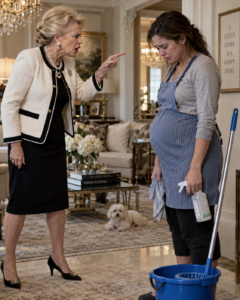
The first time my mother-in-law told me that an eight-month-pregnant woman did not need lunch, she was standing three feet away from a pot of chicken soup she had made especially for me.
“Put that back,” Margaret said.
I froze with one hand on the refrigerator door and the other resting beneath the heavy curve of my stomach.
It was nearly two in the afternoon.
I had eaten half a piece of toast at seven that morning because nausea had returned during my third trimester, and our daughter had apparently decided that my stomach was the perfect place to practice gymnastics.
“I’m just going to warm up a little soup,” I said.
Margaret looked at the clock above the kitchen doorway.
“Dinner is at six.”
“I know.”
“So you can wait.”
For a moment, I thought she was joking.
She wasn’t.
Her silver hair was perfectly arranged as usual, her cream blouse buttoned neatly to the throat, her lipstick untouched despite the fact that she had spent the morning criticizing the condition of every room in the house.
“Margaret, I’m hungry.”
“So am I.”
“Then we can both eat.”
“That defeats the purpose.”
“What purpose?”
“Saving money.”
I stared at her.
The soup had already been cooked.
It was sitting inside the refrigerator.
Eating one bowl would not somehow increase our electricity bill or cause the mortgage to rise.
“I don’t understand.”
She sighed in a way that made me feel as if I were a child failing a simple math problem.
“Ryan and you are staying here because you need to save. Groceries are expensive. Utilities are expensive. Babies are expensive. You can’t just eat whenever you feel like it.”
Whenever I feel like it.
I looked down at my stomach.
Our baby shifted beneath my palm.
“I’m not bored and looking for a snack,” I said quietly. “My doctor told me to eat regularly.”
Margaret crossed her arms.
“Doctors tell pregnant women all sorts of things now.”
“He specifically told me not to skip meals.”
“And somehow women had healthy babies before doctors turned pregnancy into a disability.”
There it was.
The sentence beneath all the other sentences.
Pregnancy was not a disability.
I had heard it from her before.
Usually when Ryan wasn’t home.
Never when he was.
That was the part I still had trouble explaining even to myself.
Because if my husband had walked through the door at that exact moment, Margaret would have transformed.
She would have rushed to the refrigerator herself.
She would have reheated the soup.
She would have cut bread and buttered it.
She would have carried the tray to the living room and told me not to stand.
Then she would have scolded Ryan for allowing his heavily pregnant wife to become tired.
I knew this because she had done it dozens of times.
When Ryan was home, Margaret treated me like a porcelain figurine.
When he wasn’t, she treated me like unpaid staff.
“Put the soup back, Claire.”
I closed the refrigerator.
Not because she was right.
Because I was tired.
I was thirty-three weeks pregnant, my back hurt, my ankles had swollen enough that only one pair of shoes still fit comfortably, and I had spent the previous two hours wiping kitchen cabinets because Margaret said she could see fingerprints when the afternoon sun hit them.
I didn’t have the energy for another argument.
“Good,” she said.
Then she pointed toward the hallway.
“The downstairs bathroom still needs doing.”
I stared at her.
“I cleaned it yesterday.”
“The mirror has spots.”
“Then I can wipe the mirror.”
“The floor should be mopped too.”
My daughter kicked.
Hard.
I pressed a hand to my side.
Margaret watched me.
For half a second, something almost human crossed her face.
Concern.
Then it disappeared.
“You should move around more,” she said. “It will make labor easier.”
I went to the bathroom.
That was the beginning of the day that nearly changed everything.
But it wasn’t the beginning of the story.
The story really began three months earlier, when a pipe burst in the apartment Ryan and I had been renting for six years.
It happened at two in the morning.
A pipe inside the wall behind our bathroom ruptured, flooded the hallway, soaked half the nursery we had just painted, and destroyed enough of the flooring that our landlord said repairs could take at least eight weeks.
At the time, I was twenty-one weeks pregnant.
Ryan and I had been trying to save for a down payment on a house.
We were close.
Not comfortably close, but close enough that every unexpected expense felt like someone moving the finish line.
The landlord offered to move us into another unit, but it would cost significantly more.
Hotels were worse.
Short-term rentals were ridiculous.
Then Margaret made what sounded like an extraordinarily generous offer.
“You’ll stay with me.”
We were sitting in a diner the morning after the flood.
Ryan looked relieved.
I hesitated.
Margaret noticed.
“My house has four bedrooms,” she said. “I live alone. It makes no sense for you two to waste money.”
“We don’t want to impose,” I said.
“You’re family.”
Ryan squeezed my hand beneath the table.
“It would only be for a couple of months.”
Margaret smiled.
“And I’ll get time with my granddaughter before she arrives.”
At that point, there was no obvious reason to say no.
Margaret and I had never been close, but we had never openly fought either.
She had opinions.
Many opinions.
About food.
Money.
Marriage.
Housekeeping.
Children.
Clothing.
Furniture.
Neighbors.
Politics.
Weather.
The correct way to fold towels.
But she had always been civil.
After her husband, Peter, died four years earlier, she became even more attached to Ryan.
He was her only child.
Ryan called her every Sunday.
He fixed things around her house.
He drove her to appointments when he could.
He never complained about it.
That was one of the things I loved about him.
He took care of people.
So when Margaret opened her home to us, I told myself I could handle a little inconvenience.
We moved in three days later.
For the first week, everything was wonderful.
Almost suspiciously wonderful.
Margaret prepared breakfast every morning.
She stocked the refrigerator with yogurt, fruit, cheese, vegetables, and the sparkling water I had been craving.
She wouldn’t allow me to carry laundry upstairs.
“Absolutely not,” she said whenever I tried.
At dinner, she would point to my chair.
“Sit. You’re growing a human being.”
Ryan loved it.
One evening, he kissed his mother on the cheek and said, “I don’t know what we’d do without you.”
Margaret smiled.
I smiled too.
I meant it.
Then Ryan left for Chicago.
His company installed commercial electrical systems, and he supervised larger projects. Usually he worked locally, but once or twice a month he had to travel.
This trip was supposed to last four days.
The morning he left, Margaret packed him sandwiches for the drive.
She hugged him at the front door.
“Don’t worry about Claire,” she said. “I’ll take care of her.”
Ryan looked at me.
“Call if you need anything.”
“I’ll be fine.”
He kissed me.
Then he placed both hands around my belly.
“Be nice to your mother.”
Our daughter kicked immediately.
Ryan laughed.
“She listens better than you do.”
I pushed his shoulder.
“Go to work.”
He left.
Margaret stood beside me until his car disappeared around the corner.
Then she closed the door.
The first thing she said was, “Now that Ryan isn’t here, we can finally get this house back in order.”
I thought she meant we could organize the nursery.
I was wrong.
She handed me a basket of cleaning supplies.
“I’d like the baseboards downstairs washed.”
I actually laughed.
She didn’t.
“I’m sorry?”
“The baseboards. They’re dusty.”
I looked at my stomach.
Then at her.
“You want me to wash baseboards?”
“I’m not asking you to move furniture.”
“I’d have to bend down.”
“You can kneel.”
“My doctor told me not to spend long periods kneeling or squatting.”
Margaret made a sound somewhere between a sigh and a snort.
“Claire, I worked until three days before Ryan was born.”
“I know.”
She told me that story frequently.
“I scrubbed my own floors.”
“I know.”
“I didn’t have anyone bringing me water every ten minutes.”
“I don’t ask anyone to bring me water every ten minutes.”
“That isn’t the point.”
I tried to smile.
“What is the point?”
“The point is that you seem to think pregnancy means everyone should rearrange their lives around you.”
My smile disappeared.
“Have I asked you to rearrange anything?”
“No. Because I don’t allow you to.”
I remember standing in that hallway and wondering whether I had misunderstood something.
Maybe she was irritated.
Maybe she was stressed.
Maybe she was one of those people who resented having houseguests after initially enjoying the idea.
I didn’t want one strange conversation to become a conflict.
So I washed some baseboards.
Not all of them.
By noon, my back hurt too badly.
Margaret saw me sitting on the sofa.
“You’re finished already?”
“I need a break.”
She looked at the clock.
“You’ve only been working two hours.”
Working.
The word stayed with me.
I wasn’t helping.
I was working.
She was supervising.
“I’m pregnant, Margaret.”
“I’m aware.”
She said it while looking directly at my stomach.
That afternoon, she asked me to vacuum the stairs.
The next morning, she wanted the kitchen cabinets emptied and wiped.
Then the guest bathroom.
Then the dining room windows.
Then she asked me to iron tablecloths that had been folded inside a cabinet for months.
Whenever I resisted, she had the same response.
“You live here too.”
Technically, she was right.
Ryan and I were living in her home.
We weren’t paying rent because she had refused it.
We contributed to groceries.
Ryan paid the cable bill and several utilities despite her protests.
I cooked twice a week when I felt well enough.
I cleaned up after myself.
I never expected Margaret to become my servant.
That wasn’t what bothered me.
It was the performance.
When Ryan called in the evenings, Margaret became a different person.
“Did Claire rest today?” he asked the first night.
Before I could answer, Margaret said, “Of course. I barely let her out of that chair.”
I looked at her.
She smiled at me.
Ryan laughed.
“Good.”
Then Margaret added, “She did try to help me with some dusting, but I told her absolutely not.”
I stared at her.
Dusting.
I had spent nearly three hours cleaning window frames.
Ryan looked at me through the phone.
“You hear that? Listen to Mom.”
I could have told him.
Right then.
I should have.
Instead, I said, “I will.”
Why?
I have asked myself that question many times.
The answer is embarrassingly complicated.
Part of it was pride.
I didn’t want to sound like I was complaining that my mother-in-law had asked me to clean a bathroom.
Part of it was gratitude.
She had opened her house to us when we needed somewhere to stay.
Part of it was fear.
Ryan and Margaret were close.
Not in an unhealthy way, at least not that I had previously thought.
I didn’t want to become the wife who forced a man to choose between his mother and his marriage.
And part of it was uncertainty.
Margaret never screamed.
Not then.
She never called me cruel names.
She never hit me.
She simply pushed.
Then pushed again.
Then acted as though resistance proved something ugly about my character.
By the end of Ryan’s first trip, I had convinced myself I could manage.
Then lunch became an issue.
Margaret was extremely frugal.
That was not new.
She reused foil.
She washed plastic bags.
She compared grocery prices across three stores.
She unplugged appliances she believed were wasting electricity.
Peter had handled their finances before he died, and I assumed budgeting made her feel secure.
At first, her comments were harmless.
“Blueberries cost almost six dollars now.”
“Cheese used to be half that.”
“Don’t run the dishwasher until it’s completely full.”
Then one afternoon, I made myself a turkey sandwich.
Margaret looked at it.
“You’re eating again?”
I thought she was joking.
“It’s lunch.”
“You had breakfast.”
“That was five hours ago.”
“We’re having dinner at five-thirty.”
I laughed awkwardly.
“My doctor recommends three meals and snacks.”
She looked at my sandwich.
“That much bread isn’t good for you.”
I put the sandwich on my plate.
“Then don’t watch me eat it.”
That was probably the first time I openly challenged her.
Her mouth tightened.
But she said nothing.
When Ryan returned that evening, Margaret had baked salmon.
She placed extra vegetables on my plate.
“You need nutrition for that baby.”
I nearly dropped my fork.
I looked at her.
She looked back.
Calm.
Pleasant.
Completely unbothered.
That was when I first understood that the difference in her behavior wasn’t accidental.
She knew exactly what she was doing.
Over the next six weeks, it got worse.
Ryan traveled four times.
Each trip created the same transformation.
When he was home, I was precious.
When he left, I became labor.
Margaret kept a list on the refrigerator.
Not officially for me.
It was simply a handwritten list titled HOUSE.
Clean upstairs bathroom.
Polish dining table.
Vacuum guest bedroom.
Wash kitchen floor.
Dust shelves.
Sort pantry.
Whenever Ryan was away, items mysteriously gained checkboxes beside them.
My checkboxes.
She stopped asking.
“Kitchen floor today.”
Or:
“Laundry should be done before three.”
Or:
“The pantry is embarrassing.”
If I sat down, she would find another task.
If I slept late, she would mention how early she woke while pregnant.
If I bought myself something from a café, she asked whether Ryan knew how much money I spent.
The lunch issue became constant.
“You don’t need both breakfast and lunch if you’re eating dinner early.”
“Fruit is expensive.”
“You already had yogurt.”
“Pregnant women gain too much weight now.”
That last comment finally made me call my doctor.
Not about Margaret.
About myself.
I had gained less weight than expected during the previous two weeks.
My obstetrician, Dr. Patel, frowned at my chart.
“Are you eating regularly?”
I hesitated.
“Yes.”
It was technically true most days.
“Three meals?”
Another hesitation.
“Usually.”
Dr. Patel looked at me.
Doctors have a way of making silence uncomfortable.
“Claire.”
“I’m eating.”
“Are you dieting?”
“No.”
“Is someone restricting your food?”
The question startled me so badly that I laughed.
“No.”
Too quickly.
She watched me.
“You need calories. The baby is measuring appropriately, but I don’t want you skipping meals.”
“I know.”
“I mean it.”
“I know.”
“Do you have enough food at home?”
“Yes.”
That was the absurd part.
There was plenty of food.
Margaret’s freezer looked prepared for an apocalypse.
The issue wasn’t scarcity.
It was permission.
I hated that word.
Permission.
I was thirty-one years old.
I was married.
I was about to become a mother.
And somehow, inside another woman’s house, I had begun behaving as though I needed permission to eat.
I left the appointment ashamed of myself.
That evening, I decided I would tell Ryan everything.
Then he came home early carrying a crib mobile.
He was exhausted.
His company was restructuring.
His supervisor had told him that layoffs might be coming after Christmas.
Our apartment repairs had been delayed again.
We were still trying to save enough to move.
And Ryan’s first words after walking through the door were, “I’m sorry you have to deal with all this while you’re pregnant.”
Then he knelt in front of me and rested his forehead against my stomach.
I looked at him.
At the dark circles beneath his eyes.
At his work shirt wrinkled from ten hours on the road.
And I thought:
I can handle Margaret.
Just a few more weeks.
That sentence nearly cost me much more than I understood.
The worst week began in November.
I was thirty-four weeks pregnant.
Ryan had to spend five days in Cincinnati because a project had fallen behind schedule.
Before leaving, he spoke to Margaret privately.
I didn’t hear everything.
Only pieces.
“Doctor said…”
“Rest…”
“No heavy lifting…”
Margaret responded in her softest voice.
“Of course.”
Then Ryan found me in the bedroom.
“You’re sure you’re okay with me going?”
“You have to work.”
“I could ask Mike to cover.”
“And then Mike would hate you forever.”
“He already hates me.”
I smiled.
Ryan didn’t.
“I don’t like leaving you this close.”
“I’m not due for six weeks.”
“You could surprise me.”
“This baby has inherited your sense of timing. She’ll be late.”
He smiled.
Then his expression became serious again.
“Mom knows you’re supposed to take it easy.”
I almost said it.
Tell him.
The words rose all the way to my mouth.
Then Margaret called from the hallway.
“Ryan! I packed those protein bars you like.”
He kissed me.
“Five days.”
“Five days.”
He left Monday morning.
At 8:30, Margaret knocked on our bedroom door.
I was still wearing pajamas.
“You’re awake?”
“Yes.”
“The living room needs vacuuming.”
I looked at her.
“Ryan hasn’t been gone two hours.”
She frowned.
“What does that have to do with anything?”
“Nothing.”
“Then why say it?”
I got dressed.
Tuesday, she had me clean the refrigerator.
Wednesday, she decided all the guest bedding needed washing.
That meant carrying sheets downstairs, washing them, drying them, folding them, and carrying them back upstairs.
I refused the last part.
“You can carry the basket,” she said.
“No.”
“It isn’t heavy.”
“Then you carry it.”
Margaret stared at me.
Something hardened in her face.
“You’re becoming very disrespectful.”
“I’m following my doctor’s instructions.”
“You use that doctor as an excuse for everything.”
“My doctor has spent more time in medical school than either of us.”
“I raised a child.”
“So have billions of women.”
Her eyes widened.
I immediately regretted the tone.
Not the point.
The tone.
“I’m sorry,” I said.
Margaret laughed once.
Coldly.
“Interesting.”
“What?”
“You’ll speak to me that way in my own house, but you expect me to feed you and clean up after you.”
“I don’t expect you to clean up after me.”
“Don’t you?”
“No.”
“You certainly don’t contribute much.”
I stared at her.
“Margaret, I cleaned your entire kitchen yesterday.”
“Because you live here.”
“I vacuumed the living room this morning.”
“Because you live here.”
“I scrubbed the guest bathroom Monday.”
“Because you live here.”
“What exactly would count as contributing?”
She opened her mouth.
Then closed it.
Because we both knew the answer.
Nothing.
There was no amount of labor that would satisfy her.
The work was not the goal.
Control was.
That realization frightened me.
For the first time, I stopped arguing.
I simply looked at her.
Margaret seemed uncomfortable.
“What?”
“Nothing.”
“Don’t look at me like that.”
“Like what?”
“As though I’m doing something terrible.”
I said nothing.
She walked away.
That afternoon, I called Ryan.
He answered from a noisy construction site.
“Hey, beautiful.”
My throat tightened.
“Can you talk?”
“For a minute. Everything okay?”
I heard someone calling his name.
Then machinery started behind him.
“Yeah,” I said.
“You sure?”
“Yeah.”
“I’ll call tonight.”
“Okay.”
“I love you.”
“I love you too.”
He hung up.
I stared at my phone.
Coward.
That was what I called myself.
But fear doesn’t always feel like fear.
Sometimes it feels like avoiding drama.
Sometimes it feels like patience.
Sometimes it sounds like, Just a few more days.
Thursday morning, Margaret took my phone charger from the kitchen.
I found it in her desk drawer.
When I asked why, she said I had been using too much electricity sitting on my phone instead of helping around the house.
A phone charger uses almost nothing.
I knew that.
She knew that.
Again, it wasn’t about money.
That afternoon, she told me to skip lunch.
Not suggested.
Told.
I opened the refrigerator.
“Put that back.”
The soup.
The clock.
The bathroom floor.
The scene I mentioned at the beginning.
I cleaned the downstairs bathroom.
At first, I only meant to wipe the mirror.
Then Margaret appeared in the doorway.
“You missed the bottom.”
She pointed toward the base of the toilet.
I bent carefully.
My lower back screamed.
I straightened.
“I can’t.”
“You haven’t even tried.”
“I said I can’t.”
“You can.”
“No.”
Margaret stepped farther inside.
“Claire, I am getting very tired of supporting two adults who act as though money appears from nowhere.”
Something in me snapped.
“Ryan pays you.”
Her face changed.
“What?”
“He pays the utilities.”
“Some utilities.”
“He buys groceries.”
“Sometimes.”
“He paid for the new water heater.”
“That was a gift.”
“He gives you money every month.”
Silence.
I had never said that aloud before.
Ryan had told me after Peter died that he gave Margaret six hundred dollars monthly.
Not because she desperately needed it.
Because he wanted her comfortable.
Margaret’s lips became thin.
“That is between me and my son.”
“And our finances are between me and my husband.”
“You certainly spend them freely.”
“On what?”
“Coffee. Takeout. Baby things.”
“My mother bought most of the baby things.”
“Then perhaps you should be living with her.”
The sentence landed harder than it should have.
My mother lived across the country.
She had wanted to come before the birth.
I had told her not to because Margaret kept insisting we had everything handled.
“Maybe I should.”
Margaret’s face shifted.
Just slightly.
Fear.
Then anger covered it.
“Don’t be ridiculous.”
“I’m not.”
“You are eight months pregnant.”
“Exactly.”
“You cannot suddenly move across the country.”
“I don’t need to. I can go to a hotel.”
“With what money?”
“My money.”
“Ryan won’t appreciate you wasting it.”
That sentence changed something.
Not inside her.
Inside me.
For months, Margaret had used Ryan like an invisible authority.
Ryan won’t like that.
Ryan works hard.
Ryan is trying to save.
Ryan shouldn’t have to worry.
She had turned my husband into a weapon without his knowledge.
And I had allowed it because I was afraid of making him choose.
I stood slowly.
“Ryan doesn’t control whether I eat lunch.”
Margaret blinked.
“I never said he did.”
“No. You do.”
Her face reddened.
“Don’t twist my words.”
“I’m going to eat.”
“You’ll spoil dinner.”
“I don’t care.”
I walked into the kitchen.
Margaret followed.
I removed the soup.
She reached past me and took the container from my hand.
Actually took it.
I stared at her fingers around the plastic.
“Give me that.”
“No.”
“Margaret.”
“You are acting like a spoiled child.”
“I am asking for food.”
“In my house.”
The words seemed to echo.
In my house.
Not our temporary home.
Not family.
Not generosity.
A territory.
And I was trespassing.
My daughter kicked again.
My hands started shaking.
“Give me the soup.”
“No.”
Then I did something I should have done months earlier.
I picked up my phone.
Margaret watched me.
“Who are you calling?”
“Ryan.”
Fear flashed across her face.
Then she recovered.
“Go ahead.”
I stopped.
The confidence in her voice bothered me.
“Why shouldn’t I?”
“I didn’t say you shouldn’t.”
“You look like you don’t want me to.”
“Claire, you are hormonal and exhausted. Call your husband and tell him his sixty-eight-year-old mother won’t let you eat. See how that sounds.”
She smiled.
That smile did it.
I lowered the phone.
Not because I changed my mind.
Because suddenly I wanted proof.
I opened the camera.
Started recording.
Then set the phone against the coffee machine with the screen angled away.
“What?” Margaret asked.
“Nothing.”
I reached for the soup again.
She moved it.
“I’m eating lunch.”
“You can eat an apple.”
“You told me fruit was too expensive yesterday.”
“That isn’t what I said.”
“Yes, it is.”
“You hear what you want.”
“I hear you perfectly.”
“Apparently not.”
“Then explain it.”
Margaret folded her arms.
“We are all making sacrifices.”
“What sacrifice are you making?”
Her face tightened.
“That is unbelievably ungrateful.”
“Answer me.”
“I gave you a home.”
“Yes.”
“I cook.”
“When Ryan’s here.”
“I cook when he’s away.”
“For yourself.”
“You eat dinner.”
“Because you don’t want Ryan asking why I didn’t.”
Her eyes snapped toward me.
I knew I had hit the truth.
“You think very highly of yourself.”
“No. Actually, I think less of myself than I did three months ago.”
She stared.
“You’ve managed that.”
Her expression shifted.
Perhaps she heard herself.
Perhaps not.
“You are lazy.”
There it was.
The first direct insult.
“You lie around all day.”
“I’m eight months pregnant.”
“So was I once.”
“I know.”
“And I worked.”
“I know.”
“And I didn’t manipulate my husband into doing everything.”
“I don’t.”
“You don’t even carry laundry.”
“Because Ryan tells me not to.”
“He babies you.”
“My doctor tells me not to.”
“You’ve made my son afraid of his own wife.”
“What does that even mean?”
“He thinks you’ll break.”
My eyes filled.
I hated that they did.
I didn’t want to cry in front of her.
“You know what I think?” Margaret said.
“No.”
“I think when that baby comes, you’re going to expect everyone else to raise her.”
That hurt.
More than the lunch.
More than the chores.
Because motherhood was the place where all my fears lived.
What if I wasn’t good enough?
What if I didn’t know what to do?
What if I became overwhelmed?
What if the baby didn’t bond with me?
What if I failed at the thing everyone assumed women instinctively understood?
Margaret had found the softest place inside me and pushed.
I picked up my phone.
She saw the recording indicator.
Her face went white.
“What are you doing?”
I didn’t answer.
“Are you recording me?”
“Yes.”
“Turn that off.”
“No.”
“Claire.”
“No.”
She came toward me.
I backed away.
“Give me the phone.”
“No.”
“Delete that.”
“I’m sending it to Ryan.”
For the first time since I had known her, Margaret lost control.
She reached for my wrist.
I pulled away.
“Don’t touch me.”
“Give me the phone.”
“No.”
“He doesn’t need to hear that.”
“He does.”
“You were provoking me.”
“Then he can decide.”
“You were deliberately twisting everything.”
“Then tell him.”
I moved toward the hallway.
Margaret blocked me.
The house went completely silent.
Even now, when I remember that moment, I remember the silence more than the shouting.
The refrigerator humming.
The clock ticking.
My breathing.
Her breathing.
My baby’s movement beneath my ribs.
“Move,” I said.
“Delete it.”
“No.”
“If you send that recording, you will destroy this family.”
“No. You did this.”
“I offered you a home.”
“And then punished me for needing it.”
Her eyes filled with tears.
That almost stopped me.
Not because she deserved protection.
Because I had never seen Margaret cry.
“You have no idea what you’re doing.”
“Move.”
“Ryan is under enormous pressure.”
“I know.”
“He could lose his job.”
“I know.”
“And you want to call him from a job site and tell him his mother is some monster?”
“I want to tell my husband the truth.”
“He will choose you.”
The words came out so quietly that I almost missed them.
I stared at her.
Margaret looked as shocked as I felt.
There it was.
Not anger.
Not money.
Not housekeeping.
Fear.
“He will choose you,” she repeated.
I lowered the phone slightly.
“Margaret…”
“And then I will have no one.”
The sentence changed the room.
For one dangerous second, compassion rushed into the space where anger had been.
Peter was dead.
Margaret lived alone.
Ryan was her only child.
The baby would be her first grandchild.
I saw not a cruel woman, but a terrified older woman who believed love was something that could be taken away.
Then she reached for the phone again.
Compassion vanished.
I pulled back.
My heel caught the edge of the rug.
I stumbled.
Margaret reached for me.
I twisted instinctively to protect my stomach.
A sharp pain tore through my abdomen.
I gasped.
Margaret froze.
“Claire?”
Another pain.
Lower.
Harder.
I grabbed the kitchen counter.
“Oh God.”
Margaret’s anger disappeared.
“What is it?”
“I don’t know.”
“Is it the baby?”
“I don’t know.”
My stomach tightened until it felt like stone.
Then released.
I breathed.
“Maybe a contraction.”
“Braxton Hicks?”
“Maybe.”
Another came less than five minutes later.
Margaret became pale.
“We should call the doctor.”
“I need my bag.”
“I’ll get it.”
“No.”
“Claire.”
“No.”
I don’t know why I said it.
Fear makes strange things seem important.
The recording.
My phone.
Her threat to delete it.
Suddenly I was terrified that if I handed her my phone, the proof would disappear and the entire day would become my word against hers.
“Give me the phone and I’ll call.”
“No.”
“You’re being ridiculous.”
“Then use yours.”
Margaret stared.
She had left her phone upstairs.
For one horrible second, neither of us moved.
Another contraction started.
Stronger.
I bent forward.
Margaret reached for me.
“Don’t.”
“Claire, we need to go.”
My heart pounded.
I looked at the phone in my hand.
The recording was still running.
Logic and emotion split me in half.
My baby might be coming six weeks early.
Nothing else should matter.
Yet some frightened part of me believed that if I stopped protecting the evidence, Margaret would erase the truth and somehow convince everyone I had imagined everything.
That was how thoroughly I had lost trust in my own voice.
“I’m calling 911,” Margaret said.
She turned toward the landline.
Then I saw something on my phone screen.
A notification.
Uploading.
Months earlier, Ryan had set our phones to automatically upload photos and videos to our shared cloud storage because I kept running out of space.
The recording was already backing up.
I almost laughed.
Instead, I started crying.
Margaret turned.
“What?”
“Nothing.”
I stopped recording.
Then I called Dr. Patel’s emergency line.
The nurse told us to go to labor and delivery immediately.
Margaret drove.
She broke every speed limit.
She kept one hand clenched around the steering wheel and the other hovering near me as though she wanted to touch me but knew she no longer had permission.
“Are they getting closer?”
“I don’t know.”
“Time them.”
“I am.”
“Should I call Ryan?”
“No.”
“Claire.”
“I’ll call him.”
“You shouldn’t stress him while he’s driving.”
“He isn’t driving.”
“You don’t know that.”
“I said I’ll call him.”
She went quiet.
I called.
Ryan answered after one ring.
“Hey.”
I burst into tears.
His entire voice changed.
“Claire?”
“I’m going to the hospital.”
“What happened?”
“I’m having contractions.”
Silence.
Then:
“How far apart?”
“About six minutes.”
“Where are you?”
“In your mom’s car.”
“I’m leaving now.”
“You’re three hours away.”
“I don’t care.”
“Ryan…”
“I’m leaving.”
Someone spoke behind him.
He said, “Family emergency. I have to go.”
Then to me:
“Is Mom with you?”
“Yes.”
“Put me on speaker.”
I did.
“Mom?”
“I’m here.”
“Get her to St. Joseph’s.”
“I am.”
“Don’t stop anywhere.”
“I know how to drive, Ryan.”
“Mom.”
Something in his voice made her stop.
“I’m getting her there.”
We reached the hospital twenty-three minutes later.
They took me upstairs immediately.
Monitor straps around my stomach.
Blood pressure.
IV.
Questions.
So many questions.
Any bleeding?
No.
Water broken?
No.
Pain level?
Six.
Baby moving?
Yes.
Falls?
I hesitated.
“No.”
Margaret looked at me.
I looked away.
The contractions continued.
Dr. Patel arrived.
She examined me.
“You’re having real contractions.”
My chest tightened.
“Is she coming?”
“Not necessarily.”
“Is she okay?”
“The baby’s heart rate looks good.”
“Then why…”
“Stress can trigger contractions. Dehydration can contribute. Not eating enough can contribute. Sometimes we never identify one cause.”
Margaret stood in the corner.
I saw her face change at the words not eating enough.
Dr. Patel asked, “When did you last eat?”
I closed my eyes.
“Breakfast.”
“What time?”
“Seven.”
She looked at the wall clock.
It was nearly four.
“Why haven’t you eaten since seven?”
Silence.
Margaret said, “She was busy.”
Dr. Patel looked at her.
Then back at me.
“Claire?”
I opened my mouth.
My phone rang.
Ryan.
I answered.
“I’m forty minutes away.”
“You shouldn’t be talking while driving.”
“Hands-free.”
“The baby’s okay.”
He exhaled.
“Thank God.”
“I’m having contractions.”
“I’m coming.”
I looked toward Margaret.
She looked terrified.
And then I made a choice.
Not about food.
Not about cleaning.
About silence.
“When you get here,” I said, “we need to talk.”
Ryan was quiet.
“About what?”
“Your mother.”
Margaret closed her eyes.
Forty-three minutes later, Ryan walked into my room.
He looked as if he had aged five years during the drive.
He came straight to me.
“Hey.”
He kissed my forehead.
Then my cheek.
Then placed a hand over my stomach.
“How is she?”
“Still inside.”
“Good. Stay there.”
I laughed despite myself.
Then he looked at the monitor.
“At least a few more weeks, kiddo.”
He pulled a chair close.
Only after several minutes did he look at his mother.
“Mom.”
Margaret sat near the window.
Her hands were clasped tightly in her lap.
“Ryan.”
“What happened?”
Nobody answered.
Ryan looked between us.
“Claire?”
My throat closed.
It was harder with him there.
That surprised me.
For months I had imagined relief.
Instead, I felt shame.
Why hadn’t I told him sooner?
Why had I allowed things to reach this point?
Why had I hidden so much?
“I need you to listen before you say anything.”
Ryan frowned.
“Okay.”
“And I need you not to interrupt.”
“Okay.”
I picked up my phone.
Margaret stood.
“Claire.”
Ryan looked at her.
“Mom?”
She sat again.
I opened the recording.
For eleven minutes, my husband listened.
He heard his mother tell his eight-month-pregnant wife that she was lazy.
He heard her defend withholding lunch.
He heard her say I manipulated him.
He heard her tell me I would expect everyone else to raise our baby.
He heard her demand that I delete the recording.
He heard her say:
If you send that recording, you will destroy this family.
And finally:
He will choose you.
When it ended, nobody spoke.
Ryan stared at the phone.
Then at his mother.
His expression was not anger.
Not yet.
It was disbelief.
“Mom?”
Margaret looked at the floor.
“It’s not the full context.”
My stomach dropped.
Ryan blinked.
“What context would make that okay?”
“She provoked me.”
I closed my eyes.
“Mom.”
“She has been disrespectful for weeks.”
“She is eight months pregnant.”
“So was I once.”
Ryan stood.
“Stop saying that.”
Margaret stared at him.
“You don’t know how she behaves when you’re gone.”
A bitter laugh escaped me.
Ryan turned toward me.
“Is there more?”
I nodded.
His face changed.
“How much more?”
I told him.
Not elegantly.
Not calmly.
I told him about the cleaning.
The stairs.
The bathrooms.
The food.
The comments.
The charger.
The lies during his calls.
The lunches.
The doctor’s warning.
Every time I remembered something, another detail followed.
Ryan sat down again.
Then he asked the question that hurt most.
“Why didn’t you tell me?”
I started crying.
“I tried.”
“No, I mean…”
He stopped.
His voice softened.
“Why did you think you couldn’t tell me?”
I looked at Margaret.
Then at him.
“Because I thought you’d be trapped.”
“Between you and Mom?”
“Yes.”
He stared at me.
“Claire, there is no between.”
Margaret flinched.
Ryan saw it.
He turned toward her.
“Mom, she’s my wife.”
“I know.”
“No. I don’t think you do.”
“I am your mother.”
“And she is my wife.”
“So I don’t matter anymore?”
“That isn’t what I said.”
“It is what you mean.”
“No.”
Margaret stood.
“You married her and suddenly everything changed.”
Ryan stared.
“You mean twelve years ago?”
“You stopped needing me.”
The room went still.
There it was again.
The truth beneath the behavior.
Ryan’s anger softened for a second.
But only for a second.
“Mom,” he said quietly, “I was supposed to stop needing you the way a child needs a mother.”
Tears appeared in Margaret’s eyes.
“That doesn’t mean I stopped loving you.”
“You don’t understand what it’s like.”
“What?”
“To spend your whole life taking care of people and suddenly have nobody need you.”
Ryan looked at her.
Then at me.
“Is that why you treated Claire like this?”
“No.”
“Then why?”
Margaret said nothing.
“Why?”
Her face crumpled.
“Because she gets the version of life I never had.”
I stared at her.
Ryan looked confused.
“What?”
“When I was pregnant with you, your father was working twelve-hour days. Your grandmother lived with us.”
Ryan’s paternal grandmother had died before we married.
Margaret continued.
“She believed pregnancy made women lazy. She made me cook. Clean. Wash clothes by hand when the machine broke. She controlled the grocery money.”
My stomach turned.
“She skipped my meals,” Margaret whispered.
I stared.
Ryan sat very still.
“She did what?”
“She said Peter worked for the money, so he needed the food more than I did.”
Tears moved down Margaret’s cheeks.
“I hated her.”
No one spoke.
“I promised myself I would never become her.”
Her eyes closed.
“And then when Claire moved into my house…”
She looked at me.
“I heard myself saying the same things.”
“Then why didn’t you stop?” I asked.
My voice came out almost too quietly.
Margaret looked at me.
“I don’t know.”
“I do.”
Ryan turned.
I wiped my face.
“Because doing it made what happened to you feel normal.”
Margaret’s lips parted.
“If you could survive it,” I continued, “then maybe it wasn’t abuse. Maybe it was just what women were supposed to endure.”
Her face broke.
I didn’t feel victorious.
I felt exhausted.
Margaret sat down.
“I’m sorry.”
I wanted those words.
For months, I had wanted those words.
But when they finally came, they weren’t enough.
“I believe that you’re sorry right now,” I said.
She nodded.
“But I don’t trust you.”
Her eyes closed.
“I understand.”
“No. Please let me finish.”
She nodded again.
“I can understand why you became this way without accepting what you did.”
Ryan looked at me.
I continued.
“You knew you were treating me differently when Ryan wasn’t home.”
“Yes.”
“You lied to him.”
“Yes.”
“You controlled my food.”
Margaret flinched.
“Yes.”
“You told me I would be a bad mother.”
“I shouldn’t have.”
“No.”
I placed a hand over my stomach.
“And today I ended up in the hospital.”
Her face went white.
Dr. Patel entered before anyone could answer.
The contractions had begun slowing.
The medication and fluids were working.
My cervix had not progressed enough to indicate active labor.
The baby’s heart rate remained strong.
“You’re staying overnight,” she said.
I didn’t argue.
Ryan didn’t either.
Margaret offered to stay.
Ryan said no.
She looked wounded.
Then looked at me.
I said nothing.
She left.
After the door closed, Ryan sat beside my bed.
For a long time, neither of us spoke.
Then he said, “We’re moving out.”
I looked at him.
“Ryan…”
“No.”
“We don’t have anywhere.”
“I don’t care.”
“A hotel for weeks would destroy our savings.”
“Then we destroy the savings.”
“We worked years for that money.”
“I don’t care.”
“I do.”
He stared at me.
“This is not about money anymore.”
“I know.”
“My wife was afraid to eat in the house where I left her.”
“I know.”
“My daughter…”
His voice broke.
He looked at my stomach.
“My daughter could have been born today.”
I reached for his hand.
“I’m okay.”
“No.”
He shook his head.
“You’re not supposed to comfort me.”
“I’m not.”
“You always do that.”
“What?”
“You make everything smaller so I don’t worry.”
I looked away.
“That’s partly how we got here.”
That hurt because it was true.
“I should have told you.”
“Yes.”
I looked at him.
He immediately added, “And none of that makes what Mom did your fault.”
I squeezed his hand.
He continued.
“You should have told me because I’m your partner. Not because it was your responsibility to stop her.”
Tears filled my eyes again.
“I thought you’d feel like you had to choose.”
“I do have to choose.”
My stomach tightened.
Ryan shook his head.
“Not between you and my mother. Between doing what is comfortable and doing what is right.”
I stared at him.
“And I choose our family.”
I cried.
This time, he cried too.
The next morning, we were discharged.
Ryan booked a small furnished apartment thirty minutes away.
It was overpriced.
The kitchen was tiny.
The bedroom carpet was ugly.
The couch looked like it had witnessed several divorces.
I loved it immediately.
We went to Margaret’s house to collect our things.
She had packed some of them already.
Boxes sat near the door.
Ryan walked upstairs.
I remained in the living room.
Margaret stood near the window.
“I didn’t delete anything,” she said.
I looked at her.
“The recording.”
“I know.”
“I wouldn’t.”
“You threatened to.”
“Yes.”
She folded her hands.
“I keep thinking about that.”
I waited.
“Not because I thought I was innocent.”
She swallowed.
“Because I knew I wasn’t.”
That was the first apology that mattered.
Not because it erased anything.
Because it contained recognition.
“I’m starting therapy,” she said.
I was surprised.
“Ryan asked you?”
“No.”
She looked toward the stairs.
“He told me I should. But I called this morning before he said anything.”
I nodded.
“I’m glad.”
“Claire…”
She stepped toward me.
Then stopped.
“I don’t expect you to forgive me.”
“Good.”
Pain crossed her face.
I didn’t enjoy causing it.
But boundaries often feel cruelest to people who benefited from their absence.
“I don’t know when you’ll see the baby,” I said.
Margaret nodded.
“I understand.”
“And you won’t be alone with her.”
Her eyes filled.
“I understand.”
“At least not for a long time.”
She nodded again.
“I understand.”
I looked at her.
“Do you?”
She wiped one cheek.
“I hope I will.”
Ryan came downstairs carrying a suitcase.
“We’re ready.”
Margaret looked at him.
“Ryan.”
He stopped.
“I love you.”
He closed his eyes.
“I love you too, Mom.”
Her face crumpled.
“But we’re leaving.”
“I know.”
“And this isn’t punishment.”
“I know.”
“It’s a boundary.”
Margaret almost smiled through the tears.
“Therapist language already?”
“No. Claire language.”
I looked at him.
He smiled faintly.
Then we left.
The furnished apartment became our home for the final five weeks of my pregnancy.
Something surprising happened there.
I relaxed.
Not immediately.
For the first few days, I still heard Margaret’s voice whenever I opened the refrigerator between meals.
Do you really need that?
I would stand there.
Then deliberately make myself something.
A sandwich.
Yogurt.
Fruit.
Sometimes all three.
Ryan started leaving notes inside the refrigerator.
EAT THE CHEESE.
Or:
THE BABY REQUESTED ICE CREAM.
Once:
IF YOU SKIP LUNCH I WILL PERSONALLY REPORT YOU TO OUR DAUGHTER.
I laughed.
Healing sometimes arrives disguised as stupidity.
Our finances suffered.
We delayed buying a house.
The apartment cost far more than we wanted.
Ryan’s company did lay off several employees, although he kept his job.
For a while, money frightened both of us.
But every night, we sat on that terrible couch, our daughter moving beneath my skin, and I understood something I should have understood earlier.
Savings were supposed to protect a family.
Not become more important than the people being protected.
Margaret did not call me for three weeks.
She called Ryan twice.
Both conversations were short.
She never asked him to convince me to forgive her.
That mattered.
Then, one Thursday afternoon, an envelope arrived.
My name was written on the front.
Inside were six pages in Margaret’s handwriting.
I almost didn’t read them.
But curiosity won.
She told me about 1988.
About being twenty-seven and pregnant with Ryan.
About moving into Peter’s mother’s house after Peter lost his job.
About being told food was expensive.
About scrubbing floors late in pregnancy.
About fainting once while ironing.
About Peter’s mother accusing her of pretending.
About crying in the bathroom.
About Peter not knowing any of it until years later.
Then she wrote:
I spent most of my adult life telling that story as proof that I was strong.
My therapist asked me last week why strength required someone else to suffer the same way.
I did not know how to answer.
I realize now that every time I looked at you resting while Ryan cared for you, I felt angry at the younger version of myself who had never been protected.
Instead of grieving for her, I punished you for having what she needed.
That is difficult to admit.
There is no excuse.
There is only an explanation, and explanations do not erase consequences.
I will respect whatever place you allow me in your life and your daughter’s life.
I am sorry I became the woman I once feared.
I finished the letter sitting at the kitchen table.
Then I cried.
Not because everything was fixed.
Because it wasn’t.
But accountability is strangely moving when you have spent too long surrounded by excuses.
Ryan found me with the letter.
He read it.
Then sat quietly.
“What do you think?” he asked.
“I think she means it.”
“Me too.”
“That doesn’t mean I’m ready.”
“I know.”
“I don’t want you to pressure me.”
“I won’t.”
“I mean it.”
“I know.”
He kissed my forehead.
“You decide what you’re comfortable with.”
That sentence mattered too.
A week later, I went into labor.
Real labor.
At 2:17 in the morning.
I woke Ryan by grabbing his arm.
“I think my water broke.”
He sat upright so fast he almost fell out of bed.
“What?”
“My water broke.”
He looked at the sheets.
Then at me.
Then at the clock.
Then back at me.
“Okay.”
“Okay.”
“Hospital.”
“Yes.”
“We need the bag.”
“Yes.”
“Where’s the bag?”
“By the door.”
“Right.”
He stood.
Then put on two different shoes.
I stared.
“Ryan.”
“What?”
“Your feet.”
He looked down.
One sneaker.
One slipper.
“Oh.”
Despite the contractions, I laughed.
Forty minutes later, we were at the hospital.
Labor lasted fourteen hours.
Fourteen long, painful, astonishing hours.
There were moments when I believed I couldn’t do it.
Moments when I begged for medication.
Moments when I cursed Ryan for standing too close.
Moments when I cursed him for moving away.
At one point, I grabbed his shirt and said, “You did this.”
He nodded solemnly.
“Statistically, yes.”
I laughed and then immediately screamed through another contraction.
Our daughter was born at 4:26 p.m.
Seven pounds, three ounces.
Dark hair.
Loud lungs.
Perfect fingers.
Perfect toes.
When they placed her on my chest, the world narrowed to the weight of her.
Warm.
Real.
Ours.
Ryan sobbed.
Not elegantly.
He completely fell apart.
“She’s here,” he kept saying.
“I know.”
“She’s actually here.”
“I know.”
“Look at her.”
“I am literally holding her.”
He laughed through tears.
We named her Sophie.
That evening, after the room became quiet, Ryan sat beside my bed holding her.
I had never loved him more.
His enormous hands looked ridiculous around her tiny body.
“She has your nose,” he said.
“She was born six hours ago.”
“Still your nose.”
“She has your ears.”
“Take it back.”
I smiled.
Then he became serious.
“Mom knows.”
My stomach tightened.
“You called her?”
“I texted her that Sophie was born and healthy.”
I nodded.
“That’s okay.”
“She asked if she could come.”
I looked at our daughter.
There it was.
The open question.
For weeks, I had known this moment would arrive.
Forgiveness was easy in theory when the person being forgiven wasn’t standing outside the door.
Boundaries were simple when they weren’t tested by a grandmother who wanted to meet her granddaughter.
My logical mind said wait.
Protect the peace.
Protect myself.
Protect Sophie.
My emotional mind remembered Margaret’s letter.
Her therapy.
Her apology.
The fact that she had not demanded access.
The fact that she had accepted consequences without turning Ryan against me.
I looked at him.
“What did you tell her?”
“That it was your decision.”
“Only mine?”
“Ours. But I won’t say yes if you’re saying no.”
I looked down at Sophie.
She yawned.
One tiny fist opened against Ryan’s chest.
“What do you think?” I asked.
Ryan took a long time.
“I think Mom did something terrible.”
I waited.
“I also think she’s trying.”
“Yes.”
“I don’t think trying earns unlimited trust.”
“No.”
“But I think people should have a path back when they genuinely change.”
I looked at him.
“That sounds like a yes.”
“It sounds like a maybe.”
I smiled.
Then I looked at our daughter again.
“Thirty minutes.”
Ryan blinked.
“What?”
“She can come for thirty minutes.”
“You’re sure?”
“No.”
He almost laughed.
“That’s reassuring.”
“But I want you here the entire time.”
“Obviously.”
“And she doesn’t take Sophie unless I offer.”
“Okay.”
“And if I become uncomfortable…”
“She leaves.”
I nodded.
“Tell her.”
Margaret arrived forty-five minutes later.
She carried nothing.
No flowers.
No giant grandmother gift.
No balloons.
Later, she told me she had considered bringing everything and decided that arriving empty-handed was the only way not to turn the visit into a performance.
She stood in the doorway.
For a moment, none of us spoke.
Then she looked at Sophie.
Her entire face changed.
Not dramatically.
Softly.
“Oh,” she whispered.
Ryan stood.
“Mom.”
Margaret’s eyes filled.
“She’s beautiful.”
“Come in,” I said.
She looked at me.
“Are you sure?”
“Yes.”
She moved closer.
Slowly.
As though approaching something sacred.
She stopped beside the bed.
Sophie made a small sound.
Margaret covered her mouth.
“She looks like Ryan.”
I laughed.
“He says she looks like me.”
“He’s wrong.”
“Thank you.”
Margaret smiled through tears.
Then she looked at me.
“How are you?”
“Tired.”
“Can I get you anything?”
The question was simple.
But everything was inside it.
Food.
Rest.
Permission.
Control.
Regret.
I looked at the tray beside me.
“There are crackers in that drawer.”
Margaret immediately moved.
Then stopped.
“Would you like me to get them?”
I understood what she was doing.
Asking.
Not assuming.
“Yes.”
She opened the drawer and handed me the crackers.
No comment about money.
No comment about calories.
No comment about dinner.
Just crackers.
I almost cried.
Ryan noticed.
He took my hand.
After several minutes, Sophie began fussing.
I adjusted her blanket.
Margaret watched.
Her hands remained firmly at her sides.
I looked at her.
“Would you like to hold her?”
She stared at me.
“Are you sure?”
“Yes.”
Ryan stood beside her as I carefully transferred Sophie into her arms.
Margaret looked terrified.
That surprised me.
She had raised a child.
But she held Sophie as though she had never seen a newborn before.
“Hello,” she whispered.
Sophie opened her eyes.
Margaret started crying.
Not loudly.
Tears simply moved down her face.
“I’m your grandmother.”
She looked at me.
Then corrected herself.
“If your mother lets me be.”
I swallowed.
“One day at a time.”
Margaret nodded.
“One day at a time.”
She stayed twenty-eight minutes.
Not thirty.
Twenty-eight.
Then she handed Sophie back.
“Thank you,” she said.
Not to Ryan.
To me.
After she left, I stared at the door.
Ryan sat beside me.
“You okay?”
“Yes.”
“Really?”
I thought about it.
“Yeah.”
He kissed my hand.
That wasn’t the end.
Real families don’t resolve themselves in one hospital room.
Margaret continued therapy.
There were awkward months.
There were moments when old habits appeared.
The first time she visited our apartment and started folding our laundry without asking, I said, “Please don’t.”
She immediately stopped.
“I’m sorry.”
The first time she commented on how much money we had spent on baby food, Ryan said, “Mom.”
She caught herself.
“You’re right. Not my business.”
Progress was not dramatic.
It was boring.
And boring turned out to be beautiful.
She learned to ask before helping.
I learned to say no without explaining myself for ten minutes.
Ryan learned that avoiding conflict did not protect relationships.
It only postponed the conflict until it became more expensive.
Six months after Sophie was born, our old apartment lease finally ended.
Instead of rushing to buy a house, Ryan and I rented a small two-bedroom place.
It wasn’t impressive.
The kitchen cabinets were outdated.
The yard was tiny.
One bathroom faucet leaked unless you turned it exactly the right way.
But it was ours.
On moving day, Margaret arrived with sandwiches.
A lot of sandwiches.
She placed them on the counter.
“Lunch.”
I looked at her.
She immediately realized what she had said.
Her face changed.
Ryan saw it too.
For one second, the three of us stood in silence.
Then Margaret said, “Actually, I may have overcompensated.”
There were twelve sandwiches.
For four people.
I started laughing.
Ryan laughed.
Margaret eventually did too.
“I didn’t know what everyone liked,” she said.
“So you bought the entire deli?” Ryan asked.
“People need to eat.”
I looked at her.
She met my eyes.
Something passed between us.
Not forgetting.
Never that.
Understanding.
“Yes,” I said.
“People do.”
We ate lunch on moving boxes because the table hadn’t arrived yet.
Sophie sat in her high chair smashing avocado with both hands.
Margaret tried not to interfere.
She lasted approximately seven minutes.
“Is she supposed to get that much in her hair?”
Ryan said, “Mom.”
Margaret lifted both hands.
“I’m asking.”
I smiled.
“She gets most meals in her hair.”
“Interesting technique.”
“Very advanced.”
Sophie slapped the tray.
Avocado flew onto Margaret’s blouse.
Everyone froze.
Then Margaret looked down at the green stain on her cream shirt.
Sophie giggled.
I waited.
Margaret began laughing.
“Oh, you think that’s funny?”
Sophie laughed harder.
Margaret leaned closer.
“You and I are going to have words when you’re older.”
I watched them.
For a moment, I remembered that bathroom floor.
The kitchen.
The soup.
The recording.
The hospital monitor.
I remembered the woman who told me I should skip lunch to save money.
Then I looked at the woman sitting across from me with avocado on her blouse, laughing with my daughter after bringing enough food to feed a football team.
People can change.
That sentence is dangerous if used carelessly.
Sometimes people don’t change.
Sometimes apologies are manipulation.
Sometimes distance is necessary.
Sometimes forgiveness does not mean reconciliation.
I learned all of that.
But I also learned that some people do change when consequences finally force them to face themselves.
Margaret did not change because we loved her enough.
She changed because we stopped protecting her from the results of her behavior.
There is a difference.
One year after Sophie was born, we celebrated her first birthday in our backyard.
My mother flew in.
Margaret came early.
The two grandmothers immediately disagreed about balloons.
My mother wanted pink.
Margaret thought yellow photographed better.
I stood in the kitchen listening to them argue.
Ryan came behind me.
“Should we intervene?”
“No.”
“Someone may die.”
“They’re both grandmothers. They’re indestructible.”
He handed me coffee.
I looked outside.
Sophie stood near the glass door holding onto a chair.
Margaret crouched several feet away.
“Come on, sweetheart.”
My mother stood beside her.
“She’ll walk when she’s ready.”
“I know.”
“You’re leaning too close.”
“I’m encouraging her.”
“You’re intimidating her.”
“I raised a child.”
“So did I.”
I looked at Ryan.
He looked at me.
Then we both started laughing.
Outside, Sophie let go of the chair.
Everyone stopped.
One step.
Then another.
Then a third.
Margaret covered her mouth.
My mother screamed.
“Sophie!”
Sophie fell onto her diaper.
Then laughed.
Ryan ran outside.
I followed.
Within seconds, four adults were celebrating three steps as though our daughter had crossed an Olympic finish line.
Margaret hugged Ryan.
My mother hugged me.
Sophie clapped for herself.
Then Margaret looked at me.
Her eyes were wet.
“She’s wonderful.”
“I know.”
“You’re a good mother.”
The words hit me harder than she could have known.
I remembered the kitchen.
I think when that baby comes, you’re going to expect everyone else to raise her.
Margaret remembered too.
I could see it in her face.
“I was wrong,” she said.
I swallowed.
“Yes.”
“I’m sorry.”
“I know.”
She looked at Sophie.
Then back at me.
“Thank you for letting me know her.”
I reached for her hand.
“Thank you for becoming someone I could let know her.”
Margaret closed her eyes.
For a second, I saw the younger woman from her letter.
Pregnant.
Hungry.
Scrubbing floors.
Trying to earn kindness.
And I wished someone had protected her.
Not because her suffering excused mine.
Because maybe if someone had protected her, she would never have learned to confuse endurance with virtue.
Sophie crawled toward us.
Margaret immediately wiped her tears.
“Grandma is fine.”
Sophie grabbed her necklace.
“Apparently Grandma’s jewelry isn’t.”
I laughed.
That evening, after everyone left, Ryan and I sat outside.
Deflated balloons moved gently in the evening breeze.
Wrapping paper covered the living room.
Cake frosting had somehow reached the ceiling.
Neither of us knew how.
Sophie slept upstairs.
Ryan stretched his legs.
“Remember Mom’s house?”
I looked at him.
“Which part?”
“The night before I left for Cincinnati.”
“Yes.”
“I told her to take care of you.”
I rested my head against his shoulder.
“She did not interpret that instruction correctly.”
“No.”
He was quiet.
“I still feel guilty.”
“Don’t.”
“I left you there.”
“You didn’t know.”
“I should have known.”
“No.”
I turned toward him.
“You don’t get to rewrite this so you become responsible for everything.”
He smiled faintly.
“Therapist language.”
“Claire language.”
He laughed.
Then he looked toward the house.
“If you’d told me sooner…”
“I know.”
“You know I would have believed you?”
“I do now.”
That was the important part.
I do now.
Not I should have known.
Not I was stupid.
Trust is not just believing another person will tell the truth.
Sometimes trust is believing they will believe yours.
“I learned something,” I said.
“What?”
“I thought keeping peace meant staying quiet.”
Ryan nodded.
“It doesn’t.”
“What does it mean?”
“Sometimes peace only comes after you make noise.”
He smiled.
“That sounds like something we should put on a wall.”
“Absolutely not.”
“Kitchen sign.”
“No.”
“Decorative lettering.”
“I will divorce you.”
“Noted.”
I laughed.
Then the baby monitor beside us crackled.
Sophie made a sleepy sound.
Ryan immediately stood.
“I’ve got her.”
“You did bedtime.”
“So?”
“You’re tired.”
“So are you.”
He went inside.
I remained outside for another minute.
The porch light cast a warm circle across the grass.
Through the kitchen window, I could see photographs covering the refrigerator.
Sophie in the hospital.
Sophie with my mother.
Sophie asleep on Ryan’s chest.
And one photograph I had hesitated to display.
Margaret holding Sophie during that first hospital visit.
When I finally put it on the refrigerator, Ryan didn’t say anything.
He just kissed my forehead.
I used to think a happy ending meant returning to the way things were before something bad happened.
I don’t anymore.
Some things should never return to the way they were.
Before the truth, I was afraid to speak.
Before the truth, Margaret was trapped inside pain she refused to name.
Before the truth, Ryan believed avoiding confrontation kept everyone safe.
None of us needed to go backward.
We needed something better.
The next morning, Margaret arrived at ten.
She was watching Sophie for two hours while Ryan and I went furniture shopping.
That privilege had taken a year.
Therapy.
Visits.
Boundaries.
Trust rebuilt slowly.
I opened the door.
Margaret held a grocery bag.
“What is that?”
“Lunch.”
I looked at the clock.
“It’s ten in the morning.”
“I know.”
“We’ll be back before noon.”
“I know.”
“Then why did you bring lunch?”
She looked mildly offended.
“Because she might be hungry.”
I stared at her.
Margaret stared back.
Then realization dawned.
“Oh.”
I started laughing.
She covered her face.
“I walked directly into that.”
“You really did.”
“Claire…”
“Yes?”
“I promise I’m not trying to feed your child every fifteen minutes out of guilt.”
I raised an eyebrow.
“Not entirely.”
She smiled.
“Maybe slightly.”
I took the grocery bag.
“What did you bring?”
“Banana, yogurt, crackers and that ridiculous cheese she likes.”
“She likes all cheese.”
“She has excellent judgment.”
Sophie heard Margaret’s voice and came toddling toward the entrance.
“Gamma!”
Margaret froze.
It was the first time Sophie had said anything that sounded like grandma.
“What did she say?”
I smiled.
“Sounds like Gamma.”
Margaret dropped to her knees.
“Say it again.”
Sophie laughed.
“Gamma!”
Margaret covered her mouth.
Tears appeared instantly.
I looked away to give her dignity.
Then Sophie walked directly into her arms.
Margaret held her.
Not tightly.
Not possessively.
Just enough.
Ryan came down the stairs carrying his jacket.
He stopped when he saw them.
“What happened?”
“Gamma,” I whispered.
He smiled.
Margaret looked at us over Sophie’s shoulder.
For one second, everything became very still.
The woman who had once been afraid that her son would choose his wife and leave her with nobody was standing in our doorway holding a granddaughter who knew her name.
And she had not earned that moment by demanding it.
She had earned it by learning to stop demanding.
“Go,” Margaret said, wiping her eyes.
“Before I become emotional and ruin my reputation.”
“You don’t have a reputation,” Ryan said.
She glared at him.
“There she is,” he said.
I grabbed my purse.
At the door, Margaret called my name.
“Claire?”
I turned.
“Yes?”
“There’s food in the fridge if you’re hungry when you get back.”
I looked at her.
Then smiled.
“Thank you.”
“And if you aren’t hungry, don’t eat it.”
I laughed.
“Progress.”
“I’m trying.”
“I know.”
Ryan took my hand.
We walked toward the car.
Behind us, Sophie began laughing at something Margaret did.
I looked back through the open door.
Morning light filled the living room.
Margaret sat on the floor beside my daughter.
A plate of banana slices rested nearby.
No demands.
No performances.
No invisible contest over who mattered most.
Just a grandmother and a child.
Ryan squeezed my hand.
“You okay?”
I nodded.
“Yeah.”
And this time, I meant it.
Because the most satisfying ending wasn’t that Margaret became perfect.
She didn’t.
Neither did I.
Neither did Ryan.
The ending was that nobody had to disappear for someone else to belong.
A son could love his mother and still protect his wife.
A wife could forgive without surrendering her boundaries.
A grandmother could be welcomed without controlling the door.
A painful past could explain a person without giving them permission to repeat it.
And a little girl could grow up in a family where love was no longer measured by suffering.
We got into the car.
Ryan started the engine.
From the front window, Margaret lifted Sophie’s tiny hand and waved it toward us.
Sophie squealed.
I waved back.
Then Ryan drove away.
The house disappeared behind us.
Sunlight spilled through the windshield.
My husband reached across the center console and took my hand.
And for the first time in a very long time, nothing inside me felt hungry.
𝐷𝑖𝑠𝑐𝑙𝑎𝑖𝑚𝑒𝑟: 𝑇ℎ𝑖𝑠 𝑐𝑜𝑛𝑡𝑒𝑛𝑡 𝑚𝑎𝑦 𝑏𝑒 𝑐𝑟𝑒𝑎𝑡𝑒𝑑 𝑏𝑦 𝐴𝑙 𝑓𝑜𝑟 𝑒𝑛𝑡𝑒𝑟𝑡𝑎𝑖𝑛𝑚𝑒𝑛𝑡 𝑢𝑟𝑝𝑜𝑠𝑒𝑠. 𝐴𝑛𝑦 𝑟𝑒𝑠𝑒𝑚𝑏𝑙𝑎𝑛𝑐𝑒 𝑡𝑜 𝑟𝑒𝑎𝑙 𝑝𝑒𝑟𝑠𝑜𝑛𝑠, 𝑒𝑣𝑒𝑛𝑡𝑠, 𝑜𝑟 𝑝𝑙𝑎𝑐𝑒𝑠 𝑖𝑠 𝑐𝑜𝑖𝑛𝑐𝑖𝑑𝑒𝑛𝑡𝑎𝑙.)








