The Duke Chose a Bride to Secure His Heir — She Was Nothing Like the Duchess He Expected
The Duke Chose a Bride to Secure His Heir — She Was Nothing Like the Duchess He Expected
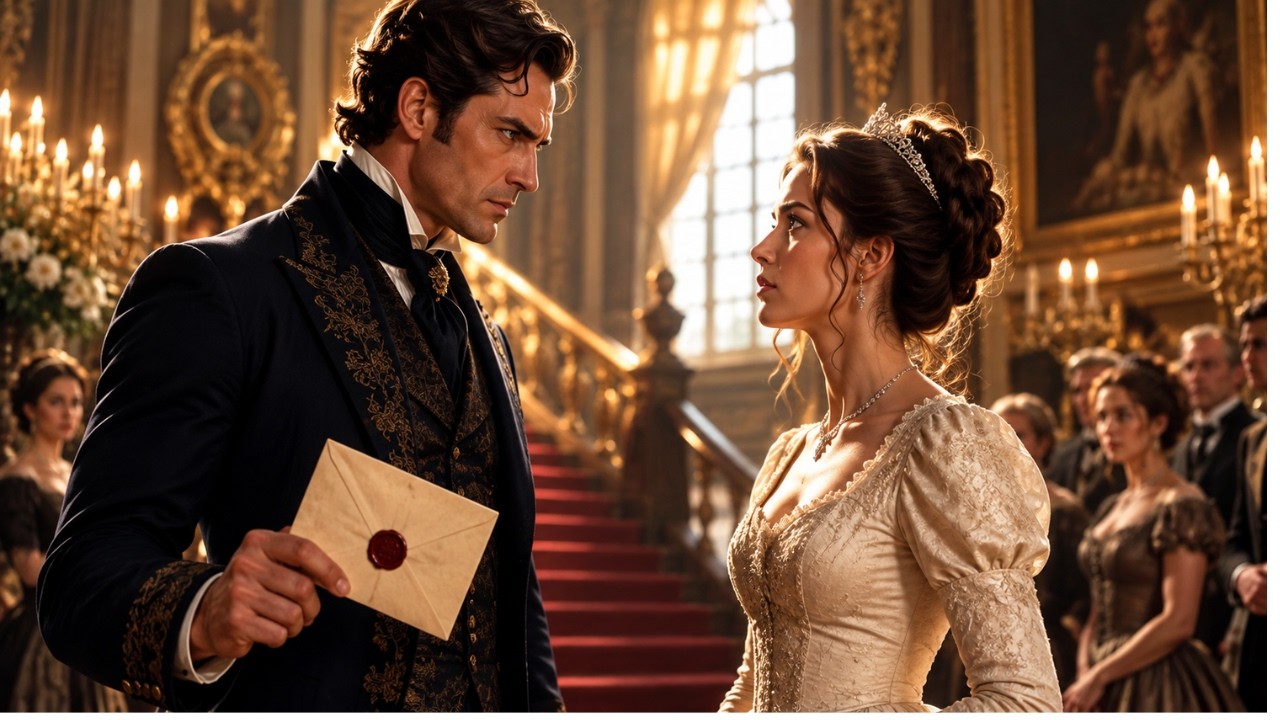
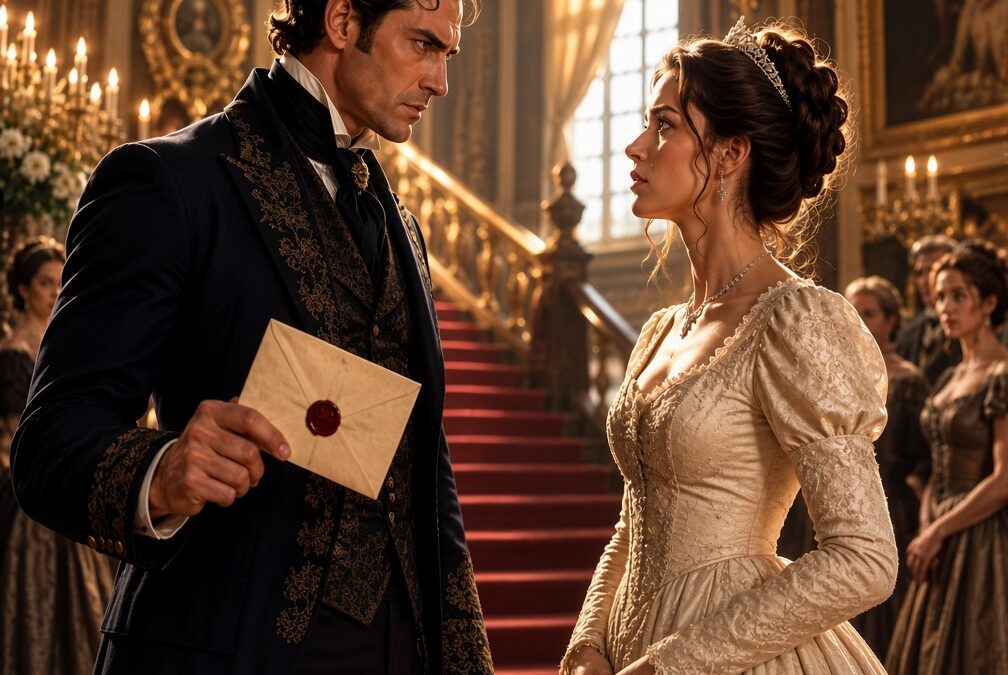
Frederick Bowmont, Duke of Ashkam, did not believe in love. He believed in ledgers, bloodlines, and the iron necessity of an heir.
At 34, he was the last of his line, and his solicitors reminded him of it weekly.
Marry, produce a son, secure the estate. That was the whole of it. He did not want a romance.
He wanted a contract with a pulse. His mother had spent two seasons parading candidates before him.
Daughters of LS, daughters of bishops, each one polished, none of them remembered past the carriage ride home.
Frederick had grown so tired of the performance that when his aunt mentioned a quiet family in Hertfordshire, a baronet’s daughter with no fortune and no scandal, he agreed to the match before he’d even seen her face.
Lydia Everheart was 26, unmarried, and resigned to it. Her father’s debts had eaten through what little dowy remained, and she’d watched two younger sisters marry first, while she kept the household books, and buried any hope of her own.
When the letter came, a duke of all things, offering marriage in exchange for nothing but her hand, and her silence on the matter of love, she did not weep with joy.
She read it twice, then said to her sister, “He wants an air maker, not a wife.”
She accepted anyway. Hertfordshire had nothing left to offer her, and a duchess’s title, however cold, was still a title.
They married in a private ceremony at Ashkam Hall in October, 6 weeks after the first letter.
No flowers beyond what the gardener could spare, no guests beyond the family’s barest obligations.
Frederick stood at the altar in black, his face arranged into the same expression he wore for tenant disputes and tax assessments.
Lydia stood beside him in gray silk, chin lifted, refusing to let the room see that her hands were shaking.
When the vicar pronounced them man and wife, Frederick did not smile. He simply turned to her and said, “I trust you understand what this marriage requires of you.”
Lydia met his eyes, gray, unreadable, the eyes of a man who’d long ago decided feeling was a weakness he couldn’t afford.
I understand exactly what it requires, she said. An heir. Nothing more. Nothing more, he agreed.
But as the carriage pulled away from the chapel toward Ashkcom Hall, toward the cold grandeur of a life neither of them had chosen for love, Frederick found himself stealing a second glance at the woman beside him, not because she was beautiful, though she was, but because she had not flinched.
Every other woman he’d met had wanted something from him. She seemed to want nothing at all.
He did not know it yet, but the duty he’d accepted so coldly had just walked into his house wearing gray silk and an unbroken spine.
Frederick expected silence. He got Lydia Everheart instead. Ashkam Hall had run on routine for a decade.
Meals at fixed hours, rooms shut up to save on coal, a household that moved around its Duke like he was furniture nobody dared rearrange.
Frederick liked it that way. Predictable, manageable. He assumed his new duchess would simply slot into the empty space left for her and stay there.
Within 3 days, Lydia had walked the entire east wing, found four rooms shuttered for no reason she could discover, and asked the housekeeper why a juke worth 40,000 a year, was living like a man bracing for bankruptcy.
“His grace prefers economy,” the housekeeper said carefully. His grace prefers misery, Lydia said, and has mistaken it for thrift.
She did not say it to wound. She said it the way she said most things, plainly, without flourish, the same voice she’d have used to point out a crack in a teapot.
But it got back to Frederick by supper, and he arrived at the table with his jaw set.
I’m told you’ve been auditing my household. I’ve been living in it, Lydia said. There’s a difference between economy and neglect.
Your tenants cottages need roofing before winter, and you’re not spending money on it because you’ve forgotten how to spend money on anything that isn’t obligation.”
Frederick set down his fork. No one spoke to him this way. Not his steward, not his mother, certainly not a wife, 6 weeks married, and acquired specifically to be unobtrusive.
“You were not brought here to manage my estate. I was brought here to be useful,” Lydia said.
I intend to be useful in more than one room of the house. He had no answer for that.
It was infuriatingly reasonable. What unsettled him more than her opinions was that she was right.
The east-wing roof had been leaking since his father’s time. Two tenant families had written requesting repairs he’d never read because his steward filed them under non-urgent.
Lydia found the letters in a drawer, read all of them in one sitting, and left them on his desk the next morning with notes in the margins.
Frederick stood over the desk a long time before he called for his steward. She was not what he’d ordered.
He had wanted a quiet woman who would produce an air and otherwise disappear into the wallpaper.
Instead, he had a duchess who walked the property in mud spattered boots, who corrected his account books, who spoke to the kitchen maids by name within a fortnight when he didn’t know half of them after years.
The staff adored her almost instantly, which irritated him more than anything else. He heard laughter from the kitchens, actual laughter, in his house, and didn’t know what to do with the sound of it.
One evening he found her in the library uninvited reading one of his late father’s books on land management with the focus of a scholar.
You read about agriculture for pleasure. I read about agriculture because no one explained the estate to me and I refuse to be ornamental.
She didn’t look up. You married me to secure your line, your grace. I’d rather understand the line I’m securing.
He should have been annoyed. He found instead that he stayed in the library longer than he meant to, watching her turn pages by candle light, saying nothing, unable to look away from a woman who had walked into his cold, ordered life, and immediately began rearranging it without asking permission.
He didn’t know yet that this was the moment the duty stopped being only duty.
He only knew that for the first time in years, his house didn’t feel like a tomb he was waiting to be buried in.
It felt occupied. The first real fight happened over a dead man’s wishes. Frederick’s father had left a clause in the family trust, vague, old-fashioned, the kind of thing solicitors keep on the books out of habit.
It stated that the Duchess of Ashkam should have no say in tenant matters that estate decisions belong to the Duke alone.
Frederick had never thought about the clause. He’d never needed to. No previous duchess had wanted a say.
Lydia wanted to say, “It started small. A dispute between two tenant farmers over a shared well, the kind of thing that used to get settled by whichever man shouted louder at the steward.
Lydia heard both sides, walked the land herself, and proposed splitting the wells use by a fair rotation.
The tenants agreed it was sensible. It was also technically not her decision to make.
Frederick found out from his steward, who delivered the news with the careful blankness of a man reporting a small disaster.
“You overruled my steward,” Frederick said that evening, not bothering with preamble. “I solved a problem your steward had let fester for 2 months.
That is not your role. Then perhaps your role needs revising.” Lydia did not raise her voice.
She never did. It was one of the things that unsettled him most, how calm she stayed while dismantling him.
You married a woman to run your household and bear your heir. You did not specify that I should do so blindly, deaf to everything happening on the land that will belong to my children.
Our children, Frederick said, will inherit a title, not a debating society. Our children will inherit whatever you and I build before then.
I’d rather build something I can be proud of than something I was merely permitted to watch.
It escalated from there, not shouting, neither of them was built for shouting, but something colder and more dangerous.
Frederick told her she’d overstepped a boundary that existed before she arrived and would exist after.
Lydia told him that a marriage built entirely on his comfort and her silence wasn’t a marriage at all, just an arrangement with better furniture.
I did not ask you to love this house, Frederick said. I ask you to manage it.
I am managing it better than it’s been managed in years, and you know it, which is exactly why this argument has nothing to do with the well.
He went quiet at that, because she was right, and he hated that she was right, and he hated more that some part of him, small, buried, unfamiliar, admired her for saying it to his face instead of around it.
For three days they barely spoke beyond what civility demanded at meals. Frederick buried himself in correspondence he didn’t need to answer.
Lydia kept to the gardens and the tenant cottages, her chin as high as it had been on their wedding day, refusing to be the one who apologized first for being competent.
It was the housekeeper in the end who broke the standoff without meaning to, mentioning in passing that the well dispute had been the talk of the village and that the tenants were saying the new duchess was the first ashkam in memory who’d actually listened to them.
Frederick heard it and said nothing. But that night he sought Lydia out in the library where she sat with her spine straight and her eyes fixed determinedly on a book she wasn’t really reading.
The tenants are pleased with the arrangement, he said. I know. I should have asked what you’d decided before condemning it.
It wasn’t quite an apology. It was close enough that Lydia looked up. I’m not trying to take anything from you, Frederick.
It was the first time she’d used his given name. I’m trying to be worth something in this house, beyond what your father’s claws allows me to be.
He sat down across from her, the argument draining out of the room like heat from a dying fire.
You already are,” he said quietly, and then seemed almost startled that he’d said it at all.
Neither of them mentioned the well again. They didn’t need to. Something had shifted in the room that had nothing to do with tenants or trusts.
The first quiet admission from a man who measured everything in duty, that this woman had become something he hadn’t accounted for.
Something changed after the well. Frederick started telling Lydia things before she had to dig for them.
Tenant problems, tax assessments, a dispute with a neighboring landowner over a boundary hedge that had been simmering since his father’s time.
He didn’t ask her opinion outright. That wasn’t in him yet, but he started leaving the ledgers open on the desk where she’d see them.
Started mentioning almost carelessly what troubled him over breakfast. Lydia noticed. She didn’t say anything about it either.
She simply started answering. The harrow boundary, she said one morning, not looking up from her tea, has been disputed since your grandfather’s day.
The original survey is wrong, not the hedge. If you commission a new survey, instead of arguing over the old one, the whole thing resolves itself.
Frederick stared at her. How do you know about a survey from 60 years ago?
It’s in the estate archive. I’ve been reading it in the evenings. She finally looked up.
You have an extraordinary library and you use it for nothing but brandy and brooding.
He laughed. It surprised them both. A short rusty sound like a door that hadn’t opened in years.
Lydia’s mouth twitched, fighting a smile she didn’t want to give him so easily. “Commission the survey,” he told his steward that afternoon.
The boundary dispute was settled within the month, exactly as Lydia predicted. It became a pattern.
Frederick brought her problems. Lydia brought clarity. He started to notice that her presence in a room changed the temperature of it.
Not just his own mood, but the staffs, the tenants, even his mothers, on the rare occasions the daager visited, and found herself, for once with nothing to criticize.
He watched her with the children at the tenant cottages, crouching in the mud without a thought for her skirts, listening to a farmer’s daughter recite her letters and praising her like the achievement mattered.
He watched her argue gently but firmly with his aunt about the running of the autumn harvest dinner, winning the point without raising her voice once.
He watched her read his father’s old books late into the night, not for performance, not for him, but because she had decided the estate was hers to understand, and she intended to understand it thoroughly.
He had married her for an heir. He found himself increasingly simply wanting to be in the room with her.
One evening, riding back from the tenant farms together, a habit that had crept in without either of them naming it, Frederick found himself studying her instead of the road.
“You’ve made yourself indispensable,” he said. “I don’t know how I managed this house before you “Badly,” Lydia said, but there was warmth under it now, not the edge from their first weeks.
“You managed it the way a man manages something he’s decided not to feel anything about.
And now she considered the question longer than he expected. Now I think you’re starting to feel things about it.
About all of it. She glanced at him sideways. Whether you intend to or not.
Frederick didn’t answer right away. The truth was he respected her in a way he hadn’t respected anyone in years.
Not the difference men gave him for his title, but real respect. Earned the hard way.
Argument by argument, decision by decision. She had not bent herself to fit his house.
She had made his house better by refusing to. I find, he said carefully, watching the road ahead rather than her face, that I value your judgment more than I expected to.
It wasn’t poetry. It wasn’t even particularly warm. But Lydia heard what was underneath it, and for the first time since her wedding day, she let herself wonder if the cold arrangement she’d accepted out of necessity might be turning into something neither of them had bargained for, and neither of them strangely seemed to want to stop.
It started, as these things always did, at a ball. The marchiness of Pelum’s autumn gathering was the first major event Frederick and Lydia attended together as husband and wife, and London society had been waiting for it.
Waiting specifically to take the new Duchess of Ashkam apart. Lydia Everheart had no fortune, no powerful family, no pedigree beyond a baronety that barely registered among the rooms titles.
She had married a juke in 6 weeks without a season, without a courtship anyone could point to and call proper.
The whispers had been building since the wedding announcement. The ball simply gave them a venue.
They say she trapped him, Lady Carlile murmured, just loud enough to carry a penniless baronet’s daughter, securing a duke before he could think better of it.
They say she runs his household like a steward, said another, which is hardly becoming of a duchess.
One wonders what else she’s taken it upon herself to manage. Lydia heard every word.
She kept her chin level and her smile composed the way she’d learned to do at her father’s creditors meetings.
Survive the room. Give nothing away. But it cost her more than she let show, especially when the comments turned inevitably to whether the marriage had produced what it was meant to produce yet, and how long a duke might wait before deciding his bargain had failed.
Frederick found her near the terrace doors, her gloved hands gripping the stone ballastrade harder than necessary.
“You shouldn’t have heard that,” he said. “I hear all of it, Frederick. I’ve heard it since the day we married.”
She kept her eyes on the garden below, refusing to let him see what it had cost her.
I am a transaction to them. A baronet’s daughter who got lucky. They will never let me forget it.
And you married me knowing they wouldn’t. I married you because you were the only person at Ashkam who never once asked me for anything beyond decency.
That doesn’t matter in there. She gestured back toward the ballroom, toward the glittering, cruel room full of people who would smile at her face and gut her reputation the moment she turned.
In there, I am beneath you, and everyone is waiting for you to remember it.
It got worse before it got better. A cousin of his late mothers cornered Lydia near the punch table and asked with poisonous sweetness whether she found Ashkam Hall terribly overwhelming for someone of her background.
A gossip column the following week referred to her as the Duke’s economical choice. A phrase designed to wound on two fronts at once, a lack of fortune and the suggestion that Frederick had married beneath himself out of indifference rather than feeling.
Lydia read the column alone in her room and did not cry. She had promised herself the day she boarded the carriage to Ashkam that she would not give society the satisfaction of seeing her break.
But when Frederick found the paper open on her writing desk that evening, something in him went very still and very cold, not at her for the first time since their wedding, but on her behalf.
He did not raise his voice when he spoke to her. He simply said, “Tell me what you need from me.”
“Nothing,” Lydia said automatically. The answer she’d given for years. “That is the wrong answer.
And you know it.” He sat across from her, his gray eyes steady in a way she hadn’t seen before.
Not the cool detachment of duty, but something deliberate, almost protective. “You have spent 5 months making my house worth living in.
I will not stand by while London decides you’re beneath their notice.” It was the first time he had openly chosen a side against the world he’d been raised inside of.
And Lydia, despite everything the evening had cost her, felt something crack open in her chest that she hadn’t expected and didn’t entirely know what to do with.
Society had attacked, and for the first time, Frederick Bowmont had not simply tolerated his wife’s presence.
He had defended it. The Daaja Duchess arrived at Ashkcom Hall uninvited, which meant she’d come to interfere.
Frederick’s mother had tolerated the marriage in silence for months, the way she tolerated most things that displeased her by waiting for them to fail on their own.
But the gossip columns had given her an opening, and she took it over tea in the drawing room, with Lydia present, as though that were simply good manners.
The talk in London is becoming difficult to ignore, Frederick. The daagger set down her cup with practiced precision.
A duke is permitted certain economies in his early choices, but it isn’t too late to manage this quietly.
An enulment handled discreetly need not be a scandal if done properly. The room went very still.
Lydia did not move, though her hands tightened in her lap. “You are discussing my wife,” Frederick said, as though she were a clause in a contract that displeased you.
I am discussing your future, which still matters to this family, even if you’ve forgotten it does.
The daagger’s gaze flicked toward Lydia with the particular cruelty of someone who believed she was being reasonable.
There is still time to correct a hasty decision. A more advantageous match remains possible.
The Peton girl has £30,000 and a family that wouldn’t embarrass you in front of the entire parage.
Lydia rose before Frederick could answer. I won’t sit here and be disgusted as a mistake to be corrected.
Her voice was steady, but her eyes, when she looked at Frederick, asked a question she would not voice aloud, whether 6 months of growing closeness had been real, or whether it would dissolve the moment his mother demanded it.
Sit down, Lydia. Frederick’s voice was quiet, not a command to retreat, something else entirely.
Lydia hesitated, then sat, watching him with the same weariness she’d worn the day she stepped off the carriage at Ashkcom.
Frederick turned to his mother, and the coldness in his face was not aimed at his wife for the first time in the history of that room.
I will say this once, so there is no confusion later. I did not marry Lydia for convenience, and I will not unmake that marriage for your comfort, or London’s or anyone’s.”
His voice did not rise, but it carried the particular weight of a man who had finally stopped performing duty and started defending something he meant.
She has done more for this estate in 6 months than this family managed in a decade of careful, advantageous choices.
She is not a mistake to be corrected. She is my wife and she will remain my wife.
And if that costs me £30,000 and the Peton family’s good opinion, I find I can live with the loss.
The daagger’s mouth thinned. You are being sentimental. I am being honest, which you’ve never had much patience for.
Frederick stood, moving to stand beside Lydia’s chair, close enough that the gesture itself was an answer.
You may return to London and tell whoever asks that the Duke of Ashkam chose his duchess and intends to go on choosing her regardless of what the gossip columns decide to print next.
His mother left within the hour, her carriage pulling away down the long drive without another word exchanged.
Lydia found Frederick afterward in the library where he stood by the window, jaw still tight with the aftermath of a fight he hadn’t expected to have.
You didn’t have to do that,” she said softly. “I didn’t do it for duty,” he turned to face her, and something in his expression had cracked open completely.
The last of the careful distance gone. “I did it because the thought of this house without you in it felt like a loss.
I am no longer willing to risk. I don’t know precisely when that happened. I only know it has.”
Lydia crossed the room and stood before him, searching his face for the calculation she’d half expected to find there since the day they married.
She found none. “That,” she said quietly, “is the first thing you’ve ever said to me, that wasn’t about duty at all.”
“No,” Frederick admitted. It wasn’t. It happened on an ordinary morning, which was somehow the worst part.
Lydia had gone out early to the tenant farms, as she did most weeks now, riding alone, because she’d long since stopped waiting for permission to do the things that mattered to her.
The horse threw her on the return path, a rabbit hole, a misstep, nothing dramatic enough to warrant what followed.
She was thrown clear, struck her head against a stone wall, and lay in the wet grass for nearly an hour before a tenants boy found her and ran the half mile back to the hall, screaming for help before he’d even reached the door.
Frederick was in his study when he heard the commotion. He did not remember crossing the house.
He remembered later. Only fragments, the boy’s face, white and gasping, the groom already saddling a horse, the cold certainty, settling into his chest like a stone dropped down a well, that something had gone wrong with the one part of his life he had never planned to need.
He found her in the lane, unconscious, her riding habit soaked through, a gash above her temple, bleeding into pale hair.
He did not wait for the cart. He carried her himself the full distance back to the hall, refusing every offer of help, as though letting go of her, even to shift her weight, might be the thing that took her from him entirely.
The physician came from miles, no, from the county town, 11 mi distant, and the ride felt like a year.
Frederick sat beside her bed through the examination, through the stitching, through the low murmured assessment, that her skull was not fractured, but that head injuries were unpredictable, that the next two days would tell more than any doctor could promise tonight.
He did not leave the room. He had never in his entire ordered life sat so long doing absolutely nothing useful, and he found he did not know how to bear it.
You should sleep your grace, the housekeeper said gently near midnight. No, it came out rougher than he intended.
He did not apologize for it. He sat in the chair beside her bed and watched her breathe.
Too shallow, too slow, every irregular breath landing in his chest like a verdict. He thought of the well dispute, of the boundary survey, of her reading his father’s books by candle light, with that fierce, unbothered focus she brought to everything she touched.
He thought of his mother’s drawing room, of the words he’d said without flinching. I did it because the thought of this house without you in it felt like a loss I am no longer willing to risk, and understood, with a clarity that frightened him more than the accident itself, that he had not been speaking hypothetically.
He had been speaking the truth, and the truth had teeth. Somewhere past 2:00 in the morning, Lydia stirred, murmured something unintelligible, and went still again.
Frederick took her hand carefully, the way he’d built her bookshelf. The way he did everything that mattered, without quite knowing he was doing it with care, and did not let go.
I have buried no one I loved, he said quietly. To a room that wasn’t listening, to a wife who couldn’t hear him.
I do not know how a man survives it. I am not prepared to learn.
It was the most honest sentence he had spoken in his entire life, and he had said it to an empty room, because he could not yet bring himself to say it to her face.
By dawn, her fever had not worsened. By the second evening, her eyes opened, found him still in the chair, unshaven, holloweyed, refusing to have moved.
“You stayed,” she said, voice thin but steady. “I had nowhere else I wanted to be.”
Lydia studied him for a long moment, the wreck of a man who had spent two days unraveling at her bedside.
The Duke, who never showed feeling, now visibly undone by the fear of losing her.
Frederick, her hand found his. What is it you’re not saying? He looked at her and for once the words came without armor.
That I am afraid, he said. Of a future that does not have you in it.
I did not know I could be afraid of anything until I imagined that one.
Lydia healed slowly, and Frederick changed faster than the wound itself. He moved her favorite chair into his study so she could sit with him during the long afternoons of recovery, reading while he worked through correspondence, occasionally interrupting him with some observation about the tenant accounts that made him laugh.
That same rusty, unpracticed laugh that had surprised them both months earlier, except now it came easily, often without him noticing he’d given it.
He read to her in the evenings the way she once told him no one had since her mother died.
He was not a graceful reader. He stumbled over poetry, mangled the rhythm of anything written with feeling rather than function.
And Lydia found she loved him more for the stumbling than she would have for any polish.
You’re terrible at this, she told him one evening, smiling against the pillow. I am aware.
He kept reading anyway, badly, doggedly, because she’d asked him to. It was during one of these evenings, 3 weeks into her recovery, that the truth finally surfaced without either of them forcing it.
I used to think, Frederick said, setting the book down, that affection was a weakness men could not afford.
My father believed it. I believed it, because believing otherwise meant admitting how much could be taken from me.
He looked at her openly now, without the old caution that used to guard every word.
I do not believe it anymore. Lydia sat up slowly, watching him with the careful attention she gave anything that mattered.
What do you believe instead? That I have spent 8 months learning what it is to actually live in this house instead of merely occupying it?
That you walked in here uninvited by feeling and somehow became the only person who’s ever made me feel anything at all?
He took her hand, not carefully this time, not like a man handling something fragile, but like a man finally certain of what he held.
I love you, Lydia. I did not intend to. I fought it longer than I should have, because I did not think a marriage built on duty was permitted to become this, but it has, and I am done pretending otherwise.”
Lydia felt something break open in her chest that had been guarded since the day she’d boarded the carriage to Ashkam.
Certain she was trading her future for survival and nothing more. I told myself the same thing, she admitted that this was an arrangement, and arrangements did not require the heart.
But you built me a bookshelf with a carved edge that served no purpose. You sat at my bedside for 2 days and didn’t sleep.
You stood in front of your own mother and chose me over £30,000 and her good opinion.
Her voice caught the careful composure she’d worn for months, finally giving way. I have loved you for longer than I was willing to admit.
Frederick, I think I loved you the night you read me Tennyson when I had the fever.
Though neither of us called it that then. What do we call it now? The truth,” Lydia said, and kissed him before he could find a more measured answer, the kind he used to give for everything.
He did not give a measured answer. He kissed her back the way a man kisses something he very nearly lost, fiercely, gratefully, without the careful distance that had governed every interaction between them since the day a vicar pronounced them husband and wife, for reasons that had nothing to do with love.
When they finally drew apart, Frederick rested his forehead against hers, eyes closed, breathing unsteady in a way that had nothing to do with old wounds or fevers.
“I ordered a wife to secure an air,” he murmured. “I did not know I was ordering the only thing that would ever make this house feel like home.”
“And I arrived determined to be nothing you expected,” Lydia said softly. You succeeded, Frederick said, and there was nothing left in his voice but love.
Beyond anything I could have imagined. Love realized in private was easy. London demanded it be proven in public.
The daager, undeterred by her son’s declaration in the drawing room, had spent the months of Lydia’s recovery, quietly working behind the scenes, reviving talk of the Peton match, suggesting in certain circles that the Duke’s sentimental attachment to his lowborn duchess was a passing weakness, the kind that fashionable men eventually outgrew.
By the time the Peton family hosted their winter ball, the invitation arrived at Ashkcom Hall practically engraved with expectation.
Come and let London see whether the Duke of Ashkam had truly chosen his duchess or merely hadn’t found the courage yet to unchoose her.
Lydia wanted to refuse. They are not inviting us, she told Frederick. They are inviting a spectacle, and I am the part they hope fails.
Then we will not give them a failure, Frederick said. We will give them an answer.
He did not explain what he meant. Lydia did not press him, though she spent the carriage ride to London with her nerves drawn tight as wire, certain the room would be exactly as cruel as the last one, sharpened further by months of rumor.
It was worse at first. The ballroom quieted the moment they entered, not with welcome, but with the particular hush of a crowd, deciding how much damage it could do before the night was through.
Miss Peton herself stood near the punch table in pale blue silk, £30,000, and an unimpeachable family standing visibly behind her like an argument Frederick was meant to reconsider.
The daager intercepted them within minutes. Frederick, how good of you to come and to bring.
The pause was deliberate. Your wife, my duchess, Frederick corrected loudly enough that the nearest cluster of guests heard precisely what they were meant to.
I find the word suits her better than anything else in this room. He did not stop there.
He led Lydia onto the dance floor for the first set, his hand at her waist with none of the cool formality he’d shown at their own wedding.
And when the music began, he did not simply dance with her. He watched her openly.
The way a man watches something he has no interest in hiding any longer. The room noticed.
The room always noticed. Midway through the evening, he asked the orchestra to pause and in front of 200 members of the puridge who had spent 8 months deciding Lydia Everheart was a mistake worth correcting.
He raised his glass. I married my wife for duty, Frederick said, his voice carrying across a ballroom gone utterly silent.
I have heard what London says about that beginning, and I will not pretend the gossip didn’t reach me.
But I did not come here tonight to defend a decision I regret. I came to tell you all that I do not regret it, that I have never been more certain of anything in my life, and that the Duchess of Ashkam has done more to earn this house, this title, and my own respect, than anyone born to either.
His eyes found Lydia’s, and his voice dropped, gentler now, meant for her alone, though the whole room heard it.
She walked in here tonight, expecting to be torn apart. I intend to spend the rest of my life making certain she never has to brace for that again.
He kissed her hand slowly, deliberately in front of every person who had ever called her an economical mistake, and then breaking every rule of ballroom decorum, kissed her properly in front of all of them, leaving no question unanswered.
The daagger’s face went the color of old parchment. Miss Peton looked away and the room after one stunned beat of silence began astonishingly to applaud.
Lydia, breathless, looked up at him. That was not subtle. No, Frederick agreed, smiling in the unguarded way he’d only learned to do for her.
I have spent 34 years being subtle and careful, and afraid of being seen to feel anything.
I find I am finished with all three. He had not simply pursued her hand.
He had pursued finally and unmistakably every room she would ever have to walk into again and made certain she never walked into one alone.
By spring the gossip had moved on, as gossip always does, to someone else’s marriage to dissect.
London found new scandals. The Pembberttons found another duke to court, and Ashkam Hall, once a cold house Frederick had merely occupied, became something neither of them had words for when they married.
Only the feeling itself, Kosillig, if Henrik Lond had ever met them. Gabbor Height, if Alma had, warm when the world outside was cold, safe, no matter what was said beyond the walls.
Lydia’s leadership of the estate, once a scandal whispered behind fans, became the thing visiting families quietly envied.
The tenant farms thrived under decisions she made without apology. The East Wing, roofed and warned at last, filled with the kind of life Frederick had forgotten a house could hold.
He stopped reading ledgers alone at night. He stopped, in fact, doing most things alone.
A year after the Peton Ball, Lydia gave him a son, not because duty demanded it, though duty had once been the whole of why they married, but because by then the marriage had become something duty could never have produced on its own.
Frederick held the boy in the library, in the same chair where he’d once watched Lydia read his father’s books by candle light, and found that the weight of an air in his arms felt nothing like the obligation his solicitors had once described.
It felt like the answer to a question he hadn’t known he was still asking.
“What will you tell him?” Lydia asked, watching from the doorway. “About how we married?”
Frederick considered it. The boy’s small fist curled around his finger. “I’ll tell him his father ordered a duchess to secure an heir and got a woman who refused to be anything he’d asked for, and and that it was the only good decision I ever made without meaning to.”
Lydia crossed the room and sat beside him, leaning her head against his shoulder, watching their son sleep in the firelight of a house that no longer felt like a tomb either of them was waiting to be buried in.
They built a life neither of them had planned at that cold October wedding. Not a contract, not an arrangement, but a partnership earned the hard way, argument by argument, crisis by crisis, until duty had quietly transformed into something neither of them had dared name at the start.
Years later, when their son was grown and asked his mother how she’d known, truly known, that the cold duke who’d married her for an heir had become a man who loved her, Lydia would tell him about the bookshelf with the carved edge that served no purpose at all.
About a ballroom where his father had kissed her hand in front of 200 people who’d called her a mistake.
“He didn’t choose me out of duty,” she told her son. He chose me in the end simply because he couldn’t imagine the house or himself without me in it.
Frederick Bowmont had ordered a duchess to secure his line. What arrived instead was a woman who refused to be ornamental, who challenged him at every turn, who built a home out of an obligation neither of them had wanted.
And what they found in the end was something far better than either had ordered, but the kind of love that isn’t requested, only earned.








