They Said She Was Too Old at 30—But the Cowboy Said “You’re Exactly What I Waited For”
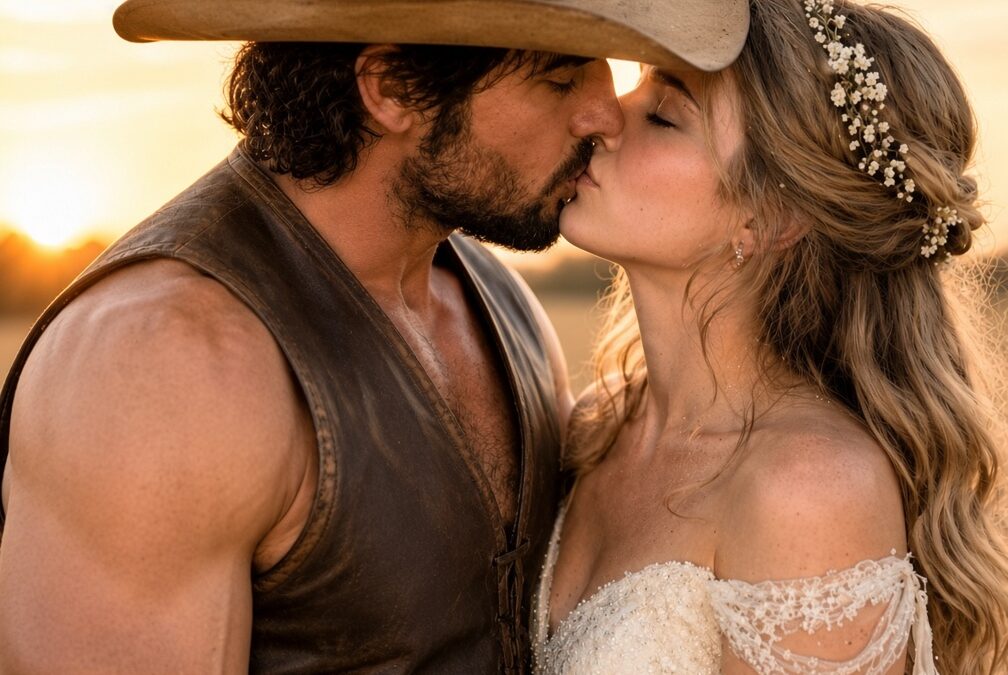
They Said She Was Too Old at 30—But the Cowboy Said “You’re Exactly What I Waited For”

They said she was too old, too worn, too late for anything but widows weeds and whispers.
But on the scorching August day in Red Hollow, 1878, Clara Whitfield stood behind her failing store counter and made a choice that would shake this desert town to its foundations.
What happened when she refused to disappear changed everything, not just for her, but for every soul who’d ever been counted out.
The heat in Red Hollow didn’t just punish. It made choices. It decided which crops withered, which men broke, which dreams cracked open like the parched earth itself.
And on this particular Tuesday, the 3rd week of August 1878, it had decided to test Clara Whitfield one more time.
She stood behind the counter of Whitfield General Store, though calling it general felt like a generous lie.
The shelves were sparse, flower sacks lined up with military precision to hide the gaps behind them, three bolts of fabric that had been there since spring, and assorted sundries that nobody seemed to need anymore.
The morning light cut through the windows at an angle that highlighted every dusty corner, every cobweb, every sign of struggle.
Clara was 30 years old. In Red Hollow, that made her a widow. A cautionary tale, and according to most of the town’s whispering wives, finished.
She’d heard them at church last Sunday. Margaret Holloway’s voice carried always had. 30 years and no prospects.
Such a shame. A woman that age. The sentence had trailed off, but the meaning landed clear enough.
Clara’s hand stilled on the ledger she’d been updating. The numbers didn’t lie. Never had.
3 months. That’s how long she could keep the doors open if business continued like this.
Maybe four if she rationed her own meals tighter, burned less lamp oil, stopped pretending.
The bell above the door chimed. She looked up, composing her face into something approaching pleasant, and felt a polite smile freeze.
Thomas Blackwood filled the doorway like a bad omen. 50some years old, successful in that particular way that came from inheritance and ruthlessness in equal measure.
His suit was too fine for Red Hollow, his boots too shined, his smile too practiced.
“Mrs. Whitfield.” He removed his hat, made a show of it. “I hope this morning finds you well,”
“Mr. Blackwood.” Clare’s voice came out level, controlled. Years of practice. “What can I do for you?”
He approached the counter slowly, taking in the store with eyes that cataloged, calculated, judged.
“I’ve come on a matter of business. Delicate business.” Clara waited. She’d learned that silence made men uncomfortable, made them fill the space with truth they’d meant to hide.
I represent certain interests, Blackwood continued, setting his hat on her counter with presumptuous familiarity.
Development interests. Red Hollow is growing, Mrs. Whitfield. The railroad is coming through. Not this year perhaps, but soon.
Men with vision are positioning themselves now. I’m sure they are. This property. He gestured around the store.
Prime location, Main Street, corner lot. In the right hands, it could be worth something.
It’s already worth something, Clare said. It’s worth my livelihood. Blackwood’s smile didn’t waver. I’m prepared to make you a very fair offer.
More than fair considering current circumstances. His eyes flicked to the sparse shelves, and Clara felt the insult of it like a slap.
The store isn’t for sale. Everything is for sale, Mrs. Whitfield. It’s simply a matter of price.
He pulled a folded document from his jacket. I’ve taken the liberty of having papers drawn up.
The figure is generous, I assure you. Enough to see you comfortably settled somewhere. Smaller, more appropriate.
The word hung in the air between them. Appropriate like her ambitions weren’t. Like her determination to hold on to the only thing she’d built was somehow unseammly.
Clara took the document, unfolded it, scanned the numbers. Her face betrayed nothing, but inside her chest something tightened.
The offer was indeed generous. Generous enough that it made clear exactly how much he wanted this property, which meant it was worth far more than he was offering.
My answer is no. Blackwood’s expression hardened just slightly, a crack in the veneer. I’d encourage you to reconsider.
Take a few days, think it through. A woman in your position. Mr. Blackwood. Clare’s voice could have cut glass.
I don’t need a few days. I don’t need to think it through. This store belonged to my husband.
He built it from nothing. When he died, people said I should sell, move back east, find family to take me in.
I chose to stay. I chose to fight for it, and I’m still here. Admirable, Blackwood said, though his tone suggested he found it anything but.
However, sentiment doesn’t pay creditors, Mrs. Whitfield. And I have it on good authority that your credit situation is strained.
Heat flooded Clara’s face. He’d been checking, asking around, building a case for why she’d have to sell.
My credit situation is my own business for now. Black would have collected his hat, placed it back on his head with careful precision.
But I’m a patient man, Mrs. Whitfield, and I’m not the only interested party. Others might not be so cordial in their approach.
He moved toward the door, paused. Think about what appropriate looks like for a woman your age.
Fighting isn’t always dignified. The bell chimed as he left. Clara stood perfectly still for a long moment, her hands flat on the counter, breathing controlled.
Then, with deliberate care, she tore Blackwood’s offer in half and in half [clears throat] again, and again, until the pieces were too small to tear further, and she let them fall like snow onto the worn floorboards.
The afternoon crawled by with the kind of slowness that made every minute feel like proof.
Proof that Blackwood was right. Proof that she was failing. Proof that 30 was too old, too late, too much to overcome.
One customer, Mrs. Chen, who ran the boarding house, buying thread and buttons and pain and coins, counted out one at a time.
Kind eyes, pitying smile. You’re looking tired, dear. I’m fine. You should take care of yourself, a woman alone.
I said, “I’m fine.” Mrs. Chen had left quickly after that, and Clara had immediately regretted her sharpness.
Couldn’t afford to alienate the few customers she had left. Couldn’t afford Pride. Couldn’t afford much of anything anymore.
She was closing the ledger, preparing to lock up early because what was the point of staying open when the bell chimed again.
This time, a man she’d never seen before stepped through the door. He was tall, taller than Blackwood, but built different, leaner, harder, like the desert had carved away everything soft and left only what was essential.
Maybe 40, though the lines around his eyes could have added or subtracted years. Dark hair, darker eyes, and a way of moving that suggested he was always aware of exactly where he was, who was near, what mattered.
He removed his hat as he entered, a gesture that seemed more automatic than performative.
Ma’am, he said, voice like gravel. Quiet. Can I help you? Clara heard the weariness in her own voice.
Hated it. Hope so. Need some supplies. Traveling light. Ran through my coffee about 2 days ago.
A hint of something in his tone. Self-deprecation, maybe. Turns out I’m meaner than usual without it.
Despite everything, Clara felt the corner of her mouth twitch. Can’t have that. How much do you need?
Pound should do it. And if you’ve got dried beans, jerky, anything that travels, well, I’m not particular.
Clara moved through the store, gathering items. She was aware of him watching her, but it didn’t feel like Blackwood’s assessment or the town wife’s judgment.
It felt like attention, genuine, and without agenda. You’re not from around here, she said.
More statement than question. No, ma’am. Got a ranch about 15 mi northeast. Trying to make something of it.
Trying? She glanced back at him. He almost smiled. “Well, the land’s got opinions about that.
We’re still negotiating.” She set the items on the counter. “That’ll be this your store?”
He interrupted, looking around with different eyes than Blackwood had. Curious, not calculating. “It is.
You run it yourself.” Here it came. The judgment, the assumptions. I do. That’s something.
He pulled out a worn leather wallet. Can’t be easy. Clara rang up the sale, gave him the total.
He paid without haggling, counted out exact change. You got a name for your ranch?
She asked, not sure why she was prolonging the conversation. Mercer Ranch. I’m Cole Mercer.
Clara Whitfield. Mrs. Whitfield. He gathered his purchases, paused. The coffee, it’s good quality. Hard to find out here.
I try to stock what people actually need, not just what’s cheapest. Cole nodded like she’d confirmed something he’d suspected.
I’ll be back through in a few weeks. Might need more supplies then. I’ll be here.
The words came out more defiant than she’d intended, and something shifted in his expression.
Recognition, maybe understanding. I believe you will be, he said quietly, then tipped his hat and left.
Clara stood in the empty store listening to Hoofbeats fade into distance and realized she was smiling.
Actually smiling for the first time in she couldn’t remember how long. The smile faded when she looked at the ledger again.
One small sale didn’t change the mathematics of survival. Didn’t change the fact that Blackwood was circling.
Didn’t change that she was running out of time, but it changed something. Some small thing she couldn’t name.
That night, Clara sat in the small room behind the store that served as her living quarters, eating cold beans from a tin because cooking for one seemed pointless.
The lamp burned low. Oil was expensive. Through the thin walls, she could hear red hollow settling into darkness.
Horses, distant laughter from the saloon, the creek of wood and nail. She pulled out a letter she’d been avoiding.
Her sister, back in Philadelphia, writing with news of cousins, society, suitable matches for appropriate women.
You could still find someone, Elizabeth had written. You’re not so old that a widowerower with children wouldn’t consider you.
There’s no shame in starting over somewhere new. No shame. As if shame was Clara’s problem.
As if she’d done something wrong by staying, fighting, refusing to disappear into the convenient category of tragic widow who knew her place.
Clara set the letter aside and opened her personal journal instead. She’d kept it since Jon died.
A record of the store, the town, her own tangled thoughts. August 20th, 1878. Blackwood came today with an offer.
Refused it. He’ll be back. They always come back. Had a customer. New rancher. Cole Mercer.
Different from the others. Didn’t see a widow. Didn’t see a woman past her prime.
Just saw someone. That shouldn’t matter as much as it does. 3 months of reserves, maybe four.
Need to find new suppliers, better prices. Need to convince people the store is worth their business.
Need to convince myself I’m not just delaying the inevitable. She closed the journal, pressed her palms against her eyes.
30 felt ancient some days, like she’d already lived the only life she’d get, wife to John for five brief years before fever took him, leaving her this building, this business, this impossible weight.
The town had been kind at first, sympathetic. But sympathy had an expiration date, and she’d exceeded it.
Now they looked at her with confusion, then irritation, then something worse. Pity mixed with contempt.
Why was she still fighting? Why didn’t she just give up, move on, become appropriate?
Clara extinguished the lamp and lay in darkness, listening to her own breathing, the creek of old wood, the sound of a town that had already decided she didn’t fit.
But she was still here. That had to count for something. The next two weeks passed in a blur of small humiliations.
The bank manager, Mr. Hendris, stopping by with concerns about her outstanding loan. Mrs. Holloway and her circle shopping at the new merkantile that had opened across town.
Newer stock, better prices, run by a married couple with three children and respectability. A shipment arriving short three crates.
The supplier claiming communication errors, though Clara’s order forms were meticulous. She handled each blow the way she’d learned to handle everything.
Back straight, face composed, emotions locked away for after hours when no one could see them fracture.
Cole Mercer came back on a Thursday. Clara was reorganizing the fabric section, trying to make three bolts look like abundance when the bell chimed.
She turned, dust cloth in hand, and felt something unexpected. Relief. Genuine relief at seeing a face that didn’t carry judgment.
Mr. Mercer. Mrs. Whitfield. He looked around the store and Clara saw it through his eyes.
Emptier than 2 weeks ago. She’d sold the older stock at loss just to move it.
I’m in need of supplies again, and I’ve got a proposition, if you’re willing to hear it.
Clara descended from the step stool. What kind of proposition? The kind that might be mutually beneficial.
He approached the counter, set his hat down. I’ve got a ranch that needs running.
Good land, decent water, but I’m one man trying to do the work of 10.
I need supplies regular. Food, tools, fabric for clothing, hardware. I could buy from the merkantile across town, but but Clara felt her heart beating faster.
But I’d rather buy from someone who knows what quality looks like. Someone who’s not trying to squeeze every penny out of me with inflated prices and short weights.
He met her eyes directly. Someone I can trust. Trust? The word landed with unexpected weight.
What exactly are you proposing? Regular orders? Weekly deliveries if you’re willing to arrange transport or I’ll come fetch them myself.
Fair prices, prompt payment, and he hesitated, choosing words carefully. I could use someone with a head for numbers.
My foreman handles the cattle, but the business side, tracking costs, managing credit, dealing with buyers, that’s not his strength, or mine, if I’m honest.
Clara studied him, looking for the angle, the catch. You’re offering me ranch bookkeeping. I’m offering you steady business and fair compensation for your expertise.
What you do with that is up to you. Why? The question came out sharper than intended.
You don’t know me. Don’t know if I’m capable. I know you’ve kept this store running for 3 years despite this town doing everything possible to forget you exist.
I know those ledgers behind you are immaculate. I know you stock quality goods even though cheaper alternatives would pad your margins.
He leaned against the counter, casual but intense. And I know you’re fighting like hell to keep standing, which tells me everything I need to know about capability.
Clara felt something crack in her chest. Not breaking exactly, but shifting, opening. What about your foremen, your ranch hands?
How do they feel about taking orders from a woman? Cole’s expression hardened slightly. They don’t take orders from you, they take orders from me.
And if I say your numbers are good, then the numbers are good. Anyone who has a problem with that can find employment elsewhere.
That simple. That simple. Clara looked at the empty shelves, the dusty corners, the ledger that documented slow failure.
Looked at Cole Mercer, the stranger offering something that sounded impossible. Partnership without pity. Business without condescension.
I’d need to see your current records. Understand the operation. I can bring them by tomorrow.
And payment terms, standard rate for bookkeeping services plus cost of supplies. I pay on delivery, no credit.
It was too good. Had to be. Men didn’t just appear offering solutions unless they wanted something else.
Something unsaid. Mr. Mercer. Cole. Cole. The name felt strange on her tongue. I appreciate the offer, but I need to understand what you’re actually asking for here.
He straightened, and for a moment something flickered in his expression. Not offense exactly, but recognition of what she was really asking, what she’d learned to ask.
I’m asking for a business arrangement, Mrs. Whitfield. Nothing more, nothing less. I need supplies and bookkeeping.
You provide both. I pay fair prices. That’s the entirety of it. He picked up his hat, turned it in his hands.
But I understand why you’d question that. A man shows up, offers help, seems like there should be a catch.
In my experience, there always is. Then let me be clear. His voice dropped lower, more serious.
I’ve got no interest in charity, and I sure as hell have no interest in pity.
I’m offering this because it benefits me, because I think you’re competent, and because I’d rather do business with someone I respect than someone convenient.
If that changes, I’ll tell you straight. And if you decide you’d rather I take my business elsewhere, you tell me the same.
No hard feelings, no complications. Clara held his gaze, looking for deception, finding only honesty that felt almost brutal in its directness.
All right, she said finally. Bring your records tomorrow. I’ll review them, give you my assessment.
If we both think it makes sense, we’ll work out terms. Something that might have been a smile touched Cole’s eyes.
Fair enough. I’ll be here at 2. 2:00. Then he settled his hat back on his head, moved toward the door, paused.
Mrs. Whitfield, for what it’s worth, I don’t think you’re too old, too late, or too anything else this town says you are.
I think you’re someone who knows her own worth. That’s rare enough to be valuable.
The bell chimed as he left, and Clara stood frozen behind the counter, those words echoing in the empty store.
I don’t think you’re too old. She’d stopped believing anyone would ever say that. Stopped hoping they’d even think it.
And now here was Cole Mercer saying it like it was simple fact, uncomplicated truth.
Clara pressed her hand to her mouth, felt the tremor there, the emotion threatening to spill over.
She couldn’t afford this, couldn’t afford to hope, to trust, to believe that maybe possibly someone saw her as something other than a cautionary tale.
But the hope came anyway, unbidden and terrifying. That night she worked late on the ledgers, running numbers, checking figures, making everything perfect for tomorrow’s review.
Not because she wanted to impress Cole Mercer, or not only because of that, but because precision was the only control she had left.
At midnight, exhausted, she finally climbed the stairs to her small room. But before sleep claimed her, she allowed herself one small indulgence.
She imagined what it might be like. Steady income, regular business, a reason to restock those shelves.
Imagine walking into church on Sunday with her head high, not because anyone’s opinion had changed, but because hers had.
Imagine Cole Mercer seeing her not as a widow or a woman past her prime, but as an equal.
Imagined, for just a moment being enough. The thought terrified her, but it didn’t stop her from smiling in the darkness alone, where no one could see the dangerous bloom of possibility taking root.
Cole arrived at exactly 2:00 the next day, carrying a worn leather satchel that had seen better decades.
He set it on the counter with a thud that suggested weight literally and metaphorically.
My business records, he said, such as they are. Fair warning, they’re a mess. My foreman Jack Torres, he keeps track of the cattle with a system that makes sense to him and nobody else.
The financial side, he shook his head. I’ve been making it up as I go.
Clara untied the satchel, pulled out the first ledger, and immediately understood what he meant.
The handwriting changed mid-page. Numbers were scratched out and rewritten. Entries [clears throat] were out of chronological order.
It was chaos bound in leather. But underneath the chaos, she could see the shape of something solid.
Good breeding stock purchases, smart land acquisitions, reasonable operating costs. Your instincts are sound, she said, flipping through pages.
The execution is terrible, but the foundation is there. Cole leaned against the counter, watching her work.
That bad? I’ve seen worse. She hadn’t actually, but no need to wound his pride.
How many head of cattle currently? 247 last count. Mix of longhorns and imported breeding stock.
Water rights. Secured three springs in a creek. Paid premium for them, but it’s drought country.
Water is everything. Clara made notes in the margin of her own ledger, asking questions, getting answers, building a picture of the Mercer ranch in her mind.
Cole answered directly, didn’t try to inflate numbers or hide problems. When she asked about debts, he listed them.
When she asked about losses, he didn’t flinch. An hour passed, then two. Finally, Clara closed the ledger and looked up to find Cole watching her with an expression she couldn’t quite read.
Well, he asked, you’re in better shape than you think. Not good shape necessarily, but better.
Your overhead is reasonable. Your assets are solid, and your instincts about land and stock are excellent.
But she tapped the ledger. You’re bleeding money in small ways. Inefficient purchasing, missed opportunities for volume discounts, paying premium prices when patient negotiation would get you better rates.
Can you fix it? I can organize it, make it visible, give you the information you need to make better decisions.
Clara met his eyes. But I can’t run your ranch from behind this counter. You’d need to trust my numbers, my recommendations.
I do. You barely know me. I know enough. Cole straightened, crossed his arms. You’re meticulous, honest, and you understand value.
That’s more than most business partnerships start with. Partnership. There was that word again. My rate is $15 a month for bookkeeping services, Clare said, pulling the number from thin air, having no idea if it was reasonable.
Plus cost of supplies at standard markup. You pay on delivery for goods, end of month for services.
20. Cole countered. Clara blinked. I said 15. And I’m saying 20. That’s the going rate for professional bookkeeping services in Denver.
You’re worth that. And I won’t insult you by paying less. Something warm unfurled in Clara’s chest.
When was the last time someone had argued to pay her more? 20. Then, she agreed quietly.
Cole extended his hand across the counter. We have an agreement, Mrs. Whitfield. Clara looked at his hand, calloused, tan, solid, looked up at his face, serious, direct, offering something that might be trust or might be disaster.
She couldn’t tell which. She took his hand. His grip was firm, brief, professional. “We have an agreement,” she echoed.
“And just like that, something shifted. The store felt less empty. The future felt less certain to crush her.
The town’s whispers felt less like prophecy.” Cole gathered his ledgers, tucking them back into the satchel.
“I’ll send Jack in tomorrow with our first supply order. He’s Gruff. Don’t take it personal.
I’ve handled Gruff before. I believe it.” He settled his hat, paused at the door.
Mrs. Mrs. Whitfield, Clara, if I may. Thank you for taking a chance on a mess of ledgers and a stranger’s word.
Thank you, she replied, for seeing past the widow’s weeds. Something passed between them, then, acknowledgment of the unspoken things that had shaped this agreement.
Then Cole was gone, and Clara was alone with the silence and the impossible lightness in her chest.
She allowed herself 5 minutes to feel it. Hope, relief, possibility. 5 minutes to imagine restocking shelves, paying creditors, walking into church with her head high.
Then she got to work. Jack Torres arrived the next morning like a weather system, all dark glower and compressed energy.
He was shorter than Cole, broader through the shoulders, with a face that suggested he’d been in his share of fights and won most of them.
“Mrs. Whitfield,” he said, making her name sound like an accusation. “Mr. Torres. Clara kept her voice level, pleasant.
Mr. Mercer said you’d be bringing a supply order. Jack pulled a crumpled paper from his pocket, smoothed it on the counter with unnecessary force.
His handwriting was nearly illeible, but Clara had practice with difficult scripts. She scanned the list.
Most of this I have in stock. The hammers might take a few days to source.
Do you need them immediately? Sooner the better. Got fences that won’t fix themselves. I’ll send a wire to my supplier in Tucson.
Should have them by Wednesday. Jack grunted. Not agreement exactly, but not disagreement either. Clara began gathering items.
Coffee, flour, beans, tobacco, rope. Jack watched her work with the intensity of someone looking for mistakes.
Cole says you’re doing the books now, he said finally. That’s the arrangement. Interesting. The word drip skepticism.
Clara set a 20 lb sack of flour on the counter with perhaps more force than necessary.
You have concerns, Mr. Torres. I suggest you take them up with Mr. Mercer. Oh, I got concerns.
Got a whole list of them. But Cole’s a grown man. Makes his own choices.
Jack leaned against the counter, arms crossed. Just know this. Anything happens to that ranch because of bad numbers or poor advice, I’ll remember where it came from.
Clara met his stare without blinking. Mr. Torres, I’ve been running this store’s books for 3 years while half this town tried to put me out of business.
My numbers are accurate. My advice is sound. And I have no intention of letting your ranch or my reputation suffer from carelessness.
If you can’t trust that, then I suggest you find another bookkeeper. But stop wasting both our time with threats that don’t scare me.
Silence stretched between them. Then, incredibly, Jack Torres smiled. Actually smiled. A quick flash of teeth that transformed his face.
Cole said you had spine. Guess he wasn’t wrong. He straightened, picked up one of the sacks.
“Get those hammers by Wednesday. We’ll call it even.” “They’ll be here Tuesday,” Clara said coolly.
Jack’s smile widened. “I believe you.” He made three trips loading supplies onto his wagon, and by the third trip, the hostility had shifted into something resembling professional respect, not friendship.
Jack Torres didn’t seem the type for friendship, but acknowledgement. She existed. She was competent.
That was enough. After he left, Clara found herself smiling again. Two days of smiling.
A dangerous habit. The hammers arrived on Tuesday as promised. Clara sent word to the ranch, and Jack picked them up that afternoon with a nod that might have been approval.
The following week, Cole brought his ranch ledgers for review. They sat at the counter going through numbers.
Clara pointing out inefficiencies. Cole asking questions. Both of them falling into an easy rhythm of discussion that felt natural, unforced.
“You’re paying too much for feed,” Clara said, tapping an entry. “Mitchell’s feed is charging a premium because you’re buying small quantities.
If you went through me, placed a bulk order for 3 months worth, I could negotiate better rates, and store the excess.
You have storage space? The back room. It’s sitting empty. Might as well use it.
Cole considered, “What kind of savings are we talking?” Clara calculated quickly. 15% minimum. Maybe 20 if I can play suppliers against each other.
Do it. And just like that, the partnership deepened. Weekly supply orders became twice weekly.
Cole started consulting her on purchasing decisions beyond ranch supplies, breeding stock, land opportunities, equipment investments.
Clare’s opinions mattered, carried weight, shaped outcomes. The store began to revive. Not dramatically, she wasn’t suddenly wealthy, but steadily.
Shelves filled in. Dust disappeared. The ledgers bleeding slowed, then stopped, then crept into the black.
The town noticed. “Heard you’re doing business with that rancher,” Mrs. Holloway said one Sunday after church.
Voice pitched to Carrie. The new one, Mercer. Mr. Mercer is a client. Yes. Must be nice having a man’s business to rely on, not that it’s proper work for a woman handling men’s finances.
The implication was clear. Clara had stepped outside appropriate bounds yet again. Mrs. Holloway, Clara said, tired of dancing around it.
I’m a businesswoman doing business. If that offends your sensibilities, you’re welcome to shop elsewhere.
I hear the merkantile has a lovely selection of opinions disguised as concern. Margaret Holloway’s face went red, but before she could respond, another voice cut in.
Mrs. Whitfield is the finest bookkeeper in three counties. Cole Mercer, appearing from nowhere, hat in hand, voice carrying that quiet authority.
I’m grateful she agreed to handle my accounts, saved me thousands already. The gathered church crowd went silent.
Cole nodded politely to the ladies, turned to Clara. I wanted to thank you for the latest delivery.
Everything was exactly as ordered. “Of course, Mr. Mercer.” Clara kept her voice professional, but inside she was blazing with something fierce and grateful.
He tipped his hat and moved on, leaving Clara facing a circle of stunned women who didn’t quite know what to do with a man publicly defending a widow’s competence.
Margaret recovered first. “Well, I suppose if Mr. Mercer is satisfied,” the sentence trailed off, taking her judgment with it.
Clara excused herself and walked away before the vindictive satisfaction could show on her face, but she felt it.
Sharp and bright and dangerous. That afternoon, Cole stopped by the store. No supplies needed, no business discussed, just stopped by.
Didn’t mean to overstep back there, he said. At church. You didn’t. Good. He glanced around the shop.
You’ve been restocking. Business is improving thanks to you. Thanks to good work. I’m just paying for quality.
He paused, choosing words. Clara, Mrs. Whitfield, I wonder if you might consider something. Her heart skipped, and she hated that it did.
What? The ranch books have gotten complicated enough that weekly reviews aren’t sufficient. I need someone on site at least a few days a month, going through everything in detail, catching problems before they compound.
He met her eyes. I’d pay for your time and travel. Naturally, Jack could bring you out in the morning, return you by evening.
Days at the ranch, away from the store, from town, from the careful boundaries she’d maintained.
I’ll need to think about it. Of course, no pressure. But something in his expression suggested it mattered.
Her answer mattered more than logistics and bookkeeping. After he left, Clara stood in the empty store and faced the question squarely.
What was she afraid of? The answer came too easily. She was afraid of wanting something she couldn’t have.
Afraid that Cole’s respect might become something more complicated. Afraid that she’d already started to depend on his presence, his partnership, the way he made her feel capable instead of cursed.
Afraid that 30 wasn’t too old after all, and that hope was more dangerous than despair had ever been.
She told him yes 3 days later. Told herself it was purely business, purely professional, purely about the ranch’s financial needs and her own economic survival.
The lie felt necessary. The first day at the Mercer Ranch, Jack picked her up at dawn in a wagon that [clears throat] had seen better decades.
They rode in silence for an hour, the desert landscape rolling past in shades of gold and rust.
The ranch itself surprised her. She’d expected rough bachelor quarters, minimal comfort, function over form.
But the main house was solid, well-built, with a porch that caught the morning breeze and windows that let in light without letting in heat.
Not fancy, but thoughtful. Cole met them at the house, and something in Clara’s chest tightened at the sight [clears throat] of him.
Sleeves rolled up, already working through the sun had barely cleared the horizon. “Welcome,” he said simply.
“I’ve set up the office for you. Everything should be there, but if you need anything, Jack knows where to find me.”
The office was a small room off the main house with a desk, good light, and ledgers stacked with intimidating precision.
Clara settled in, opened the first book, and lost herself in numbers. Hours passed. She worked through cattle inventories, feed costs, equipment depreciation, labor expenses, made notes, flag discrepancies, built a clearer picture of the ranch’s financial health.
Around noon, Cole appeared with lunch. Bread, cheese, cold chicken. Set it on the desk without ceremony.
You need to eat. I’m fine. Clara. Just her name. Quiet and [clears throat] firm.
Eat. She ate. They talked while she did. Not about numbers surprisingly, but about the ranch itself.
Cole’s plans for expansion, his thoughts on breeding programs, his hope to build something lasting.
Why here? Clara asked. Red Hollow isn’t exactly welcoming to strangers. No, Cole agreed. But the land is good, and I’m tired of moving.
Spent too many years drifting, working other men’s ranches, building other men’s dreams. Wanted something of my own, he paused.
Wanted roots. Clara understood that. Understood it too well. What about you? Cole asked. Why stay?
You’ve got skills, education. Could have gone back east, started fresh somewhere people didn’t know your history.
Because this is mine, Clare said fiercely. John and I built that store together. When he died, people expected me to abandon it.
Abandon him. Abandon everything we’d worked for. I couldn’t do that. Wouldn’t? Cole nodded slowly.
Loyalty matters. It’s not just loyalty. It’s She struggled for words. It’s proving something to them, to myself.
That I’m not just the woman John married. I’m the woman who survived him, who kept standing when everyone said I’d fall.
“You’ve proven it,” Cole said quietly. “Have I?” Clara looked at him directly. “Or am I just delaying the inevitable?
Blackwood won’t stop circling. The town won’t stop whispering, and eventually the ledger will tip the wrong way, no matter how careful I am.
Then we’ll tip it back.” “We!” Such a small word, such enormous weight. Clara looked away, uncomfortable with the intensity of his focus.
You’re already doing enough. More than enough. I’m doing business. Fair exchange. Nothing more. Except it felt like more.
Felt like something neither of them was ready to name. Building in the space between professional courtesy and personal investment.
The afternoon stretched long. Clara worked. Cole checked in periodically. And somewhere in the rhythm of it, something settled.
Some tension she’d been carrying loosened. At sunset, Jack appeared to take her back to town.
“Same time next week?” Cole asked. “Yes, good.” On the wagon ride back, Jack was marginally less hostile.
“You find any disasters in those books?” “Nothing disastrous, some inefficiencies. Cole listens to you.”
It wasn’t quite a question, wasn’t quite an observation. Clara measured her response carefully. We have a good working relationship.
Jack snorted. That what we’re calling it? Mr. Torres, Jack. And I’m not judging Mrs.
Whitfield. Just observing. Cole’s a good man. Been through hell and came out decent anyway.
Deserves someone who sees that. Clare’s heart hammered. Our arrangement is purely professional. If you say so.
Jack’s tone suggested he knew better, but he let it drop. They rode in silence the rest of the way, Clara’s mind churning.
Was she that obvious? Was Cole? Were they building something that couldn’t be dismissed as mere business?
And if so, what then? The questions followed her home, haunted her dreams, and remained unanswered when dawn broke over Red Hollow once again.
Two months passed in this new pattern. Weekly visits to the ranch. Cole’s regular appearances at the store.
Conversations that started about business and wandered into territory more personal. His past, her fears, their shared understanding of what it meant to fight for something when the world said you should quit.
The town’s whispers grew louder. Clara Whitfield and that rancher, inappropriate, unseammly, too familiar. Clara stopped caring.
Then Thomas Blackwood came back. He arrived on a Thursday. Three other men with him.
Lawyers from the look of them or moneymen. Whatever they were, they meant business. “Mrs.
Whitfield,” Blackwood said too pleasant. “I believe we have unfinished business.” “I believe we don’t.
I’m afraid circumstances have changed.” He nodded to one of his companions who produced a document.
“I’ve acquired your outstanding loans from the bank, all of them, which makes me your primary creditor.”
Clara’s blood went cold. That’s not legal. It’s entirely legal. I purchased the debt at fair market value.
Mr. Hendrickx was quite reasonable about the whole transaction. Blackwood’s smile was sharp, which means I can call those loans due immediately.
The numbers flashed through Clara’s mind. $600. She didn’t have it. Couldn’t raise it. You son of a careful Mrs.
Whitfield. Slander is actionable. Blackwood leaned against her counter. Proprietary. However, I’m prepared to be generous.
Sell me this property at my original offer, and I’ll forgive the debt entirely. Clean slate, fresh start.
And if I refuse, then I’ll see you in foreclosure court. You’ll lose the store anyway, and you’ll still owe the money.
Makes no financial sense to refuse, really, he straightened. I’ll give you one week to decide.
After that, I file with the court. They left. Clara stood in the empty store, hands shaking, mind racing.
$600. Impossible. She’d need months to earn that, even with Cole’s business. Couldn’t borrow it.
No one would loan to a woman who was already underwater. Unless, no, she couldn’t ask that.
Wouldn’t. But the alternative was losing everything. That night, alone in her room, Clara let herself cry for the first time in 3 years.
Cried for the unfairness of it, the cruelty of men like Blackwood, who used money as a weapon, the exhaustion of fighting battles she couldn’t win.
Then she dried her tears, washed her face, and made a choice. She would ask Cole for help, not charity, alone.
Terms clearly laid out professional arrangement. It would humiliate her, would prove she couldn’t stand alone after all.
But pride was a luxury she could no longer afford. Pride didn’t pay debts. Pride didn’t save the store Jon had built.
Pride didn’t matter anymore. The next day, Clara sent word to the ranch. Cole arrived within 2 hours, worry etched in the lines around his eyes.
What’s wrong? Clara told him everything. Blackwood, the loans, the ultimatum. Watched Cole’s expression darken with each detail.
When she finished, silence stretched between them. Then Cole said, “Marry me.” Clara’s mind went blank.
What? Marry me, Cole repeated more firmly. Legally, your debts become my debts. I pay Blackwood, keep the store running, we combine resources.
It solves the problem. That’s not a marriage proposal. That’s a business merger. It’s both.
Cole moved closer. Urgent now. Clara, I’m not doing this out of pity. I’m proposing because I’ve been wanting to for weeks and was trying to find the right time, the right words.
This isn’t the romance you deserve, but it’s the truth. I want to build a life with you.
Not because you need saving, but because I need you. Clara shook her head, overwhelmed.
You barely know me. I know you’re strong, brilliant, fierce. I know you make me think harder, work smarter, hope bigger.
I know I’d rather face this town’s judgment beside you than face anything else alone.
He took her hand, gentle but certain. I know I’m asking too much too fast, but Clara, say yes anyway.
The world tilted. This man, this impossible, unexpected man was offering her everything. Partnership, protection, a future that wasn’t just survival.
But at what cost? If I say yes, Clara whispered, they’ll say I trapped you.
They’ll say I used my desperation to snare a husband. Let them talk. Cole’s thumb brushed over her knuckles.
I know the truth. You know it. That’s all that matters. Is it? Yes. Clara looked at their joined hands at Cole’s face.
Serious, open, certain in a way she’d never been certain about anything. She thought about the store, about Jon’s memory, about the woman she’d been and the woman she was becoming.
She thought about the desert, the heat, the way Red Hollow decided who deserved to stay and who should disappear.
And she thought about Cole Mercer, offering not rescue, but partnership. Not pity, but respect.
Not the end of her fight, but a different way to keep fighting. Yes, she said.
God help us both. Yes. Cole’s relief was visible, physical. He pulled her close, held her like she was precious, like she mattered.
And for the first time in 3 years, Clara let herself be held. They married quickly, quietly, with Jack Torres and Mrs.
Chen as witnesses. No white dress, no church celebration. No pretense that this was anything but practical necessity wrapped around something neither of them quite knew how to name yet.
The town exploded with gossip, just as Clara had predicted. But standing beside Cole in the judge’s office, repeating vows that were legal, contract, and promise both, Clara found she didn’t care.
Let them talk. She had chosen. And that choice, terrifying and necessary and possibly disastrous, felt like the first truly free decision she’d made since Jon died.
The war wasn’t over. Blackwood still circled. Debt still loomed. The future was still uncertain.
But she wasn’t facing it alone anymore. And that, Clara discovered, changed everything. The ranch house felt foreign in the darkness.
Clara lay beside Cole on their wedding night, stiff as carved wood, listening to his breathing settle into sleep while her own heart hammered against her ribs.
They’d agreed, both of them, practical and awkward in equal measure, that this marriage was partnership first, and whatever else it might become would have to wait, find its own time.
Still, the bed felt too small and too vast all at once. She must have slept eventually because dawn woke her with light slicing through unfamiliar windows.
Cole’s side of the bed was already empty, sheets cool. Clara dressed quickly, braided her hair with hands that wanted to shake, and went to find her new life.
The kitchen smelled of coffee and something burning. She found coal at the stove, scowlling at a pan of what might have been eggs once.
“I can cook,” he said without turning around. “Just not well. Let me.” Clara moved past him, assessed the damage, scraped the pan clean, and started over.
Her hands knew this work, the rhythm of breakfast, the small domestic rituals that made a house feel less empty.
They ate in silence, the scrape of forks loud against tin plates. “Jack will be here soon,” Cole said finally.
“We’re moving cattle to the north pasture. I’ll be gone most of the day.” “All right, you don’t have to stay.
If you want to go back to town, check on the store. The store is closed for the week.”
Clara met his eyes across the table. “I’m here. Might as well make myself useful.
Something shifted in Cole’s expression. Relief maybe. The books are in the office. And Clara, he stopped, started again.
Thank you for saying yes. I know it wasn’t what you wanted. What I wanted was to keep standing, Clara said quietly.
You made that possible. That’s enough. It wasn’t entirely true, but it wasn’t entirely false either.
The truth lived somewhere in between, too complicated to name over breakfast on the first day of a marriage neither of them had expected to need.
Cole left with Jack and three ranch hands Clara hadn’t met yet. She watched them ride out, dust rising behind the horses, then turned to face the house, her house now, legally, officially terrifyingly.
The place was cleaner than she’d expected from a bachelor household, but it had that hollow quality of spaces maintained without being inhabited.
Functional, not livedin. Clara moved through rooms, cataloging what existed and what was missing. Decent furniture, sparse decoration, nothing personal except a single photograph on the mantle.
Cole and an older man, both unsmiling, standing in front of a barn that looked nothing like this ranch.
She didn’t touch it. The office pulled her like gravity. Here, at least she knew what she was doing.
Clara settled at the desk and opened the latest ledger, losing herself in numbers that made sense when nothing else did.
Hours passed, the sun climbed, heat building. Clara worked through inventory reports, feed costs, breeding records, made notes about inefficiencies, flagged questions for coal, built order from chaos, one calculation at a time.
Around noon, hoof beatats approached. Clara looked up, expecting coal. Instead, four women dismounted in the yard, and Clara’s stomach dropped.
She recognized two of them, Margaret Holloway, of course, and Susan Palmer, who ran the boarding house with her sister.
The other two were strangers, but their expressions were familiar enough. Judgment wrapped in courtesy calls.
Clare met them at the door, spine straight, face composed. “Mrs. Mercer,” Margaret said, testing out the new name like it might be counterfeit.
“We wanted to welcome you properly. How kind. Clara didn’t invite them in. Didn’t step aside.
I appreciate the gesture, but as you can see, I’m settling in. Perhaps another time.
Oh, we won’t take much of your time. Margaret pushed forward with the inevitability of weather.
The other women following. Clare had no choice but to step back or be trampled.
They filed into the parlor, taking in every detail with eyes that missed nothing. Clara saw the house through their gaze.
Bare walls, minimal comfort. A woman’s absence obvious in every corner. “You’ll have your work cut out for you,” Susan said, voice dripping false sympathy.
“A bachelor household requires a firm hand to civilize.” “I’m sure Mrs. Mercer is up to the task,” one of the strangers added.
“Though it’s quite a change from running a shop.” “Indeed,” Margaret settled onto the sofa like she owned it.
We were all so surprised by the news. Such a quick courtship, one might even say rushed.
There it was, the real reason for this visit. Clara remained standing, forcing them to look up at her.
Mr. Mercer and I understood each other. No need to waste time on extended courtship when the partnership is sound.
Partnership. Margaret’s smile sharpened. What a practical way to view marriage. I’ve always been practical, Mrs.
Holloway. You know that. Still, one wonders about the timing, your financial difficulties, Mr. Mercer’s timely proposal.
She let the implication hang. Heat flooded Clare’s face, but she kept her voice level.
If you have something to say, Mrs. Holloway, say it plainly. I’m simply concerned, dear, for you, for Mr.
Mercer. Marriage entered into for the wrong reasons rarely ends well. And what would you know about my reasons?
I know desperation when I see it. Margaret stood smoothing her skirts. A woman your age, losing everything, one can hardly blame you for accepting the first offer that came along.
But Mr. Mercer deserves better than a wife who married him for his money.” The words landed like slaps.
Clara felt them strike. Felt the old shame try to rise. Felt every doubt she’d buried claw its way toward the surface.
“Then something else rose instead. Something harder.” “Get out,” Clara said quietly. Margaret blinked. “Excuse me?
Get out of my house. Clare’s voice could have cut steel. All of you now.
Well, I never No, you never do. You never consider that a woman might have value beyond being ornamental.
You never imagine that a man might want a partner instead of a decoration. You never think that maybe, just maybe, I bring something to this marriage beyond desperation.
Clara moved toward the door, opened it wide. Cole Mercer is intelligent, capable, and perfectly able to make his own decisions.
If he wanted your opinion on them, he’d ask. Since he didn’t, I suggest you take your concerns and your judgment back to town where they belong.
The women filed out stiff with outrage. Margaret paused on the threshold. You’re making a mistake, Clara.
Burning bridges you might need later. The only mistake I made was letting you through my door in the first place.
Clara shut it firmly, leaned against the wood, and tried to stop shaking. She’d done it now, declared war on the town’s social arbiters, the women who decided who belonged and who didn’t.
They’d make her life hell for this, would whisper and exclude and punish her for the crime of defending herself.
But standing there alone in the quiet house, Clara found she didn’t regret it, not even a little.
When Cole returned at sunset, dusty and exhausted, he found Clara in the kitchen making dinner.
Real dinner. Pot roast, biscuits, vegetables from the root cellar. The kind of meal that said someone lived here now, not just survived.
Smells good, he said, washing up at the basin. How’d it go with the cattle?
Lost two head to predators last week. Jack setting traps. Cole dried his hands, studied her face.
You all right? You look I’m fine, Clara. She set down the knife she’d been using to slice bread.
I had visitors today. Margaret Holloway and her circle. They came to express their concerns about our marriage.
Cole’s jaw tightened. What’d they say? That I trapped you. That I married you for money?
That you deserve better than a desperate widow past her prime. The words came out flat.
Factual. I threw them out. Good. Clara looked up, surprised. Good. Good. Cole crossed to her, leaned against the counter.
I was wondering when you’d stop trying to make peace with people who will never accept you anyway.
About time you showed them teeth. They’ll make me pay for it. Let them try.
Something fierce flickered in his expression. You’re Clara Mercer now. That means something out here.
Means you’ve got a whole ranch backing you up, not just a shop on Main Street.
I didn’t marry you to hide behind your name. Didn’t ask you to. But facts are facts.
You’re not alone anymore. Fighting battles with one hand tied. They want to come at you.
They’re coming at both of us. And I promise you that’ll make them think twice.
Clara felt something loosen in her chest. You’re not angry that I might have damaged your reputation by association?
Cole laughed short and sharp. My reputation is I’m a hard man to work for and harder to cross.
Not exactly social currency in town, anyway. You think I care what Margaret Holloway says at church socials I don’t attend?
Most men would. I’m not most men. He straightened, moved toward the table. And you’re not most women.
We’ve established that. I think they ate dinner together, talking about the ranch, the cattle, the work that needed doing.
Normal conversation, domestic and strange. Clara watched Cole across the table. This man she’d married out of necessity, and something else she couldn’t quite name, and wondered what they were building here.
Partnership, yes, but partnership could look like many things. The question was which kind they wanted.
The week passed in establishing rhythms. Clara rose early, made breakfast, worked on the books while Cole handled the ranch.
He came back at midday for lunch and they’d talk about numbers, about problems, about plans, dinner together, then evening tasks, then sleep in the same bed with careful space between them.
It wasn’t romance, but it wasn’t empty either. On the fifth day, a letter arrived from Thomas Blackwood.
Clara read it twice, feeling ice spread through her veins. Dear Mrs. Mercer, I understand congratulations are in order on your recent marriage.
However, I’m sure you’ll understand that this development does not alter our business arrangement. The debt remains outstanding, and I require settlement within the week as previously discussed.
Your change in marital status does not erase legal obligations incurred prior to said marriage.
I await your response. Cole found her in the office staring at the letter. What is it?
Clara handed it over, watched his expression darken as he read. Son of a Cole said quietly.
He’s claiming the debt predates our marriage, so it’s still your responsibility alone. Is that true legally?
I don’t know. Need to ask someone who does. Cole set the letter down, started pacing.
He’s trying to separate you from the protection the marriage provides. Make you vulnerable again.
It’s working. No. Cole stopped, faced her directly. It’s not because even if the law says the debt is yours, the money to pay it isn’t.
We’re married, Clara. What’s mine is yours. That includes the $600 to get Blackwood off your back.
Clara shook her head. That wasn’t the deal. I can’t just The deal was partnership.
Partners share burdens. He pulled out a chair, sat. Listen to me. This isn’t charity.
This isn’t rescue. This is me protecting my investment in our combined future. Blackwood gets his claws in you.
It weakens both of us. I won’t allow that. Colt, no arguments. Tomorrow we go to town together.
We visit the bank, pay off the debt in full, and we make damn sure Blackwood knows he’s done circling.
Agreed. Clara looked at him, stubborn, certain, refusing to let her fight alone, and felt something shift deeper.
Not love, not yet, but the foundation for it, maybe. The soil where it might grow.
Agreed, she whispered. They rode into Red Hollow the next morning, side by side. Clara held her head high, refused to flinch when Town’s people stared, when whispers followed them down Main Street.
Let them look, let them talk. She was Clara Mercer now, and that meant something.
The bank was crowded. Saturday morning, people conducting weekly business. Conversations died when Clara and Cole walked in.
“Mr. Hendrickx emerged from his office, smiles strained.” “Mr. Mercer, Mrs. Mercer, how can I help you?”
“We’re here to settle an outstanding debt,” Cole said. “The loans you sold to Thomas Blackwood.”
Hendrick’s smile faded. “Ah, yes. Well, those accounts are no longer held by this institution.
I’m aware, but I want the exact figures. Total amount owed, including interest calculated to today.
Written documentation, of course. Hendrickx retreated to his office, returned with papers. $643 total. Cole counted out bills from his wallet, placed them on the counter with deliberate precision.
Full payment. I want a receipt showing the debt satisfied in full, and I want notification sent to Blackwood immediately.
Mr. Mr. Mercer, I should mention there are proper channels for this sort of transaction.
Mr. Blackwood would need to approve. Mr. Blackwood can approve or disapprove all he wants.
The debt is paid. You’ll send confirmation or I’ll have my lawyer ensure you do.
Your choice. Hendrick swallowed, nodded. I’ll send it today. Cole took the receipt, tucked it into his jacket.
Then he turned to Clara, offered his arm. Shall we? They walked out together and Clara felt eyes on them from every corner.
Felt the weight of speculation, judgment, curiosity. Felt Cole’s arms solid beneath her hand, anchoring her.
On the street, Thomas Blackwood waited. He leaned against a post, casual, smiling. “Mr. Mercer, Mrs.
Mercer, I hear you’ve been conducting business.” “The debts paid,” Cole said flatly. “You’ve got no claim on my wife or her property.”
Interesting interpretation, Blackwood straightened. But I’m afraid the legal reality is more complex. The debt was incurred solely by Mrs.
Mercer, then Mrs. Whitfield, prior to your marriage. Texas law is quite clear on separate property obligations.
Then I guess we’ll see what a judge says. Oh, I don’t think you want to do that.
Blackwood’s smile widened. Court cases are expensive, timeconuming, and while we’re battling over legal technicalities, I’ll simply file a lean on the store property.
Even if you win eventually, the damage will be done. The store’s reputation destroyed, customers driven away, value diminished.
He adjusted his hat. Seems foolish to fight when the solution is so simple. Sell me the property, walk away clean.
Clara felt rage building, hot and sharp. But before she could speak, Cole stepped forward.
You threaten my wife again,” he said, voice dangerously quiet. “And you’ll discover I’m not a man who settles things in courtrooms.”
The threat hung in the air, unmistakable. Blackwood’s smile flickered. “Are you threatening me, Mr.
Mercer? I’m stating facts. Clare’s business is my business now. Her property is my property.
You want to come after it, you come through me, and I promise you that’s a fight you’ll lose.”
They stood there, two men, two wills, neither backing down. Finally, Blackwood laughed. We’ll see, Mr.
Mercer. We’ll see. He tipped his hat to Clara, malice in his eyes. “Enjoy your marriage while it lasts.”
He walked away, and Clara exhaled breath she hadn’t known she was holding. “He won’t stop,” she said.
“No,” Cole agreed. “But neither will we.” They returned to the ranch in silence, the weight of the confrontation settling between them.
Clara knew this was only beginning. Blackwood had resources, connections, patience. He’d probe for weaknesses, exploit every opening.
The question was whether their partnership was strong enough to withstand it. That night, Clare couldn’t sleep.
She lay in the darkness, listening to Cole breathe, mind churning through possibilities and fears.
You awake? Cole’s voice quiet. Yes. Can’t stop thinking about it either. No. Silence. Then Cole shifted and Clara felt his hand find hers in the darkness.
Not romantic, not presumptuous. Just connection, solid and real. We’ll figure it out, he said.
Whatever Blackwood tries, we’ll counter it together. Clara squeezed his hand. You didn’t sign up for this much trouble, didn’t I?
She heard the smile in his voice. Pretty sure marrying you came with a clear warning label.
Stubborn widow comes with enemies and bad debts. No returns accepted. Despite everything, Clara laughed.
That should have been in the vows. Probably. Cole’s thumb brushed across her knuckles. Clara, I need you to understand something.
This marriage, it started practical. I know that. Solving problems, combining resources, but that’s not all it is for me.
Her heart stopped. Cole, let me finish. He took a breath. I’m not asking you to feel anything you don’t.
Not rushing you, not demanding more than you can give. But I need you to know I didn’t propose just to save your store.
I proposed because I wanted you in my life. Wanted to build something with you.
And if it takes time for you to want that, too, I’ll wait. But I won’t pretend I don’t.
Clara lay frozen, his words washing over her like water, like sunlight, like something she’d stopped believing could exist.
I don’t know what I feel yet, she whispered. It’s all too new, too fast.
I know, but I’m glad I said yes. Glad it’s you. And maybe that’s enough to start with.
Cole squeezed her hand. That’s more than enough. They fell asleep like that. Hands linked, space between them, but connection holding fast.
The next weeks brought both progress and problems. Clara threw herself into ranch management with the same fierce determination she’d given the store.
She reorganized the office, established new supply contracts, negotiated better rates with buyers. The ranch’s finances stabilized then improved.
Cole’s respect deepened into partnership that felt real, earned. But Blackwood kept circling. A surveyor appeared on the ranch’s eastern boundary, claiming disputed property lines.
Legal papers arrived questioning water rights. Suppliers suddenly had concerns about credit terms, clearly pressured by someone with influence.
Each attack was small, careful, designed to bleed resources and attention. Cole handled them with grim efficiency, but Clara saw the toll.
Saw exhaustion in the lines around his eyes, frustration in the set of his shoulders.
“He’s trying to drown us in small cuts,” she said one evening, reviewing the latest legal complaint.
“Make it too expensive to fight.” Working so far. What if we went on offense instead?
Cole looked up. What do you mean? Tapped the papers. Blackwood wants the store property because he knows something we don’t.
Railroad coming through, development plans, something that makes that corner lot valuable beyond its current use.
What if we figured out what he knows? How? Research, county records, railroad company filings, development proposals.
There’s a paper trail somewhere. We find it. We understand his game and once we understand it, we can beat him at it.
Cole’s expression shifted, sharpened. You’d need to spend time in the county seat, days, maybe weeks, going through records.
I know. I’d come with you, but the ranch, I can handle it alone. Clara met his eyes.
Trust me to do this. Cole held her gaze for a long moment, then nodded.
I do. When do you leave? Tomorrow. The county seat was a two-day ride from Red Hollow, a real town with brick buildings and paved streets.
Clara rented a room at a respectable boarding house, then spent 6 days buried in records at the county clerk’s office.
She found fragments, pieces that didn’t quite fit together, railroad survey maps showing a proposed northern route, development company filings mentioning Red Hollow Expansion Corridor, land purchases by Shell Companies with addresses tracing back to Blackwood’s associates.
On the seventh day, she found the key document. It was buried in mineral rights filings, deliberately obscure, but there it was.
A geological survey showing potential silver deposits in the hills north of Red Hollow. Not a major vein, but enough to make the land valuable.
And the proposed railroad route ran right through the area, positioned to service mining operations.
Blackwood wasn’t after Clara’s store for retail development. He was positioning himself to control transportation and supply for a mining boom that hadn’t happened yet.
Clara copied everything, paid the clerk for certified copies, and rode back to the ranch with evidence that changed the entire game.
Cole read through the documents twice, face darkening with each page. That calculating bastard, he said finally.
He’s been buying up property for months, using shell companies to hide the pattern. Once the railroad confirms the route, he’ll own half the town’s commercial center.
Unless we stop him. How? We can’t outbid him for properties. Don’t have that kind of capital.
Clara smiled and it wasn’t entirely kind. We don’t need to outbid him. We need to expose him.
Make the scheme public before he can complete it. Force transparency. The town won’t care.
He They’ll probably applaud him for bringing in jobs, development. They’ll care if they realize he’s been manipulating them, using inside information about the railroad route while pretending to do them favors, offering to help struggling businesses by buying them out for a fraction of what they’ll be worth.
Clara spread the documents on the table. And they’ll especially care if the newspaper runs a story about it before Blackwood can control the narrative.
Cole’s eyebrows rose. You want to go to the press? I want to burn his advantage to the ground.
For a moment, Cole just stared at her. Then he laughed, surprised and delighted. You’re terrifying when you’re angry.
I know. Clara gathered the documents. Question is, are you with me? Because this will make him furious.
He’ll come after us with everything he has. He’s already doing that. Cole stood, moved around the table, took her hands.
Clara, I’ve been fighting defensive this whole time, trying to protect what we have. You just handed me a way to win.
Of course, I’m with you. The next day, they rode to Red Hollow together and walked into the offices of the Red Hollow Gazette.
The editor, Michael Chen, listened to their story with growing interest, examined the documents, asked sharp questions, took notes.
“This is big,” he said finally. “If even half of this checks out, Blackwood’s been running a con on this entire town.”
“It all checks out,” Clare said. “I verified every source.” Chen studied her. “Mrs. Mercer, you understand what you’re starting here?
Blackwood has friends, influence. He’ll fight back hard. I’m counting on it. All right. Chen stood, extended his hand.
Give me a week. I’ll verify everything independently, interview sources, build the story properly, then we print.
They shook on it. Walking out of the newspaper office, Clara felt lighter than she had in months.
Felt like she’d finally stopped reacting and started acting. Cole must have sensed it. You enjoyed that, he said.
I did. Remind me never to make you angry. Clara laughed, surprised by the sound.
Too late. I’m already angry. Just pointing it in the right direction now. The week crawled by.
Clara threw herself into ranch work, helping Jack move cattle, reviewing breeding records, organizing supply inventory.
Anything to keep busy, keep her mind from spinning worst case scenarios. Cole watched her with something that looked like admiration.
On the sixth day, Margaret Holloway appeared at the ranch. Clara met her at the door, wary.
Mrs. Holloway. Mrs. Mercer. Margaret looked uncomfortable, a rare sight. May I come in? Clara stepped aside, led her to the parlor.
They sat in silence for a moment. I owe you an apology, Margaret said finally.
For my behavior when you married Cole. The things I said, they were cruel, unjustified.
Clara waited. I’ve learned some disturbing things recently about Thomas Blackwood, about his plans for Red Hollow, about the way he’s been manipulating people.
Margaret met Clara’s eyes, including me. He convinced me you were taking advantage of Mr.
Mercer, that your marriage was a scheme. I believed him because she stopped, started again, because I wanted to believe you were failing.
It made my own compromises feel justified. What compromises? I sold my late husband’s property to Blackwood 6 months ago.
He said he was helping me, giving me fair value. Now I discover he paid me half what it’s actually worth.
Bitterness crept into her voice. I called you desperate. Turns out I’m the desperate one.
Clara felt unexpected sympathy. He’s good at finding pressure points. He is. Margaret straightened. Which is why I wanted to warn you.
He knows about the newspaper story. I don’t know how, but he knows and he’s planning something.
What kind of something? I don’t know specifics, but he’s called in favors, contacted associates.
Whatever he’s planning, it’s big. Margaret stood. Watch yourself, Clara. And tell your husband to do the same.
After she left, Clara found Cole in the barn and relayed the warning. He knows, Cole said grimly.
Question is what he’ll do about it. They got their answer the next morning. The Gazette’s office had burned down overnight.
Total loss. Printing press, records, everything, including Chen’s copies of Clara’s documents. She stood in the street staring at smoking ruins.
Rage and despair warring in her chest. The originals, Cole said urgently. Where are they safe?
In the ranch office, Clara turned to him. But without the press, we find another one.
Tucson, maybe. Or we take this to the territorial authorities. Blackwood will have thought of that.
He’ll have contingencies. They were still standing there when Thomas Blackwood himself appeared. Expression sympathetic in a way that made Clara’s skin crawl.
“Terrible tragedy,” he said. “I hear Chen barely escaped with his life. Such a shame.”
“You did this?” Clara said flatly. “Me? I was in Tucson all night. Witnesses can confirm it.”
Blackwood smiled. “But I understand you’re upset. You’ve been working so hard on your little investigation.
Must be disappointing to see it go up in smoke. Cole stepped forward and Clare grabbed his arm, holding him back.
Blackwood noticed. Wise, Mrs. Mercer. Violence solves nothing. Unlike smart business decisions. He pulled an envelope from his jacket, which is why I’m prepared to make one final offer.
$50,000 for your store property, plus all claims against you permanently dropped. That’s more than generous considering your position.
Go to hell. Think about it. You’ve lost your evidence, your ally in the press, and I have very patient lawyers who will keep you tied up in court for years.
Or you can take the money, keep your ranch, live your life. Smart choice seems obvious.
He left the envelope on a nearby post and walked away. Clara stood shaking with fury, with helplessness, with the terrible knowledge that he might be right.
That night at the ranch, she and Cole sat in the office staring at the documents that were suddenly useless without a way to publish them.
“We could try to rebuild,” Cole said. “Find another newspaper. Start over. He’ll just burn it down again or buy them off or threaten them.”
[clears throat] Clara dropped her head into her hands. We can’t win this way. He’s got too much money, too much reach.
Then we find a different way. What way? He’s beaten us, Cole. We just haven’t admitted it yet.
Cole stood, started pacing. No, there’s something we’re missing. Some angle he hasn’t covered. Like what?
I don’t know yet, but I know you don’t fight this hard. Come this far just to give up because one tactic failed.
He stopped in front of her. You’re the woman who threw Margaret Holloway out of your house, who faced down Blackwood in the street, who spent a week in County Records finding the truth.
That woman doesn’t quit. Clara looked up at him. This man who believed in her even when she didn’t believe in herself and felt something crack open in her chest.
“I’m scared,” she whispered. “Scared he’ll take everything. Scared I’ll lose the store, drag you down with me, destroy everything we’re building.”
Cole knelt in front of her, took her hands. “Then be scared.” “But be scared fighting, not running.
We’re partners,” Clara that means we stand together, fall together, win together. And I’m betting on win.
She looked at their joined hands at his face, serious, determined, refusing to let her surrender.
And something shifted inside her. Something that felt like steel replacing stone. All right, she said.
All right, we fight. How? Clara’s mind raced, sorting through options, discarding the impossible, reaching for the barely possible.
Blackwood’s counting on us being alone, she said slowly. Isolated, without allies. What if we weren’t?
What do you mean? The other property owners he’s targeting, the businesses he’s trying to force out.
They’re all fighting alone like we were. But if we brought them together, showed them the pattern, united them.
He can’t fight everyone at once, Cole. Finished. Clara, that’s brilliant. It’s risky. Some of them might be working with him already, and bringing them in means sharing what we know, losing control of the strategy.
But it multiplies our strength. Cole stood, pulled her up with him. Who do we start with?
They spent the next two days quietly reaching out to business owners, ranchers, property holders who’d been approached by Blackwood.
Met them one at a time, shared information, built trust. Some refused to get involved, too scared, too compromised, too beaten down.
But others listened, recognized the pattern, got angry. On the third day, 12 people gathered secretly in the Mercer Ranch House, brought together by desperation and hope in equal measure.
Clara stood before them, the documents spread on the table, and told them the truth about what Thomas Blackwood was really doing to Red Hollow.
And when she finished, when the shock and anger had rippled through the room, Margaret Holloway stood up.
“What do we do?” She asked. Clara smiled, and this time it was fierce and certain.
We fight back. The planning took three days of heated arguments, competing strategies, and moments when Clara thought the whole alliance would fracture before it even began.
12 people meant 12 different fears, 12 sets of competing interests, and 12 reasons why working together might be impossible.
Robert Chen, Michael’s brother, who ran the lumber mill, wanted to go straight to the territorial governor.
Legal channels. That’s the only way this holds up. Legal channels take months, Margaret countered.
Blackwood will have consolidated everything by then. So, what’s your plan? Storm his office with pitchforks.
If necessary, Clara intervened before it could escalate further. We need both. Legal pressure and public exposure.
Hit him from multiple directions so he can’t defend everything at once. And how exactly do we expose him when he burned down the only newspaper?
This from Samuel Wright, who owned the feed store and three rental properties Blackwood had been circling.
We don’t need a newspaper, Clara said. We need witnesses. People willing to stand up in public and tell what Blackwood did to them.
Make it personal. Make it real. Let Red Hollow see the pattern for themselves. A town meeting, Cole said.
Force it out into the open where he can’t control the narrative. He’ll shut it down.
Someone objected. He’s got the mayor in his pocket. Then we hold it without the mayor’s permission.
Clara looked around the room. On private property. My store, it’s still legally mine and I have the right to gather people there.
The store is closed, been closed for weeks. Then I’ll open it. One day only, free coffee and conversation.
Blackwood can’t stop people from shopping. Margaret smiled slowly. And if conversation happens to turn to certain business practices, well, can’t control what customers talk about.
The plan crystallized. They’d open the store on Saturday, market day, when most of Red Hollow came to town anyway, invite people in under the guise of reopening celebration.
Then once enough witnesses gathered, they’d lay out everything they knew about Blackwood’s scheme, the shell companies, the inside information, the manipulation, make it impossible to ignore.
What about proof? Robert asked. He’ll deny everything without documentation. Clara produced the certified copies from the county seat.
I’ve got documentation and I made duplicates. Three sets hidden in different locations. He can’t burn them all.
He can discredit them, say they’re forgeries or misinterpretations, which is why we need people willing to testify about their own experiences, your words, your stories.
You can’t burn those. Clara looked at each person in turn. I know it’s asking a lot.
No, he’ll retaliate. But if we all stand together, he can’t crush everyone at once.
Margaret finished. I’m in. He already took my property. I’ve got nothing left to lose.
One by one, the others agreed, some reluctant, some eager, all desperate enough to try.
After they left, Clare and Cole sat in the empty parlor, exhaustion settling over them like dust.
“Think it’ll work?” Cole asked. “I think it’s the best chance we have.” Clara leaned against him, letting herself take comfort in his solid presence.
But it could also blow up spectacularly. Blackwood’s not stupid. He’ll see us organizing, figure out what we’re planning.
Let him. Maybe knowing we’re coming will make him nervous, force mistakes, or give him time to prepare a counterattack we haven’t anticipated.
Cole’s arm came around her shoulders. When did you get so strategic about this kind of thing?
When I realized being right wasn’t enough. You have to be smart, too. Ruthless even.
She looked up at him. Does that bother you that I’m willing to play dirty?
Bothers me that you have to, but no, it doesn’t change how I see you.
His hand found hers. If anything, it makes me more certain I married the right person.
Something warm bloomed in Clara’s chest at those words. Not love yet, maybe, but something close.
Something that felt like foundation settling, like structure solidifying. Cole about this marriage. You don’t have to explain.
I know where we stand. No, listen. Clara turned to face him fully. When we married, I told myself it was purely practical.
Survival, nothing more. And maybe that was true at first, but these past weeks, working together, fighting together, she stopped, searching for words.
I don’t know exactly what this is becoming, but it’s more than a business arrangement, at least for me.
Cole’s expression shifted, something hopeful breaking through his careful control. For me, too. Has been since before we married, if I’m honest.
I know, and I wasn’t ready to hear it then. Wasn’t ready to feel anything that might make me vulnerable.
Clara squeezed his hand. I’m still not sure I’m ready, but I wanted you to know I’m trying to let this be real.
To trust that maybe we can build something that isn’t just about surviving. That’s enough, Cole said quietly.
More than enough. They sat in silence, hands linked while outside the desert knight settled over the ranch, and the weight of what they were about to attempt hung heavy in the air.
The next three days were chaos, barely contained. Clara reopened the store with the same fierce determination she’d used to keep it running before.
Cleaned every surface, restocked shelves with supplies Cole brought from the ranch, made the place look alive again.
Word spread fast. Whitfield General Store, now under new management, reopening Saturday. Blackwood Heard, of course.
Had to have heard. Had to. On Thursday, his lawyer appeared at the store. Young man, too polished for Red Hollow, carrying papers that probably cost more than Clara’s entire inventory.
Mrs. Mercer, I’m James Hartford, representing Mr. Blackwood’s interests. I know who you are. Then you’ll understand this is a courtesy visit.
Mr. Blackwood is aware of your plans for Saturday. He wants you to know that any public statements defaming his character or business practices will result in immediate legal action, slander, liel, torchious interference.
He’s prepared to pursue all remedies. Clare kept cleaning the counter. Didn’t look up. Is that all?
[clears throat] He’s also prepared to increase his offer. 60,000 for the property. Final offer.
After Saturday, the offer expires and legal proceedings begin. Tell Mr. Blackwood he can take his offer in his threats and get out of my town.
Hartford’s smile was thin. Your town, Mrs. Mercer, you’ve been here 3 years. Mr. Blackwood’s family helped found Red Hollow, his connections, his capital.
They built half of what you see. Who do you think people will believe? An established businessman or a widow with debts and desperation?
I guess we’ll find out Saturday. You’re making a mistake. Mr. Blackwood tried to be reasonable, tried to offer you a way out.
You’ve chosen confrontation instead. That’s unwise. Clara finally looked up, met his eyes with a gaze that could cut stone.
Mr. Hartford, I’ve been underestimated my entire life by men who thought I was too young, too female, too widowed to matter.
Your client is just the latest in a long line. But here’s what they all eventually learned.
I don’t quit. I don’t break. And I sure as hell don’t scare easy. So, you go back to Blackwood and you tell him this.
Saturday, I’m opening my store. People will come. Sure. Truth will be spoken. And if he wants to stop that, he’s welcome to try, but he better bring more than lawyers and threats because I’m done playing defense.
Hartford left and Clare’s hand shook so badly she had to grip the counter to steady them.
But she’d said it, declared war openly. No more pretending this was just business. Co-founder an hour later, still gripping the counter, still shaking.
Heard Blackwood’s lawyer was here. He made threats. I made promises. Now we see who keeps them.
Clara. Cole moved closer. Turned her to face him. It’s not too late to back out.
Take the money. Keep the ranch. Let this go. Is that what you want? I want you safe.
Want us safe? If that means letting Blackwood win this round, no. Clara’s voice was steel.
He doesn’t get to win by intimidation. Doesn’t get to keep crushing people because they’re too scared to fight back.
Saturday happens. Whatever comes after, we deal with it. Cole studied her face for a long moment, then nodded.
All right, then. We make sure Saturday counts. Friday night, Clara barely slept, lay beside Cole in the darkness, running through scenarios, anticipating problems, trying to prepare for every possible outcome.
Around midnight, Cole’s voice broke the silence. Stop thinking so loud. Despite everything, Clara smiled.
Can’t help it. Try. You’ll need your wits tomorrow. I know. She turned toward him.
Cole, if this goes wrong, if Blackwood crushes us, if we lose everything, we won’t.
But if we do, I need you to know I don’t regret this, any of it.
Marrying you, fighting him, risking everything. Even if we fail, at least we failed standing up.”
Cole pulled her closer, and this time Clara let herself be held without reservation. “Let herself take comfort in his strength, his certainty, his refusal to let her face this alone.”
“We’re not going to fail,” he murmured against her hair. “But if we did, I wouldn’t regret it either, because you’re right.
Some things are worth the risk.” Saturday morning broke clear and hot, the kind of heat that made the air shimmer.
Clara dressed carefully, her best dress, hair pinned up, trying to look confident, even though her stomach churned with nerves.
Cole loaded the wagon with supplies while Jack and two ranch hands prepared to ride escort.
“You really think Blackwood might try something physical?” Clara asked. “I think desperate men do desperate things,” Jack said.
“And we made him desperate, so yeah, we’re prepared.” They arrived in Red Hollow at 8:00.
The store looked better than it had in months. Windows clean, shelves stocked, a sign proclaiming grand reopening, all welcome.
People started arriving almost immediately. Curious towns people drawn by the novelty. Some of Clara’s allies from the meeting, arriving early as planned.
Margaret Holloway with her circle of women looking nervous but determined. By 9:00, the store was crowded.
By 9:30, people spilled onto the street outside. Clara moved through the crowd, greeting customers, answering questions, keeping everything looking normal while her heart hammered against her ribs.
At 10:00, Thomas Blackwood walked in. The room went quiet. He moved through the crowd with easy confidence, examining merchandise, nodding to acquaintances, stopped in front of Clara with that practice smile.
Mrs. Mercer, quite a turnout. I’m impressed. Mr. Blackwood, how kind of you to support local business.
Oh, I always support what benefits the community. His eyes swept the room. Growth, development, progress.
That’s what Red Hollow needs, not nostalgia for failing enterprises that drag us backward. Several people shifted uncomfortably.
Clara felt the moment. Now or never. Interesting. You should mention progress, she said, voice carrying.
I’ve been doing some research on development plans for Red Hollow. Fascinating what you can find in county records.
Blackwood’s smile didn’t waver, but something flickered in his eyes. I’m sure it is. For instance, I found geological surveys showing potential mineral deposits north of town and proposed railroad routes that would service mining operations in that exact area.
Clara pulled the documents from beneath the counter. Funny thing is, these surveys are dated 6 months ago, but the town council just learned about potential railroad expansion last month.
Public records become public on different schedules. Hardly suspicious. No, but using advanced knowledge to buy up property before anyone else knows its value.
That’s suspicious. That’s fraud, actually. The room went dead silent. Blackwood’s expression hardened. Careful, Mrs.
Mercer. Accusations require proof. I have proof. Clara spread the documents on the counter. Shell companies traced back to your associates.
Property purchases in a clear pattern around the proposed railroad corridor. Geological surveys you commissioned.
Privately before the information went public. And testimony from people you pressured into selling at below market values.
Testimony from bitter business rivals means nothing. I’m not bitter. Margaret Holloway interrupted, stepping forward.
Just informed. You bought my late husband’s property for $8,000. Told me it was fair value that you were helping me.
I’ve since learned comparable properties in projected development zones are worth $20,000 minimum. You stole $12,000 from me.
That’s speculation. I sold you my water rights for $500. Robert Chen cut in. You said water was plentiful.
The rights weren’t worth much. Now I discover you’re consolidating water access to control mining operations.
Those rights are worth 10 times what you paid. One by one, others stepped forward.
Samuel Wright describing high pressure tactics and misleading information. Susan Palmer detailing threats disguised as friendly advice.
A dozen voices. A dozen stories all pointing to the same pattern of manipulation and fraud.
Blackwood’s composure cracked. “This is ridiculous. You’re taking isolated business transactions and constructing conspiracy theories.”
None of this proves anything. Maybe not individually, Cole said, appearing beside Clara. But together, it shows pattern and practice.
And pattern is evidence. Evidence admissible in court, Robert added. Which is where this is heading, unless you’d like to negotiate settlements with everyone you’ve defrauded.
Blackwood looked around the room, seeing his control slipping, his carefully constructed advantage collapsing. You people are fools.
That railroad is coming through whether you like it or not. Red Hollow will grow, will modernize.
I’m offering you a chance to profit from that growth. Instead, you’re listening to a desperate widow and her.
Finish that sentence,” Cole said quietly. “And you’ll regret it.” The threat hung in the air.
Blackwood’s face went red, then white. “This isn’t over,” he said finally. “You want a war?
You’ll get one. My lawyers will bury you in litigation. I’ll make sure none of you can do business in this territory.
I’ll You’ll what?” Clara’s voice cut through his bluster. “You’ve already tried intimidation, tried manipulation, tried buying us off and burning us down.
What’s left? The truth is out now. Everyone here knows what you are. And you can threaten lawsuits all you want, but 12 witnesses with documented evidence beats one angry man with money every single time.
We’re also filing a formal complaint with the territorial authorities, Robert added. Using inside information for personal gain in development schemes falls under fraud statutes.
Whether criminal charges result or not, the investigation alone will freeze your operations for months.
Blackwood’s composure shattered completely. You, all of you, you’ll regret this. I built this town.
My family’s money, my family’s influence. You think you can just We just did, Margaret said calmly.
Now get out of Clara’s store before we have you removed for trespassing. For a moment, Blackwood looked like he might explode.
Then, with visible effort, he collected himself, straightened his jacket, fixed Clara with a stare full of poison.
This isn’t over, he repeated. Not even close. He left. Lawyer trailing behind him and the room erupted in conversation.
Relief, excitement, nervous laughter. People clustering around Clara asking questions, offering support, suddenly seeing her as something other than a cautionary tale.
Cole’s hand found hers beneath the counter, squeezed tight. “You did it,” he murmured. “We did it,” Clara corrected.
But inside she knew this was only the beginning. Blackwood wouldn’t give up easily. The real battle was just starting.
The celebration lasted through the afternoon. Clara sold more merchandise in one day than she’d sold in the previous 3 months combined.
People wanted to support her now, wanted to be part of the resistance. It would have been gratifying if Clara wasn’t so aware of how quickly public opinion could shift back.
As sunset approached and the crowd thinned, Margaret approached the counter. That was brave. Of what you did today or stupid.
We’ll see which both probably. Margaret smiled without humor. I wanted to apologize again for everything I said before.
I was cruel because I was unhappy and I took it out on you. People do that.
Still, you deserved better. Margaret hesitated. I also wanted to say when you threw me out of this house, told me to take my judgment elsewhere.
That was the first time in years anyone called me on my behavior. It stung, but it was necessary.
Clara studied the older woman, seeing past the society polish to the exhaustion beneath. Why did you really come to the ranch that day to warn us about Blackwood?
Because he used me. Made me part of his scheme by feeding me lies about you, turning me into his mouthpiece.
When I realized what he’d done, Margaret’s voice cracked slightly. I’ve spent my whole life trying to be respectable, proper, appropriate, and it made me into his tool.
Your refusal to play by those rules, your determination to fight, even when it looked hopeless, it shamed me.
Made me realize respect isn’t worth anything if it’s built on someone else’s destruction. Margaret, I’m not asking for friendship.
Just want you to know if Blackwood comes at you again, you’ve got allies now.
Real ones. After she left, Clara stood in the empty store, processing the day’s events.
They’d won this round. Exposed Blackwood, rallied support, survived. But she wasn’t naive enough to think it was over.
Cole appeared in the doorway. Ready to go home. Home? The ranch? Their shared life.
When had that become home instead of just necessity? Yes, Clara said. Let’s go home.
The ride back was quiet, both of them exhausted, but it was comfortable silence, the kind that came from shared experience and mutual understanding.
At the ranch, Clara changed out of her good dress while Cole dealt with the horses.
She was sitting on the bed, unpinning her hair when he appeared in the doorway.
“You were magnificent today,” he said. “I was terrified.” “Didn’t show. You stood there and dismantled him piece by piece.
Never wavered once.” Clara looked at him. This man who’d married her out of convenience and somehow become essential and felt something shift deeper, something that felt dangerously like love.
Cole, I need to tell you something. He crossed the room, sat beside her. All right.
When I married you, I thought I knew what I was getting. Partnership, protection, practical arrangement, nothing more.
Clare took his hand. I was wrong. Or maybe I was right at first, but things changed.
You changed them by seeing me as capable instead of desperate. By standing beside me instead of in front of me.
By making this feel like partnership instead of rescue. Clara, let me finish. She squeezed his hand.
I’m not good at this. At admitting I need someone, that I care about someone beyond what they can provide practically.
But I do care about you, about us, about what we’re building together. And it terrifies me because losing you would hurt in ways losing the store never could.
Cole’s free hand came up to cup her face. You’re not going to lose me.
You can’t promise that. No, but I can promise I’m not going anywhere by choice.
That what we have, partnership, marriage, whatever we’re calling it, matters to me more than I knew anything could.
He leaned his forehead against hers. I love you, Clara. Have for weeks now. Wasn’t sure when you’d be ready to hear it, but there it is.
Clara’s breath caught. I don’t know if I can say it back yet. Don’t know if I’m there.
Don’t care. You told me enough. The rest will come when it comes. She kissed him then, finally, letting the careful distance between them collapse.
Let herself want this. Want him. Want the life they were building, even if it meant risking the heart she’d kept locked away for three long years.
When they finally pulled apart, Cole smiled. So, we survived Blackwood’s opening salvo. Now what?
Now we prepare for whatever he throws next because he will throw something. Men like that don’t accept defeat gracefully.
Then we’ll face it together. Together. Clara agreed. They spent the night planning, discussing, preparing for battles that hadn’t arrived yet, but surely would.
And somewhere in the planning, between contingencies and strategies, they built something else. Intimacy born not from romance but from trust.
From knowing they could face anything as long as they faced it together. The retaliation came Monday morning.
A formal lawsuit delivered by Courier. Thomas Blackwood versus Clara Mercer alleging defamation, slander, torchious interference with business relationships.
Damages sought. $100,000. Clara read it twice, felt ICE settle in her stomach. It’s a pressure tactic.
Cole said. He knows he won’t win. Just wants to drown you in legal costs.
Us. Drown us. Right. Us. Cole took the papers, scanned them. We need a lawyer.
Good one. Can’t afford good ones. I can. The ranch is solid. Clara. We’ll hire whoever we need.
By afternoon, they’d contacted Samuel Morrison, the best attorney in the territory. He arrived 2 days later, reviewed the case, and delivered his assessment.
Blackwood’s case is weak. Provable truth is absolute defense against defamation. You’ve got documentation, witnesses, the works.
But Morrison hesitated. He’s got resources. He can drag this out for years. File motion after motion.
Appeal everything. Even winning will cost you tens of thousands in legal fees. So, what do we do?
Clara asked. We could settle. Offered to retract statements in exchange for dropping the suit.
No. Clare’s voice was flat. I won’t lie about what he did. Morrison nodded like he’d expected that answer.
Then we fight and we file counter claims. Fraud, intentional misrepresentation, breach of fiduciary duty.
Make him defend on multiple fronts. Won’t be cheap, won’t be quick, but it’s winnable.
Do it, Cole said. Whatever it costs. Over the following weeks, the legal battle escalated.
Depositions, discovery requests, motions, and counter motions. Clara spent hours with Morrison documenting everything, preparing testimony, building their case.
The toll was exhausting. Between managing the store, handling ranch books, and dealing with legal proceedings, Clara felt stretched impossibly thin.
Some nights she fell into bed too tired to speak. Woke to more papers demanding attention, more questions requiring answers.
Cole carried what he could, but the ranch demanded his attention, too. Cattle needed moving.
Fences needed mending. A hundred small crises that couldn’t wait. They started arguing. Small things at first.
Who forgot to lock the chicken coupe? Whose turn it was to ride to town?
Then larger things. Strategy decisions, money allocation, whether to push harder or pull back. We can’t sustain this pace, Cole said one night, frustration evident.
Something’s got to give. What do you suggest? Let Blackwood win. I’m suggesting we consider compromise.
Maybe offer to drop the public accusations in exchange for him dropping the suit and leaving us alone.
That’s surrender. That’s survival. Clara, we’re burning through savings, wearing ourselves down. Is being right worth destroying ourselves?
Clara felt anger flash hot. You said we’d fight together, that we wouldn’t back down.
I said we’d face things together. That includes knowing when to retreat, regroup, choose different battles.
So, you’re giving up on me. That’s not Cole stopped, ran his hands through his hair.
I’m not giving up on you. I’m trying to protect us. There’s a difference. Is there?
Because it sounds like you think I should just accept being crushed, learn my place, stop making trouble.
You know that’s not what I mean, do I? Because every man I’ve ever trusted eventually decided I was too much trouble, too stubborn, too difficult, too unwilling to just let things go.
And now here you are suggesting the same thing. Cole’s face went hard. That’s not fair.
And you know it. I’ve stood by you through everything, married you, backed your plays, put my own resources on the line.
Don’t you dare compare me to people who abandoned you. Then don’t ask me to abandon myself.
They stood glaring at each other across the kitchen, the space between them suddenly vast.
Finally, Cole spoke quietly. I’m going to check the north fence. Be back late. He left and Clara stood in the empty kitchen, shaking with anger and fear in equal measure.
She’d done it. Pushed him away. Proved her worst fear right. That she was too much, too stubborn, too broken to keep.
The tears came then, hot and bitter. She’d fought so hard to prove she could stand alone.
Now she was alone again and it felt like failure instead of victory. Jack found her an hour later still crying at the kitchen table.
Cole wrote out looking like thunder. He said, “Guessing you two had words.” Clara wiped her eyes.
You could say that. Jack poured himself coffee, sat across from her. Want to talk about it?
Not particularly. Tough. I’m talking anyway. He took a drink. Cole’s scared. Terrified actually. Not of Blackwood, not of losing money.
Scared of losing you. That’s ridiculous. I’m right here, right? Are you? Because from where I’m sitting, you’ve got one foot out the door already.
Ready to believe he’ll leave the second things get hard. So, you’re pushing him away before he can hurt you.
Clara’s breath caught. That’s not It is, and I get it. You’ve been hurt, abandoned, told you weren’t enough.
Makes sense you’d protect yourself. Jack leaned forward. But Cole’s not those other men. He’s seen you at your worst.
Desperate, angry, scared, and he’s still here, still fighting beside you. Maybe it’s time to trust that.
He wants me to compromise with Blackwood. Give up the fight. He wants you to survive.
There’s a difference. Jack stood. Look, you’re going to do what you do. Fight till you drop, probably.
But maybe ask yourself, are you fighting for what’s right or just fighting because surrender feels like proving everyone right about you being too old, too damaged, too much trouble?
He left her with that question burning in her mind. Cole came back after midnight, smelling of horse and dust.
Clara was still awake, sitting in the darkness. “I’m sorry,” she said before he could speak for what I said.
“You didn’t deserve it.” Cole sat beside her. I’m sorry, too, for suggesting you compromise your principles.
That wasn’t fair. You were trying to protect us. I understand that now. And you were trying to protect your integrity.
I understand that, too. He took her hand. We’re both scared of different things, maybe, but scared all the same.
I am scared, Clara admitted. Scared that if I back down even once, I’ll disappear, become appropriate again, acceptable, small.
You could never be small. Not to me. Cole squeezed her hand. But Jack was right.
And yes, he told me what he said to you. There’s a difference between standing up and self-destruction.
And I think maybe we need to find that line together. Clara leaned against him.
I don’t know how to do this. How to fight without losing myself. How to compromise without surrendering everything I am.
Then we figure it out together. Making mistakes probably fighting sometimes, but together. I love you, Clare said quietly.
I don’t know when it happened exactly, but I do love you. Trust you. Need you in ways that terrify me.
Cole pulled her close. I know. And I love you back even when you’re impossible.
Especially when I’m impossible. Especially then. They sat in the darkness, holding each other, finding their way back to solid ground.
The next morning, they met with Morrison and laid out a new strategy. They’d fight the lawsuit, but strategically pick battles they could win.
Concede points that didn’t matter. Preserve resources for the long game. Not surrender, but smart warfare.
And Clara reopened the store 3 days a week instead of full-time. Let herself delegate.
Let Cole handle more of the ranch books. Let their alliance of business owners share the load.
It wasn’t giving up. It was surviving long enough to win. The lawsuit dragged on for months.
Depositions, hearings, legal maneuvering that seemed designed to exhaust rather than resolve. But slowly, their case strengthened.
More witnesses came forward. Additional documentation surfaced. Blackwood shell companies unraveled under scrutiny. Then in late November, Morrison arrived at the ranch with news.
Blackwood wants to settle. Clare’s heart jumped. What are the terms? He drops all suits against you.
You drop all counter claims. No admission of wrongdoing on either side. Clean break. Everyone walks away.
That’s it. No money. No money either direction. Just done. Clara looked at Cole. What do you think?
I think we won. Maybe not the way you wanted, but we won. He blinked first.
Morrison nodded. He’s also selling off his Red Hollow properties and relocating operations to Tucson.
Word is the territorial investigation spooked his investors. They’re pulling out. Without capital, he can’t execute his development plans anyway.
Clara felt something release in her chest. So, we actually stopped him. You stopped him.
Made it too expensive, too risky, too public to continue. That’s a win, Mrs. Mercer.
They signed the settlement papers a week later. Clara’s hand shook slightly as she wrote her name, but she wrote it strong and clear.
Clara Mercer. Not Whitfield anymore. Not widow. Not cautionary tale. Clara Mercer, who’d fought the richest man in the territory and survived.
That night she and Cole celebrated with the others who’d stood with them. Margaret brought wine from her late husband’s cellar.
Robert provided food. They gathered at the ranch 12 people who’d been strangers or enemies.
6 months ago, now bound by shared battle. To Clara, Margaret raised her glass, who taught us that appropriate is overrated.
To all of us, Clara corrected, who proved that standing together beats standing alone. They drank, laughed, shared stories of the fight, and for the first time in years, Clara felt it belonging.
Not because she’d made herself acceptable, but because she’d found people who valued her exactly as she was.
Later, after everyone left, Cole found her on the porch watching stars emerge in the darkening sky.
“You did it,” he said. “Everything you set out to do, kept the store, beat Blackwood, proved you could stand.”
“We did it,” Clara corrected. “I couldn’t have won alone.” “Maybe not, but you would have tried.”
Clara smiled. “Probably stupidly, stubbornly, until I broke. Instead, you learn to bend. That’s growth.”
She leaned into him, let his arm come around her shoulders. “What now? We’ve spent months fighting.
What do we do with peace?” “Live,” Cole said simply. “Build. Make this ranch into something that lasts.
Maybe start thinking about family, future, all the things we put on hold. Family.” The words sent a thrill through Clara.
Possibility and terror in equal measure. I’m 31 years old, she said. Probably too old.
Stop. You’re not too old for anything, and if you say it one more time, I’m going to prove it to you in very specific ways.
Clara laughed, felt the last of the day’s tension drain away. Is that a threat or a promise?
Both. They went inside together to the home they’d built from desperation and determination, and something neither of them had expected to find.
Love. Real complicated, hard one love. And Clara finally believed in it, in him, in herself.
Believed that maybe her timing hadn’t been wrong after all. Maybe it had been exactly right.
Winter came to the ranch with cold that cut through everything. Clara awoke on the first morning of December to find frost coating the windows and patterns like lace.
Beautiful and unforgiving. Cole was already up. She could hear him in the kitchen fumbling with the stove, cursing under his breath.
She dressed quickly, joined him to find smoke billowing from a pan of what might have been bacon once.
I can’t cook and manage a ranch, he said, scraping charred meat into the slot bucket.
One or the other, not both. Good thing you married someone who can cook then.
Best decision I ever made. He kissed her forehead, grabbed his coat. Jack and I are moving the herd to the south pasture today.
Better grazing, some shelter from the wind. Be back by dark. Be careful. Always am.
He wasn’t, actually. Cole Mercer approached ranch work with the same intensity he approached everything else.
Full commitment, occasional recklessness, stubborn refusal to admit when he was pushing too hard. Clara had learned to worry quietly, save her arguments for battles that mattered.
She spent the morning on accounts, reviewing the ranch’s finances with satisfaction she still wasn’t entirely used to feeling.
The Blackwood settlement had cost them. Legal fees had drained reserves, but the ranch was stable.
More than stable, actually profitable. The store was doing better, too. Clara kept it open three days a week, enough to maintain relationships and income without consuming all her time.
Margaret Holloway had started helping out, unpaid, just filling empty hours and rebuilding her own sense of purpose.
They’d become something like friends, though neither would have used that word comfortably yet. Around noon, someone knocked.
Clara opened the door to find a man she didn’t recognize. Mid-40s, well-dressed, carrying a leather case that marked him as someone official.
Mrs. Mercer, I’m Robert Hammond, representing the Western Pacific Railroad. I was hoping to speak with you and your husband about a business matter.
Clara’s stomach tightened. [clears throat] The railroad. Blackwood’s whole scheme had been built around the railroad coming through.
My husband’s out with the herd. Can I help you? Perhaps. May I come in?
She led him to Cole’s office, offered coffee. He declined, waited. Hammond opened his case, pulled out maps.
The railroads finally confirmed the northern route through this region. We’ll be coming through Red Hollow within the year, extending north into the mining territories.
We’re currently negotiating land rights and supply contracts with local property owners. And you want our land?
Not exactly. Your property doesn’t sit on the planned route, but he spread the map on the desk.
Your ranch borders what will become a major junction point. We need reliable suppliers for livestock, grain, lumber.
Your operation is one of the largest in the area. We’d like to discuss a long-term contract.
Clara studied the map. Mind racing. This was what Blackwood had seen, what he’d positioned himself to control.
The railroad would transform the region’s economy, create demand for everything from cattle to construction materials.
What kind of contract? Guaranteed purchase agreements. We’d buy beef cattle at fixed rates above current market value.
5-year term renewable. Plus, you’d have first option on other supply contracts as they develop.
How much above market? 20% premium for guaranteed delivery. We need reliability more than we need the cheapest price.
20%. Clara calculated quickly. On their current herd size, that was thousands of dollars annually, more if they expanded.
I’d need to discuss this with my husband, of course, but Mrs. Mercer. Hammond leaned forward.
I should mention we’re talking to several ranchers. This offer won’t stay open indefinitely. The railroad moves fast once decisions are made.
After he left, Clara sat staring at the maps and numbers, excitement and caution waring in her chest.
This was opportunity, real and substantial. The kind that could transform the ranch from stable to prosperous.
But it was also commitment. 5 years locked into contracts with the railroad meant 5 years tied to their schedule, their demands, their timeline.
She needed Cole’s input. But Cole wouldn’t be back for hours. So Clara did what she did best.
She prepared, pulled ranch records, calculated production capacity, estimated what expansion would require. By the time Cole returned at sunset, dusty and exhausted, she had a full analysis waiting.
We need to talk, she said. He took one look at her face. Good news or bad?
Both, maybe. Depends how we play it. Over dinner, Clara laid out Hammond’s offer. Watched Cole’s expression shift from surprise to calculation to something like hunger.
20% premium, he said, for 5 years. Clara, that’s I know it’s significant. It’s transformative.
We could expand the herd, improve breeding stock, build real infrastructure. This ranch could become something major.
Or we could overextend, lock ourselves into obligations we can’t meet, and collapse under the pressure.
Clara set down her fork. I’ve seen what happens when people chase growth too fast.
My father did it. Lost everything when one bad season destroyed his leveraged investments. Cole nodded slowly.
Fair point. But your father was gambling on speculation. This is guaranteed contracts with the largest railroad in the territory.
Guaranteed assuming we deliver. What happens if we have a bad year? Disease wipes out part of the herd.
Drought kills the grazing. We’d still owe cattle we don’t have. We build reserves, keep surplus beyond contract obligations, which requires capital we don’t have yet.
We’d need to borrow to expand fast enough. Calculated risk versus guaranteed reward. Cole stood started pacing.
Clare, I respect your caution. I do, but sometimes you have to take the leap, and sometimes the leap kills you.
They stared at each other across the table, the familiar tension building, her caution against his ambition, her scars against his hope.
“What are you really afraid of?” Cole asked quietly. Clara took a breath. “I’m afraid of losing what we’ve built.
We’re stable now, secure. Why risk that?” “Because stable isn’t enough. Not for me.” He moved to the window, looked out at the darkening land.
I spent 20 years working other people’s ranches, building other people’s dreams. This is mine, ours, and I want it to be something that lasts, that matters, something I can be proud of.
You’re already proud of it. I see it every time you talk about the herd, the land.
I want more than survival. Clara want to build something substantial. Leave a legacy. The word landed hard.
Legacy. Clara thought about Jon, about the store he’d built that she’d fought to keep.
Was that enough? Or was Cole right that survival wasn’t the same as success? “How much expansion are we talking about?”
She asked. Cole turned back, sensing opportunity. “Double the herd over 2 years, maybe more if grazing supports it.
Upgrade facilities, hire additional hands, become the premier cattle operation in three counties.” That’s ambitious.
That’s what the opportunity demands. Clara looked at the maps, the numbers, the future spread out in paper and possibility.
Felt the old fear rise. What if they failed? What if she’d survived Blackwood only to destroy them through her own choices?
But beneath the fear, something else stirred, excitement, maybe, or hunger of her own. “I need time to think about this,” she said.
“Run more numbers, understand the risks better.” Hammond said the offer wouldn’t stay open long.
“Then we’ll work fast.” But Cole, I won’t gamble our future on impulse. We do this.
We do it smart. He crossed over, took her hands. Fair enough. We’ll work it together like everything else.
That night, Clara barely slept. Her mind churned through scenarios, calculations, possibilities. By dawn, she had pages of notes, questions that needed answers, contingencies that required planning.
She and Cole spent the next 3 days analyzing the proposal from every angle. Consulted with Jack about operational capacity.
Visited the bank to discuss financing options. Wrote out to survey potential grazing land for expansion.
By the third evening, Clara had her answer. “We can do this,” she said, spreading her final analysis on the desk.
But not the way Hammond proposed. Cole looked up from the map he’d been studying.
“What do you mean? His timeline is too aggressive. Doubling the herd in 2 years puts too much pressure on grazing, requires too much borrowed capital.
But she pointed to her notes. If we negotiate a three-year expansion timeline and lower initial delivery commitments, we can grow sustainably, build reserves, maintain flexibility, protect against bad years.
Hammond wanted faster delivery. Hammond wants reliability more than speed. He said so himself. We offer him guaranteed delivery on a slightly smaller scale initially with contractual provisions to increase as we expand.
He gets certainty. We get breathing room. Cole studied her numbers. Slow smile spreading. You’re brilliant.
I’m careful. There’s a difference. No, you’re brilliant. You found the path between reckless and timid.
The smart risk. They brought the modified proposal to Hammond the next day. He listened, asked sharp questions, pushed back on timeline.
The railroad needs volume, he said. We’ve got construction crews, mining operations, towns growing overnight.
3 years is a long ramp up. 3 years is a sustainable ramp up, Clare countered.
You want to lock in a 5-year contract? Then you need a partner who will still be operational in year 5.
Overextension kills ranches faster than drought. We’re offering you reliability, not promises we can’t keep.
Hammond looked at Cole. Your wife drives a hard bargain. My wife is the smartest person I know, Cole said.
I’d listen to her. They negotiated for 2 hours. Clara held firm on timeline, conceded slightly on initial delivery volumes, refused to budge on reserve requirements.
Ammon pushed, probed, tested. Finally, he leaned back. All right. 3-year expansion timeline, tiered delivery commitments, provisions for force majour in case of natural disaster.
20% premium on delivery, 15% premium during ramp up phase, 18% during ramp up, Clare said.
16 17 and you cover transportation costs to the rail depot. Hammond laughed. Mrs. Mercer, you should be negotiating railroad contracts professionally.
I’m negotiating this one. That’s enough. They shook on it. Papers would take weeks to finalize, but the deal was struck.
Walking out, Cole pulled Clara close. You just secured our future. We secured it together.
Still watching you work that negotiation. He shook his head, reminded me why I married you.
I thought you married me because I needed saving. I married you because you’re formidable.
Saving never entered into it. The winter passed in preparation. They purchased additional breeding stock, hired two new ranch hands, began expanding facilities.
Clara managed finances with the same fierce attention she’d given the store’s books, tracking every expense, ensuring they stayed within budget.
It wasn’t smooth. One of the new hands quit after a week, claiming he wouldn’t take orders filtered through a woman.
Jack fired him personally, made it clear that Clara’s authority was absolute regarding business decisions.
“Anyone who can’t handle that can leave now,” Jack told the remaining crew. “Mrs. Mercer’s the smartest person on this ranch regarding money.
Cole runs the cattle. She runs the numbers. That’s how it works. No one else quit.
Clara found herself slowly earning respect for men who’d initially seen her as Cole’s wife, nothing more.
They learned she could calculate feed efficiency in her head, could spot accounting errors at a glance, could negotiate prices that saved the ranch thousands.
She wasn’t one of them, would never be. The gulf of gender too wide, but she wasn’t dismissed anymore either.
Spring brought new challenges. Calving season hit hard. Several difficult births requiring round-the-clock attention. Clara found herself in the barn at 3 in the morning, helping pull a breach calf while Cole held the struggling mother steady.
“Almost there,” she gasped, arms straining. “Just one more.” The calf came free in a rush, landing in the straw, wet and motionless.
Clara’s heart sank. Then Cole was there, clearing the nose and mouth, rubbing vigorously. The calf coughed, wheezed, drew breath.
“We got him,” Cole said, relief evident. “We got him!” They sat in the straw, exhausted, watching the mother lick her newborn clean.
Clara felt the weight of it, the fragility of life, the constant battle against loss, the satisfaction of winning even small victories.
“This is harder than I expected,” she admitted. “Ranching, all of it, the work, the worry, the constant pressure.
I thought winning against Blackwood would be the hard part. Turns out building something is harder than defending it.
Cole’s arm came around her shoulders. You having regrets? No, just tired sometimes. Wondering if we bit off more than we can handle.
We probably We probably did, but we’ll handle it anyway. That’s what we do. Clara leaned against him, drew strength from his certainty.
When did you get so confident? When I married someone who makes me believe we can do anything.
By summer, the ranch was transformed. New fences, expanded corral, breeding program producing quality stock.
The first delivery to the railroad went smoothly, payment arriving within days. Clara deposited the check and updated the ledgers with satisfaction that felt earned, real.
The store was thriving, too. Margaret had essentially taken over day-to-day operations, freeing Clara to focus on the ranch.
It was working. The balance they’d built between multiple enterprises, multiple demands. But in late July, everything shifted.
Clara had been feeling off for weeks. Exhausted beyond what the work explained, queasy in mornings, strange food aversions.
She ignored it, pushed through, told herself it was just stress and summer heat. Then she missed her monthly cycle.
She sat in the bathroom counting backward, forward, trying to remember exactly when, and felt her heart start hammering.
No, not possible. She was 32, hadn’t conceived in 5 years of marriage to John, had assumed, but the signs were unmistakable.
Clara told Cole that evening, stumbling over the words. I think I might be. She couldn’t say it.
I’m late and I’ve been sick in the mornings and I think Cole’s eyes went wide.
Are you You’re pregnant. I don’t know for certain, but probably. Yes. He stared at her for a long moment, then swept her into his arms, laughing, spinning her around until she protested.
Cole, put me down. I’m going to be sick. He set her down carefully like she was suddenly made of glass.
Sorry, I just Clara, this is He stopped, really looked at her. You’re terrified. She was absolutely terrifiedly.
What if something goes wrong? Women die in childbirth out here or the baby. There are so many things that can go wrong and the timing is terrible.
We’re right in the middle of expansion. I can’t just breathe, Cole said gently. Just breathe.
Clara sat down hard, trying to process a baby. She’d wanted children with Jon. Mourned when it never happened.
Assumed at 32 her chance had passed. Now here it was. And all she felt was fear.
I don’t know if I can do this, she whispered. You can. We can. Cole knelt in front of her.
I know you’re scared, but Clara, you’re the strongest person I know. You fought off Blackwood, built a business, transformed this ranch.
You can handle anything. This is different. This isn’t about being strong or smart or stubborn.
This is Her hand went to her stomach. What if I’m not enough? What if I fail?
You won’t. And even if things get hard, we face them together like always. Clara wanted to believe him.
Wanted to feel excited instead of terrified. But all she could think about was her mother dying 3 days after giving birth to her youngest sister.
Could see the grave marker in the family plot back east. The dates too close together.
She went to see the doctor in Red Hollow the next week. He confirmed what she already knew.
About 3 months along, due in January. Healthy so far, no immediate concerns. You’re older than ideal for a first pregnancy, he said with the bluntness of rural physicians.
But you’re healthy, strong, should be fine with proper care. Should be, not will be.
Should. The pregnancy changed everything. Clare couldn’t work the same brutal hours, couldn’t skip meals or sleep, couldn’t push through exhaustion the way she had before.
Her body made demands she couldn’t ignore. It infuriated her. I’m not an invalid, she snapped at Cole when he suggested she skip the morning ride to check the north pasture.
I didn’t say you were. I’m saying you’re pregnant and it’s hot and maybe not everything requires your personal supervision.
So, I should just sit inside and knit baby clothes, become useless. That’s not what I Cole stopped, started over.
What’s really going on here? Clara sank into a chair, sudden tears threatening. I don’t know how to be this.
Don’t know how to be vulnerable and dependent and limited. I’ve spent years proving I’m capable, independent.
Now my own body is betraying me. Your body is creating life. That’s not betrayal.
It feels like it. Like I’m losing control of everything I fought to build. Cole pulled up a chair, took her hands.
So we adjust. You supervise instead of doing every task yourself. You delegate, trust other people to handle details.
You’re still in charge, still making decisions, just doing it differently. What if I can’t?
What if stepping back means losing ground we can’t get back? Then we’ll deal with it.
But Clara, you’ve got to stop acting like pregnancy is a weakness. It’s just a different challenge.
And if anyone can figure out how to run a ranch while growing a human being, it’s you.
She wanted to argue, but exhaustion pulled at her. And maybe he was right. Maybe this was just another problem requiring strategy instead of strength.
The months passed in a haze of discomfort and wonder. Clara’s body changed, swelling in ways that felt alien and inevitable.
She handed over more ranch duties to Jack and the crew, focused on managing finances and contracts from the relative comfort of the office.
It chafed, but it worked. The railroad contracts continued smoothly. Deliveries went out on schedule.
Payments arrived reliably. The ranch’s reputation grew. Mercer Ranch, known for quality stock and reliable delivery.
In October, railroad executives came to inspect the operation before renewing discussions about additional contracts.
Clara, 7 months pregnant and feeling roughly the size of a barn, insisted on attending the meetings.
Mrs. Mercer, the senior executive said clearly uncomfortable. Perhaps you should be resting. I’ll rest when we’re done talking business, Clara said.
Now, you mentioned wanting to expand beef contracts by 30% next year. Let’s discuss whether that’s sustainable.
She walked them through capacity analysis, breeding projections, grazing calculations, watched them realize that the pregnant woman in front of them knew more about ranch operations than most men they dealt with.
By the end of the meeting, they’d agreed to tiered expansion with provisions protecting the ranch from overcommitting.
Your wife is remarkable, the executive told Cole afterward. “I know,” Cole said, pride evident.
“Believe me, I know.” That night, Clara felt the baby kick for the first time, a flutter, then stronger movement.
She grabbed Cole’s hand, pressed it to her stomach. “There, did you feel that?” His face transformed.
That’s That’s our child. That’s our child. For the first time since learning she was pregnant, Clara felt something other than fear.
Felt wonder, anticipation, the dangerous bloom of hope. Maybe she could do this. Maybe they could.
Winter came early, hard and cold. Clara grew increasingly uncomfortable. Her body stretched and strange.
She couldn’t ride anymore. Could barely walk without exhaustion. Spent her days in the office or the house managing what she could reach, frustrated by what she couldn’t.
In early January, the contraction started. Clara was reviewing accounts when the first pain hit, sharp and unmistakable.
She gripped the desk, breathing through it, waiting for it to pass. It did for an hour.
Then another came stronger, longer. Cole was out moving cattle to shelter ahead of a storm.
Jack was in the barn. Clara was alone when the third contraction hit and her water broke in a rush that left her gasping.
She made it to the door, called for Jack. He appeared running, took one look, went white.
I’ll get the doctor. No time. Send someone for him, but this baby’s coming now.
Another contraction doubled her over. Help me to the bedroom and find Cole. I need Cole.
Jack half carried her upstairs, got her settled, then ran. Clara lay in the bed she shared with her husband, feeling her body taking over with processes she couldn’t control, couldn’t stop, couldn’t escape.
Terror clawed at her throat. Margaret Holloway arrived first, summoned by one of the ranch hands.
She took charge with the calm efficiency of someone who’d done this before. “I’ve birthed three children and helped with a dozen more,” she said, washing her hands.
“You’re in good hands, Clara. Where’s Cole coming?” But this baby doesn’t care about timing.
Now, next contraction. I need you to breathe through it. Don’t push yet. The hours blurred into pain and pressure and Margaret’s steady voice guiding her through.
The doctor arrived, checked her progress, confirmed what Margaret already knew. The baby was coming fast, positioned right, no complications visible.
Cole burst through the door as another contraction hit, wildeyed and terrified. I’m here. I’m here.
I’ve got you. He took her hand, let her grip hard enough to hurt. “Don’t leave,” Clara gasped.
“Never! I’m not going anywhere.” The pain built to levels she didn’t think humans could survive.
Clara screamed, wept, cursed, begged for it to stop. Cole stayed beside her, voice steady, even when his face showed terror.
“You can do this. You’re doing it. Just a little more. I can’t. You can.
You’re the strongest person I know. Just a little more.” And then with a final push that felt like it would tear her apart, the baby came.
A cry split the air, strong, healthy, furious at being thrust into cold air. “A girl,” the doctor said, cleaning her quickly.
“Healthy girl.” He placed the baby on Clara’s chest, and everything else disappeared. Pain, fear, exhaustion, all of it vanished in the face of this tiny, perfect creature.
“Hello,” Clara whispered. Hello, little one. Cole leaned over them both, tears streaming down his face.
She’s beautiful. Clara, she’s perfect. The baby was wrinkled, red, screaming, “She was perfect.” They named her Sarah after Clara’s mother.
Sarah Mercer, born January 7th, 1880, weighing 7 lbs, and already possessing her mother’s stubborn disposition.
The first weeks were brutal. Sarah barely slept, nursed constantly, cried for reasons Clara couldn’t decipher.
Clara was exhausted beyond anything ranch work had ever demanded. Her body healing slowly, her emotions swinging wildly between fierce love and desperate frustration.
Cole helped where he could, walking Sarah at night, changing her, giving Clara breaks to sleep, but he still had the ranch to run, cattle to manage, work that couldn’t wait.
Clara felt herself drowning. On the 10th day, she sat in the rocking chair at 3:00 in the morning.
Sarah finally asleep against her chest and wept quietly. This was supposed to be joyful.
Everyone said it would be joyful. Instead, she felt trapped, inadequate, like she was failing at the most basic task women were supposed to excel at naturally.
“You’re not failing,” Margaret said quietly. Clara hadn’t heard her enter, but there she was, wrapped in a shawl.
“I can’t even keep her happy. Newborns aren’t happy. They’re adjusting to being alive. It’s hard for everyone.
Margaret sat in the other chair. I cried every day for the first month with my eldest.
Thought I was doing everything wrong, but you get through it. How? One day at a time, one feeding, one diaper, one small victory, and by accepting help instead of trying to be superhuman.
She reached over, adjusted Sarah’s blanket. You’re allowed to struggle, Clara. Doesn’t make you weak.
Over the following weeks, Margaret became essential. She visited daily, taught Clara things the doctor hadn’t mentioned, provided the steady presence that kept Clara from falling apart.
Other women from town started coming too. Susan Palmer, Mrs. Chen, even some who’ judged Clara harshly before.
Motherhood apparently created bonds that transcended previous enmity. By February, Clara found her rhythm. Sarah still didn’t sleep through the night, still demanded constant attention, but Clara learned to function on broken sleep and stolen moments.
She also learned to let go. Jack ran the ranch operations she’d previously insisted on controlling.
Cole handled negotiations she would have done herself. Margaret managed the store Clara couldn’t visit, and the world didn’t collapse.
The ranch kept running. Contracts were fulfilled. Business continued. Clara’s absence didn’t destroy everything she’d built.
That realization felt like freedom. In March, when Sarah was 8 weeks old, Clara finally made it back to the ranch office.
She sat at the desk with Sarah sleeping in a basket beside her and reviewed two months of accounts.
“Everything was in order. Jack’s notes were meticulous, Cole’s decision sound. They’d handled it.” Feeling obsolete, Cole asked from the doorway.
“Little bit,” Clare admitted. Mostly relieved that we didn’t burn the place down without you, that I built something strong enough to run without me, that I surrounded myself with competent people instead of trying to control everything myself.
She looked at Sarah, sleeping peacefully. That maybe I don’t have to choose between being a mother and being capable.
Maybe I can be both. Cole crossed to her, kissed the top of her head.
You’ve always been both. He You just needed to believe it. Spring brought new opportunities.
The railroad, pleased with their first year’s performance, offered expanded contracts. Clara negotiated from the office with Sarah in her lap, discovered that new mothers commanded a different kind of respect.
People took her seriously in new ways, acknowledged her capability through a lens they denied before.
She used it ruthlessly. By summer, Mercer Ranch had become the railroad’s primary beef supplier in the region.
The contracts transformed their finances from comfortable to prosperous. They paid off all debts, expanded the herd again, purchased adjacent land that had come available.
The ranch Clara had married into out of desperation became something neither she nor Cole had imagined possible.
And through it all, Sarah grew, started smiling, then laughing, then reaching for things with determined curiosity that reminded Clara painfully of herself.
“She’s going to be trouble,” Jack observed one afternoon, watching six-month-old Sarah try to grab everything within reach.
She’s going to be formidable, Clara corrected. There’s a difference. In August, another opportunity arrived.
A different railroad, the Southern Pacific, sent representatives discussing a competing route through the region.
They’d heard about Mercer Ranch’s reputation, wanted to discuss exclusive supply agreements. Clara and Cole met with them in the ranch office, Sarah playing on a blanket nearby.
The offer was substantial. More money than the Western Pacific contract. Longerterm guaranteed volumes. There’s a catch, Clara said.
There’s always a catch. The representative smiled. The catch is exclusivity. We’d require you to supply only to Southern Pacific.
Terminate existing contracts with other railroads. Which means breaking our contract with Western Pacific. Cole said it’s within your legal rights.
The contract has provisions for termination with 90 days notice. After they left, Clare and Cole sat in heavy silence.
“It’s more money,” Cole said finally. “It’s also burning a relationship with partners who’ve been reliable, who took a chance on us when we were still establishing ourselves.”
“Business is business, is it? Or is reputation worth more than short-term profit?” Clara picked up Sarah, held her close.
“What do we want this ranch to stand for?” Quick profits or integrity. Cole was quiet for a long moment.
You already know what you think we should do. I think we should honor our commitments, build relationships that last, not chase every bigger offer that comes along.
But it’s your ranch, too. Your decision as much as mine. Our ranch, Cole corrected.
And you’re right. We turned them down. They did. Sent a polite refusal. Reaffirmed their commitment to Western Pacific.
3 months later, Southern Pacific’s route fell through. Insufficient funding, political complications. The company folded within a year.
“Good call,” Cole said when they heard the news. “Lucky call,” Clara corrected. “But I’ll take it.”
By winter, as Sarah approached her first birthday, Clara finally felt like she’d found balance.
She managed ranch finances and contract negotiations while sharing operational duties with Jack and Cole.
Ran the store part-time with Margaret as full partner. Raised Sarah with help from the network of women she’d somehow collected despite her best efforts to remain isolated.
It wasn’t perfect. She still struggled some days. Still felt torn between competing demands. But it worked and that was enough.
On Sarah’s first birthday, they held a small gathering at the ranch. Margaret came. Jack and the Ranch Hands, some of the business owners from their alliance against Blackwood.
Even Michael Chen, whose newspaper had finally rebuilt and now covered regional business news extensively.
Clara stood on the porch watching Sarah toddle around the yard, Cole nearby to catch her when she stumbled, and felt something she’d stopped expecting to feel.
Contentment. Not happiness exactly, too complicated for that, but satisfaction. The sense of having built something worth building, something that would last.
“You did it,” Margaret said, joining her. “Everything you set out to do, kept your independence, built a successful operation, proved everyone wrong.”
“We did it,” Clara said. “Couldn’t have done any of this alone. Still, the woman they pied 3 years ago became the woman they respect now.
That’s quite a transformation.” Clara thought about that. About Clara Whitfield, desperate widow, fighting to survive.
About Clara Mercer, ranch partner, mother, businesswoman. They were the same person, but also not.
The transformation hadn’t been about becoming someone different. It had been about becoming more fully herself.
I’m not finished yet, Clara said. No, no, I’ve got plans. Big plans. She looked at Margaret.
The railroads bringing growth, development, opportunity. Someone needs to make sure that growth benefits everyone, not just men like Blackwood positioning themselves to profit.
Why shouldn’t that someone be us? Margaret smiled slowly. What exactly are you proposing? I’m proposing we stop reacting and start leading.
Form a business association, set standards, create opportunities for local owners instead of outside speculators, make Red Hollow into something more than a backwater waiting to be exploited.
That’s ambitious. That’s necessary. Clara turned to face her fully. I’m done with surviving, Margaret.
I want to build. Really build something that matters. Something that lasts. You in? Margaret looked at her for a long moment, then extended her hand.
I’m in. They shook on it, standing on the porch of the ranch Clara had married into out of desperation and transformed into something extraordinary.
Behind them. Sarah laughed as Cole swung her in a circle, safe and loved and unaware that her mother was already planning the next battle, the next venture, the next impossible thing.
Because that’s what Clara did, what she’d always done. She stood, she fought, she built, and she was just getting started.
The Red Hollow Business Cooperative formed in the spring of 1881, built from the ashes of their fight against Blackwood and the determination of people who’d learned that standing together beat standing alone.
Clara and Margaret served as founding directors along with Robert Chen, Samuel Wright, and three other business owners who’d survived their own battles with predatory investors.
Their first meeting drew 23 local proprietors to the backroom of Clara’s store. She stood before them.
Sarah on her hip because the baby refused to be left with anyone else that morning and laid out her vision.
The railroads coming through within the year. That means opportunity, but also risk. Outside investors, speculators, people who will extract wealth and leave nothing behind.
We can let that happen or we can take control of our own development. Clara shifted Sarah to her other hip.
I’m proposing we create our own investment pool. Pull capital, fund local ventures, ensure growth benefits the people who live here instead of carpet baggers from back east.
How much capital are we talking about? Someone asked. Whatever we can collectively raise could could be $5,000, could be 50,000.
Point is, we control it. We decide how it’s used. We profit from success and absorb losses together.
And who decides which ventures get funded? We vote. Democratic process. One member, one vote.
Regardless of how much capital you contributed. That caused murmurss. The wealthier members looked uncomfortable with the idea of their larger investments not buying proportional control.
That’s not how business typically works, Samuel pointed out. Typically, business concentrates power in the hands of whoever has the most money, Clara countered.
We’ve all seen where that leads. I’m proposing something different. Equal voice, shared risk, collective benefit.
It’ll never work, one of the skeptics said. Someone will try to grab control or we’ll deadlock on every decision or or we’ll prove that cooperation works better than competition, Margaret interrupted.
We’ve already done it once against Blackwood. Why not formalize it? The debate lasted 3 hours.
Clara fielded objections, modified proposals, negotiated compromises. By the end, they had a framework. Initial capital contributions scaled to ability to pay.
Quarterly meetings to review investment proposals, simple majority vote for decisions, profits distributed proportionally to investment, but governance truly democratic.
18 of the 23 signed on. It was a start. Cole found Clara that evening in the office, reviewing the cooperative’s initial financial projections while Sarah played with blocks on the floor.
Heard the meeting went well, he said. Went loud, but productive. Clara rubbed her eyes.
We’ve got 8,000 in committed capital so far. Not enough to do anything major, but enough to start.
What’s the first project? Margaret’s proposing we fund a proper hotel. Red Hollow’s got two boarding houses and a lot of railroad workers coming through with nowhere decent to stay.
Good business opportunity fills a need and gets Margaret back on her feet financially. Cole observed that, too.
She lost most of her savings to Blackwood. This gives her a way to rebuild.
Clareire looked up at him. That a problem? No, just observing that your cooperative seems designed to help people as much as make profit.
Why can’t it do both? Cole smiled. No reason. Just pointing out that not every business association would structure things to benefit the most vulnerable members.
Then maybe they should. Clara stood, stretching. I’m tired of watching people get crushed because they started from disadvantage.
Tired of systems designed to concentrate wealth at the top. This is a chance to do something different.
You’re not going to let this stay small and local, are you? Not if I can help it.
Over the following months, the cooperative grew. More members joined. Capital pool expanded. First investments bore fruit.
Margaret’s hotel project got approved and funded. The lumber mill received capital for expansion. A group of farmers pulled resources to build irrigation systems that benefited everyone.
But not everything went smoothly. Disputes erupted over which projects to fund. Accusations of favoritism surfaced.
Some members wanted faster returns while others prioritized long-term stability. Clara found herself mediating conflicts, drafting bylaws, establishing procedures for governance that could survive disagreement.
It was exhausting work on top of managing the ranch, and raising Sarah. Clara felt stretched impossibly thin some days, snapping at Cole when he suggested she was taking on too much.
Resenting Sarah’s demands when cooperative business required attention. One particularly bad day in August, Clare lost her temper completely when Sarah knocked over an inkwell, ruining hours of accounting work.
She yelled, actually yelled at a one-year-old, then immediately felt horrible. Sarah’s face crumpled. She started crying and Clara swept her up, apologizing, hating herself.
Cole found them like that. Clara holding a sobbing Sarah, both of them tears and ink stains.
I’m a terrible mother, Clara said. You’re an overwhelmed mother. Different thing. Cole took Sarah gently.
Go take a break. Real break. Not working on something else. I can’t just Yes, you can.
The ranch won’t collapse. The cooperative won’t dissolve. Sarah will survive being held by her father instead of her mother for an hour.
Go. Clara went. Walked out to the south pasture, sat under a cottonwood tree, and let herself feel the exhaustion, the frustration, the impossible weight of trying to be everything to everyone.
She’d spent years proving she was capable, independent, strong enough to handle anything. When had that become a cage instead of freedom?
When had proving herself become more important than actually living? Jack found her there an hour later.
“Cole sent me to make sure you hadn’t run off to join the circus,” he said, settling beside her.
Circuses probably have better hours and worse pay. He was quiet for a moment. You know, when you and Cole first married, I thought you’d be a distraction.
Woman in the operation, causing problems, making everything complicated. Thanks for the vote of confidence.
I was wrong. You made this ranch what it is, organized, profitable, positioned for the future.
But Clara, he turned to look at her directly. You’re allowed to not be perfect at everything.
Allowed to struggle, to need help, to admit when you’re drowning. I’m not drowning. You yelled at a baby for knocking over ink.
You’re drowning. Clara dropped her head into her hands. I don’t know how to do less.
Don’t know how to not fight for everything. Control everything. Prove I’m capable of everything.
Then maybe it’s time to learn because killing yourself trying to be superhuman doesn’t prove anything except that you’re human after all.
That night, Clara and Cole had the conversation she’d been avoiding. I need to step back from something, she admitted.
The ranch, the cooperative, the store. I can’t do all of it and be present for Sarah.
Something has to give. What do you want to give up? Clara thought about it.
Really thought instead of reflexively defending all her responsibilities. The store. Margaret’s essentially running it anyway.
She should own it. Really own it. I’ll sell her my steak, use the capital for the cooperative or ranch expansion.
You sure? That store was everything to you once? It was. But things change. I changed.
Clara leaned against him. I spent 3 years fighting to keep that store because it represented survival, independence, John’s memory.
But I’m not that desperate widow anymore. I’m different now. Want different things. What do you want?
I want to build the cooperative into something that matters. Want to raise Sarah and maybe she paused.
Maybe another child eventually if we’re lucky. Want to make this ranch into a legacy.
Can’t do all that while clinging to the store out of stubbornness. Margaret will be thrilled.
Margaret earned it. She’s kept it alive while I’ve been focused elsewhere. Might as well make it official.
They told Margaret the next week. She cried, hugged Clara fiercely, offered to pay in installments over 5 years.
Take 10, Clara said. And only if the store stays profitable. I’d rather see you succeed than extract every penny.
Why are you doing this? Because you’re my friend. And because sometimes the best investment is in people, not profits.
The sale finalized in September. Clara signed over her ownership stake, watched Margaret’s name go on the deed, and felt surprisingly light.
She’d let go of something she’d nearly died defending, and the world hadn’t ended. It felt like growth.
With more time, Clara threw herself into the cooperative and ranch development. The cooperative voted to fund a grain elevator, a equipment sharing program for small farmers, and a credit union that offered better terms than Red Hollow’s Bank.
Each project strengthened the local economy, created opportunities, proved that collective action could work. But the biggest opportunity came in early 1882 when the railroad announced plans for a major regional depot and switching yard.
The location would transform whichever town got selected from backwater to commercial hub. Red Hollow was in the running along with two other communities.
The railroad would make their decision based on infrastructure, available land, and financial incentives offered.
Clara saw it immediately. This was their chance, not just for the town, but to prove that community-driven development could compete with corporate interests.
She called an emergency cooperative meeting. “The railroad wants incentives. Land, tax breaks, infrastructure guarantees,” she told the assembled members.
“Towns are going to bid against each other. Offer whatever it takes. But we can do something different.
Instead of giving away everything for the promise of growth, we can offer genuine partnership.”
“What kind of partnership?” Robert asked. We offer the land the railroad needs, but we retain ownership and lease it long-term.
We commit to building infrastructure, but we control it, our roads, our utilities, our development.
We give them operational space and guaranteed local support. They give us fair contracts and preferential rates for local shipping.
They’ll never agree to that, someone objected. They want control, not partnership. Maybe. But maybe they’re tired of fighting hostile communities that resent their presence.
Maybe a town that treats them as genuine partners instead of either obstacle or savior is worth more than tax breaks that expire.
The debate raged for hours. Some members wanted to offer standard incentives. Play it safe.
Others worried any restriction would cost them the depot. But Clara held firm. We’ve spent 2 years building something different here.
An economy based on cooperation instead of exploitation. Either we believe that’s valuable or we don’t.
If we believe it, we offer partnership on our terms. If they reject it, at least we didn’t compromise everything we’ve built.
Chasing growth, they voted. Narrow margin, but Clara’s proposal won. She led the negotiating team to meet with railroad executives, brought maps, financial projections, community support letters, made her pitch with Sarah, playing quietly in the corner because she’d learned that sometimes being fully herself, mother, businesswoman, community leader, was more powerful than trying to fit narrow definitions of professionalism.
The executives listened, asked hard questions, pushed back on terms. You’re asking us to accept less control than other towns are offering.
The lead negotiator said, “We’re offering you more stability,” Clara countered. “A community invested in your success because we’re genuine partners, not resentful hosts who gave away everything for promises.
You’ll have labor, supplies, local support, all reliable, all fairly priced, all sustainable long-term. And if we need to expand operations, modify facilities, we negotiate in good faith, like partners.
You’ll find were reasonable when treated with respect instead of his resources to extract. They deliberated for two weeks.
Clara didn’t sleep well, ran through alternative scenarios, prepared for rejection. The answer came in late March.
Red Hollow was selected on terms substantially matching Clara’s proposal. The town erupted in celebration.
The depot would bring jobs, commerce, growth beyond anything they’d imagined. And they’d secured it without surrendering control, without becoming dependent on corporate benevolence.
They’d done it their way. Cole found Clara that night on the ranch porch watching stars emerge.
You did it again, he said. Took an impossible situation and bent it to your will.
We did it. The cooperative, the community. I just argued the case. You’re being modest.
Doesn’t suit you. He settled beside her. Clara, do you realize what you’ve built? In 5 years, you went from desperate widow to the most influential business leader in three counties.
You’re reshaping how an entire region develops. I’m trying to make sure people have a chance.
That’s all. That’s everything. Cole took her hand. I’m proud of you. Probably don’t say it enough, but I am every day.
Clara leaned into him, felt the solid warmth of his presence, the certainty of his support.
I couldn’t have done any of this without you. The ranch, the resources, the partnership.
None of it works if you’re not beside me. We make a good team, the best.
They sat in comfortable silence while inside Sarah slept peacefully, and the ranch settled into night routines.
Clara thought about everything that had led here. The desperation, the fight with Blackwood, the marriage that started as convenience and became foundation.
Thought about the woman she’d been and the woman she’d become. She was 34 years old.
Not old, not anymore. Not too late, not too much, not any of the things Red Hollow had once whispered about her.
She was exactly who she needed to be. The depot construction began that summer, transforming Red Hollow’s landscape and economy.
The cooperative managed community development, ensuring local workers got hired, local suppliers got contracts. Growth benefited everyone instead of just outside investors.
It wasn’t perfect. Disputes arose. Some people profited more than others. Not every venture succeeded.
But the fundamental principle held. Collective action, shared benefit, democratic governance. Other towns started noticing.
Delegations visited Red Hollow, studied their cooperative model, asked how they’d achieved what they had.
Clara found herself traveling to speak at regional business conferences, sharing what they’d learned, encouraging others to try similar approaches.
She became improbably something like famous, at least in economic development circles. The woman too old for love becomes the woman reshaping western commerce, Margaret teased one afternoon.
Quite a transformation. I’m still too old for love, according to some people, Clara said.
But now I’m too powerful to say it to my face. Progress. In 1883, Clara discovered she was pregnant again.
This time she felt joy instead of terror, excitement instead of fear. She’d learned she could be both mother and businesswoman, that pregnancy didn’t erase her capabilities or value.
Cole was ecstatic. Sarah, now three and deeply suspicious of anything that might divide her parents’ attention, was less enthusiastic.
“No baby,” she declared firmly. “Send it back.” “Doesn’t work that way, sweetheart,” Clare said.
“Then I want two ponies. Fair trade. We’ll discuss the ponies.” Thomas James Mercer arrived in February 1884, healthy and loud and immediately adored by his sister.
Once she realized babies were less threatening than anticipated, Clara took 6 weeks away from cooperative work, let others handle operations, and discovered the world continued without her constant supervision.
It was liberating and humbling in equal measure. By the time Thomas was 6 months old, Clara was back to full engagement, but differently now.
She delegated more, trusted others more, accepted that control was illusion, and collaboration was strength.
The cooperative continued growing. By 1885, it managed over $100,000 in collective capital, had funded 43 local ventures, and was being studied as a model for rural economic development.
Clara chaired the board, but shared leadership with Margaret, Robert, and newer members who brought fresh ideas.
She’d learned that building legacy meant raising up others, not remaining indispensable. The ranch thrived, too.
Mercer Ranch was now the largest cattle operation in the territory, employing 23 permanent hands plus seasonal workers.
Cole had developed breeding programs that produced premium stock, and their contracts with multiple railroads ensured stable income through market fluctuations.
Jack, now in his 50s, had taken on a younger assistant foreman. Getting too old for this, he admitted.
Need someone who can still ride all day without hurting for three days after. You’re not old, Clara protested.
I’m realistic and I’m watching you build something that’ll outlast all of us. Want to make sure the ranch is positioned to survive me eventually.
It was a reminder Clara needed. Everything they were building, the ranch, the cooperative, the community development had to survive beyond them.
Had to be structured for succession, for continuation, for legacy. That lasted. She started documenting everything, writing down procedures, codifying governance structures, training younger members in the principles that made the cooperative work, building institutional knowledge instead of personal power.
In 1886, an offer came that tested everything Clara had built. A consortium of Eastern investors wanted to buy the cooperative’s entire portfolio, offered an astounding sum, enough that every member would profit substantially, enough to transform individual fortunes.
The vote was scheduled for the quarterly meeting. Clara knew many members wanted to accept, wanted to cash out while values were high.
She stood before the assembled membership, looking at faces she’d known for seven years now, and made her case one final time.
This offer represents immediate wealth, she said. Real money that would change lives. I understand the appeal, but I want you to consider what we’d be giving up.
We’d be giving up hard work and constant worry. Someone called out. For a pile of money seems like a fair trade, except the work and worry built something more valuable than money.
It built a model that works that other communities are copying. It proved that ordinary people can control their own economic development, that we don’t need to wait for outside saviors or accept crumbs from corporate tables.
Clara looked around the room. This cooperative changed Red Hollow. Changed all of us. Made us believe we mattered, that we could build something that lasted.
You want to sell that for one big payout? Easy for you to say. Another member countered.
You’ve got the ranch, got wealth already. Some of us need that money. It was fair criticism.
Clara was arguing from privilege now, from a position of security she hadn’t had 7 years ago.
You’re right, she acknowledged. I’m arguing from a place of financial stability. But I remember what it felt like to be desperate, to need any opportunity that came along.
And I remember what saved me wasn’t wealth. It was partnership. People who stood beside me when I had nothing to offer except determination.
She looked at Cole, at Margaret, at the others who’d fought with her. We built this together.
We could cash out individually or we could keep building collectively. Make this model so successful that it spreads that communities across the West copy it that economic development fundamentally changes.
That’s the choice. Short-term individual gain versus long-term collective transformation. The vote was close. 53 to 48 against selling.
Clara had won barely. Afterwards, some members left the cooperative, took their capital, and invested elsewhere.
It stung, but Clara understood. Not everyone wanted to be part of a grand experiment.
Some people just wanted security, and that was valid, too. The cooperative restructured, smaller, but more committed.
They doubled down on principles, expanded their model, started providing consulting services to other communities, trying to replicate their success.
By 1887, Clara was traveling regularly, speaking at conferences, advising other cooperatives, becoming a recognized voice for alternative economic development.
She was 40 years old, mother of two, successful rancher, influential businesswoman. She was everything the 30-year-old desperate widow had thought impossible.
One evening, after returning from a particularly exhausting speaking tour, Clara found Cole on the porch with both children.
Sarah was nine now, sharp and stubborn, and already showing signs of her mother’s fierce determination.
Thomas was three, quieter but observant, taking in everything with careful attention. They’re getting big, Clara said, settling beside Cole.
They are, Sarah asked today when she could start learning the ranch books. She’s nine.
She’s her mother’s daughter. Thinks she should be running the operation by 12. Clara laughed.
We’ll start teaching her basics. Can’t hurt to understand how business works. Already gave Thomas a tour of the cattle operation.
He wanted to know why we can’t give every cow a name. What’d you tell him?
That we can if he wants to do the naming. He made it through about 15 before getting distracted by a butterfly.
They watched the sun set over land they’d transformed together. Children playing nearby. Life they’d built from desperation and determination.
Do you ever regret it? Clara asked quietly. Marrying me when you did? Getting pulled into all the battles, the complications.
Cole was quiet for a moment. Not once. You not once. Clara took his hand.
Though I do wonder sometimes what would have happened if you hadn’t walked into my [clears throat] store that day.
If I’d faced Blackwood alone, if I’d lost everything. You wouldn’t have. You’d have found another way, fought harder, survived anyway.
That’s who you are. Maybe, but it would have been lonier. That I believe. Sarah ran up breathless with excitement.
Mama Thomas says cows can’t learn tricks, but I think they can. Can we teach one to bow?
Cows are not dogs, sweetheart. But can we try? Clara looked at her daughter, fierce, curious, convinced she could do anything.
And saw herself reflected back. We can try, she agreed. But Thomas gets to pick which cow.
In 1889, the cooperative voted to establish a formal school for business education, teaching principles of cooperative economics, democratic governance, and sustainable development.
Clara helped design the curriculum, drawing from everything they’d learned, everything they’d built. The first class had 12 students.
10 years later, it would have hundreds, and graduates would spread cooperative principles across the West.
In 1890, Clara was invited to speak at the territorial legislature about economic development policy.
She brought Sarah, now 12 and increasingly involved in ranch operations because she wanted her daughter to see that women belonged in rooms where decisions got made.
The speech went well. Legislators listened, asked questions, some even seemed genuinely interested in implementing cooperative principles at larger scale.
Afterward, as they walked to their hotel, Sarah asked, “Mama, why did some of those men look angry when you talked?”
Because I was suggesting changes to systems that benefit them. People don’t like losing advantages, even when those advantages come at others expense.
That’s not fair. No, it’s not. But fair isn’t the same as easy. Sometimes making things fair requires fighting people who profit from unfairness.
Is that why you fight so much? Clara stopped, knelt to Sarah’s level. I don’t fight because I like it.
I fight because I remember what it felt like to be dismissed, discounted, told I didn’t matter.
And I refuse to let that happen to others if I can prevent it. Will I have to fight, too?
Probably. But you’ll be better prepared than I was. You’ll have education, resources, examples of what’s possible.
You’ll have people who believed in you from the start instead of having to prove yourself first.
Sarah considered this. I want to fight anyway, like you. Then we’ll fight together. By 1892, Clara was 45 years old.
Sarah was 14 and managing significant portions of ranch bookkeeping. Thomas was eight and showing unexpected talent for breeding program management.
The cooperative had grown to over 200 members, managed investments across three territories, and was being studied by universities as a successful alternative to traditional capitalist development.
Mercer Ranch was legendary. 15,000 acres, premium breeding stock, contracts with five different railroads, worth more than Clara could have imagined when she’d married Cole out of desperation 14 years earlier.
She stood in the ranch office one afternoon reviewing quarterly reports and realized something. She wasn’t proving anything anymore.
Wasn’t fighting to justify her existence, validate her worth, demonstrate her capabilities. She was simply living, building, leading.
The desperation that had driven her for so long had transformed into purpose. The need to prove herself had evolved into desire to create lasting change.
She’d stopped fighting against and started building toward. It felt like freedom. Cole found her there, noticed her expression.
What are you thinking about? How far we’ve come? How different everything is. Different good or different complicated?
Both. Clara set down the reports. Colt, I want to ask you something and I need you to be honest.
All right. Do you resent it sometimes that I’m not conventional? That I’m always working, building, fighting for the next thing instead of just being content with what we have?
Cole crossed to her, took her hands. Clara, if you were conventional, I never would have married you.
I didn’t want a conventional wife. Wanted a partner who challenged me, pushed me, made me build something bigger than I’d imagined alone.
That’s what I got. Why would I resent it? Because it’s exhausting sometimes. And I know I’m not always easy.
No, you’re not. And I’m not always easy either. We fight, disagree, push each other’s boundaries.
But that’s partnership. Real partnership, not the sanitized version people pretend exists. He pulled her close.
I love you exactly as you are. Fierce, stubborn, impossible, brilliant, all of it. Clara leaned into him, felt tears threatening.
I love you, too. Even when you’re infuriatingly reasonable, and I want to be unreasonably angry, especially then.
That evening, the family gathered for dinner. Clara, Cole, Sarah, Thomas, and Jack, who’d become honorary family over the years.
They talked about ranch business, cooperative developments, Sarah’s latest ideas for improving breeding records. It was ordinary, beautifully, perfectly ordinary.
And Clara realized that was the greatest victory of all. Not the wealth, not the influence, not the legacy she was building, but this family gathered around a table safe and fed and together.
The ordinary life she’d thought she’d lost forever when Jon died. She’d fought for survival and found purpose.
Fought for independence and found partnership. Fought to prove she mattered and discovered she’d always mattered.
Had just needed to believe it herself. In 1895, Clara turned 48. The cooperative was thriving.
The ranch was legendary. Her children were growing into remarkable people. She’d been invited to speak at a national conference on economic development.
Her model being discussed as potential federal policy. The woman Red Hollow had pied as too old, too damaged, too late for anything except quiet disappearance had reshaped regional economics and influenced national policy.
Standing before that conference, looking at hundreds of faces taking notes on her every word, Clara thought about the desperate widow who’d stood in an empty store 17 years earlier, wondering if life had passed her by.
She’d had no idea what was coming. No idea she’d marry a stranger who’d become her foundation.
No idea she’d fight a ruthless developer and win. No idea she’d build a business model that would spread across territories.
No idea she’d have children, influence, legacy. No idea that the timing she’d thought was all wrong would turn out to be exactly right.
Her speech that day wasn’t about economic theory or cooperative principles. It was about her story.
The desperate widow, the impossible marriage, the battles fought and won, the life built from ashes.
They told me I was too old, she said, too damaged, too late for love, for family, for building anything that mattered.
And I believed them for a while. Carried that weight like truth instead of opinion.
She paused, looked around the room. But here’s what I learned. You’re never too old to start again.
Never too broken to build something beautiful. Never too late to discover you’re more capable than anyone, including yourself, believed possible.
The only thing that makes you too old, too damaged, too late, is accepting those labels as truth instead of fighting to prove them wrong.
The applause was thunderous. But more important than applause were the faces. Women and men both, young and old, seeing possibility in her story, seeing permission to fight their own battles, build their own futures, refuse their own limiting labels.
Clara returned to Red Hollow 2 weeks later, exhausted but satisfied. The ranch was waiting.
The cooperative needed attention. Her children had grown taller in her absence. Cole met her at the depot.
Pulled her into a hug that felt like coming home. “How’d it go?” He asked.
“They listened. Really listened. I think we might actually change some things.” “Of course they listened.
You’re brilliant.” “I’m persistent. There’s a difference.” No, Cole said quietly. You’re both, and I’m glad I get to spend my life watching you prove it.
They rode home together as the sun set over land they’d transformed, life they’d built, legacy they were creating.
Clara looked at Cole beside her, thought about Sarah and Thomas waiting at home, thought about the cooperative and ranch and community they’d shaped together.
She’d been so afraid once, afraid of losing everything, of proving the whispers right, of being too old and too late and too much.
But she’d learned something those desperate years had taught her. Fear was just another challenge to overcome.
Age was just another opinion to ignore. Timing was just another excuse people used to quit before they’d really tried.
She was Clara Mercer. She’d faced down ruthless developers, built cooperative empires, reshaped regional economics, raised children, transformed a failing store and struggling ranch into legendary institutions.
She’d done it scared, done it imperfect, done it while people whispered she was too old and too late and too damaged to succeed.
And she’d done it anyway. That was the legacy she wanted to leave. Not wealth or institutions or influence, but proof.
Proof that you could start over at 30, 40, 50. Proof that desperation could transform into determination.
Proof that the woman everyone counted out could become the woman everyone remembered. Years later, after Clara and Cole were both gone.
After Sarah had taken over the ranch and Thomas had expanded the cooperative into a national organization, people would still tell the story.
The desperate widow who’d refused to disappear. The woman who’d been too old for love and became too powerful to ignore.
But that was the future. In this moment, riding home beside Cole with the desert sunset painting everything gold, Clara was just living, building, loving, being exactly who she’d fought so hard to become.
And it was enough. More than enough. It was everything.








