17. My Husband Told the Judge Our Daughter Was Afraid of Me—Then She Handed Over a Purple Phone and Asked Him to Listen
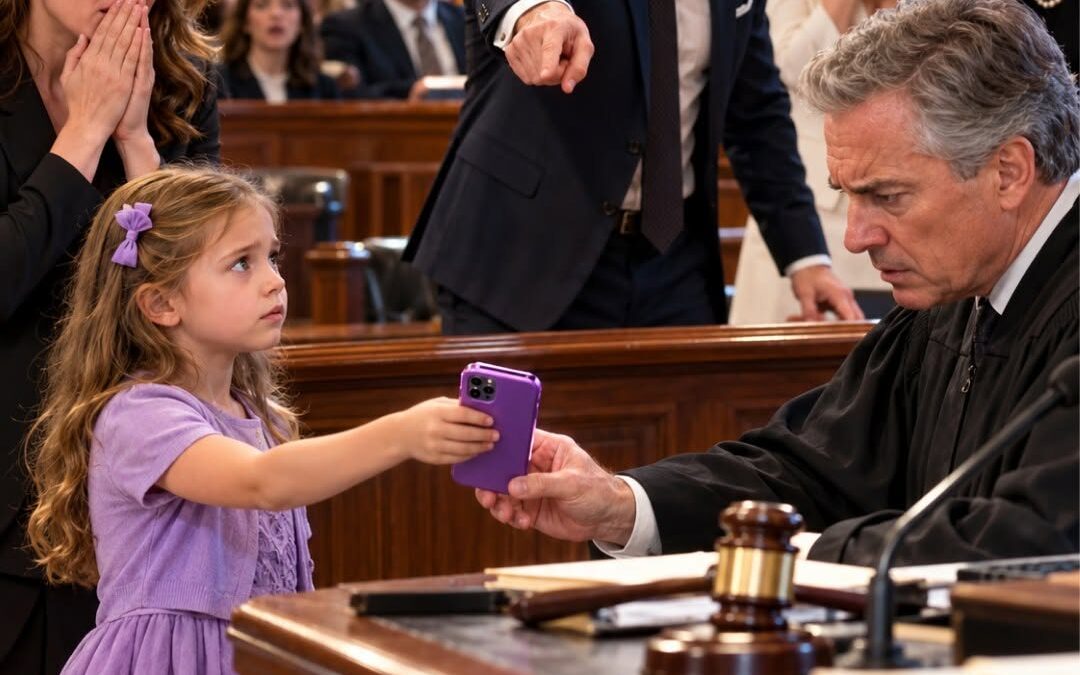
17. My Husband Told the Judge Our Daughter Was Afraid of Me—Then She Handed Over a Purple Phone and Asked Him to Listen
PART 2
My lawyer put the pages down before I could start asking Ada questions.
“She doesn’t have to explain this to us right now.”
I nodded.
Then I asked whether somebody could make sure she had somewhere quiet to eat her sandwich.
It was the useful thing I could think of that didn’t require turning my child into the person responsible for saving me.
The phone didn’t end the case in a dramatic minute.
The court addressed how the material should be preserved, reviewed, and considered without putting Ada in the middle of another argument.
Her father’s objections were heard.
So were the records.
The photograph showed the cards.
The recording supplied the context.
Grandma read a sentence.
Ada repeated it.
When she changed a word or said that wasn’t what happened, somebody corrected her.
My husband’s message tied him to the preparation.
It didn’t require anyone to guess whether his mother had acted alone.
The purple phone was supposed to help with the practice.
He’d given it to Ada so she could replay the words and become more comfortable saying them.
She used it for reading stories too.
That ordinary habit was why she understood she could record what happened instead of only repeating what she was told.
She didn’t know how to present evidence.
She knew adults were saying things about her mother that didn’t feel true.
I wanted to thank her until I couldn’t speak.
A counselor later helped me understand why gratitude needed care.
My daughter wasn’t supposed to learn that being loved meant rescuing a parent in court.
So I told her she’d done nothing wrong by asking for help.
Then I told her the adults would handle the next steps.
My husband said the cards were language exercises.
His mother said Ada misunderstood role play.
The recording made those descriptions difficult.
It contained instructions about what the judge needed to hear.
It contained pressure.
It contained a child asking whether Mommy would be sad.
I listened only when I needed to, with support.
There was no benefit in keeping the hardest parts on repeat.
The earrings his companion wore became another issue to address through the property arrangements.
They weren’t the proof of a relationship I needed most that morning.
The central betrayal was a father using his daughter’s trust to build a case against someone she loved.
Our disagreements about the house didn’t explain that away.
The court’s decisions followed a process, including further assessment and arrangements intended to protect Ada from pressure.
I cooperated even when questions felt unfair.
Being falsely accused didn’t mean no professional could ask me anything difficult.
It meant I deserved a fair chance to answer, and my daughter deserved adults willing to look carefully.
For weeks, she checked whether saying something nice about Dad would hurt me.
I told her no.
She could love him.
She could miss him.
She could also say when something made her uncomfortable.
Those weren’t disloyal choices.
They were feelings she was allowed to have.
I worked on keeping my own face from asking her to choose a team.
Some days, that took more effort than anything in court.
My lawyer handled the records and practical issues.
I found help for the anger.
Ada found a space where she could draw and talk without anyone grading her account.
The purple phone was preserved as needed.
We gave her another device later, with clear rules and no assignment to monitor adults.
She took photographs of everything.
Her rabbit.
A spoon.
The ceiling.
An unfortunate close-up of my chin.
I let the last one survive because she said it looked friendly.
Months later, she wanted to read a story aloud.
I sat at the kitchen table while she found her place.
Halfway through, she stopped.
“Do I have to say it exactly?”
I asked whether she meant the story.
She nodded, but her eyes were on me.
“No. You can make it your own.”
So the rabbit in the book became a dragon.
The dragon ate toast.
The toast apparently had feelings about being eaten.
I laughed until she laughed too.
Then we made lunch.
Turkey sandwiches.
I forgot the crusts again.
She noticed, rolled her eyes, and ate them anyway.
For a moment, she looked wonderfully like a child whose complaint was a mother who couldn’t remember a small preference.
I held on to that.
The legal arrangements didn’t become a fairy tale.
There were still calendars and careful handovers and conversations that required support.
But Ada stopped practicing sentences written by someone else.
And I learned that protecting our bond meant leaving her enough room to be herself, even when the truth of our family was difficult.
The next story she recorded was about a dragon who hated crusts.
I saved that one.
Disclaimer: This story is entirely fictional and created for entertainment purposes only. It does not represent any organization or individual, nor does it encourage inappropriate behavior. The content was generated with AI assistance.








