18. My Daughter-in-Law Invited Me to Christmas Dinner as a Guest—Then Handed Me an Apron in Front of Everyone
18. My Daughter-in-Law Invited Me to Christmas Dinner as a Guest—Then Handed Me an Apron in Front of Everyone
PART 2
I asked my son what else had been charged in my name.
He didn’t answer immediately.
Felicity did.
She said families shared resources.
I looked at the apron in my hand and asked whether sharing included asking the person whose card paid the bill.
Then I handed the fabric to a chair and stepped away.
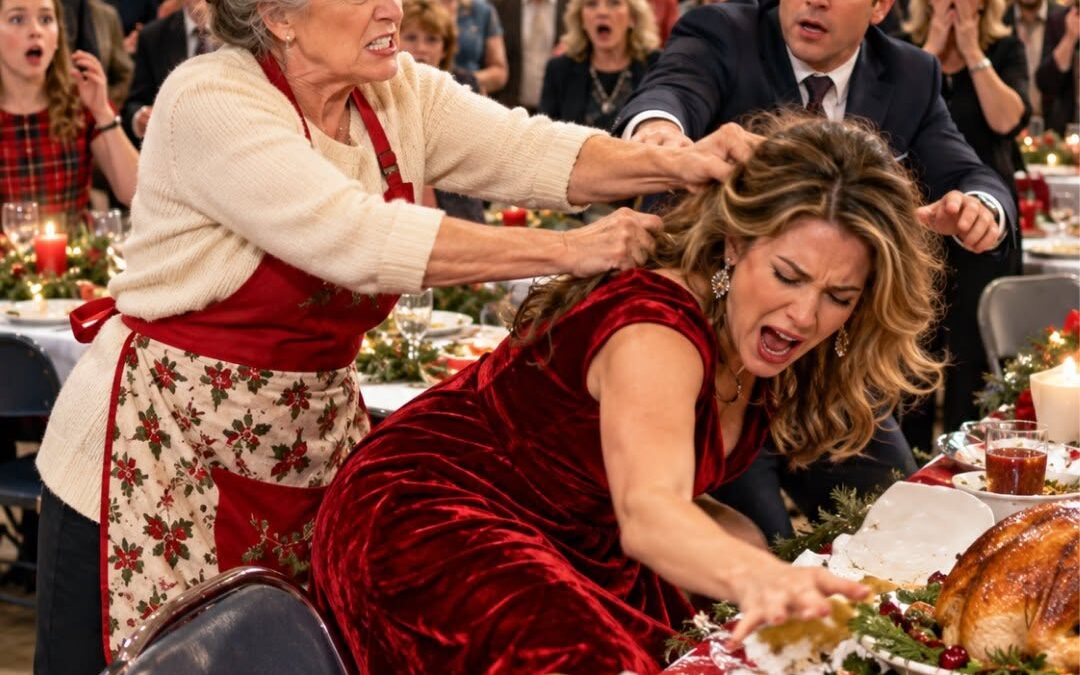
I had grabbed her hair during the struggle over it.
I apologized for that action clearly.
I wasn’t going to use embarrassment as permission to become someone else.
I also wasn’t going to let it erase the receipt.
The hall manager helped separate the authorized booking from the disputed payment.
I asked for records, not a public verdict.
Then I went home with a friend instead of continuing a family argument beside the turkey.
The date on the receipt matched the evening Felicity helped wrap gifts.
She’d had access to my desk while collecting tags and tape.
That mattered because the payment information wasn’t something I’d supplied for this event.
The signature wasn’t permission because it resembled mine.
I contacted the bank and obtained independent advice about the account activity.
The additional charges explained my son’s unfinished sentence.
Christmas wasn’t the only expense.
There were household purchases, deposits, and payments associated with plans he and Felicity hadn’t discussed with me.
Some had been presented to him as assistance I’d willingly offered.
Others he knew about.
He’d been happy not to ask too many questions while the bills seemed manageable.
I told him those were different levels of knowledge.
Both required an honest answer.
Felicity had described my help as something I wanted to keep private because I was proud.
Whenever he questioned a payment, she said speaking to me would make me uncomfortable.
It was a clever use of a family habit.
I’d often given without wanting attention.
She turned that into a reason I shouldn’t be consulted at all.
The apron was part joke, part defense.
If I became upset, she could describe me as jealous about losing Christmas.
If I helped quietly, everybody would see the familiar mother who liked serving.
Neither version required anyone to imagine I was being used.
My son didn’t invent the account details.
He did let convenience become his understanding of consent.
When he said that without blaming his wife for every decision, I was willing to listen.
I wasn’t willing to pay the disputed charges to preserve their comfort.
The records went through the appropriate process.
I changed access arrangements and reviewed what information I’d left available.
I refused to turn my caution into shame.
Trusting family wasn’t a defect that made their choices my fault.
The relationships changed.
Felicity called my boundaries humiliating.
I thought of the embroidered words and decided we understood humiliation differently.
We stopped discussing it directly.
My son asked whether he could visit without her.
I said yes, with clear conditions about money and no expectation that one coffee would restore everything.
He arrived without requests.
That helped.
We talked about the children.
Then he apologized for standing while she described me as hired help.
He hadn’t seen the apron before.
He had seen my face.
That distinction mattered to me.
I told him I wasn’t asking him to choose his mother over his marriage.
I was asking him to stop treating my silence as permission.
He nodded.
We had more than one conversation.
Some ended badly.
We still scheduled the next when we both felt able.
I stopped hosting celebrations out of obligation.
At first, December felt strange without a list of meals and presents to organize.
I kept reaching for a notebook I no longer needed.
Then a neighbor invited me to supper.
She said I didn’t have to bring anything.
I brought flowers anyway.
She put them in water and asked what I’d like to drink.
No apron appeared.
Halfway through dinner, I offered to help clear.
She said we could do it together afterward.
I nearly cried over a stack of plates.
It was becoming a pattern, discovering how much dignity ordinary courtesy could hold.
The next Christmas, I invited my grandchildren for an afternoon chosen around the arrangements everyone agreed to.
We baked biscuits.
They made a mess.
I helped clean it because I wanted to.
My son joined us later and washed the mixing bowls without turning it into a statement.
We talked about the weather.
One child gave me a handmade apron.
For a moment, my stomach tightened.
Then I read the words.
Grandma’s Kitchen. Everyone Gets a Turn.
I asked whether she wanted to wear it.
She did.
We tied it twice around her waist and let the smallest person in the room announce dessert.
Nobody presented a bill.
Nobody needed to earn a chair.
I sat down while the biscuits were still warm.
Disclaimer: This story is entirely fictional and created for entertainment purposes only. It does not represent any organization or individual, nor does it encourage inappropriate behavior. The content was generated with AI assistance.








