Daniel’s question opened a door I had been keeping shut for eleven months.
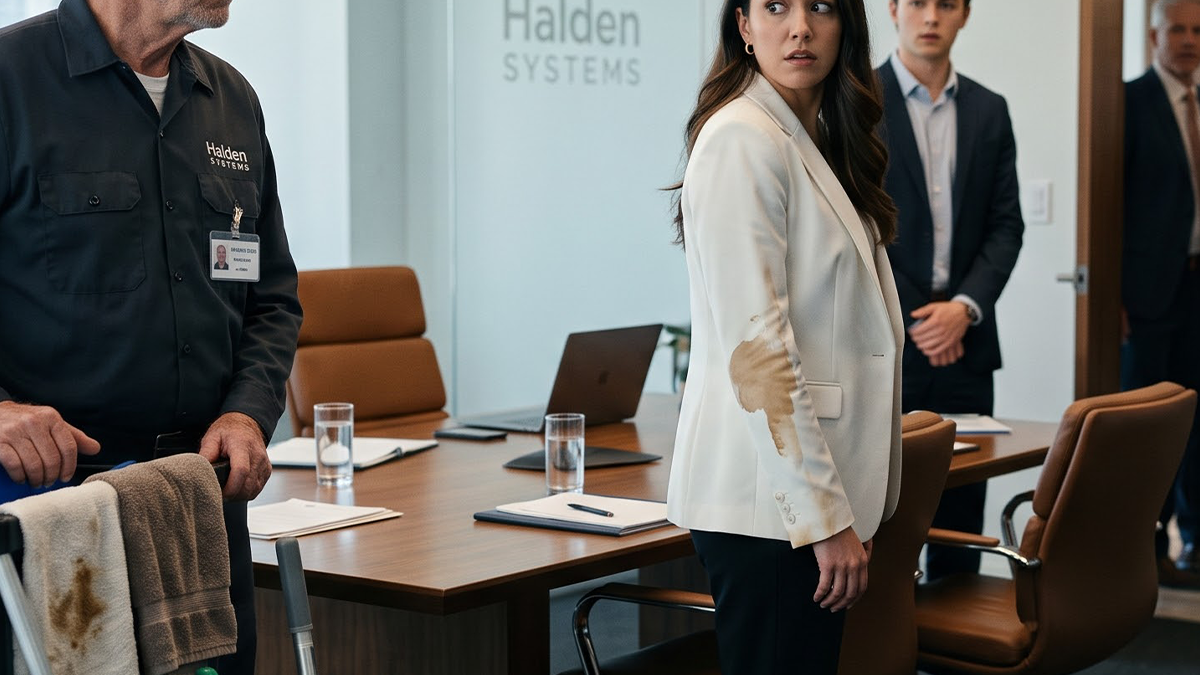
Daniel’s question opened a door I had been keeping shut for eleven months.
I looked around the room, but I spoke to my son.
“Because after your mother died, I stopped knowing what to do with myself.”
His expression softened.
“For forty-three years, your mother filled our house with noise. Music in the kitchen. Phone calls with your aunt. Complaints about my socks on the floor. Then one morning, all of it was gone.”
Daniel lowered his eyes.
“I tried retirement,” I continued. “I tried gardening. I tried those grief groups you found for me. I appreciated all of it. But every day, I woke up with nowhere I needed to be.”
“So you took a janitor job here?”
“I took three jobs when you were a kid.”
Daniel stared at me.
“After your biological parents died, you were six. Ellen and I had been your foster parents for eight months. I worked maintenance at the hospital, stocked shelves overnight twice a week, and drove deliveries on Sundays.”
Daniel swallowed.
“Mom worked too.”
“Of course. She cleaned offices until midnight, then came home and packed your lunch.”
“We didn’t do that because we were saints,” I said. “We did it because you were our son.”
Daniel sat across from me.
“You never told me it was that bad.”
“It wasn’t bad. It was exhausting. There’s a difference.”
I went on.
“When you got into college, Ellen cried for two days. She kept saying, ‘He gets to choose his life now.’ That mattered to her more than anything.”
Daniel pressed his thumb against his lower lip, the way he had since childhood when he was trying not to show emotion.
“And after she died,” I said, “I started feeling useless. So I came here because I knew buildings. Floors. Equipment. People leave a mess, and I know how to make it better.”
“You could have told me.”
“You would have tried to fix me.”
He flinched.
“I didn’t need a better house or a vacation. I needed a reason to put my shoes on in the morning.”
For the first time since Ellen died, I watched my son stop trying to solve my grief and simply listen to it quietly.
Then Daniel looked at Vanessa.
“What you said to him was unacceptable.”
She nodded.
“I understand.”
“No,” I said.
Both of them looked at me.
“I don’t think she does yet.”
Vanessa’s cheeks reddened.
I wasn’t interested in humiliating her. I wanted her to understand what had happened before she knew my last name mattered.
So I asked her one question.
“If Daniel hadn’t walked through that door, would you still be sorry?”
She opened her mouth.
Nothing came out.
That was answer enough.
Daniel leaned back in his chair.
Vanessa finally said, “Probably not.”
“I saw your uniform,” she continued, “and I decided what your value was.”
I nodded.
“That’s the problem.”
Daniel looked at me.
“What do you want me to do?”
“Nothing for me.”
He frowned.
“Don’t fire her because she insulted the CEO’s father. If company policy says her conduct deserves discipline, follow it. But don’t turn me into a special category of human being after everyone just watched what happens when someone gets put into a lower one.”
Vanessa looked up.
Daniel was quiet.
Then he asked the board to give us the room.
Most people filed out.
Marcus stayed near the door until Daniel thanked him for speaking up.
When we were alone, Vanessa apologized again.
This time, she didn’t mention stress, meetings, or my connection to Daniel.
She simply said, “I treated you like you didn’t matter.”
“Yes.”
“I’m sorry.”
“I believe you’re starting to be.”
Daniel later told me she received a formal disciplinary review and management training. She kept her job.
I kept mine too.
Not because I needed the paycheck.
Because Tuesday evenings still came, the house was still quiet, and grief did not disappear because my son had a corner office.
A few weeks later, Daniel started joining me for dinner every Thursday.
No assistants. No board calls.
Sometimes we talked about Ellen.
Sometimes we talked about nothing important.
One night, he asked whether I was embarrassed that people at his company saw me pushing a mop cart.
I laughed.
“Son, I spent half my life doing work people pretend not to see.”
Then I told him what Ellen used to say whenever either of us complained about a hard job.
“Work doesn’t tell you what a person is worth. How they treat people does.”
Daniel nodded.
I still clean the executive floor twice a week.
The difference now is that people know my name.
But the moment I remember most is not hearing the CEO call me Dad.
It is Marcus speaking before he knew I was anyone important.








