David did not promise me anything immediately.
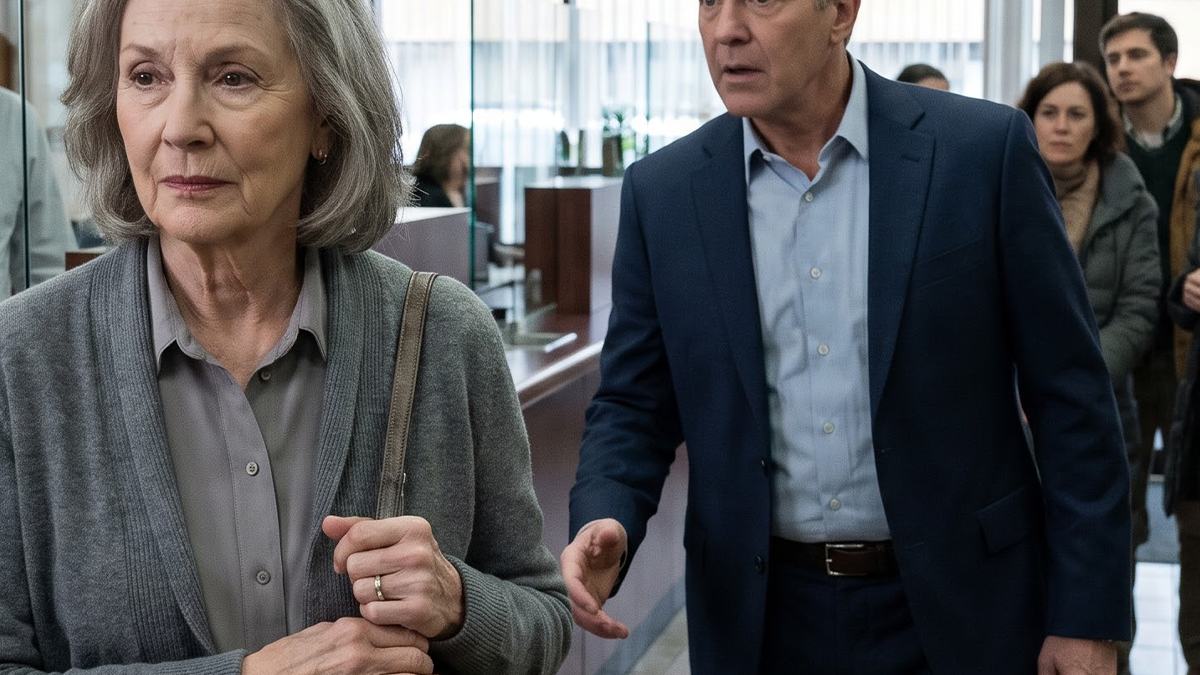
David did not promise me anything immediately.
That was the first reason I stayed.
Instead, he asked questions.
“What would meaningful training look like to you?”
“Start with the assumption that dignity is part of customer service.”
He took notes.
I told him what bothered me most was not being asked for identification. Banks should verify identity.
The problem was how quickly caution became condescension.
The supervisor had spoken louder and slower even though I could hear perfectly.
He had suggested confusion before considering that I might simply know my own account.
He had asked whether someone else managed my money.
And when a younger customer supported me, the room suddenly treated his voice as more reliable than mine.
“That is what needs fixing,” I said.
David nodded.
“You’re right.”
“Good. Now prove it.”
Within a week, his office sent me a draft plan.
I expected a glossy presentation.
Instead, I received twelve pages of policies, examples, complaint data, and proposed training sessions.
I read every page.
Then I sent back nineteen comments.
David called me the next morning.
“Nineteen?”
“You should be grateful. I was tired.”
He laughed.
The program they eventually developed was not built around telling employees to be nice.
It focused on behavior.
Do not assume cognitive impairment because someone is old.
Do not make financial capability judgments based on clothing, accent, occupation, or account balance.
Explain verification requirements clearly.
Use the same respectful tone whether someone is withdrawing fifty dollars or fifty thousand.
Know when extra fraud safeguards are appropriate and when they become an excuse for patronizing a customer.
First Harbor also created a review process for complaints involving age, disability, or perceived income level.
I insisted that frontline employees help design the training.
“They’re the people dealing with real situations,” I told David. “If you make this another corporate lecture, they’ll forget it before lunch.”
The teller who had served me participated.
So did the supervisor.
I did not demand that either of them be fired.
That surprised David.
“You don’t think there should be consequences?”
“There should be accountability. That isn’t always the same as unemployment.”
The supervisor received formal coaching and a performance review. The teller completed additional customer-care training.
A month later, I returned to the same branch.
This time, I wore the same gray cardigan.
The young teller recognized me immediately.
Her face tightened.
“Mrs. Carter.”
“Good morning.”
She looked nervous.
“I wanted to apologize.”
“You already did through your manager.”
“I know. I wanted to do it myself.”
I waited.
“I made assumptions about you,” she said. “Not just about your identification. About whether you understood what you were asking for.”
“Yes.”
“That wasn’t fair.”
“No.”
She took a breath.
“I’m sorry.”
I believed her.
Then I handed her a withdrawal slip.
Five hundred dollars.
For one second, we both looked at it.
She almost smiled.
“May I see your ID?”
I laughed.
“Yes, you may.”
She completed the transaction in less than three minutes.
No special treatment.
No executive office.
No phone call to my family.
Exactly what I had wanted the first time.
Before I left, the young man who had spoken up for me happened to walk into the branch.
We recognized each other.
He smiled.
“Looks like they finally gave you your money.”
“They did.”
“Good.”
I thanked him for what he had done that day.
He shrugged.
“It just seemed wrong.”
“That’s usually a good enough reason to say something.”
The charitable trust stayed with First Harbor.
Not because I was sentimental about fifty-two years of history.
History alone does not earn loyalty.
I stayed because the bank did something useful with an embarrassing mistake.
Six months later, David invited me to sit in on one of the training sessions.
An employee asked whether all of this had really started over a five-hundred-dollar withdrawal.
I answered before David could.
“No. It started because five hundred dollars was enough to show us who people believed deserved respect.”
The room became quiet.
I thought about the version of myself who had opened that first account with my husband in 1974.
We had almost no money then.
We counted grocery dollars.
We worried about rent.
Nobody at the bank knew whether we would ever become valuable customers.
They treated us well anyway.
I wanted the lesson to survive even when no president happened to walk through the door.
That was the standard I wanted back.
Money can make people listen to you.
I know that.
But the real measure of an institution is how it treats someone before learning what they are worth on paper.
I walked into that branch wanting five hundred dollars.
I left asking for something much more expensive.
A change in habit.
And to First Harbor’s credit, they finally understood the difference.








