I had never planned to tell that story in front of my daughter’s teacher.
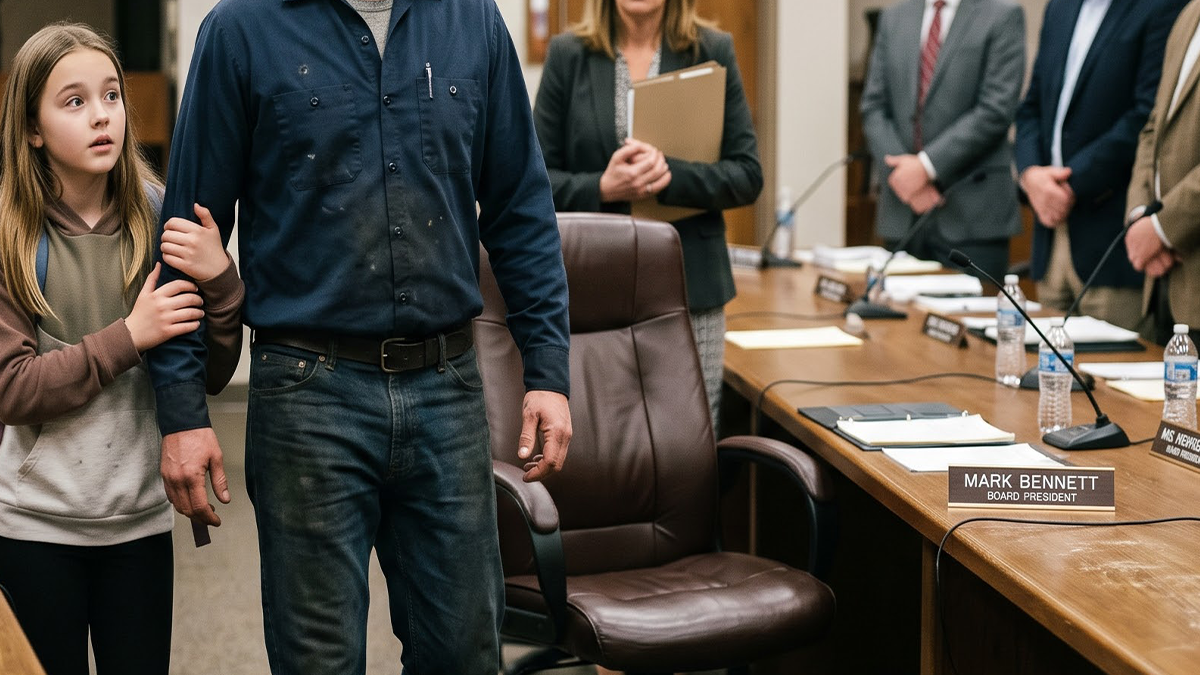
I had never planned to tell that story in front of my daughter’s teacher.
“My mother got sick when I was seventeen,” I said. “Her arthritis became so severe that some mornings she couldn’t hold a coffee mug.”
“My father had already been gone for years. We needed rent money, groceries, and someone to drive her to appointments. So I quit school and took a job at a repair shop.”
“I told myself it was temporary.”
It wasn’t.
For the next four years, I worked six days a week. I changed oil, swept floors, replaced brakes, and learned everything older mechanics would teach me.
At night, after Mom went to bed, I studied from used textbooks.
Eventually, I earned my GED.
Later, I took business classes at community college.
One garage became two.
Two became six.
None of that made me ashamed of being a mechanic.
“What bothered me today,” I continued, “wasn’t that someone thought I worked with my hands. I do. What bothered me was the assumption that working with my hands meant I couldn’t understand what my daughter was learning.”
Mrs. Collins looked up.
Her face was red.
I didn’t mention her name.
I didn’t need to.
“This STEM program matters to me because kids shouldn’t grow up believing intelligence only looks one way. Some students understand an engine before they understand an equation. They still deserve someone who sees what they can become.”
I glanced at the robotics proposal.
“When we funded the lab, I didn’t do it to put my company’s name on a wall. I did it because I know what it feels like to have ability without the right door opening.”
The board voted.
The expansion passed unanimously.
Afterward, people came over to shake my hand, but I was watching Lily.
Mrs. Collins approached us.
“Mr. Bennett, may I speak with you?”
“Sure.”
“I owe you an apology.”
I waited.
“What I said during the conference was dismissive and unfair.”
“Yes, it was.”
She nodded.
“I made assumptions based on your clothes and your job.”
“My clothes actually were pretty dirty.”
That surprised a small laugh out of her.
Then I said, “But that wasn’t the issue.”
“I know.”
She looked at Lily.
“And I’m sorry you had to hear it.”
Lily said, “My dad knows more about machines than anyone I know.”
Mrs. Collins nodded.
“I believe that.”
I could have demanded consequences.
But embarrassment wasn’t what I wanted.
So I said, “The next parent who walks in wearing work boots might not sit on the school board.”
“I’ll remember that.”
On the drive home, Lily was quiet.
At a red light, she spoke.
“Dad?”
“Yeah?”
“I wasn’t embarrassed because you’re a mechanic.”
I looked over.
“I was embarrassed because she talked to you like you were stupid, and I didn’t say anything.”
“You’re twelve,” I said. “You don’t have to fight every adult battle.”
She nodded.
Then I told her something I wished someone had told me at seventeen.
“You never need to be embarrassed by honest work. And you don’t have to prove someone wrong every time they underestimate you.”
A week later, Mrs. Collins invited me to speak to Lily’s class during a unit on engineering careers.
I almost said no.
Then Lily asked me to come.
So I showed up in the same mechanic’s shirt.
This time, it was clean.
I brought a brake caliper, a diagnostic scanner, and a damaged engine sensor.
The students asked better questions than most adults.
At the end, Mrs. Collins thanked me and told the class about the new robotics equipment.
Then she mentioned Bennett Auto Group’s contribution.
A boy near the back looked at Lily.
“Your dad paid for that?”
Before I could answer, Lily sat up straighter.
“My dad fixes cars,” she said.
She glanced at me and smiled.
“And he helped build this school.”
I had received awards before.
Business plaques.
Community certificates.
Photos with people in suits.
None of them meant as much as that sentence.
A week earlier, my daughter had held my hand while someone made her question whether my work made me less important.
Now she understood what I had spent years trying to teach her.
There was nothing small about knowing how to fix something.
There was nothing impressive about a title if it taught you to look down on people without one.
I was a business owner.
I was a school board member.
I was a high school dropout who went back and finished.
And I was still a mechanic.
That afternoon, when I returned to the garage, one technician asked why I was smiling.
I grabbed a wrench from my toolbox.
“My daughter finally understands what I do,” I said.
For once, I felt completely seen.
Then I went back to work.








