I Married a Blind Woman—Then Caught Her Reading the One Document Nobody Was Supposed to See
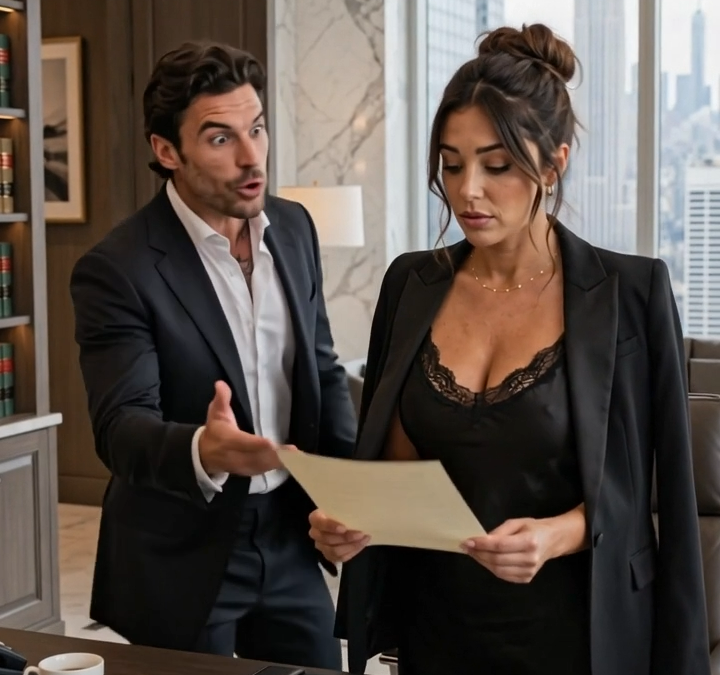
PART 2
I kept the folder between us.
“Whose investigation?” I asked.
Isabella didn’t reach for it again.
“An investigation into financial crimes connected to your business.”
I looked at her, waiting for a different answer.
She gave me none.
I sat across from her.
“Start with the blindness.”
“I lost most of my sight after an accident. I recovered more than the doctors expected, but I kept the improvement private.”
“Why?”
“Because someone in my family’s business was hiding things from me. People spoke freely when they thought I couldn’t read what was in front of me.”
I remembered the evenings when she’d asked innocent questions about unfamiliar voices.
She hadn’t been guessing.
She’d been observing.
“Are you working for the police?”
“I’m an investigator assisting a financial crimes inquiry,” she said. “I agreed to the marriage arrangement because it gave me access to records that connected several companies.”
The words made our entire life together feel manufactured.
I thought about the dinners we’d cooked, the arguments over music, the mornings she’d waited for me to wake up before making coffee.
“Were any of those moments real?”
“Yes.”
“That isn’t enough.”
“I know.”
She admitted she’d entered the relationship with a purpose she hadn’t disclosed. The marriage had been facilitated by business associates who believed our families would benefit. She hadn’t told me her professional role because revealing it could have compromised an active inquiry.
I looked at the open folder.
“Did you take documents from my office?”
“I examined some. I made notes. I shouldn’t have crossed that boundary without telling you.”
I told her I couldn’t accept secrecy simply because she believed her reasons were good.
She nodded.
Then she pointed to the payment authorization.
“That account was used to move money between companies linked to your partners. The document is designed to make you personally responsible if you approve it.”
I read the page again.
The payment looked routine at first glance. But the beneficiary’s name differed slightly from the company listed in the supporting paperwork.
I’d missed it.
“Are you saying someone set me up?”
“I’m saying the records raise serious concerns. Investigators still have to establish what happened.”
That cautious answer sounded more trustworthy than a dramatic accusation.
I asked why she had warned me instead of quietly allowing the transaction to proceed.
She looked tired.
“Because I couldn’t watch you sign something that might destroy you.”
“Then you should have told me sooner.”
“Yes.”
I wasn’t ready to forgive her.
I asked her to leave my office while I contacted independent counsel. She did.
That night, I gave my attorney the relevant records and disclosed everything Isabella had told me. I also acknowledged the questionable transactions I’d knowingly permitted through my businesses.
I didn’t pretend my hands were clean.
Over the next several months, I cooperated with the investigation through counsel. The authorities reviewed the financial transfers, including transactions involving companies with criminal associations.
Some accounts were frozen. Several contracts were challenged. I faced questions I couldn’t avoid simply by claiming I hadn’t read closely enough.
Isabella kept her distance during that time.
We spoke through our attorneys when necessary. We lived separately.
I learned that she had genuinely experienced severe visual impairment and undergone an extended recovery. The records also confirmed her investigative role.
Those facts didn’t repair the trust she’d broken.
But they changed what I believed about her motives.
She hadn’t chosen me because I was an easy man to love.
She’d chosen an assignment that placed her near someone she initially distrusted.
And then she’d begun questioning her own judgment.
Months later, after her role in the inquiry ended, she requested a meeting at a café.
I agreed.
She arrived without the careful hesitation she’d once used to navigate unfamiliar rooms.
Seeing her move confidently still surprised me.
“I don’t expect you to take me back,” she said.
“Good.”
She smiled sadly.
I told her I’d begun restructuring my businesses and leaving partnerships I should never have entered. None of that was a romantic gesture. They were choices I needed to make whether she returned or not.
She said she was considering leaving investigative work for a while.
“I need to figure out who I am when I’m not pretending to be someone else.”
I understood.
We talked for an hour.
Before leaving, I asked her one question.
“When did you stop seeing me as a case?”
She thought carefully.
“The night you made dinner because I said I’d had a bad day. You didn’t ask what happened. You just stayed.”
I remembered burning the pasta.
She remembered too.
For the first time in months, we laughed.
I didn’t ask her to come home.
Instead, I asked whether she’d like to meet again next week.
“No secrets?” I said.
“No secrets,” she answered.
And when she looked into my eyes, I finally knew she could see exactly who she was choosing.
Disclaimer: This story is entirely fictional and created for entertainment purposes only. It does not represent any organization or individual, nor does it encourage inappropriate behavior. The content was generated with AI assistance.








