I ran after Henry before he reached the corner.
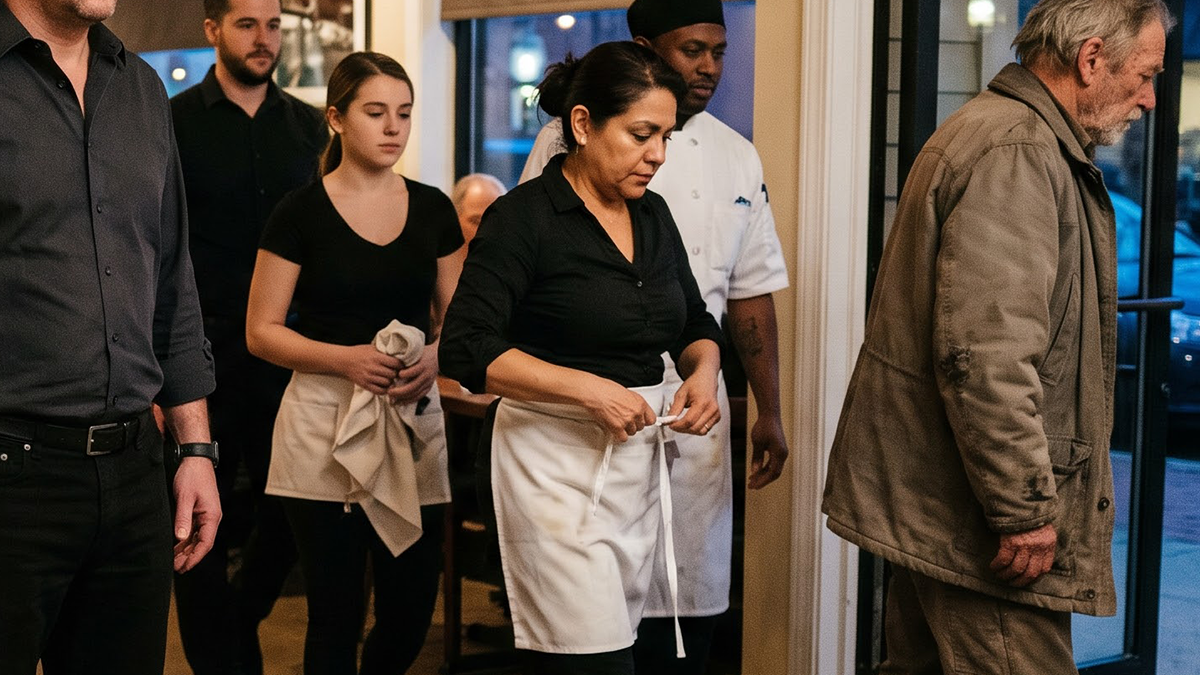
I ran after Henry before he reached the corner.
“Mr. Mason.”
He stopped.
The staff gathered several feet behind me.
I had spent three months believing ownership meant authority. Standing on that sidewalk, I finally understood that authority and trust were not the same thing.
“I owe you an apology.”
Henry looked at me but said nothing.
“I judged you by your coat. I decided you were bad for business without asking a single question.”
He glanced toward the restaurant.
“You were protecting the room you thought you bought.”
“That doesn’t excuse it.”
“No.”
I appreciated that he didn’t make it easier for me.
“I’d like you to come back inside.”
Henry looked toward table seven through the front window.
Then he shook his head.
“Not tonight.”
Maria stepped forward.
“Henry.”
“I’m fine.”
He looked at me again.
“I don’t need a free meal. I don’t need anyone fired. And I definitely don’t need people pretending I’m important because they learned my name.”
“I understand.”
“Do you?”
I thought about the customers I had been trying to impress.
“I’m starting to.”
Henry nodded toward my employees.
“Then start with them.”
I turned.
Maria, Kevin, two cooks, four servers, and our dishwasher were standing in the cold without coats.
“They followed you,” I said.
Henry smiled.
“They followed what they believed was right.”
Then he gave me the sentence I would remember long after that night.
“Take care of them. They’re the reason this place mattered.”
He walked away before I could answer.
For several seconds, none of us moved.
Then I looked at Maria.
“Are you coming back?”
“That depends.”
“On what?”
“Whether anything changes.”
Fair enough.
We went inside and finished service.
It was messy.
We were short-handed for twenty minutes, several tables complained, and I personally carried food from the kitchen because nobody had time to care that I was the owner.
After closing, I asked everyone to stay.
Nobody looked excited.
I stood beside table seven.
“I bought this restaurant because the numbers made sense,” I said. “I thought the old systems were the problem.”
Kevin leaned against the bar.
“Some were.”
A few people laughed.
“I’m sure. But I treated history like clutter. And tonight I treated a person the same way.”
I apologized to the staff.
Not for embarrassing myself.
For putting them in a position where doing the decent thing meant risking their jobs.
Then I asked them what I needed to understand.
For the next two hours, they told me.
Henry remembered birthdays.
Ellen brought soup to employees who were sick.
When Kevin’s father died, Henry covered his shifts for a week and still paid him.
When Maria was nineteen and had nowhere to stay, Ellen helped her find an apartment.
They had rules.
They had standards.
But people came before appearances.
I had inherited a restaurant full of employees who remembered that.
The next morning, I called Henry.
He did not answer.
I called again two days later.
This time he picked up.
“I said you didn’t owe me anything.”
“I know. I’m asking for help.”
That got his attention.
I asked him to tell me which traditions mattered and which ones everyone secretly hated.
He laughed.
“That second list is longer.”
A week later, he returned.
He wore clean clothes that time, which made me feel worse somehow.
Nobody made an announcement.
Maria simply led him to table seven.
I sat with him for coffee.
He told me about Ellen.
They met when she spilled iced tea down his apron and blamed the glass.
They married four years later.
For nearly forty years, they sat at table seven after closing on their anniversary.
After she died, Henry kept the reservation alone.
“I know she isn’t coming,” he said. “I just like remembering the years when she did.”
That was when I understood the chair he had touched before leaving.
Over the next year, I changed plenty at Mason House.
New reservation software.
A smaller menu.
Better kitchen equipment.
But table seven stayed where it was.
So did Henry’s monthly reservation.
I also stopped confusing expensive customers with important ones.
Those are not always the same people.
My staff did come back that night.
But their loyalty did not automatically transfer to me.
I had to earn it.
That was probably the best business lesson anyone ever gave me.
I bought Mason House believing the restaurant belonged to whoever held the deed.
Henry taught me differently.
A place belongs, in part, to the people who give years of their lives to it.
The owner only gets the chance to deserve them.
Months later, when Henry walked in and everyone greeted him by name, I understood what I had nearly thrown away that night: not a customer, but the memory holding them together.








