I waited until the bus was quiet before I told Ethan the part I had avoided for years.
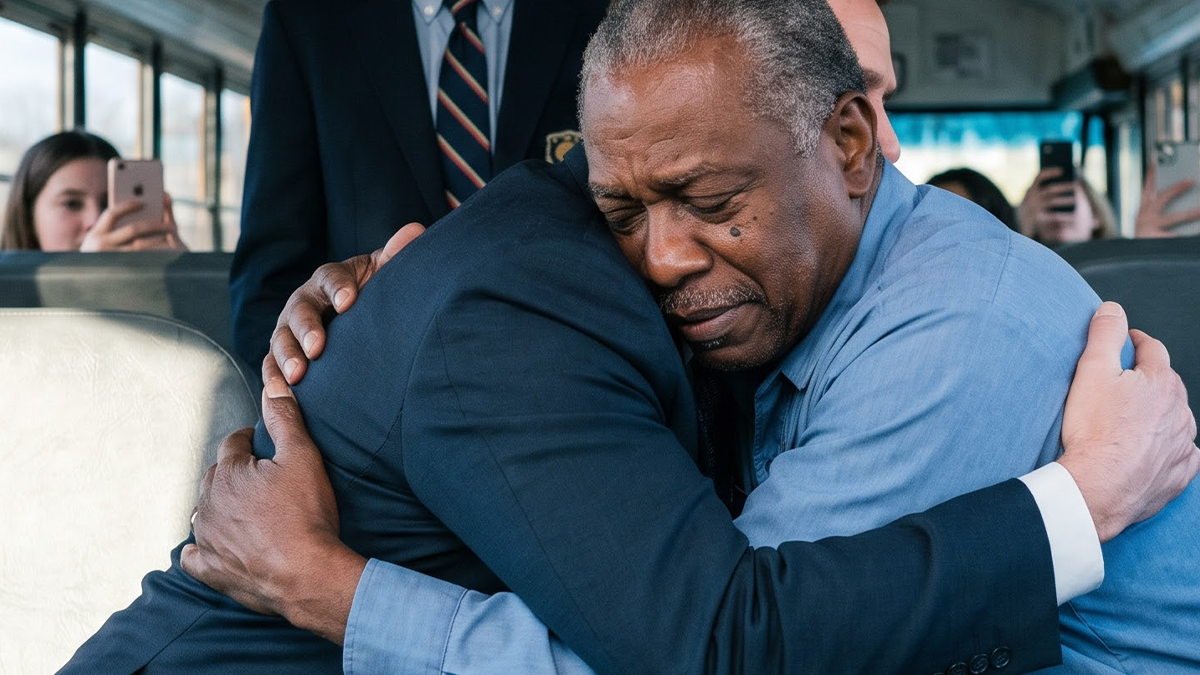
I waited until the bus was quiet before I told Ethan the part I had avoided for years.
“When Robert met me, I owned two shirts that fit and one pair of sneakers with tape over the side.”
Ethan looked down at his expensive shoes.
I continued.
“My mother loved me. She was also sick. Addiction made our home unpredictable. Some weeks there was food. Some weeks there wasn’t. I learned early not to ask for things.”
Robert sat behind the wheel, listening.
“When I came to his house, I expected rules and disappointment. Instead, he took me shopping.”
Robert smiled.
“You hated everything I picked.”
“I was ten.”
“You had opinions.”
That earned a nervous laugh from Ethan.
I looked at him.
“Mr. Harris worked maintenance at a hospital. Denise worked cafeteria shifts at an elementary school. They were not rich. They still found money for school supplies, baseball fees, and the bus pass I needed for an advanced math program.”
Ethan glanced toward Robert’s shoes again.
I noticed.
“So yes, those shoes are worn.”
Robert shook his head.
“Michael.”
“No. He needs to hear this.”
I kept my voice calm.
“Everything you have began with people like him making sacrifices when nobody was watching.”
Ethan’s eyes filled.
Robert turned around.
“Your father is giving me too much credit.”
“I’m giving you less than you deserve.”
He looked uncomfortable.
That had not changed.
Ethan finally said, “Mr. Harris, I’m sorry.”
Robert studied him.
“For the shoes?”
“For treating you like you were less than me.”
“That’s better.”
Ethan swallowed.
“I thought being funny mattered more than being decent.”
Robert nodded.
“You’re fifteen. That is a common disease.”
Ethan laughed through his embarrassment.
Then Robert looked at me.
“And you.”
“What about me?”
“You waited thirty years.”
That one landed.
“I know.”
“Denise asked about you until the day she died.”
The air left my chest.
“When?”
“Six years ago.”
I looked down.
“I’m sorry.”
“She was proud of you.”
I could not answer.
For years, I had told myself I lost contact because addresses changed and life got busy.
The truth was uglier.
Once I became successful, returning to that part of my childhood meant remembering how powerless I had been.
So I kept moving forward.
Robert had paid the price for my avoidance.
After the students left, I asked him to dinner.
He hesitated.
Ethan spoke first.
“Please come.”
Robert looked at him.
“You sure you want an old bus driver at your fancy table?”
Ethan winced.
“I deserved that.”
Robert smiled.
“Yes, you did.”
He came.
Over dinner, Ethan asked questions I had never answered.
What was I like at ten?
Bad at baseball.
Obsessed with computers.
Afraid of thunderstorms.
Did I really hide food?
Yes.
Did Robert really buy my first suit?
From a discount store, with sleeves too long.
The next morning, the video from the bus had already spread among students.
Ethan asked if he should post an explanation.
“No,” I said.
“Why?”
“Because this is not about repairing your image.”
I told him to apologize privately to the driver and let his behavior afterward do the explaining.
For the rest of the semester, Ethan rode Robert’s bus when his schedule allowed instead of using my car.
I did not force that.
He asked.
Sometimes he helped clean trash from the seats after the last stop.
Sometimes they talked.
Sometimes Robert made him sit quietly because driving teenagers was exhausting enough.
A month later, Ethan noticed Robert’s phone finally died.
He asked if he could buy him another one.
I said, “Ask him what he wants.”
Robert refused an expensive model.
He chose a basic phone and insisted on paying half.
Ethan accepted that.
That mattered to me.
I had spent years trying to give my son everything I lacked.
I forgot that some of the best things I received had never been expensive.
Consistency.
Patience.
A bedroom door someone knocked on before entering.
An adult who showed up.
At the end of the school year, Robert came to our house for dinner again.
Before he left, Ethan noticed his old shoes by the door.
He smiled.
“I’m not saying anything.”
Robert laughed.
“Smart kid.”
I walked Robert outside.
“I should have found you sooner.”
“Yes,” he said.
No comforting lie.
Then he hugged me.
“You found me now.”
I watched him drive away in the school bus.
Ethan came outside and stood beside me.
“You really never told me any of that.”
“I should have.”
He was quiet.
Then he said, “I thought money was the part of your story that mattered.”
“So did I for a while.”
I looked at him.
“Everything you have began with a man wearing shoes like those.”
This time, Ethan did not look away.
Neither did I.








