In April 1987,
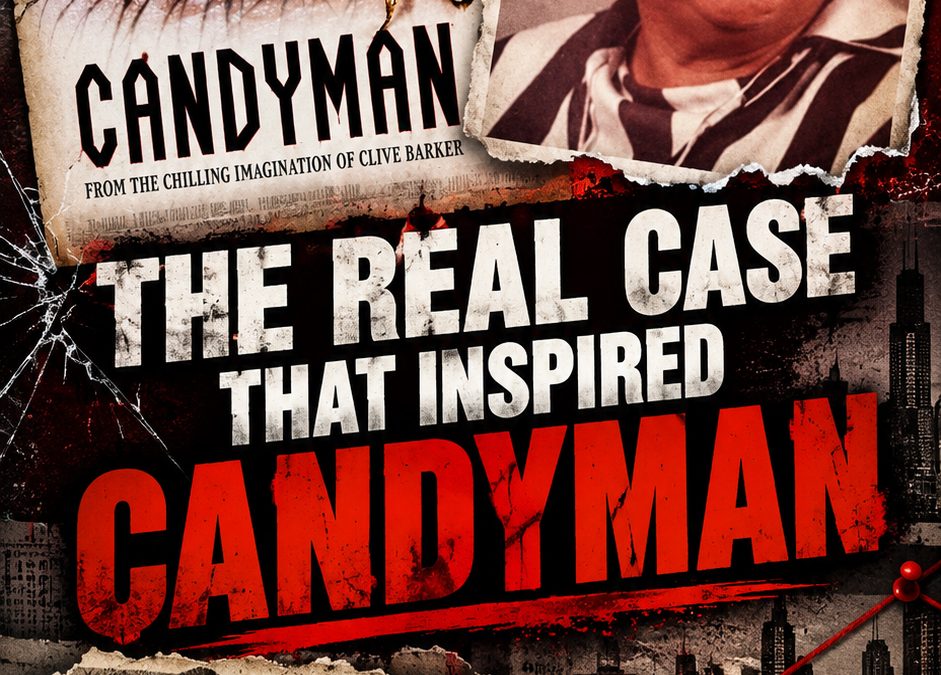
In April 1987, a woman living on the eleventh floor of a Chicago public housing building made a desperate telephone call to police.
She reported that someone was trying to enter her apartment through the bathroom cabinet.
To someone unfamiliar with the building, the statement might have sounded impossible.
But behind that ordinary household fixture was a structural vulnerability that could allow a person to move between apartments.
The woman was Ruthie Mae McCoy, fifty-two years old.
By the time authorities discovered what had happened inside her home, Ruthie was dead.
Five years later, a horror film would bring a disturbingly similar image to movie theaters across America.
The film was Candyman, released in 1992 and directed by Bernard Rose.
Although the movie featured a supernatural killer, one of its most unsettling ideas had roots in the real circumstances surrounding Ruthie’s death.
Her story began not with a ghost or an urban legend, but with a problem involving the design and security of public housing.
Ruthie lived in Chicago during a period when some of the city’s large public housing developments were facing serious problems involving maintenance, safety, and crime.
The building where she lived contained plumbing access spaces behind bathroom fixtures.
These spaces were intended to accommodate pipes and provide access for maintenance.
However, openings between adjoining apartments could also create an unexpected security risk.
A person who gained access to the space behind one bathroom fixture could potentially move through the shared wall area and enter another apartment.
For residents, that meant a locked front door did not necessarily guarantee protection.
The danger was hidden behind something that appeared completely ordinary.
On the night Ruthie contacted police, she reported precisely that kind of intrusion.
Someone, she said, was trying to come through her bathroom cabinet.
Her words described an unusual method of entry, but one that was physically possible because of the building’s construction.
The call should have directed attention toward a specific and potentially dangerous access point.
Instead, Ruthie’s situation ended tragically.
When authorities eventually entered her apartment, they discovered that she had been killed.
Investigators examined the scene and identified the opening behind the bathroom cabinet as a possible route of entry.
The discovery transformed what might initially have seemed like an extraordinary claim into a serious concern about the building itself.
The opening was not imaginary.
The vulnerability existed.
And Ruthie had reported someone attempting to exploit it before she was found dead.
The case raised questions extending beyond the identity of the person responsible.
It also exposed the dangers associated with poorly secured maintenance spaces and the difficulty vulnerable residents could face when reporting emergencies that sounded unusual.
For Ruthie’s family and community, the tragedy was real and immediate.
For the wider public, it became an example of how dangerous conditions could exist inside residential buildings without being obvious from the outside.
Years passed.
Then, in the early 1990s, British filmmaker Bernard Rose began developing a movie based on The Forbidden, a short story by horror writer Clive Barker.
Barker’s original story explored urban legends, fear, and the relationship between violence and the communities in which frightening stories circulate.
Rose relocated the setting to Chicago.
As he researched the city, he encountered reporting about Ruthie McCoy’s death.
The account contained an image that seemed almost impossible to forget.
A woman had reported someone coming through her bathroom wall.
The danger was not visible from the hallway.
It was concealed behind a familiar fixture inside her home.
That detail offered the filmmaker a way to connect supernatural horror with an unsettling real-world possibility.
In the resulting film, Candyman, the bathroom mirror became a central visual element.
The story follows Helen Lyle, a graduate student investigating an urban legend associated with Chicago’s Cabrini-Green housing development.
As Helen becomes increasingly involved in the legend, the boundary between ordinary reality and supernatural terror begins to disappear.
The film’s title character is associated with a ritual in which his name is repeated five times before a mirror.
The ritual itself was fictional.
There is no established evidence that Ruthie’s death involved anything resembling the summoning legend.
The connection lies instead in the physical idea of a hidden passage behind a bathroom fixture, allowing an apparently impossible intrusion into a private home.
This distinction is important because the real tragedy and the movie’s mythology are not interchangeable.
Ruthie was a real woman whose life ended violently.
Candyman was a fictional work that incorporated elements of urban folklore, social history, and horror.
The film did not simply reproduce her death.
It transformed aspects of the circumstances into a supernatural narrative.
When Candyman arrived in theaters in October 1992, audiences encountered a story that combined familiar horror conventions with a setting shaped by urban inequality and public housing conditions.
The film’s imagery made ordinary domestic spaces feel threatening.
A bathroom mirror, something people look into every day without concern, became associated with the possibility of an unseen presence.
But for those familiar with Ruthie’s case, the fear carried a different meaning.
The disturbing idea was not that a supernatural figure might appear in a reflection.
It was that someone could enter a home through a hidden opening while the resident believed the apartment was secure.
That possibility had already existed in Chicago.
And Ruthie had reported it.
Over the following decades, Candyman became an influential horror film, inspiring further installments and renewed discussion about its themes.
Its connection to Ruthie’s death also attracted attention from people interested in the true stories behind fictional horror.
Yet there is a danger in remembering the movie more clearly than the woman whose experience helped inspire one of its ideas.
Ruthie’s life was not a horror screenplay.
Her final call was not an invented scene designed to frighten an audience.
It was a request for help.
The structural opening investigators identified was not a supernatural device.
It was a physical security problem inside a residential building.
Thirty-four years after Candyman’s theatrical release, the relationship between the film and the real case remains deeply unsettling.
The movie invited audiences to fear what might appear in a mirror.
Ruthie’s case revealed something more immediate: the possibility that a dangerous person could exploit a hidden weakness in the walls of someone’s home.
Long before audiences heard the name Candyman repeated in a darkened theater, a woman in Chicago had already described someone trying to enter through her bathroom cabinet.
Her warning was followed by a discovery that confirmed the danger was not impossible.
And behind one of horror cinema’s most memorable images remains the real story of Ruthie Mae McCoy.








