My Father Called Me From a Police Station While My Brother’s Wife Told Officers He Was Too Unstable to Be Believed
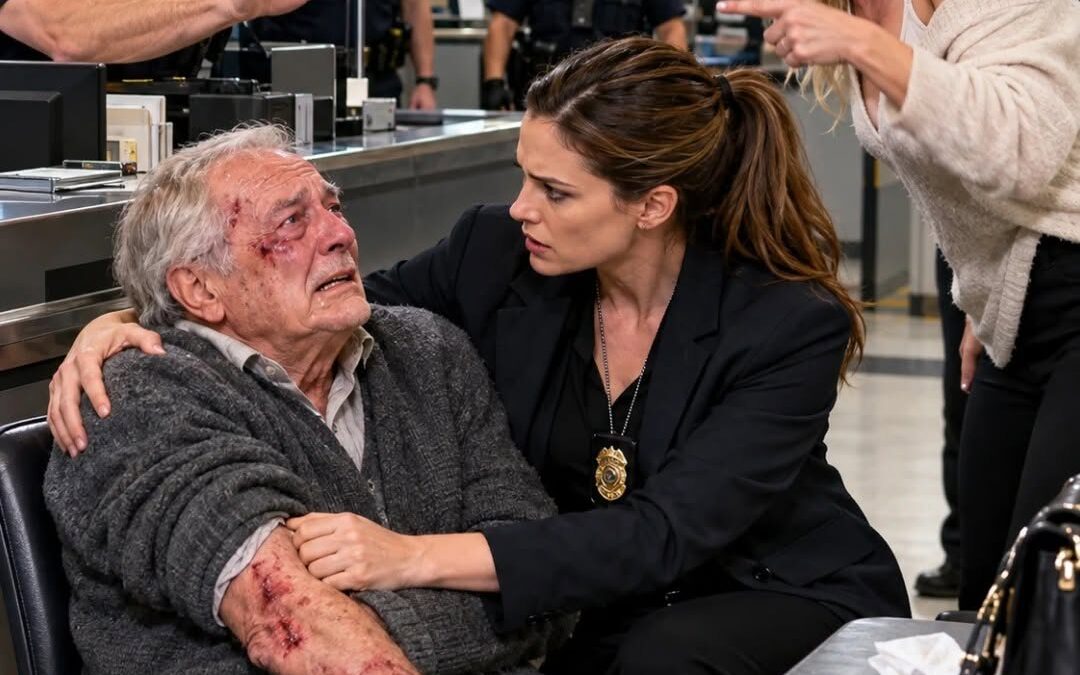
The sergeant stopped the recording before playing it any louder.
He asked Dad whether he wanted an advocate present and told us medical help was on the way.
Beth started talking over him.
My brother stared at the cracked phone.
That was the first time I’d seen him afraid of something that wasn’t a bill.
Dad agreed to preserve the recording. I gave my own account separately and made clear where I hadn’t been present.
Being his daughter didn’t make guesses into evidence.
Being an investigator didn’t give me ownership of someone else’s case.
The file lasted eleven minutes.
It began with Dad reading his grocery list.
Then the door opened.
Beth asked whether he’d signed the papers.
He said he wanted me to review them first.
My brother told him I was too busy and would only complicate matters.
Dad refused.
The argument that followed explained the broken handle, the injuries, and why my brother hadn’t called for help.
He was there.
He’d watched Beth hurt Dad, then helped shape a story in which Dad became confused and aggressive.
I didn’t listen to every second beside him.
The officers could do their work without making him relive it in a plastic chair.
At the hospital, I sat close while he answered questions about what happened.
He kept apologizing for making trouble.
I asked who’d taught him to call asking for help trouble.
He looked down.
I knew the answer.
Over several months, Beth and my brother had made ordinary mistakes sound like proof he couldn’t live independently.
They moved his wallet, changed appointment times without telling him, and described his objections as confusion.
The clinician’s assessment hadn’t supported their claims.
That was why they wanted signed authority before another appointment could undermine the story further.
The papers concerned control of his accounts and property.
My brother had debts he hadn’t disclosed.
Beth believed Dad’s savings were an inheritance they shouldn’t have to wait for.
Dad had begun recording lists because he was trying to defend his memory against accusations that kept changing.
The phone mattered because he’d started recording before they arrived.
Its cracked screen explained my brother’s quick claim that it was unusable.
He hoped nobody would check.
The house key mattered too.
Dad wasn’t being irrational when he asked whether the door was locked.
He knew the people hurting him could walk inside whenever they wanted.
After he received care, we arranged somewhere safe for him to stay.
He chose my guest room temporarily.
I asked what he wanted to bring.
His answer wasn’t the account paperwork.
It was Mom’s gardening notebook.
We collected it through a safe arrangement, along with his medication and clothes.
His bank reviewed access permissions with him. He obtained independent legal advice. The investigation proceeded through the officers assigned to it.
I didn’t call colleagues to demand an outcome.
Dad deserved a case built on what happened, not my job title.
Beth sent messages accusing me of stealing her place in the family.
I preserved them and stopped responding.
My brother asked whether we could solve everything privately.
Dad answered that request himself.
“No.”
I was in the kitchen when he said it.
I didn’t interrupt.
Later, he cried for his son.
That didn’t mean he doubted his decision.
It meant grief and protection could happen in the same person.
There were consequences for Beth and my brother as the evidence was reviewed. Dad participated with support, choosing when he needed breaks.
He wasn’t required to become fearless to be believed.
Months later, he returned home.
The locks were different.
So were the emergency contacts.
I asked whether he wanted me to stay the first night.
He said he’d like dinner, then some quiet.
It took effort not to interpret independence as rejection.
After everything, I had my own lessons to learn.
I cooked badly.
He corrected my rice, gently, the way he’d done when I was a teenager.
Then he opened Mom’s notebook and showed me where she wrote about planting bulbs.
For the first time in months, he was planning something beyond the next difficult conversation.
At the door, I asked whether he’d call if he needed me.
He lifted his repaired phone.
“Even for groceries?”
“Especially groceries.”
He laughed.
The sound was rough, but familiar.
I waited in my car until I saw him switch off the hallway light.
Then I drove home.
The next morning, he sent a photograph of a shopping list.
Under milk, bread, and coffee, he’d added one more item.
New bulbs for spring.
I sent back a question about colors. He called instead, and we spent twenty minutes disagreeing cheerfully about flowers neither of us had planted yet.
He chose yellow. I ordered them that afternoon, using the address he still called his own.
Disclaimer: This story is entirely fictional and created for entertainment purposes only. It does not represent any organization or individual, nor does it encourage inappropriate behavior. The content was generated with AI assistance.








