On a Saturday afternoon in October 2002,
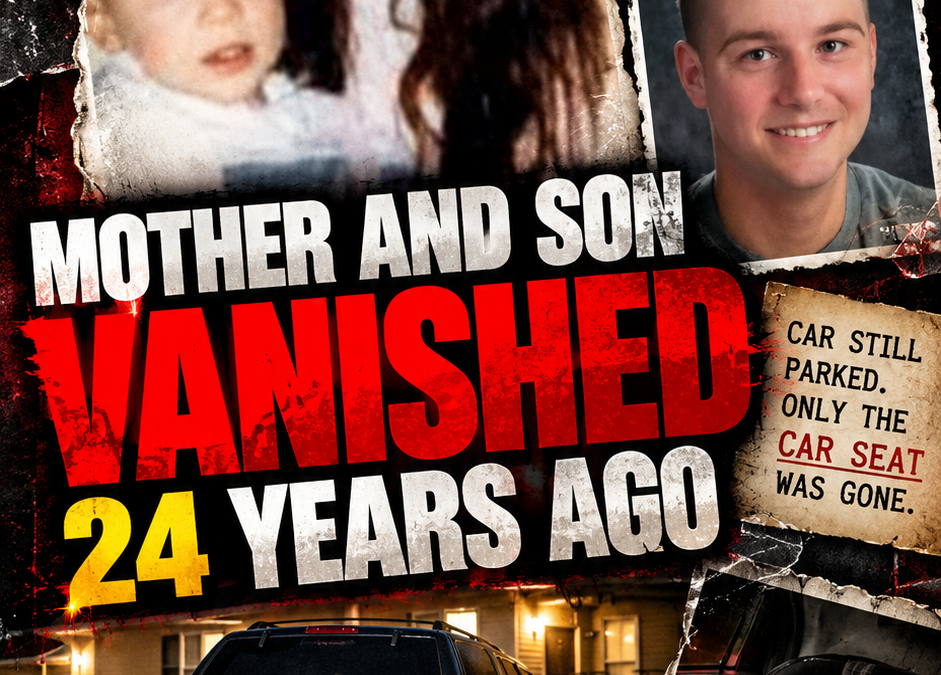
On a Saturday afternoon in October 2002, a young mother finished her shift at a Sam’s Club in Valdosta, Georgia, and left work. She was twenty-five years old, had a three-year-old son, and was making plans to move closer to her family.
Within two days, both mother and child would be missing.
Her name was Paula Ann Wade.
Her little boy was Brandon.
What happened after Paula left work on October 12 has remained one of the most troubling unanswered questions surrounding their disappearance.
There was no confirmed sighting of the pair leaving town, no established explanation for their absence, and no discovery that could tell investigators where they had gone.
The one thing authorities knew was that Paula’s vehicle had been left behind.
And something normally kept inside it was missing.
Before the disappearance, Paula had been living in Valdosta while working at Sam’s Club. She was planning to transfer to another store in Florida, a move that would bring her closer to relatives.
Her family remained an important part of her life.
One of the routines they shared was a Sunday telephone call.
It was a simple arrangement, but regular enough that her parents noticed when the call did not come.
On Saturday, October 12, Paula was seen leaving work.
Nothing in the available account established that she was in immediate danger at that moment.
There was no confirmed indication that she intended to disappear or abandon her plans to move.
But after leaving the store, her documented movements became unclear.
Sunday passed without the expected telephone call.
For her parents, the silence was unusual.
Then Monday morning arrived, and another routine was broken.
Paula failed to report for work.
Her absence concerned her supervisor enough that arrangements were made for someone to check on her.
What they found at her apartment only deepened the mystery.
Paula’s Chevy Blazer was still parked outside the building.
The vehicle did not appear to have been disturbed.
There was no obvious damage or sign that someone had searched through its contents.
Yet Paula was nowhere to be found.
Neither was Brandon.
The discovery presented investigators with a difficult question.
If Paula had left the apartment voluntarily, why had she left her vehicle behind?
And if something unexpected had happened, why was there so little immediate evidence explaining it?
Then attention turned to an item that was no longer inside the SUV.
Brandon’s car seat was missing.
For a child only three years old, a car seat was an ordinary part of traveling by automobile.
Its absence suggested the possibility that Brandon had been transported in another vehicle.
But that was only a possibility.
Investigators could not establish from the missing seat alone whether the pair had entered another vehicle, who might have transported them, or where they might have gone.
The detail was significant precisely because it offered a potential clue without providing an explanation.
Paula’s SUV remained in the parking lot.
Her son’s car seat did not.
As investigators examined the family’s circumstances, they also looked into Paula’s husband.
He was serving in the military at the time and was stationed in South Carolina, approximately five hours from Valdosta.
His location was an obvious part of the initial investigation because he was closely connected to both missing individuals.
Authorities checked his whereabouts.
According to the reported investigation, they verified his location and ruled him out as a person of interest.
That finding was important, but it did not bring investigators closer to determining what had happened to Paula and Brandon.
The case remained open.
Investigators faced the challenge of reconstructing a period of time for which little confirmed information was available.
Paula had left work Saturday.
She had missed her usual family telephone call Sunday.
She had failed to appear at work Monday.
And when someone checked her apartment, both she and her son were gone.
Those events established a timeline, but not a destination.
There was no confirmed account explaining whether Paula had arranged to meet someone, accepted transportation from another person, or encountered an unforeseen emergency.
Without reliable evidence, those possibilities could not be treated as facts.
For Paula’s relatives, the uncertainty was especially difficult because the disappearance involved a young child.
Brandon was only three years old when he vanished.
He depended on adults for transportation, shelter, and care.
His disappearance alongside his mother meant investigators had to consider the circumstances of both individuals rather than treating the case as a single missing adult.
As months became years, the family continued seeking information.
The lack of a confirmed resolution meant that even ordinary questions remained unanswered.
Had anyone seen Paula after she left Sam’s Club?
Was there someone who knew about her plans to transfer to Florida?
Could another person have provided transportation for her and Brandon?
And why had the car seat disappeared while the Chevy Blazer remained behind?
None of these questions produced a publicly established explanation.
Over time, the case became more difficult for people outside the investigation to recognize.
Photographs taken in 2002 showed Paula as a young woman and Brandon as a small child.
But children change dramatically as they grow older.
If Brandon were alive, he would no longer resemble the three-year-old boy shown in the original missing-person notices.
This problem became central to a renewed public awareness effort in 2024.
The National Center for Missing & Exploited Children partnered with local law enforcement to distribute age-progressed images of Paula and Brandon.
The campaign placed their photographs on screens at more than 2,800 gas stations throughout Georgia and Florida.
The locations were selected to bring the case before a large traveling public, including people who might not have encountered the original missing-person reports.
Age progression could not establish what Paula and Brandon actually looked like decades later.
But it offered a way to help people imagine how their appearances might have changed.
The campaign also reminded the public that the investigation had not been forgotten.
Twenty-two years after the disappearance, authorities were still seeking information.
And the family’s hope remained that someone might remember a detail that had never been reported.
By 2025, new tips were reportedly still reaching investigators.
The available information did not establish whether those tips produced significant new leads.
But their existence showed that the case continued to attract attention long after the original search.
October 2026 marked twenty-four years since Paula and Brandon disappeared.
Brandon would now be twenty-seven years old.
Paula would be approaching her fiftieth birthday.
Their family had spent nearly a quarter century without knowing what happened after that October weekend.
There had been no publicly confirmed discovery of either missing person.
No established explanation had resolved how they left the apartment or where they went afterward.
And the central evidence remained much the same as it had been in 2002.
A mother finished work on Saturday.
She missed a familiar telephone call on Sunday.
She did not arrive at work Monday.
When someone went to check on her, the family vehicle was waiting in the apartment parking lot.
Paula and Brandon were missing.
So was the child’s car seat.
Twenty-four years later, investigators still have not publicly established who, if anyone, helped them leave, whether they traveled beyond Valdosta, or what happened during the hours when their movements became unknown.
The Chevy Blazer was found exactly where Paula had left it.
But the mother and her little boy never returned.








