PART 3 — THE LAST SECRET OF 1966
PART 3 — THE LAST SECRET OF 1966
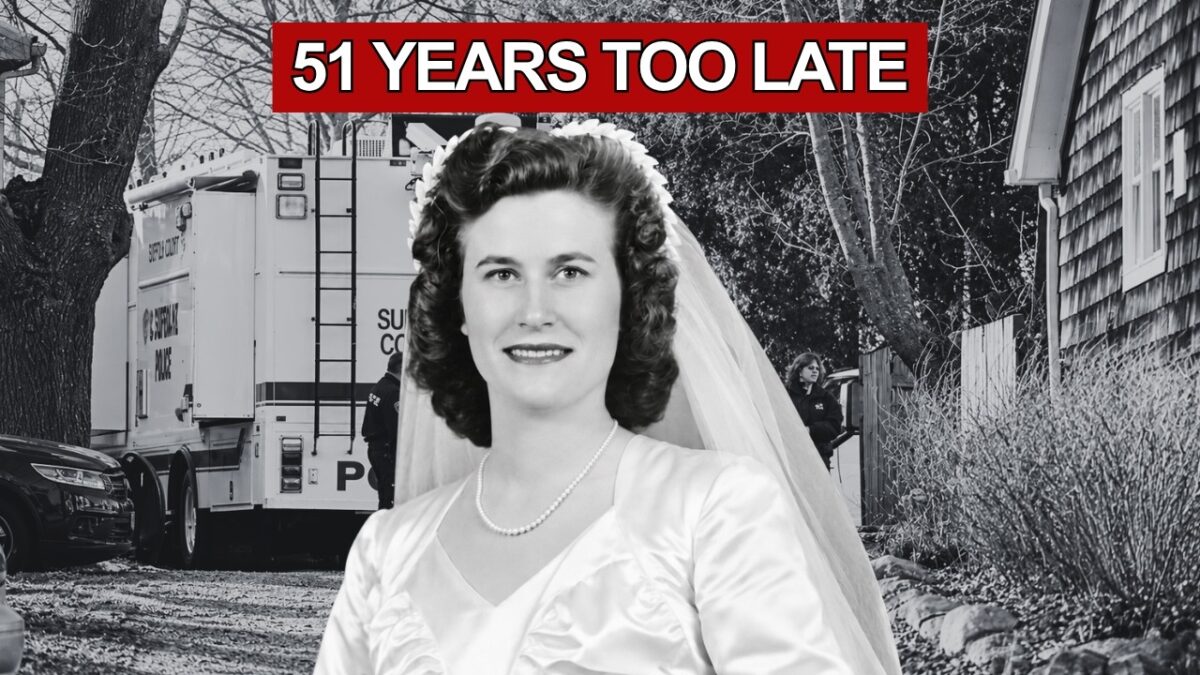
The human remains discovered beneath an old concrete foundation in 2017 brought a major breakthrough in the investigation into Louise Martin’s disappearance.
For fifty-one years, her daughter, Sandra, had wondered whether Louise had abandoned her or suffered something far more serious.
Now forensic testing confirmed that the remains belonged to her mother.
The discovery ended one mystery while raising another.
What happened during the final days of Louise’s life?
Investigators reviewed the surviving records from October 1966. Louise had recently separated from her husband and was preparing to leave Long Island. She had reportedly discussed traveling to Florida and had shown her daughter two airline tickets.
She was also involved with William Parker, a married police officer who resigned the day after Louise disappeared.
The investigation found evidence suggesting that Louise might have traveled with Parker shortly after leaving home.
However, the incomplete airline records could not establish every detail of the trip.
Detectives also examined statements from Parker’s former wife, who had described troubling behavior during their marriage.
According to her earlier account, Parker had made threatening remarks during arguments and had once spoken about hiding evidence where nobody would discover it.
Those statements were never tested in court.
Parker had died years before investigators recovered Louise’s remains.
Nevertheless, the location of the burial site and the timing of renovations to the property raised serious questions about his possible involvement.
The forensic examination suggested that Louise had suffered injuries before her death.
Investigators classified the case as a homicide, although they could not establish every detail of the events leading to her death.
The inquiry also returned to Louise’s handbag.
It had been discovered beside a remote highway weeks after she disappeared. Inside were personal documents and a note containing a physician’s telephone number.
The surviving records suggested that Louise had sought medical advice shortly before vanishing.
Investigators considered whether a possible pregnancy might have created additional conflict in her relationship with Parker.
But they emphasized that the available evidence did not establish pregnancy as a confirmed fact or motive.
For Sandra, the uncertainty was painful.
She wanted to know exactly what happened to her mother.
Yet many people who might have provided answers had died, and important documents had been lost.
The investigators explained that historical cases often contain gaps that cannot be repaired.
Still, the discovery of Louise’s remains provided an answer to the question Sandra had carried since childhood.
Her mother had not simply disappeared into another life.
She had died.
Sandra began gathering photographs, letters, and memories from relatives who had known Louise before 1966.
She learned stories about her mother’s childhood on Long Island, her love of dancing, and the work she performed during harvest seasons.
She also learned that Louise had been planning changes in her life.
The woman Sandra remembered only as a mother had been a person with hopes, fears, and plans for the future.
One photograph showed Louise standing beside a field of strawberries, smiling toward the camera.
Another showed her holding Sandra as a baby.
Sandra placed both pictures in her living room.
She wanted her grandchildren to know Louise as more than the woman who vanished.
In the months following the identification, the family organized a memorial service.
Relatives who had searched for Louise for decades gathered to honor her life.
Sandra spoke about the final morning she saw her mother.
She remembered the school bus, the farmhouse driveway, and the promise of a future trip.
For years, she had imagined what might have happened if she had stayed home that day.
But she eventually understood that the responsibility for Louise’s disappearance did not belong to an eleven-year-old girl.
The investigation remained open in the fictional account because several questions could not be answered with certainty.
No living suspect was charged.
Yet the recovery of Louise’s remains allowed her family to correct decades of speculation.
Sandra arranged for her mother’s original name to be restored to the family memorial.
She also placed a small photograph beside the grave.
It showed Louise smiling on a summer afternoon, long before the events of October 1966.
For fifty-one years, Sandra had searched for an explanation.
The truth she received was incomplete, but it was enough to change the way she remembered her childhood.
Her mother had not chosen to vanish from her life.
Someone had taken away the future they were supposed to share.
And the daughter who watched her mother wave goodbye in 1966 finally had a place where she could return and say goodbye herself.








