Samuel woke the next afternoon with my father sitting beside his bed.
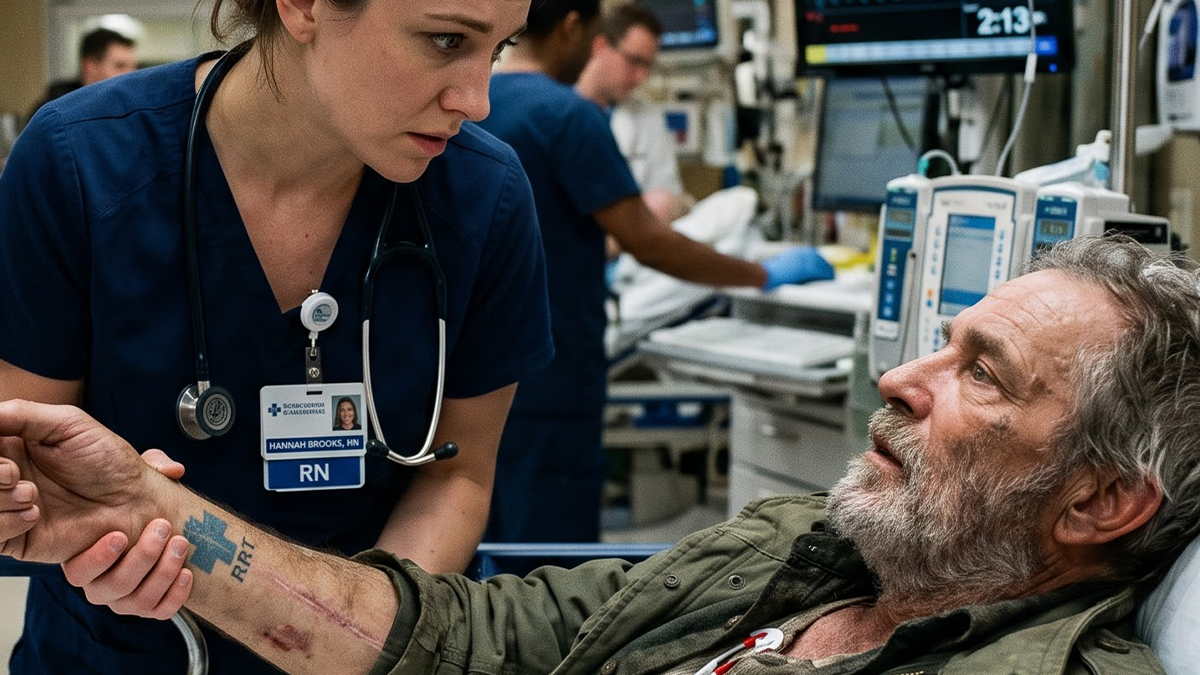
Samuel woke the next afternoon with my father sitting beside his bed.
I was finishing medication checks when I saw Dad through the glass.
Samuel looked worse than he had the night before.
There were stitches near his temple, an IV in each arm, and monitors surrounding him, but his eyes were clear.
I stepped inside.
“Mr. Hayes?”
He turned toward me.
“Doctor,” my father said quietly. “You probably don’t remember me.”
Samuel studied his face.
Then his eyebrows lifted.
“Brooks?”
Dad laughed once, and his eyes filled.
“Yeah.”
Samuel closed his eyes.
“I thought you died.”
“You kept me from dying.”
For several seconds, neither man spoke.
Dad pulled an old photograph from his wallet.
I had seen it hundreds of times.
A younger version of my father stood on crutches beside six rescue workers. Samuel was at the edge, thinner and serious.
Dad handed it to him.
“You crawled under that beam when everyone else was being ordered out.”
Samuel looked at the picture.
“I was your doctor.”
“You were more than that.”
“No. I was doing my job.”
I recognized the discomfort my father had described whenever anyone called Samuel a hero.
Dad nodded toward me.
“This is Hannah. My daughter.”
Samuel looked at my badge.
“She wasn’t born yet when the plant came down,” Dad said. “Because of you, I got to meet her.”
Samuel looked away.
Later, after Dad left for coffee, Samuel asked what I knew about him.
“Only what Dad told me.”
“And the hospital record?”
“Enough to know you lost your wife and daughter.”
His face changed.
“I’m sorry.”
He stared at the window.
“The fire happened two years after Mercer.”
I waited.
“I was working overnight. Faulty wiring started it. By the time someone called me, the house was gone.”
His voice was flat.
“I spent my career arriving in time for strangers. I wasn’t there for them.”
“You didn’t start the fire.”
“That didn’t matter to me.”
He returned to work too soon.
Then came insomnia.
Drinking.
Missed shifts.
Warnings.
Finally, he resigned before the hospital could remove him.
“I kept thinking I could stop whenever I wanted.”
He gave me a tired smile.
“That’s what alcohol lets you believe.”
Years became shelters, temporary rooms, detox programs, relapses, and stretches on the street.
Nothing about it matched the heroic story I grew up hearing.
That was the point.
He was not a legend lying in that bed.
He was a sick man who had once done something brave and later lost almost everything.
Dr. Mason came in that evening.
“Mr. Hayes, I owe you an apology.”
Samuel looked confused.
“When you came in, I anchored on intoxication too quickly. I should have assessed you more carefully.”
Samuel nodded.
“I was drunk.”
“You also had a brain bleed.”
“Both can be true.”
Mason looked at me.
“Hannah pushed for another look.”
After he left, Samuel said, “Good nurse.”
I smiled.
“My dad says I’m stubborn.”
“That helps.”
A social worker came the next morning to discuss rehabilitation, housing, and addiction treatment.
Samuel listened.
He did not promise never to drink again.
He simply said, “I’ll try.”
That sounded more believable.
Before my shift ended, I checked on him again.
He was holding Dad’s photograph.
“For years,” he said, “I thought everything I did before the fire stopped counting.”
I pulled a chair beside him.
“It still counted to my family.”
He looked at me.
I thought about the apartment where I grew up, the birthday cakes Dad baked badly, my nursing-school graduation, and every ordinary day that existed because someone crawled beneath unstable steel thirty years earlier.
“You saved my father before I was born,” I said. “Tonight, I’m returning the favor.”
Samuel shook his head.
“You didn’t owe me anything.”
“I know.”
Three weeks later, he transferred to a residential recovery program.
Dad visited when Samuel wanted company.
I did too.
Recovery was uneven.
Samuel never became the heroic figure from Dad’s stories.
That would have been unfair.
He had saved lives.
He had also fallen apart.
Both things were true.
Months later, he returned for a follow-up appointment wearing clean jeans and a borrowed jacket.
He stopped at the ER desk and looked toward the bay where he had arrived.
Then he looked at me.
“Still stubborn?”
“Professionally.”
He smiled.
When Samuel needed someone to see past the alcohol, the dirty coat, and the easy assumption, I was grateful I had looked at his wrist long enough to ask one more question.
That night never erased what happened to his family, and treatment did not magically repair his life. But it gave him a place to begin. For my father, it closed a question carried for decades. For me, it changed how I looked at patients who arrived judged.








