The Class That Was Erased
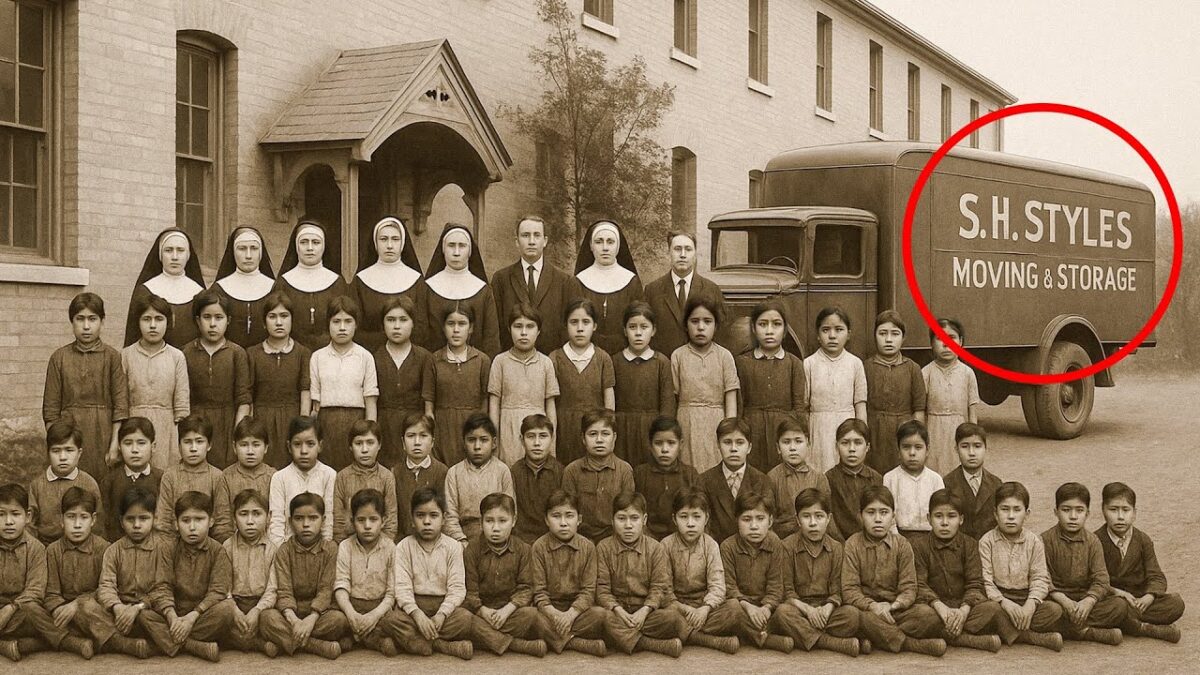
By November 1975, Sheriff Thomas Reed had identified several people who might have survived the unexplained transfer of twenty-three Indigenous children from Cedar Valley Residential School in 1930. The children had disappeared from official enrollment records after their names were crossed out and replaced with numbers. A photograph discovered forty-five years later showed them standing outside a facility labeled Pine Hollow Training Center, an institution that did not appear under that name in state archives.
Reed’s investigation led him to an elderly woman living in Oregon who remembered attending Cedar Valley as a child. She confirmed that she had been transferred with other students during the summer of 1930. According to her account, the children were told they would receive additional training and were instructed to use new names after arriving at Pine Hollow.
The woman described the facility as a collection of wooden buildings surrounded by forest. Children attended lessons in the morning and performed assigned work during the afternoon. She remembered strict rules about correspondence and said several students were punished for speaking about their families.
Her testimony prompted Reed to examine the recovered ledgers more closely. The documents contained numbered entries corresponding to the children in the photograph. Some records showed transfers to other institutions, while others listed work placements without addresses or family contact information.
Reed contacted community representatives and families connected to the original school records. Together, they began reconstructing the children’s identities using surviving documents, oral histories, and personal photographs.
The process was difficult. Several children had been recorded under different names, and some birth dates were inconsistent. Families had received little information after the transfers, and many parents had died without learning where their children went.
By early 1976, the investigation had identified seven surviving former students. Several lived in different states and had spent decades using the names assigned to them during childhood. Others had reclaimed their original names after leaving institutional care.
Reed also located records confirming that several children had died during the years following their transfer. The documents were incomplete, and investigators could not establish every circumstance surrounding those deaths. However, the findings allowed some families to learn where their relatives had been buried.
The sheriff’s office worked with community leaders to organize a meeting where surviving former students could share their experiences voluntarily. Some chose to speak publicly, while others preferred privacy. Reed understood that the investigation involved more than locating missing records. It concerned people whose childhood identities and family connections had been disrupted.
One survivor brought a small photograph of her parents that she had kept hidden for decades. She explained that she had been afraid the picture would be confiscated if staff discovered it. Another remembered repeating his original name silently at night because he feared he would eventually forget it.
Their accounts helped explain why the records had been so difficult to trace. The children had not simply been removed from one school’s enrollment list. They had been transferred into a system where altered names and incomplete documentation obscured their identities.
In April 1976, Reed submitted a report describing the records recovered from Pine Hollow, the survivors identified, and the unresolved questions concerning the remaining students. Community representatives requested further access to institutional archives and support for families attempting to reconnect.
The fictional investigation did not recover a complete account of every child’s life. Some records remained missing, and several families continued searching for information.
But the discovery ended the assumption that the twenty-three children had simply vanished without explanation.
They had been transferred, renamed, and scattered across institutions and placements that made them difficult for their families to find.
For Reed, the most important result was not the report itself. It was seeing survivors reconnect with relatives who had spent decades wondering what happened to them.
Forty-five years after their names disappeared from a school ledger, the children of Cedar Valley were finally being recognized as individuals with families, histories, and identities that no administrative record should have erased.








