The Diagnosis That Changed Everything
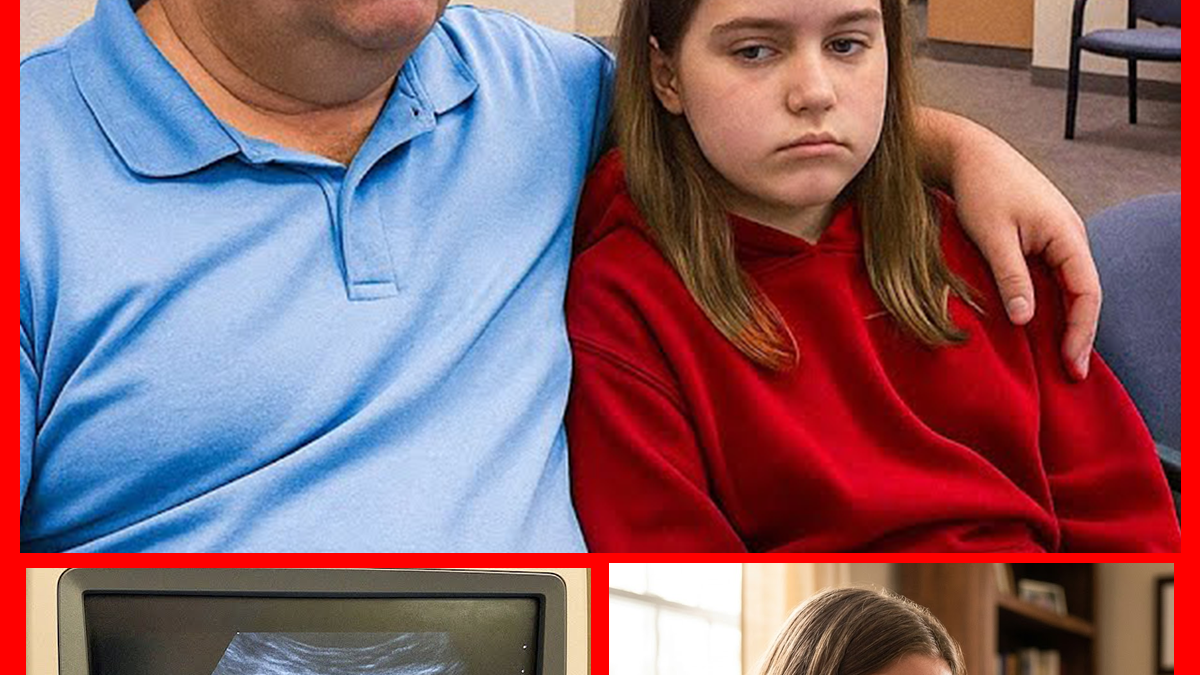
By late February 2021, nine-year-old Olivia Parker was recovering in a children’s hospital after undergoing surgery for a large abdominal mass discovered during a pediatric appointment. Her father, Nathan, had originally believed that her stomach pain was caused by digestive problems. But an ultrasound ordered by Dr. Rachel Morgan revealed an abnormality near her kidney that required urgent specialist evaluation.
The situation became more concerning when Olivia produced an old medical letter showing that another physician had recommended additional testing months earlier. Nathan admitted that he had not arranged the appointment because of financial difficulties and fear of receiving bad news.
Olivia’s surgery was completed without major complications. However, her medical team still needed laboratory results to determine the nature of the mass and whether further treatment would be necessary.
On February 23, specialists informed the family that Olivia had a kidney tumor requiring additional care. The diagnosis was frightening, but doctors explained that childhood kidney tumors vary in their characteristics and treatment needs. Her care plan would depend on the pathology findings and recommendations from pediatric oncology specialists.
Nathan was devastated. He had spent months hoping his daughter’s symptoms would resolve without medical intervention. Now he understood that avoiding the recommended tests had not protected her from illness.
The hospital’s social work team helped him apply for financial assistance and arrange transportation to future appointments. A pediatric psychologist also began meeting with Olivia, who had become worried that her illness was somehow connected to something she had done wrong.
The psychologist reassured her that she had not caused the condition and that speaking about her pain had been important.
Meanwhile, hospital staff reviewed the circumstances surrounding the missed medical follow-up. Their assessment considered Nathan’s financial situation, his understanding of the earlier recommendation, and the seriousness of Olivia’s symptoms. In this fictional case, no criminal charge resulted, but Nathan agreed to a structured care plan to ensure that Olivia attended every necessary appointment.
In March 2021, Olivia began additional treatment under the supervision of her oncology team. The following months were difficult. She experienced fatigue, missed school activities, and struggled with the uncertainty surrounding her recovery.
Nathan attended every appointment. He learned to ask questions when he did not understand medical information and stopped answering for Olivia when doctors asked her how she felt.
Gradually, Olivia became more comfortable discussing her symptoms. She began keeping a small notebook where she recorded questions for her medical team. Her doctors encouraged her to participate in age-appropriate conversations about her treatment.
By December 2021, follow-up imaging showed no visible evidence of the original mass. Her physicians emphasized that regular monitoring remained necessary, but the findings represented encouraging progress.
Olivia returned to school on a reduced schedule and began spending more time with friends. Nathan continued receiving support to help manage the family’s financial and emotional challenges.
Dr. Morgan later reflected on the appointment that had changed Olivia’s life. The first warning sign had not been the ultrasound image itself. It had been a child who seemed unable to explain her own pain while her father answered every question.
By giving Olivia a chance to speak privately, the doctor learned that her symptoms were more serious than initially described.
The letter hidden in Nathan’s desk did not reveal a criminal conspiracy or a secret injury. It revealed a medical warning that had gone unaddressed because of fear and uncertainty.
For Nathan, the experience became a painful lesson about the importance of following medical advice.
For Olivia, it meant something even more personal.
She had learned that when something felt wrong, her voice deserved to be heard.








