The woman on the phone knew something about my past that even my commanding officer had tried to erase.
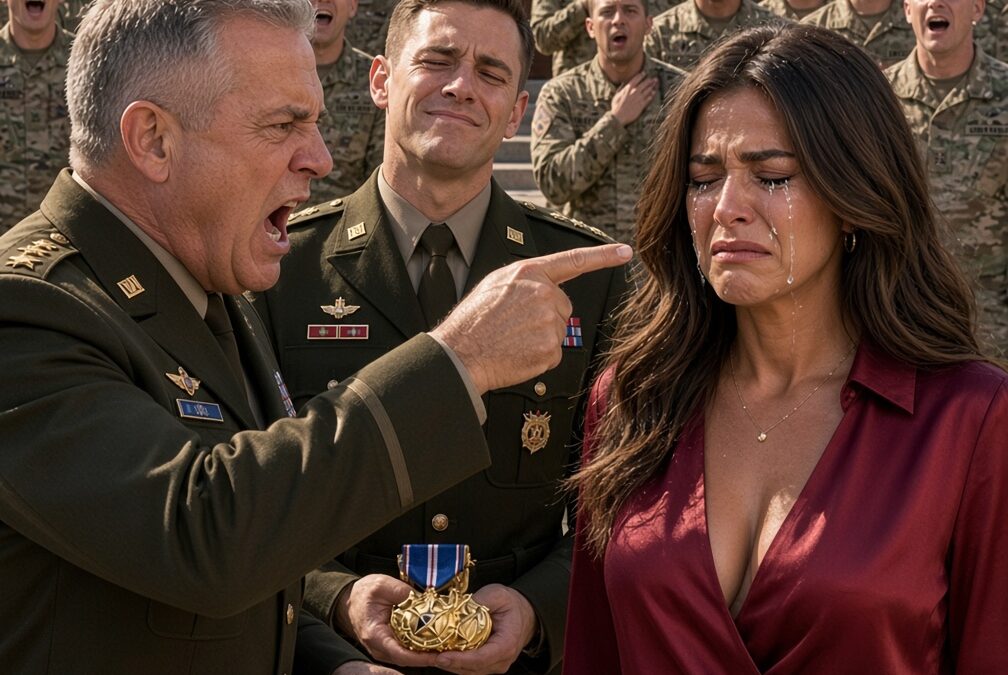
The woman on the phone knew something about my past that even my commanding officer had tried to erase.
“Sergeant Carter, my name is Evelyn Brooks. I’m calling from the Department of Defense Inspector General’s office.”
I sat on the edge of my bed.
“How did you get my number?”
“Someone submitted evidence concerning an operation from fifteen years ago. Your name appears throughout the original records.”
My throat tightened.
“What records?”
“The ones your command reported missing.”
I stared at the empty space where my photograph had been.
Brooks continued.
“Do not confront Colonel Bennett. Investigators will arrive tomorrow morning.”
Then she said something that made me grip the phone.
“Sergeant, the soldier you carried out that night is alive. And he has been looking for you.”
I couldn’t speak.
Fifteen years earlier, our transport convoy had become stranded during a severe storm in Afghanistan.
Communications failed. One vehicle slid off the road, leaving several soldiers injured and unable to walk.
Our commanding officer ordered the team to remain in position.
But the temperature was dropping.
One soldier, Private Daniel Reeves, had stopped responding.
I made a decision.
With two other soldiers, I organized an evacuation through a narrow mountain passage.
We carried Daniel for nearly four miles.
By sunrise, everyone had reached medical assistance.
I received no recognition.
Instead, the official report credited another officer with directing the operation.
That officer was connected to Bennett.
I challenged the report once.
My complaint disappeared.
After that, every promotion board seemed to find another reason to reject me.
The next morning, I walked into headquarters expecting another ordinary day.
Instead, three unfamiliar officials stood outside Bennett’s office.
Melissa was sitting nearby, staring at her hands.
Colonel Bennett emerged carrying a folder.
“Sergeant Carter,” he said sharply. “My office.”
Before I could move, a woman stepped forward.
“Actually, Colonel, we’d like Sergeant Carter to remain here.”
She showed her credentials.
Evelyn Brooks.
Bennett’s expression changed.
“What’s this about?”
“An ongoing review of personnel records, award recommendations, and the handling of official complaints.”
Bennett glanced toward Melissa.
She lowered her head.
Brooks opened a folder.
“Fifteen years ago, an evacuation report was amended after its initial submission. Sergeant Carter’s leadership role was removed.”
Bennett crossed his arms.
“That was a command decision.”
“Then perhaps you can explain why the original witness statements contradict the amended report.”
Silence filled the hallway.
I could hear the clock above the reception desk.
Then Melissa stood.
“I need to say something.”
Bennett turned toward her.
“Captain Grant, sit down.”
She didn’t.
“I didn’t lead that evacuation,” she whispered.
My heart began pounding.
Melissa looked directly at me.
“I knew your work was being credited to other people. I accepted assignments and recognition I hadn’t earned.”
Her eyes filled.
“I kept telling myself it wasn’t my responsibility to correct it.”
I couldn’t look away.
Brooks asked, “Are you willing to provide a formal statement?”
Melissa nodded.
Bennett’s face had gone pale.
But the biggest surprise came twenty minutes later.
A man entered the building using a cane.
He was older than I remembered, with silver beginning to show around his temples.
“Naomi?”
I knew that voice.
“Daniel?”
He smiled.
Private Daniel Reeves.
The young soldier I’d carried through the mountains.
He stopped in front of me.
“I’ve been trying to find you for years.”
I covered my mouth.
Daniel reached into his jacket and removed a folded photograph.
The same photograph that had disappeared from my locker.
“I sent the envelope,” he said. “I wanted you to know someone finally had the original evidence.”
He explained that he’d kept copies of medical records, personal notes, and photographs from the evacuation.
After learning that my promotion had been denied again, he’d contacted investigators.
“I thought you knew what happened,” he said.
I shook my head.
“I thought everyone had forgotten.”
His eyes filled with tears.
“Not me.”
The investigation continued for months.
Bennett was removed from personnel decision-making while officials reviewed the evidence. Melissa provided testimony and accepted responsibility for her actions.
My records were corrected, and a new promotion review was ordered.
Nothing could return those fifteen years.
But one afternoon, I received a letter confirming that my role in the evacuation had finally been formally acknowledged.
I read it twice.
Then I placed it beside the photograph on my kitchen table.
Daniel called that evening.
“Does it feel different?” he asked.
I looked at the younger woman in the picture.
The one who had carried someone through a mountain storm without expecting anyone to notice.
“Yes,” I said quietly.
“For the first time, it feels like they finally saw me.”
Disclaimer: This story is entirely fictional and created for entertainment purposes only. It does not represent any organization or individual, nor does it encourage inappropriate behavior. The content was generated with AI assistance.








