Thomas waited until I sat down before speaking.
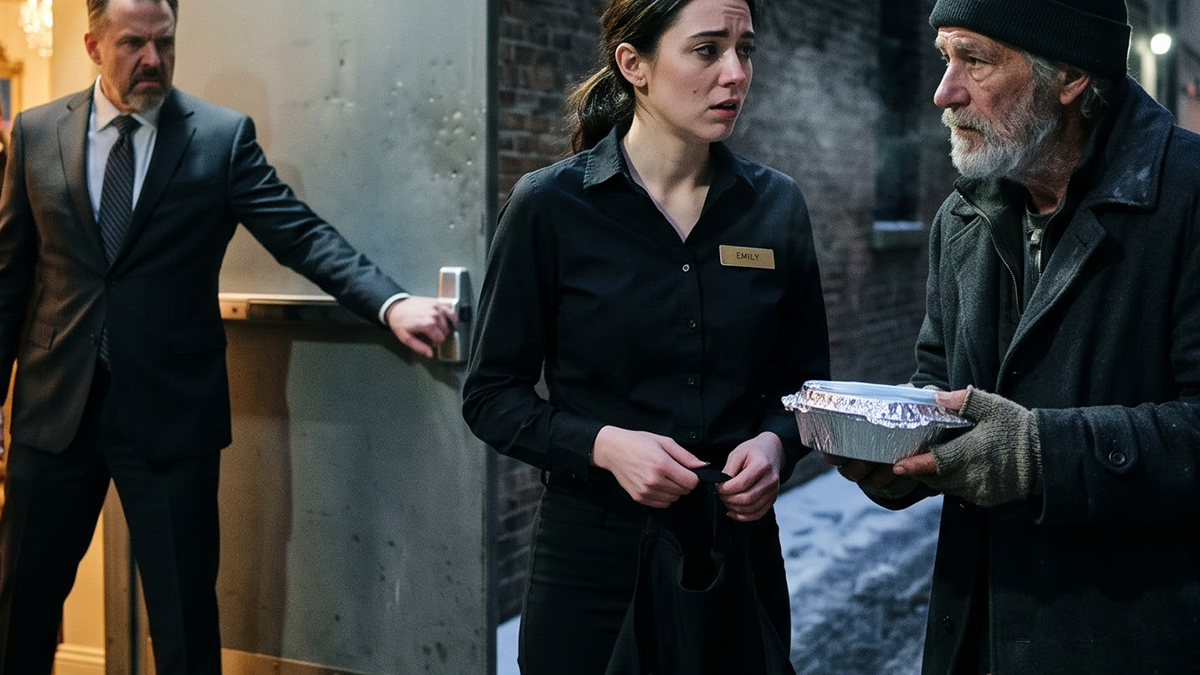
Thomas waited until I sat down before speaking.
“I founded this restaurant thirty-two years ago.”
Grant stopped pacing.
The room became so quiet I could hear the refrigerator humming behind the bar.
Thomas rested both hands on the table.
“I sold most of my operating interest seven years ago. I kept a seat on the board and enough ownership to ask questions when I think we are forgetting what this company was built to be.”
I looked at his suit, then at the front window.
“Why were you outside dressed like that?”
“Because I wanted to see this place without people performing for me.”
He explained that he had spent the last month visiting several Bell & Mason locations without announcing himself. Sometimes he sat at the bar in ordinary clothes. Sometimes he waited near the entrance. Sometimes he asked employees simple questions.
At our location, he had gone further.
“I wanted to know how we treat someone who appears to have nothing to offer us.”
Grant finally spoke.
“This was some kind of test?”
Thomas looked at him.
“No. A test is something people know they’re taking. Last night, you simply showed me who you are when you believe nobody important is watching.”
Grant’s face tightened.
“I enforced policy.”
“You enforced it selectively.”
Thomas slid a folder across the table.
One of the board members opened it.
The restaurant had guidelines against employees giving away food without authorization. That much was true.
But there was also a manager procedure for documenting safe surplus food and approving donations through local partner organizations.
Grant had never used it.
Worse, according to the records in front of us, our location threw away hundreds of pounds of edible food every month.
I felt my anger shift.
This was bigger than my dinner container.
Thomas turned toward me.
“Emily, I owe you an apology too.”
“You?”
“Yes. I created a company that talks about hospitality, then allowed policies and management habits that made kindness feel punishable.”
Grant looked stunned.
“Are you firing me?”
Thomas did not answer immediately.
“The board will review your conduct and your management record. That decision will follow company procedure.”
I appreciated that.
He wasn’t putting on a dramatic show for me.
Then Thomas looked back at me.
“We would like to offer you your job back immediately, with back pay for the shift you lost.”
For a second, all I could think about was Mom’s pill organizer on our kitchen table.
I needed the money.
I needed stability.
The sensible answer was yes.
But I remembered standing in the service doorway while Grant said, We are not a shelter.
So I asked a question.
“If I come back, what happens tomorrow night when there’s another container of good food and another hungry person outside?”
Thomas leaned back.
“What do you want to happen?”
“I don’t want employees sneaking food out and risking safety rules. But I also don’t want trays of food going into dumpsters because helping someone is inconvenient.”
One board member began taking notes.
I continued.
“If food is safe and can legally be donated, create a real process. Train people. Partner with shelters and community groups. And if there’s a simple way to give someone a meal at closing, let managers approve it without acting like compassion is theft.”
Thomas was quiet for several seconds.
Then he smiled.
“That sounds reasonable.”
“I’m serious.”
“So am I.”
I returned to Bell & Mason the following week.
Grant did not.
I later learned the review found other management problems, and the company ended his employment. Nobody asked me to celebrate it, and I didn’t.
Losing a job is frightening. I knew that better than most.
Within two months, our restaurant began working with a nearby food recovery nonprofit. Other locations followed after a trial period.
There were rules, labels, temperature logs, pickup times, and plenty of paperwork.
It wasn’t glamorous.
It worked.
Mom’s medication stayed paid for.
I kept serving tables.
Thomas visited occasionally, always through the front door after that.
The first time he returned, I joked that I almost didn’t recognize him without the old coat.
He laughed.
Then he asked how the donation program was going.
That mattered more to me than the suit, the lawyers, or discovering whose name was on the building.
For years, I had thought kindness was something you did when you could afford the consequences.
That night taught me something more complicated.
Good intentions still need good systems behind them.
I had fed one man because he looked cold.
What changed afterward meant the next person would not have to depend on whether a frightened waitress was willing to lose her job.
And that was the only reason I agreed to come back.
That made returning feel worth the risk.








