23-YEAR-OLD TEACHER VANISHED ON NEW YEAR’S EVE — 15 YEARS LATER, A VOICE ON YOUTUBE CHANGED EVERYTHING
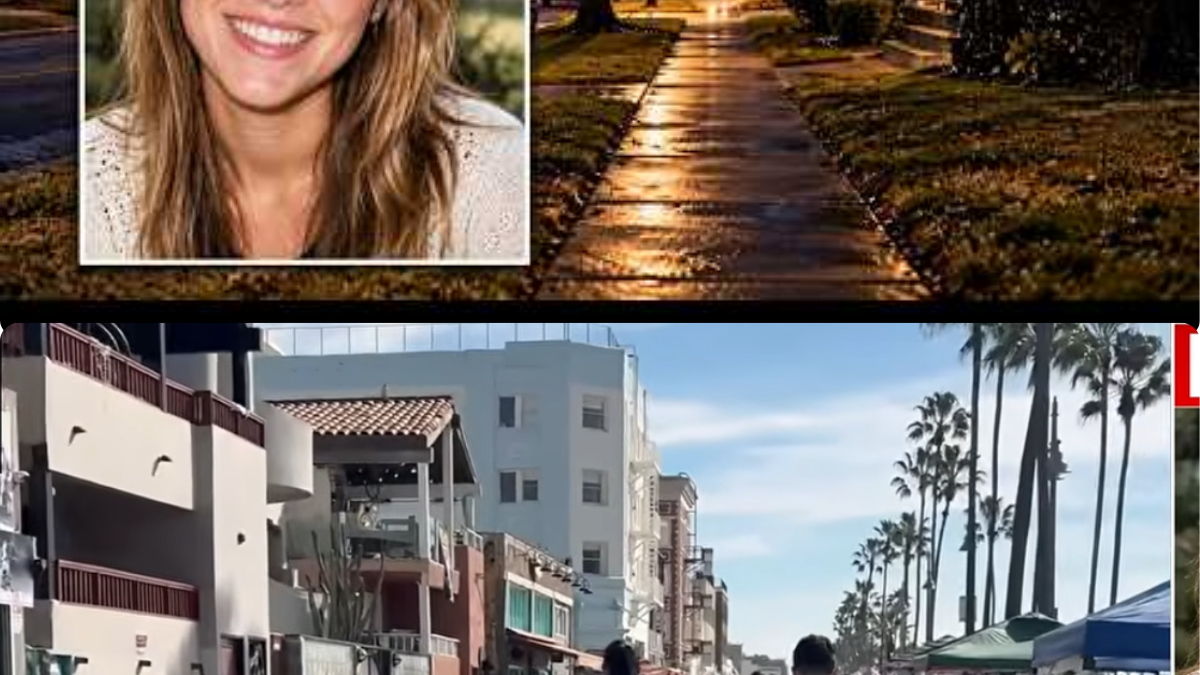
23-YEAR-OLD TEACHER VANISHED ON NEW YEAR’S EVE — 15 YEARS LATER, A VOICE ON YOUTUBE CHANGED EVERYTHING
Part 1
December 31, 2000, Bridgewater, Texas. The fireworks were already lighting up the Hill Country sky when 23-year-old Natalie Whitfield vanished — barely half a block from her own front door. Her parents waited inside with sparkling cider and paper hats, counting the minutes until their daughter would walk through the door. She never did.
Natalie was the kind of girl the whole town knew and adored. Bright, warm, newly graduated, she’d come home to teach second grade at Bridgewater Elementary — the very school she’d attended as a child. She’d taken an extra shift at the Main Street diner that night to help a co-worker who wanted to be with family, promising she’d be home by a quarter to ten. She walked that mile from the diner to Cedar Lane nearly every evening. Everyone did. Bridgewater was safe. It was the kind of place where doors stayed unlocked and neighbors waved from their porches. No one locked their doors — until that night.
Carol and Richard Whitfield were no ordinary parents. Carol worked at the middle school, her kindness known to every student who ever needed a gentle word. Richard had served twenty-five years on the police force, twelve as a detective. He knew the statistics better than anyone: cases solved themselves in the first forty-eight hours, or they didn’t get solved at all. He’d never imagined he’d be applying that knowledge to his own daughter.
The first sign something was wrong came at 11:55 p.m., when Carol checked the clock and frowned. Natalie was always punctual. By midnight, when cheers erupted across town and the new year began, the worry in the Whitfield home had curdled into terror. Richard walked the route she would have taken, calling her name into the cold dark. Three doors down from their house, he found it — her purse, spilled open on the sidewalk. Her wallet was still there, cash and ID untouched. Her keys lay beside it. Her cell phone was a few feet away, screen cracked, battery popped out.
Robbery was never the motive.
By dawn, the FBI was there. Natalie’s face was on every television screen in Texas — brown hair, hazel eyes, five-foot-six, last seen in jeans and a green sweater. Dorene, the other waitress at the diner, told them about the man. He’d started coming in weeks earlier — medium build, dark hair under a baseball cap, always ordered coffee and pie, always left exact change, never took his eyes off Natalie. He’d brushed his hand against hers that night, deliberate, his gaze holding hers too long. Natalie had stepped away shaken, telling Dorene it made her skin crawl. He’d left just before her shift ended.
Surveillance footage showed him clearly enough to be hauntingly familiar, but not clearly enough to identify. Every tip led nowhere. Days blurred into weeks, weeks into months. The leads dried up. The news vans packed up and left. Richard watched the investigation fade with a sinking heart — the same pattern he’d seen a dozen times before, now unfolding on his own front lawn.
Natalie’s room stayed exactly as she left it — lesson plans open on her desk, clothes hanging in the closet, bed unmade. Carol changed the sheets once a month, dusted the furniture, kept everything ready for the daughter who wasn’t coming home. The years crawled by. They stopped celebrating holidays. Natalie’s birthdays passed in silence. Richard retired early and spent his days poring over the file, memorizing every frame of grainy footage, retracing her route until he knew every shadow and blind spot. Someone had been watching her, he realized. Someone had known exactly where to wait.
By the tenth anniversary, most people in town had stopped mentioning her name. But Carol never gave up. She drove to every town within a hundred miles, taping flyers to gas station bulletin boards, showing Natalie’s photo to strangers who politely looked away. She carried newer versions too — age-progressed images showing what Natalie might look like at twenty-five, thirty, thirty-three — strangers’ faces that she prayed would somehow walk toward her one day.
No one expected what happened next. Three hundred miles away, a woman who called herself Hannah Delroy had started posting recordings to a quiet, little-watched YouTube channel. She didn’t know her real name. She couldn’t remember her childhood. She only had fragments — the smell of chalk dust, a yellow house with a porch light always left on, the feeling of being loved by people she couldn’t picture.
One October evening in 2015, Carol clicked on a video the algorithm had placed before her — and froze.
😨 What they discovered next was even more terrifying… Find PART 2 in the comments, or leave ANY WORD below to receive it privately! 👇
Part 2
One October evening in 2015, Carol clicked on a video the algorithm had placed before her — and froze.
It was just a voice over drifting clouds, soft and thoughtful, speaking about what it felt like to wake up in a hospital with no name and no past. But Carol knew that voice. She knew the way certain words curled gently at the edges, the quiet pause before sharing something vulnerable, the breathy catch that had been there since childhood. She listened once, twice, three times, tears spilling over as the woman spoke of teaching children, of chalk dust on her fingers, of a yellow house she could not place but dreamed of every night.
Richard tried to be gentle when she showed him. He’d seen Carol grasp at straws before — faces in crowds, voices in grocery stores — but as he listened, his trained focus kicked in. The cadence, the tone, the quiet strength — it wasn’t just similar. It was her. They hired a private investigator in Dallas who specialized in missing-persons cases. Three weeks later, he called back with details that made their blood run cold: Hannah Delroy had been admitted to a Dallas hospital in April 2001 with catastrophic head injuries, no identification, no purse, no wallet. Someone had left her at the emergency room entrance and vanished before anyone could ask a single question. No accident matching her description had ever been reported.
The photo the investigator sent arrived by email. She was thinner, her hair shorter and lighter, but her eyes — those hazel eyes — looked straight out of every picture Carol had carried in her purse for fifteen years.
The meeting happened in a quiet coffee shop on a Saturday afternoon. Carol’s hands trembled so badly she could barely lift her coffee cup. When Hannah walked in, she looked uncertain, guarded, a stranger standing in the doorway of their grief. But when Carol spoke her daughter’s name, something flickered in the woman’s expression — a flinch, a question, something half-buried and aching to surface.
She didn’t remember them. She didn’t remember Bridgewater, or the school, or walking home that night. The doctors had called it retrograde amnesia — severe trauma had severed the neural pathways holding her past. The memories weren’t just lost; they were unreachable. But when Carol spoke of the yellow brick house on Cedar Lane, of chalk dust and second-grade stories, Hannah’s breath caught. “I dream that house,” she whispered. “I always thought I made it up.”
The DNA results took three agonizing days. When the phone finally rang, Richard listened in silence, then hung up and looked at Carol, his face crumpling. “It’s her,” he said. “Ninety-nine point nine percent match.”
They had found her. Their daughter was alive. But the joy was tangled in something sharp and terrible — because Hannah could not remember being Natalie. She had built an entire life in Dallas as someone else, working as a bookkeeper, living quietly, carrying a grief she could not name, and now she was being told she belonged to strangers.
Then came the harder questions. What had happened between New Year’s Eve 2000 and that hospital admission four months later? Who had taken her? Why was she alive? The deeper they dug, the darker the trail became — and the closer they got to a truth no one was prepared to face.
😱 The truth behind this disappearance is more horrifying than anyone imagined… LIKE or COMMENT “REVEAL” to see PART 3! The final part will be posted after enough comments! 👇
Part 3
The investigation pulled in every resource available — cold-case teams, retired agents, anyone who could help piece together those missing months. The prevailing theory emerged slowly, built from hospital records, timelines, and what investigators knew about abductions: whoever took Natalie had driven her toward Dallas. Something went wrong en route — a crash, a struggle, a moment of panic. Fearing capture, he’d dumped her at the hospital entrance, praying she would survive but terrified to stay and face what he’d done. He’d gotten away clean — no vehicle identified, no witnesses, no trail left behind.
The man from the diner remained faceless. The grainy footage never got clearer. No one called in with a name that stuck. The trail, already fifteen years cold, hardened into ice.
Natalie — Hannah — faced a reality no one could soften. The brain scans confirmed it: the memories of her first twenty-three years were not temporarily hidden; they were gone. The injury had destroyed the tissue that held them. She could learn the facts — her childhood, her friends, the way her mother sang off-key in the kitchen — but she would never feel them as her own. “It’s like reading about someone I almost was,” she told Carol quietly one evening. “I want to feel it. I try. But it’s just… words.”
They built something new anyway. She drove down from Dallas on the second Saturday of every month. She slept in the guest room, not Natalie’s room — that space remained suspended in amber, a shrine to the girl they’d lost even as they welcomed the woman who had returned. Carol made her favorite meals; Richard showed her old photo albums, telling stories until his voice grew thick. They sat on the porch at dusk, watching the same sky Natalie had walked beneath that final night.
Richard struggled most. He had spent fifteen years grieving a specific daughter — the one who loved school, who hummed while she set the table, who called him Daddy — and now he had to learn to love someone else entirely: a woman who balanced spreadsheets for a living, who preferred coffee to sweet tea, who had never seen the Hill Country sunset with the eyes he remembered. He loved her fiercely, but the grief never fully lifted — a quiet ache that lived beneath every reunion.
Carol, too, found herself caught between gratitude and heartbreak. She had prayed for this moment every single day, and here it was — and yet it wasn’t the moment she’d pictured. She had imagined running into Natalie’s arms and being recognized instantly. Instead, she was introducing herself to her own child, explaining traditions, naming relatives she didn’t know. “I got her back,” she told a friend one afternoon, wiping her eyes. “But I didn’t get my girl back. Does that sound terrible?”
Slowly, they forged a fragile peace. Hannah kept her name — it was the identity she’d built from nothing, the only one she knew — but she also answered to Natalie. She visited the school, walked the halls where she’d once taught, stood on the stage where she’d performed as a child. She felt echoes — a warmth, a sense of belonging she couldn’t explain — but no clear memory surfaced.
The man who took her was never found. The investigation remains open. Every few years, new technology is applied to the diner footage; every few years, the result is the same — promising, then nothing. He is still somewhere, carrying that night with him, untethered and uncaught.
On New Year’s Eve 2016, they gathered in the yellow house on Cedar Lane — Carol, Richard, and the woman who was both Natalie and Hannah. They toasted with sparkling cider, just as they’d planned sixteen years earlier. No one mentioned the glasses that sat untouched on the counter all those years ago. No one had to.
“I’m glad you found me,” Hannah said softly as the ball dropped on the television screen. “Even if I can’t remember. I’m glad I know where I came from.”
Carol squeezed her hand. “We never stopped looking. Not for one day.”
That is the truth at the heart of this story — that love can find you even when you can’t find your way back to it. It doesn’t fix everything. It doesn’t bring back the missing years or unlock lost memories. It doesn’t deliver justice or close every door. But it shows up. It keeps searching. It listens to a voice on a screen and says I know you. And sometimes, that is enough.
Somewhere out there, a man walks free who knows exactly what happened between that diner door and the hospital entrance. He knows why he chose her, why he let her go, what those months held in the dark. He may have told himself stories to sleep at night. He may have thought he’d gotten away clean. But he should know this: the family he shattered never stopped looking. And the girl he left behind found her way home, in the end, in the most miraculous way imaginable.
This story is entirely fictional and created for entertainment purposes only. It does not represent any organization or individual, nor does it encourage inappropriate behavior. The content was generated with AI assistance.
Disclaimer: This story is fictional and created for entertainment purposes only.
Any names, characters, places, or events are fictitious or used fictitiously.
No real person or organization is intended to be portrayed.








