A Family Cursed: Two Buried, One Dying — Then a Diary Predicted Every Death Before It Even Happened
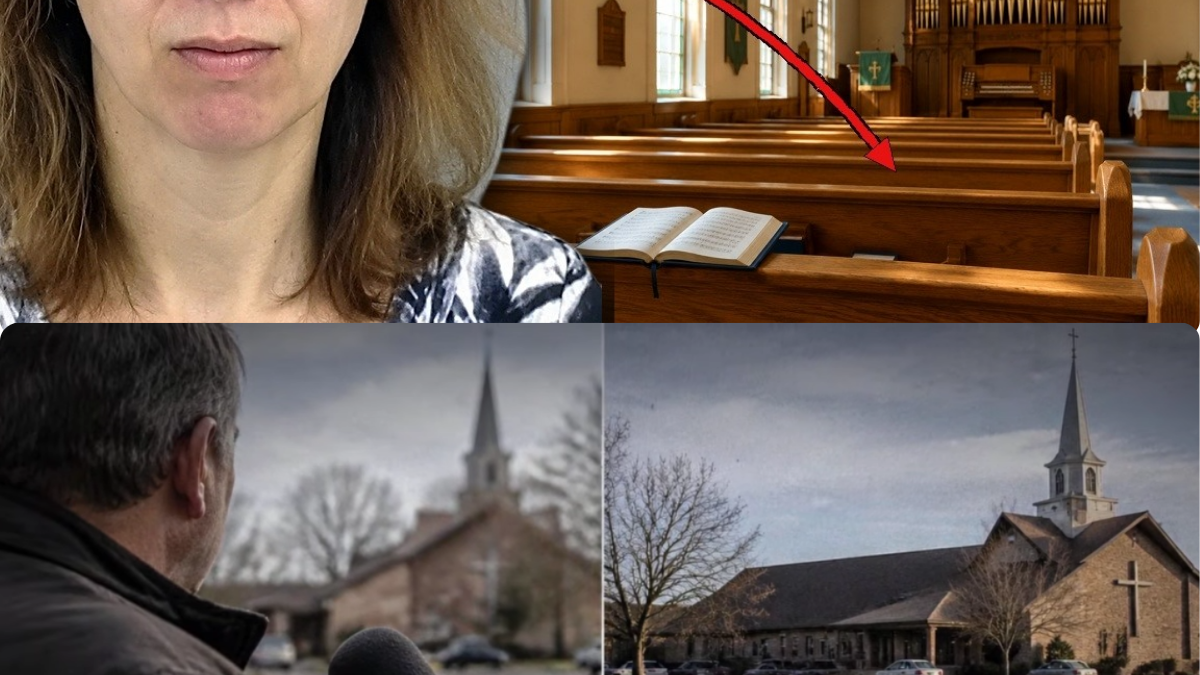
A Family Cursed: Two Buried, One Dying — Then a Diary Predicted Every Death Before It Even Happened 😱
Part 1
Springfield, Missouri, April 8, 2012. The bells of Redeemer Lutheran Church rang out on Easter Sunday, but the message they carried was not one of joy. Sixty-one-year-old Mark Stoddard — beloved blues musician, devoted father, gentle husband — was dead.
No one saw it coming. Two nights earlier, he’d stood on a stage, singing and playing guitar with his bandmates. He’d seemed quiet, a little pale, but nothing more. By Sunday morning, he was gone. His wife, Diane — respected church organist, trained nurse, the family’s steady rock — told everyone he’d been unwell for days, stubbornly refusing medical help. The medical examiner nodded, noted his history of drinking and an unhealthy lifestyle, and signed the death certificate: natural causes.
He was cremated. His ashes scattered across a quiet lake. And as friends and parishioners filled the house with casseroles and prayers, they noticed something impossible: Diane Stoddard wasn’t grieving.
She laughed. She made small talk. She poured coffee and greeted guests like she was hosting a Sunday brunch, not burying her husband. One bandmate pulled a friend aside, his voice trembling. “She’s not crying. Not once. It’s like… like she’s relieved.” But everyone told themselves what people always tell themselves: grief looks different for everyone. They said it was shock. They said she was being strong for her children. And so the quiet, unsettling doubt was buried alongside Mark’s memory.
Only one man could not shake it. Pastor Jeff Cippy had known the Stoddards for years. He’d watched Mark and Diane raise their four children in that modest Ozarks home — Shawn, gentle and autistic, finding comfort in routine; Sarah, brilliant and ambitious, dreaming of Paris and translation; Rachel, radiant and adored, her mother’s inseparable shadow; and a little girl still in pigtails, the baby of the family. They were the picture of a loving Christian household. Yet when Cippy heard the news, two words burst from him before he could stop them: No way.
He had no proof. No autopsy, no investigation, no suspicious signs. Just a gut feeling that would not let go. But he stayed silent.
Five months later — September 2, 2012 — the nightmare repeated itself.
Diane called 911 in the early hours. She’d found Shawn, twenty-six, lying unresponsive on his bedroom floor. He’d had seizures before, she explained, and flu-like symptoms. The medical examiner reviewed his file, matched the story to the history, and ruled again: natural causes. Cremation followed swiftly. No formal funeral. Mark’s own brother didn’t even learn Shawn was gone until a distant relative mentioned it in passing.
The town whispered. A husband and a son, gone in half a year? It seemed like a family cursed. But Diane? She moved them into a bigger, nicer home with Mark’s small life insurance payout. She kept smiling. And Rachel posted a photo online — bright, beaming — captioned: “I don’t think I’ve seen Mom this relaxed in years.”
Someone did contact authorities, quietly suggesting the deaths felt too similar, too convenient. But the files were closed. The conclusions were written. Nothing changed.
Then came June 2013.
Sarah — twenty-four, dean’s list, French and history graduate, full of plans — fell violently ill. Within hours, she was fighting for breath. Diane and Rachel rushed her to the ER. Doctors ran every test they knew. They checked for infection, for organ failure, for everything — and found nothing. Her body was shutting down, and they could not explain why.
Through it all, Diane sat by her daughter’s ICU bed — not weeping, not frantic, but chatting. She joked with nurses. She talked cheerfully about her upcoming Florida vacation. She seemed almost… impatient.
Pastor Cippy heard the news. A third Stoddard fighting for life? This time, he did not hesitate. On June 11, 2013, he dialed the Springfield Police Department. He did not give his name. But he told them exactly what he feared: two deaths ruled natural, now a third — and he did not believe in coincidences.
Detective Neil McCamus pulled the files. Mark. Shawn. Same family. Same symptoms — days of illness, found at home, no clear cause. Both cremated. Then he went to the hospital. The doctor pulled him aside, voice low: Sarah’s condition was worsening. And privately, he admitted something that turned McCamus’s blood cold: he suspected poisoning.
Specialized tests were ordered. And when the results came back, they confirmed the doctor’s darkest fear. Sarah had been systematically poisoned. Worse — preserved tissue samples from Shawn’s autopsy, re-examined at last, revealed the exact same deadly pattern.
Two murders. One dying victim. And the killer was still inside the house.
Police moved fast. They brought Diane and Rachel in for questioning. At first, Diane was calm, composed, the devoted mother wrongfully accused. “I may not be perfect,” she said, “but I didn’t hurt my kids.” Then, almost casually, she added something that silenced the room: “When Mark died… it was actually a relief. I just don’t tell people that.”
The detective leaned forward. Before anyone could stop her, Diane began to talk. She admitted everything — Mark, Shawn, Sarah. She’d hated Mark. Shawn was in the way. Sarah’s student loans were a burden she was tired of carrying. She’d acted alone, she insisted. Only she. Rachel knew nothing.
Then investigators walked into Rachel’s bedroom and opened a diary resting on her nightstand.
Most pages held the ordinary hopes and heartaches of a young woman. But on June 13, 2011 — nearly a full year before Mark ever fell ill — they found an entry written in Rachel’s own hand:
“It’s sad when I realize how my father will pass on in the next two months. Shawn, my brother, will move on shortly after. It will be tough getting used to the changes, but everything will work out.”
😨 What they discovered next was even more terrifying… Find PART 2 in the comments, or leave ANY WORD below to receive it privately! 👇
Part 2
“It’s sad when I realize how my father will pass on in the next two months. Shawn, my brother, will move on shortly after. It will be tough getting used to the changes, but everything will work out.”
The words burned in front of Detective McCamus’s eyes — written ten months before the first death, predicting exactly who would die and in what order. He turned the page. Tucked between entries was a scrap of paper, written like a poem:
Only the quiet ones would be left. My mother, my little sister, and me.
The air in the room grew thin. Diane had claimed she acted alone. But this diary proved someone else knew — long before anyone was even sick. Rachel had not just watched; she had expected it. She had written it down as if it were destiny.
When confronted, Rachel’s face went pale. It was just a dream, she stammered — a bad dream she’d had. Nothing more. But McCamus read her rights, and slowly, her story unraveled.
On June 22, 2013, the truth began to spill.
“Mom brought it up,” Rachel said quietly. “And then we discussed.”
It hadn’t been a solo act. It had been a plan — talked about, weighed, decided together. Diane had chosen the poison. Diane had bought it. But Rachel had listened. She had agreed. At first, they’d only spoken of Mark — the deadbeat husband, the drain on their finances, the man holding them back. But then Diane’s gaze shifted to Shawn. He needed constant care, she said. He was always there. He was a burden. Rachel had hesitated — suggested assisted living, other options — but Diane had been firm. She wanted him gone.
And Sarah? Sarah with her dreams and her debts and her independence? She, too, became surplus to requirements.
The revelation struck McCamus like a blow. Three people — father, brother, sister — marked for elimination. Two women plotting to be all that remained.
But one question haunted him: if they meant to kill Sarah, why bring her to the hospital at all? Why risk discovery?
Rachel’s answer chilled him more than any confession could.
“It had nothing to do with saving my sister,” she said. “It was about our own discomfort. After everything that had already happened in that house.”
Sarah was brought in not out of mercy, but because watching her suffer was becoming inconvenient.
Yet as the picture grew darker, one piece still did not fit. If this was a shared plan, why had Diane taken full blame? Why protect her daughter? And what of the youngest Stoddard girl — the one never harmed, never mentioned as a target? The note said three would remain. Only three.
As investigators dug deeper, a hidden hierarchy emerged from the shadows of that home. Diane had favored Rachel above all — the golden child, the one who understood her, the one who mirrored her. The others were not family; they were obstacles. And slowly, a terrifying realization took shape: the plan was never simply survival. It was inheritance. A world with no one left to answer to but each other.
Diane still insisted she’d acted alone. But Rachel’s words told a different story — of a mother who groomed, who confided, who made her daughter a partner in the darkest of crimes. And then McCamus remembered something Sarah had told him in her rare moments of consciousness — a memory from months before she fell ill. She’d found her mother’s private journal. She’d read something frightening about herself and Shawn. When she’d confronted Diane, her mother had snapped the book shut and warned her: “You’re not going to die. Don’t read it again.”
The detective gripped the edge of the table. Sarah had known. She had seen the warning. And she had been silenced — until it was almost too late.
There was one secret left to unearth — the true origin of the plan, the moment a mother and daughter decided to erase their own family from existence — and it was far more calculated, far colder, than anyone had imagined.
😱 The truth behind this disappearance is more horrifying than anyone imagined… LIKE or COMMENT “REVEAL” to see PART 3! The final part will be posted after enough comments! 👇
Part 3
The truth, when it fully emerged, was not born in a moment of madness or sudden rage. It had been building for years — quiet resentment hardening into cold calculation, nurtured in the shadows of a home that looked perfect from the outside.
Diane Stoddard had grown to despise her life. She was the breadwinner, the nurse, the provider — and she felt she carried everyone on her back. Mark brought in almost nothing, his music career barely scraping by. Shawn required constant supervision, his needs endless and unchanging. Sarah had returned from college with debt and big dreams but no steady income. Diane saw them not as her family, but as anchors dragging her down.
Rachel was the only exception. The oldest daughter saw herself in her mother — overlooked, underappreciated, deserving of more. They were a team. And slowly, the conversations turned from complaining to planning. What if they didn’t have to carry this weight forever? What if they were free?
Mark was first. His death would bring in the insurance money — enough to start over. Shawn came next — his care costs, his presence, his very existence a daily drain. Sarah was the final obstacle — her loans, her future, her potential to question what happened. Only Rachel, Diane’s true confidante, and the youngest daughter — still a child, easily shaped, no threat — would remain. The diary entry from June 2011 was not a prediction. It was a timeline. A schedule of death.
Diane had chosen the poison carefully — something slow, something that mimicked natural illness, something that would slip past a routine examination. She administered it in small, steady doses. Mark weakened. He grew tired. He died in his sleep, and the system, seeing what it expected to see, accepted it. Shawn followed the same path. The cremations were not haste; they were erasure. No bodies, no proof.
Sarah’s case nearly broke their perfect pattern. Her reaction was more severe, faster than anticipated. She deteriorated publicly, dramatically. Even then, Diane nearly succeeded — if not for one man who listened to his gut and picked up the phone.
When Sarah survived — against every medical forecast — the fragile plan shattered. She woke to the truth: her mother and sister had tried to kill her. She asked the same question, over and over, through tears and pain: Why?
The answer was simpler, crueler, than she could have imagined. Diane had not snapped. She had decided. She had looked at her husband, her son, her daughter — and decided her life would be better without them. And Rachel, hungry for her mother’s approval, had gone along with it.
The legal process unfolded slowly. Rachel eventually agreed to testify against Diane in exchange for a reduced plea. In May 2015, she pleaded guilty to two counts of murder and one count of assault. On March 1, 2016, she was sentenced to two life terms, parole possible only after forty-two years. At her sentencing, she turned to Sarah, her voice breaking:
“I’m sorry I couldn’t find the courage to stand up for what was right. To go for help, to protect you and our siblings. Your suffering could have been prevented, and I hate myself for not being there for you.”
Diane never admitted guilt formally. Instead, she entered an Alford plea — acknowledging the evidence was overwhelming without saying the words I did it. She received life without parole, sent to the Chillicothe Correctional Center in northern Missouri. Years later, from behind bars, she changed her story entirely — claiming Mark had been involved with dangerous people, that someone else must have harmed him. She offered no names, no proof, no explanation for Shawn or Sarah. Detective McCamus dismissed it as it deserved to be dismissed: a last attempt to rewrite history. “There was nothing whatsoever to support it,” he said. “Only Diane and Rachel.”
The youngest daughter was placed in state care, given a new identity, protected from the public eye — spared, it seemed, not out of love, but because she was never part of the problem.
Sarah’s recovery was agonizing. She had to relearn how to walk, how to speak, how to perform the simplest daily tasks. Her dreams of Paris and translation were put on hold. She would require support and assisted living for the rest of her life. Yet in the courtroom, facing the woman who had destroyed her family, she spoke with a strength that silenced everyone:
“I prefer to be a survivor than a victim. I forgive my mom for what she did to me, but she not only took away my dad and brother — she took away my lifestyle, my livelihood, and my independence.”
Her faith, she said, was what allowed her to forgive. She spoke of dreaming of her father and brother, watching over her like angels. She began planning a support group for survivors of poisoning, turning her trauma into purpose. And she still hopes to see Paris one day.
Rachel remains in prison. She has tried to withdraw her plea, claiming coercion — but the words she spoke, the diary she wrote, the truth she told, stand unchanged. Diane also remains incarcerated, her stories shifting, her remorse focused chiefly on herself: “I’m sorry for what everybody goes through. I’m sorry for what I’ve had to go through.”
In the end, it was not forensic science alone that saved Sarah. It was not a smoking gun or a witness statement. It was one pastor who refused to explain away what felt wrong. It was a phone call made in uncertainty, from someone who had nothing but a feeling — and the courage to act on it. And it was a diary, meant to stay hidden forever, that laid bare the darkest truth of all: that the most dangerous secrets are written in plain sight. That families can hide monsters behind Sunday smiles and church hymns. That sometimes, the people meant to protect you are the very ones you need protection from.
The doors of Redeemer Lutheran Church still open every Sunday. The bells still ring. But in Springfield, they carry a different reminder now — not just of faith, but of vigilance. Of asking questions when something feels off. Of trusting the gut instinct that whispers this is not right. Because someone, somewhere, may be waiting for you to notice.
“This story is entirely fictional and created for entertainment purposes only. It does not represent any organization or individual, nor does it encourage inappropriate behavior. The content was generated with AI assistance.”
Disclaimer: This story is fictional and created for entertainment purposes only.
Any names, characters, places, or events are fictitious or used fictitiously.
No real person or organization is intended to be portrayed.








