A Hiker Vanished From a Trail She Knew by Heart. Two Years Later, Cavers Found Something Sitting Motionless in the Dark, and Only the Faint Rise of Its Chest Proved It Was Still Alive
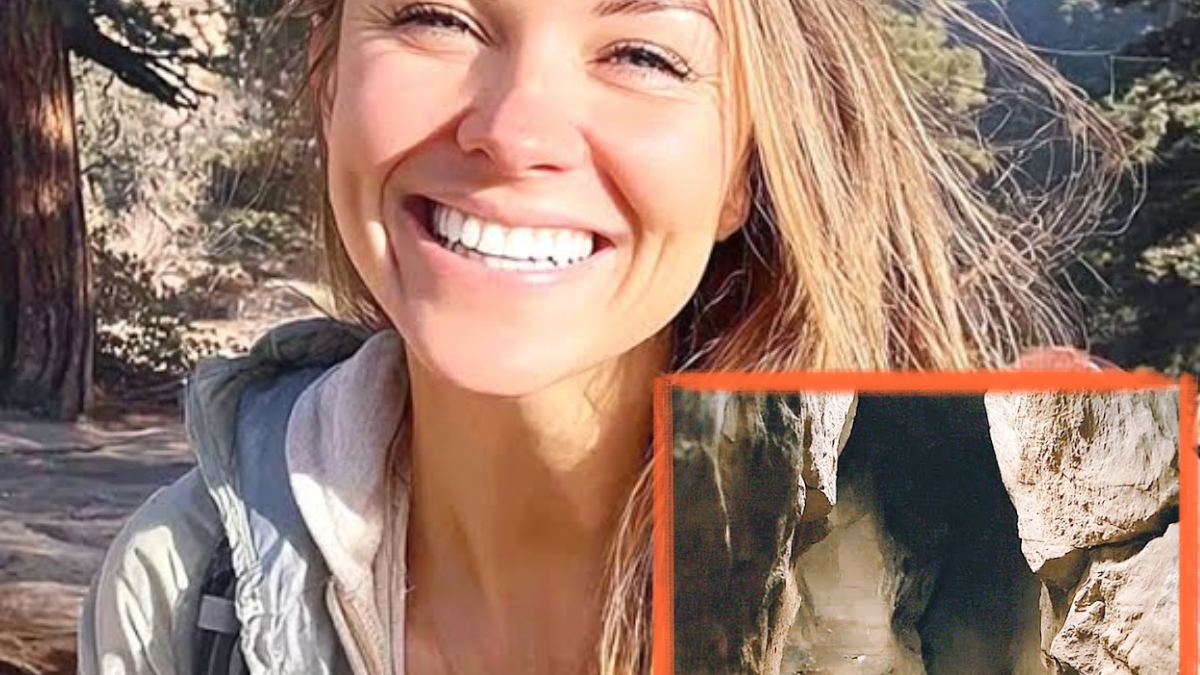
A Hiker Vanished From a Trail She Knew by Heart. Two Years Later, Cavers Found Something Sitting Motionless in the Dark, and Only the Faint Rise of Its Chest Proved It Was Still Alive 😨
Part 1
On October 19, 2015, three cavers who had broken every rule crawled into an unmapped cave beneath Reavis Canyon in Arizona’s Superstition Mountains. What they found in the dark would haunt them for the rest of their lives.
In the far corner of a small stone grotto, something sat perfectly still.
Ben Carter raised his lantern. The light slid across the walls and landed on a shape pressed against the rock, knees bent, hands flat on the floor. At first he thought it was a fallen boulder. The shadows were wrong, and the contours too uneven.
Then the beam reached the face.
It was a woman, or what remained of one. Her skin was gray and almost translucent. Her hair hung in dead strands. Her body was so thin that all three men believed they were looking at a mummy.
“It looks like she’s been sitting here for years,” Ben whispered.
None of them dared step closer.
Then Ben saw it.
The chest moved. Once. Then again.
She was breathing.
Two years earlier, on October 23, 2013, twenty-five-year-old archivist Lisa Burns had parked her car at the Peralta Trailhead… at least that was the plan. In reality, she had arrived at the Peirce Springs Trail at 10:47 a.m. A camera at the parking lot entrance recorded her car. She took a water bottle, a light windbreaker, and a small backpack.
She signed the visitor log around 11:15.
Lisa was no beginner. She had hiked since she was a teenager and walked this trail several times a year. It was short, marked, and mostly open ground between low pines and rocky ledges. It was the last place anyone expected a person to vanish.
At around eleven, a hiker coming down the trail passed her. She looked calm, he told police. She greeted him politely, never broke stride, and continued uphill.
That was the last confirmed sighting of Lisa Burns.
She had promised her friend Kelly Thomas a phone call at nine that evening. The call never came. By ten, Kelly had called the Phoenix police.
Rangers reached the trailhead after midnight. Lisa’s car sat exactly where she had left it. Inside lay her bag, her keys, a small flashlight, a folding knife, and her phone.
Her phone.
Friends said she sometimes left it behind to avoid distractions. But on trails she almost always carried it, at least as a navigator. No one could say why she hadn’t this time.
There were no signs of a struggle, no moved seats, no broken glass. Only a car, quietly waiting for a woman who did not return.
At 6:00 a.m. the next morning, a full-scale search began. Rescue teams, volunteers, two drones, and a sheriff’s helicopter swept the area. Rescuers rappelled into ravines and checked every ledge.
The dogs picked up a faint scent near the start of the trail.
A few hundred yards later, it stopped.
One handler blamed the heavy foot traffic. But others noticed something troubling. Dogs usually show at least a direction of travel. This trail did not fade.
It ended, as if Lisa had stepped off the world in the middle of the path. 🕯️
For weeks the searchers combed gullies, dry streambeds, old hunters’ paths, and rocky shelves high above the trail. They found no torn fabric, no broken strap, no mark of a fall.
The Pinal County sheriff told reporters that in cases like this, they usually find something.
“In Lisa’s case,” he said, “there was nothing. Not a single thread.”
Detectives checked every hospital from Mesa to Casa Grande. They collected guest registers at roadside motels. They searched her banking records and found her cards untouched since the day she vanished. A private investigator hired by the family, a former police officer named Harold Ramsay, interviewed hunters and ranchers and even checked abandoned mine shafts.
Nothing.
There was no reason to believe she had run away. She had no debts, no secrets, no depression, and no plans to leave. She had simply walked up a sunny trail in the middle of the day, among other hikers, and never come back.
By late November, the active search was called off. By April 2014, the case was quietly moved to the cold files. An internal report that a Phoenix journalist later obtained put the odds of finding Lisa alive as “extremely low.”
Her family refused to surrender.
Every October 23, they returned to the trail with friends and volunteers. The search was symbolic, but it gave them somewhere to put their grief.
“We don’t know what happened to her,” her mother said on a recording kept in the case file. “But we can’t accept that she just disappeared. People don’t just disappear.”
Now, on October 19, 2015, the three cavers were backing away from a motionless figure in the dark.
They did not touch her. Low oxygen pockets were common in these galleries, and they knew better than to move a body that might be near death. They climbed to the surface almost without stopping, and only when they reached open canyon did they get a signal to call 911.
“They found a person underground,” the dispatcher wrote afterward. “He kept saying she was barely moving. His voice was shaking.”
Rescuers took hours to build a route through passages too narrow for a stretcher. The first medic who reached her found her breathing slowly, her pulse barely detectable, her body temperature dangerously low. Her shoulders and forearms were covered in bruises and old calluses.
And the cavers had noticed something else.
There were no footprints in that grotto. No equipment. No sign that she had wandered in and gotten lost.
She was sitting in a dead end, in a cave with no alternate exit.
As if someone had placed her there.
When the rescuers carried her into the evening light, doctors saw her face for the first time. They did not know her name. No one yet knew that this was Lisa Burns, missing for almost two years.
And no one could explain how a human being had survived that long in the dark.
At the hospital, X-rays revealed old fractures in her ribs, wrist, and forearm that had healed badly. They had happened at different times. They had not been accidents.
Then a nurse found something tucked in the waistband of her torn clothing, wrapped in a scrap of cloth.
It was a small, handmade bracelet woven from horsehair.
The same kind the cavers had found at the bottom of the cave shaft.
And it was fresh.
😨 What they discovered next was even more terrifying… Find PART 2 in the comments, or leave ANY WORD below to receive it privately! 👇
Part 2
And it was fresh.
The fibers had not dried out. The weave still held its shape. That meant someone had made it recently, deep underground, with materials that did not belong in a cave.
Detective Mark Sims stared at the bracelet in an evidence bag. In his years in major crimes, he had worked many disappearances in the Arizona desert. None had ever begun with a woman found alive beneath the earth.
He descended into the cave in two stages, and the second one stayed with him.
The grotto was larger than the cavers had described. When the lights were set up, the experts went quiet.
In one corner lay a neatly made bed of moss, lichen, and dried roots, pressed flat from months of sleeping. It was orderly, as if whoever made it needed to hold onto some thread of normal life.
In the opposite corner, someone had built a small stone basin to catch the water that dripped from the ceiling. The stones were lined with a thin layer of sand, and tiny channels had been cut to guide the flow. Whoever lived here knew how to survive on very little.
Nearby lay a small, careful pile of rodent bones. Some had been cracked open to reach the brain, one of the few nutritious parts a person could eat.
Then they found her backpack.
Inside was a notebook swollen with moisture and a pen with a worn grip. In the lab, technicians opened the pages one by one. Most of the ink had dissolved.
But one page survived.
It held a shaky map of the cave, drawn with lines that curved like a child’s. On the right side, an arrow marked “Passage B” and pointed toward what seemed to be the only way out.
Beneath it, in uneven, nearly illegible pencil, were five words:
“It doesn’t work. He blocked the entrance.”
He.
Sims read the line again. Until now, the case had looked like a tragic accident. A hiker lost, injured, and trapped. But this meant a third person.
And a third person meant that someone had come and gone from that cave at will.
The evidence began to point the same way.
Scuff marks ran along the grotto walls at shoulder height, repeated again and again, the kind left by someone walking the same route many times. But they were too even and too high. They were not Lisa’s.
A geologist examined the rubble that had once sealed the passage and frowned. The stones had not fallen naturally. Several carried tool scratches. One fragment held traces of a clay-sand mixture that did not exist anywhere in that part of the cave.
Someone had carried those stones in from outside.
And there was one more detail, the one that bothered Sims most.
Every object in that grotto belonged to Lisa. No rope. No plastic bag. No tool. No scrap of trash.
Whoever had been there had cleaned up after himself.
Weeks passed before Lisa could speak. She lay with her eyes closed, silent, as if her mind had switched off. When she finally murmured her first words, they were slurred and fragmented, and they came and went like a radio losing signal.
She told Sims what she could. That day on the trail, she had tried to take a shortcut to a viewpoint. The ground crumbled. She fell and struck her head.
When she woke, she was underground.
She remembered crawling toward a faint glow, hands on cold stone, hearing water dripping somewhere in the dark. She remembered getting lost in the same passages again and again.
Then she remembered the footsteps.
They were slow, steady, and unhurried. At first she thought they were echoes of her own.
But they kept getting closer.
Lisa would not describe the man’s face. She said she never saw it. He carried a small lantern with a yellow light, and he never turned it toward himself. At first, he brought her water. It tasted of cold metal. Then roots, wrapped in cloth.
She remembered it as a kind of care, and in the moment, it felt like rescue.
Then she tried to leave.
“He was dragging a stone,” she told a psychologist, in the flat voice of someone describing a dream.
“How?” the psychologist asked.
“For a long time,” she said. “And silently.”
She said he had a name for himself. She repeated it again and again, like a word stored apart from all the others.
The Guardian.
She could not say how long she had been down there. The only answer she ever gave was “A very long time.”
And then her voice dropped, and the psychologist leaned closer to catch it.
Lisa whispered that sometimes the Guardian had stood very near her in the dark. Close enough that she could hear him breathing.
He never touched her.
He only watched.
Sims set down his pen. He had been sure the man behind this had left no name, no face, no past.
But in the old geological archives, he found a file that said otherwise. A file for an engineer who had once known these underground passages better than anyone alive.
He opened it, and read the name at the top of the first page.
His hand stopped moving.
😱 The truth behind this disappearance is more horrifying than anyone imagined… LIKE or COMMENT “REVEAL” to see PART 3! The final part will be posted after enough comments! 👇
Part 3
The name on the file was Arthur Graves.
He had worked for Western Geoservices, a company that conducted geological surveys in the Superstition area. Colleagues remembered him as a brilliant specialist who understood rock structure, had real experience in cave systems, and could navigate in total darkness without a lamp.
They also remembered something else.
A former supervisor, reached by phone, said Graves had talked obsessively about underground systems. He believed in an eventual man-made collapse, after which only those who had adapted to life underground would survive.
About ten years before Lisa’s disappearance, the company let him go. The paperwork used vague phrases: violation of work discipline. Dangerous paranoid behavior.
After that, Graves slipped off every record.
Local residents told police that for years afterward they sometimes saw a man in remote parts of the mountains, with a backpack and an old miner’s lamp on his belt. Some called him a hermit. Some called him a savage.
No one thought of him as a threat.
Sims obtained old geological survey maps from the state, charts of fissures and technical passages created during surveys decades earlier. Several overlapped the cave where Lisa was found. One geologist who had worked there said that Graves might have known of cavities that never made it onto any public map.
To anyone else, those tunnels were a hazard.
To Arthur Graves, they were a private labyrinth.
The police launched a new search, not to rescue anyone, but to find him.
Teams used radio sensors, cavity scanners, and cavers who specialized in mapping unknown passages. For a week they found nothing but traces: old campfires, empty cans, scraps of cloth used as rain shelters.
Then, in a remote section of Little Apache Canyon, where almost no one went because of the terrain, they found a hidden camp.
A small tent. A tarp. A shelter built from stones.
It looked as though it had been abandoned in a hurry. Belongings were scattered. The ground beneath the tent was marked with fresh footprints.
Inside lay metal boxes of dried roots, scraps of cloth smudged with soil, and an old lantern with a yellowed glow.
Lisa had said the Guardian carried a lantern with yellow light.
And there were notebooks, bound with rope.
Investigators called them the observation diaries. The handwriting was uneven and harsh, in places so cramped it looked as though it had been written in darkness. They tracked the movements of tourists in the Superstitions. They recorded when trails were least crowded. They noted seasons instead of dates: August, hot after rain. Cold nights.
But the second half was darker.
In it, Graves described his vision of a new race, built to live without the sun. He called himself an overseer and a keeper of order. The people he watched on the trails, he called candidates.
In several places, he wrote about a woman he called the student who bears the dark better than the others.
There was no doubt who that was.
One entry read: “She is still afraid of the dark, but the dark will teach her.”
Another: “Passage B is closed. No one must disturb the balance.”
Sims closed the notebook slowly. Everything finally fit.
Lisa had not been lost. She had been chosen.
A woman had fallen on a rocky ledge, hit her head, and woken in a cave. And a man who had spent years in the darkness had found her there, and decided she was exactly what he had been waiting for.
He had saved her from dying of thirst. He had fed her and given her water.
Then he had blocked the exit with stones he carried in himself, one by one, and called himself her Guardian.
Search teams followed his trail for miles with dogs. It ended at the edge of a cliff, where there were only a few old shoe marks and a shifted stone.
Cavers believed he might have lowered himself into a deep vertical shaft, the kind leading to unexplored chambers. For an ordinary person, it would have been suicide. For Graves, who had lived underground for years, it was simply another door.
Officially, the sheriff said Arthur Graves was in hiding and his whereabouts were unknown. “We have no reason to believe he is dead,” the sheriff told reporters. “We have no reason to believe he has left the state.”
Off the record, detectives were less careful.
He went back into the earth, one said. And he’s never come out.
Locals whispered that on certain nights, someone had heard footsteps in the gorges, or seen a faint yellow glow flicker between the stones. No one ever confirmed it.
In his final report that autumn, Detective Sims wrote one sentence that closed the operation:
“We found his world, but we did not find him.”
For Lisa Burns, the investigation was only the beginning of a different kind of recovery.
Doctors described her return to reality as slow, uneven, and fragile. For weeks she could barely walk across a ward without resting. She regained weight in fits and starts, and her body sometimes refused food, as if it did not believe it was allowed to live.
She searched the corners of every room with her eyes, as if checking whether someone was hiding there. She could not tolerate a dark corridor and begged that her door be left open all night. She woke screaming, unable to explain why, and repeated only one word.
He.
Specialists in isolation trauma noted that her reactions matched those of people deprived of sensory stimuli for a long time. Confined spaces triggered panic. A routine CT scan had to be canceled several times because she would not enter the machine, saying she could feel the pressure of stone.
She was still Lisa. But she was not the same Lisa.
Her speech was quiet and restrained. Her sense of space had shifted. Her attention drifted. Her mother said she could sit at a window for hours, watching a patch of sunlight move across the floor, studying its changing shape as if she had to relearn what light was.
Her family never spoke about the Superstition Mountains in front of her. Her father once said that Lisa told him she could still feel the shadow of a stone when she heard about those places. No doctor could explain that.
After Lisa’s rescue, the Arizona park authorities rewrote their search protocols. New rules required checking cave systems within several miles of a missing person’s last location. They tightened trail registration and established new procedures for remote canyons.
The official statement said that the Burns case had proven remote cavities could shelter people living outside society, and whose behavior could not be predicted.
Hikers who once walked alone began joining groups.
Some locals said Lisa’s story had given the mountains their voice back. A reminder that this place does not forgive mistakes.
The case file of Lisa Burns remains formally open. It holds dozens of photographs, copies of Arthur Graves’s diaries, cave analyses, maps, and interview transcripts.
But one document is missing.
The final report.
It was never written, because the sheriff’s office cannot close a case with no ending.
For Lisa, the answer was different. She survived.
But according to her doctor, a part of her stayed where she had lived among the stones. The place still lingers in her with its dry air, its motionless darkness, and a silence quieter than a whisper.
And though Arthur Graves was never found, the shadow he left behind still lives in those mountains, as real as the stone that once sealed Passage B. 🌙💔
This story is entirely fictional and created for entertainment purposes only. It does not represent any organization or individual, nor does it encourage inappropriate behavior. The content was generated with AI assistance.








