A Teen Was Found Dead in Her Own Bedroom After School. Detectives Whispered the Same Thing: “She Isn’t the First, and She Won’t Be the Last.” Then a Stranger’s Stolen Purse Revealed a Terrifying Secret
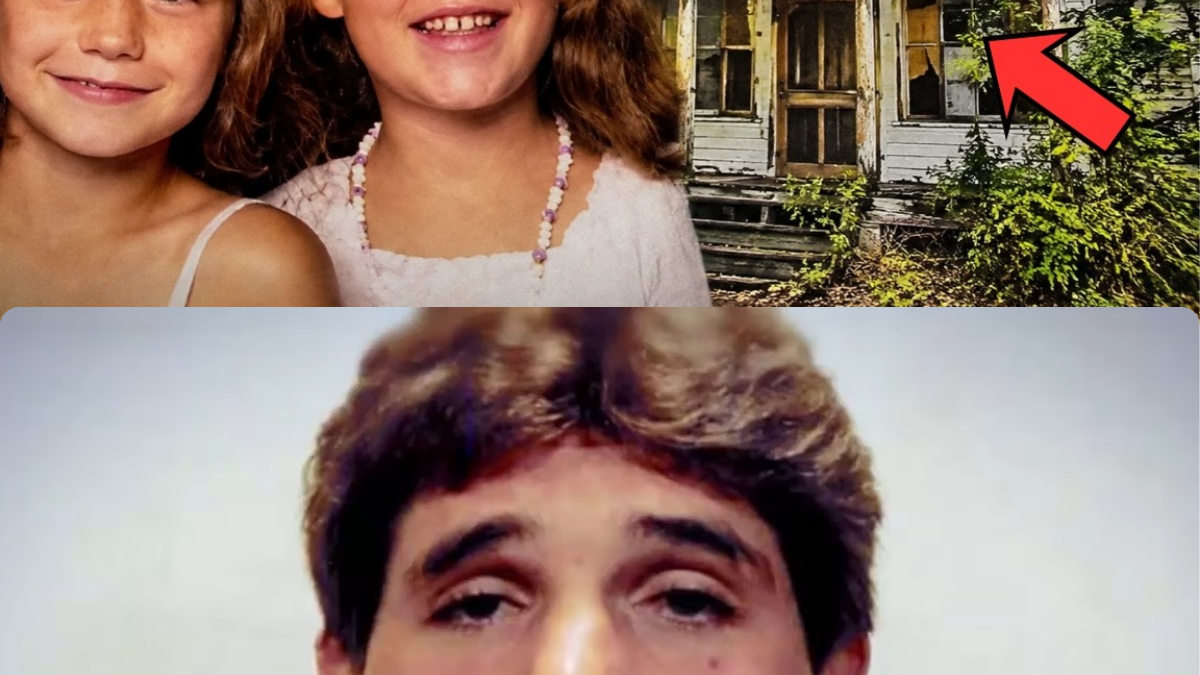
A Teen Was Found Dead in Her Own Bedroom After School. Detectives Whispered the Same Thing: “She Isn’t the First, and She Won’t Be the Last.” Then a Stranger’s Stolen Purse Revealed a Terrifying Secret 😨
Part 1
On the evening of October 13, 1987, fifteen-year-old Megan Doyle walked into her family’s home in a quiet Indiana town, still buzzing from her school swim meet.
“Kelly? I’m home! You won’t believe how it went!”
No answer.
The living room was clean and tidy. The house was silent. Their mother was still at work, and their parents’ recent divorce meant the sisters often stayed alone until she returned. But Kelly always answered. She never went anywhere without saying so.
Megan checked the rooms one by one, half expecting her older sister to jump out in a prank.
At the bedroom door, she stopped.
Kelly Doyle, sixteen, lay on the floor. 🕯️
Kelly had been the kind of girl a whole town was proud of. She sat on the student council, cheered at every game, and captained the swim team. Her mother called her beautiful, cheerful, and full of life.
Within minutes, patrol cars filled the street. Megan was led to a squad car while officers entered the house.
The lieutenant in charge had worked for seventeen years. He later said he had never seen anything like what waited in that bedroom. Kelly had been brutally attacked. Whoever did it had left her bound and silenced.
The town of eighteen thousand had come here for the quiet. Its crime rate was low. People left their doors unlocked.
That night, it ended.
Crime scene specialists worked the room inch by inch. On the wall and curtain by the window, they found spatters of blood. They sprayed the wall with silver nitrate, a chemical that reacts with the residue left by skin, then swept the room with an alternate light source that reveals what the naked eye cannot.
The light revealed a partial palm print in blood.
Technicians cut out that entire section of the wall and sent it to the lab.
Other details piled up. In the living room, a drinking glass carried two sets of fingerprints. One belonged to Kelly. The other matched no one in the family. Hanging on a chair was a denim jacket, and in its pocket, a young man’s driver’s license.
On the kitchen counter sat a woman’s purse with no identification inside. Megan said it was hers. But when she had come home, she told police, she had not seen her sister’s purse anywhere.
Where was Kelly’s purse?
The family recognized the license in the jacket. It belonged to Kelly’s boyfriend.
Detectives questioned him that night. He said he had not been at the house. Kelly had been cold at school, he explained, so he lent her his jacket, and she took it home. He had spent the rest of the day with his parents, who confirmed it.
Before he left, detectives took his fingerprints and palm prints.
They did not match.
Over the next days, police interviewed dozens of friends and neighbors. Every suspect they identified was cleared by fingerprints, one by one. The unknown prints were entered into the automated fingerprint identification system.
No match.
There was no sign of forced entry. The killer, it seemed, had walked out the front door calmly, as if nothing had happened. As if he had all the time in the world.
The town began to live in fear. Was the killer a neighbor? A man from the next town? A stranger passing through?
Then, a week later, something happened an hour away.
A woman in Chicago read the newspaper story about Kelly Doyle at work. She sighed, thought about the family’s grief, glanced at the clock, and realized she was late. She slipped out the back door into an alley.
A man with brown hair and a mustache grabbed her and held a knife to her.
She fought. She screamed. A delivery truck turned into the alley, and the attacker panicked, snatched her purse, and ran.
Shaken but alive, the woman went straight to the police. She would not stop insisting they find her purse.
Days later, officers called. They had found one, dirty, dumped in a trash can.
She went to the station and confirmed it was hers. Then she opened it.
Tucked inside were items that did not belong to her.
She stared at the name on the documents. It was the name she had read in the newspaper just hours before the attack.
Kelly Doyle.
Part 2
She stared at the name on the documents. It was the name she had read in the newspaper just hours before the attack. Kelly Doyle.
The man in the alley had taken the cash he wanted, then thrown away the purse and everything else he carried. Including a dead girl’s papers.
In one careless moment, he had left behind two things: a living witness who had seen his face, and a physical link to the murder.
The woman described him in detail. A composite sketch and a description of his car went out across the region. For two weeks, tips poured in. None led anywhere.
Detectives now held a sketch and a set of bloody fingerprints. But a print is useless until someone gives it a name.
Winter came. Months passed. The man’s identity remained a mystery.
Everything about the case suggested the same chilling thought. Kelly would not be the last. 🌙
The next break came from more than a thousand miles away.
Diane Carter had grown tired of her small town and its lack of opportunity. What had kept her there was a sense of safety, but Kelly’s murder had shattered it. So she started over in Florida.
One afternoon, with a cup of tea, she opened the local paper and froze.
A teenager had been murdered inside her own home. Her younger brother had found her after school. Police, unable to solve it, were pleading for help.
Diane felt a jolt of recognition. She remembered Kelly. She remembered the details. The two stories rhymed.
She thought: Just as I connect these two towns, so might the killer.
She phoned the Florida sheriff’s office and told them everything.
Indiana police received the tip with skepticism. It was thin. But they had little else, so they asked Florida to send the files.
In January 1988, shortly after six in the evening, fourteen-year-old Jenna Carlisle had been found dead in her bedroom by her younger brother. She had come home from school alone. Her father and brother had stepped out for an errand.
The scene matched. The way she had been bound, with a bedsheet. The hour. The empty house.
There were no fingerprints. But there was something else. The autopsy had recovered biological evidence, and in 1988, DNA analysis was just beginning to enter criminal investigations. The lab managed to build a genetic profile.
But a profile only answers a question once there is someone to compare it with.
Detectives from both states met, spread photographs across a table, and studied both scenes. The similarities were undeniable.
It was as if the killer had left a signature.
A neighbor of the Carlisle family remembered a stranger in the area that afternoon: dark hair, mustache, early twenties. He had driven a red Corvette with Missouri plates.
The car did not match the Indiana description. But the face did.
Investigators now believed they were chasing a man who crossed state lines, which made him nearly impossible to track.
All they could do was wait for him to make a mistake.
Two months later, in Beaumont, Texas, he did.
A call came in about possible gunfire at a city hotel. Officers knocked on a door, got no answer, and went in.
They found a fellow officer on the floor, unconscious, shot.
Part 3
The wounded officer was thirty-year-old Paul Henley. Minutes earlier, he had radioed dispatch to say he was pulling over a driver whose plates were reported stolen. The car had been headed for the hotel.
Henley was rushed to the hospital, but his wounds were too severe. He died shortly afterward.
A witness who had heard shots looked out a window and saw a dark-haired man with a mustache speeding away in a red Corvette.
An alert went out, and within minutes the car was spotted. Police chased it for nearly forty kilometers until the driver lost control and went off the road.
Officers arrested him inside the car. On the seat lay a .357 Magnum revolver that had just been fired, stained with blood. Nearby were stolen license plates.
His name was Dennis Lee Marlow.
At the Beaumont station, he confessed to shooting the officer almost immediately. He offered no explanation. He was calm, controlled, almost businesslike.
That calm unsettled the detectives. A man who kills a policeman over a stolen car is usually panicked, or desperate, or stupid.
Marlow was none of those. He was something else.
In his hotel room, police found a pile of receipts from hotels and restaurants across the Midwest. He had been moving from place to place for months.
One Texas detective wrote up the case for a national law enforcement magazine, laying out Marlow’s profile, his movements, and the details of Henley’s killing.
The article landed on the desk of a Florida detective working Jenna Carlisle’s case.
He read it, set it down, and picked up the phone.
The red Corvette with Missouri plates was the one missing piece in Florida. And Missouri plates had just been found in Texas.
Soon after, Indiana was told.
Indiana investigators asked for Marlow’s fingerprints to be sent to the county crime lab. A specialist compared them to the prints recovered from Kelly’s house.
After a meticulous examination, the verdict was clear.
The fingerprints placed Marlow inside the home. The palm print, in blood, placed him beside Kelly, at the wall and the curtain, where he had stood looking out the window to see if anyone was coming.
Nearly eight months after Kelly Doyle died, detectives finally had a name.
The officers who had spent months staring at a dead end said they felt something close to relief. Relief that he could never hurt anyone else. And a quiet satisfaction at being able to offer her family some kind of closure.
In Florida, there were no fingerprints. But there was a genetic profile, preserved from the evidence in Jenna’s case.
Investigators compared it with a sample taken from Marlow.
It was a perfect match.
Three law enforcement agencies, in three states, had linked three seemingly unrelated killings to a single man: an Indiana teenager, a Florida teenager, and a Texas police officer.
The evidence told a picture investigators would never forget.
Marlow had crossed the country, scouting neighborhoods for young people who might be home alone. When he knew a house was empty of adults, he knocked. When they opened the door, he went in, with one purpose.
He had been caught by a police officer who happened to run a stolen plate. By a woman in Chicago who refused to stop asking about her purse. By a reader in Florida who noticed a headline and picked up the phone. And by a genetic profile that sat in a lab for weeks, waiting for a name to compare it to.
Dennis Marlow was arrested on March 22, 1988. During jury selection for his Texas trial, he tried to escape.
It failed.
In October of that year, a jury convicted him of killing Officer Henley. In 1989, he was found guilty of Kelly Doyle’s murder. That December, he pleaded guilty to the murder of Jenna Carlisle.
He was sentenced to death.
After his conviction, Marlow gave an interview to a Hungarian journalist that still circulates online in dubbed form. According to news reports, before his execution he said he was sorry and hoped his death would bring some comfort. He expressed love and gratitude to his friends and family and thanked the prison staff, who he said had always treated him well.
On December 9, 1997, in Texas, Dennis Lee Marlow was executed.
For two families, no sentence could return a daughter. For Kelly’s sister Megan, who walked into a silent house and went room to room calling a name, nothing could undo that moment.
But a case that began with a bloody palm print on a bedroom wall, and looked hopeless for months, was solved by a chain no one planned. A discarded purse. A woman who moved a thousand miles away and read the wrong headline at the right time. A fingerprint kept on file. A DNA profile preserved until there was someone to compare it with.
A town that had once left its doors unlocked never forgot that autumn.
And two girls who never got to grow up are remembered not for how they died, but for the people who refused to let their cases go cold. 🌙💔
This story is based on a real criminal case. Names, places, and some details have been changed. It is written for awareness and does not represent any real individual or organization. It was generated with AI assistance.








