HE ABANDONED OUR UNBORN BABY OVER A POSSIBLE DIAGNOSIS—THEN HIS SECRET SECOND CHILD CHANGED EVERYTHING
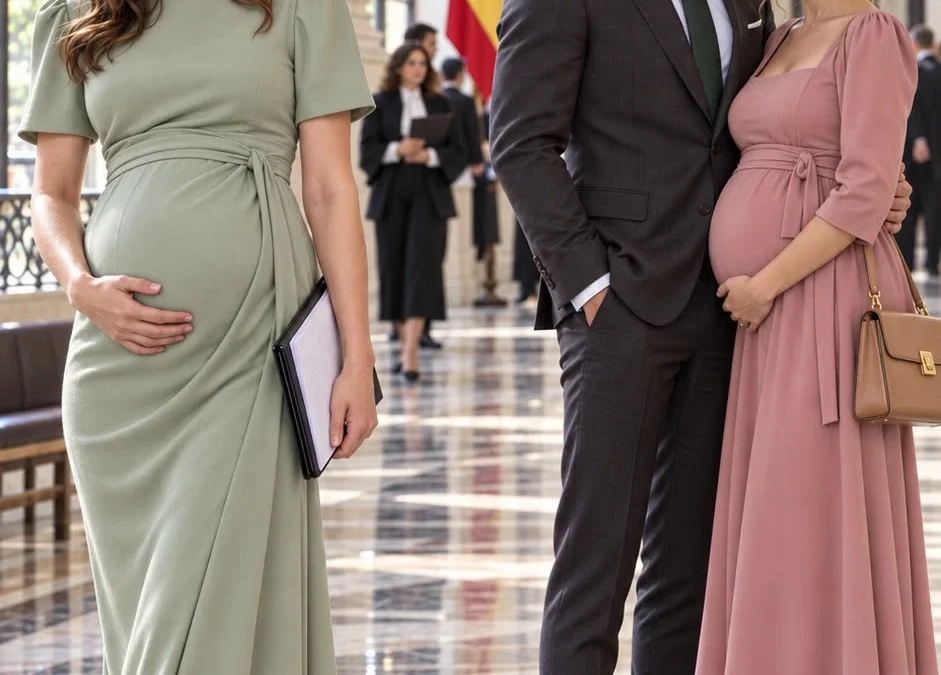
HE ABANDONED OUR UNBORN BABY OVER A POSSIBLE DIAGNOSIS—THEN HIS SECRET SECOND CHILD CHANGED EVERYTHING 💔
PART 1
“If that baby has trisomy 21, don’t expect me to be her father.”
Laura Martín stared at her husband as rainwater slid down the windshield of their parked car outside a private clinic in Madrid.
She was still holding the prenatal screening report.
Her fingers were trembling.
The doctor had been very clear.
The screening did not confirm that their daughter had trisomy 21.
It only indicated an increased probability and recommended further testing.
But Sergio Navarro had already made his decision.
Laura was 35, a teacher at a public school in Chamberí, and she had been married to Sergio for six years.
For most of those years, he had spoken constantly about becoming a father.
He wanted birthday parties.
Family vacations.
Sunday breakfasts with children running through the apartment.
After Laura lost their first pregnancy at ten weeks, Sergio had cried beside her.
One night, standing in the empty room they had hoped would become a nursery, he wrapped his arms around her.
“One day,” he whispered, “there’ll be a crib right here.”
Laura believed him.
When she became pregnant again, Sergio seemed transformed.
He attended appointments.
He cooked when Laura was exhausted.
He bought a small wooden bassinet before they even knew they were having a girl.
Then came the first-trimester screening.
The gynecologist spoke calmly.
“The probability is higher than usual. But this is not a diagnosis. We need additional testing before drawing conclusions.”
Laura heard uncertainty.
Sergio heard catastrophe.
Over the next eight days, he stopped talking about their daughter like she was a child.
Instead, he sent Laura articles.
Statistics.
Therapy estimates.
Lists of potential medical expenses.
“We have a life planned,” Sergio said one night.
Laura looked up from the kitchen table.
“What does that mean?”
“A mortgage. Careers. Trips. Plans.”
He slid his phone toward her.
“We can’t sacrifice our entire future.”
Laura’s hand instinctively moved to her stomach.
“Our future?”
She studied his face.
“Or yours?”
Sergio didn’t answer.
Two nights later, he finally said what he had been building toward.
“You can still terminate the pregnancy.”
The room became silent.
Laura felt her daughter move beneath her palm—or perhaps she only imagined it.
“And if I don’t want to?”
Sergio leaned back in his chair.
His expression was colder than she had ever seen it.
“Then you’ll raise her alone.”
He expected tears.
Laura could see that.
He expected bargaining.
He expected her to ask what she could do to keep their marriage together.
Instead, Laura looked directly at the man she had loved for six years.
“Then I’ll raise her alone.”
Forty-eight hours later, Sergio moved out.
He took his suits.
His laptop.
Two expensive watches.
He even took the coffee machine they had chosen together after moving into the apartment.
But in the hallway, he left the crib in pieces.
Laura stood looking at the wooden panels scattered across the floor.
That was how her older brother Daniel found her.
He didn’t ask whether she was okay.
He already knew the answer.
He rolled up his sleeves.
“Where are the instructions?”
Laura began crying.
Daniel assembled the crib that night.
His wife, Marta, arrived with food.
From then on, they became Laura’s safety net.
Daniel drove her to appointments when necessary.
Marta painted the nursery.
They stocked Laura’s refrigerator and learned when she needed company—and when she simply needed someone nearby who would not ask questions.
At six months pregnant, Laura filed for divorce.
The last meeting with the lawyers was when she learned how quickly Sergio had rebuilt the life he claimed Laura was destroying.
He arrived with another woman.
Irene.
Twenty-eight years old.
A financial adviser who worked at Sergio’s firm.
And unmistakably pregnant.
Four months.
Sergio didn’t even pretend to be ashamed.
He sat across from Laura as though they were negotiating the sale of a house.
Then he smiled.
“I’m going to be a father again.”
Laura said nothing.
“With Irene, I have the chance to start properly.”
Laura’s eyes moved slowly toward Irene’s stomach.
Then back to Sergio.
He followed her gaze.
And said the sentence she would never forget.
“Besides, this baby is fine.”
Irene looked uncomfortable.
Laura did not cry.
She didn’t shout.
She quietly placed the legal papers inside her bag and stood.
Months later, Alba was born after fifteen exhausting hours of labor.
Daniel was outside the room.
Marta waited with him.
Sergio was nowhere.
The doctors completed the necessary tests.
Alba did not have trisomy 21.
Laura looked down at her daughter’s tiny face.
She felt no triumph.
No sense of having “won.”
Instead, she understood something that hurt far more.
Sergio had abandoned Alba not because of a diagnosis.
He had abandoned her because of a possibility.
For four months, he never called.
He never asked whether Alba had been born safely.
Never asked how much she weighed.
Never asked if Laura needed help.
Never asked for a photograph.
Then one afternoon Laura walked into a pharmacy in Pozuelo and unexpectedly saw Patricia, Sergio’s sister.
Patricia froze when she noticed Alba sleeping in the stroller.
“She’s beautiful.”
Laura nodded.
Patricia hesitated.
“Does Sergio know?”
“Know what?”
“That she’s okay.”
Laura felt something cold settle inside her.
“Sergio knows nothing.”
Patricia looked confused.
“He never asked.”
Patricia’s face changed.
“Then you don’t know about Irene.”
Laura tightened her grip on the stroller.
“What about her?”
Patricia lowered her voice.
“She gave birth eleven days ago.”
Laura waited.
“A boy. Mateo.”
Then Patricia said something Laura could never have predicted.
“Mateo has trisomy 21.”
Laura closed her eyes.
Not because she was pleased.
Mateo was an innocent baby.
None of this was his fault.
“What did Sergio do?”
Patricia hesitated.
“When the doctors told them, he walked out of the room.”
Laura stared at her.
“He came back hours later.”
“For Irene?”
Patricia shook her head.
“He demanded a paternity test.”
Two days later, someone rang Laura’s doorbell.
She opened it.
Sergio stood there holding white flowers and a stuffed bear.
He smiled as if the previous year had been nothing more than an argument they could forget.
“Now that we know Alba is healthy,” he said, “we can fix things.”
Laura gripped the door.
“And Mateo?”
Sergio’s smile disappeared.
“Don’t mix situations.”
“He’s your son.”
“That hasn’t been proven yet.”
Laura finally understood why he was there.
Sergio stepped closer.
“I’m going to ask for shared custody of Alba.”
Laura stared at him.
“You don’t want Alba.”
“Excuse me?”
“You want the version of fatherhood that looks good from the outside.”
His expression hardened.
“That’s for a judge to decide.”
Laura closed the door.
Then she called her lawyer.
Because Sergio believed he had just threatened her with a custody battle.
He had no idea that the custody battle was about to expose something much worse.
👉 Find Part 2 in the comments—or leave ANY WORD and I’ll send it to you privately.
PART 2
He had no idea that the custody battle was about to expose something much worse.
Laura’s lawyer, Nuria Beltrán, had spent nearly twenty years handling family-law cases in Madrid. She listened without interrupting as Laura explained the pregnancy, Sergio’s departure, the months of silence, Alba’s birth and his sudden demand for shared custody.
When Laura finished, Nuria held out her hand.
“I need the messages.”
Laura looked away.
“Some of them I never want to read again.”
“That’s exactly why we preserve them.”
That night, Laura opened conversations she had avoided for months.
There they were.
“If the result is positive, don’t count on me.”
“I’m not sacrificing my life because of a disability.”
“If you continue the pregnancy, that’s your responsibility.”
“I deserve a normal family too.”
Laura’s hands shook.
Nuria’s response was simple.
“This is not about revenge. It’s about establishing what relationship he actually chose to have with Alba.”
Three weeks later, Sergio formally requested alternating weekends, half the school holidays and a gradual transition toward shared custody.
His filing described him as a devoted father unfairly excluded after a difficult separation.
He mentioned buying a crib.
Preparing a nursery.
Rearranging his schedule.
It said nothing about the four months in which he made zero calls about his newborn daughter.
Then, two weeks before the hearing, Laura’s phone rang.
Unknown number.
“Laura?”
“Yes?”
“It’s Irene.”
Laura went completely still.
“I know you have no reason to trust me,” Irene said. “But there’s something you need to see.”
They met near Retiro Park.
Irene arrived pushing a stroller.
Inside was Mateo.
Tiny.
Sleeping beneath a blue blanket.
Irene looked exhausted.
“I’m sorry,” she said immediately.
Laura remained silent.
“I knew you and Sergio were still married. He told me it was over. He said you were using the pregnancy to keep him.”
“I didn’t come for an apology.”
“I know.”
Irene glanced at Mateo.
“I came because he’s doing the same thing again.”
She described the hospital.
The moment doctors explained Mateo’s diagnosis.
Sergio staring at the baby.
Asking whether they were sure.
Then walking out.
Three hours later, he returned.
He didn’t hold Mateo.
He didn’t ask how Irene was feeling.
He demanded a paternity test.
Then Irene unlocked her phone.
“There’s more.”
She showed Laura recent messages.
“With Laura, at least I have a daughter without problems.”
“Mateo will take too much time.”
“If I get shared custody of Alba, I can still have a normal family life.”
Laura felt sick.
“Why are you showing me this?”
Irene looked at her son.
“Because he’s using Alba to escape Mateo.”
She swallowed.
“And because I already made one mistake by believing everything he said about you. I won’t make another one by helping him lie about our children.”
Certified copies were sent to Nuria.
Irene agreed to give evidence.
At the hearing, Sergio arrived in an immaculate suit.
He spoke about stability.
Responsibility.
Wanting to recover lost time.
He claimed Laura had prevented contact.
Then Nuria presented the phone records.
Four months.
Zero calls about Alba.
Then she presented the messages from Laura’s pregnancy.
Finally, the clearest sentence appeared before the court:
“If she has trisomy 21, I will not be her father.”
Sergio’s attorney called it fear.
An emotional reaction.
Nuria looked directly at Sergio.
“Then perhaps you can explain how long that fear lasted.”
She placed another set of messages on the table.
The ones about Mateo.
The room went silent.
This no longer looked like one frightened outburst.
It looked like a pattern.
And just when Sergio realized the case was slipping away, Nuria revealed that Irene was prepared to testify.
👉 LIKE this and COMMENT “ALBA” if you want Part 3. Once I receive enough comments, I’ll post the complete ending.
PART 3
And just when Sergio realized the case was slipping away, Nuria revealed that Irene was prepared to testify.
Sergio turned toward Irene.
For perhaps the first time since entering the courtroom, the confidence disappeared from his face.
Irene did not look away.
She had spent weeks questioning whether she could sit in that room.
She knew what people might say.
She had begun a relationship with a married man.
She had believed Sergio’s version of Laura.
She had imagined that she and Sergio were beginning something new rather than standing inside the wreckage of something unfinished.
But now Mateo existed.
And whatever shame Irene carried about the past, she refused to let it determine her son’s future.
Nuria asked her to describe what happened after Mateo was born.
Irene spoke carefully.
“When the doctors explained his diagnosis, Sergio left.”
“How long was he gone?”
“About three hours.”
“When he returned, did he ask about your recovery?”
“No.”
“Did he hold Mateo?”
“No.”
“What did he ask for?”
“A paternity test.”
Sergio’s lawyer shifted in his chair.
Irene continued.
“In the days afterward, he stayed somewhere else. Then he came back for clothes and his computer.”
“What did he tell you?”
Irene looked directly at Sergio.
“He said he needed to save the life he still could.”
Sergio clenched his jaw.
Nuria displayed the messages Irene had preserved.
The language was painfully clear.
Sergio described Alba as the child through whom he might still have the family image he wanted.
He described Mateo primarily in terms of time, medical appointments and inconvenience.
For Laura, the worst part was not that the messages helped her case.
It was knowing that two children had been reduced to categories inside their father’s mind.
Acceptable.
Unacceptable.
Easy.
Difficult.
Useful.
Inconvenient.
The court did not grant immediate shared custody.
Sergio would not suddenly receive full weekends with a baby who barely knew him.
Instead, a gradual contact arrangement was established in a family contact center, together with an evaluation of the developing father-daughter relationship.
He was also ordered to contribute financially toward Alba’s needs.
Outside the courtroom, Laura finally exhaled.
Daniel was waiting several steps behind her.
She had almost reached the staircase when Sergio caught up.
“Laura.”
She kept walking.
“Laura!”
His footsteps quickened.
Then his hand closed around her arm.
She turned.
“What?”
“Are you happy now?”
Laura stared at him.
“You’ve made everyone think I’m some kind of monster.”
“I didn’t write your messages.”
“I am Alba’s father.”
“Being a father is not something you begin after a medical result satisfies you.”
His grip tightened.
“You’ve been manipulating this from the beginning.”
“Let go of me.”
“I’m trying to talk to you.”
“Let. Go.”
Laura pulled away.
Her foot caught the edge of the stair.
She fell sideways.
Pain shot through her ankle.
Daniel ran forward.
“Don’t touch her again!”
A security guard stepped between them.
Several people stopped.
One woman had already been recording part of the confrontation on her phone.
Sergio immediately insisted it was an accident.
“I was just trying to stop her so we could talk.”
The recording showed something else.
Laura suffered a sprained ankle and visible marks around her wrist.
At Nuria’s request, direct communication between Laura and Sergio was restricted.
Future discussions about Alba would be handled through lawyers and a parenting communication system.
The planned contact sessions were temporarily paused while the incident was reviewed.
That night, Laura put Alba to bed, took pain medication for her ankle and slept seven uninterrupted hours.
It was the longest she had slept in months.
Meanwhile, Irene began her own legal process.
The paternity test Sergio had demanded came back.
Mateo was his son.
There was no dramatic revelation.
No mistake at the hospital.
No alternate explanation.
Mateo was Sergio’s child.
Financial support obligations were established, and professional guidance was recommended to determine whether and how Sergio could develop a safe, stable relationship with him.
Sergio responded by claiming that Laura and Irene had joined forces to ruin his life.
The truth was far less theatrical.
They had simply stopped fighting each other.
At first, their relationship was uncomfortable.
Laura had not forgotten that Irene knowingly became involved with her husband while they were still married.
Irene did not ask to be forgiven.
She didn’t expect friendship.
But gradually their conversations stopped being about Sergio.
They started talking about Alba.
Mateo.
Vaccinations.
Sleepless nights.
Daycare.
Feeding.
Work.
The strange loneliness of having everyone offer parenting advice while very few people actually offered practical help.
Irene contacted an association for families of people with Down syndrome in Madrid.
She met parents who refused to romanticize anything.
They spoke honestly about early intervention.
Appointments.
Paperwork.
Uncertainty.
Exhaustion.
But they also spoke about ordinary life.
Birthdays.
First steps.
Favorite songs.
Tantrums.
Laughter.
Inside jokes.
Holidays.
Milestones that no medical report could possibly predict.
Mateo began early support services.
The first time he held a toy for several seconds, Irene sent Laura a video.
She almost deleted it before pressing send.
Laura replied with a heart.
Weeks later, when Alba began crawling across the living-room floor with extraordinary determination, Laura sent Irene a video back.
Soon, without either woman consciously deciding it, the children began growing up near each other.
Laura returned to teaching when her maternity leave ended.
On her first morning back, she stood in front of her classroom for several seconds before speaking.
For years, she had taught children that human worth was not measured by how quickly someone learned.
How they spoke.
How they moved.
What support they needed.
She had believed those lessons.
But now they felt painfully personal.
Because she had spent years beside an adult who believed love should be conditional upon convenience.
Months later, Sergio was allowed to restart supervised visits with Alba.
He arrived on time for the first.
And the second.
He missed the third.
He was thirty-five minutes late for the next.
Each time he failed to show up properly, he followed it with an expensive gift.
A designer coat.
An enormous stuffed animal.
A dress Alba could not yet wear.
At first, Laura became furious.
Then something changed.
She stopped confusing gifts with effort.
The legal system could impose responsibilities.
It could establish boundaries.
It could create protections around Alba.
But no court could manufacture devotion.
No judge could order Sergio to become emotionally mature.
No lawyer could force him to see his daughter as a person rather than a reflection of himself.
That part had to come from Sergio.
And Laura finally accepted that it might never happen.
One Sunday in October, Laura and Irene took the children to Juan Carlos I Park.
The air was cool but bright.
They spread a blanket across the grass.
Alba sat upright, deeply concentrated on trying to push a plastic spoon into a toy cup.
Beside her, Mateo watched every movement.
The spoon slipped from Alba’s hand.
She stared at it.
Picked it up.
Then, instead of putting it back into the cup, she reached toward Mateo.
He closed his fingers around the handle.
Irene smiled.
“Look at those two.”
Laura laughed.
For several seconds, there were no hearings.
No lawyers.
No accusations.
No prenatal reports.
No text messages.
Just two small children sharing a plastic spoon.
Irene was quiet for a moment.
“Do you ever wish everything had happened differently?”
Laura looked at Alba.
“Yes.”
Irene waited.
“I wish Sergio had understood something before either of them was born.”
“What?”
Laura watched Mateo holding the spoon.
“That you don’t love a child after checking whether they meet your conditions.”
Irene looked down.
“During my pregnancy, I thought the worst thing that could happen would be hearing a diagnosis that frightened me.”
She brushed a hand gently over Mateo’s hair.
“Now I know the worst part was discovering that the man beside me needed a perfect child before he could behave like a father.”
Laura understood.
For a long time, she had thought the cruel irony of the story was medical.
Sergio had abandoned Alba because screening suggested the possibility of trisomy 21.
Alba was later born without it.
Then Mateo was born with trisomy 21.
And Sergio walked away again.
But that was never the real point.
There was nothing wrong with Alba.
There was nothing wrong with Mateo.
The problem had always been Sergio’s belief that love was something people earned by fitting his expectations.
He claimed to want a family.
What he really wanted was a script.
A wife who behaved correctly.
Children who developed according to plan.
A career that looked impressive.
A home that photographed well.
And when reality stopped following the script, Sergio treated people as though they had failed him.
A year after Alba’s birth, Laura finally received the last divorce documents.
She placed them inside a box.
Old bills.
Property paperwork.
Documents from the pregnancy.
Then she found a folded sheet of paper.
She opened it.
It was a list Sergio had written when they learned they were expecting a girl.
Fourteen names.
Some crossed out.
Some circled.
And next to one name, he had drawn a tiny heart.
Alba.
Laura stared at it.
For a second, grief returned.
Not grief for the man standing outside the courtroom.
Not for the man who had abandoned two babies when fatherhood became frightening.
She grieved the version of Sergio she had believed in.
The man who cried after their first pregnancy loss.
The man who promised a crib would one day stand in their empty room.
The man she thought would love their child no matter what.
Perhaps that man had never truly existed.
Or perhaps he existed only when love cost him nothing.
Laura tore the page in half.
Then again.
She did not do it angrily.
She simply no longer needed it.
Because she had spent months believing the collapse of her marriage meant she had lost her family.
But when she looked at her life, she saw something completely different.
Daniel building a crib at eleven at night.
Marta arriving with food when Laura was too tired to cook.
Irene learning to ask for help instead of pretending everything was fine.
Alba laughing whenever she saw Mateo.
Mateo reaching for Alba’s hand whenever adults became too loud.
None of that looked like the polished family Sergio had imagined.
It was messier.
More complicated.
More honest.
And infinitely more real.
Neither child knew that before they were born, someone had tried to calculate how much love they deserved based on a medical possibility.
Laura hoped they would remain innocent of that knowledge for many years.
One evening, after Alba fell asleep, Laura entered the nursery.
The little girl was hugging a soft rabbit.
Her breathing was slow and peaceful.
Laura remembered the clinic parking lot.
The paper trembling between her fingers.
And Sergio’s voice.
“If that baby has trisomy 21, don’t expect me to be her father.”
For months, Laura had heard those words as a threat.
Now she understood them differently.
They had been a confession.
Sergio had revealed exactly who he was long before Laura had been emotionally ready to believe him.
She leaned over the crib.
Kissed Alba’s forehead.
And switched off the lamp.
The perfect family Sergio wanted had never existed.
Real families were frightened sometimes.
They became exhausted.
They received news they did not expect.
Plans changed.
People needed help.
Some days were difficult.
Some futures looked different from the ones imagined at the beginning.
But love was never supposed to be measured by how easy a person was to care for.
It was measured by who stayed when things became difficult.
Who learned.
Who adapted.
Who held your hand when the future no longer looked familiar.
And above all—
Who could look at a child and understand that the child never had to prove they were perfect before being worthy of love. ❤️
Disclaimer: This story is entirely fictional and created for entertainment purposes only. It does not represent any organization or individual, nor does it encourage inappropriate behavior. The content was generated with AI assistance.








