HE BOUGHT A LONELY RANCH FOR $600—THEN TWO WOMEN INSIDE TOLD HIM: “TONIGHT, YOU BELONG TO US”
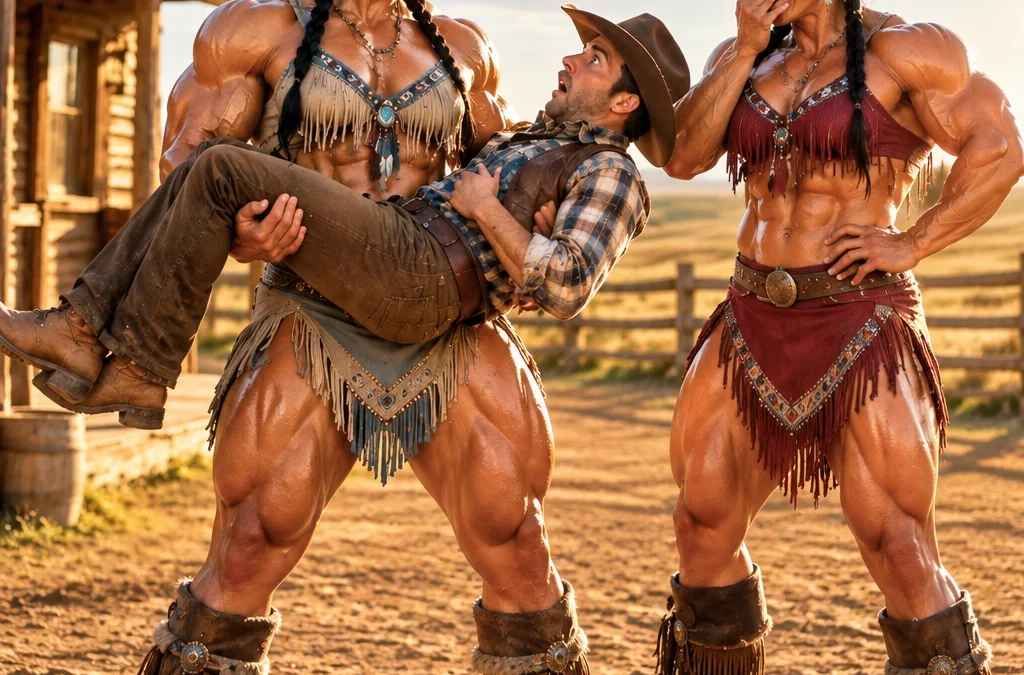
HE BOUGHT A LONELY RANCH FOR $600—THEN TWO WOMEN INSIDE TOLD HIM: “TONIGHT, YOU BELONG TO US” 😳
PART 1
New Mexico Territory, 1886.
Caleb Ross had spent almost everything he owned on a place where he intended to disappear.
He was forty-one.
Widowed.
Half-broken from a silver-mine collapse in Leadville that had killed three men and left him alive with a damaged back and questions he could never answer.
Why them?
Why not him?
The doctors told Caleb he was lucky.
Some days he wished they had chosen another word.
He could walk.
He could ride.
But he would never again work ten-hour shifts underground.
So with the settlement money from the mine—and what little remained after selling his mother’s wedding ring—Caleb bought 200 lonely acres in New Mexico for six hundred dollars.
Silver Canyon Ranch.
The lawyer handling the sale was named Dorsey Pike.
Soft hands.
Expensive waistcoat.
Too many smiles.
“Sign here.”
Then another page.
“And here.”
Then another.
“Standard territorial language.”
Caleb’s back had been aching.
The whiskey was warm.
He wanted the transaction finished.
So he signed.
Every page.
Including the appendix he never read.
Six weeks later, he rode into Silver Canyon believing he finally owned somewhere quiet enough to be forgotten.
Then he saw smoke rising from the chimney.
Caleb stopped his horse.
The property was supposed to be empty.
Smoke meant fire.
Fire meant people.
His hand instinctively touched the revolver at his hip.
He hadn’t fired it in fourteen years.
He hoped today wouldn’t change that.
He dismounted beneath a yellowing cottonwood and climbed the porch.
The door wasn’t locked.
Caleb knocked anyway.
No answer.
He pushed it open.
And the life he believed he had bought ended at the threshold.
Two women stood in the center of the room.
They had been waiting for him.
That was immediately clear.
Both were Apache.
Both were unusually tall—the older woman slightly taller than Caleb himself, the younger nearly his height.
The older had black hair falling heavily over her shoulders and a pale scar tracing the edge of her jaw.
The younger watched Caleb with gray eyes that missed nothing.
Neither appeared frightened.
Neither looked surprised.
The older woman spoke first.
Her English was precise.
“Tonight, you sleep in the same quarters with both of us.”
Caleb thought he’d misheard.
“What?”
“That is the contract.”
She held out a folded sheepskin document.
“You signed it before you came here.”
Caleb stared at her.
Then took the paper.
Appendix D.
Article 7.
He read.
Then reread it.
The purchaser was required to maintain the property’s “existing living arrangements” for six months.
That included sharing the primary dwelling and sleeping quarters with the two current residents.
If he refused?
The sale became void.
Every dollar of his purchase price was forfeited.
At the bottom appeared his signature.
Caleb Ross.
His own handwriting.
His own mistake.
He slowly set down the page.
“I won’t do it.”
The women said nothing.
“I don’t care what that paper says.”
Still nothing.
Caleb looked from one to the other.
“I want one night to understand what kind of trap I’ve walked into.”
For the first time, the older woman’s expression changed.
Barely.
But enough.
Then the younger woman said something worse.
“You are the fourth man.”
Caleb frowned.
“Fourth?”
“To buy this ranch.”
A cold feeling moved through him.
“What happened to the other three?”
The younger woman’s voice remained calm.
“Two are dead.”
Caleb stared at her.
“The third ran away.”
“When?”
“At night.”
She paused.
“He left his horse.”
Another pause.
“He left his boots.”
Caleb glanced toward the door.
“Your names.”
The older woman hesitated.
“Tashina.”
“Winema,” said the younger.
“Caleb Ross.”
Tashina looked at him.
“We know the name written on the paper.”
Then, quietly:
“We do not know who you are.”
Caleb slept in the barn that night.
Or tried.
Wind moved through the cottonwood.
Coyotes called from the canyon.
His horse breathed softly in the neighboring stall.
But Caleb couldn’t stop thinking about those women.
About the contract.
About the scar on Tashina’s face.
And something Winema had said just before he left the house.
Caleb had asked:
“Who agreed to this clause for you?”
Winema answered:
“Dorsey Pike.”
Caleb sat upright.
“The lawyer?”
“He signed for us eighteen years ago.”
Then she added the sentence that kept Caleb awake until sunrise.
“He has been signing our names ever since.”
Before dawn Caleb entered the kitchen.
He made coffee.
Three cups.
One for himself.
One for Tashina.
One for Winema.
He placed them at the table and waited.
The sisters eventually emerged.
Neither asked why he had prepared coffee for them.
They simply sat.
Finally Tashina spoke.
“You want the truth.”
“Yes.”
And for the next hour she gave it to him.
Their grandfather had been a Chiricahua leader known in English as Standing Bear.
In 1868 he had signed an agreement granting his family permanent rights to Silver Canyon—roughly two hundred acres with water, grazing land and timber.
Permanent.
In perpetuity.
Then their grandfather died.
The sisters were left alone.
And Dorsey Pike arrived.
He claimed the government needed paperwork completed to transfer the property legally.
The girls trusted him.
They couldn’t properly read the documents.
They made their marks.
A month later, Pike returned with the land apparently in his own name.
But he allowed them to remain.
Not from kindness.
Because keeping them there made his scheme profitable.
He repeatedly sold the same ranch to outsiders.
Then inserted increasingly disturbing conditions into the sales agreements.
If the buyers fled, the ranch reverted to him.
Then he sold it again.
One buyer drank himself to death.
Another attempted to assault Tashina.
She fought back and killed him in self-defense.
Pike discovered the body.
Instead of calling the law, he laughed.
Then threatened the sisters.
If they ever resisted him, he would accuse them of murdering a white man.
Who would believe two Apache women over a respected lawyer?
That was when he created the sleeping clause.
It wasn’t truly meant to be obeyed.
It was bait.
A test.
Men who wanted to exploit the women exposed themselves.
Men with enough conscience to refuse usually ran.
Either way, Pike got the ranch back.
Again.
And again.
And again.
Caleb sat silently.
“How many years?”
“Eighteen,” Winema said.
“You stayed here eighteen years?”
“Where would we go?”
No answer came.
Then Caleb asked the question that changed everything.
“There must be another document.”
Both women stared at him.
“Why?” Tashina asked.
“Because Pike is greedy.”
Caleb leaned forward.
“A greedy man doesn’t build a scheme this complicated for a few hundred dollars unless he’s protecting something bigger.”
Winema and Tashina exchanged a glance.
Then Winema disappeared into the back room.
She returned carrying another piece of sheepskin.
Older.
Faded.
Protected for years beneath the floor.
“The original treaty,” she said.
Caleb read.
Halfway down the page, he found the language Pike had spent eighteen years hiding.
If ownership of the land was transferred to an outsider who maintained continuous residence for six months, the title would become legally secured—and all previous claims against Standing Bear’s heirs would dissolve.
Caleb looked up.
“Six months.”
Winema’s voice became almost childlike.
“If you stay six months…”
She couldn’t finish.
Tashina did.
“We become free.”
Caleb stared at the document.
He had bought the ranch intending to live alone until the world forgot him.
Now two women he’d known for less than twenty-four hours were looking at him as though six months of his life might return eighteen years of theirs.
“There is one problem,” Tashina said.
“Pike.”
“He will come.”
“I know.”
“He’ll try to drive you off.”
“I know.”
“He may kill you.”
Caleb looked at the steam rising from the third cup of coffee.
Then he thought about the Leadville mine.
About the three men who never walked out.
About Elijah Belknap, only twenty-three, who had once shared food with Caleb when Caleb had none.
He had spent two years wondering why he survived.
Maybe there was no answer.
Maybe a man simply decided what to do with the life that remained.
Caleb folded the contract.
“Six months?”
“Yes.”
He stood despite the pain in his back.
“Then we’d better get to work.”
Tashina stared at him.
“You are not what we expected.”
Caleb gave a tired half-smile.
“No.”
Then he looked around the house he did not truly own and at the two women who had spent almost two decades waiting for someone not to fail them.
“I am not what I expected either.”
But what none of them knew was that Silver Canyon hid one more secret.
Dorsey Pike wasn’t merely afraid of losing a ranch.
Buried in the legal history of those 200 acres was something worth a fortune—and once Pike realized Caleb planned to survive all six months, he would use debt, corrupt judges, hired guns and an innocent woman facing the gallows to stop him.
If you want to know what Dorsey Pike did when Caleb refused to leave—and why the THREE CUPS OF COFFEE became the clue that changed everything—find Part 2 in the comments, or leave ANY WORD below and I’ll send it to you privately.
PART 2
If you want to know what Dorsey Pike did when Caleb refused to leave—and why the THREE CUPS OF COFFEE became the clue that changed everything—find Part 2 in the comments, or leave ANY WORD below and I’ll send it to you privately.
Two months passed. Caleb repaired fences, cleaned the well and rebuilt the barn while Tashina worked beside him and Winema managed the house and accounts. Every evening they ate at one table—but Caleb still slept in the barn. “Your rooms remain yours,” he told them. “Until six months are finished, nobody owes anybody anything.”
Then Caleb rode into town.
A shopkeeper named Ada Belknap quietly asked him to return when nobody was watching. A judge refused even to discuss the 1868 treaty. And Caleb discovered something horrifying: Dorsey Pike’s original name was Dorsey Vane.
Judge Hollis Vane was his brother.
For eighteen years, the same family had controlled both the fraud and the courtroom.
When Caleb later returned to Ada’s store, she revealed another secret.
Her late husband Tobias had been the county clerk.
Years earlier he had discovered the original Standing Bear treaty and secretly copied it.
Four days later, Tobias died in a supposed hunting accident.
Ada had hidden the copy ever since.
Then she asked Caleb a strange question.
“Did you work in Leadville?”
“Yes.”
“Did you know Elijah Belknap?”
Caleb went pale.
The young miner who had died beside him in the collapse.
The man whose name Caleb still whispered during nightmares.
Ada’s son.
Tears rolled silently down the older woman’s face.
“My boy wrote about you.”
Caleb couldn’t speak.
Ada pushed the copied treaty toward him.
“Then take this and finish what my husband couldn’t.”
Now there were multiple surviving copies of the truth.
And Dorsey became desperate.
First he invented a $400 lien against the ranch.
Caleb had almost no money.
He could have used hidden silver the sisters knew about—but revealing it would tell Pike there was wealth beneath Silver Canyon.
So Caleb sold the one possession he loved most.
His horse.
He walked fifty miles home afterward carrying his saddle.
Three months remained.
Then Winema revealed the name of a third Vane brother.
Micah Vane.
Unlike Dorsey and Hollis, Micah had left New Mexico decades earlier and become an attorney dealing with federal Indian land claims.
He had personally witnessed the original treaty.
He didn’t know what his brothers had done.
Caleb wrote him.
Weeks passed.
Then a message arrived from Ada.
A tall Chiricahua woman had been arrested in Mesilla.
The charge?
Murder.
The warrant?
Signed by Judge Hollis Vane.
But Tashina was standing in Caleb’s kitchen.
Pike had arrested an innocent woman who merely resembled her.
His plan was monstrous.
He would claim the prisoner was Tashina, connect her to the old killing, and force Caleb away from Silver Canyon to defend her.
The moment Caleb left, the six-month continuous-residence requirement would fail.
If he stayed?
An innocent woman might hang.
Caleb, Tashina and Winema devised one desperate plan.
Winema would ride north with Ada carrying treaty evidence to a federal marshal.
Tashina would travel south with Father Mendez to reach the jailed woman.
Caleb would stay.
Alone.
On the ranch.
No matter what Pike sent.
Before Tashina left, she looked at him.
“He will come.”
“I know.”
“With men.”
“I know.”
“You may not survive.”
Caleb said nothing.
Tashina stepped closer.
“Then don’t die before we come home.”
Caleb almost smiled.
“I’ll try.”
For five weeks, he defended Silver Canyon.
Dorsey came once with four men.
Then seven.
Caleb used every trick his mining years had taught him—not to kill them, but to frighten them away.
Then, six days before the six months were complete, a court writ arrived.
Caleb was ordered to appear in Mesilla.
If he obeyed, he lost the ranch.
If he ignored it, Pike could call him a fugitive.
Caleb read the document twice.
Then something unexpected happened.
He smiled.
Dorsey had made a mistake.
A tiny legal mistake.
The kind corrupt men make when they believe nobody else is smart enough to read the paper.
And somewhere beyond the snowy mesas, Winema was already returning with a federal marshal…
…and another rider was beside her.
An older man from St. Louis.
A man named Micah Vane.
Dorsey Pike’s own brother.
LIKE this post or COMMENT “FREEDOM” if you want Part 3. Once I receive the right number of comments, I will post the complete ending.
PART 3
The mistake was simple.
Judge Hollis Vane had issued the writ from Silver Canyon.
But the order commanded Caleb Ross to appear in a different jurisdiction.
It wasn’t valid.
For eighteen years, Dorsey Pike and his brother had survived because frightened people rarely stopped long enough to question official-looking paper.
Caleb had spent months doing nothing but questioning paper.
He folded the writ carefully.
For the first time since arriving in New Mexico, he understood something important.
Dorsey was no longer controlling the game.
He was reacting.
And frightened men made mistakes.
Three days later, riders appeared above the canyon.
Caleb saw blue coats.
Federal officers.
His hand tightened around the porch rail.
Then he recognized Winema.
She rode at the front beside Ada Belknap.
Both looked exhausted.
Behind them rode United States Marshal Jonas Teague.
And beside the marshal was an older man in a dark traveling coat.
Micah Vane.
Caleb walked toward them.
Micah dismounted.
“Mr. Ross?”
“Yes.”
They shook hands.
For several seconds neither man released the other.
Then Micah spoke.
“My brothers.”
His voice was low.
“I didn’t know.”
Caleb remained quiet.
“I left New Mexico because I could no longer tolerate what Dorsey was becoming. I told myself the law would eventually correct whatever happened here.”
Micah looked toward the ranch house.
“I spent my life helping other people fight land claims while my own brothers spent eighteen years destroying two women I once promised their grandfather would be protected.”
He swallowed.
“I should have known.”
Caleb answered without anger.
“Your brother took nothing from me I wasn’t prepared to lose.”
Micah looked at him.
“But he took eighteen years from Tashina and Winema.”
Caleb pointed toward the house.
“You want to make something right? Make their land theirs.”
Micah nodded.
“I will.”
“Not temporarily.”
“Permanently.”
“Not through territorial law.”
“Federal protection.”
“No loopholes.”
“None.”
Only then did Caleb breathe out.
Micah opened his satchel.
“I have brought the necessary filings.”
Then he hesitated.
“There is something else.”
Winema came closer.
Micah removed an old federal document.
“When Standing Bear and I surveyed this land in 1868, he showed me a mineral seam along the northern ridge.”
Caleb’s eyes narrowed.
“Silver?”
“Yes.”
Winema went completely still.
Micah continued.
“I registered it as a protected federal mineral claim under Standing Bear’s name.”
Tashina had returned from Mesilla that morning and now stood in the doorway listening.
Micah looked toward both sisters.
“That claim never expired.”
“How much?” Caleb asked.
“At current prices?”
Micah paused.
“Perhaps thirty thousand dollars.”
Nobody spoke.
Thirty thousand dollars was more money than Caleb could imagine earning in a lifetime.
Tashina looked at Winema.
They had spent eighteen years fighting to preserve a home.
Without knowing it, they had also been protecting a fortune beneath a mountain.
Dorsey Pike had spent years trying to steal Silver Canyon because he suspected something valuable lay there.
He simply never knew Standing Bear had protected the mineral rights separately through federal law.
Even if Dorsey had succeeded in stealing the ranch…
the silver still would not have belonged to him.
Winema laughed once.
Not because anything was funny.
Because sometimes relief has nowhere else to go.
Tashina covered her mouth.
Caleb looked toward the northern ridge.
“All this time.”
“All this time,” Micah confirmed.
Then Marshal Teague adjusted his coat.
“We still have work to do.”
They rode into town together.
Federal officers.
Micah Vane.
Caleb.
Tashina and Winema.
Ada.
Father Mendez.
The woman falsely imprisoned in Mesilla had also been identified.
Her name was Kaya.
She had never committed the murder.
She had never even been to Silver Canyon when the killing occurred.
Dorsey had simply needed an Apache woman tall enough to place in front of a corrupt court.
That deception now became evidence against him.
When they reached Silver Canyon, Judge Hollis Vane was arrested first.
He was standing outside the courthouse eating lunch.
The moment Marshal Teague touched his shoulder, Hollis broke.
He started talking.
Years of forged papers.
False liens.
Illegal sales.
Bribes.
Threats.
Everything.
Then they went for Dorsey.
He saw them coming from his upstairs office.
He saw the federal uniforms.
Saw Caleb.
Saw Tashina.
Saw his younger brother Hollis in shackles.
Then he saw Micah.
His oldest brother.
The man Dorsey believed would never return.
Dorsey closed the curtains.
Opened his desk drawer.
And pulled out a revolver.
By the time they reached the feed store, Tashina looked toward the upstairs window.
She saw movement.
Then metal.
“Wait.”
Caleb turned.
But Tashina was already running.
She took the outside staircase two steps at a time.
Kicked open the office door.
Dorsey sat behind his desk.
The gun wasn’t aimed at her.
It wasn’t aimed at the marshal.
It was pressed against himself.
He preferred death to facing what he’d done.
Tashina crossed the room.
Fast.
She tore the weapon from his hand before he could fire.
For several seconds they simply stared at each other.
This was the man who had forged away her family’s land.
The man who had turned frightened buyers into weapons against two isolated women.
The man who had mocked her scar.
Threatened her sister.
Used a killing committed in self-defense to hold them captive for years.
She could have struck him.
She didn’t.
She didn’t even insult him.
She merely handed his gun to Marshal Teague.
“He is yours.”
Then Tashina walked downstairs.
And never looked back.
That was the moment Dorsey Pike truly lost.
Not when federal officers placed him in irons.
Not when the fraud was exposed.
When the woman he had spent eighteen years trying to control decided he wasn’t worth another second of her life.
The federal trial lasted three weeks.
Micah refused to prosecute his brothers personally because of the conflict, but attended every session.
Witnesses came forward.
Ada testified about her husband Tobias.
Records proved that he had discovered the treaty before dying in a suspicious hunting incident.
Territorial documents exposed fraudulent transfers.
The false lien against Caleb was entered into evidence.
The repeated ranch sales were reconstructed.
Kaya testified about her false arrest.
Father Mendez confirmed the treaty’s history.
And Hollis Vane gave investigators practically everything they needed.
He had spent eighteen years supporting his brother.
Faced with federal prison, he abandoned him in days.
Dorsey Pike was convicted.
Hollis Vane received twenty years of hard labor.
Dorsey was sentenced to death.
The morning his sentence was carried out, Ada traveled to Santa Fe.
Caleb stood beside her.
She held a small tin of black tea in her lap.
The same kind that had hidden Tobias’s copied treaty for seven years.
When it was over, Ada didn’t celebrate.
Didn’t cry.
She simply closed the tin.
“Tobias can rest now.”
Caleb placed one hand briefly on her shoulder.
Nothing more needed saying.
Kaya was released with a formal apology and compensation.
Ada personally offered her work at the store.
The federal court affirmed Standing Bear’s 1868 treaty.
At last, Silver Canyon belonged legally and permanently to Tashina and Winema.
But then the lawyers discovered a strange complication.
Caleb had also satisfied his six-month residence requirement.
Technically, according to the tangled contracts, he possessed a valid claim too.
Two lawful titles.
Same land.
Micah spent days attempting to solve it.
Caleb solved it in ten minutes.
One Sunday morning, he sat at the kitchen table with Tashina and Winema.
Three cups of coffee stood between them.
Just like the first morning.
Caleb pushed a deed across the table.
“What is this?” Winema asked.
“My claim.”
Tashina read it.
Caleb was transferring every acre he owned in Silver Canyon to the sisters.
Price:
One dollar.
Tashina stared at him.
“No.”
“Yes.”
“You spent everything you owned buying this place.”
“Correct.”
“You sold your horse because of this place.”
“Correct.”
“You nearly died for it.”
“Several times.”
“And now you sell it to us for a dollar?”
Caleb sipped his coffee.
“Sounds profitable compared with some decisions I’ve made.”
Winema laughed.
Tashina didn’t.
She studied him for a long moment.
Then she reached into her pocket.
Placed a silver dollar on the table.
“Done.”
Caleb picked it up.
“Pleasure doing business.”
Then Tashina placed another deed in front of him.
Caleb frowned.
“What is this?”
“Twenty acres.”
The southern edge of Silver Canyon.
The well.
The barn.
And a portion surrounding the original ranch house.
“To Caleb Ross,” Winema said.
“For one dollar.”
Caleb stared at both women.
“You planned this.”
“Longer than you planned yours.”
He slowly placed the same dollar back on the table.
Tashina pocketed it.
And that was how Silver Canyon was finally divided.
Not by fraud.
Not by coercion.
Not by men drinking whiskey in lawyers’ offices.
By three people sitting around a kitchen table with coffee.
One year passed.
The canyon changed.
The silver claim provided enough money to build something none of them had expected.
A school.
Not only for Apache children.
Everyone.
Apache.
Mexican.
Anglo.
Even the son of a Chinese railroad worker.
Children sat in the same room learning letters, numbers and languages.
Winema helped build the desks.
Then built a forge behind the barn.
She became one of the best farriers for miles.
At night, she helped teach.
She never married.
She didn’t want to.
For perhaps the first time in her life, nobody told her what she was supposed to want.
Tashina’s life changed differently.
A Chiricahua widower named Gray Eagle passed through Silver Canyon with a trading caravan.
He was a horseman.
A carpenter.
Quiet.
He had lost his wife and young son to cholera.
He stayed two weeks.
Then left.
Then returned.
This time, permanently.
Tashina married him that autumn.
By the following spring she was expecting a child.
Caleb watched all of it from the twenty acres the sisters had sold him.
He built a small cabin.
One room.
Sleeping loft.
Porch facing east.
He kept horses.
Eventually Tashina gave him an Apache mare.
“You promised,” Caleb reminded her.
She frowned.
“Promised what?”
“That if I sold my horse, you’d find me a better one.”
Tashina glanced toward the mare.
“I said an Apache horse.”
“You also said better.”
“It is better.”
Caleb smiled.
“Yes.”
His back never completely healed.
Some mornings it hurt badly.
But the nightmares changed.
He stopped waking every night beneath imaginary mine debris.
Stopped counting his fingers in the darkness.
Stopped repeating the names of the dead just to convince himself that he had earned another sunrise.
Ada eventually closed her store and moved onto the ranch.
Tashina and Winema gave her a room near the kitchen.
She began calling them her daughters.
Out loud.
Even in town.
Then she started calling Caleb her son.
He objected once.
Ada ignored him.
So he stopped objecting.
They had become something nobody had planned.
Not relatives in the traditional sense.
Something chosen.
Something earned.
One evening in the spring of 1888, Caleb sat outside his cabin drinking coffee.
The canyon glowed red beneath the setting sun.
The schoolhouse windows stood open.
Children’s laughter carried on the wind.
Winema was walking home from the forge with soot on her cheek.
Gray Eagle was bringing horses down from the pasture.
Ada was somewhere near the main house calling children inside for supper.
Then Tashina approached.
Pregnancy made her walk more slowly now.
She lowered herself into the chair beside Caleb.
For several minutes neither spoke.
Finally she said:
“Caleb Ross.”
“Yes?”
“You remember the first day?”
“Unfortunately.”
“The day you opened our door.”
“I remember.”
“Did you imagine any of this?”
Caleb looked across Silver Canyon.
The repaired fences.
The school.
The horses.
Smoke rising gently from the chimney.
People calling one another home.
“No.”
He smiled faintly.
“I thought I’d bought somewhere to die quietly.”
Tashina turned toward him.
“I didn’t know I’d bought somewhere to live.”
She nodded.
“My grandfather said the fourth man would hold.”
“He appears to have been annoyingly accurate.”
“But he never said the fourth man would stay.”
Caleb considered that.
“Maybe he didn’t know.”
Then he looked at her.
“Maybe staying was my decision.”
Tashina was quiet.
“We are glad you stayed.”
Caleb looked toward a small iron plaque attached to his porch post.
He had forged it himself at Winema’s shop.
The letters were crooked.
But readable.
NO PERSON IS PROPERTY HERE.
For a long moment, Caleb stared at those words.
Then Tashina placed her hand over his.
Not romantically.
They had never been lovers.
Never would be.
What bound them didn’t need that shape.
They were people who had met carrying grief, fear and almost nothing else.
People who had decided, one choice at a time, to stand beside one another.
Caleb looked at her hand.
Then out at the canyon.
“I am glad I stayed too.”
Down the hill, a bell rang.
Children began running toward supper.
A lamp appeared in the ranch-house window.
Smoke rose straight upward into the spring air.
Silver Canyon had once been sold for six hundred dollars through a contract Caleb didn’t read.
It had been trapped behind eighteen years of lies.
Men had tried to turn people into property and law into a weapon.
But now?
The ranch belonged to those who lived there.
The school belonged to the children.
The forge belonged to Winema.
The home belonged to Tashina and Gray Eagle.
Ada had found daughters.
Caleb had found a family.
And nobody belonged to anybody.
Caleb lifted the last of his coffee.
For years, he had wondered why he survived Leadville when three other men didn’t.
That question no longer demanded an answer.
Maybe survival wasn’t a debt.
Maybe it was an opportunity.
Not to become important.
Not to become wealthy.
Simply to stay long enough to matter to somebody.
The sun vanished behind the mesa.
Caleb set his empty cup on the porch rail.
And smiled.
This time, the smile reached his eyes. ❤️
Disclaimer: This story is entirely fictional and created for entertainment purposes only. It does not represent any organization or individual, nor does it encourage inappropriate behavior. The content was generated with AI assistance.








