HE REFUSED HER IN FRONT OF 200 GUESTS AND SAID HE WASN’T “EVEN SORRY.” THREE YEARS LATER, SHE WALKED BACK INTO HIS BALLROOM IN BLACK SILK, AND WHAT SHE CARRIED IN HER LEATHER FOLDER DESTROYED HIS ENTIRE FAMILY.
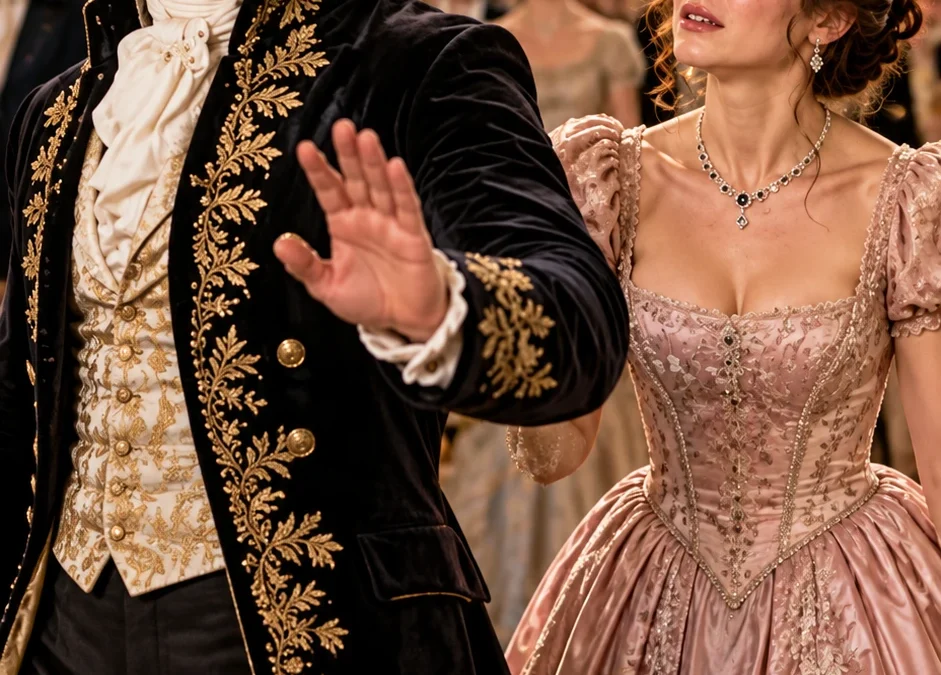
HE REFUSED HER IN FRONT OF 200 GUESTS AND SAID HE WASN’T “EVEN SORRY.” THREE YEARS LATER, SHE WALKED BACK INTO HIS BALLROOM IN BLACK SILK, AND WHAT SHE CARRIED IN HER LEATHER FOLDER DESTROYED HIS ENTIRE FAMILY.
Part 1
“I cannot marry you, Clara. And I am not even sorry to say it.”
The words rang across the Ravenscroft ballroom. Two hundred guests turned to look. 😳
“Then I understand,” she said, her voice shaking with fury. “You will regret this. I will make sure of it.”
The Duke of Ravenscroft had humiliated Clara Whitmore in front of all of London.
But he had not refused her because he thought her beneath him. That would have been easier to forgive. He had refused her because he believed he was protecting her.
Three years later, Clara would walk back into that same ballroom wearing black silk and diamonds, rich enough to buy the very estate he had once thought he was saving her from.
And Alexander Ravenscroft would learn a painful truth. He had never been her greatest obstacle. He had only been the man who failed to understand what she was really asking for.
Three years earlier, Clara had entered that ballroom with exactly forty-seven pounds to her name. 💔
She had not come looking for a husband. She had come looking for time.
Her father was dead. His textile company was collapsing. Creditors had already seized most of the family estate, and her mother was gravely ill. Within weeks, they could lose everything.
But Clara did not believe the business was truly finished. She had spent two years helping her father with his accounts. She knew his habits. She knew his handwriting. And the final ledgers held mistakes that were too precise to be mistakes.
Payments made after her father was too ill to work. Contracts signed with signatures that looked almost right, but not quite. Money vanishing from accounts that should have been secure.
Someone had been stealing from him.
Clara believed she could find the truth, but she needed three months. And there was only one man in England powerful enough to give them to her: Alexander Ravenscroft, the sixth Duke.
Their fathers had once been close. “If we ever fall into trouble,” her father had told her, “Ravenscroft will remember us.”
So she went to the ball in her mother’s old blue gown, altered twice, the sleeves a little too short, the pearls at her throat borrowed. But she held her head high.
Across the room stood Alexander. Tall, composed, impossible to read. Years ago, he had helped her tame a difficult mare at Ravenscroft, and she had never forgotten the patience in his hands.
That memory gave her courage. She crossed the room.
“Miss Whitmore,” he said, surprise flickering across his face. “You have been away from London.”
“My family has had difficulties.”
“I heard.”
“I need to speak with you privately.”
He led her to a quiet alcove while the music played on. Clara drew a folded account sheet from her purse.
“I need three months.”
“For what?”
“To examine my father’s accounts.”
“Your father’s company is bankrupt.”
“I know.”
He studied her face. There was no anger in it. Only exhaustion carefully hidden beneath composure.
“You believe you can recover the business.”
“I believe I can find where the money went. And if I cannot, then at least I will know that I tried.”
Something in her answer unsettled him. He remembered the girl who had laughed beside the stables, the girl who had never asked him for anything. Now she stood before him with the pride of someone trying desperately not to beg.
“Clara,” he said quietly, “I could give you the money.”
Her eyes lifted. For one brief second, hope shone in them.
“And that,” he continued, “is precisely why I should not.”
Her expression changed. “Why?”
“Because if I give you that money tonight, everyone in this room will know by morning.”
“I do not care what they say.”
“I do.”
“You think I cannot endure gossip?”
“No,” he said at once. “I think you should not have to.”
Clara looked away. “So you would rather let my family lose everything than risk what people might say about you?”
“That is not what I am saying.”
“Then what are you saying?”
He hesitated. The truth was more tangled than he wanted to admit. A duke secretly paying the debts of a ruined gentleman’s daughter would become a scandal before the week was out. Every door she tried to open would carry his name with it. He could save her from immediate ruin and still leave her dependent on him.
And he did not want that for her. Not because he thought she was weak. Because he suspected she was capable of far more than anyone in that room had ever given her credit for.
“I will not make your future dependent on me.”
Her eyes glistened. “You have already decided what my future should be.”
“No.”
“Then why does it feel as though you have?”
He had no answer.
“I am sorry,” he said at last.
Clara gave a small, sad smile. “That is not the same as helping me.”
“No,” he swallowed. “It is not.”
She folded the account sheet and tucked it back into her purse.
“I understand.”
He knew from her voice that she did not.
She curtsied. “Good evening, Your Grace.”
“Clara…”
She stopped. He almost called her back. Almost. But he knew that if he did, he would only give her false hope.
“I hope you find what you are looking for.”
“I hope so, too.”
Then she walked away into the crowd.
Alexander watched her go. He had convinced himself that refusing her was the honorable thing. He did not yet know that this single decision would haunt him for three years. 🥀
Clara did not cry in the ballroom. She did not cry in the carriage. She waited until she reached her bedroom, removed the borrowed pearls, set them gently on the table, and sat by the window until sunrise.
At dawn, she opened her father’s account book again. She checked the suspicious payment. Then the signature. Then the amount.
Her breath caught.
Someone had forged her father’s name.
She turned the page. Another. Then another. She compared signature after signature until the room grew bright around her.
They were not mistakes. Someone had forged her father’s hand, moved the money, and buried the theft inside the company’s own books. Her father’s business had not simply failed.
Someone had helped destroy it.
And Clara intended to find out who.
The next morning, she left England with one trunk, two dresses, her father’s account books, and forty-seven pounds.
And she had no idea that the name she would find at the end of that trail belonged to the family she had once trusted most… 😱
👇 Want to read Part 2? Find it in the comments, or leave any word below and I’ll send it to you privately!
Part 2
And she had no idea that the name she would find at the end of that trail belonged to the family she had once trusted most.
Clara went to Liverpool, a city where nobody cared about her family name. Merchants cared about numbers. Ship captains cared about cargo. For the first time in her life, she could become someone without anyone knowing who she had been.
At first, the merchants dismissed her. Then she began correcting their figures. She learned which ships carried damaged goods, which warehouses were desperate to clear stock, which men could be trusted. She listened more than she spoke and watched how money moved through the port.
She learned something her old world had never taught her. Money could be inherited. But it could also be built. 💪
Her first shipment was ruined by rain, taking nearly everything she had. That night she wondered whether she had been a fool to leave England at all.
The next morning, she started again.
Her second shipment earned eleven pounds. Clara counted the coins twice before setting them on the table. It was not a fortune. But every coin was hers.
Then forty pounds. Then eighty. She bought damaged cloth cheap, repaired it, cleaned it, repackaged it, and sold it through small merchants who could not afford the great suppliers. Within eighteen months she owned a warehouse. Within two years, three.
She stopped living as the daughter of a ruined gentleman. She became a businesswoman.
But she never forgot why she had started. Every time her fortune grew, she returned to the old accounts. Every missing payment, she followed. And at last, the trail led back to London, to a name she knew far too well.
Lord Henry Ravenscroft. Alexander’s own uncle. The family’s most respected investor.
Once could have been coincidence. Twice, an error. There were six.
A chill crept through her. Her father’s company had not merely been robbed. Someone powerful had been waiting for it to collapse.
And then she found a second name. Edmund Vale. Her father’s trusted solicitor. His transactions matched the Ravenscroft records exactly. Money flowed from her father’s company into Vale’s accounts, then through Liverpool, then to a company tied to Lord Henry.
Clara stared at the documents for a very long time. She now knew the man who ruined her family was connected to the very house she had once believed would save it.
She needed proof. And she needed to know one more thing.
Had Alexander known?
Three years after she left, Clara returned to London.
Not as the frightened girl in the borrowed pearls, but with warehouses, shipping contracts, textile investments, and enough wealth to buy her family’s old estate twice over. And with unfinished business.
Society noticed at once. Mrs. Clara Whitmore is back. Merchants wanted meetings. Bankers wanted partnerships. Hostesses who had forgotten her name suddenly remembered it.
She accepted exactly one invitation: the Ravenscroft Ball.
She entered in black silk. No borrowed gown. No borrowed pearls. No trembling hands.
The room fell silent.
Alexander saw her and stopped mid-sentence. For three years he had imagined what she might look like if he ever saw her again. He had never imagined this. She did not look angry. She did not look wounded.
She looked completely free of him. 🖤
She walked past without a glance.
He had expected anger. Indifference unsettled him far more. Anger would have meant she still carried something of that night. Indifference meant she had built a life in which he no longer mattered.
Later that evening, he approached. “Mrs. Whitmore.”
“Your Grace. You have changed.”
“So have you.”
He wanted to ask where she had been, how she had built everything, why she had returned. Instead he said the only thing that felt safe. “You look well.”
“So do you.”
Then she walked away.
The next morning, a letter arrived. The Duke requested a meeting. She nearly refused. Then she saw the seal, and accepted.
In his library, Alexander looked different. The confidence remained, but something beneath it had changed. He looked tired. Not in body, but in fortune. Clara knew why.
“Your estate is in trouble.”
“You already know.”
“Everyone in London knows.”
His estate carried debts it could no longer bear. Several investments had failed. And the man who had advised him on most of them was Lord Henry.
“I want to offer you a business arrangement.”
“No.”
He almost laughed. “You have not heard it.”
“I know what you need. You think I want to give you a loan.”
“Do you?”
Clara stood. “Then I cannot help you.”
“Why?”
“Because three years ago you told me my family’s problems were not yours.”
His face changed. “I remember.”
“So do I.”
She turned toward the door. Then he spoke.
“Allow me to say something I should have said that night.”
She stopped.
“I was wrong.”
She studied him.
“I was wrong about your family. And I was wrong about you. I thought refusing you would protect you from becoming dependent on me. I never stopped to ask whether you wanted my protection.”
Her expression softened, but only slightly.
“I accept your apology.”
Then she left.
But two weeks later, she came back. Not because Alexander needed her. Because she had found a new link between her father’s accounts and the Ravenscroft estate.
“I will examine your books. I believe the man who ruined my father is now taking money from you.”
That ended the conversation.
They worked late into the evenings, Clara over the ledgers, Alexander through the Ravenscroft archives. At first they fought over everything. He was accustomed to giving orders. She was accustomed to ignoring them.
Then, slowly, the arguments changed. He began asking her opinion before he decided. She began listening rather than assuming. Neither mentioned it. Both noticed. 💫
One night, Clara’s hand stopped on a familiar signature.
“What is it?”
She turned the ledger toward him. “Edmund Vale. Your solicitor.”
His face hardened. “How long did he handle your father’s accounts?”
“Six years.”
She turned another page. A payment from Ravenscroft funds had gone to a Liverpool company, the very same company that had received stolen Whitmore money.
Alexander stared. “My uncle approved this.”
“Yes.”
The library fell silent. Clara expected anger. Instead, he looked at her.
“You were right. I should have listened three years ago.”
“Yes.”
For the first time, he laughed. Quiet. Unexpected. And for one brief moment, Clara forgot they were discussing stolen money.
Then she remembered. Someone had destroyed her family. And that someone was still close.
The evidence grew. Forged documents. Hidden accounts. False companies. All of it pointed to Lord Henry and Edmund Vale.
But Clara was not satisfied. It proved Vale had stolen. It did not yet prove Lord Henry had ordered it.
Then, in an old shipping ledger, she found something that made her blood run cold.
The Liverpool company had received payments from a Ravenscroft investment account months before her father’s company collapsed.
And Alexander said something that turned the whole room to ice. “When those investments began failing, my uncle advised my father to sell.”
“To whom?”
Alexander went silent.
Clara understood. “Your uncle bought the failing assets.”
“And after my father died,” Alexander said slowly, “he bought more.”
Lord Henry had not simply stolen money. He had engineered the collapse of other people’s businesses, so he could buy them up. 😨
And if Clara was right, he was doing the same thing to Alexander right now.
“I need to confront him,” said Alexander.
“No. If he knows we suspect him, the evidence will disappear.”
“What do you suggest?”
“We let him believe he has won.”
Alexander stared at her. Then he smiled. And what Clara and the Duke planned next would lure Lord Henry into the one trap he never saw coming… 🔥
👇 Do you want to know how they trapped him, and what Clara put on that table in front of all of London? LIKE this post or COMMENT “REVEAL” to unlock Part 3, which will be posted once we reach enough comments!
Part 3
“You have a plan,” said Alexander.
“I usually do.”
For the first time, they were not duke and businesswoman. They were partners. 🤝
They prepared a false account showing that Clara intended to sell her largest company, and leaked it through a trusted intermediary. Within days, an offer arrived from a company tied to Lord Henry.
Clara accepted the meeting. She did not accept the offer. Instead, she watched.
Lord Henry wanted that company too badly. In his eagerness, he revealed details of Clara’s finances that only someone with access to her stolen records could possibly know.
It confirmed their suspicion. But it was not enough to survive a court.
So they returned to the Ravenscroft archives. On the fourth morning, Alexander found a locked box that had belonged to his late father. Inside lay three letters and a payment record.
Clara opened the first. Edmund Vale to Lord Henry. She read the payment record, and her eyes stopped on the destination of the money.
It was the same company she had spent three years tracking.
She slowly lowered the paper.
“We found it.”
“What does it say?”
“The money from my father’s company was transferred to a company owned by your uncle.”
For several seconds, neither moved. The mystery was no longer a suspicion. It was truth.
Alexander wanted to confront his uncle in private. Clara refused.
“He destroyed my family in private. He will answer for it in public.”
At the next great Ravenscroft family gathering, London’s most influential families filled the hall. Lord Henry arrived smiling, Edmund Vale at his shoulder. Neither man knew what awaited them.
Clara entered on Alexander’s arm. The room fell quiet.
“Mrs. Whitmore,” said Lord Henry, his smile fixed. “I hear you have been making serious accusations.”
“I have.”
“I hope you have evidence.”
Clara set a leather folder on the table. “I do.”
She opened it. The first document. The second. The third. Lord Henry’s expression changed.
Vale stepped forward. “These papers prove nothing.”
Alexander laid another document beside them. “This one does.”
Vale froze.
Alexander looked at his uncle. “You signed this.”
“You would believe her?” said Lord Henry. “You are destroying your own family.”
“No.” Alexander did not raise his voice. “You destroyed this family long before Clara came back.”
The room was silent. Clara placed the final document on the table.
“My father trusted you.”
Lord Henry said nothing.
“You knew he was ill. You knew he could not check the accounts.”
His expression hardened. “You know nothing of the pressures your father created.”
“I know enough.” She pushed the paper toward him. “This proves where the money went.”
Lord Henry looked at it. Then at Vale. And for the first time, the confidence drained from his face. 😶
The investigation lasted months, but the evidence held. Edmund Vale was exposed. Lord Henry’s dealings were laid bare. The accusations against Clara collapsed. Her companies were cleared, and the Whitmore name was restored at last.
Clara had won. Not because a duke had rescued her. But because she had built the evidence herself, and because this time, someone powerful had chosen to stand beside her instead of in her way. 👑
Afterward, life grew quieter. Clara kept building her businesses. Alexander rebuilt his estate. They kept their fortunes separate. They did not need to combine them.
Instead they built something neither expected: trust.
It began with small things. Alexander stopped making decisions for Clara. Clara stopped assuming he would disappoint her. He asked her opinion. She gave it. Sometimes they argued. Sometimes they spent entire evenings over ledgers without saying more than a few words.
It was not dramatic. That was what made it real.
One autumn evening, Clara walked through the Ravenscroft gardens, and Alexander joined her. The lake was still. The last light rested on the trees.
“Do you remember the first time you came here?” he asked.
“Yes. I remember what I said.”
“So do I. I have regretted it every day since.”
“You have apologized.”
“Not enough.”
She smiled. “You cannot change that night.”
“No. But I changed afterward.” He looked at her. “I had to.”
“Why?”
“Because I finally understood that I had mistaken wealth for worth.”
Clara gazed across the lake. “I did something similar. I spent years believing that if I became wealthy enough, successful enough, powerful enough, I would finally prove that everyone who rejected me had been wrong.”
“And now?”
“Now I know I never needed to prove anything.”
He smiled. “Then perhaps you are free.”
“I am.”
A quiet moment passed. Then he spoke.
“There is one thing I still want.”
“What?”
“You.”
She did not answer.
“But only if you choose me.”
Clara looked at the man who had once stood across a crowded ballroom and refused her. He was still a duke. She was still wealthy. But neither fact mattered now. What mattered was the choice.
She stepped closer.
“I choose you.”
Alexander took her hand. No audience watched. No orchestra played. No society gathered around them. There was only the quiet garden, and two people who had finally learned that love is not one person rescuing the other.
It is two people standing on equal ground. 💞
One year later, Clara entered the Ravenscroft ballroom once more. The same chandeliers. The same polished floor mirroring the candlelight. Many of the same faces.
But Clara was not the same woman. Three years ago, she had entered that room with forty-seven pounds and a desperate request. Now she entered as the future Duchess of Ravenscroft.
Yet when Alexander offered his hand, she did not think about the title. She thought of the girl who had walked out of that ballroom alone. The girl who had believed rejection was the end of her story.
It had not been the end. It had been the beginning.
“May I have this dance?”
Clara smiled. “You may.”
They stepped onto the floor. The orchestra began.
She had never needed a duke to save her. She had needed the freedom to choose her own life. And when she finally chose Alexander, she did not choose his title, his fortune, or the protection of his name. She chose the man who had finally learned to stand beside her.
The music swelled around them. Clara looked across the ballroom and remembered the girl who had once entered it with forty-seven pounds and a desperate request.
That girl had come looking for three months.
She had found a lifetime. 🥂
If Clara’s journey from heartbreak to triumph kept you hooked, please LIKE and SHARE this story with someone who believes a woman can rebuild her own world. 💬 Tell us in the comments: should Alexander have helped her that first night?
This story is entirely fictional and created for entertainment purposes only. It does not represent any organization or individual, nor does it encourage inappropriate behavior. The content was generated with AI assistance.








