HE SLAPPED HIS FIANCÉE FOR HIS MISTRESS—SO SHE TOOK BACK HER £20,000 DOWRY AND MARRIED A DUKE
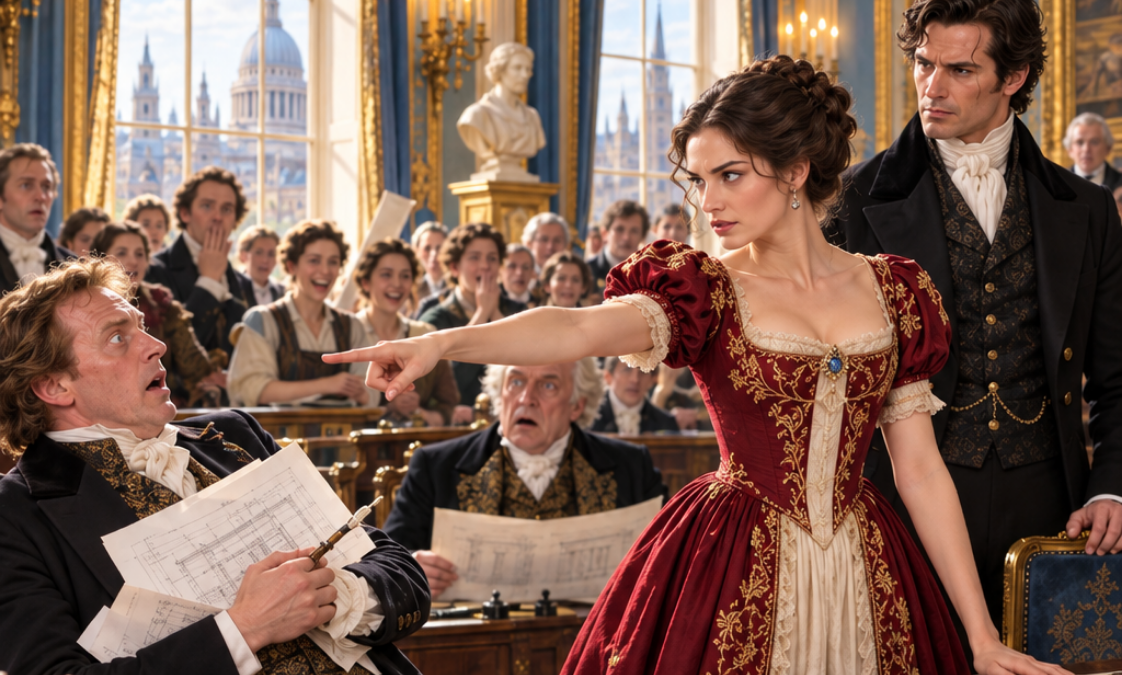
HE SLAPPED HIS FIANCÉE FOR HIS MISTRESS—SO SHE TOOK BACK HER £20,000 DOWRY AND MARRIED A DUKE 😳
Part 1
The slap was loud enough to silence the courtyard.
Lady Susanna Bell’s head snapped sideways beneath Lord James Ardan’s hand.
A clerk stopped beneath the stone arch.
A flower seller lowered her basket.
Even the horses seemed to still.
Only Viola Hart continued crying.
She stood beside a hired carriage with one gloved hand pressed delicately to her wrist, though the supposed injury had not prevented her from crossing half of London alone.
“James,” Viola whispered, “please don’t quarrel because of me.”
Susanna tasted blood where her tooth had cut her lip.
She looked at James.
Three years.
Three years she had loved him.
Three years she had helped him repair tenant cottages, negotiate debts, economize on household expenses and keep Ardan Hall from slipping deeper toward ruin.
That morning they had come to Doctors’ Commons to obtain the special license for their wedding.
James had teased her for touching the modest silver ring on her finger.
“When your £20,000 settlement clears the mortgage,” he had promised, “I shall replace that little thing with diamonds.”
Then Viola’s note arrived.
She had fallen downstairs.
She was alone.
She was frightened.
She needed James.
He immediately ordered the carriage turned toward her house.
Susanna told the coachman to stop.
“If you leave me on the morning we secure our marriage license,” she said, “do not return expecting a wedding.”
James called her jealous.
Susanna reminded him of the midnight notes.
The private suppers.
The pearl bracelet purchased with money supposedly reserved for their household.
Then Viola appeared from another carriage, miraculously capable of walking.
Susanna stepped between them.
James lost his temper.
And struck her.
Now they stood surrounded by strangers.
Shock crossed James’s face.
Perhaps he had not expected his own hand to reveal him so clearly.
Susanna slowly removed the engagement ring.
James stared.
“What are you doing?”
She placed it on the wet paving stone between them.
“We are finished.”
“Don’t be absurd.”
“Take excellent care of Miss Hart.”
“You would destroy three years over one mistake?”
Susanna met his eyes.
“No.”
Her voice was steady.
“You made the decision.”
She glanced at the ring.
“I am merely accepting it.”
James caught her sleeve.
“You will regret making a spectacle of this.”
Susanna looked down at his hand until he released her.
“The spectacle was yours, my lord.”
Then she walked away.
She did not cry until the carriage door closed.
Her friend Catherine Row admitted her to a modest house in Bloomsbury and gasped when she saw the darkening handprint.
“He did this?”
Susanna nodded.
“And where is he now?”
“Taking Viola home.”
Catherine wrapped ice in linen.
“Then God has spared you a dreadful marriage with remarkable efficiency.”
Susanna laughed once.
Then the grief arrived.
She cried for the James who had once sat outside her father’s sickroom all night.
For the man who sang ridiculous songs while they balanced household accounts.
For every time Viola intruded and James convinced Susanna that kindness required patience.
By evening, forty-two notes had arrived.
The first begged forgiveness.
The fourth blamed panic.
The twelfth insisted Viola had no family in London.
By the twentieth, James accused Susanna of cruelty.
The final note proposed they simply return to Doctors’ Commons on Monday and forget the “regrettable scene.”
Susanna burned every one.
The following morning, she summoned Mr. Bellamy, her late mother’s solicitor.
He entered, saw her bruised face, and asked no foolish questions.
Susanna sat opposite him.
“Withdraw the marriage settlement.”
Bellamy blinked.
“All of it?”
“All of it.”
“Lady Susanna—”
“Cancel the transfer of my trust income. Revoke Lord Ardan’s authority to negotiate against the Bell estate.”
Bellamy slowly opened his notebook.
“There is also the Grover Street house.”
“My contribution was four times his.”
“What would you like done?”
“Force a sale or buy out his share.”
Bellamy hesitated.
“And the money advanced against Ardan Hall?”
Susanna looked toward the window.
“Call in the note.”
That made him look up.
“The viscount may lose the property.”
“Then he should ask Miss Hart to save it.”
For three years, Susanna had confused loyalty with unlimited credit.
The bruise on her face clarified the account.
She would pay no more.
James expected her to return.
He arrived at Catherine’s house carrying peaches, chocolates and Susanna’s favorite tea.
Catherine blocked the doorway.
“I came to apologize.”
“You should have considered that before striking her.”
Eventually Susanna agreed to see him once.
James entered looking exhausted.
“I have not slept.”
“Neither have I.”
She touched the fading bruise.
“Only one of us was struck.”
He knelt.
“I was wrong. It will never happen again. Come home.”
Susanna studied him.
“Have you dismissed Viola from your life?”
James hesitated.
Only a second.
Enough.
“She has no one.”
“She has you.”
“Not in the manner you imply.”
“Then why can you not let her go?”
His face hardened.
“Because I am not heartless.”
Susanna stared at him.
“You mistake cruelty to me for kindness to her.”
James stood.
“You are behaving as though you possess endless alternatives.”
There it was.
The threat underneath the apology.
“You are nearly twenty-seven. Your father is dead. Your stepmother has made Bell House uncomfortable. Society is not kind to women who break engagements.”
He leaned closer.
“Where will you go?”
The cruelty of the question lay in its accuracy.
For years Susanna had believed James would become her permanent home.
She answered anyway.
“Anywhere you are not.”
At the door he turned.
“When you have finished this performance, send for me.”
After he left, Susanna’s hands finally began to shake.
Then Bellamy arrived.
And what he carried destroyed the last fragment of the man she thought she knew.
James had already pledged Susanna’s expected dowry to three creditors.
Money she advanced for tenant repairs had paid for private rooms for Viola.
Gowns.
Jewelry.
A diamond clasp.
The slap had not been the first betrayal.
It was simply the first one James had delivered honestly.
Susanna spent the next week collecting proof.
Then she moved into the small Bloomsbury house inherited from her mother.
Inside was something she had abandoned during the engagement.
Her father’s old architectural office.
Before James, Susanna had designed libraries, shops and assembly rooms under her father’s name.
James had called paid work unbecoming for a future viscountess.
Susanna uncovered the drawing boards.
Sharpened her pencils.
And wrote to every former client.
Lady Susanna Bell had returned to business.
A week later, while she was revising plans in a coffeehouse, a tall man stopped beside her table.
She looked up.
At first she saw only a stranger.
Then he smiled.
“Still correcting everyone’s measurements, I see.”
Susanna froze.
“Nathaniel?”
Nathaniel Ashford.
The poor boy she had once sent books and five pounds each term through a charitable correspondence scheme.
The boy who had disappeared into the army.
Except he was no longer poor.
He was now the Duke of Blackmir.
And he had returned carrying every letter Susanna had ever written him.
👉 Find Part 2 in the comments, or leave ANY WORD below and I’ll send it to you privately.
Part 2
And he had returned carrying every letter Susanna had ever written him.
Nathaniel sat opposite her.
“You never answered my final letter,” Susanna said.
“My regiment sailed before it arrived.”
“You could have written afterward.”
“By then you were engaged.”
“That did not prohibit gratitude.”
“No.”
His gaze moved to the fading bruise.
“It prohibited me from confusing gratitude with something less manageable.”
Susanna lowered her pencil.
Nathaniel offered her a commission.
Blackmir required a new library, an assembly hall that could become a winter school, and a gallery for textiles produced by estate tenants.
“Why me?”
“Because you design rooms for people rather than portraits.”
“And because you owe me?”
“I repaid every five-pound note years ago.”
Susanna stared.
“Those unexplained deposits in my trust?”
“Yes.”
“This is business,” Nathaniel said. “Charge me outrageously if you wish.”
She accepted.
At Blackmir, something strange happened.
Nathaniel listened.
When trustees addressed technical questions to him, he redirected them.
“Lady Susanna designed it. Ask her.”
He challenged costs without challenging her competence.
And for hours at a time, Susanna forgot to feel broken.
James noticed.
He began waiting outside her office.
Flowers appeared.
Breakfast baskets.
Letters recalling happier years.
Susanna returned everything.
Then he discovered the Blackmir commission.
His apologies became accusations.
“You replaced me before the bruise faded.”
Susanna faced him in the street.
“You installed Viola in our marriage before it began.”
“Blackmir is using your anger.”
“He pays invoices on time and keeps his hands to himself. Your standards have made him appear heroic.”
James seized her wrist.
Before Susanna could pull away, Nathaniel stepped from a nearby carriage.
He did not strike James.
He simply removed James’s fingers from Susanna’s wrist.
One by one.
“Touch Lady Susanna again,” Nathaniel said quietly, “and the magistrate will hear testimony from Doctors’ Commons.”
James paled.
“This is between us.”
Susanna looked directly at him.
“There is no us.”
Nathaniel opened the carriage door.
Then waited.
He did not tell Susanna to enter.
She chose to.
Months later, Blackmir’s new library opened.
After the tenants had gone home, Nathaniel found Susanna checking accounts beneath the restored ceiling.
“Marry me.”
She nearly dropped the ledger.
“That is not a question.”
He corrected himself.
“Would you marry me?”
“That is grammatically improved and otherwise alarming.”
Nathaniel produced a folded legal settlement.
Susanna read it.
Her Bloomsbury house remained hers.
Her trust remained hers.
Her commissions and future business profits remained hers.
Blackmir could not borrow against them.
She would retain her office after marriage.
If they separated, she would have an independent house and income.
Susanna looked up.
“You prepared this before asking me?”
“I wanted the offer to be safe before it was romantic.”
Her throat tightened.
“Why marriage?”
Nathaniel’s answer was quiet.
“Because I have loved the person in your letters for fourteen years.”
He smiled faintly.
“And the woman before me since she corrected my architect in front of six trustees.”
Susanna did not answer immediately.
She took three days.
Consulted Bellamy.
Catherine.
Her own fear.
On the fourth morning, she returned the settlement with two amended clauses.
And her signature.
They married quietly.
At Blackmir House, Nathaniel showed her adjoining rooms connected by a door.
“The key,” he said, “is on your side.”
“Always?”
“Always.”
For the first time, Susanna understood that marriage did not have to mean surrendering the exit.
But just when London began whispering about the viscount’s discarded bride becoming a duchess, Viola Hart arrived at Blackmir House wearing red.
On her hand glittered a diamond.
James’s diamond.
Purchased, Bellamy’s ledgers showed, with money Susanna had once advanced to repair leaking tenant roofs.
Viola smiled.
“James and I are engaged.”
Susanna looked at the ring.
“My congratulations.”
Then she added softly:
“That stone morally belongs to three leaking roofs.”
Viola’s smile disappeared.
And what she said next would ignite the scandal that brought all of London into one ballroom.
👉 LIKE this post or COMMENT DIGNITY to see Part 3. Once I receive the right number of DIGNITY comments, I’ll post Part 3.
Part 3
Viola stepped deeper into the morning room.
Two servants stood discreetly near the doors.
Susanna had insisted on witnesses.
She no longer considered caution rude.
Viola glanced around at silk walls, gilded mirrors and tall windows.
“You have done remarkably well for someone nursing a bruised cheek.”
Susanna looked at her.
“And you recovered remarkably well from your fall.”
Viola’s expression tightened.
“James loves me.”
“Then enjoy being loved by him.”
That was not the answer Viola wanted.
She had come expecting jealousy.
Perhaps fury.
Perhaps evidence that becoming Lady Ardan would finally make her victorious over Susanna.
Instead Susanna seemed almost bored.
Viola raised her chin.
“James says your marriage is false.”
“The Archbishop’s license disagrees.”
“He says you married Blackmir for protection.”
“James says many things when creditors call.”
Viola’s cheeks reddened.
Nathaniel entered halfway through the conversation.
Viola turned toward him quickly.
“Your Grace, I came because I thought you deserved to know the truth about your wife.”
Nathaniel glanced toward Susanna.
She remained seated.
He did not interrupt.
Viola continued.
“Her professional reputation is exaggerated. Powerful men favor her. James believes she used confidential Ardan plans to obtain Blackmir commissions.”
Nathaniel considered that.
Then said:
“My wife’s office earned nearly twice the income of Lord Ardan’s estate last quarter.”
Viola flushed.
“I came out of concern.”
“Concern generally knocks before entering another woman’s marriage,” Nathaniel replied.
Susanna stood.
“You wanted James.”
Viola looked at her.
“You called him away on the morning of our license knowing exactly what it would cost.”
“He chose me.”
“Yes.”
Susanna nodded.
“He did.”
The simplicity of the agreement seemed to unsettle Viola.
“So why are you still here?”
Viola stared.
Susanna stepped closer.
“You won.”
The word landed like an insult.
“You have James.”
Susanna glanced at the diamond.
“You have the ring.”
Then back at Viola.
“Why do you still need me to lose?”
Viola’s hand twitched.
Nathaniel noticed.
He did not step in front of Susanna.
He merely said:
“I recommend remembering how greatly the previous public blow improved my wife’s circumstances.”
Viola lowered her hand.
She left Blackmir House promising society would learn “the truth.”
Within a week, a scandal sheet published allegations that Susanna had seduced Nathaniel while still engaged to James and stolen Ardan architectural plans for her business.
James allowed his name to support the accusation.
Susanna read the article over breakfast.
Nathaniel folded his newspaper.
“Shall I suppress it?”
“No.”
He waited.
Susanna placed the scandal sheet beside her coffee.
“Invite everyone to the Blackmir Winter Ball.”
“Everyone?”
“Especially James and Viola.”
The ball became the most coveted invitation of the Season.
But when guests entered Blackmir’s long gallery, they did not find a ballroom prepared merely for dancing.
They found evidence.
Susanna had transformed the walls into a living record of her career.
Dated architectural plans.
Completed interiors.
Signed contracts.
Client statements.
Society of Arts filings predating her engagement.
At the center stood a model of Blackmir’s new tenant cottages.
They had been constructed for nearly half the amount James claimed to have spent repairing Ardan cottages.
Guests arrived hoping for scandal.
They found an audit.
James entered with Viola on his arm.
His coat remained elegant.
His face did not.
Viola wore the tenant-funded diamond.
Susanna greeted them politely.
“Lord Ardan. Miss Hart. How brave of you to attend.”
James’s jaw tightened.
“I came to end this slander against us.”
“How fortunate.”
Susanna smiled.
“So did I.”
At midnight Nathaniel called for silence.
Then did something almost nobody expected.
He did not defend his wife.
He stepped aside.
And gave her the center of the room.
Susanna began with the accusation of stolen designs.
She displayed drawings registered before her engagement.
Contracts.
Statements from craftsmen.
Original measurements.
Then Bellamy stepped forward carrying the Ardan ledgers.
The atmosphere changed.
Money James recorded as tenant repairs had instead paid Viola’s rent.
Her gowns.
Her jewelry.
Private rooms.
Even the diamond on her hand.
The whispers grew.
James looked toward Viola.
She went pale.
Bellamy continued.
James had pledged Susanna’s revoked settlement as security to creditors even after their engagement ended.
Then Susanna produced the document that destroyed whatever remained between James and Viola.
A letter.
Viola’s handwriting.
James recognized it immediately.
“No.”
Viola stared at him.
Susanna read only the crucial line:
Once Susanna was legally bound, Viola had written, she might complain—but she could no longer withdraw her money.
James turned toward Viola.
“You told me that letter was destroyed.”
The ballroom erupted in whispers.
Viola snapped:
“You said nobody could enter your desk!”
Susanna did not need to say anything.
They exposed themselves.
James stared at Viola as though seeing her clearly for the first time.
“You wanted me to marry Susanna for the money.”
“You needed the money!”
“You said—”
“And you agreed!”
Nathaniel remained at the edge of the room.
Silent.
This was not his reckoning.
It belonged to Susanna.
She held up the scandal sheet.
“The publisher has received notice of a libel action.”
Then she looked at James.
“Mr. Bellamy will also place the fraudulent securities before the magistrate.”
James went white.
“Susanna…”
“Your creditors now possess accurate accounts.”
His mother, Lady Ardan, sat rigidly nearby.
James looked around desperately.
“You’ll destroy my family.”
Susanna’s expression softened.
But not toward him.
“Your mother retains her jointure.”
James stared.
“The tenant leases have been transferred into a protected trust funded through the sale of my note.”
“You protected them?”
“Yes.”
“Why?”
“They did not strike me.”
James had no answer.
Viola suddenly laughed.
“How noble.”
Everyone turned.
“You marry a duke, rescue tenants, expose James, and arrange everything so society applauds you.”
Susanna descended one step from the dais.
“I arranged nothing for applause.”
“You think yourself better than me.”
“No.”
Susanna stopped in front of her.
“I think myself finished with you.”
Viola’s face twisted.
Her hand rose.
This time, Susanna caught her wrist.
Not violently.
She simply held it suspended between them.
The entire ballroom watched.
Susanna spoke softly.
“The last person who raised a hand to me lost a wife, a fortune and his future in one morning.”
Viola’s face drained.
“Consider whether you can afford the gesture.”
Susanna released her.
Viola never recovered socially.
James resigned from his club before he could be expelled.
The scandal sheet printed a retraction.
The magistrate opened an inquiry into the fraudulent securities.
Two months later, Viola left James.
She took the diamond and fled to Bath with a wealthy widower.
James discovered that devotion built around rescue weakened considerably once there was nothing left to rescue with.
Ardan Hall was sold.
The entailed land survived under strict administration.
For the first time in James’s life, failure could not be transferred to Susanna.
Months later he came to see her.
Nathaniel was away at Parliament.
Susanna received James in her office with the door open and Catherine in the adjoining room.
He looked older.
“Viola is gone.”
“I heard.”
“She never loved me.”
Susanna looked down at a drawing.
“Perhaps she loved what being chosen over me proved.”
James lowered his head.
“I chose wrong.”
“You chose repeatedly.”
“I was confused.”
“You were comfortable.”
He looked up.
Susanna continued.
“I financed your plans. Managed your household. Forgave your absences. Viola made you feel desired without requiring responsibility.”
She paused.
“You wanted both.”
James did not deny it.
“I remember striking you every night.”
“Good.”
He flinched.
“Remember before your hand ever rises against another person.”
Tears entered his eyes.
“Come back.”
Susanna stared at him.
“Our marriage never happened.”
“Your marriage to Blackmir—perhaps it could be annulled.”
Susanna almost pitied him.
“I will work,” he said desperately. “I’ll repay everything. I will spend my life proving—”
“Stop.”
James fell silent.
“I love you.”
Susanna’s expression did not change.
“You loved the certainty that I would remain.”
His face crumpled.
“Do you remember nothing good?”
Of course she did.
The winter he carried her through snow after she twisted her ankle.
His ridiculous songs.
The tenderness he showed her father.
People did not become entirely false because they committed terrible acts.
“I remember.”
Hope appeared in his face.
Then she said:
“But memory is not consent.”
It vanished.
“Blackmir bought your loyalty.”
Now Susanna genuinely pitied him.
“Nathaniel signed away every legal claim to my property before asking me to marry him.”
James stared.
“You pledged money that did not yet belong to you before striking me for objecting.”
Her voice remained calm.
“If you cannot understand the difference, regret has taught you nothing.”
James covered his face.
“What can I do?”
“Become someone who does not require the woman he injured to supervise his redemption.”
She rang for the footman.
At the door, James turned.
“Are you happy?”
Susanna thought before answering.
“I am becoming happy.”
She smiled faintly.
“It is quieter than I expected.”
When Nathaniel returned that afternoon, he entered her office and noticed the untouched tea.
“Ardan?”
Susanna nodded.
“Do you want questions?”
“No.”
“Company?”
“Yes.”
Nathaniel sat on the carpet beside her chair.
He did not ask whether she still loved James.
Did not demand reassurance.
Did not make James’s visit about himself.
He opened a book and read while Susanna worked through the ache.
An hour later, she rested one hand on Nathaniel’s hair.
“I love you.”
He looked up.
Surprise made him look years younger.
“You need not say that because he came.”
“I’m saying it because you stayed without asking what his arrival meant for you.”
Nathaniel kissed her palm.
Their marriage deepened slowly.
Not through grand declarations.
Through repetition.
He knocked before entering her office.
She kept her own accounts.
He learned she disliked being approached from behind.
She learned silence frightened him because childhood guardians had passed him from one house to another.
They argued.
Sometimes sharply.
But conflict ended in information rather than punishment.
Susanna’s business grew.
Bell Design House began designing schools.
Workshops.
Market halls.
Libraries.
Then came a new battle.
The Royal Architectural Committee refused to consider Susanna’s county infirmary design because women could not hold membership.
Soon afterward, Sir Barnaby West submitted an almost identical plan under his own name.
Susanna recognized everything.
The stair measurements.
The ward arrangements.
The ventilation.
Nathaniel offered her London’s finest barrister.
She accepted the introduction.
Then directed the case herself.
Bellamy located the engraver who had copied her plans.
Catherine found letters in which Sir Barnaby admitted Susanna’s design was excellent but complained that allowing her recognition would “establish a precedent.”
At the hearing, Sir Barnaby smiled.
“Her Grace may possess charming ideas, but architecture requires practical command of cost and risk.”
Susanna placed two ledgers before the chairman.
“Blackmir’s assembly hall finished six weeks early and eleven percent below estimate.”
Then she pushed forward another page.
“Your courthouse exceeded estimate by thirty-seven percent.”
A few committee members looked down.
“And its western ceiling collapsed before Michaelmas.”
The chairman coughed.
Susanna then produced her dated originals and the engraver’s statement.
Sir Barnaby went pale.
The committee rejected his stolen design.
It still refused Susanna membership.
But the county trustees independently awarded Bell Design House the infirmary contract.
Two years later, it opened with wide wards, cross ventilation, a maternity wing and gardens visible from every bed.
At the entrance, Susanna placed the names of builders, nurses and draftswomen on a stone tablet.
Her own name appeared in letters the same size.
That mattered more to her than membership in a club designed to exclude her.
Within five years, Bell Design House employed thirty people.
Susanna hired widows.
Women barred from apprenticeships.
Daughters of craftsmen who could calculate loads better than trained men.
She used part of the profits to establish a legal fund helping women understand marriage settlements before signing them.
Catherine directed it.
Bellamy trained women to detect fraudulent pledges.
Society mocked the idea until three countesses used the service to protect their daughters’ inheritances.
Then suddenly it became fashionable.
Nathaniel never asked Susanna to stop working after their children were born.
Their daughter believed blueprints were bedtime stories.
Their son once “improved” a palace model by adding six wooden horses to the ballroom.
Their life was not perfect.
Years after Doctors’ Commons, Susanna still sometimes froze when a man moved too quickly during an argument.
Once Nathaniel raised his voice at a steward and saw Susanna stiffen beside the doorway.
He did not explain.
Did not tell her she was overreacting.
He apologized.
Then slept in his own room because she asked for space.
Trust returned through behavior, not vows.
Years later, James wrote from Liverpool.
He had repaid part of the fraudulent debt.
His firm now required two signatures before accepting loans secured against family property.
He did not ask for forgiveness.
Susanna kept the letter long enough to show Bellamy restitution had begun.
Then burned it.
Viola disappeared to the Continent after another marriage ended badly.
Susanna felt neither triumph nor pity.
Viola’s life was no longer a room Susanna needed to stand inside.
Ten years after the slap, Susanna returned to Doctors’ Commons with Nathaniel.
The paving stones remained.
She found the place where her silver engagement ring had once lain.
Nathaniel looked at her.
“Do you want to leave?”
“No.”
The daughter of the old flower seller now managed the stall.
Susanna bought a small bunch of violets.
She placed one flower on the stone.
Nathaniel watched.
“For James?”
“No.”
“For the marriage?”
“No.”
Susanna looked at the paving beneath her feet.
“For the woman who walked away while her face was still burning.”
Nathaniel smiled faintly.
“She was brave.”
Susanna shook her head.
“She was terrified.”
Then she took his hand.
“Both can be true.”
They walked toward Bell House.
Years earlier, Susanna’s stepmother had sold it.
Susanna eventually bought it back.
Not with Nathaniel’s money.
With her own profits.
She restored her mother’s garden.
Converted the dark formal rooms into bright studios.
Above the entrance hung a brass plate:
BELL DESIGN HOUSE
No ducal crest.
Inside, young women leaned over architectural plans.
Clients studied models of schools, cottages and shops.
Her mother’s portrait hung above the stairs.
That evening, Susanna addressed apprentices, patrons and women who once whispered that she had destroyed her only chance at marriage.
“A woman is often told endurance proves love,” she said.
Nathaniel stood at the back holding their sleeping daughter.
“But endurance without dignity is merely a long surrender.”
The room became silent.
“The life you have already invested in is not entitled to the rest of you simply because leaving is expensive.”
Susanna did not win because she married a duke.
She did not win because James lost his estate.
She did not win because Viola became unwelcome.
She won the morning she stopped treating another person’s choice as a verdict on her worth.
One slap outside Doctors’ Commons had ended one future.
It had not ended hers.
After everyone left, Nathaniel found her alone in the central studio.
Moonlight fell across plans for a refuge where women leaving violent homes could stay safely while rebuilding their lives.
“Ready to go home?” he asked.
Susanna smiled.
Years earlier, home had meant James.
Before that, Bell House.
Then she had learned something more durable.
Home was not a man.
Not a title.
Not a room she earned through obedience.
Home was having the right to decide where she stood—
and who was permitted to stand beside her.
Susanna took Nathaniel’s hand.
“Yes.”
Together they walked through the door bearing her own name. ❤️
Disclaimer: This story is entirely fictional and created for entertainment purposes only. It does not represent any organization or individual, nor does it encourage inappropriate behavior. The content was generated with AI assistance.








