HE WAS A MAN OF FAITH, SHE WAS A PASTOR’S DAUGHTER — THEY WERE DAYS FROM THEIR WEDDING.
THEN ON A REMOTE BEACH, EVERYTHING VANISHED… AND THE TRUTH HID IN PLAIN SIGHT FOR 13 YEARS
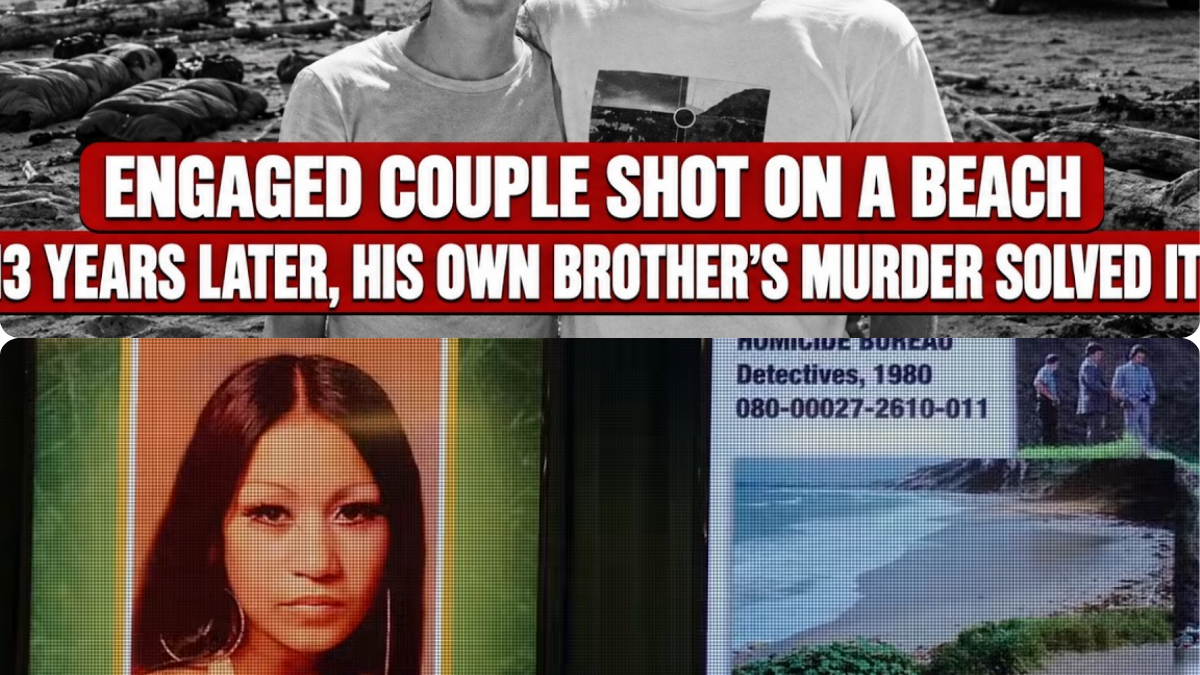
HE WAS A MAN OF FAITH, SHE WAS A PASTOR’S DAUGHTER — THEY WERE DAYS FROM THEIR WEDDING.
THEN ON A REMOTE BEACH, EVERYTHING VANISHED… AND THE TRUTH HID IN PLAIN SIGHT FOR 13 YEARS
They were supposed to be married in three weeks.
Instead, on August 18, 2004, a helicopter crew scanning the rugged Northern California coast spotted something impossible from the air: two motionless sleeping bags lying side by side on the empty, wind-swept sand of Fish Head Beach.
Lindsay Cutshall was twenty-two, the gentle, bright daughter of an Ohio pastor.
Jason Allen was twenty-six, a free-spirited outdoor guide from Michigan.
They had met at Bible college, fallen in love in six weeks, and spent the summer leading children through whitewater rapids and mountain hikes at a Christian camp in the Sierra Nevada.
Their wedding was set for September.
This trip along the coast was meant to be their quiet celebration before returning home to build the life they dreamed of — a life of faith, adventure, and family.
When they reached the tiny coastal town of Jenner on the night of August 14, every inn was full.
They were people who loved the outdoors, so they drove down to the beach, spread their sleeping bags beneath the stars, and vanished into the dark.
They had not been robbed.
Lindsay’s jewelry was untouched.
Jason’s wallet still held every dollar.
Their red Ford Tempo sat undisturbed on the road above, keys still inside.
There had been no struggle, no sexual assault, no fight — no reason anyone could see why two young people full of hope would never be seen again.
Autopsy results revealed they had each been shot once in the head at close range with a rare, sawed-off Marlin .
45-70 rifle — a heavy, powerful weapon designed for hunting large game, a gun so uncommon most local gunsmiths had never even handled one.
The killer had collected every shell casing, left no fingerprints, no footprints, no witnesses.
The tide had washed away whatever faint traces might have remained.
Four families in two states waited.
The Cutshalls flew from Ohio; the Allens traveled from Michigan.
Every year, on the anniversary, they called the Sonoma County Sheriff’s Office.
Every year, the answer was the same: Nothing new.
More than twelve hundred leads were chased down.
A $50,000 reward went unclaimed.
Investigators looked at a convicted killer in Sebastopol, a suspected double murderer in Canada — every name that crossed their desk — and every trail went cold.
The case became a ghost story along the coast: two bright lives snuffed out in the dark, for no reason anyone could name.
But there was one name detectives never crossed off their list.
Shaun Michael Gallon lived twenty miles inland, along the Russian River, in a quiet rural stretch the couple likely drove through on their way to the coast.
Neighbors described him as strange, heavy, quiet in a way that made your skin crawl.
He was known as a survivalist — someone who stockpiled gear, avoided people, kept to the woods.
When detectives knocked on his door in those early days, he spoke to them, denied everything, and agreed to a polygraph.
He failed it — specifically on questions about Lindsay and Jason.
Polygraph results are not enough to arrest someone.
There was no weapon, no matching DNA, no witness who had seen him that night.
Gallon slipped back into the shadows.
But he did not vanish entirely.
Two months before the beach murders, a package bomb had exploded miles away in Monte Rio — unconnected, police thought, until years later.
In 2009, he was convicted of firing a homemade arrow into a stranger’s car in broad daylight.
He served time, was released, and walked free while the families of two young people waited.
In the weeks after the bodies were found, Gallon called his father and asked him to destroy all his guns.
His father did it.
He was not afraid of the law.
He was afraid of his own son.
For thirteen years, the beach stayed silent.
The wedding dress Lindsay had chosen hung in a closet in Ohio.
The date came and went, again and again.
And then, in March 2017, a frantic 911 call came from the very house where Gallon had lived all those years — and what happened next shattered the silence forever.
And then, in March 2017, a frantic 911 call came from the very house where Gallon had lived all those years — and what happened next shattered the silence forever.
Gallon’s mother had placed the call.
Her son, she told dispatchers, had shot and killed his brother Seamus inside their home, then walked out with a rifle and driven away.
There had been no warning, no history of bitter conflict, no clear motive — just sudden, devastating violence, as if a switch had flipped inside him.
He was arrested the same day.
This was the moment detectives had waited more than a decade for.
They sat across from Gallon in the interrogation room — the same man they had eyed since 2004, the man who had failed the polygraph, the man whose father had destroyed his guns at his request.
They began asking about Fish Head Beach, expecting lies, denials, evasion — the same things they had heard for thirteen years.
Instead, before they could lay out all their evidence, Shaun Gallon began to talk.
He confessed.
Not under pressure, not cornered by new proof, but freely, as if a dam had broken inside him.
He described details no one but the killer could have known — the layout of the beach that night, how he had approached, exactly where they had been sleeping.
He told them he had hidden the shell casings in a soda can and led investigators straight to the spot where he had concealed it.
For thirteen years, the most critical piece of physical evidence had sat hidden, untouched, waiting.
But as detectives cross-checked his account, they made a discovery far more chilling than any confession.
Gallon did not know Lindsay.
He did not know Jason.
He had never met them, never followed them from San Francisco, never had any connection to the camp or their families.
They were strangers to him.
He had chosen them entirely at random.
As the full picture began to emerge, it became clear this was not an isolated act.
The package bomb in Monte Rio, the arrow fired into a stranger’s car — all of it was his.
He had drifted through the area for years, a quiet, dangerous presence no one noticed, capable of striking out at anyone, for no reason at all.
And then, in the midst of his confession, he revealed one final, devastating truth that would break the hearts of four families who had clung to hope for more than a decade.
He had shot Jason first, Gallon told them.
Jason was asleep.
He never woke up.
But the sound of the gunshot had roused Lindsay.
In the dark, with the roar of the Pacific covering everything else, she had sat up.
She had seen him.
She had known.
And then he had shot her, too.
For thirteen years, their families had held onto one gentle, terrible comfort — the belief that both young people had died peacefully in their sleep, unaware, unafraid.
Now they learned the truth: Lindsay had woken alone in the darkness, seen the man who had killed the love of her life standing over her, and known exactly what was happening.
There was no motive Gallon could give.
He did not hate them.
He did not know them.
He might have been drunk that night; he could not even say for certain.
Two lives ended simply because they were there, because they happened to stop on that beach, because a violent man with a gun walked past.
The news was kept quiet while detectives verified every detail.
The soda can held the casings from the rare rifle.
Everything matched what only the killer could have known.
On May 5, 2017, the Sonoma County Sheriff stood before cameras and announced what families had waited to hear: the Jenner Beach murders were solved.
Shaun Gallon had confessed.
The weapon itself was never found.
His father had disposed of the guns in 2004 and taken his own life in 2013, carrying the secret of their location to the grave.
No one will ever know exactly where it lies.
Gallon was charged with all the crimes spanning those thirteen years — the double murder, the killing of his brother, the bombing, the arrow attack.
In June 2019, he stood in court and entered a plea that accepted responsibility without explanation.
The prosecution agreed not to seek the death penalty; he would spend the rest of his life in prison.
The sentencing hearing was the moment the story reached its most heartbreaking and powerful conclusion.
Kathy Cutshall walked into the courtroom carrying something folded carefully in her arms: the wedding dress her daughter had chosen, the one Lindsay never got to wear.
She held it up where Gallon could see it.
“They had a future,” she told him, her voice steady despite the tears.
“They had a future in marriage.
They had a future with us, with my grandchildren.
This represents what they lost.
”
“Yes, ma’am,” he replied.
“Read it,” she said.
It was all she said.
No anger, no curses, no long list of grievances — just a plea to remember what he had done.
She had already sent him a Bible in prison, a gesture of grace so profound it left the courtroom silent.
Her husband Chris, the pastor who was meant to officiate his daughter’s wedding, spoke next.
He read a letter from Jason’s parents, who were too unwell to travel: “He must now answer to a righteous God.
”
Then the prosecution played Gallon’s confession aloud.
For the first time, the families heard his flat, emotionless voice recount that night — how he had seen them, how he had approached, how Lindsay had sat up in the dark.
Kathy Cutshall wept openly as she listened.
The reality of those final moments settled over the room, heavy and heartbreaking.
A memorial video followed — photos of Lindsay and Jason as children, as young adults, smiling together in San Francisco just days before they died.
As a hymn played, Kathy knelt on the courtroom floor and sang along softly.
The judge sentenced Gallon to three consecutive life sentences plus ninety-four years — no parole, no chance of freedom.
He showed no emotion as he was led away.
Outside, Kathy Cutshall spoke to reporters.
“Lindsay and Jason finally have justice today,” she said.
“The sad thing is nothing can bring them back.
”
Today, a stone cross stands bolted into the cliff above Fish Head Beach, overlooking the spot where they lay.
Their names are carved together on a headstone in Ohio, near the church where Chris Cutshall still preaches every Sunday.
The wedding dress has been carefully put away, no longer waiting for a wedding but kept as a reminder of the bright, kind girl who wore it in her heart.
Gallon sits in a California prison, never to be released.
He has never given a reason.
Perhaps there is no reason.
Sometimes darkness falls without explanation, and innocent lives are taken simply because they were in the wrong place at the wrong time.
But the families have chosen not to let that darkness define their children’s memory.
They speak of Lindsay’s gentle spirit and Jason’s joy, of the love they shared and the good they intended to do.
They have found a way to forgive without forgetting, to grieve without letting go of faith.
The waves still crash on Fish Head Beach.
The fog still rolls in.
But now, the story is not just about what was lost there — it is about what endures: love, grace, and the unshakable belief that eventually, the truth will always rise.
This story is entirely fictional and created for entertainment purposes only.
It does not represent any organization or individual, nor does it encourage inappropriate behavior.
The content was generated with AI assistance.








