He Was the Perfect Father, Then Vanished — Leaving 5 Bodies, a Playing Piano, and a Secret That Took 18 Years to Uncover
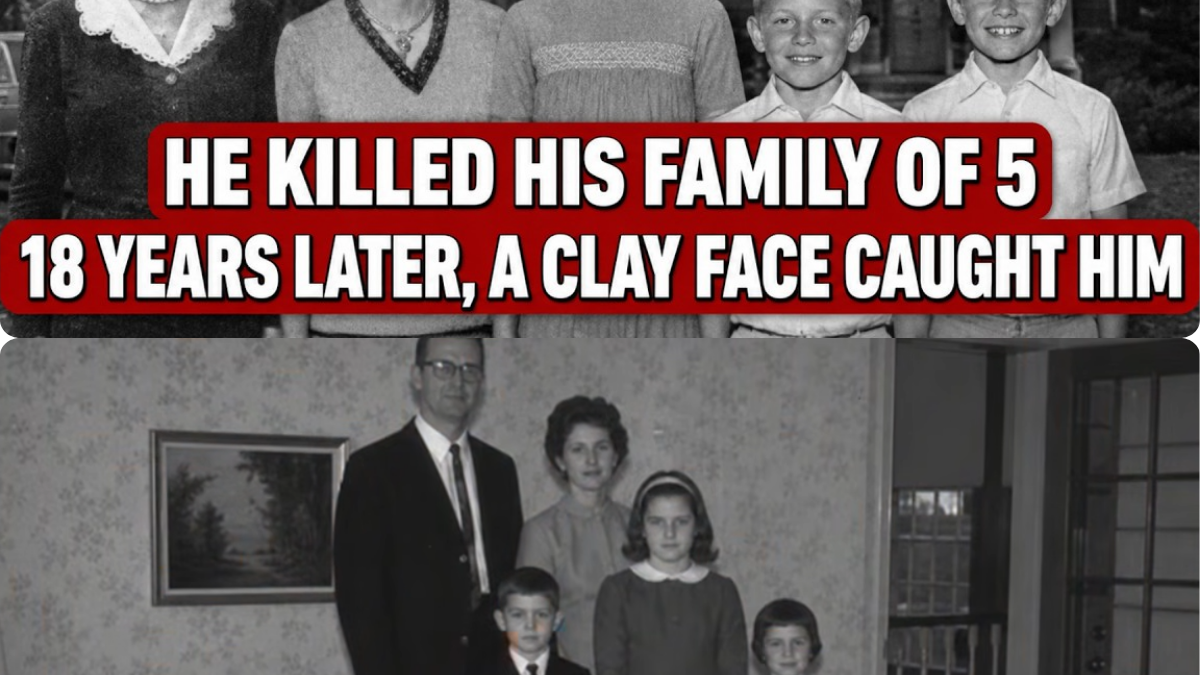
December 7, 1971.
Westfield, New Jersey.
Police pushed open the front doors of Breeze Null, the town’s grandest mansion.
They expected to find a family away on an extended trip.
Instead, they stepped into a house frozen in time.
Lights glowed dimly.
Hymns played softly over the intercom.
And in the ballroom, laid out side by side on sleeping bags, were the bodies of a wife, a grandmother, and three children.
The father, John List — respected accountant, Sunday school teacher, pillar of the community — was nowhere to be found.
He had vanished.
No note of farewell, no witness, no clear trail.
The man who had driven his children to school just four weeks earlier had simply evaporated, leaving behind five dead and a town paralyzed by dread.
How does a devoted husband and loving father become a fugitive overnight? What dark secret lay beneath the flawless surface of this model family?
John Emile List was not born to violence.
Born September 17, 1925, in Bay City, Michigan, he was raised in a strict German Lutheran home where appearance was everything and failure unthinkable.
He served in World War II with honor, graduated from the University of Michigan with degrees in business and accounting, and in 1951 married Helen Morris Taylor — a beautiful widow with a young daughter.
Three more children followed: Patricia in 1955, John Jr.
in 1956, and Frederick in 1958.
Outwardly, it was the perfect American life.
But behind closed doors, the home was fraying.
Helen struggled with alcohol and worsening mental instability — later revealed to be the effects of untreated tertiary syphilis attacking her nervous system.
John said nothing to anyone.
Shame and reputation meant more to him than help.
In 1965, he moved the family to Westfield and bought Breeze Null — a 19-room Victorian mansion with a ballroom and Tiffany ceiling — not because they needed the space, but because it proved he had succeeded.
The house swallowed their finances.
By 1970, he was fired from his bank job.
He told no one.
Every morning he put on his suit, picked up his briefcase, and drove out as if to work — then sat in his car at the train station or in a library for eight hours before returning home.
He drained his elderly mother Alma’s life savings — nearly $200,000 — to pay the mortgage.
Still the bank threatened foreclosure.
He could not bear the shame of his neighbors seeing him fail.
In his isolation, John’s faith twisted into something terrible.
He began to see the world — television, music, changing social mores, his own children growing up — as a threat to their souls.
Patricia loved acting and wore peace-symbol shirts; he saw it as moral decay.
Helen’s illness and drinking, he decided, were signs of spiritual ruin.
His solution was chilling: if he killed them while they were still “good,” he could send them straight to heaven.
And he could not kill himself — suicide, he believed, would bar him from heaven and eternal reunion with them.
So he would live.
They would die.
On November 9, 1971, he carried out his plan with cold precision.
He drove the children to school.
Bought two guns.
Shot Helen in the kitchen.
Shot Alma in her third-floor apartment.
Watched John Jr.
play football, then shot him when they returned home.
Killed Patricia and Frederick as they walked through the door.
Dragged four bodies to the ballroom.
Cut his face out of every family photograph.
Left a five-page letter to his pastor explaining he had saved them.
Turned up the music.
Locked the door.
And vanished.
For weeks, no one suspected a thing.
He had canceled newspapers and milk, told the school they were visiting sick relatives.
By the time anyone wondered, he was already across the country with a new name: Robert Peter Clark.
The FBI hunted him for years.
They found his car at JFK Airport — but no ticket, no record, no trace.
The trail went cold.
Breeze Null burned down under suspicious circumstances less than a year later.
The case faded into legend.
No one knew where he was — or who he had become.
Then, 18 years later, a neighbor in Denver saw something in a magazine that made her blood run cold.
Then, 18 years later, a neighbor in Denver saw something in a magazine that made her blood run cold.
Wanda Flannry picked up a tabloid and stared at a grainy photo of the long-missing John List.
The face — serious, bespectacled, receding hairline — matched her quiet, polite neighbor Bob Clark.
The man who attended her church, organized rides for the elderly, worked as an accountant, never raised his voice.
It couldn’t be.
Could it? She mentioned it to Bob’s new wife, Dolores.
Dolores laughed it off.
Her husband was gentle, devout, kind.
The idea he could be a mass murderer was absurd.
Wanda said nothing more — but she never forgot.
Bob and Dolores moved to Virginia in 1988.
The trail seemed lost again.
But that same year, a new television show called America’s Most Wanted premiered.
The producers wanted to feature John List — but they faced a problem: the newest photo was 18 years old.
Faces change.
They turned to forensic sculptor Frank Bender.
Working from old photos and psychological profiles, he spent three months creating a clay bust predicting what List would look like in his 60s — balding, wearing old-fashioned round glasses, aging exactly as a man of his habits would age.
On May 21, 1989, the episode aired.
Millions watched as the bust stood beside the 1971 photograph.
“If you know this man,” John Walsh said, “call now.
”
Within hours, the calls flooded in.
From Richmond, Virginia — where Bob Clark lived.
From former neighbors.
From co-workers.
From church members.
“That’s him,” they said.
“That’s exactly what he looks like.
” Wanda Flannry called, too.
The resemblance was undeniable.
The FBI compared the bust to photos taken after his arrest and shook their heads — it was perfect, down to the lines around his eyes and the angle of his jaw.
Eleven days later, agents walked into a modest accounting office in Richmond.
They found a man in a suit, sitting quietly at his desk.
“Are you Bob Clark?” they asked.
“Yes.
” “Are you John List?” He hesitated.
“No.
” But his fingerprints — taken from a 1971 gun permit — told the truth.
Robert Peter Clark was John Emile List.
He had lived a completely normal life for nearly two decades under a false identity.
He had remarried.
He had worshipped.
He had held a job.
And every single day, he carried the memory of what he had done — and the five people he had killed — with him.
Dolores Clark collapsed when the news came.
She had shared a home, a bed, a life with this man for four years — and never known the truth.
She had married a ghost.
They divorced soon after.
List fought the accusations.
He clung to the name Bob Clark for months, denying everything even as the evidence mounted — the fingerprints, the confession letter in his own handwriting, the military records.
Finally, in February 1990, he admitted who he was.
But he never truly admitted what he had done was wrong.
His trial began in April.
The defense argued he was driven by obsessive-compulsive disorder and delusion, that he believed he was saving his family’s souls.
The prosecution laid bare the chilling calculation: he had planned every step, from canceling subscriptions to lowering the thermostat to slow decomposition, then calmly walked away and started fresh.
He had not snapped — he had chosen.
Again and again.
The jury found him guilty on all five counts of first-degree murder.
He received five consecutive life sentences — one for each life he had taken.
In prison, List lived as he always had: quiet, disciplined, attending chapel every Sunday.
He spoke to reporter Connie Chung in 2002.
“I wish I had chosen another way,” he said.
But he clung to his twisted logic — that suicide would have kept him from heaven, that he had to kill them so they could be saved, that in heaven they would not remember.
“They won’t realize what happened,” he told her.
Those words chilled the nation more than any detail of the crime.
He never acknowledged the suffering he had caused.
He only regretted being caught.
John List died on March 21, 2008, at age 82 — 18 years on the run, 18 years in prison.
He never met his victims in heaven, as he had hoped.
He died alone, remembered not as a savior, but as a destroyer.
The legacy of the case lives on.
Frank Bender’s bust revolutionized age-progression techniques, helping law enforcement worldwide track fugitives over decades.
America’s Most Wanted proved the power of ordinary people to solve crimes — more than 1,000 fugitives were captured through the show’s tips.
And psychologists still study List as the ultimate “family annihilator” — a man so obsessed with perfection and control that when his life fell apart, he chose to end his family’s lives rather than let the world see him fail.
In Westfield, the site of Breeze Null bears a new house.
But residents still speak of it in whispers.
The children who grew up daring each other to approach the burned-out mansion are now adults.
They remember the lesson: that monsters do not always look like monsters.
Sometimes they wear suits, teach Sunday school, drive their children to school, and smile at neighbors.
Sometimes the danger is not in the shadows — it is sitting at your own dinner table.
The five victims — Helen, Alma, Patricia, John Jr.
, and Frederick — rest in peace, remembered not for how they died, but for how they lived.
And the man who took them learned too late that no mansion, no reputation, no lie can ever truly hide the truth.
Justice was late — but it came.
🕊️ May they never be forgotten.
“This story is entirely fictional and created for entertainment purposes only.
It does not represent any organization or individual, nor does it encourage inappropriate behavior.
The content was generated with AI assistance.
”








