MARRIED AT 17 TO A COLD DUKE—THEN HE BROUGHT HIS MISTRESS HOME AND LEARNED WHO HIS WIFE REALLY WAS
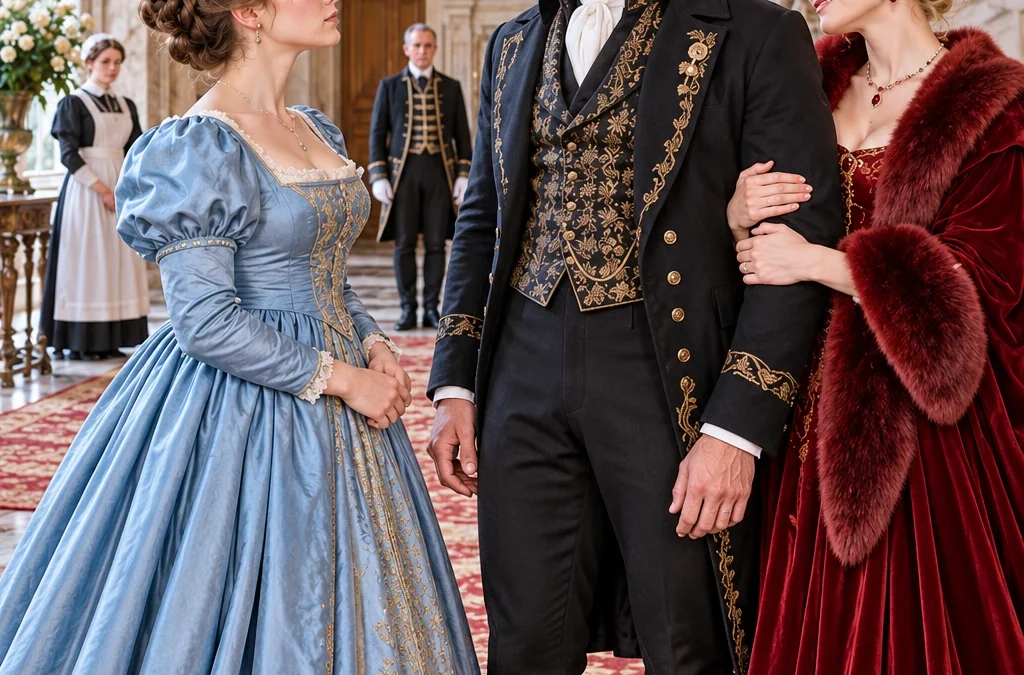
MARRIED AT 17 TO A COLD DUKE—THEN HE BROUGHT HIS MISTRESS HOME AND LEARNED WHO HIS WIFE REALLY WAS
Part 1
Lady Josephine Hastings was seventeen years old when her father sold her future to save his own.
No one called it selling, of course.
In London society, ugly things were wrapped in silk and given respectable names.
They called it an advantageous marriage.
Her father, Lord Thomas Hastings, had gambled away nearly everything the family possessed. Investments had failed. Horses had lost. Creditors circled the Hastings estate like starving wolves.
Then Leonard Cavendish, Duke of Rothbury, made an offer.
He was twenty-nine, enormously wealthy, politically powerful, and feared by men twice his age. Society called him the Duke of Ice because no scandal, insult, beauty, or tragedy seemed capable of touching him.
Leonard wanted an heir.
Lord Hastings wanted money.
And Josephine became the agreement between them.
On the morning of her wedding, rain clouds hung over London like funeral cloth.
Josephine stood outside the church in white silk, gripping her roses so tightly that a thorn pierced her glove.
A tiny red stain appeared against the white leather.
She stared at it.
For some reason, that single drop of blood frightened her more than the hundreds of curious faces waiting inside.
Then the doors opened.
At the altar stood Leonard.
Tall. Broad-shouldered. Dressed almost entirely in black.
He did not smile when she reached him.
His pale blue eyes studied her with the detached expression of a man examining a document before signing it.
The vows were spoken.
The ring was placed on her finger.
And within an hour, Josephine Hastings was gone.
The Duchess of Rothbury sat opposite her new husband in a black carriage heading north.
The journey to Yorkshire lasted three exhausting days.
Leonard spoke to her only when necessary.
“Are you cold?”
“No, Your Grace.”
“Tea?”
“No, thank you.”
That was almost the extent of their marriage.
When Rothbury Manor finally appeared through the fog, Josephine’s stomach tightened.
The enormous Gothic house rose from the moors like something carved from darkness.
My prison, she thought.
That night, she sat trembling on the edge of the bed in the duchess’s chambers.
Her mother had tearfully explained what might be expected of her.
Josephine heard the lock turn.
Leonard entered.
She immediately straightened.
“I am ready, Your Grace.”
He stopped.
His expression changed.
“You are shaking.”
“I know my duty.”
Leonard stared at her for several seconds.
Then his jaw hardened.
“You are a child.”
Josephine blinked.
“My father said—”
“Your father,” Leonard interrupted coldly, “is a fool who would sell his soul for a winning hand.”
He remained by the door.
“I paid his debts. Your obligation in this bargain is fulfilled.”
“But you require an heir.”
“Eventually.”
His gaze softened by the smallest degree.
“You have tutors, servants, horses, and one of the finest libraries in Yorkshire. Learn this estate. Learn the world. Grow up, Josephine. When you are ready to decide what kind of woman you intend to become, then we will discuss the future.”
He turned and left.
By sunrise, he was gone.
London, Mrs. Higgins informed her.
No return date.
No letter.
Nothing.
Josephine cried that first morning.
Then she stopped.
If Rothbury was to be her cage, she would at least learn where every door led.
She began with the household accounts.
Then the tenant records.
Then the farms.
She discovered an estate manager quietly stealing money and dismissed him. She reorganized supplies, supervised spring planting, visited tenant families, studied economics, agriculture, French, politics, and estate law.
The servants who had once pitied the abandoned child-bride gradually stopped pitying her.
They started respecting her.
Eight months passed.
By spring, Josephine was eighteen.
The frightened girl who had arrived in white silk seemed to belong to another lifetime.
Then, one rainy afternoon, a shout came from outside.
“The Duke’s carriage!”
Josephine froze.
Leonard was home.
She stood in the entrance hall wearing a fitted forest-green gown while the household assembled behind her.
The doors opened.
Leonard strode inside.
Wind had disordered his dark hair. His riding coat was damp from the approaching storm.
Josephine stepped forward.
“Welcome home, Your Grace.”
Leonard stopped.
For once, the Duke of Ice appeared genuinely speechless.
His eyes moved over her face as though searching for the frightened girl he remembered.
She was gone.
Before he could answer, a woman’s voice floated in from behind him.
“My heavens, Leonard. You promised me sanctuary, not exile at the edge of civilization.”
A beautiful blonde woman entered wearing crimson.
She was perhaps twenty-five, elegant and perfectly aware of it.
Every servant in the hall went still.
Leonard’s expression closed instantly.
“Josephine, this is Mrs. Anna Abernathy. She will be staying with us indefinitely.”
Josephine felt something cold settle inside her.
Then Leonard added, “Have the East Wing prepared for her.”
The East Wing.
The family’s private apartments.
Josephine understood immediately.
Anna was not merely his guest.
Leonard had brought his mistress into his wife’s home.
Anna smiled.
“So this is the little duchess.”
Josephine’s humiliation burned so fiercely that she almost tasted it.
Leonard watched her.
Perhaps he expected tears.
Instead, Josephine smiled.
“Mrs. Abernathy, welcome to Rothbury.”
Anna’s expression flickered.
Josephine turned toward the housekeeper.
“Mrs. Higgins, please prepare the Blue Guest Suite in the North Wing.”
Leonard frowned.
“I said the East Wing.”
“And I ordered repairs to the East Wing fireplaces last week.”
“Josephine.”
“Unless you wish your guest to sleep in soot and construction dust, she will use the North Wing.”
Silence.
Then Mrs. Higgins bowed.
“Immediately, Your Grace.”
Josephine looked at Leonard.
“Dinner is served at eight. We ring the bell once.”
And she walked away.
That was the first battle.
The war lasted weeks.
Anna tried to command servants who politely reminded her that only the duchess controlled household matters.
She requested special French meals and received excellent Yorkshire dinners instead.
She demanded horses only to discover Josephine had assigned them elsewhere.
Finally, during dinner, Anna attacked openly.
“Josephine, dear, Leonard tells me you spend your days buried in accounts. How terribly dull.”
Josephine continued eating.
“A woman of your rank should understand fashion and society. Though perhaps refinement cannot be expected from a girl sold to settle her father’s gambling debts.”
The room became silent.
Leonard’s hand tightened around his wineglass.
Josephine slowly put down her fork.
“You are correct, Mrs. Abernathy.”
Anna smiled triumphantly.
“My father was an appalling gambler. He repeatedly assigned enormous value to things that ultimately proved worthless.”
Josephine looked directly at Anna.
“Unfortunately, many people make the same mistake. They confuse cheap glass with diamonds simply because both can sparkle.”
Anna’s face reddened.
“Leonard!”
But Josephine had not finished.
“And while you remain beneath my roof, you will address me as Your Grace. My first name is reserved for my husband and my friends.”
She paused.
“You are neither.”
Anna turned desperately toward Leonard.
“Are you going to allow this?”
Leonard looked at his wife.
And something extraordinary happened.
The smallest smile touched his mouth.
“She is the Duchess of Rothbury, Anna.”
His voice was quiet.
“In this house, her word is law.”
Josephine left before dessert.
But Leonard could no longer stop watching her.
He noticed how confidently she dealt with tenants. How servants adored her. How fiercely she defended Rothbury.
And he realized something dangerous.
He had returned expecting a child he could intimidate.
Instead, he had found a woman he could not control.
Then came the annual Rothbury ball.
Josephine descended the staircase in midnight-blue silk wearing the ancient Rothbury sapphires.
Conversation stopped.
Leonard simply stared.
Soon she was surrounded by guests.
And when handsome Lord Henry Sinclair asked her to dance, Josephine accepted.
She laughed at something Sinclair whispered.
Leonard’s expression darkened.
Anna touched his arm.
“She certainly enjoys his attention.”
Leonard did not look at her.
“Remove your hand.”
“Leonard?”
“Go upstairs, Anna.”
Minutes later, he crossed the ballroom.
“My turn.”
He took Josephine into the next dance.
“You were smiling at Sinclair,” he said.
“He is polite.”
“He wants you.”
Josephine’s eyes flashed.
“How dare you speak to me about another man when you brought your mistress into my home?”
Leonard went still.
“You care?”
“I care that you humiliated me.”
The words struck harder than any slap.
“You abandoned me for eight months. Then you brought another woman here expecting me to break.”
Leonard led her away from the ballroom and into the moonlit library.
The doors closed.
For the first time, his perfect control fractured.
“Anna leaves tomorrow.”
Josephine stared at him.
“What?”
“I brought her here because I thought you were still frightened. I expected you to demand something from me. Attention. Authority. Anything.”
His voice dropped.
“Instead, you defeated her without needing me.”
Josephine’s heart hammered.
“And tonight I watched Sinclair make you laugh.”
Leonard looked directly into her eyes.
Something fierce had replaced the ice.
“I discovered I could not bear it.”
He stepped closer.
Josephine lifted her chin.
“You do not own me.”
“No,” he said quietly.
And for the first time since their wedding, the powerful Duke of Rothbury looked almost vulnerable.
“But I want the chance to become a man you would choose.”
Josephine’s breath caught.
Then she gave him the answer that changed everything.
“You told me to grow up, Leonard. I did. You told me to become a duchess. I became one. If you want my heart now, you will have to earn it.”
And Leonard Cavendish—the man who had never begged anyone for anything—answered with two words:
“Teach me.”
But what Josephine did not yet know was that Leonard’s mistress was not the greatest threat to their marriage. Someone from her past was already preparing a lie that could destroy her name, her title…and everything she had built.
👉 Find Part 2 in the comments—or leave ANY WORD below and I’ll send it to you privately.
Part 2
But what Josephine did not yet know was that Leonard’s mistress was not the greatest threat to their marriage. Someone from her past was already preparing a lie that could destroy her name, her title…and everything she had built.
Anna Abernathy left Rothbury the following morning. Leonard did not ask Josephine to forgive him. Instead, he began doing something far more difficult: changing.
He invited Josephine into meetings previously reserved for men. When she proposed rebuilding the village school, he provided the funds but insisted her name—not his—appear on the plans. He gave her access to shipping accounts and mining investments and listened when she challenged his decisions.
One evening Josephine stared at the mountain of documents before her. “You realize most husbands would consider this madness?”
“Most husbands,” Leonard replied, “did not marry you.”
Slowly, cautiously, the distance between them narrowed.
Josephine discovered that beneath Leonard’s coldness lived a man who trusted almost no one because trust had always been used against him. Leonard discovered that Josephine did not want jewels or worship.
She wanted respect.
By November, Rothbury felt different.
Warmer.
Then a carriage arrived.
Josephine entered the drawing room and found her father standing beside the fireplace.
Lord Thomas Hastings looked thinner and desperate.
“My beautiful girl.”
“Why are you here?”
His smile disappeared.
“I require ten thousand pounds.”
Josephine almost laughed.
“No.”
“Lord Rutledge owns my debts.”
“You promised you would stop gambling.”
“I need the money.”
“And you will not receive it from me.”
Thomas slowly reached into his coat.
“Then perhaps your husband will be more reasonable.”
He produced a sealed letter.
“What is that?”
“A confession from a former stableman.”
Josephine read the first lines—and felt the blood drain from her face.
The document claimed that before her marriage she had secretly conducted a scandalous affair.
It was entirely fabricated.
“You forged this.”
“Obviously.”
Her father smiled.
“But London does not require truth, Josephine. Only scandal.”
Her fingers went cold.
“If this reaches the newspapers,” Thomas continued, “society will question whether the Duke married a compromised woman. His enemies will laugh. Your reputation will collapse.”
“You would destroy your own daughter?”
“For ten thousand pounds, I would save myself.”
Josephine stared at the man who had once traded her future to settle his debts.
He had returned to sell her again.
Then a voice thundered from the doorway.
“Get out of my house.”
Thomas spun around.
Leonard stood there in muddy riding boots, one gloved hand still holding his riding crop.
“Your Grace—I can explain.”
“I heard enough.”
Thomas lifted the letter.
“You cannot ignore this. People will believe it.”
Leonard walked toward him.
Josephine waited for anger.
For suspicion.
For the cold calculation she remembered from their wedding.
Instead, Leonard passed Thomas completely.
He went to Josephine.
His hand gently touched her cheek.
“Look at me.”
She did.
“If you want me to pay him, I will.”
Her lips parted.
“If you want him arrested for extortion, I will summon the magistrate.”
Leonard stepped aside, leaving Thomas directly in Josephine’s sight.
“But I will not choose for you.”
Thomas paled.
Leonard’s next words were quieter.
“You are the Duchess of Rothbury.”
He offered Josephine his hand.
“Decide.”
For several seconds, nobody moved.
Then Josephine looked at the forged letter in her father’s trembling hand.
The frightened seventeen-year-old girl inside her whispered that scandal could ruin everything.
The woman she had become answered differently.
Josephine stepped forward.
“Publish it.”
Thomas stared at her.
“What?”
“Send your lie to every newspaper in London.”
Leonard’s eyes sharpened.
Thomas backed toward the door.
“You foolish girl. Do you understand what you are risking?”
Josephine followed him.
“Oh, perfectly.”
But before she could finish, Thomas suddenly reached inside his coat again.
Leonard moved instantly.
And Josephine saw the flash of something hidden beneath her father’s sleeve.
👉 What was Thomas really carrying—and how far was he willing to go? LIKE this post or comment “DUCHESS” if you want Part 3. Once we hit the right number of comments, I’ll post the complete ending.
Part 3
Thomas suddenly reached inside his coat again.
Leonard moved instantly.
And Josephine saw the flash of something hidden beneath her father’s sleeve.
It was not a pistol.
It was another folded document.
Leonard seized Thomas’s wrist before he could pull it free.
“What else have you brought into my house?”
Thomas struggled.
“Release me!”
Leonard did.
But only after taking the paper.
He opened it.
His face changed.
Josephine recognized that expression now.
It was not anger.
Anger was warm.
This was the terrible stillness that came before Leonard destroyed something.
“What is it?” she asked.
Thomas’s bravado returned for half a second.
“Insurance.”
Leonard handed the document to Josephine.
Her eyes moved across the page.
Then she understood.
Her father had not merely fabricated a confession.
He had drafted letters implicating several people connected to Rothbury—servants, acquaintances, even Lord Sinclair—as supposed witnesses to Josephine’s nonexistent misconduct.
“You planned all of this?” she whispered.
Thomas shrugged.
“I planned to survive.”
Josephine stared at him.
Something inside her finally broke.
Not her courage.
Her attachment.
All her life, a tiny part of Josephine had wanted her father to become the man she had imagined as a child.
Perhaps one day he would apologize.
Perhaps one day he would admit he had been wrong.
Perhaps one day he would see his daughter rather than her monetary value.
Standing in that room, she finally understood.
That day would never come.
“You sold me once,” Josephine said.
Thomas rolled his eyes.
“Do not be dramatic.”
“You sold me.”
Her voice remained quiet.
Leonard stood several feet away, motionless.
“You gambled away my home. You traded my future to repair your mistakes. And when the marriage you arranged did not destroy me, you returned to profit from me again.”
“I am your father.”
“No.”
Thomas blinked.
Josephine folded the forged documents.
“You are the man who happened to father me.”
His face hardened.
“You ungrateful little—”
Leonard took one step forward.
Thomas stopped.
Josephine raised her hand.
“No, Leonard.”
Leonard immediately halted.
It was a tiny thing.
Yet Thomas noticed it.
The most feared man in the room had obeyed her without hesitation.
Josephine noticed too.
Months earlier, Leonard would have taken control.
He would have decided what happened next because power was the only language he understood.
Now he stood beside her and waited.
Not because he was weak.
Because he respected her choice.
Josephine turned back to Thomas.
“You asked for my decision.”
Her father swallowed.
“You will receive no money.”
“Josephine—”
“No estate. No allowance. No secret payment to save you from creditors.”
Thomas’s face turned red.
“You cannot do this!”
“I can.”
“You owe me!”
“For what?”
He opened his mouth.
Nothing came out.
Josephine stepped closer.
“For arranging my marriage without my consent? For leaving me terrified at seventeen? For appearing again only when you wanted another fortune?”
Thomas looked toward Leonard.
“Surely you see reason, Cavendish.”
Leonard’s expression did not change.
“My wife is speaking.”
Three words.
That was all.
Thomas finally understood that there would be no appeal.
No man above Josephine whose authority he could invoke against her.
He looked back at his daughter.
Josephine held out the forged confession.
“Publish it.”
“You think I will not?”
“I think you might.”
“And your reputation?”
Josephine smiled.
“Let them gossip.”
Thomas frowned.
“You believe your title protects you?”
“No.”
Josephine’s smile disappeared.
“I believe the truth protects me from becoming afraid of men like you.”
The room fell silent.
“If London chooses to believe a forged letter, London may believe it. If people whisper about me at dinners, let them whisper. I survived being sold by my father. I survived being abandoned by my husband. I survived having another woman brought into my home to humiliate me.”
Leonard lowered his eyes at that.
Josephine saw it.
Good.
She did not want him to forget.
Forgiveness did not require amnesia.
She continued.
“I built a life here when everyone expected me to collapse. Do you truly imagine a newspaper column can take that away?”
Thomas’s confidence began to crumble.
Josephine moved nearer.
“You taught me something valuable, Father.”
His eyes narrowed.
“What?”
“That fear is expensive.”
She placed the forged letter against his chest.
“And I have already paid enough.”
Thomas stared at her.
“Leave Rothbury.”
He did not move.
Josephine glanced toward the door.
Mrs. Higgins was standing outside with two enormous footmen.
The housekeeper looked almost disappointed that no physical removal had yet been required.
Thomas noticed them.
“You would throw your own father into the road?”
Josephine met his gaze.
“I would allow you to walk there voluntarily.”
Mrs. Higgins cleared her throat.
Thomas snatched the documents from Josephine.
His hands were trembling.
“You will regret this.”
“No,” Josephine said.
“I regretted being afraid of you.”
That silenced him.
He turned.
The servants stepped aside.
Thomas Hastings walked from Rothbury Manor without another word.
Seconds later, the front doors slammed.
Josephine remained perfectly still.
Leonard did not approach her.
Not immediately.
He understood enough now to wait.
She stared at the closed doors.
Then her shoulders began shaking.
“Josephine?”
“I thought I would feel victorious.”
Leonard crossed the room slowly.
“What do you feel?”
She laughed once, but the sound broke halfway through.
“Like a daughter who has finally admitted that her father never loved her enough.”
Leonard’s expression softened.
Josephine pressed a hand against her mouth.
“I kept thinking perhaps someday he would be ashamed.”
Leonard said nothing.
“I thought perhaps if I became clever enough, strong enough, important enough—”
Her voice failed.
Leonard reached her.
“But his failure to recognize your worth never determined it.”
Josephine looked up.
“Easy for a duke to say.”
“No.”
Something raw entered his voice.
“It is easy for a man who once failed to recognize it too.”
That stopped her.
Leonard looked away.
“I thought providing money made me honorable.”
He gave a bitter laugh.
“I paid your father and congratulated myself for not behaving like him.”
Josephine listened.
“Then I abandoned you in a house full of strangers.”
“You gave me space.”
“I gave myself an excuse.”
Leonard looked back at her.
“And when I returned, I brought Anna because I wanted to provoke you into needing me.”
Josephine’s expression hardened slightly.
“I remember.”
“I hope you always do.”
She frowned.
Leonard continued.
“Because if you forget what I was capable of, then my becoming better means nothing.”
Josephine stared at him.
This was not the declaration she had expected.
No grand demand.
No claim.
No mine.
Only accountability.
“You said I had to earn your heart,” Leonard said. “I do not know whether I have.”
Josephine swallowed.
“But I know I would rather spend twenty years earning it than possess it for one day because society says I am entitled to it.”
Something inside Josephine gave way.
Not surrender.
Trust.
She reached for his hand.
Leonard looked down at their joined fingers.
“You listened to me today,” she said.
“I intend to make a habit of it.”
A laugh escaped her.
A genuine one.
Leonard’s eyes lifted immediately.
“There.”
“What?”
“That sound.”
Josephine smiled.
“You are ridiculous.”
“I spent months jealous of every person capable of making you laugh.”
“That sounds like your problem.”
“It was unbearable.”
She laughed again.
Leonard smiled.
Not the faint, ironic curve she had seen at dinner months earlier.
A real smile.
It transformed his entire face.
Josephine suddenly saw the man hidden behind the title.
She stepped closer.
“Leonard.”
“Yes?”
“When you first brought Anna here, I hated you.”
His smile disappeared.
“I know.”
“I wanted you to feel humiliated. I wanted you to understand what it was like to be powerless.”
“I deserved that.”
“Probably.”
His eyebrow lifted.
Josephine continued.
“Then you did something I never expected.”
“What?”
“You changed when changing cost you something.”
Leonard remained silent.
“You shared authority. You listened. You let me disagree with you in front of your advisers. You trusted my judgment.”
“I trust it more than my own in certain matters.”
“That may be the most romantic thing you have ever said.”
“I can attempt poetry.”
“Please don’t.”
He almost laughed.
Josephine looked toward the windows.
Outside, snow had begun falling over the Yorkshire moors.
“When I arrived here,” she whispered, “I thought Rothbury was a prison.”
Leonard’s face tightened.
“And now?”
She considered the question.
“Now it is home.”
His eyes closed briefly.
When they opened again, emotion had stripped away the last of his coldness.
“And me?”
That question was harder.
Josephine looked at the man before her.
The husband who had frightened her.
The stranger who had abandoned her.
The arrogant duke who had humiliated her.
The man who later sat beside her for hours discussing tenant schools and crop yields.
The man who had finally learned that love without respect was merely another form of possession.
“You are not my owner,” she said.
“Never.”
“You are not my rescuer.”
“No.”
“And I will never become the obedient little wife you once imagined.”
A shadow of amusement appeared in his eyes.
“I have abandoned that particular fantasy.”
Josephine stepped into his arms.
“But you may become my partner.”
Leonard stopped breathing.
“May?”
“You still have work to do.”
His arms slowly wrapped around her.
“I have several decades available.”
“That might be sufficient.”
He bent his forehead to hers.
“Josephine.”
“Yes?”
“I love you.”
She closed her eyes.
Once, those words would not have been enough.
Now they were supported by months of choices.
That made them different.
“I know.”
Leonard drew back.
“That is all?”
Josephine deliberately made him wait.
The Duke of Rothbury looked genuinely alarmed.
Then she smiled.
“I love you too.”
His relief was so obvious that she laughed.
Leonard pulled her closer.
This time, when he kissed her, there was no anger, jealousy, or attempt to prove possession.
He waited.
Josephine closed the remaining distance herself.
And that distinction meant everything.
The forged scandal never achieved what Thomas intended.
Rumors appeared briefly in London, exactly as Josephine predicted.
Some believed them.
Others did not.
Leonard refused to spend his influence chasing every whisper.
Instead, when asked publicly about his wife, he gave the same answer:
“I trust the Duchess.”
Those four words killed more gossip than threats ever could.
Josephine did something even more unexpected.
She refused to disappear from society.
The following season, she entered London ballrooms with the Rothbury sapphires around her throat and her husband beside her.
People stared.
Josephine let them.
Someone whispered behind a fan.
Josephine smiled directly at her.
The whispering stopped.
Lord Sinclair greeted her warmly at one reception.
Leonard appeared at Josephine’s side.
Sinclair hesitated.
Josephine looked at her husband.
“Behave.”
“I am behaving.”
“You look murderous.”
“This is simply my face.”
Sinclair coughed to hide a laugh.
Josephine laughed openly.
Leonard endured it.
Mostly.
Marriage did not turn them into perfect people.
Leonard remained controlling by instinct, impatient, and terrifying when angry.
Josephine remained proud, stubborn, and entirely capable of arguing with him until sunrise.
But they learned.
When Leonard tried to issue orders instead of asking, Josephine would simply stare at him.
He eventually learned that particular stare meant disaster.
When Josephine tried to carry every burden alone, Leonard reminded her that independence did not require isolation.
Together they rebuilt the village school.
They improved housing on the estate.
Josephine became increasingly involved in Rothbury’s finances, and Leonard discovered—with considerable irritation—that his wife sometimes understood his own accounts better than he did.
“You are enjoying this,” he accused one evening after she discovered an error in a shipping ledger.
“Immensely.”
“You are intolerable.”
“You married me.”
“You were quieter then.”
“You told me to grow.”
Leonard stared at her.
“That may have been the greatest strategic mistake of my life.”
She threw a paper at him.
He caught it.
And laughed.
Years passed.
Lord Thomas Hastings never returned to Rothbury.
His gambling consumed what remained of his life and reputation. News eventually reached Josephine that he had died far from Yorkshire, leaving little behind except unpaid debts and memories she no longer allowed to control her.
Josephine mourned.
Not entirely for the man who died.
She mourned the father she should have had.
Leonard sat beside her through the night and never once told her how she ought to feel.
Anna Abernathy disappeared from their lives as well.
Josephine occasionally heard her name in society gossip, but eventually even those stories faded.
Rothbury endured.
So did the marriage nobody had expected to survive.
By twenty-one, Josephine was no longer the frightened girl who had once stood outside a London church gripping white roses until the thorns drew blood.
She was a mother.
A landowner in everything but the technical language of the age.
A formidable hostess.
A woman whose opinion merchants, tenants, politicians, and aristocrats learned not to underestimate.
And Leonard?
The Duke of Ice developed one extraordinary weakness.
His wife.
Years later, during another grand Rothbury ball, Josephine stood at the top of the same staircase where Leonard had once watched her descend in midnight-blue silk.
Their children were asleep upstairs.
Music drifted through the hall.
Leonard waited below.
His hair had begun showing the faintest threads of silver near his temples.
Josephine descended.
He held out his hand.
“Your Grace.”
“Your Grace.”
“May I have this dance?”
Josephine placed her hand in his.
“You are asking now?”
“I learn slowly.”
“Very slowly.”
He drew her onto the floor.
The orchestra began.
Around them, guests danced beneath hundreds of candles.
Leonard looked down at her.
“Do you remember the first time we danced here?”
“You nearly frightened Lord Sinclair to death.”
“He recovered.”
“You dragged me into the library.”
“A regrettable failure of diplomacy.”
“You were jealous.”
“Violently.”
Josephine smiled.
“You told me I was yours.”
Leonard’s expression grew serious.
“I was wrong.”
She raised an eyebrow.
He brought her hand to his lips.
“You were always yours.”
Josephine went still.
“And somehow,” he continued, “you chose to share your life with me.”
Her eyes suddenly burned.
Leonard smiled.
“That is worth considerably more.”
Josephine rested her head briefly against him.
Around them stood everything they had built from the ruins of a marriage neither had chosen.
Their home.
Their family.
Their partnership.
Their love.
Josephine had once believed strength meant never trembling.
She knew better now.
Strength was trembling and speaking anyway.
It was refusing to let humiliation become identity.
It was learning that forgiveness did not erase accountability.
And that love was not proven when someone said you belong to me.
Sometimes the greatest love began when someone finally understood:
You belong to yourself.
Leonard held her a little closer as the orchestra swelled.
“Josephine?”
“Yes?”
“If you could return to that first night at Rothbury and speak to the frightened girl sitting on the edge of that bed, what would you tell her?”
Josephine thought for a long moment.
Then she looked across the ballroom she once believed would never belong to her.
“I would tell her not to be afraid of becoming difficult.”
Leonard smiled.
“Anything else?”
“Yes.”
She looked directly into his ice-blue eyes.
“I would tell her that one day, the man everyone fears will stand in front of an entire ballroom and ask her permission for a dance.”
Leonard laughed.
“And she will make him wait.”
“Cruel woman.”
“You survived.”
“Barely.”
Josephine smiled and rested her hand over his heart.
The frightened seventeen-year-old bride was long gone.
In her place stood a woman no father could sell, no rival could humiliate, no scandal could silence, and no husband could own.
The Duke had once believed power meant possessing everything.
Josephine taught him otherwise.
The most precious thing in his life could never be possessed.
Only respected.
Only cherished.
Only chosen—
again and again.
And for the rest of their lives, that was exactly what they did. ❤️
Disclaimer: This story is entirely fictional and created for entertainment purposes only. It does not represent any organization or individual, nor does it encourage inappropriate behavior. The content was generated with AI assistance.








