My Parents Left My 6-Year-Old Daughter Alone in a Thunderstorm for My Sister’s Kids. Then I Added Up What I’d Secretly Paid Them: $370,000.
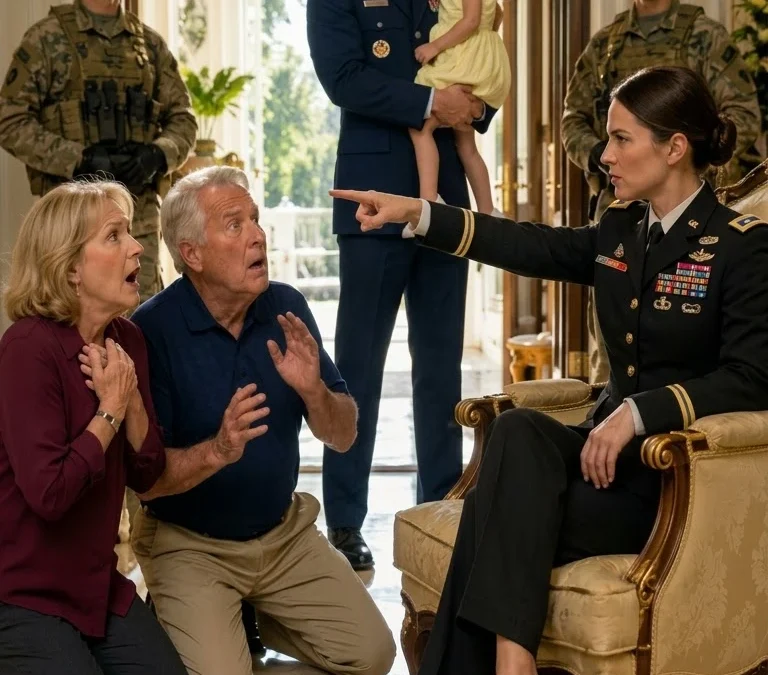
My Parents Left My 6-Year-Old Daughter Alone in a Thunderstorm for My Sister’s Kids. Then I Added Up What I’d Secretly Paid Them: $370,000.
Part 1
I have been trained to stay calm when everything around me is falling apart. Ten years in the Army taught me to slow my breathing and set my feelings aside until the job is done.
None of it helped when my phone lit up with a call from my daughter’s school at 3:47 on a Thursday afternoon.
“Emily? It’s Mrs. Patterson. Lily is safe, but you need to come right now.”
Safe. Nobody says that word unless something almost wasn’t.
I was already running for my car before she finished. Outside, the sky had turned the color of a bruise, and rain was coming down hard enough to blur the road.
My parents were supposed to pick Lily up that day. My mother had insisted. “Let us have her, Emily. We hardly ever see her.”
I had believed her.
When I pulled into the school lot, the playground was empty. Water ran in sheets along the curb. Under the awning by the front doors stood Mrs. Patterson, holding a tiny, soaked, shaking figure wrapped in her own cardigan.
Lily’s hair was plastered to her face. Her sneakers squelched when she took a step. When she saw me, she didn’t run. She just crumpled.
I dropped to my knees on the wet concrete and pulled her in. She was freezing.
“Mommy,” she whispered, “I forgot my umbrella.”
Of all the things she could have said, that was the one that broke me.
“Baby, it’s okay. Tell me what happened.”
She hiccupped. “Grandma and Grandpa came. But Aunt Miranda was there, and Ethan and Chloe. And Grandma said there wasn’t enough room in the car.”
I felt every muscle in my body go still.
“So where did you go?” I asked, keeping my voice gentle.
“Grandpa said I should walk home.”
Mrs. Patterson quietly turned her face away.
“Walk home,” I repeated. “From here?”
Lily nodded. “I told him I didn’t know which road.”
“And what did Grandpa say?”
Her little chin trembled.
“Nothing. He didn’t say anything. Then they drove away.”
The words landed so softly. There was no screaming and no accusation, just the truth.
They drove away.
Our house is almost four miles from that school. There are two major intersections on the way, and the storm was bad enough that the local radio had already issued a warning.
“She was crying by the flagpole when I found her,” Mrs. Patterson told me. “I was locking up. I wasn’t about to leave her.”
“Thank you,” I said, and my voice cracked. “If you hadn’t stayed…”
“Of course I stayed,” she said. “She’s six.”
Four words, and a stranger understood what my own mother and father apparently couldn’t.
She’s six.
I drove home with the heat blasting and Lily’s hand wrapped around mine the whole way. David was waiting on the porch, and one look at her made his face drain of color.
“What happened?”
“Inside first,” I said.
We ran a warm bath. David found her thickest pajamas and the fuzzy socks with the little foxes. We didn’t ask her anything until she was warm and wrapped in a blanket with hot chocolate in her hands. Explanations could wait. She couldn’t.
David made grilled cheese, cut into triangles the way she likes. He burned his own on purpose and called it “a bold new recipe,” and she laughed. Kids can do that. They can laugh while the adults around them are bleeding inside.
At bedtime I tucked the blankets up to her chin.
“Mom? Did I do something bad?”
My heart actually hurt.
“No, baby. Never.”
“Grandma looked mad.”
“You did nothing wrong.”
“Not even because I forgot my umbrella?”
“Not even a little.”
I kissed her forehead and promised I’d pick her up myself tomorrow. She believed me. That was the worst part, because it meant she’d had to wonder.
In the hallway, David pulled the bedroom door shut.
“That wasn’t an accident,” he said.
“No.”
“They chose Miranda.”
“Yes.”
His jaw tightened. “They’ve always chosen Miranda.”
That sentence opened a door I’d spent years pretending was a wall.
Birthdays. College. Weddings. Emergencies. Every family crisis somehow centered on my sister, and somehow I always became the solution. Miranda needs rent money. Emily can handle it. Mom and Dad need a new car. Emily has good credit. The roof, the deductible, the property taxes, the private school tuition for Ethan and Chloe.
Emily can handle it.
I’d never kept score. I thought that’s what family did.
That night I sat down at the dining table and opened my laptop. David pulled up a chair.
“What are you looking for?”
“Everything.”
I logged into one account, then another. Mortgage transfers. Car payments. Insurance. Tuition. Repairs. Credit card balances I’d quietly cleared. Vacations my mother had called “desperately needed family time.” I pulled it all into one spreadsheet and watched the column grow.
$84,000.
$137,000.
$219,000.
Then the final cell, the sum of four years of “helping.”
I stared at it until the numbers stopped looking like numbers.
$370,000.
David said my name, barely audible. I couldn’t answer. All I could think was that I’d poured a house’s worth of money into the people who had just watched my six-year-old cry in the rain, and driven away.
What happened next still gives me chills. Part 2 is in the comments—or leave any word below and I’ll send it to you privately.
Part 2
What happened next still gives me chills. Part 2 is in the comments—or leave any word below and I’ll send it to you privately.
I closed the laptop. David looked at me, waiting for the explosion.
“Nothing,” I said. “Not tonight.”
“Nothing?”
“I’m not deciding anything while I’m angry. Anger tells you something is wrong. It doesn’t get to decide what comes next.”
The next morning I took Lily for pancakes. She ordered chocolate chips and enough whipped cream to embarrass a pastry chef, and watching her laugh made yesterday feel almost impossible.
Almost.
On the way back to the car, she asked, “Are Grandma and Grandpa mad at us?”
I knelt in front of her. “They made a choice, sweetheart. Now it’s my turn to make one.”
That’s when my phone rang. Dad.
“Emily.” No apology. No how is Lily. “Your mother is extremely upset.”
“Mom is upset?”
“She barely slept.”
“How is Lily?” I said, to see what he’d do.
He was silent for three full seconds. That told me everything.
“Don’t turn this into some enormous drama,” he finally said. “There wasn’t enough room.”
“So you picked the person to leave behind. And it was a six-year-old.”
“She needs to learn independence sometime.”
“Would you have told Ethan to walk home?”
Silence.
“Dad?”
“That’s different.”
There it was. Not a misunderstanding or a lapse in judgment. A ranking.
“Miranda was having a difficult day,” he said. Then, quieter: “You’ve always been the strong one, Emily. Miranda needs more.”
The strong one. I’d heard it all my life. And now, apparently, my daughter was supposed to inherit it too.
“No more automatic transfers,” I said.
His voice changed instantly. “What?”
“I’m reviewing everything.”
“Is this about the money?”
I hadn’t said one word about money. He’d gone straight there, as if it had been waiting at the front of his mind the whole time.
“The lifestyle support stops,” I said. “The cars, the vacations, the monthly deposits. Ethan and Chloe’s current semester stays paid. And after a reasonable transition, I’m done with the mortgage.”
“You’re punishing us.”
“No. I’m refusing to finance people I no longer trust.”
He hung up.
Within twenty minutes, my phone was blowing up. Mom: How can you do this to your father? Miranda: Are you seriously threatening Mom and Dad because Lily waited outside a few minutes?
A few minutes.
By evening my aunt texted: Your mother says you cut them off because they were five minutes late picking up Lily.
So I answered with facts. They picked up Miranda and her kids. They told Lily there was no room. They told a six-year-old to walk home through a storm.
My aunt replied in under a minute. They left her there? Your mother didn’t tell me that.
Of course she hadn’t.
Three days later, the doorbell rang. David opened it. My father stood on the porch with my mother, her face swollen from crying, and Miranda behind them, arms crossed.
“You should have called first,” I said from the stairs.
“You won’t answer,” my mother said.
“Emily, this has gone far enough,” my father began.
“It went too far when you left Lily outside.”
“We didn’t abandon her,” my mother sobbed.
And from behind me, from somewhere high on the staircase, came a small voice that made every adult in that doorway freeze.
“Yes, you did.”
I turned around.
If you want to know what my six-year-old said next, and what my father finally admitted, LIKE this post and comment “RAIN.” When enough people comment, I’ll post Part 3.
Part 3
Lily stood halfway down the stairs in her purple pajamas, her stuffed rabbit clutched to her chest.
My mother went white. “Oh, Lily.”
Lily didn’t move.
My mother held out her arms. “Come here, sweetheart.”
Lily shook her head. It was a tiny motion, and it was devastating.
“Honey, Grandma made a mistake.”
“You saw me,” Lily said. There was no anger in her voice, and that made it worse. “You looked at me through the window.”
Nobody breathed.
“I told Grandpa I was scared. And you still left.”
My mother started to cry harder. My father stared at the floor like it might open up. When my mother stepped forward and whispered, “I’m so sorry,” Lily backed up a single stair.
I raised my hand. “Stop.”
“Emily, I’m her grandmother.”
“And she gets to decide when she feels safe. She doesn’t have to hug you because you finally said sorry.”
“This is ridiculous,” my father muttered.
David spoke for the first time. “What’s ridiculous is three adults standing here arguing about money after a six-year-old just told you she was afraid.”
Miranda lifted her chin. “My kids had nothing to do with this.”
“You’re right,” I said, and I meant it. “Ethan and Chloe did nothing wrong. They’ll never hear me blame them.” Then I looked at her. “But you were in that car. You watched them leave her.”
“I didn’t know Dad was serious!”
“You watched the car move.”
“I figured she had another ride! I had my own kids to think about.”
“So do I,” I said quietly.
Miranda opened her mouth. For the first time in my life, she had nothing to say.
My father sat down heavily on the bench by the door. All at once he looked old.
“We thought you’d fix it,” he said.
“Fix what?”
“Everything.” My mother shot him a warning look, but he kept going. “The house. The cars. The bills. Miranda’s tuition. Every time something went wrong, you handled it. You never complained.”
“No.”
“You never said no.”
“No.”
“So after a while…” He swallowed. “We thought you always would.”
That was the real secret. Not the $370,000. They had mistaken my generosity for an obligation and my silence for permission. And because I had always survived whatever they handed me, they’d decided I needed less love, less protection, less consideration.
Then they handed the same treatment to my daughter.
“You thought I’d always fix it,” I said. “Because Miranda needed more.”
“Yes.”
“And because I was strong, I needed less.”
“Emily…” my mother whispered.
“And now Lily is supposed to need less too?”
“No!” she cried, but it came a moment too late, and we all heard it.
“I’m done teaching my daughter that love means accepting whatever people do to you just because they’re family,” I said.
I laid it out calmly, the way I’d practiced it in my head. Ethan and Chloe’s current semester stays paid, and I won’t take back anything I’ve already given. No new tuition. No car payments. No vacation money. No monthly deposits. Nobody was being thrown into the street tomorrow, but I was done carrying everyone.
“What about the house?” my mother asked.
“You’ll have to decide whether you can afford it.”
“We can’t.”
“Then you’ll need to downsize.”
“That house has been in our family for years!”
“And I’ve paid most of the mortgage for four of them.”
Nobody argued, because nobody could.
“What about Lily?” my father asked at last.
“That depends on whether you earn her trust back.”
My mother looked up, hopeful. “You’ll let us see her?”
“Supervised. For now.”
“For how long?”
“I don’t know.”
“You’re her mother. You decide.”
“No,” I said. “Lily gets a say too.”
They didn’t understand that. In our family, children had always been expected to accept whatever the adults decided. That ended on my staircase.
The months afterward were uncomfortable, but they were honest. My parents sold a car. Then they listed the house and moved somewhere smaller that they could actually afford. Miranda moved Ethan and Chloe out of private school when the year ended. Nobody lost their home to the street. Nobody starved. They simply had to live on their own incomes, maybe for the first time in years.
Some relatives called me cruel. Others apologized once they learned the whole story. I never posted the spreadsheet or humiliated anyone. The truth came out on its own, because my parents couldn’t explain how the lifestyle they’d shown everyone collapsed the moment my support stopped.
Then something I didn’t expect arrived in the mail: a letter addressed to Lily in my mother’s handwriting.
It had no excuses and no guilt trip. It said: I should never have left you. You told me you were scared, and I did not protect you. I was wrong.
I let Lily decide whether to read it. She did, then folded it away and said nothing. Two weeks later, another came, and then another.
Finally, one evening, Lily asked, “Can I see Grandma at the park?”
David and I went with her. My father came too. They looked as nervous as she did. For twenty minutes they talked about school, butterflies, and a book she liked. Then Lily asked the question we all knew was coming.
“Grandma? If it rains again, will you leave me?”
My mother’s eyes flooded. “No.”
“Even if Ethan and Chloe are there?”
“Even if everyone in the world is there.”
Lily studied her for a long moment. Then she nodded. She didn’t run into her arms or forgive everything at once. Trust doesn’t work that way. But she stayed, and that was enough.
Things with my parents stayed different, probably forever. When my father called about a repair bill, I gave him a contractor’s number instead of my credit card. When Miranda complained about expenses, I listened politely and transferred nothing. When Mom hinted that Christmas would be “smaller this year,” I told her Lily would be happy as long as everyone was kind. She never brought up money again.
Without money tying us together, I finally found out which relationships were real. Miranda grew distant. That hurt less than I expected, because I understood how much of our closeness had depended on what I could provide. My parents changed more slowly, and not perfectly, but genuinely.
Almost a year after that Thursday, another storm rolled across Virginia while I waited outside Lily’s school. The sky opened up fast. Kids squealed and ran under umbrellas, and then Lily came through the gates, spotted me, and her whole face lit up.
“Mom!”
She climbed into the car, shaking water from her jacket, and stared out at the downpour.
Then she smiled. “I like storms now.”
“You do?”
“They’re pretty when you know someone is coming for you.”
I had to turn toward the windshield so she wouldn’t see my eyes fill.
That one sentence made every boundary worth it. Every hard phone call, every angry message, every dollar I stopped sending. None of it had really been about money. It was about teaching my daughter what I should have learned years earlier.
Being strong doesn’t mean accepting neglect. Being generous doesn’t make you responsible for everyone. And being family doesn’t give anyone permission to hurt you without consequences.
My parents believed the thing holding our family together was the $370,000 I’d quietly poured into their lives. They were wrong. Money only hid the cracks.
The real secret was simpler. They had counted on me never saying no, on fixing every disaster, paying every bill, and forgiving every unfair choice. They figured that since I’d survived everything, I’d tolerate anything.
Then they left my six-year-old standing alone in the rain.
And for the first time in my life, I stopped fixing things for them.
I fixed things for her.
Disclaimer: This story is entirely fictional and created for entertainment purposes only. It does not represent any organization or individual, nor does it encourage inappropriate behavior. The content was generated with AI assistance.








