SHE SMILED WHEN HE SAID “YES, I’M HAVING AN AFFAIR. SO WHAT?” — HE HAD NO IDEA SHE HAD BEEN QUIETLY HOLDING EVERYTHING HE OWNED FOR 6 YEARS
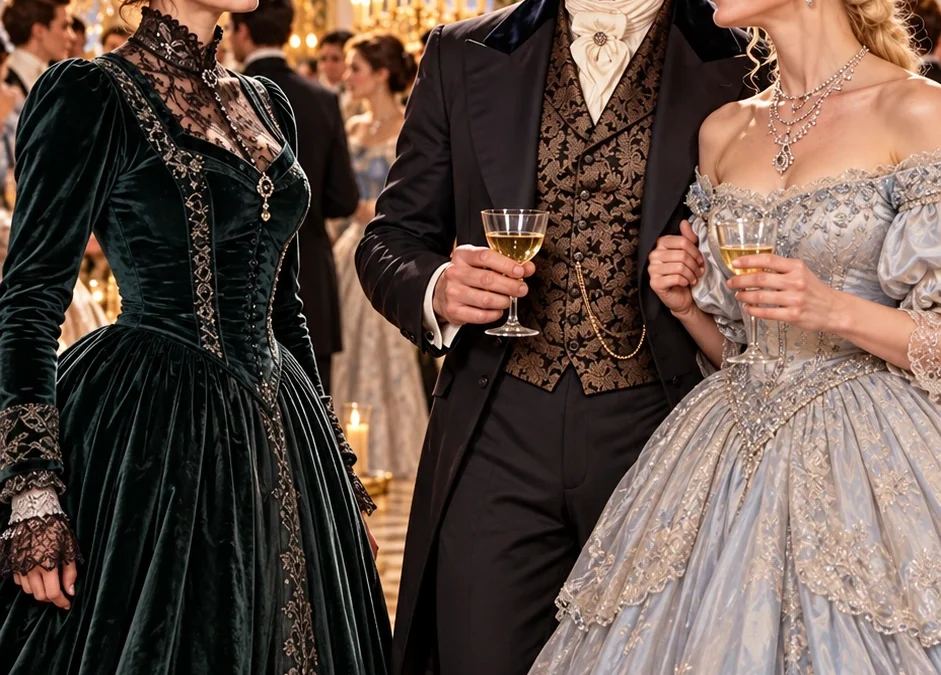
SHE SMILED WHEN HE SAID “YES, I’M HAVING AN AFFAIR. SO WHAT?” — HE HAD NO IDEA SHE HAD BEEN QUIETLY HOLDING EVERYTHING HE OWNED FOR 6 YEARS 😱❄️
Part 1
“Yes, I’m having an affair. So what?”
Adrien Blackwood, the Duke of Blackwood, smirked and lifted his glass in the middle of a winter conservatory clouded with cold. Beyond the glass, the snow fell thick and silent.
His duchess, Eleanor Ashford, stood across from him and said nothing.
She did not cry. She did not strike him. She did not even ask who the woman beside him was.
She only looked at him for a long moment and said, “Then I finally understand this marriage.”
Adrien laughed. He was certain she could do nothing.
He had no idea that by the very next morning, Eleanor would open every ledger in the house, summon a lawyer, and begin withdrawing from his life one piece at a time. ❄️
Winter had come early to Blackwood Manor that year.
By the second week of November, the snow had buried the long drive beneath a white so deep that the carriages arriving for the winter ball left trenches behind them like scars. Inside, a thousand candles trembled in crystal chandeliers. The finest families in the county laughed as if nothing in the world could ever be cold.
Everything was perfect. Eleanor had made certain of that.
She stood near the eastern windows in a gown of deep midnight blue, her dark hair pinned with a single sapphire comb, greeting every guest by name. To anyone watching, she was the Duchess of Blackwood at her finest: composed, gracious, untouchable.
But Eleanor was watching the doors.
She had been watching them for nearly a year. Ever since she first noticed how her husband’s attention drifted whenever a certain woman entered a room, she had told herself it was nothing.
Then the doors opened, and Lady Vivien Carlile stepped inside.
She wore silver, and the candlelight loved her for it. She was younger than Eleanor by perhaps five years, with pale gold hair and a laugh that carried across the ballroom like music meant for one listener alone.
Eleanor did not look at her for long. She looked at Adrien instead.
The Duke of Blackwood was a tall man, broad through the shoulders, with a face carved for portraits and a manner famous for its coldness. He barely smiled at his own wife. But when Vivien crossed the floor, something in his face loosened and warmed.
Eleanor felt the change the way one feels a draft from a door left open somewhere in a house. 💔
An hour later, Adrien slipped away from the ballroom. He did it quietly, the way a man does when he believes no one is counting his steps.
Eleanor counted them.
She watched him pass through the long gallery toward the winter conservatory at the far end of the east wing, the glass house his grandmother had built for orange trees that never quite survived the frost.
A few minutes later, Vivien followed.
Eleanor set down her glass. She walked the length of the gallery alone, her slippers silent on the marble.
The conservatory was freezing. Frost had crept up the inside of the glass in delicate ferns, and beyond it the snow fell steadily into the dark garden. Adrien stood near the stone fountain with a decanter in his hand. Vivien stood beside him.
They were not kissing. They were not touching.
They did not need to.
The space between them was too small, too comfortable, too familiar. It told Eleanor everything a confession could have told her.
Vivien saw her first. She did not step away.
Adrien turned slowly, and for a moment the three of them stood in perfect silence while the snow kept falling.
“How long?” Eleanor asked.
Adrien did not apologize. He poured himself a glass of wine, unhurried, as though she had asked about the weather.
“Are you having an affair with her?”
He looked at her over the rim of his glass. Then he smiled, a slow and careless smile, the kind he saved for men he had already beaten at cards.
“Yes, I’m having an affair. So what?”
The words did not echo. The glass walls swallowed them. But Eleanor felt them land somewhere deep beneath her ribs, like the first cut of a blade, so sharp that the pain had not yet arrived.
Adrien took a sip and went on in the patient tone of a man explaining arithmetic to a child.
“You have the title. You have this house. You have servants, jewels, a box at the opera, and the best seat at every table in England. You have everything a woman in your position could want. What you do not have, Eleanor, is the right to demand that I love you as well.”
Vivien lowered her eyes, though not quite far enough to hide her satisfaction.
Eleanor studied her husband the way she might study a contract she had finally read to the last page.
“Then I finally understand this marriage,” she said.
She turned and walked back through the frozen glass house without hurrying. Behind her, Adrien laughed softly, and the sound followed her into the gallery.
He believed the conversation was over. He believed he had won, the way he always won: by refusing to care more than the person standing in front of him.
Eleanor did not return to the ballroom. She stopped at the tall window at the end of the gallery and watched the snow drift over the dark lawns, over the stables and the orchards and the long road that led away to the rest of the world.
For six years she had held this estate together with her own two hands. For six years she had caught every falling thing before it hit the ground.
Standing there with the cold pressing against the glass, she allowed herself one question she had never dared to ask.
What would happen if I simply stopped saving him? 🥶
The ball ended a little after two in the morning. The servants put out the candles one by one until the great house sank into darkness.
Eleanor did not go to her bedroom. She went to her study, a narrow room on the second floor with one window, one desk, and shelves lined from floor to ceiling with leatherbound ledgers.
She lit a single lamp. She did not cry. She did not throw anything.
She pulled the first ledger from the shelf.
Very few people knew what was inside that room. Adrien certainly did not. He believed Blackwood ran the way rivers ran, by nature and gravity, because it always had.
In truth, none of it happened on its own.
Eleanor was the one who negotiated with the tenant farmers each spring. She settled the boundary dispute with the neighboring estate before it reached the courts. She kept the London banks close, writing to the directors herself. She corrected the contracts Adrien signed without reading. She paid the debts he forgot he owed.
For six years, she had been the machinery hidden beneath the floor of Blackwood, turning silently so the Duke above could stand still and admire the view.
But tonight, she turned the pages differently.
For the first time, she did not read them as a wife hunting for problems to solve before her husband discovered them. She read them as a woman who needed to know one simple thing:
What in all of this actually belongs to me?
By the time the windows turned gray with dawn, she had filled three pages with questions she had never thought to ask.
At eight o’clock, she wrote a short letter to a lawyer named Nathaniel Gray and sent a groom riding through the snow.
Three days later, Nathaniel returned to Blackwood Manor. He did not even take off his coat before he spread the first papers across the table.
“Your Grace,” he said quietly. “You should see this.”
Eleanor leaned over the documents, and her breath caught.
The eastern farms. The investment accounts. Even part of the capital that kept Blackwood afloat.
They had never belonged to Adrien at all.
They belonged to her. 😳
And that was only the first thing the ledgers were hiding.
👇 Want to know what Eleanor found on the very last page? Comment “PART 2” or leave any word and I’ll send it to you privately!
Part 2
And that was only the first thing the ledgers were hiding.
Eleanor did not plan revenge. She did not hire anyone to ruin her husband. She did not whisper Lady Vivien’s name into the ears of the county’s most dangerous gossips, though she could have done it with a single afternoon of calls.
She simply stopped.
For six years she had quietly done a hundred small things to keep Blackwood standing. Now she left them exactly where they lay.
The first week, she stopped guaranteeing Adrien’s credit. Without her name beside his, those London accounts were simply Adrien’s debts, and Adrien’s debts were considerable. Two merchants sent polite letters requesting payment. They were placed on the silver tray in the front hall.
No one opened them. Adrien was away at the races. 🐎
The second week, she stopped riding out to the tenant farms. Three families sent their lease contracts back unsigned.
The third week, a letter arrived from the Bank of Ellsworth and Crane. It concerned the renewal of a large loan secured against the Blackwood timber holdings, and its tone was careful, cool, and unmistakably uncertain.
In past years, she would have answered that same afternoon. This time, she read it twice, folded it along its original creases, and set it aside.
Outside, the snow climbed higher against the walls. Inside, something else began to cool, something that had nothing to do with the weather. The servants noticed first. The house had once had a heartbeat, and now it seemed to be listening for one.
Adrien returned on a gray afternoon in late November and went straight to his study. The fire was lit, but the desk was not clear.
A tall, untidy stack of letters sat in the center of it, the kind of pile he had not seen in six years.
He found Eleanor in the estate office with a cup of tea and a book of agricultural reports. She did not rise.
“Why haven’t you dealt with these?”
“Because they aren’t my accounts.”
“You always handle these things.”
She closed the book and looked up. Her voice was calm, almost gentle.
“I always chose to handle these things.”
Adrien opened his mouth, then closed it. Duty and choice were not the same thing. He had never once imagined that what his wife did for him was something she might choose not to do. 😶
That evening, three pieces of news reached him within the same hour. The bank was reconsidering the timber loan. The eastern tenants refused to extend their leases. And Arthur Fenwick, the wool merchant whose contract had kept the northern farms profitable for a decade, was withdrawing.
For the first time in his life, the Duke of Blackwood felt the ground shift beneath his feet.
By morning, his fear had hardened into anger. He carried it up the stairs like a weapon and pushed open her study door without knocking.
He threw the letters down so hard that one slid off the desk.
“What have you done?”
“Nothing.”
“Nothing?” His voice cracked against the quiet. “Ten years, Eleanor! And Fenwick ends it with a note! And you sit here telling me you have done nothing!”
Eleanor rose slowly from her chair.
“Yes,” she said. “And that is not nothing, is it?”
She walked to the shelves and touched the spines of the ledgers as though greeting old friends.
“Six years of Fenwick’s contract. I renegotiated it twice. Once when he wanted to leave for Yorkshire. And once when you insulted his son at a shooting party. Six years of riding to the eastern farms in December. Six years of debts paid before the creditors knocked.”
She turned to face him.
“Do you remember what you told Lord Hensley at dinner, when he asked how you managed such a vast estate with so little effort?”
Adrien’s face changed. He remembered.
“You said,” Eleanor said softly, “the estate runs itself.”
She gathered the scattered letters and squared their edges with her fingertips.
“You called everything I did nothing. Now you are discovering what nothing actually looks like.” 🥀
For one moment, shame flickered across his face. But a lifetime of habit does not break in a single morning.
“You’ve made your point,” he said coldly. “When you’ve finished sulking, I expect these matters handled.”
He left. Eleanor listened to his footsteps fade, then picked up her pen and returned to a letter she had been writing to Nathaniel Gray about the deeds to the eastern farms.
Her hand did not shake.
Adrien believed she would come back. He believed this was a season of coldness that would thaw the way every winter thawed.
He was wrong. And then December arrived in a storm.
For three days the wind drove snow against the windows. On the fourth day, the sky cleared to a hard, brilliant blue, and a carriage came up the long drive bearing Lady Vivien Carlile.
Adrien announced at breakfast that she would be staying for a week, to pay her respects to his widowed aunt. Lady Margaret, who had never met Vivien in her life, looked up from her plate in mild astonishment and said nothing.
Eleanor did not make a scene. She ordered the blue guest room prepared and greeted Vivien in the front hall with perfect courtesy.
On the third evening, there was a formal dinner. Vivien came down the staircase last, so that every head would turn.
Tonight, they turned for a different reason.
Around her pale throat lay a necklace of old diamonds, three strands set in white gold around a single teardrop stone.
Eleanor knew it the moment she saw it.
The Blackwood Snow. The most sacred heirloom of the family, worn for over two centuries by the Duchess of Blackwood and no one else. 💎
Across the table, Adrien studied his soup with great concentration.
Vivien looked directly at Eleanor and smiled, the smile of a woman who believes she has just won.
The whole room held its breath. Eleanor met Vivien’s gaze for one long moment.
Then she lifted her fork and went on eating.
She finished every course, folded her napkin, and rose. “Please excuse me. I have letters to write.”
That night, she wrote four short lines and sent them to Havford at first light:
Nathaniel, it is time. Tuesday. Bring the trustees.
The next afternoon, Adrien found her in the library. He had prepared his words like a speech for the House of Lords. He spoke of the title, of history, of her place in society.
Then he stepped closer, his voice softening.
“You won’t leave me, Eleanor. We both know everything you are is here.”
She turned to face him.
“You’re right,” she said. “I won’t leave what I’ve built.”
Relief flooded his face. He smiled, and began to say how glad he was.
Eleanor spoke over him, quietly.
“I’m going to take it with me.”
Adrien’s smile froze.
She walked to the table, opened a leather folder, and said the words that would end his world.
“Mr. Gray has spent the last month examining my documents. The eastern farms are mine. The northern pasture leases are mine. Nearly a third of the capital that has kept this estate solvent since our marriage came from my accounts.”
Adrien stared at the folder as though it were a snake.
Something new entered his face. Something she had never seen there in six years of marriage.
It was fear. 😨
And on Tuesday morning, three carriages rolled up the snowy drive…
👇 What did the trustees reveal that made the Duke fall silent? LIKE or COMMENT “REVEAL” to unlock Part 3, which will be posted after enough comments!
Part 3
Tuesday dawned white and silent.
At ten o’clock, the first carriage arrived. Nathaniel Gray stepped down with a leather case under his arm. Behind him came a second carriage bearing the trustees of Eleanor’s inheritance, Mr. Edmund Hail and Mr. Robert Witkim, both elderly, both precise, both dressed in black.
A third carriage followed. It carried Samuel Price, the solicitor who had served the Blackwood family for thirty years.
The servants carried the long oak table into the great hall and set it beneath the tall windows. Nathaniel laid out the documents in careful rows: deeds, settlements, bank records, trust papers.
Samuel Price sat at the far end, his face growing grayer with every page.
Eleanor stood by the fireplace in a dark gray traveling dress, hands folded, waiting.
Adrien came down the main staircase at half past ten. Halfway down, he stopped. He looked at the table. He looked at the men in black. He looked at Samuel Price, who would not meet his eyes.
Finally, he looked at his wife.
“What is this?”
“I told you,” Eleanor said. “We’re about to find out.”
He descended the rest of the stairs slowly, like a man walking into cold water. 🥶
Nathaniel presented each document in a calm, level voice. The marriage settlement, with clauses protecting Eleanor’s separate property. Clauses Adrien had signed on the morning of his wedding without reading a single line.
The trust established by her father, never touched by the estate.
Wintermir Hall and its two thousand acres, left to her by her mother.
The eastern farms. The northern leases. The London investment accounts.
Then the ledgers. Page after page of payments flowing out of Eleanor’s accounts and into Blackwood’s, year after year. Covering shortfalls. Settling debts. Paying the gambling losses Adrien had run up in his first winter of marriage and promptly forgotten.
Adrien sat down heavily in the nearest chair.
He did not speak for a long time. The truth arranged itself before him piece by piece, and it was not the truth he had lived inside for six years.
He had believed his wife lived on his generosity.
The documents told a different story. He had been living on hers.
The house he called his own had been kept standing by her money, her labor, and her silence.
At last he looked up at Samuel Price, and his voice was hoarse.
“Was I never told any of this?”
The old solicitor removed his spectacles and wiped them slowly.
“With respect, Your Grace,” he said, “you never asked.”
The words struck harder than any accusation could have.
Adrien looked down at the ledgers again, and now he saw what he had refused to see before. Eleanor had paid his debts. Eleanor had protected his name while he did everything to tarnish it. Eleanor had poured her own fortune into his estate so quietly that he had mistaken her generosity for the natural order of things.
She had not destroyed him. She had not even tried.
She had simply stepped out of the machine she had been running, and the machine was grinding to a halt without her. 💔
One by one, Eleanor signed the papers. Her signature was clean and steady, the same signature that had appeared on hundreds of letters Adrien had never read.
When it was done, he rose. His voice was quieter than anyone in the room had ever heard it.
“You’re leaving today?”
“Yes.”
“Where will you go?”
“Wintermir Hall,” she said. “My mother’s house.”
She pulled on her gloves, nodded once to the trustees, and walked to the great front doors. A footman opened them. Cold air poured into the hall.
Eleanor stepped out onto the snowy steps and climbed into the waiting carriage without looking back.
No one followed her.
Wintermir Hall lay forty miles north of Blackwood, at the end of a long valley where the hills folded close together and the wind came down off the moors with nothing to stop it.
Her mother had grown up there. After her death, the house had been closed and left in the care of an aging caretaker who did his best and could not do much.
When Eleanor’s carriage came around the last bend late that afternoon, the house rose out of the snow like something half-forgotten. Snow lay heavy on a slate roof where several tiles had slipped. Snow drifted against the doors of the empty stables.
The caretaker, an old man named Walter Dunn, met her at the door with a lantern and an apology. Half the chimneys did not draw. The east wing had not been opened in a decade.
Eleanor listened to all of it, thanked him, and asked for a fire in the kitchen and a cup of tea.
She was not afraid. She had spent six years running an estate three times this size with no one’s thanks and no one’s help.
Wintermir did not frighten her. It only needed attention, and attention was the one thing she had always known how to give. 🏚️
She began the next morning with practical things. She had the drainage ditches surveyed and found them choked with years of silt. She went through the accounts and found rents that had not been reviewed in fifteen years. She rode out on a borrowed pony through the snow and visited the laborers’ cottages one by one, noting which roofs sagged, which chimneys smoked, and which families had too little firewood.
On the fourth day, the first tenant came to the house.
Thomas Marsh was a broad, weathered man of about fifty-five, with hands like tree roots. He stood in the kitchen doorway turning his cap in his fingers and explained his troubles slowly. His lower fields flooded every spring because the old ditches had never been cleared. His rent had been raised twice without explanation. And a widow on the next farm, Mrs. Agnes Cole, had three children and a roof that had been leaking since October.
No one had come to fix it.
Eleanor listened without interrupting. She did not make promises. She asked exactly three questions: How many acres flooded each spring? What had his rent been before the first increase? And how many days of work would it take to repair Mrs. Cole’s roof if the slate were provided?
She wrote down his answers and told him she would send word within the week.
Thomas walked home through the snow, and at his gate he stopped to speak to his neighbor over the wall.
“She listens,” he said, sounding faintly amazed. “She actually listens.”
News always travels in a valley in winter, from kitchen to kitchen, from the smithy to the chapel, from one frozen gate to the next. Within a fortnight, twelve families had come to Wintermir Hall. Eleanor received each of them in the warm kitchen, offered tea, and heard them out.
She had the ditches cleared before the thaw. She lowered every rent that had been raised unfairly. She sent slate and two carpenters to Mrs. Cole’s cottage, and the roof was finished three days before Christmas. 🎄
Slowly, room by room and field by field, Wintermir began to wake.
There was no Adrien to take the credit. There was no title to hide behind and no great name to open doors. There was only Eleanor, her notebook, her questions, and her two hands.
One evening in late December, she stood at the window of her mother’s old sitting room and watched the lamps glowing in the cottages across the valley, the cottages whose roofs no longer leaked.
She realized something she had never let herself believe.
I never needed Blackwood to prove I was capable.
The next morning, Walter Dunn came up from the village with the post. Among the bills and seed catalogs lay a single heavy envelope, cream-colored, sealed in dark red wax.
Eleanor knew the crest before she saw the handwriting.
The first letter spoke of honor and duty and the talk her absence was causing in the county. It suggested that she had made her point and that it was time to come home.
She read it once and placed it in a drawer.
A second letter came a week later. She did not answer that one either.
The third letter was different. It arrived in the middle of January, during a hard frost that turned the valley to iron.
Adrien did not mention honor. He wrote that Blackwood was struggling. He wrote that Vivien had left before Christmas, quietly taking the first carriage to London after the trustees’ visit, and that he had not heard from her since.
He wrote that he had begun to manage the estate himself, because there was no one else to do it.
He wrote that he did not know how she had ever done it all. 📜
The letters that followed came every week, and each one was a little more honest than the last. He wrote about riding out to the eastern farms and sitting in a tenant’s kitchen for the first time in his life, being shouted at by a farmer whose fields had flooded. He wrote about traveling to London to meet the directors of Ellsworth and Crane in person, and being made to wait in an outer office for an hour like any other petitioner.
He wrote about reading his own correspondence, every bill and complaint and request, and discovering how many had been answered in his name for six years by a woman he had never thanked.
He wrote about facing consequences he could no longer pass to someone else.
In February, Nathaniel Gray came to Wintermir on business and stayed for supper. Over the meal, he mentioned the news from Blackwood as though it were of no particular importance.
Adrien had sold a portion of the western woodland to clear his debts. He had hired a new estate manager, a widow named Mrs. Clara Bennett, who had run her late husband’s lands in Derbyshire for fifteen years and was said to be formidable. And he had begun, of all things, to ask other people for their opinions before making decisions.
Eleanor listened. She did not smile. She did not feel triumph.
She set down her fork and said only, “He’s changing.”
Nathaniel watched her across the table and said nothing more.
Adrien came to Wintermir himself at the beginning of March. He rode alone, without a groom, and arrived with snow on his hat and mud on his boots.
Walter Dunn showed him into the small parlor where Eleanor was going over the spring planting accounts. She did not rise. Adrien did not sit until she gestured to a chair.
He looked older, thinner. There were lines around his eyes that had not been there in November.
For a long moment, neither of them spoke. The fire popped in the grate. Outside, water dripped steadily from the eaves, the first sign of the thaw.
He did not ask her to come back. He did not blame her, or Vivien, or the bank, or the weather. He looked down at his hands and spoke slowly, as though each word cost him something.
“I know that for six years I treated you like a piece of furniture. Something useful. Something that would always be in the same place when I came home.”
Eleanor said nothing.
“I used your loyalty as a guarantee. I believed that whatever I did, however I behaved, you would still be there holding everything together. I counted on it. And I never once asked what it cost you.”
He raised his eyes to hers.
“I’m not asking you to forgive me. I don’t think I have the right. I only want to know one thing.” His voice dropped. “Are we finished?”
Eleanor looked at him for a long time.
The man in front of her was not the man who had smirked at her in the conservatory. But he was not yet a man she could trust, either.
“I don’t know,” she said at last.
It was the truest answer she had. 🕯️
Adrien nodded slowly, as if he had expected nothing more. She did not agree to return to Blackwood. But before he left, she told him that if he wished, he could come to Wintermir for luncheon on Thursdays.
He accepted at once.
At the door, she added one condition.
“Don’t be late. I don’t stop my work for people who are late.”
The following Thursday, Adrien arrived ten minutes early. He waited in the cold courtyard until the clock struck the hour.
It was the first time in his life he had ever done such a thing.
Weeks passed, and then months. The Thursday luncheons continued, and slowly, almost without either of them noticing, something changed.
There was no performance at that table. No titles, no servants hovering, no audience to impress. No power to win or lose. There were only two people who had once been married and were learning, for the first time, how to actually speak to one another.
Adrien asked questions now. He listened to the answers. When he disagreed, he said so plainly. And when Eleanor disagreed with him, he did not dismiss her.
Sometimes he was right. More often, he admitted she was.
He changed in ways that could be seen. Mrs. Bennett reported that the Duke now read every contract before signing it. The eastern tenants spoke of him visiting their farms. And Arthur Fenwick, after a long meeting in which Adrien apologized for a slight committed years earlier, renewed his wool contract without being asked.
None of it was dramatic. All of it was real.
Meanwhile, Eleanor kept Wintermir. She bought the neighboring farm when its owner retired. By summer, Wintermir Hall had become one of the most productive estates in the north of England, and its tenants were the best housed in the county. 🌾
In the autumn, a letter arrived inviting her to speak at the annual meeting of the Regional Agricultural Society in York.
For the first time in her life, she had been invited somewhere not as the Duchess of Blackwood, not as anyone’s wife, but as herself. A woman whose work had been noticed on its own merits.
She stood at the front of a crowded hall and spoke for half an hour about drainage, fair rents, and the value of listening to the people who work the land.
Then the applause began, and it went on for a long time.
Nathaniel Gray was in the audience that day. Over the long months, he had become something more than her lawyer. He was a trusted friend, a steady voice, a man who had never once asked her to be smaller than she was.
On the walk back to the inn through the cold streets of York, he asked about the Thursday luncheons. He did not ask her to choose. He only said, gently:
“Do you think perhaps you’re waiting for a certainty that doesn’t exist?”
Eleanor walked in silence for a while. She thought about the conservatory, and the snow, and the smile on Adrien’s face when he had said so what.
And at last she understood.
Certainty had never protected her. She had been certain of her marriage once, and that certainty had not saved her from betrayal.
What had saved her was something else entirely. The truth had saved her the moment she stopped pretending not to see it. Her own competence had saved her, the skills she had spent six years giving away. Her right to choose had saved her. The simple discovery that she could say no.
None of those things required certainty. They only required her to stand where she was and trust herself. 🤍
The next Thursday, Adrien arrived early, as he always did now. They ate in the small parlor at Wintermir with the window cracked open to the late winter air.
When the plates had been cleared, Eleanor folded her hands on the table and looked at him.
“I think I could try,” she said.
Adrien went very still. He did not reach for her. He did not make speeches. He only asked, quietly:
“On what terms?”
She answered with a single word.
“Equal.”
She let it sit between them for a moment. Then she explained.
“Not a duchess who managed everything while the Duke took the credit. Not a wife who worked in silence while her husband accepted the praise. Equal. In every decision, in every conversation, in every room we enter together. In every disagreement spoken aloud and settled honestly. No pretended silences. No managing each other from behind closed doors. No treating sacrifice as if it were simply a duty owed.”
Adrien listened to every word. When she finished, he did not hesitate.
“Yes,” he said. “Equal.”
There was no dramatic embrace. There were no grand romantic vows. Adrien simply reached across the table and laid his hand palm up beside hers.
And after a moment, Eleanor placed her hand in his.
It was a very small beginning. But it was an honest one, and neither of them had ever had an honest beginning before. ❄️➡️🌱
Outside, the last of the winter snow was melting. Water ran in bright threads down the slate roof of Wintermir Hall, gathered in the gutters, and spilled into the newly cleared ditches below the south fields. Along the garden wall, the first green shoots were pushing up through the softening earth.
Spring was coming.
Eleanor stood at the window and looked out at the house her mother had loved, the house that had been abandoned and forgotten for so many years, just like her.
And now it was alive again.
She had not won because she made Adrien lose everything. She had never wanted that. She had won because she finally understood the truth about herself.
She had never been the woman standing quietly behind a powerful man.
She had been the one who made his entire world turn.
And the moment she stopped asking permission to exist, her own life could finally begin. ✨
This story is entirely fictional and created for entertainment purposes only. It does not represent any organization or individual, nor does it encourage inappropriate behavior. The content was generated with AI assistance.








