SHE VANISHED ON A COLORADO MOUNTAIN—5 YEARS LATER, A BAREFOOT WOMAN WALKED INTO A HOSPITAL WITH SCARS ON BOTH WRISTS… AND THE SECRET BEHIND HER “FATAL FALL” LED TO A MARRIED COUPLE HIDING SOMETHING HORRIFYING!
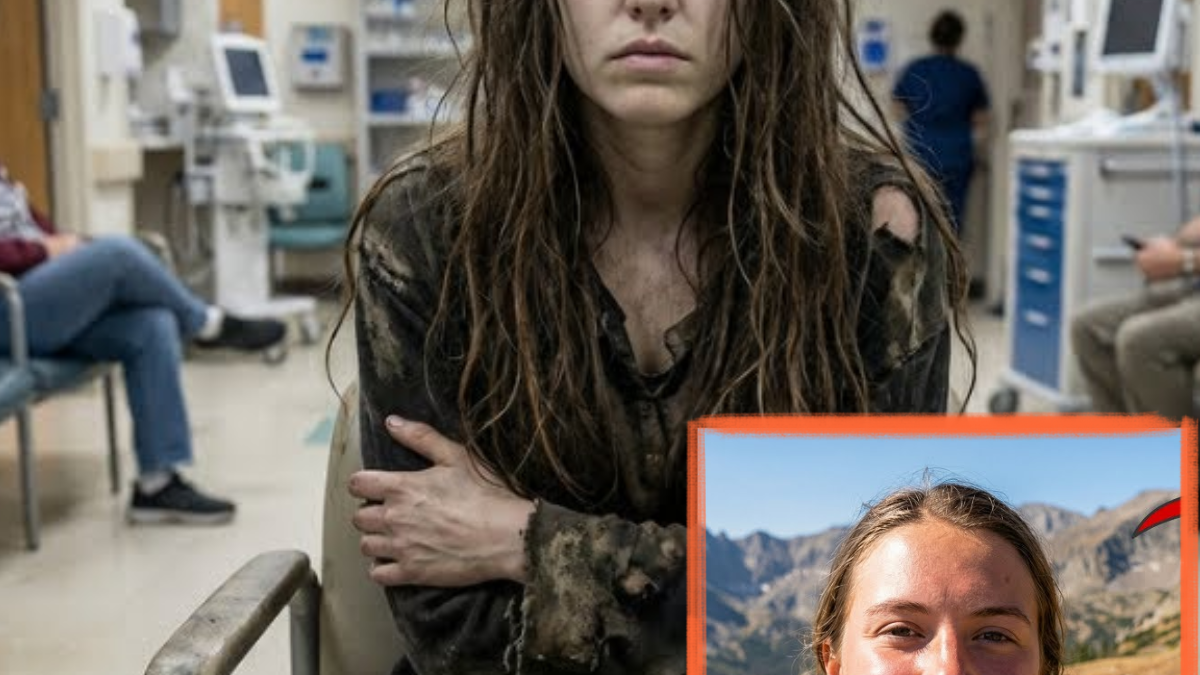
SHE VANISHED ON A COLORADO MOUNTAIN—5 YEARS LATER, A BAREFOOT WOMAN WALKED INTO A HOSPITAL WITH SCARS ON BOTH WRISTS… AND THE SECRET BEHIND HER “FATAL FALL” LED TO A MARRIED COUPLE HIDING SOMETHING HORRIFYING! 😱
PART 1 — THE GIRL WHO DISAPPEARED INTO THE MOUNTAINS 🕯️
On July 14, 2002, a 21-year-old woman disappeared while hiking through the Colorado Rockies. Seven days later, rescuers found a torn piece of her backpack hanging from a cliff above a deadly ravine.
Everyone believed she had fallen to her death.
But five years later, a barefoot woman stumbled into a hospital nearly 200 miles away, carrying scars that no mountain accident could explain.
Her name was Helen Humes.
And what happened to her during those missing years would expose a nightmare more disturbing than anyone could have imagined.
That summer morning, Helen arrived at the Maroon Bells trailhead near Aspen at precisely 6:47 a.m.
The mountains glowed beneath the rising sun.
Pine trees swayed gently in the cool breeze, and the distant peaks reflected golden light.
For most visitors, the landscape was breathtaking.
For Helen, it was home.
She had been hiking since she was twelve, when her father first taught her how to navigate mountain trails.
Now an environmental science graduate student at the University of Colorado, she spent much of her free time studying the wilderness she loved.
She was intelligent, independent, and exceptionally careful.
Before leaving her silver Subaru Outback, Helen checked her equipment.
Four liters of water.
Food.
First-aid supplies.
A flashlight.
Extra clothing.
A map, compass, and GPS device.
Her mother had insisted on the GPS.
Helen had laughed at the concern, but she carried it anyway.
At 7:02 a.m., she signed the trail register.
Destination: Crater Lake.
Expected return: 4:00 p.m.
Hiker: Alone.
Fifteen minutes later, she disappeared into the trees.
For the first two hours, everything went according to plan.
Helen photographed wildflowers, crossed narrow mountain paths, and climbed toward the rocky slopes beneath the famous twin peaks.
At 9:30 a.m., she reached higher terrain.
The air was thinner.
The ground became increasingly dangerous.
Loose stones shifted beneath her boots, and steep drops opened beside the trail.
But Helen knew the route.
She had completed it before.
At 10:47 a.m., she stopped to send a message to her younger brother, Charles.
They had a tradition.
Whenever Helen hiked alone, she sent him updates.
Charles replied with ridiculous jokes.
This time, Helen wrote:
“The altitude is getting to me, but the view is worth it. Signal’s cutting out.”
Twenty minutes later, Charles received the message.
He responded with a joke about a mountain goat falling from a cliff.
“Don’t be that goat.”
Helen never replied.
At approximately 11:00 a.m., her phone lost reception.
That was normal in the mountains.
What happened afterward was not.
By 4:00 p.m., Helen had not returned.
At sunset, her Subaru remained in the parking lot.
At 8:30 p.m., rangers locked the gates.
The car was still there.
Charles began calling at 9:15.
Voicemail.
He tried again.
Nothing.
By 10:00 p.m., he was calling his parents.
His voice trembled.
“Something’s wrong. Helen always checks in.”
By midnight, search-and-rescue teams had been notified.
The following morning, the mountains were filled with rescuers.
Thirty-seven volunteers began searching.
Tracking dogs followed Helen’s scent through aspen groves and rocky trails.
The dogs climbed higher.
Then, at approximately 12,400 feet, the trail ended abruptly.
The animals circled an exposed section of rock.
They whined.
They searched again.
Nothing.
It was as though Helen had vanished into the air.
Helicopters arrived.
Experienced climbers searched dangerous ledges.
Divers entered the freezing waters of Crater Lake.
Her parents traveled from Denver and refused to leave the command post.
Helen’s mother stood beside the Subaru, staring at the driver’s seat.
Her father studied maps until his eyes burned.
Charles arrived on the third day.
He kept reading his last unanswered message.
“Don’t be that goat.”
The joke that had once seemed harmless now felt unbearable.
On the fifth day, a violent storm swept across the mountains.
Rain hammered the cliffs.
Winds reached sixty miles per hour.
Search operations were temporarily suspended.
Helen’s mother sat beneath a leaking tarp, refusing to go home.
“She’s still out there,” she whispered.
But the mountains offered no answer.
Then, on the seventh day, a volunteer climber named Thomas Ainslie spotted something blue fifteen feet below a dangerous cliff.
Rescuers carefully descended.
Wedged between two rocks was a torn strap from Helen’s backpack.
The fabric was shredded.
The remaining material carried a manufacturer’s identification number matching her equipment.
Investigators believed the explanation was obvious.
Helen had slipped.
Her backpack had caught on the rocks.
The strap had torn as she plunged toward the lake.
Her body had disappeared into the freezing water below.
On July 22, 2002, the search was suspended.
In September, approximately 300 people attended her memorial service.
Charles read a poem.
Her mother cried throughout the ceremony.
In 2004, Helen was declared legally dead.
Her parents eventually sold their family home because they could no longer bear looking at her empty bedroom.
Charles moved to Seattle.
The years passed.
The photographs faded.
And the world slowly forgot Helen Humes.
But Helen had never fallen into Crater Lake.
On August 23, 2007, at 7:34 p.m., the automatic doors of St. Mary’s Hospital in Grand Junction slid open.
A young woman stood in the entrance.
She was barefoot.
Her clothes were filthy and torn.
Her hair hung in thick, tangled strands past her waist.
Her body was frighteningly thin.
Triage nurse Linda Patterson approached.
“Ma’am? Do you need help?”
The woman stared at her.
Her lips moved.
No sound emerged.
Then her knees buckled.
Patterson caught her before she struck the floor.
Doctors rushed her into an examination room.
What they discovered was horrifying.
Old restraint scars encircled both wrists.
Similar marks surrounded her ankles.
Small, circular burns covered her forearms.
Her body showed evidence of prolonged starvation.
Dr. Eleanor Bradshaw examined the injuries.
Her expression changed.
These were not wounds caused by falling rocks or surviving in the wilderness.
They were signs of deliberate, repeated abuse.
“Call the police,” she ordered.
The woman had no identification.
No phone.
No wallet.
Not even shoes.
Detective James Rourke ordered her fingerprints checked.
At 2:34 a.m. on August 24, the results arrived.
He opened the report.
Then he stopped breathing for a moment.
The fingerprints belonged to Helen Renee Humes.
The woman officially declared dead three years earlier.
But the most disturbing discovery was still ahead.
When Helen finally spoke, her first words revealed that she had not been lost in the mountains at all—someone had been controlling even her right to drink water.
😨 What they discovered next was even more terrifying… Find PART 2 in the comments, or leave ANY WORD below to receive it privately! 👇
PART 2 — THE PRISON NOBODY KNEW EXISTED 😱
When Helen finally spoke, her first words revealed that she had not been lost in the mountains at all—someone had been controlling even her right to drink water.
For three days, Helen barely spoke.
She flinched whenever a man entered her room.
She slept curled into a protective position.
Even the sound of a door closing made her tremble.
Her family arrived in disbelief.
Her mother, Eleanor, stared at the woman in the hospital bed.
The face was thinner.
The hair was unrecognizable.
But the eyes belonged to her daughter.
“Helen?”
The young woman looked up.
Eleanor began crying.
Five years earlier, she had buried her daughter’s memory.
Now Helen was alive.
Yet something inside her seemed terribly broken.
A therapist named Dr. Thornton began working with Helen.
During one session, Helen stared at a cup of water.
Her lips moved.
“May I have some water?”
Thornton gently explained that she could drink whenever she wanted.
Helen did not move.
She continued waiting.
Only after receiving explicit permission did she reach for the cup.
The therapist understood immediately.
Helen had been trained to fear making even the smallest decision.
Meanwhile, Detective Rourke began reconstructing her escape.
Hospital security footage showed Helen emerging from scrubland near the medical complex.
Investigators traced her route backward.
She appeared to have walked approximately eighteen miles.
Barefoot.
Injured.
Desperate.
The trail led toward an isolated farming area near the Uncompahgre Plateau.
One property attracted particular attention.
A remote farmhouse owned by Joseph and Doris Clapton.
The couple appeared ordinary.
They grew organic vegetables.
They rarely entertained visitors.
Neighbors described them as quiet and private.
But their property contained a large barn.
Its doors remained closed.
And something about the place troubled investigators.
Surveillance revealed unusual routines.
The couple seemed obsessively protective of the barn.
Rourke requested a search warrant.
It was granted on August 30, 2007.
Before dawn the next morning, twelve officers traveled toward the farmhouse.
Three unmarked vehicles moved through the darkness.
At 5:17 a.m., the teams approached.
Joseph opened the front door holding a cup of coffee.
His expression hardened when he saw the officers.
Doris was already dressed in the kitchen.
A pot of oatmeal simmered on the stove.
Neither appeared surprised enough.
While officers secured the house, Rourke approached the barn.
The building smelled of hay, damp wood, and something stale beneath the floorboards.
Investigators searched its interior.
Then they discovered an entrance leading underground.
Rourke descended.
His flashlight illuminated concrete walls.
A narrow sleeping area.
A metal bowl.
And chains fixed to the wall.
The air was cold.
The space was almost completely isolated from the outside world.
He looked at the restraints.
Then at the marks where metal had repeatedly scraped against the concrete.
Someone had lived here.
Not for days.
For years.
A further search revealed a concealed office containing journals, photographs, and recordings.
The folders carried disturbing labels.
“Subject Progress.”
“Methodology.”
“Reclamation Protocols.”
Rourke opened one of the journals.
The entries dated back to 2002.
One described a young woman hiking alone near Maroon Bells.
Another recorded her habits.
Her arrival times.
Her favorite routes.
Her willingness to help strangers.
Then he reached an entry dated July 14, 2002.
It described an operation planned for that very day.
Rourke turned the page.
The final line revealed that Helen’s disappearance had been planned weeks in advance—and that the people who imprisoned her believed they were performing an act of salvation.
😱 The truth behind this disappearance is more horrifying than anyone imagined… LIKE or COMMENT ‘REVEAL’ to see PART 3! The final part will be posted after enough comments! 👇
PART 3 — THE TERRIFYING TRUTH BEHIND THE FIVE MISSING YEARS 💔
Detective James Rourke stood inside the hidden office beneath the Clapton farmhouse, staring at a handwritten journal.
The entry was dated July 14, 2002.
The same morning Helen Humes had disappeared.
Its final sentence described the beginning of something called Operation Reclamation.
Rourke read the words again.
The couple had not kidnapped Helen for money.
They had not demanded a ransom.
They had not even attempted to conceal their beliefs from their own private records.
They believed they were saving her.
And that made their actions even more horrifying.
THE COUPLE WHO HUNTED FOR THE PERFECT VICTIM
Joseph and Doris Clapton had spent months searching for a particular kind of young woman.
Someone independent.
Someone confident.
Someone who traveled alone.
Someone whose disappearance could easily be blamed on the wilderness.
Their journals revealed that they had visited numerous hiking locations throughout Colorado, quietly observing women who ventured into remote areas.
On May 22, 2002, they noticed Helen Humes at the Maroon Bells trailhead.
She was young, athletic, and experienced.
But what attracted their attention was something else.
Helen had stopped to help an older hiker struggling with his backpack.
The Claptons interpreted her kindness as a weakness.
In Doris’s journal, Helen was described as compassionate and trusting.
Those qualities made her the perfect target.
Over the following weeks, the couple monitored her movements.
They observed her preferred routes.
They recorded when she arrived.
They learned that she enjoyed hiking alone early in the morning.
A concealed trail camera captured her during subsequent visits.
By June, Joseph had prepared an underground cellar beneath their barn.
The walls were reinforced.
The room was soundproofed.
Heavy restraints were installed.
Everything was ready.
They were simply waiting for Helen to return.
And on July 14, 2002, she did.
THE LAST MOMENTS OF FREEDOM
That morning, Helen followed her usual routine.
She parked her Subaru.
Checked her equipment.
Signed the trail register.
And began hiking.
She had no idea that two people had been studying her movements for weeks.
After sending her final message to Charles, she continued along the mountain trail.
Later, while making her way through a dangerous section near Crater Lake, she encountered a distressed woman.
It was Doris Clapton.
Doris claimed that her husband had fallen and desperately needed assistance.
Helen immediately stopped.
“Where is he?” she asked.
Doris pointed toward a nearby section of the trail.
Helen followed.
She had been raised to help people in danger.
She believed someone might be injured.
But as she approached the place Doris indicated, another figure moved behind her.
Joseph Clapton.
Helen felt something pressed against her face.
A cloth carrying a powerful chemical odor.
She struggled.
Her arms moved desperately.
The mountains blurred.
Then everything disappeared.
When she regained consciousness, she was no longer in the wilderness.
She was lying on a cold concrete floor.
Her wrists were restrained.
The room was dark.
She called for help.
No one answered.
She screamed until her throat hurt.
Still, nobody came.
Eventually, footsteps sounded beyond a heavy door.
A lock turned.
And Joseph Clapton entered.
Helen begged to be released.
Joseph watched her calmly.
“You’ve been brought here for a reason,” he told her.
She did not understand.
She asked for her parents.
She asked for Charles.
She promised she would not tell anyone if they allowed her to leave.
Joseph refused.
He believed the young woman standing before him had been corrupted by modern society.
He believed her independence was something that needed to be destroyed.
And he intended to remake her according to his own twisted beliefs.
THE LIE THAT CONVINCED EVERYONE SHE WAS DEAD
While Helen lay imprisoned beneath the Clapton farm, investigators searched the mountains for her body.
The torn backpack strap discovered near Crater Lake became the most important piece of evidence.
Police believed it proved she had fallen.
But the truth was different.
The evidence had been planted to support the appearance of a fatal accident.
The couple understood the mountain’s dangers.
They knew that a torn piece of hiking equipment discovered beside a steep cliff would lead rescuers toward a tragic explanation.
The location was convincing.
The damage was convincing.
And because Helen’s body could not be found, the authorities assumed she had disappeared into the lake.
No one suspected that she had been transported away from the mountains.
No one searched the remote farmhouse.
No one imagined that a young woman presumed dead was being held approximately forty-three miles from the area where she vanished.
The wilderness had not killed Helen.
It had simply provided the perfect cover for the people who abducted her.
THE RULES OF THE UNDERGROUND PRISON
Joseph called his project Operation Reclamation.
His written manifesto described a world he believed had become morally corrupted.
He condemned modern independence, education, and women’s freedom to choose their own lives.
He insisted that certain people needed to be isolated and taught obedience.
Helen became the subject of that ideology.
Her captors established rules controlling nearly every aspect of her existence.
She could not speak without permission.
She could not eat without permission.
She could not sleep without permission.
Even drinking water required approval.
Breaking a rule resulted in punishment.
Sometimes food was withheld.
Sometimes she was left alone in complete darkness.
Sometimes she endured physical abuse.
The circular scars discovered on her arms were evidence of repeated deliberate injuries.
The marks around her wrists and ankles came from prolonged restraint.
The thin scars across her back reflected other punishments.
Her captors recorded these events as though they were conducting an experiment.
Doris maintained journals describing Helen’s behavior.
Joseph documented what he considered progress.
They watched for signs of resistance.
Then they tried to eliminate them.
At first, Helen fought.
She shouted.
She demanded freedom.
She refused to accept their rules.
But every act of resistance brought consequences.
Weeks became months.
Months became years.
And slowly, the young woman who once climbed mountains without fear began to change.
She stopped speaking unless spoken to.
She waited for permission before moving.
She learned to interpret footsteps as warnings.
She learned that silence could be safer than protest.
Eventually, the rules became so deeply ingrained that she struggled to imagine life without them.
The most devastating part was that her captors began interpreting her fear as obedience.
And her obedience as proof that their experiment was succeeding.
THE WOMAN WHO PRETENDED TO BE KIND
Doris Clapton played an especially disturbing role.
To neighbors, she appeared gentle.
She tended her vegetables.
She spoke politely.
She lived quietly with her husband.
But the evidence beneath the barn revealed a different woman.
Doris delivered Helen’s food.
She enforced rules.
She documented punishments.
And she helped maintain the isolation that kept Helen hidden for five years.
Sometimes, Doris spoke to Helen in a soft voice.
She told her that obedience would make life easier.
She described the captivity as a form of protection.
But Helen was not being protected.
She was being systematically deprived of freedom.
The contrast between Doris’s public appearance and her private actions became one of the most chilling discoveries in the investigation.
She had not merely watched Joseph’s cruelty.
She had participated in it.
THE MISTAKE THAT SAVED HELEN’S LIFE
By August 2007, Helen had spent more than five years inside the cellar.
Her physical condition had deteriorated severely.
Her body was dangerously underweight.
Her hair had grown long and tangled.
She had become accustomed to the darkness and confinement.
But somewhere beneath the fear, her desire to survive remained.
On August 22, 2007, Joseph left the property on a supply trip to Montrose.
Doris remained behind.
During her usual routine, she failed to secure the cellar door properly.
It was a small mistake.
A moment of carelessness.
But for Helen, it created the first real opportunity for escape in years.
She discovered that the door was not fully locked.
For a long time, she hesitated.
Her conditioning told her that leaving without permission would bring terrible punishment.
Her body trembled.
She listened for footsteps.
Then she pushed the door.
It opened.
Beyond it lay a passage leading toward the barn.
Helen moved carefully.
Every sound frightened her.
She expected Joseph to appear.
She expected Doris to shout.
But no one stopped her.
She reached the outside.
For the first time in five years, open air touched her face without a captor controlling where she could go.
The sunlight hurt her eyes.
The landscape seemed enormous.
She was weak, barefoot, and terrified.
But she began walking.
EIGHTEEN MILES TO FREEDOM
Helen did not know exactly where she was.
She had no map.
No phone.
No money.
No shoes.
She simply moved away from the farmhouse.
Her bare feet struck stones and dry earth.
Sharp vegetation scratched her legs.
Her muscles ached.
She was severely dehydrated.
But she continued.
She traveled through scrubland and rough terrain.
At times, she stopped to hide.
Every distant vehicle sounded like Joseph returning.
Every unfamiliar voice frightened her.
She feared that if she were discovered, she would be taken back underground.
Still, she kept moving.
For approximately eighteen miles, she struggled toward civilization.
By August 23, she had reached Grand Junction.
She found herself near St. Mary’s Hospital.
The automatic doors opened.
Bright lights flooded her vision.
People turned toward her.
For a moment, she could not move.
Then nurse Linda Patterson approached.
And Helen collapsed.
Five years of captivity had ended.
But the consequences were only beginning.
THE JOURNAL THAT EXPOSED THE FINAL BETRAYAL
Back at the Clapton farm, Detective Rourke continued examining the hidden office.
Investigators recovered photographs, surveillance recordings, and detailed written records.
The couple had documented Helen’s captivity with disturbing precision.
There were images from the mountain trails before her disappearance.
There were recordings from the underground room.
There were reports describing her physical and psychological deterioration.
And there was Doris’s final journal entry.
Dated August 22, 2007.
The day Helen escaped.
Doris admitted failing to secure the cellar door.
She described Joseph’s anger.
She recorded their unsuccessful attempt to locate Helen.
But the final passages were especially chilling.
The couple believed that if Helen died in the wilderness, their secret would remain safe.
If she survived, they intended to deny knowing her.
And if their experiment had truly ended, they planned to begin again.
With another victim.
Rourke closed the journal.
For several seconds, he could not speak.
Helen had not escaped people who had finally regretted their crimes.
She had escaped people who were preparing to repeat them.
THE TRIAL
The criminal case against Joseph and Doris Clapton was overwhelming.
Investigators had the cellar.
The restraints.
The medical evidence.
The journals.
The surveillance recordings.
And Helen herself.
During the trial, prosecutors presented evidence showing that the couple had followed Helen before her disappearance.
They demonstrated how she had been abducted.
They described the years of imprisonment.
And they exposed the ideology behind Operation Reclamation.
Joseph’s defense argued that he suffered from a delusional disorder and genuinely believed he was helping his victim.
Doris’s attorney portrayed her as a woman controlled by her husband.
But the evidence contradicted the suggestion that Doris had merely been a helpless observer.
Her own writings documented active participation.
Recordings showed her enforcing rules and punishments.
She had helped create and maintain the prison.
On the fourth day of the trial, Helen entered the courtroom.
She wore a simple blue dress.
Her hair had been cut short.
Her arms remained folded protectively across her chest.
The courtroom fell silent.
Helen sat in the witness chair.
At first, her voice was barely audible.
She described the woman on the mountain trail.
The story about an injured husband.
The cloth pressed against her face.
The darkness when she awoke.
Then she described the rules.
The punishments.
The years when she could not make even the smallest decision for herself.
The prosecutor eventually asked whether she could identify the people who had held her captive.
Helen looked toward the defense table.
Joseph sat motionless.
Doris held a tissue.
Helen’s hands trembled.
Then she raised one finger.
“That’s him.”
She pointed toward Joseph.
Then toward Doris.
“That’s her.”
She did not cry.
For years, showing distress had brought punishment.
Even in a courtroom filled with people trying to protect her, her body still remembered the rules of captivity.
THE VERDICT
After six hours of deliberation, the jury reached its decision.
Joseph Clapton was found guilty of kidnapping, false imprisonment, aggravated assault, and torture.
He received life imprisonment without the possibility of parole.
He showed little reaction.
Doris was convicted on the same charges.
She received a thirty-year prison sentence, with the possibility of parole after twenty years.
The courtroom proceedings finally established what had happened to Helen.
She had never fallen into Crater Lake.
She had been deliberately abducted by a married couple who believed they could destroy her independence and rebuild her identity through captivity.
The torn backpack strap had helped convince investigators that she was dead.
The isolated farm had concealed her prison.
The injuries discovered at the hospital were evidence of five years of systematic abuse.
And the reason she survived was not because her captors showed mercy.
She survived because one unlocked door gave her the chance to escape.
The mystery was solved.
But Helen’s life could not simply return to the way it had been.
THE DAUGHTER WHO CAME HOME DIFFERENT
After the trial, Helen continued receiving medical treatment and psychological care.
Her parents tried to rebuild their relationship with the daughter they had mourned for five years.
But the reunion was painfully complicated.
Helen was twenty-six.
She had lost the years when she expected to finish her studies, build a career, and travel.
She had once been confident in the wilderness.
Now ordinary decisions could overwhelm her.
Sometimes she waited for permission before eating.
Sometimes she hesitated before entering a room.
She struggled to sleep in a normal bed.
She was frightened by unfamiliar male voices.
Her parents learned to approach her gently.
They learned that asking too many questions could make her withdraw.
They learned that love alone could not erase trauma.
Eleanor sometimes looked at old photographs of Helen smiling on mountain trails.
The young woman in those pictures appeared fearless.
The woman sitting beside her now was often frightened by the smallest sounds.
Eleanor grieved for the years her daughter had lost.
But she also understood that Helen was still there.
Changed.
Wounded.
Yet alive.
Charles traveled from Seattle whenever possible.
Before the disappearance, he and Helen had communicated through jokes.
Now he rarely tried to make her laugh.
Instead, he sat beside her.
Sometimes he read books she had once loved.
Sometimes they listened to music.
Sometimes they said nothing.
There were moments when Helen smiled.
Small moments.
Brief moments.
But unmistakably real.
Charles treasured them.
He no longer expected his sister to become exactly the person she had been before.
He simply wanted her to know that she would never again have to earn the right to be loved.
THE FREEDOM THAT DID NOT FEEL LIKE FREEDOM
Helen’s recovery remained difficult.
Her captors had controlled her life for so long that independence itself could feel frightening.
A glass of water could become a test.
A closed door could trigger panic.
An ordinary request could remind her of a punishment.
She struggled to trust her own decisions.
The woman who once navigated dangerous mountain trails with confidence now sometimes needed reassurance before taking a simple step.
But she continued trying.
With professional support and the patience of her family, she gradually began rebuilding pieces of her life.
There was no sudden transformation.
No miraculous moment when the fear disappeared.
Some days brought progress.
Others brought painful setbacks.
The scars on her wrists faded slowly.
The memories did not.
And although Joseph and Doris Clapton were imprisoned, Helen still carried the consequences of their crimes.
The couple had wanted to erase her identity.
They had wanted to turn a strong, independent woman into someone who obeyed without question.
They had inflicted extraordinary suffering in pursuit of that goal.
But they had failed to destroy the part of Helen that wanted to live.
That part had survived the cellar.
It had survived the darkness.
It had survived five years of isolation.
And on August 22, 2007, it had carried her through an unlocked door and toward freedom.
THE FINAL HEARTBREAKING TRUTH 💔
Years earlier, Helen had climbed the Maroon Bells because she loved the feeling of standing above the world.
She loved the silence of the mountains.
She loved the freedom of choosing her own path.
On July 14, 2002, two strangers had stolen that freedom.
For five years, her family believed the mountains had killed her.
But the mountains were innocent.
The real danger had been human cruelty disguised as moral conviction.
Helen survived.
Her captors were convicted.
Her family finally learned the truth.
Yet the woman who emerged from captivity was not the same woman who had disappeared.
She could not simply reclaim the five years that had been taken.
She could not forget the cellar.
She could not erase the rules that had been forced into her mind.
But she was no longer beneath the barn.
She was no longer chained to a wall.
And no one had the right to decide whether she could drink water, speak, sleep, or walk outside.
The most devastating part of Helen Humes’s story was not that she had been declared dead while still alive. It was that even after escaping her prison, she had to spend years learning that she was allowed to live freely.
The Cliftons had tried to take her identity.
They had not succeeded in taking her life.
And somewhere beneath the fear, the woman who once loved the mountains was still fighting to find her way home. 🕯️💔
“This story is entirely fictional and created for entertainment purposes only. It does not represent any organization or individual, nor does it encourage inappropriate behavior. The content was generated with AI assistance.”








