SHE VANISHED ON A DARK HIGHWAY — 100+ SAW HER ALIVE… BUT HER CAR WAS BURIED JUST MILES AWAY THE ENTIRE TIME
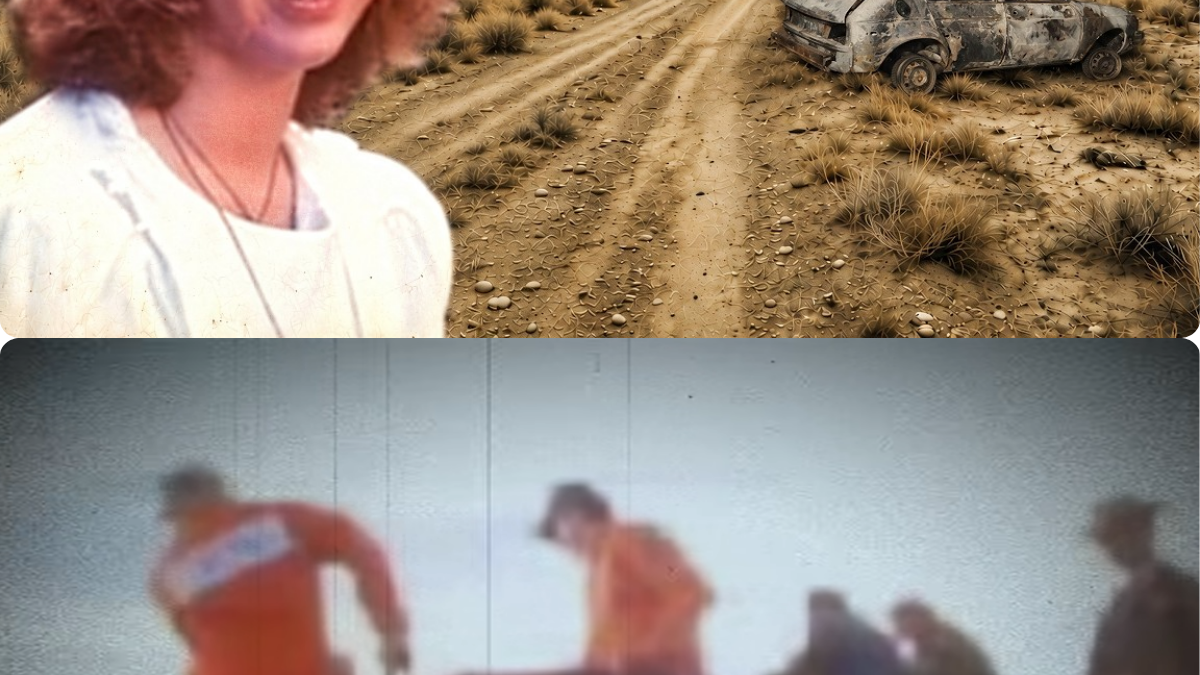
The night Lisa Kimmel vanished, she was just 18 years old, driving a gleaming white Honda CRX north through Wyoming’s endless dark.
Her license plate bore two tender words: Little Miss — the nickname her family had called her since childhood.
It was March 25, 1988, and she was heading home to Billings, Montana, to introduce the man she loved to the people who mattered most.
She never arrived.
Eight days later, a fisherman spotted something face‑down in the frigid waters outside Casper.
It was Lisa.
The news shattered her family — but the nightmare had only just begun.
Medical examiners delivered a devastating truth: she had not died the night she disappeared.
For nearly six agonizing days, while planes flew overhead and her parents sat by the phone, Lisa was still alive somewhere.
No one knew where.
Lisa had left Aurora, Colorado, at 4:00 PM that Friday, excited and full of hope.
By 9:00 PM, she reached Douglas, Wyoming, where a patrol officer pulled her over for speeding.
She didn’t have the cash to pay the fine on the spot, and her card wouldn’t work at the ATM.
Under state law, she could have been taken into custody — but the officer, seeing a young woman alone far from home on a lonely highway, made a judgment call.
He let her go, trusting she would mail the check.
She promised she would.
That was the last confirmed sighting anyone had of her.
When she didn’t show up in Cody to meet her boyfriend, Ed, worry spiraled into panic.
It was 1988 — no cell phones, no texts, no quick way to check in.
Police brushed it off: she was an adult, just running late.
By the time authorities finally opened a missing‑person case, the trail was ice‑cold.
Her father hired a pilot to scan the route from the air; he drove every mile himself, searching ditches and pull‑offs.
There was nothing.
Then the tips began — and they defied all logic.
More than 100 people called in, claiming they had seen Lisa’s distinctive Little Miss plate in states across the West, even as far as Canada.
Five separate witnesses swore they had seen her driving around Casper days after she vanished — alive, behind the wheel, sometimes with an unknown man beside her.
If she was free, why didn’t she call anyone? Why didn’t she come home? She was due back at work Monday morning; everyone who knew her said she would never have missed a shift without a word.
Months passed.
The case grew colder.
Then someone visited her grave.
They left an envelope pinned to the headstone, a note filled with grief and longing — signed Stringfellow Hawk, a name from a TV show.
Not real.
Who would mourn a stranger so intimately? Investigators began to fear the killer had come to watch, to gloat.
National television brought fresh leads, but also bitter conflict.
The Kimmel family begged for FBI help; Sheriff Ron Ketchum fought them every step of the way, refusing to hand over control, refusing even to return federal calls.
Why would the man leading the search sabotage the investigation? When DNA testing finally became available, samples were sent to a federal lab — and detectives started testing everyone connected to the case.
Lisa’s boyfriend, Ed, was cleared.
The patrol officer who had let her go was cleared.
Then a witness stepped forward with a bombshell: the man who had pulled Lisa over that night wasn’t the patrol officer from Douglas.
It was Sheriff Ron Ketchum.
And he had never mentioned it once.
It was Sheriff Ron Ketchum who had stopped Lisa that night — and he had kept it a secret all along.
The revelation sent shockwaves through the investigation.
Ketchum had led the search from the start, guarded every detail, blocked outside help at every turn.
Now he was the prime suspect.
Within months, he abruptly left his post.
He suffered a severe breakdown, was hospitalized, and entered psychological treatment.
When investigators finally asked for a DNA sample, he refused — until the court prepared to force him, and he relented.
The result sent everyone reeling.
His DNA did not match.
Confusion gave way to despair.
If it wasn’t the sheriff, who was it? The trail seemed to vanish as completely as Lisa had.
Then, in 2002 — 14 years after she disappeared — police re‑entered the case’s DNA profile into the national database, a tool that had not existed in 1988.
Almost instantly, there was a match.
The DNA belonged to Dale Wayne Eaton, a 59‑year‑old man already behind bars.
He had been convicted in 1997 of a terrifying roadside attack: he offered to help a stranded family, then pulled a gun and tried to abduct them.
The family fought back and escaped.
Eaton was sentenced to prison — and as part of routine procedure, his DNA had been added to the national registry.
Investigators dug into his past and found a history of violence stretching back to his teens.
He lived in Moneta, Wyoming, in an old converted bus with no running water — about an hour from where Lisa’s body was found.
Neighbors recalled something deeply unsettling: around the time Lisa vanished, Eaton had dug a massive hole on his property.
When asked, he claimed he was installing a septic tank.
No tank was ever put in.
Authorities arrived with heavy machinery.
They began to dig where the hole had been.
Inch by inch, the dirt gave way — and there it was.
Buried just below the surface, hidden for 14 years, was a small, white Honda CRX.
The license plate was still perfectly legible: Little Miss.
The car that 100 people claimed to have seen across multiple states had never left Wyoming.
There it lay — Lisa’s car, buried on Dale Wayne Eaton’s land, silent proof that the answers had been there all along, concealed beneath the earth.
The puzzle pieces began to lock into place.
Eaton had no running water at his ramshackle home, so he regularly drove to a gas station near Casper to use the restroom.
Investigators believe that was where their paths crossed.
Lisa stopped there in the late hours of March 25, 1988 — and Eaton seized his chance.
He forced her at gunpoint to drive him to his remote property, miles from any main road, hidden from view.
For nearly six days, she was held captive in that converted bus.
While her father flew overhead, while her family waited by the phone, while witnesses claimed to see her driving hundreds of miles away, Lisa was trapped less than an hour’s drive from where her body would eventually be found.
The reported sightings were heartbreakingly easy to explain: dozens of identical Honda CRXs were registered in the region; frightened or hopeful people mistook them for Lisa’s car.
The man seen beside her? Likely the killer himself, driving her vehicle to mislead investigators — a cruel, calculated deception that worked for 14 years.
When Eaton was done, he took her to a secluded bridge deep in the wilderness — a place only someone who knew the back roads could find.
He attacked her, threw her unconscious body into the river, and drove her car back to his land.
He dug the grave, buried it deep, and hoped the truth would rot there forever.
Behind bars, Eaton told a different story through a fellow inmate who claimed to be his confidant: that Lisa had seen him standing by the road and voluntarily stopped to offer a ride.
Her family rejected the account with fierce certainty.
Their daughter had always been cautious — once, when her own car broke down, she kept the doors locked and barely lowered the window to speak to a stranger.
She would never have picked up a strange man on a dark highway at night.
The jury agreed; the cellmate’s story unraveled under scrutiny, his motives tainted by hopes of a reduced sentence.
In April 2003, Dale Wayne Eaton was formally charged with Lisa Kimmel’s murder.
The evidence was overwhelming: his DNA on her body, her car buried on his land, his pattern of violence.
In court, the defense argued his severe mental disabilities should spare him from the death penalty.
The jury did not waver.
He was found guilty and sentenced to death.
The Kimmel family did not stop there.
They filed a civil suit and won ownership of Eaton’s property — the land where their daughter had been held, the place where her car had been hidden.
On July 18, Lisa’s birthday, they gathered with the local fire department and burned every structure to the ground.
It was not vengeance; it was reclamation — clearing away the darkness so something new could grow.
Eaton remains in prison today, elderly and isolated.
Years of appeals failed to overturn his conviction.
Questions linger: investigators cannot rule out his involvement in other unsolved disappearances in the region, though no evidence has tied him to those cases.
For now, those mysteries endure.
For the Kimmels, closure has come in layers — not all wounds heal, but the uncertainty is gone.
The girl who worked hard, bought her dream car, and set out to build a life of her own is remembered not as a file or a statistic, but as Little Miss — a daughter, a sister, a young woman who never got to finish the journey home.
The road where Lisa vanished still stretches dark and empty through the Wyoming night.
But the truth, buried for so long, has finally seen the light.
Some secrets remain hidden for years — but they never stay buried forever.
“This story is entirely fictional and created for entertainment purposes only.
It does not represent any organization or individual, nor does it encourage inappropriate behavior.
The content was generated with AI assistance.
”








