SHE VANISHED ON A SUNNY DAY HIKE IN YOSEMITE. FIVE YEARS LATER, RANGERS FOLLOWED A THIN COLUMN OF SMOKE AND FOUND HER IN A HIDDEN CAVE, CLUTCHING A JOURNAL THAT ENDED WITH TWO WORDS REPEATED SEVENTEEN TIMES
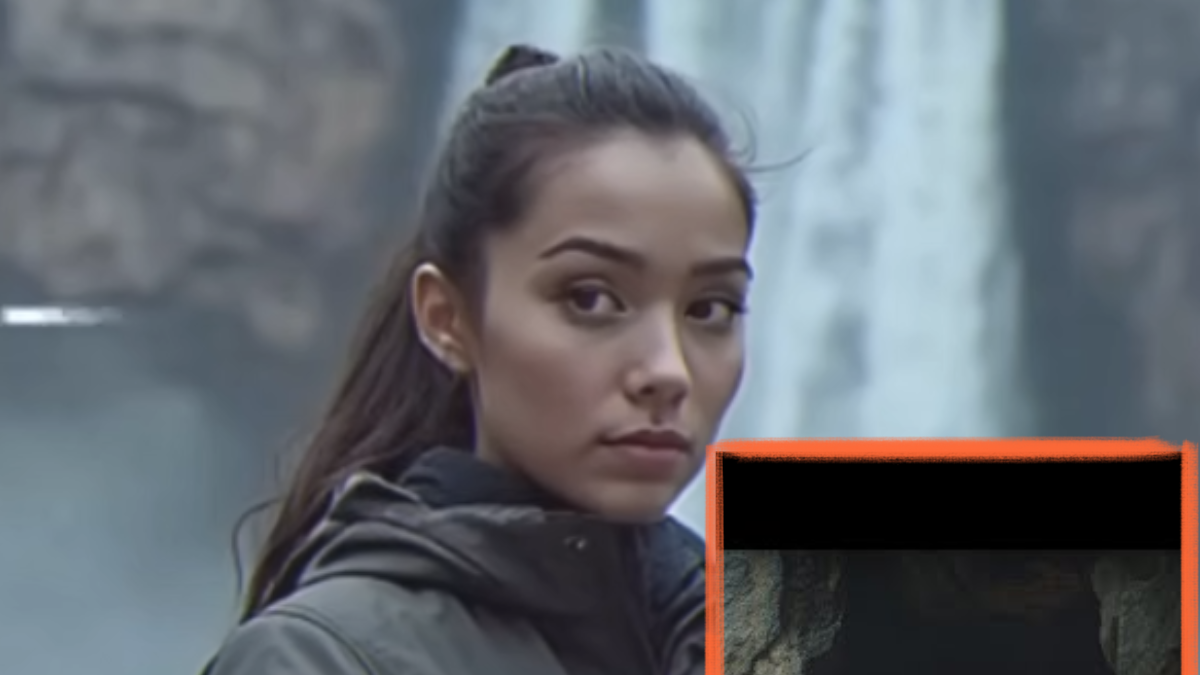
SHE VANISHED ON A SUNNY DAY HIKE IN YOSEMITE. FIVE YEARS LATER, RANGERS FOLLOWED A THIN COLUMN OF SMOKE AND FOUND HER IN A HIDDEN CAVE, CLUTCHING A JOURNAL THAT ENDED WITH TWO WORDS REPEATED SEVENTEEN TIMES 😨
Part 1
The last entry in the journal contained only two words.
They know.
Seventeen times, in the same trembling hand, filling the final page edge to edge. It had been written just days before the rangers ever found her.
But to understand how a brilliant 29-year-old software engineer ended up crouched in a cave with a book she would not let go of, you have to go back to March 15th, 2018, to a woman who never did anything without a backup plan for her backup plan.
Rebecca Torres had moved to San Francisco three years earlier, chasing the same dream as everyone else. She worked at a startup that built mapping software, spending her days buried in GPS coordinates and elevation data. Her colleagues called her brilliant and solitary, the kind of person who solved problems by vanishing into code for hours.
“She had spreadsheets for her grocery shopping,” her roommate, Sarah Chen, would later tell investigators. “Color-coded calendars. Backup plans for her backup plans. Rebecca never did anything without thinking it through completely.”
That was why what happened next made no sense.
That morning, Rebecca told Sarah she was heading to Yosemite for a quick day hike on the Mist Trail, “to clear my head.” She packed light: water, energy bars, a first aid kit, and the Moleskin journal she had carried since college. She left no detailed itinerary. No emergency contact beyond Sarah.
At 11:47 a.m., park entrance cameras caught her Honda Civic rolling through the gate. She paid her fee, took the standard safety warnings, and parked at Curry Village.
The Merced River ran high and fast that day, swollen with snowmelt. The air smelled of pine and wet stone. At about 12:30 p.m., Rebecca started up the trail, and her phone captured everything: selfies, smiling, confident, the face of someone expecting to be home by dinner. A wooden bridge. The first views of Vernal Fall. Granite steps slick with spray.
Her final photo was time-stamped 2:47 p.m. She stood on the bridge below Vernal Fall, rain jacket zipped, dark hair in a ponytail, giving the camera a thumbs-up. Behind her, a 317-foot waterfall exploded into mist.
After that photo, Rebecca Torres was gone.
Her car sat untouched in the lot. When she didn’t return to her campsite that night, other campers assumed she had moved on. Yosemite sees four million visitors a year, and people change plans constantly.
It wasn’t until Tuesday, when Rebecca missed work without calling, that anyone realized something was wrong. “She would never do that,” Sarah insisted. On Wednesday morning, Sarah called the park service.
By Thursday, the search was in full swing: rangers, volunteer teams, dogs, helicopters. They combed forty square miles. They checked caves and overhangs. They followed the river downstream.
“We left no stone unturned,” Ranger Captain Michael Harris said later. “We looked everywhere a person could conceivably go, and plenty of places they couldn’t. We found nothing.”
Nothing, except other people’s secrets. The search teams stumbled across the remains of two other missing hikers from previous years. The wilderness gave up its dead reluctantly.
But it held on to Rebecca.
After three weeks, the search was called off. Her file, YNP-2018-047, was filed away as a probable accident.
Sarah refused to believe it. And one night, alone at Rebecca’s computer, she found the reason.
For weeks before she vanished, Rebecca had been researching missing-person cases in national parks with an intensity that bordered on obsession. Hundreds of searches. Cave systems in Yosemite. Something called “cluster patterns.” Dozens of bookmarked posts by families of the vanished, all telling the same story: experienced hikers, perfect weather, massive searches, nothing found.
And in her final emails, sent the day before she left, were three sentences that Sarah read again and again until her hands shook.
“I think there might be a connection.”
“Some patterns are too obvious to ignore.”
“I need to see for myself.”
Part 2
“I need to see for myself.”
Sarah took the emails to the park service. To local police. To anyone who would listen. The responses were always polite. Always the same. Grief sometimes looks like conspiracy thinking. Correlation is not causation. There was no evidence of foul play.
The case went cold. Sarah eventually moved back east, unable to live with the reminders. Rebecca’s parents held a memorial service two years later, though they never had her declared dead.
Five years passed.
Then, on a Tuesday morning in April 2023, two maintenance workers reported thin, wispy smoke rising from a part of Yosemite where no one should have been. It wasn’t the smoke of a wildfire. It was the kind that came from a carefully tended campfire.
Ranger Jessica Martinez took the call. Eight years in the backcountry had taught her to dismiss most reports as false alarms. But the workers described the location with GPS precision, a maze of granite boulders and hidden valleys that hikers almost never visited. Something about it felt different.
She assembled a small team: Ranger Kevin Santos and park biologist Dr. Amanda Foster. They set out the next morning, leaving the marked trails far behind. The forest grew older and denser, untouched by logging. “It felt like stepping back in time,” Martinez would write in her report. “Beautiful, but also somehow unsettling.”
After three hours, they found the source: a small fire behind a house-sized boulder, ringed with stones. Perfectly built. Dead fall only, burned down to coals, tended for hours.
But no tent. No gear. No camper.
“Hello! Park service! Anyone there?” Santos called. His voice died against the granite.
Then Foster noticed the footprints. Small. Bare. Worn in a way that suggested someone had been walking without shoes for a very long time.
They followed the prints into the boulder field, calling out as they went. Somewhere in the stone maze, something rustled, like an animal suddenly aware of humans. The sound echoed until it was impossible to place.
It was Santos who found the entrance: a crack in a boulder face where the shadow was too deep. Two massive stones had settled against each other thousands of years ago, hiding a gap barely eighteen inches wide.
“There’s a cave here,” he said.
They smelled it before they entered. Beneath the musty air was something else, something lived in. Martinez squeezed through first. The passage opened into a chamber large enough to stand in, with tunnels leading deeper, dim light filtering down through cracks above.
And there, crouched in the farthest corner, was a person.
Small. Emaciated. Dressed in faded hiking gear patched with materials that did not belong in any outdoor store. Long, matted dark hair framed a gaunt face, and dark eyes that held terror and relief in equal measure.
In her arms, she clutched a notebook bound with cloth and twine, as if it were worth more than her life.
“It’s okay,” Martinez said softly. “We’re here to help. You’re safe now.”
The woman’s voice came out cracked from years of disuse.
“You found me. I knew someone would eventually. They always know when someone gets too close to the truth.”
“What’s your name?”
A sharp, bitter laugh.
“Rebecca Torres. I’ve been missing for five years, three months and eight days. But I wasn’t lost.” Her eyes locked on Martinez. “I was hidden. And now they know I’m not alone anymore.”
The rangers froze.
“They’re still out there,” Rebecca whispered. “And now they know you found me. We’re all in danger.”
She opened the journal. Maps. Timelines. Surveillance notes. License plates. Hundreds of pages written with the precision of a data analyst.
“Look at the missing-person reports from the last twenty years,” she said. “Cross-reference them with lunar cycles, weather, location. There’s a system.”
Then she turned to a page with a hand-drawn map and told them what she had seen on her very first day.
Voices off the trail, she said. People who knew the terrain intimately. And with them, a woman in her thirties, walking wrong, like she wasn’t entirely present, being led toward a part of the park that appeared on no official map.
Martinez’s pulse quickened. Foster had drifted to the back of the cave, and what she found there made her blood run cold.
Carved into the stone wall, in the faint filtered light, were names. Dozens of them. Dates beside each one. And next to some, a single word.
Found.
“Sarah Mitchell,” Foster read aloud, her voice barely steady. “Found, July 2019.” She turned. “But officially, Sarah Mitchell is still missing.”
Rebecca smiled, and it was the most frightening thing in the cave.
“Because the official records are incomplete,” she said softly. “Come with me. There’s something I haven’t shown you yet.”
Part 3
Rebecca led them through a narrow passage into the smallest, most hidden chamber of the cave.
On the floor, preserved beneath a makeshift tarp, lay backpacks, water bottles and hiking boots. All of it worn by experienced hands. All of it clearly belonging to other people. Each item carried a small tag with a name and a date, written in Rebecca’s careful handwriting.
Foster lifted a water bottle and read the tag aloud.
“Jennifer Walsh. Disappeared June 2020.” Her voice cracked. “This is evidence from an active missing-person case.”
“Her campsite was officially empty,” Rebecca said quietly. “But I found that bottle fifty yards away, hanging from a tree branch at exactly eye level. Like someone wanted it found. But only by people who knew where to look.”
Nobody spoke.
If she was right, dozens of cases would have to be reopened, and people inside the park service itself might be complicit. If she was wrong, then five years of isolation had built a paranoid fantasy so meticulous it looked like truth.
Rebecca showed them the display she had built in another chamber: maps, timelines, photographs, clippings, organized like a professional investigation. Thirty-seven people in twenty years. All experienced hikers. All vanished from areas that were later declared off-limits to the public for “administrative reasons.”
She told them how she had tried the official route first. After three weeks lost in the wilderness, she had hiked out and told the park service what she saw. They said she was suffering from exposure-induced hallucinations. They suggested a therapist. And when she filed a formal complaint and demanded they investigate the locations she had marked, every one of those sites was suddenly declared off-limits for ecological reasons.
“Coincidence?” she asked.
Her latest journal pages were different. The handwriting was rushed, the lines frantic. For months, she wrote, people in park service uniforms had been searching areas that weren’t on any official grid, looking for something specific.
Looking for her.
“Rebecca,” Martinez said, as steadily as she could, “whatever you’ve found, it needs to be investigated by people with more authority than a backcountry patrol. And you can’t do it from a cave.”
Rebecca’s grip tightened on the journal. “The moment I enter official custody, this evidence disappears. That’s how they manage it. Anyone who gets too close gets discredited, and their documentation vanishes.”
“Then we’ll make sure that doesn’t happen,” Santos said. “We’ll copy everything. Multiple copies. Federal investigators if we have to.”
Rebecca studied their faces for a long time, searching for dismissal or deceit. Finally, she nodded.
“When I first got lost following those people,” she said, “I thought it was an accident. Now I think it was meant to happen. Someone needed to be out here, watching.”
She packed her most critical evidence into a carrier woven from salvaged material. “The journal goes with me. Everything else… maybe it’s time other people saw it.”
The hike out took six hours. Rebecca was malnourished and injured, but she moved through the wilderness with an almost uncanny knowledge of water sources and seasonal food. Even now, she kept writing, noting signs of human activity that didn’t match normal park use.
“There,” she said, pointing to a barely visible side trail. “That’s one of theirs. Not on any map. But someone keeps it clear of deadfall.”
Santos went to look. When he returned, his face was pale.
“She’s right. It’s maintained. And it leads toward an area that’s been closed for ecological restoration for the last three years.”
At the trailhead, Rebecca’s Honda Civic sat exactly where she had left it five years earlier. Strangers had left faded flowers and weathered notes on the windshield, turning it into a quiet shrine to a woman who was no longer missing.
She stood there for several minutes, running her fingers over the notes.
“They never gave up,” she whispered. “People I didn’t even know. They never gave up hope.”
At park headquarters, her return caused a sensation. Investigators from multiple agencies arrived within hours. Her survival was taken seriously. Her accusations were not.
The evidence was acknowledged, then explained away. Disappearances in wilderness areas were a known risk. The off-limits zones were legitimate conservation areas. The belongings could have been lost and passed along any number of innocent ways.
“Ms. Torres,” the lead investigator said gently, “five years of isolation can have significant psychological effects. What you’ve documented is impressive, but we have to consider that trauma may have led you to see patterns where none exist.”
Rebecca had expected exactly that.
That night, in a hospital bed, she made a phone call.
“Sarah?”
A long silence. Then a voice barely above a whisper. “Oh my God. Rebecca. Where have you been? We thought you were dead.”
“I was investigating,” Rebecca said. “And I found something people need to know about.”
Returning to normal life proved impossible. Everyone wanted her to put the wilderness behind her and become a software engineer again. But she had seen too much, documented too much, to pretend. Within six months, she founded the Rebecca Torres Foundation, a nonprofit that investigates missing-person cases in wilderness areas. She built databases and analytical tools that could spot patterns invisible to traditional searches, and she went back into the backcountry again and again, using the survival skills those five years had forged.
She never found definitive proof of the systematic conspiracy she believed in. Her patterns remained correlation, not causation. Her evidence stayed circumstantial.
But she found people.
Over the next three years, her foundation located twelve sets of remains that official searches had missed. They were not victims of any conspiracy. They were hikers who had simply died in remote places and never been found. Twelve families finally received the closure they never expected.
And quietly, some things began to change. Areas declared off-limits for “ecological reasons” were reopened when reviews found no actual conservation concerns. Trails that had been discontinued reappeared on park maps without explanation. Rebecca chose to see it as victory, proof that someone, somewhere, had been forced to retreat. Others said it was just ordinary park management.
Her journal was never released in full. Portions went to investigators, but she kept the most detailed sections private, arguing they were too dangerous to publish without proof.
“Truth isn’t always something you can demonstrate,” she said in one of her rare interviews. “Sometimes it’s something you have to live with, even when you can’t prove it to anyone else.”
She never moved back to San Francisco. She built a small house near Yosemite, close enough to keep investigating, far enough to keep her perspective.
One evening, Sarah visited and finally asked the question that haunted everyone who knew the story.
“Do you regret it? The five years. Everything you gave up?”
Rebecca looked out at the mountains that had been her home.
“Thirty-seven people disappeared under circumstances that made no sense,” she said. “Twelve of them, we found. Twelve families got answers they never would have had. If I had to trade five years of my life for twelve people being found…” She shrugged slightly. “That seems like good mathematics to me.”
But late at night, when sleep would not come, Rebecca still opened the journal.
The final entry, written three years after her rescue, was a single sentence repeated again and again.
They’re still watching.
Whether they meant park officials monitoring a perceived threat, or something far more sinister, Rebecca never said. Every few months, she would vanish into the mountains for days, then return with new evidence for files no one else was allowed to see.
She had found her way out of the caves. She had never really left them.
And in the granite and shadow around Yosemite, the disappearances continued at their statistical average, no more frequent than before, but no less mysterious. Always with the quiet possibility that someone, somewhere, was watching from a cave no one would think to explore.
The journal now rests in a secure location. Four hundred pages of meticulous documentation, either the record of an elaborate paranoid delusion, or evidence of something most people would rather not think about when they venture into the wilderness seeking beauty and solitude.
Perhaps that is the most unsettling truth of all: that the two possibilities are not mutually exclusive, and that the line between finding answers and losing yourself may be thinner than any of us want to believe. 🌙
This story is entirely fictional and created for entertainment purposes only. It does not represent any organization or individual, nor does it encourage inappropriate behavior. The content was generated with AI assistance.








