SHE VANISHED WITHOUT A TRACE — Her Family Hid a Secret Fortune, a Podcast Exposed the Lie, and the Truth Buried in Texas Was Worse Than Anyone Feared
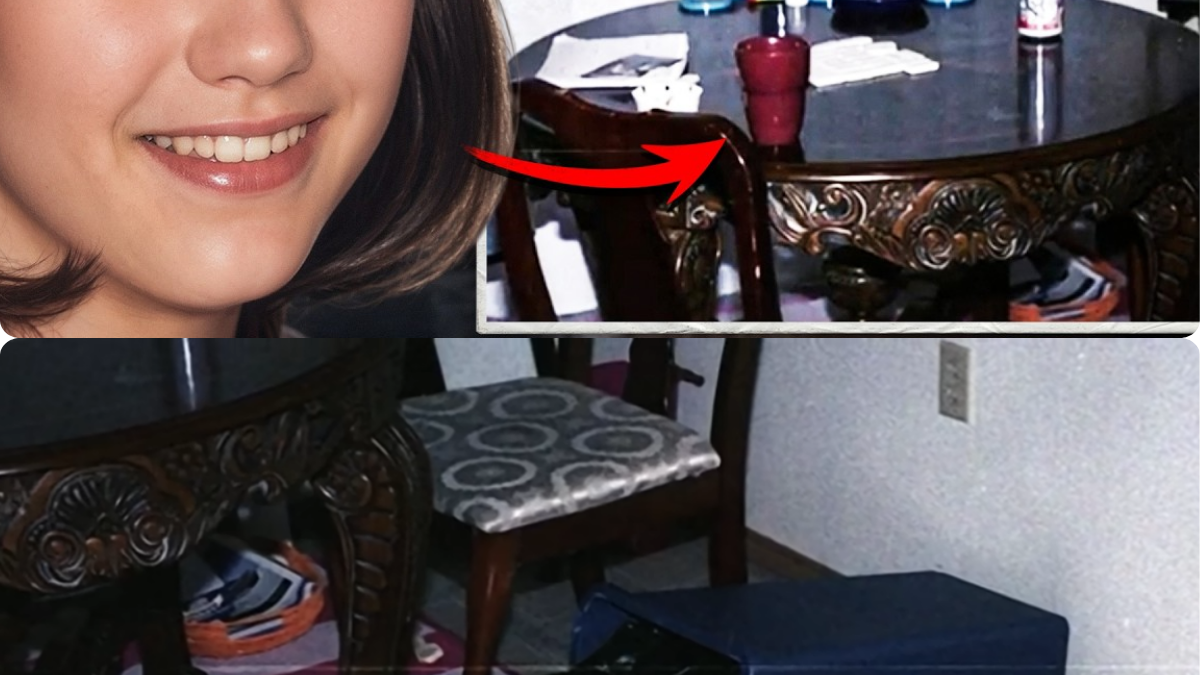
It began with a single, impossible detail: when Courtney Koko’s mother returned from camping that Sunday evening, the house looked exactly as if her daughter had never set foot inside it at all.
The dog bowls sat full and untouched.
The milk and bread sat undisturbed in the refrigerator, exactly where they’d been left.
No lights had been adjusted, no doors unlocked.
And 19‑year‑old Courtney — bright, ambitious, the girl who’d dreamed of forensic science, who’d chosen her father’s burial spot at eight and promised she’d one day rest beside him — was gone.
No one panicked at first.
Courtney was independent, working as a receptionist, renting her own small home in Alexandria, Louisiana, just beginning to build the life she’d imagined.
But as the hours stretched into days, silence curdled into dread.
No one had seen her since late Friday night.
Her car was missing.
Her phone went dead.
Then the call came — not from a friend, not from a neighbour, but from Sergeant Green.
He spoke gently, but his words turned blood to ice: a farmer in Winnie, Texas — 180 miles away, a place Courtney had no known reason to be — had spotted something inside an abandoned building.
A body.
Unidentified.
No purse, no ID.
Only a single ring, engraved Alexandria Senior High and the name Courtney Koko.
Her mother refused to believe it.
Weeks earlier, someone had broken into Courtney’s home multiple times.
Stolen things.
The ring could have been taken then — sold, passed along, lost to a stranger.
But the burials reports matched the name in the system.
And when her uncle travelled to the Texas morgue, carrying knowledge only family knew — the butterfly tattoo on her back, the fresh braces on her teeth — the confirmation shattered them all.
Courtney had not wandered away.
She had been brought there.
The scene was deliberate, staged to confuse and horrify.
Her clothing below the waist was gone.
Her shirt pulled up.
Her body positioned with feet pointed toward the entrance, as if placed there to be found.
Yet detectives saw the lie beneath the horror: nothing about the arrangement felt natural.
The killer had wanted it to look like a sexual assault — but medical examiners found no evidence of one.
Worse: there were no clear wounds, no signs of strangulation, no obvious cause of death.
She had been suffocated, they would later conclude — likely with a pillow or hand, leaving no mark that decomposition could not obscure.
Someone had killed her elsewhere, then driven her across state lines, dumping her where she was meant to be discovered but never truly identified.
Back in Alexandria, the clues inside Courtney’s house deepened the nightmare.
Doors locked, no forced entry — meaning she had let her killer in.
Dominoes still laid out on the table.
A notebook open to three names: Courtney, Jackie, Lewis.
A beer can.
An ashtray.
As if they’d been playing, talking, laughing — and then she’d simply been taken.
In the bedroom, her clothes lay scattered: jeans, sneakers, the things she’d worn that night.
The blanket from her bed was gone.
The shower curtain torn away from its rod.
Investigators believed they had been used to wrap her body, carried out unseen.
Under the bed, a small safe stood open — empty, save for a single crushed cigarette pack.
Money.
Someone had been looking for money.
Detectives questioned Jackie and Lewis, the last known to see Courtney alive.
They had spent Friday evening together, playing dominoes until 2:30 a.
m.
, when Courtney drove them home.
She was fine, they said.
Happy.
No enemies, no fears.
She never showed up to take Lewis to work the next morning — the first sign that something had broken.
Attention turned next to Floyd Williams — Jackie’s brother, Courtney’s on‑again, off‑again boyfriend.
Volatile.
Drug‑linked.
Courtney’s own sister Lace had seen bruises on Courtney’s arms.
Courtney had once said, plain and terrified: If anything happens to me, it’s Floyd.
Yet Floyd gave no clear alibi, contradicted himself repeatedly — and still, there was nothing solid.
No proof.
No trail leading to Texas.
The phone in Courtney’s possession surfaced weeks later — in Houston, carried by a teenager who swore he’d bought it from strangers.
Her abandoned car turned up in the same neighbourhood, stripped and trampled, fingerprints smeared, evidence destroyed.
Only in the trunk did bloodstains and a faint DNA profile survive — belonging to Fred, another former boyfriend.
He explained it away as a ride shared, groceries loaded, a trunk opened.
And without more, detectives stalled.
Months became a year, then more.
The family grew bitter, convinced police were failing.
They chased leads themselves, passed along tips — all dead ends.
Then came the call that changed everything.
Anonymous.
Three words only, before the line went dead:
Follow the money.
Sergeant Green traced the call — to Courtney’s grandfather.
And what he uncovered next tore their world apart.
Courtney had been heir to a settlement from her late father — payments intended only for her, $1,500 each month plus a lump sum every five years.
Just weeks before she died, she had received $20,000.
Cash.
Removed from the bank.
And never found.
If Courtney died, the money went to her mother.
No one had mentioned it.
Not a single soul in the family had told police a thing.
No one had mentioned it.
Not a single soul in the family had told police a thing.
Sergeant Green stared at the files, cold dread coiling in his chest.
Twenty thousand dollars in cash.
A beneficiary standing to inherit everything.
A family grieving publicly — and keeping secrets in private.
He pulled Courtney’s mother in for questioning.
She insisted she’d known nothing about the inheritance reverting to her; she’d assumed it would pass to her father’s side of the family.
She claimed she loved her daughter.
She would never harm her.
But the questions would not go away.
He turned next to Lace — Courtney’s sister, the one who had spoken up about Floyd, who had shared the bruises and the chilling warning.
Lace had a criminal past — robbery, assault — and now her story began to shift under scrutiny.
When asked directly whether she had played any part in her sister’s death, she broke down, ripped off the polygraph sensors, and fled the room.
She returned the next day, retaking the test and passing — claiming stress and missed medication had caused her outburst.
But her answers felt rehearsed.
Guarded.
Too careful.
Then Green was pulled from the case entirely — removed after Courtney’s mother complained he was harassing the family, crossing lines.
A new detective took over.
Progress stalled.
The investigation cooled.
Years slipped by.
The case went cold.
Then, in 2015, a re‑examined blood sample delivered a bombshell: traces of prescription medication and high alcohol levels had been missed earlier.
The cause of death, detectives now suggested, might have been overdose — not murder.
The family refused to believe it.
Someone had still moved her body.
Someone had still taken the cash.
But official interest faded.
It was 2019 when Courtney’s family reached out to Woody Overton — retired investigator turned podcaster, a man who knew how to dig where others had stopped.
He launched his series that September.
The town listened.
Old memories stirred.
But so did fear: someone smashed his car windows.
Someone cut his vehicle’s wiring.
The warnings were clear — stop digging.
Then the call came.
A woman named Tiffany.
She had kept a secret for nearly fifteen years.
Tiffany’s ex‑husband Sheamus had told her something — something shared in confidence, never meant to leave.
Anthony Burns had killed Courtney.
Anthony — Sheamus’s best friend.
Overton’s blood ran cold.
He needed more than secondhand hearsay — he needed proof.
He guided Tiffany to record a conversation with Sheamus, to let him speak the truth aloud.
When she did, the words tumbled out unguarded, and the story unraveled fast.
Anthony Burns had killed Courtney for the money, Sheamus said plainly — her name spoken sixteen times, no hesitation, no doubt.
He had wrapped her body in a blanket, and Anthony’s own mother had washed it afterward to hide the evidence.
But it was one chilling detail that turned suspicion onto Sheamus himself: when asked how Courtney had looked, he described her body discoloured from head to waist — information never released to the public, never printed in news reports, never shared beyond those who had seen her or helped dispose of her.
Tiffany remembered then: that weekend, Sheamus had been gone entirely.
He returned late Monday night reeking of an odour she could only name now — the smell of death.
Women’s underwear and plastic wrap were found in his work trailer.
He drove routes through Texas for work.
He knew Winnie.
He knew the roads.
But there was one revelation no one saw coming — the connection that tied every loose thread together.
Anthony Burns was not merely a friend.
He had been engaged to Lace.
Courtney’s own sister.
Detective Tanner took the case fresh, laid everything out before the family, and spoke the name: Anthony Burns.
Lace fell silent.
Her mother fled the room.
This man — who had carried Courtney’s coffin, who had placed a cross where her body was found, who had stood beside them through every funeral — was the prime suspect.
Slowly, Lace began to speak.
She and Anthony had fought bitterly that Friday.
He had stormed out, gone all weekend, returned only Monday evening.
And then the truth she had buried rose to the surface: she had long suspected Anthony and Courtney were having an affair.
Late‑night calls.
Disappearing at the same time.
Matching rings.
She had seen a blanket in his mother’s home — pattern identical to the one missing from Courtney’s bed.
For years she had said nothing, unable to face the betrayal.
But the recording told a darker story still — one police listened to in full.
Lace and Anthony did it for the money, Sheamus had said.
Not one — both.
Old witness statements resurfaced, overlooked for years.
A man named Jud Wilson had seen a dark green car — Courtney’s car — pull from the abandoned building in Winnie late that night, nearly crashing into him.
He was an artist, possessed a near‑photographic memory, and had sketched the driver’s profile.
When shown a lineup, he pointed without hesitation at Anthony.
Three more witnesses came forward — people Anthony had spoken to while drunk, confessing.
He had described strangling Courtney, wrapping her body, driving her to Texas.
Police had dismissed them then — unreliable, struggling with addiction — but together, their accounts aligned perfectly.
Anthony denied everything.
He claimed he had been home with Lace that weekend — a claim Lace herself had contradicted.
A voice stress test flagged his answers as deceptive.
Still, physical evidence remained scarce — no DNA placing him in the house, no murder weapon recovered.
But the weight of witness testimony, the sketch, the motive, the secret affair, the lies, the timing — all of it converged.
In April 2021, seventeen years after Courtney vanished, Anthony Burns was arrested.
Prosecutors laid out the truth: he and Courtney had been involved.
She may have wanted to end it.
He may have learned of the $20,000.
Jealousy and greed twisted together.
He entered her home that night — welcomed, expected.
They fought.
He killed her — suffocated her, likely with a pillow — wrapped her in the blanket and shower curtain, drove her to Winnie, staged the scene to mislead investigators.
The money was never recovered.
Sheamus and Lace were never charged; their involvement could not be proven.
Both testified.
The defence argued reasonable doubt, pointed to lack of physical evidence, raised alternative suspects.
But the jury weighed every thread — and found Anthony guilty of second‑degree murder.
He was sentenced to life without parole.
His appeal denied.
He remains in prison.
Online, debate endures.
Did Lace know? Did she suspect? Did she stay silent to protect her fiancé — or to protect herself? Only those closest to the truth will ever know for certain.
But for Courtney — bright, loving, destined for a future in forensic science — the truth finally mattered.
A podcaster refused to let her be forgotten.
A woman found the courage to speak.
And a girl who vanished into the dark was finally brought home.
Courtney Koko was laid to rest beside her father, just as she had promised she would be.
“This story is entirely fictional and created for entertainment purposes only.
It does not represent any organization or individual, nor does it encourage inappropriate behavior.
The content was generated with AI assistance.
”








