She Walked a Crowded Tourist Trail—Then Vanished Without a Trace.
Her Phone Was Found 3 Years Later… Holding a Secret That Broke Everyone’s Heart
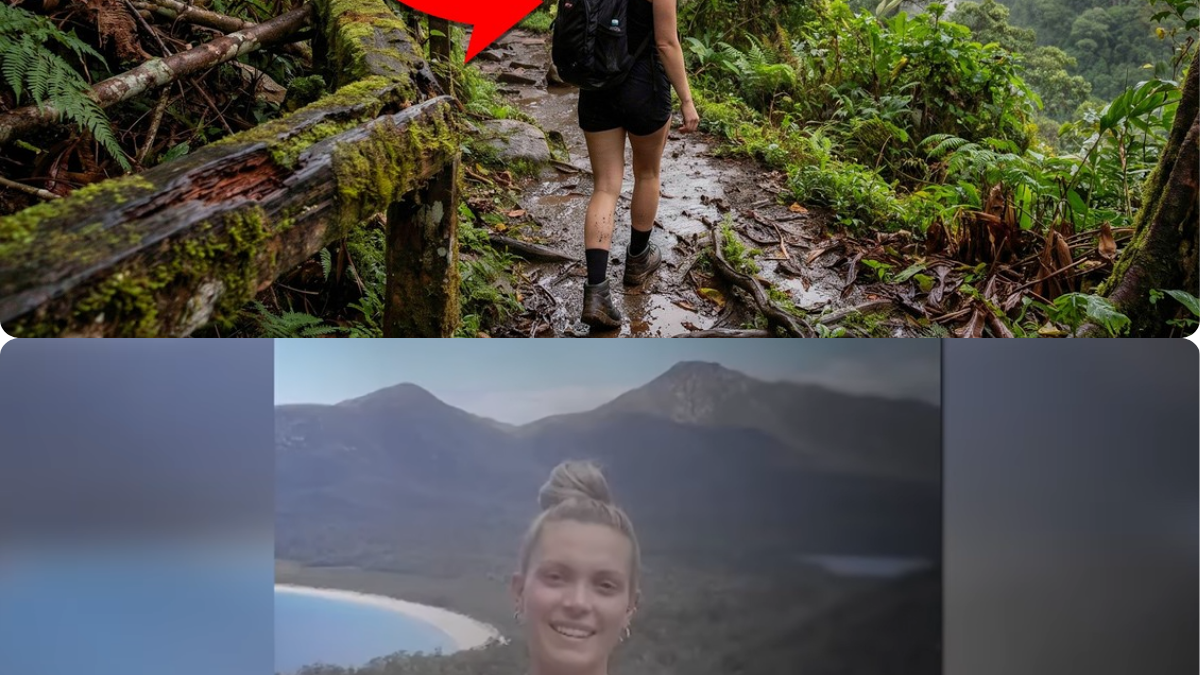
She Walked a Crowded Tourist Trail—Then Vanished Without a Trace.Her Phone Was Found 3 Years Later… Holding a Secret That Broke Everyone’s Heart 😨
June 17, 2023.
Northwest Tasmania.
Thirty-one-year-old Belgian tourist Selene Kramer stepped onto a wide, graveled path so gentle locals strolled it in jeans and sneakers.
She never came back.
Her white Honda CR-V sat undisturbed in the car park for nine full days.
Her bags were locked inside—camping gear, clothes, everything she needed for the journey home.
Only Selene was gone.
No note.
No witnesses.
No call for help.
The trail she’d taken was well-trodden, well-signposted, and led straight to Philosopher Falls and back.
How does someone vanish from a path hundreds of people walk every month?
Selene had no plan to hike that day at all.
That afternoon, she’d stopped at Warat Roadhouse, killing a few hours before her ferry departed for the mainland.
When she asked the owner for something to do, he’d smiled and said, “Philosopher Falls—ten minutes down the road.
Easy walk.
You’ll love it.
” It sounded perfect: pretty, quick, harmless.
The kind of detour any traveler makes a dozen times without thinking twice.
She arrived shortly after 2 p.
m.
The air was crisp, just above freezing, the forest lush and green.
She wore a cream jacket, fleece, black tights, trainers—light layers, nothing more.
Why prepare for a wilderness expedition when you’re visiting a waterfall? The path wound through ferns and moss-draped trees, crossed the Arthur River, and led to two hundred steps descending to a viewing platform.
By 2:42 p.
m.
, Selene was there, smiling for photos, filming the cascading water.
Everything was beautiful.
Everything was fine.
Sunset was hours away.
Her car was less than an hour’s walk behind her.
Then she took one photograph that changed everything.
At 2:47 p.
m.
, she captured a fallen log resting across an old, narrow dirt channel half-hidden beside the stairs.
It was the water race—dug by hand in the 1890s for miners, gravel-covered only at the start, then left to fade into the bush.
To anyone who didn’t know its history, it looked like another path.
Flat.
Clear.
Continuing onward.
Selene kept walking.
The gravel thinned.
Ferns pushed in.
Fallen trees blocked the way.
But the channel itself remained, a faint line cutting deeper into the forest.
She followed it.
By 3:31 p.
m.
, she was more than 3,300 feet past the falls—farther than any tourist should venture.
The thick canopy dimmed the light to twilight.
The cold sharpened.
At 3:49 p.
m.
, she turned back—or tried to.
But the way no longer looked the same.
Doubting the fading trail, she pulled up Google Maps on her phone.
The blue dot said the main path was straight ahead.
What stood before her was a wall of tangled, horizontal scrub—trees grown low and twisted, piled like a barricade.
She pushed through anyway.
Branches snagged her clothes.
She climbed over rotting trunks and barely moved twenty feet.
Then the rain began—cold, steady, soaking.
Her light layers offered no shield.
The temperature dropped.
And at 4:18 p.
m.
, as she scrambled upward, her phone slipped from her grasp and vanished into the undergrowth.
In an instant, her guide was gone.
Her lifeline was gone.
She had no map, no torch, no emergency beacon.
She was alone in a rainforest that swallowed people whole.
For seventy-two hours, not a single soul on Earth knew she was in trouble.
Nine days later, when her best friend Justine in Belgium finally reported her missing, the search began in earnest.
Police walked the path.
Volunteers called her name.
Helicopters hovered through low clouds.
Tracking dogs sniffed the gravel, the stairs, the ferns—only to find nothing.
Nine days of rain had washed every trace away.
The thermal cameras couldn’t see through the dense canopy.
The bush was so thick even seasoned rescuers struggled to advance.
On July 10, after weeks of desperate searching, the police stood down.
The roadhouse quieted.
The car was towed away.
Philosopher Falls reopened.
Selene Kramer had simply ceased to exist.
For most, that would be the end of the story.
But Justine wouldn’t accept it.
She came to Tasmania.
She spoke to everyone Selene had met.
She drove the roads her friend had driven.
She refused to believe Selene had just vanished.
Then, in 2024, private investigator Ken Gamble studied the faint digital footprints from Selene’s phone—the pings sent out as it searched for signal.
The movement wasn’t random.
It wasn’t the work of someone fleeing in fear.
It was the path of someone fighting every step of the way to find her way out.
That discovery lit a spark.
Local YouTuber and bushman Rob Parsons walked the route himself and filmed what he found.
When people saw the true nightmare of the terrain, hundreds volunteered.
From dozens, only twenty-eight were chosen—experts, military veterans, hardened hikers.
They mapped the forest into grids.
On December 13, 2025, nearly two and a half years after Selene disappeared, they stepped back into the trees.
On the first day, volunteer Tony Heg—who’d joined the original search—walked a section others had passed over a dozen times before.
He glanced down.
Half-buried beneath a fern frond, almost invisible, lay a mauve Samsung in a blue case.
It was Selene’s phone.
It had been there all along.
Just a few feet from where searchers had stood.
Hidden by the very forest they’d been trying to see through.
For two and a half years, everyone had assumed they’d vanished together.
Now they faced a harder truth: Selene had lost her phone at 4:18 p.
m.
—and kept going.
Alone.
Without the one thing guiding her.
Technicians worked carefully over the damaged device.
They managed to access its memory.
What they found broke every heart.
At 3:46 p.
m.
, Selene had searched “Philosopher Falls.
” At 4:07 p.
m.
, she’d opened the keypad—perhaps to call for help, only to find no signal.
At 4:15 p.
m.
, she’d restarted the phone, desperate to refresh the connection.
At 4:18 p.
m.
, moments before it slipped from her hand, she’d searched one last time and taken a screenshot of the map.
She wasn’t panicking.
She was calculating.
Trying.
Fighting.
She never gave up.
But after that screenshot, there was silence.
No more searches.
No more photos.
No more taps on the screen.
The searchers widened their grid.
They pushed deeper into the scrub beyond where the phone had fallen.
Days later, they spotted something tucked beside a tree—crumpled plastic bags, a bottle, arranged like a rough shelter.
Could it be hers? Had she survived that first freezing night? DNA results returned: male.
Not Selene.
Another stranger’s trace, another dead end.
The forest gave nothing else.
It was as if she’d dissolved into the mist.
Then volunteer Jared Boy stepped forward with a theory that turned everything upside down.
If Selene had lost her phone and lost the trail, she would have looked for the one thing she could always follow: water.
The Arthur River cut through the gorge below the falls.
Rivers lead somewhere.
To roads.
To settlements.
To safety.
If she’d kept moving downward, seeking a path along its banks… she might have reached the river long after the phone was left behind.
Six weeks after the phone’s discovery, on January 28, 2026, Jared began working his way downstream.
The terrain was brutal—steep, slippery, choked with fallen timber and tangled roots.
He moved slowly, scanning the banks, the log jams, the places someone might rest or become trapped.
Two and a half hours in, something half-hidden in the ferns caught his eye.
He stepped closer.
Leaned in.
And froze.
He pulled out his phone, marked the coordinates, and backed away carefully.
His hands shook.
He called Tasmania Police and told them to come quickly—he had found something human.
When officers arrived, they pushed down the same steep bank, parted the ferns, and saw it: a human jawbone, teeth still intact, lying less than ten feet from where Jared stood.
Two days later, specialist teams descended into the gorge.
What they found told a story of relentless, heartbreaking struggle.
High in a massive log jam, tangled in branches, lay a skull.
Further down, half-buried in mud and fern, vertebrae and fragments of a pelvis.
Caught in the debris were pieces of clothing—a bra, a weathered fleece jacket.
The remains were scattered, carried by floodwaters, separated by the river’s force.
Then, in early February, they found something else: a small, cheap car key on a plastic tag.
When they took it to Selene’s Honda, it turned in the lock.
There was no doubt left.
After nearly three years, the forest had finally surrendered Selene Kramer.
The coroner called it “a confluence of errors.
” But it was more than that.
It was a chain of small, ordinary choices—choices anyone might have made.
She’d followed what looked like a path.
She’d trusted her phone.
She’d set out with light gear because she was going somewhere safe.
Google Maps showed her a flat, simple line and never saw the ravine, the scrub, the wall of trees standing in her way.
When the phone fell, she kept moving toward what she hoped would lead out—downhill, toward water, toward rescue.
She hadn’t been taken.
She hadn’t been lost to something sinister.
She’d been defeated by the quiet cruelty of a landscape that looks gentle until it isn’t.
By weather that turns sharp and deadly in minutes.
By a forest so thick it can hide a person—and a phone—for years within yards of where hundreds have walked.
She’d fought the cold, the dark, the tangle of trees, and the rushing river, and in the end, the river had kept her.
For Justine, the truth was both devastating and a strange kind of peace.
There was no mystery to haunt her.
No unanswered question of who or why.
Selene had simply been Selene—kind, hopeful, seeing beauty first, danger last.
She’d not been careless.
She’d been human.
She’d walked into a place that felt welcoming, and the world had turned harder than anyone expected.
Today, the path to Philosopher Falls remains open.
Visitors still walk it in light jackets and comfortable shoes.
They admire the green and the falling water.
Few know the story.
But those who do see it differently—every bend, every narrow channel, every stretch of dense bush carries a quiet reminder: the wild does not announce its dangers.
It waits.
And the line between a beautiful afternoon and an unthinkable loss can be thinner than a phone signal.
Selene’s memory lives on—not as a cautionary tale of foolishness, but as a reminder of how easily we can trust what we see, and how deeply we keep fighting even when hope seems lost.
She never stopped trying to find her way back.
“This story is entirely fictional and created for entertainment purposes only.
It does not represent any organization or individual, nor does it encourage inappropriate behavior.
The content was generated with AI assistance.
”








