SHE WAS SOLD ON AN AUCTION BLOCK WITH HER 5-YEAR-OLD BROTHER 😭 THE CROWD BID $50… THEN A STRANGER AT THE BACK SAID ONE WORD THAT SILENCED THE WHOLE STREET… BUT WHY DID HE ASK IF THEY’D EATEN? 🔥
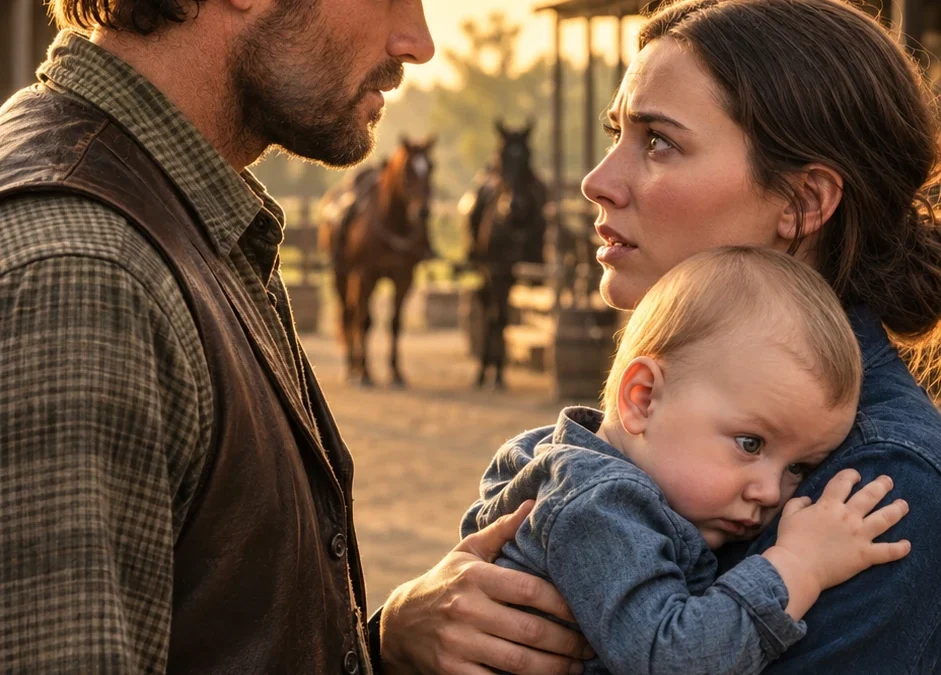
SHE WAS SOLD ON AN AUCTION BLOCK WITH HER 5-YEAR-OLD BROTHER 😭 THE CROWD BID $50… THEN A STRANGER AT THE BACK SAID ONE WORD THAT SILENCED THE WHOLE STREET… BUT WHY DID HE ASK IF THEY’D EATEN? 🔥
Part 1
The auctioneer’s hammer struck wood like a death sentence. 🔨
Eliza Moore stood on the raised platform in the center of Willow Creek’s main street, her little brother Noah clinging to her skirts, while men below shouted numbers as if she were livestock.
Twenty. Thirty. Forty-five.
Their eyes stripped her bare, calculating what they’d bought. Her labor. Her body. Her silence.
She had lost everything in three weeks. Her father to fever. Her home to debt. Her freedom to this godforsaken auction. And all she had left was the promise she’d whispered in the dark last night.
I’ll keep you safe. No matter what.
The morning had started with bread and false hope. She’d woken Noah before dawn in the boarding house room they could no longer afford and rationed the last of their food: half a loaf gone hard, water from a pitcher. She’d brushed his hair with her fingers, because she’d sold their mother’s brush two days ago. And she’d told him the lie that tasted like ash.
“It’ll be all right, sweet boy. Someone kind will take us in.”
Noah had looked up with eyes too old for five years, brown and serious like their father’s. He hadn’t argued. He’d stopped arguing after they buried Papa in the hard Montana ground and watched strangers carry their furniture out the door.
Now those words mocked her from every leering face in the crowd.
The auctioneer was a thin man with a voice like a rusty saw. “Healthy girl, twenty years old, can cook and clean and mend. Brother included, strong for his age, worth the extra mouth to feed.” He gestured at them like a wagon and a mule sold as a set.
Eliza’s spine straightened. She wouldn’t give these men the satisfaction of seeing her break. Not while Noah could still see her face.
The bidding had started at fifteen. Mr. Brennan, a shopkeeper who’d once smiled pleasantly while selling her father tobacco, raised his hand. A ranch hand missing half his teeth called twenty-five, his grin promising things that turned her stomach. Then voices blended together in a cacophony of greed and casual cruelty.
Thirty. Thirty-five. Hell, forty. Girl that pretty is worth it.
Laughter rippled through the crowd.
She kept her eyes on the false-fronted buildings across the street, cataloging details the way Papa had taught her to stay calm in storms. The sorrel horse tied outside the saloon. The woman sweeping her porch three buildings down. The clouds gathering on the western horizon, promising rain that wouldn’t come in time to save anything.
Noah’s small hand tightened in her skirt. She dropped her own hand to his shoulder and squeezed once. I’m here. I’m still here.
“Forty-five.”
The voice belonged to a man in a dusty suit whose eyes crawled over her like spiders. The auctioneer grinned, sensing profit.
“Quality merchandise, gentlemen. Raised proper. Not some saloon girl or drifter.”
Three weeks ago, she’d been a person. A daughter helping her father run a modest freight business, dreaming of teaching school someday. Three weeks ago, Noah had been a child who laughed. Three weeks was all it took to become merchandise.
“Fifty.” Someone’s voice, rough with whiskey even this early.
The auctioneer’s gavel hand rose, ready to fall. Eliza’s heart hammered. Fifty dollars. That’s what she and Noah were worth. Fifty dollars to some drunk who…
“One hundred.”
The voice cut through the noise like a knife through rotted cloth. Quiet. Firm. Tolerating no argument.
The crowd shifted. Eliza’s gaze snapped toward the speaker before she could stop herself.
He stood at the back edge of the crowd, apart from the others. Tall, maybe six feet, with the weathered face of years under the Montana sun. A jaw dark with several days’ stubble. Brown canvas pants, a faded blue shirt, a hat pushed back to show dark hair threaded with early gray. He held himself with the stillness of a man who had learned patience the hard way, and his slate-gray eyes met hers for just a moment before shifting to the auctioneer.
There was no hunger in that look. No calculation of what he’d bought. Just something else. Something Eliza couldn’t name through the rushing in her ears.
“One hundred,” the stranger repeated. “Cash. Right now.”
“Well, now, that’s a serious bid, Mr. …?”
“Caleb Hartman.”
“Mr. Hartman bids one hundred! Going once…” Silence. The kind that pressed against eardrums. “Going twice…”
Eliza’s breath caught. Noah’s hand was shaking in her skirt. Or maybe that was her own hand against his shoulder.
“Sold to Mr. Caleb Hartman for one hundred dollars.”
The gavel struck. The sound echoed off the buildings like a gunshot.
And just like that, Eliza Moore and her brother belonged to a stranger whose eyes held something she didn’t dare hope was kindness.
In the land office, the papers were signed and witnessed while she and Noah stood against the wall like furniture waiting to be claimed. When it was done, Caleb Hartman turned to them without ceremony.
“You two had breakfast?”
The question landed like something from another world. Eliza blinked, thrown completely off balance. “What?”
“Have you eaten today?”
She had schooled herself not to cry. Tears were a luxury she’d surrendered along with everything else. But something about the simple directness of that question, asked in that quiet tone, cracked something inside her chest.
“No,” she managed. “No, we haven’t.”
He nodded once, as if that confirmed what he’d already suspected.
“There’s a decent place two streets over. Come on.”
He walked toward the door, clearly expecting them to follow. Eliza and Noah exchanged a glance, hers questioning, his terrified. Then she took her brother’s hand and followed their new owner out into the blinding sun.
And over breakfast, he said something that made her question everything she thought she knew about the man who had just bought her…
👉 Want Part 2? Find it in the comments, or drop any word below and I’ll send it to you privately! 👇
Part 2
The restaurant was small and clean. Martha’s Kitchen, said the painted sign. The smell of bacon and fresh bread hit Eliza’s empty stomach like a blow, and she wavered on her feet. Hartman’s hand touched her elbow, steadying her. Brief. Impersonal. Gone before she could react.
“Easy. Sit down before you fall down.”
He ordered without wasting words. Eggs, bacon, potatoes, biscuits, pie. Coffee for him, milk for them. The woman who ran the place raised her eyebrows at Eliza and Noah, clearly drawing conclusions, but his steady gaze and the coins on the table forestalled whatever she’d planned to say.
Silence settled over the table. Noah pressed against Eliza’s side, his face half-hidden in her sleeve. She stared at the scarred tabletop. Men who bought women at auction didn’t feed them in public restaurants. They didn’t ask about breakfast. They took what they’d paid for.
“My name’s Caleb Hartman. I run a cattle ranch about two hours northwest of here, up in the foothills. It’s remote. Nearest neighbors five miles. House is solid, barn sound, work is hard but honest.”
“Why did you buy us?”
The bluntness of her own question surprised her. But if she was going to survive whatever came next, she needed to understand the rules.
“Because somebody needed to, and I could afford it.”
“That’s not an answer.”
“It’s the only answer I’ve got.” He waited until Martha set down the plates, then spoke more quietly. “I’m not going to lie to you. Ranch life is hard. Work starts before dawn and doesn’t end till dark. Winter’s brutal. You’ll earn your keep.”
“Doing what?” Her voice came out harder than she intended. “Exactly what am I expected to earn?”
Understanding dawned in his eyes, followed by something that might have been offense if it hadn’t been tempered with patience.
“Cooking. Cleaning. Mending. Same as any household. There’s been no woman at my place for three years, and it shows. I need help running the house. Not…” His jaw tightened. “Not anything else.”
The words hung in the air, heavy with implication and denial both.
“Eat,” he said. “Both of you. Take your time.”
Eliza wanted to resist, to keep some shred of dignity. But Noah was already reaching for a biscuit with trembling hands, and her own hunger was a living thing clawing at her insides. She ate. The food was simple but well prepared, and after weeks of rationed scraps, it tasted like salvation.
When their plates were half cleared, Hartman spoke again.
“I’m going to be straight with you, because I think you can handle straight talk. I need help on my ranch, and you need a place to go. I can pay you wages. Not much, but fair. Room and board included. You’ll have your own space, and the boy stays with you. If you don’t like the arrangement after a month, I’ll take you back to town and pay you for your time. No strings.”
Her throat tightened. “You’d let us leave?”
“I don’t keep people against their will.” His voice was firm, almost harsh. “I bought your debt, not your life. There’s a difference, even if the law doesn’t always recognize it.”
“Then why buy us at all? Why not just offer us work?”
For the first time, his expression shifted into something harder to read. Regret, maybe. Or old pain.
“Because that crowd wouldn’t have stopped at forty-five or fifty. You know what would have happened. Don’t pretend you don’t.”
She did know. The knowledge sat in her stomach like spoiled meat.
“So you bought us out of mercy.”
“I bought you out of anger.” The admission came flat and honest. “At a system that does this to people. At myself for having the money to participate in something that shouldn’t exist. I’m not a good man pretending to be your savior. I’m a man trying to do one decent thing in an indecent situation. That’s all.”
The rawness of it silenced her.
Noah tugged her sleeve. “Eliza. Are we going to be okay?”
She looked down at her brother’s thin face, still trusting her to have answers she didn’t possess. Then she looked back at Caleb Hartman, this strange man who claimed to want nothing but honest work, who’d paid a hundred dollars for the privilege of not being like other men.
“If we come to your ranch, and we don’t like it, you’ll truly let us leave?”
“You have my word.”
“Your word doesn’t mean much to me yet.”
“Fair enough.” He didn’t seem offended. “Then you’ll have to see for yourself.”
It wasn’t a guarantee. But it was more than she’d had on that auction block thirty minutes ago.
“All right,” she said. “One month.”
They left town within the hour. The wagon rolled north, and the road grew rougher, the land rising toward distant mountains. Noah fell asleep in the wagon bed, curled around their single carpet bag, exhausted by stress and the first full meal he’d had in weeks.
“He’s a good boy,” Hartman said. “Didn’t cry once, even when he was scared.”
“He’s been through too much. Children shouldn’t have to learn that kind of strength.”
“No. They shouldn’t.” Something in his voice suggested personal knowledge. “How long were you on your own?”
“Two weeks. The debt collectors came three days after we buried him. Papa had borrowed against the business to pay for Mama’s medicine two years back. They took everything. And when it wasn’t enough, they put us on that block.”
Hartman was quiet for a long moment. Just the creak of the wagon and the clip of hooves.
“My wife and daughter died three years ago. Cholera. Nobody sold me or took my land. It’s not the same thing. But I understand gone.”
She glanced at him sidelong, seeing new details. The grief worn into the lines around his eyes. The careful control of someone who’d learned not to break.
“I’m sorry.”
“So am I. The ranch was supposed to be for them. Sarah and Emma. Spent five years building it. Then they were gone, and I was left with this place I built for ghosts.”
“Why stay?”
“Because leaving would mean it was all for nothing.”
She understood that more than she wanted to. Sometimes survival was just stubbornness by another name.
When the sun lowered toward the mountains, he pointed ahead. “There. That’s home.”
A valley between two ridges. A creek running silver through its center. And on a slight rise, a two-story log house with a wide porch, a barn, a bunkhouse, and cattle grazing in golden grass. It looked like something from a dime novel. It also looked like a place where people could disappear and no one would know.
Her hands tightened in the blanket he’d lent her. He seemed to sense it.
“I know how it looks. Middle of nowhere. No witnesses. Just your word against mine if things go wrong.” He drew the wagon to a halt. “I can’t make you trust me. Trust isn’t something you buy or demand. But I can keep my promises, and I can give you time to see I mean what I say.”
Noah stirred. “Where are we?”
“Somewhere different, sweet boy,” Eliza said. “Come on. Let’s see what we’ve gotten ourselves into.”
The house was neat but neglected in small ways. Weeds around the porch steps. Windows that hadn’t seen cleaning in months. Two ranch hands greeted them, a red-haired young man named Tom and a grizzled older one named Henry, both too sensible to voice the questions in their eyes.
Upstairs, Hartman showed her a small clean room with a single bed. “You and Noah can have this one. My room’s at the end of the hall.” Then he went down to make supper and burned the stew.
Eliza found him staring at a pot of beef and vegetables that had adhered to the bottom with alarming determination. “I can admit when I’m outmatched,” he said, stepping aside. She took over without comment and coaxed the meal back from the edge of disaster.
That night she lay awake with Noah curled against her, listening to the unfamiliar sounds. Wind in the pines. Cattle lowing. Hartman’s boots on the stairs, then the soft click of his door closing, far down the hall.
One day survived. Twenty-nine more until she’d promised to decide.
The days found a rhythm. She cleaned the house until it gleamed. She cooked, and Henry and Tom ate with gratifying speed. She found photographs on the parlor mantel, a woman with kind eyes, a laughing little girl, a younger Hartman behind them with his hands on his wife’s shoulders. She dusted the frames and left them exactly where they were.
“You didn’t have to do all this,” he said, standing in the doorway of his transformed kitchen.
“I did, actually. That was the arrangement. Sit down before you fall down.”
His mouth twitched toward a smile.
He paid her at the end of the first week. Real coins that clinked into her palm with solid weight. “It’s what we agreed on. You’ve earned it.” Her first earnings in longer than she could remember. Proof she was worth something beyond what men might bid at auction.
Noah thrived, following Tom around like a devoted puppy, learning horses and cattle with the absorptive enthusiasm of a child given something safe to focus on besides fear. Color returned to his cheeks. His laughter came more easily.
Hartman never lingered after meals. He knocked before entering any room she was in. He treated her like a person with autonomy rather than property with obligations. It should have been entirely reassuring.
But then she’d see him in the yard after supper showing Noah how to rope a fence post, his rare laugh low and genuine, and feel something shift in her chest that had nothing to do with fear or gratitude. She didn’t examine it too closely.
Then, one evening, Henry came in with grim news.
“Weather coming. Bad storm, maybe two days out.”
And when it hit, it hit like the end of the world…
👍 LIKE or COMMENT “REVEAL” to see Part 3! It will be posted once we hit enough comments! 💬
Part 3
They spent a day and a half in preparation. Tom and Henry moved the cattle to lower pastures. Caleb chopped wood until it formed a wall against the house. Eliza filled every container with water, baked bread and beans that would keep, and checked the lamps.
The storm struck at night. The wind hit like a physical blow, rattling the whole house. Rain came not in drops but in sheets, thrown against the walls with percussive force. Thunder cracked so close it felt like the sky splitting open.
Eliza froze on the stairs, white-knuckled on the railing.
“It’s all right,” Caleb called from below, steady despite the chaos. “House is solid. It’ll hold.”
Then came a splintering crack from outside.
“That’s the barn roof.” He started for the door. “I have to check on the horses.”
“You can’t go out there.” Her hand shot out and caught his arm before she’d thought. “You’ll be killed.”
“I know my land.” But he didn’t pull away from her grip. “Eliza. I have to.”
She saw the set of his jaw, the determination of a man who’d shouldered every responsibility alone for three years. No argument would work.
“Then at least take a rope. Tie yourself to the porch so you can find your way back.”
He blinked. “That’s smart thinking.”
He tied one end to the railing, the other around his waist, and pushed out into the storm. She watched from the doorway as he fought across the yard, the rope playing out behind him, his figure appearing and vanishing in sheets of rain. She counted heartbeats. The rope stayed taut.
Then a shape resolved from the dark. Hand over hand, he fought his way back, something clutched under his other arm. He reached the porch, and she pulled him inside and slammed the door against the wind.
He was soaked and breathing hard, and cradled against his chest was a half-drowned barn cat, eyes wide with terror.
“Horses are secure. But this one…” He held out the cat. “Couldn’t leave her.”
She took the trembling animal, felt its claws dig into her dress. And she looked at this man who’d fought through a killing storm for a cat, and something fundamental shifted in her understanding.
“You’re bleeding.”
“Beam caught me. It’s nothing.”
“It’s not nothing. Sit down.”
She cleaned and bandaged the long shallow cut on his arm while the cat purred between them, the storm raging on, somehow farther away.
“You think I’m foolish. Risking myself for animals.”
“I think you’re responsible.” She wrapped the bandage carefully. “And maybe a little foolish. But mostly I think you understand what it means to be helpless in the dark while the world comes apart.”
His breath caught. Their eyes met.
“The cat’s name is Emma,” he said softly. “My daughter named her. I couldn’t leave her.”
“I know.” Her hand rested on his wrist. “I know.”
They stayed that way while the storm peaked and slowly eased. Later, with the fire built up against the cold, he said, “Three years I’ve been alone in this house. Pretending I was fine with it. Then you and Noah arrive, and suddenly there’s life here again.”
“You don’t have to figure it out tonight.”
“One month was the agreement. We’re past halfway. Have you decided if you’ll stay?”
“I haven’t decided,” she said honestly. “But I’m thinking about it.”
“That’s fair.”
“Caleb.” His first name felt strange on her tongue. Intimate. He looked up at it with something raw and hopeful. “You gave us a choice when we had none. That matters more than you know.” 🔥
The morning showed the storm’s toll. The barn roof sagged. Shingles lay scattered like playing cards. But the house stood, the animals had survived, and Henry and Tom came out of the bunkhouse shaken but unharmed.
“I can help,” Eliza heard herself say.
Three pairs of eyes turned to her. Caleb’s expression hovered between surprise and refusal.
“I’m offering, not asking permission.”
Something flickered across his face that might have been approval. “You work the house first. Then come out if there’s daylight. And you bring Noah.”
She sorted shingles all afternoon in the humid heat, her palms blistering despite Tom’s oversized gloves. That night on the porch steps, Caleb settled beside her and held out a tin of salve. “Sarah used to make it. Ranching makes a mess of hands.”
“My father ran a freight business,” she said. “I kept his books, helped with loading. I’m not afraid of hard work, Caleb. I’m afraid of being useless.”
“You’re not useless. This house was barely livable before you came. Now it’s a home again.”
The word hung between them.
“You already have worth,” he said. “You understand that?”
“I’m working on understanding it.”
“Work faster.” But his tone was gentle, almost teasing.
For a week, the new rhythm held. Then on a Tuesday morning, three well-dressed men rode into the yard. The leader dismounted with practiced ease.
“Caleb Hartman. Richard Brennan. These are my associates, Mr. Pierce and Mr. Dalton.”
Brennan. Eliza’s hand stilled on the laundry line. The shopkeeper who’d bid on her.
“Just a neighborly visit,” Brennan said, his smile never reaching his eyes. “But I heard you made an interesting purchase in town. A girl and her brother. Folks worry about that sort of thing. Whether she came willingly. Whether she’s being treated proper.”
It wasn’t concern. It was a threat wrapped in respectability.
Caleb’s hands curled into fists. “Miss Moore is employed here as household staff. She’s paid fair wages and treated with complete respect.”
“Why don’t we ask the lady herself? Miss Moore, you being treated all right? Because if you’re not, there are men in town who’d be happy to provide alternative arrangements.”
The implication was clear. Any hint of dissatisfaction and they’d take her. Not to safety.
Every instinct screamed at her to stay silent. But she thought of Noah sleeping safely inside. Of the money in her carpet bag earned through honest work. Of Caleb carrying a cat through a killing storm.
She stepped away from the laundry line.
“Mr. Brennan. I appreciate your concern, misguided though it is.”
All eyes turned to her.
“Mr. Hartman offered me honest employment when I had nothing. He pays me fair wages. He provides safe accommodation for me and my brother. He treats me with respect and dignity, something that was distinctly lacking when you and your friends were bidding on me like livestock a month ago.”
“Now see here…”
“No, you see here.” Her voice gained strength. “This isn’t about my welfare. This is about men like you being angry that Caleb outbid you. That he gave me choice instead of ownership. That he’s treating me like a person instead of property. And you can’t stand it.”
“The girl’s been influenced,” Dalton muttered. “Probably threatened.”
“The girl is standing right here, speaking for herself. Something none of you seem capable of respecting.”
Silence fell hard. Henry and Tom had positioned themselves strategically, ready. Caleb stood utterly still beside her, solid and somehow reassuring.
“You’re making a mistake, Miss Moore,” Brennan said coldly.
“I don’t need a way out. I need you to leave.”
“Miss Moore is free to speak however she chooses,” Caleb said. “It’s called respecting someone’s autonomy. You should try it sometime.”
Brennan’s face flushed dark. For a moment she thought he might draw a weapon. But Henry’s hand had drifted to his hip, and even Brennan’s arrogance had limits. “We’ll see how this plays out.”
They rode out fast, leaving tension thick in their wake.
Caleb turned to her, pale beneath his tan. “Are you all right?”
“Did I just make everything worse?”
“You told the truth. And you did it with more courage than most people could manage.” His hands gripped her shoulders gently. “We’ll handle whatever comes. But you did nothing wrong. Nothing.”
Four days later, a woman in severe black arrived in a hired wagon. Mrs. Henrietta Walsh, of the territorial Ladies’ Aid Society. “We’ve received concerning reports about a young woman and child residing here under questionable circumstances.”
Eliza knew whose doing this was. She led Mrs. Walsh to the parlor and told the truth without embellishment: her father’s death, the debt, the auction, Caleb’s intervention.
“You were sold like cattle,” Mrs. Walsh repeated, scandalized.
“I was. Along with my five-year-old brother. Mr. Hartman bought our debt and offered us employment instead of what other buyers intended.”
She brought out the wooden box of saved wages and set it on the table. She answered every question. She said, “If propriety is offended by a man offering honest work to a woman and child who had nothing, then propriety is the problem, not this arrangement.”
Mrs. Walsh set down her pencil with a sharp click. “You’re quite outspoken.”
“I’ve had to be. Women who stay quiet and proper often find themselves with no options at all.”
For a long moment they regarded each other. Then Mrs. Walsh said quietly, “I had a daughter once. She fell on hard times after her husband died. No family. No skill society deemed appropriate for a lady. She ended up in circumstances far worse than an auction block.” Her voice hardened. “So I understand desperation. I also understand how easily it can be exploited.”
“Exploiting my desperation would have meant forcing me into situations I couldn’t refuse. Mr. Hartman did the opposite. He gave me choice. That’s the difference.”
After a thorough inspection, interviews with Noah, Caleb, and both hands, Mrs. Walsh stood in the yard.
“I came expecting impropriety. I’ll report honest employment in circumstances that, while unconventional, are entirely proper. However. Appearances matter. An unmarried man and an unmarried woman in one household will continue to invite speculation.” She looked between them, almost sympathetic. “The only solution that satisfies both propriety and practicality would be marriage.”
The words fell like stones into still water.
Eliza fled to the kitchen before anyone could respond, chopping vegetables with more force than necessary. Marriage to Caleb Hartman. A man she’d known six weeks. Who’d bought her at an auction.
Caleb appeared in the doorway. “Eliza.”
“Don’t. Whatever you’re about to say. That Mrs. Walsh put you in an impossible position. That you’re sorry.”
“That’s not what I was going to say.” He moved closer. “I was going to say we should talk about it. Actually talk.”
“Why? It’s clearly impossible.”
“Is it? We live together. We work together. We’re building something that works. The only thing making it improper is other people’s judgment.”
“You’re suggesting we marry for convenience?”
“I’m suggesting we consider whether marriage would benefit us both.”
“What would you get?”
He was quiet. “Honestly? I’d get to keep you here without constantly worrying someone’s going to take you away. A partner instead of just an employee. A reason to care about more than just surviving day to day.”
The rawness of it tightened her throat. “You want me to be your second chance. To replace what you lost.”
“No. I want you to be my partner in building something new. Not a replacement for Sarah. No one could be that.”
“That’s not love. That’s just two broken people making do.”
“Maybe.” He didn’t look away. “But maybe that’s all love is sometimes. Two people choosing each other despite their brokenness.”
“I need time.”
“Take all the time you need. And whether we marry or not, you and Noah can stay as long as you want.”
She believed him. That was the terrifying part.
That night, staring at the ceiling, she untangled her thoughts. Marriage would solve practical problems. But it also meant risking her heart on a man who might see her only as a solution to loneliness. Unless he already saw more. She thought of the small moments: his hand steadying her after the auction, his patience with Noah, the way he said her name, careful and respectful, with something underneath that might have been tenderness.
When had he stopped being the stranger who bought her and become Caleb, the man who carried cats through storms?
The realization settled over her like sunrise. Slow. Inevitable. Terrifying, and somehow right.
She was falling for him. Had been, gradually, in increments so small she hadn’t noticed.
In the morning she found him in the barn, oiling a bridle. “Is this purely practical for you?”
“Would that be enough for you?”
“If it were purely practical, I wouldn’t have asked.”
His mouth twitched. “Fair.” He set the bridle down. “The truth is, I don’t know anymore. It started practical. Or so I told myself. But when I saw Brennan looking at you, I wanted to put my fist through his face. When Mrs. Walsh suggested you might leave, I felt a panic I haven’t felt since Sarah died. When you’re in the house, everything feels lighter. When you’re not, I’m just going through motions again. So no. It’s not purely practical. Not for me.”
Her heart pounded. “What if I said it’s not purely practical for me either?”
Hope and fear warred in his face. “Then I’d say we should talk about it like adults instead of dancing around it.”
“I care about you, Caleb. More than employer. More than protector. It’s wanting to see you smile. It’s worrying when you’re out in storms. It’s starting to imagine a future where this isn’t temporary.”
He closed the distance between them and framed her face with his calloused hands. “Eliza Moore, I bought you at an auction six weeks ago, and somewhere along the way you became the most important person in my world. If you’ll have me, not because you owe me or because it’s practical, but because you actually want this, I swear I’ll spend the rest of my life making sure you never regret saying yes.”
Tears pricked her eyes. “That’s not a very romantic proposal.”
“I’m not a very romantic man.” His smile was soft, reaching his eyes. “Marry me anyway.”
Standing in the barn with the morning light slanting through the rafters, Eliza made the same choice she’d made that first night. To trust. To hope.
“Yes. I’ll marry you.” 💛
Noah’s reaction was pure unfiltered joy. “Can I call him Papa?”
Caleb crouched to his level. “You can call me whatever feels right, son. But yes. If you’ll have me, I’d be honored to be your family.”
Noah launched himself at Caleb so hard he nearly knocked him over.
“About time,” Tom said over supper. “We’ve been taking bets on when you’d figure it out.”
They married a week later in the parlor, decorated with wildflowers Noah had picked, with Henry and Tom as witnesses and Mrs. Walsh officiating, her severity softened by what might have been satisfaction. Eliza wore her mother’s dress, the only nice thing she still owned, carefully preserved in the carpet bag that had held everything they possessed six weeks earlier.
“Mrs. Hartman,” Caleb murmured against her lips, testing the name.
“Mr. Hartman,” she returned, with a smile like sunrise.
Two weeks later, Brennan came back with a territorial marshal, a gray-haired man named Samuel Cord.
“That’s my wife,” Caleb said, “Eliza Hartman. We were married two weeks ago with proper witnesses and documentation.”
“Convenient timing,” Brennan sneered.
The marshal asked to speak with Eliza alone. In the parlor, he said, “Mrs. Hartman, I need you to be straight with me. If this marriage is coerced, that’s a serious crime.”
“It’s not coerced.” She met his gaze steadily. “Six weeks ago I stood on an auction block, terrified for myself and my brother. Caleb outbid them and brought us here. But he didn’t treat us like property. He gave me employment and offered me choice. I stayed because this became home. I married him because gratitude turned into respect, and respect turned into something deeper. Look around, Marshal. Talk to my brother, who calls Caleb Papa because he feels safe and loved.”
“And if I told you right now that you could leave, that I’d take you and your brother to town and help you find other arrangements, would you go?”
“No.” The answer came without hesitation. “This is my home. Caleb is my husband. Whatever brought us together, what we’ve built is real.”
Cord sighed and replaced his hat. “I’ve been doing this twenty years. I know coercion when I see it, and I know genuine choice.”
After interviews and a look at the marriage certificate, he turned to Brennan with visible exasperation. “There’s nothing here. The marriage is legal. The woman is willing. Hartman didn’t buy a person. He bought a debt and offered employment instead of servitude. You want my advice? Let this go. You’re not going to win this fight.”
Brennan mounted without further argument, murderous but beaten.
Caleb pulled her close. “Is it really over?”
“I think so.” She leaned into his warmth.
The seasons turned. Autumn painted the mountains gold and crimson. Eliza became a true partner in the ranch, managing accounts and livestock decisions, treated with the same respect Caleb gave Henry’s years of experience. Noah grew taller, stronger, more confident, his nightmares about the auction replaced by dreams of cattle drives and horses.
One snowy winter evening, with the fire crackling, she realized she had forgotten to wait for disaster. Caleb watched her from across the room.
“Just thinking how different this is from last winter. This house was so quiet I could hear the walls settling. Now it’s full of life.”
“Do you miss the quiet?”
“Not even a little.” He sat beside her. “I miss Sarah and Emma. I always will. But I’m not just surviving their loss anymore. I’m building something new because of you.”
“We’re building it together.” She turned in his arms. “Caleb. I’m pregnant.”
His eyes went wide. “You’re… We’re…” He couldn’t finish a sentence. “About two months along.”
His expression cycled through shock, wonder, and joy so pure it made her eyes sting. His laugh was half sob. “Thank you. Thank you for choosing this life. For choosing me.”
The baby arrived in late summer on a day when the heat pressed down like a weight. A girl, with healthy lungs. Caleb sat beside Eliza on the bed, his hand gentle on the baby’s dark head, tears in his eyes.
“Not Emma,” he said quietly. “That wouldn’t be fair to either of them. She deserves her own name.”
“Grace,” Eliza suggested. “Because we’ve been given so much grace, and she’s part of that.”
“Grace Hartman.” He smiled. “Yes.”
Noah touched his sister’s tiny hand with such careful reverence it made them both tear up. 💫
Three years later, on a cool autumn afternoon, Eliza stood in the yard watching eight-year-old Noah teach three-year-old Grace to feed the chickens, patiently guiding her small hand as she scattered grain. Caleb slid an arm around her waist, his other hand resting on the swell of her stomach, where their second child was growing.
“Remember when you first got here? You could barely look at me without suspicion.”
“Can you blame me? You’d bought me at an auction.”
“Fair point.” He kissed her temple. “Look at us now.”
Henry and Tom, older now, had become uncles to the children. Even the town had come around, mostly. Mrs. Walsh visited sometimes, always formal, increasingly warm. “You’ve done well, Mrs. Hartman. Better than most women in your circumstances could have hoped for.”
“I had help,” Eliza said. “And I chose well.”
That night, after the children were asleep, Caleb and Eliza sat on the porch, his fingers laced through hers, watching the stars come out.
“Do you ever think about that day? The auction?”
“Sometimes. But not the way I used to. I used to think about it with horror. Now I think of it as the day everything changed. The day I met you.”
“I bought you at an auction,” he said ruefully. “That’s going to sound terrible when we tell our grandchildren how we met.”
She laughed, the sound carrying into the night. “Then we’ll tell them the truth. That sometimes life brings people together in impossible ways. And what matters isn’t how you start, but what you build from it.”
She turned to look at him, this man who had saved her and whom she’d somehow saved in return, whose grief had become peace, whose lonely house had become a home full of life.
“And I wouldn’t change a word of it.”
He pulled her close and kissed her forehead with tender reverence.
In the distance, a coyote called to the moon. Closer, their daughter stirred in her sleep and settled again. The wind whispered through the pines, carrying the scent of coming winter. And on the porch of the ranch house they had made into a home, Caleb and Eliza sat in comfortable silence, hands joined, hearts linked.
What began on an auction block in desperation had become a marriage built on choice, a family created through courage, a home earned through work and trust.
They had been sold. They chose each other anyway. 💛🌄
This story is entirely fictional and created for entertainment purposes only. It does not represent any organization or individual, nor does it encourage inappropriate behavior. The content was generated with AI assistance.








