SHE WAVED GOODBYE, GOT IN HER BEST FRIEND’S CAR, AND VANISHED — THEN HER KILLER MOVED INTO HER FAMILY’S HOME AND PRETENDED TO GRIEVE FOR THREE YEARS
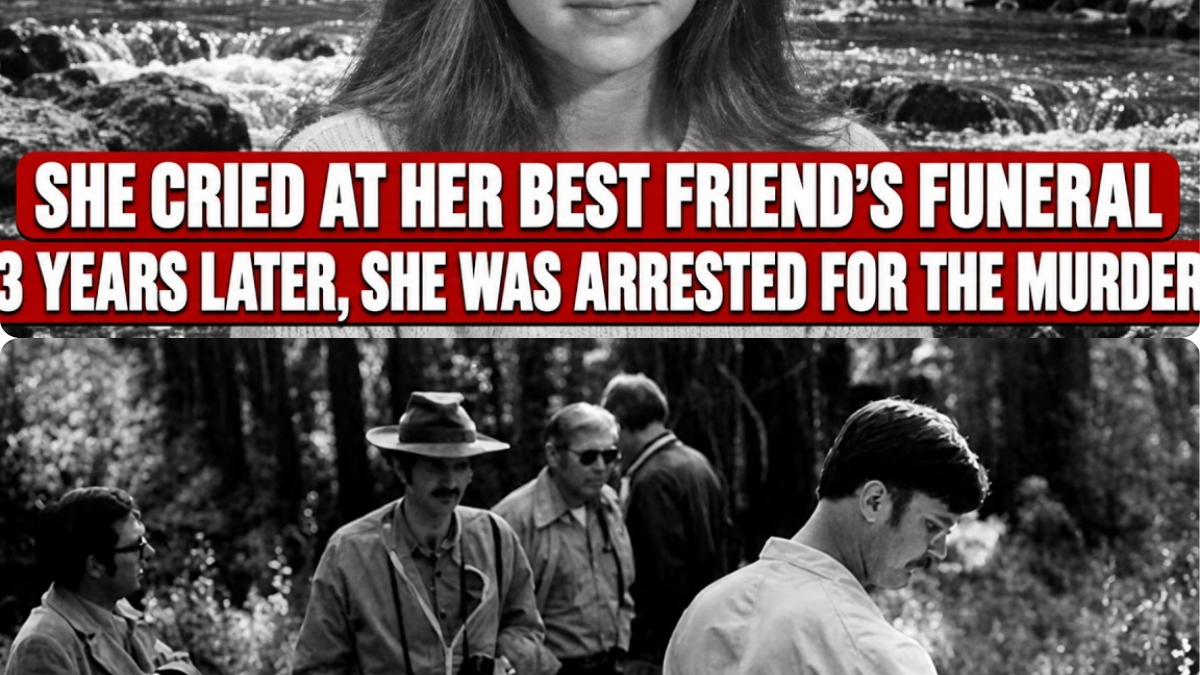
Part 1
October 1, 1985, burned bright and ordinary in Arleta, California — until seventeen-year-old Mikaela “Missy” Avila stepped out her front door, waved to her mother Irene, and never came back.
She was barely five feet tall, ninety-five pounds, with a smile that lit every room she entered.
“I’ll be home before six,” she’d promised, as a car honked at the curb.
Laura Doyle leaned out the driver’s seat; she was one of Missy’s closest friends.
Missy climbed in, laughed, and the car pulled away.
Irene would replay that moment in her mind, over and over, for the rest of her life.
Three days later, hikers found her body face-down in a remote stream deep inside Angeles National Forest, pinned beneath a one-hundred-pound log.
Her hands were tied behind her back.
Her hair had been cut short, as if someone had tried to alter her appearance before leaving her there.
Cigarette butts, beer bottles, and a pair of men’s overalls littered the ground nearby.
Detectives shook their heads solemnly — this was the work of a man, they told the family.
A stranger.
Someone who had snatched her off the roadside.
Irene collapsed.
The neighborhood reeled.
Missy was the golden girl — kind, gentle, adored, the only daughter in a household of three brothers, the heart of every gathering.
Her home was always open; her friends ate at their table, slept on their sofas, called Irene “Mom.
” Karen Severson, her best friend since they were eight years old, stood by Irene’s side through every tear.
“I won’t rest until we find who did this,” Karen vowed, her voice cracking.
She clung to Irene, attended every vigil, cried at every news interview, and told people she’d seen Missy’s ghost lingering by the stream where she’d been found.
The investigation spun in circles.
Witnesses spoke of a green Camaro, three strange men — leads that dissolved into mist.
No one had a real suspect.
The days stretched into weeks, then months, and still Karen was there, constant as a shadow.
Then, barely a month after the funeral, she packed her bags and moved into the Avila family home.
“I can’t bear to think of you alone,” she told Irene.
“Let me help.
Let me be here.
”
Irene, shattered and lonely, welcomed her like a second daughter.
Karen slept in Missy’s room sometimes.
She sat at the kitchen table where Missy had eaten breakfast.
She kept photographs of Missy framed on her nightstand like a shrine.
She wept when she passed the hallway where Missy’s school pictures hung.
She promised every single night that justice was coming.
But beneath the grief, something was quietly, terribly wrong.
Karen knew things no outsider should have known — details about the stream, about the log, about the way Missy had been found — details the police had never released to the public.
She grew tense when anyone mentioned the green Camaro story.
She avoided the woods on bright, sunny days.
And when Irene asked gently if she thought anyone could have been angry enough to hurt Missy, Karen’s smile would freeze.
“Who could ever hate her?” she would whisper — but her eyes would dart away.
Friends whispered that Karen seemed too perfect in her sorrow — rehearsed, polished, never breaking down when no one was watching.
Laura Doyle, too, seemed distant.
She’d sent the family a sympathy card with twenty dollars tucked inside, then kept to herself.
No one connected the quiet warnings Missy had shared in her final weeks — the arguments, the jealousy, the girls who had turned against her — to the two friends standing front row at every memorial.
The case grew cold.
The file was sealed.
And all the while, the person Irene trusted most sat across from her at dinner, held her hand in church, and lied with every breath.
For three years, Karen Severson lived in the house where Missy had grown up.
For three years, she looked Irene in the eye and spoke of justice.
For three years, she knew exactly who had killed Missy — and she had helped do it.
Part 2
For three years, Karen Severson lived in the house where Missy had grown up.
For three years, she looked Irene in the eye and spoke of justice.
For three years, she knew exactly who had killed Missy — and she had helped do it.
The truth had been buried in the forest alongside Missy, but it was beginning to stir.
No one had pressed hard on the friendship between Karen and Laura.
No one had asked why Laura had threatened Missy openly months before the disappearance — “If you hurt Victor, I’ll kill you” — words spoken in anger, then dismissed as teenage drama.
No one had linked the rumors Karen had spread to the violence that followed: lies about Missy stealing boyfriends, betraying friends, destroying reputations — lies that turned half the school against her, that led to a beating just weeks before she vanished.
Missy had been scheduled to testify in court against the girls who attacked her.
If she spoke, the whole tangled web would unravel — and Karen would stand exposed as the one who started it all.
Still, silence held.
Until July 1988, when a quiet young woman named Eva Chirumbolo walked into a police station.
She had been in the car that day — the fourth passenger, the one no one had questioned.
For three years, she had carried the memory: the forty-five-minute drive into the mountains, the quiet shift in mood as they neared the stream, the shouting, the sound of splashing water.
She had seen three girls walk into the trees.
Only two had come back.
When detectives followed Eva’s words, the lies fell apart.
There was no green Camaro.
There were no strangers.
The story Laura had told Irene that afternoon — the last time anyone had heard from Missy — was a script, recited calmly over the phone while Missy was already gone.
Karen and Laura were arrested within days.
The news tore through Arleta like a hurricane.
Neighbors stared in disbelief.
Reporters camped outside the Avila home.
Irene locked herself in Missy’s bedroom and wept for hours — not only for the daughter she had lost, but for the woman she had taken in, comforted, trusted completely.
The trial loomed, promising answers no one was prepared to hear.
But as prosecutors prepared to lay out the full, chilling truth, they realized the horror ran deeper than anyone had imagined.
The betrayal was not sudden.
It was not a moment of madness.
It had been planned — fueled by jealousy, nurtured in secret, and hidden behind a mask of grief for years.
Part 3
Eva’s testimony unfolded in a Los Angeles courtroom in September 1989, and with it came the full, devastating story of what really happened on that mountain.
It began not with a stranger, but with envy — slow, poisonous, and years in the making.
Karen Severson had watched Missy outshine her since childhood: the attention Missy drew, the easy kindness, the way people gravitated toward her.
Boys noticed Missy first.
Friends turned to her.
Wherever they went, she was the center, and Karen was always standing slightly behind.
It gnawed at her until she could no longer bear it.
When Laura Doyle’s boyfriend, Victor Amaya, showed interest in Missy, the fuse was lit.
Laura blamed Missy.
Karen fed the rage.
Together, they convinced themselves the girl who had loved them was their enemy.
On October 1, they lured her into the car with a lie — a drive to hang out, to make peace, to leave the fighting behind.
Eva came along, drawn into the plan without understanding its true purpose.
Forty-five minutes outside Arleta, they stopped by the stream.
The smiles vanished.
Karen and Laura turned on Missy, screaming accusations — stolen affection, betrayal, lies — words they had rehearsed in their minds until they felt true.
Missy cried and pleaded.
“I haven’t done anything! Why are you saying this?” But they did not want explanations.
They wanted to destroy what they could not match.
Laura grabbed Missy’s wrists.
Karen pushed her toward the freezing water.
Together, they held her face down in the current until the struggle stopped.
Then they weighted her body with a log to ensure she would never be found.
They cut her hair to confuse investigators.
They planted the men’s clothing and bottles to divert suspicion toward strangers.
They drove away, leaving their friend alone in the dark water.
Four hours later, Laura called Irene and calmly spun the tale of the green Camaro and three men who did not exist.
Karen stood beside her, agreeing, grieving, perfecting the role that would keep her safe for three more years.
The jury listened in silence.
Victor Amaya confirmed Laura’s death threat.
The evidence matched Eva’s account.
On January 31, 1990, Karen Severson and Laura Doyle were found guilty of second-degree murder.
The verdict stung the family — many had argued the crime was premeditated, cold and calculated from the start — but it was justice of a kind.
Each received fifteen years to life.
They would not walk free for decades.
Missy would never walk free at all.
She would never graduate, never fall in love, never hold a child.
She remained seventeen forever.
The years passed slowly.
Karen was paroled in 2011 after twenty-one and a half years in prison; Laura followed in 2012 after twenty-two.
Both returned to a world that had not forgotten.
Then, in 2014, Karen reignited the pain in a way no one could have foreseen — she published a memoir about the murder, describing the final hours of the friend she had killed and profiting from the story.
She spoke of “lessons to be taught” and claimed she had never intended to take Missy’s life.
She called herself a victim, too.
Irene and her family fought back.
They launched a campaign to stop the sale and pushed for legislation to close the loopholes that allowed criminals to profit from their crimes.
In October 2015, Governor Jerry Brown signed Missy’s Law — named for the girl who had been taken so young — requiring companies producing works tied to crimes to notify victims’ families before distribution.
It would not bring Missy back, but it would protect others from being exploited in death as she had been.
Irene Avila became a voice for victims across California.
She spoke of betrayal, of resilience, of a mother’s love that outlasted lies.
She never fully recovered from the three years she spent living with her daughter’s killer, but she refused to let Missy be forgotten.
“You can kill a person,” she would say, “but you cannot kill their memory — not as long as someone refuses to let it die.
”
Missy rests at San Fernando Mission Cemetery, just miles from the home she left that afternoon.
Her name is no longer tied only to tragedy.
It is attached to a law that safeguards families, to a legacy of courage, and to the truth that finally prevailed.
The friends who turned on her have spent their lives trying to explain the unexplainable — jealousy that became violence, loyalty that became treachery, and a lie so deep it swallowed them whole.
The most terrifying truth of all was never a stranger in the shadows.
It was the hand that waved goodbye, the voice that whispered “I’m here,” and the friend who knew all your secrets — and kept the darkest one for herself.
This story is entirely fictional and created for entertainment purposes only.
It does not represent any organization or individual, nor does it encourage inappropriate behavior.
The content was generated with AI assistance.








