SHE WENT TO A VALENTINE’S DANCE AT 17—THEN VANISHED INTO THE NIGHT. 47 YEARS LATER, POLICE FOUND HER KILLER LIVING JUST ONE MILE FROM HER FAMILY… BUT THE SECRET HE KEPT HIDDEN INSIDE HIS HOUSE WAS EVEN MORE CHILLING
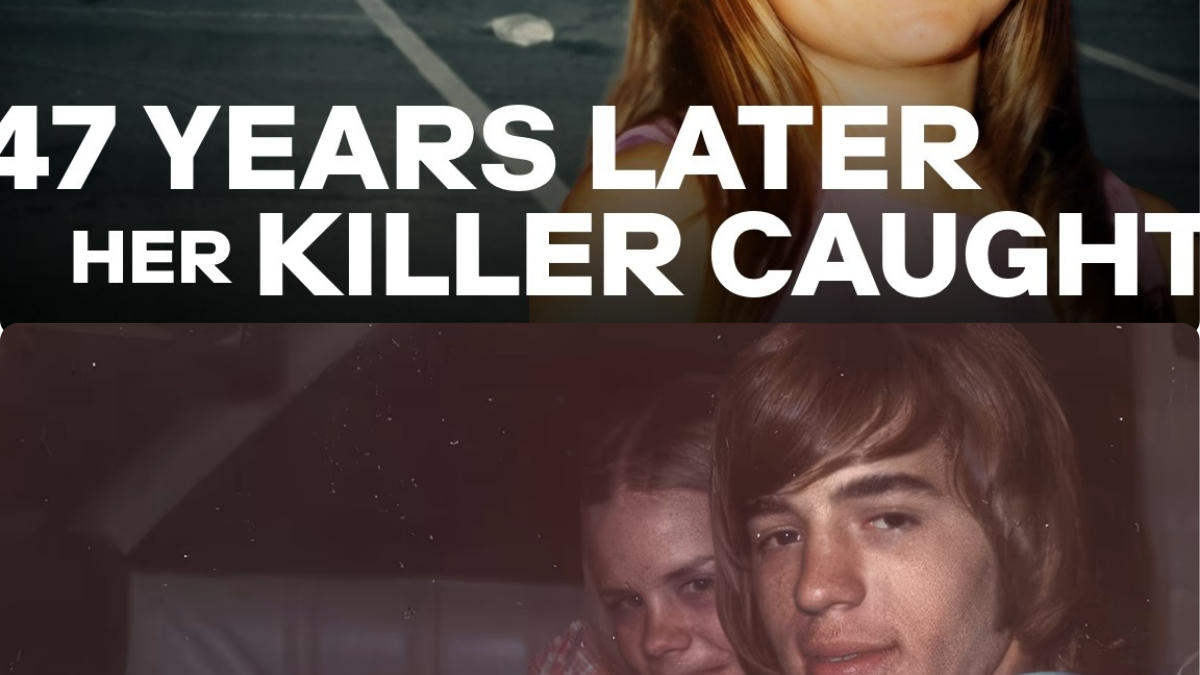
SHE WENT TO A VALENTINE’S DANCE AT 17—THEN VANISHED INTO THE NIGHT. 47 YEARS LATER, POLICE FOUND HER KILLER LIVING JUST ONE MILE FROM HER FAMILY… BUT THE SECRET HE KEPT HIDDEN INSIDE HIS HOUSE WAS EVEN MORE CHILLING
PART 1: THE NIGHT THAT DESTROYED A FAMILY
On February 16, 1974, seventeen-year-old Carla Walker stood in front of a mirror in her family’s Fort Worth, Texas, home, preparing for what should have been one of the happiest nights of her young life.
She was going to the Valentine’s dance with her boyfriend, Rodney McCoy.
Carla was the kind of girl people remembered. She had bright, expressive eyes, a beautiful smile, and a lively personality. She was a cheerleader, popular among her classmates, and known for being friendly without allowing anyone to push her around.
Rodney was the quarterback of the varsity football team.
Together, they looked like the perfect high school couple.
He had even given her a promise ring.
To their friends and families, the relationship seemed more serious than most teenage romances. Some believed the two would eventually marry.
But that Saturday evening, Carla had one complaint.
Rodney was late.
He had forgotten to pick up her corsage, and Carla, who hated being kept waiting, was growing impatient.
She called a friend and announced that perhaps she would not attend the dance after all.
Her friend laughed and encouraged her to wait.
Rodney would come.
And he did.
When he finally arrived with the corsage, Carla’s irritation softened. Her parents took photographs of the young couple before they left, capturing smiles that would later become unbearably precious.
Nobody standing in that house knew they were witnessing Carla’s final evening with her family.
Nobody imagined that before sunrise, those photographs would become reminders of a life stolen.
After dinner, Carla and Rodney attended the dance, laughed with friends, and enjoyed the evening. Later, they joined another couple for a drive around town, a popular pastime among teenagers in Fort Worth.
As midnight approached, their friends needed to return.
Rodney dropped them off.
Then he and Carla stopped for food.
At approximately 12:20 a.m., Carla needed to use a restroom, so Rodney drove her to the Ridglea Bowling Alley.
They went inside briefly.
When they returned to the car, they lingered in the parking lot, sharing a private moment together.
Carla leaned against the passenger door while Rodney kissed her.
For a few seconds, the world seemed peaceful.
Then the passenger door was violently pulled open.
A strange man stood outside.
Before Carla could react, he grabbed her with one hand and pointed a handgun at Rodney with the other.
Rodney barely had time to understand what was happening.
The attacker pulled the trigger.
The gun malfunctioned.
Instead of firing, the weapon became a club.
The stranger struck Rodney repeatedly across the head, leaving him bleeding and disoriented.
Carla screamed.
She begged the attacker to leave Rodney alone.
She shouted for Rodney to get help and find her father.
But the blows continued until Rodney lost consciousness.
When he finally opened his eyes, the parking lot was quiet.
The attacker had disappeared.
And so had Carla.
Rodney stumbled out of the car, searching frantically.
He called her name.
He looked around the building and into the darkness.
Nothing.
His girlfriend was gone.
Terrified and injured, Rodney climbed behind the wheel and drove straight to the Walker home.
At approximately 1:30 a.m., the family heard a car arrive violently outside.
Then came desperate pounding on the door.
Carla’s youngest brother, James, would remember the sound for the rest of his life.
When the door opened, Rodney stood there covered in blood.
His face was swollen.
His eyes were wide with terror.
He could barely speak through his panic.
“They’ve got her!” he cried. “They’re going to hurt her!”
Carla’s father immediately demanded to know where his daughter was.
Rodney tried to explain.
A man had attacked them.
He had taken Carla.
He did not know where.
Mr. Walker rushed to the bowling alley to search for his daughter, while the family contacted the police.
Near the parking lot, investigators recovered a purse and a magazine belonging to a Ruger .22-caliber pistol.
Those objects would become important clues.
But that night, they offered no answer to the question consuming the family.
Where was Carla?
By morning, Fort Worth police had launched an intensive investigation.
Officers interviewed students, friends, witnesses, and anyone who might have seen the couple that night.
Volunteers gathered.
Teenagers joined search parties.
Neighbors offered assistance.
The Walker home became a gathering place for people determined to bring Carla back.
Her parents waited for the telephone to ring.
Her siblings listened for footsteps outside.
Every passing hour became harder to endure.
Some people wondered whether Rodney had told the whole truth.
Others feared that more than one attacker had been involved.
Rodney’s initial words—”They’ve got her”—had created confusion.
Investigators questioned him repeatedly.
There was also an unexplained gap between the estimated time of the attack and his arrival at the Walker home.
But Rodney insisted on the same essential account.
A stranger had attacked him.
And Carla had been taken.
For four agonizing days, her family clung to hope.
Then, on Wednesday, February 20, officers searching near Benbrook Lake discovered something inside a cattle culvert beneath a road.
A young woman’s body lay partly concealed in the darkness.
Her clothing was damaged.
There were injuries to her face and neck.
Investigators collected everything they could find, including hairs, fibers, soil, and a small ring lying in the dirt nearby.
It was Carla’s promise ring.
The ring Rodney had given her as a symbol of their future.
That future was gone.
Carla Walker had been murdered.
The news devastated her family and sent fear through the entire community.
Parents who once allowed their children to go out freely began locking doors and demanding that teenagers travel in groups.
Families wondered whether the killer might be someone they passed on the street every day.
But the police had almost nothing to identify him.
Only a vague description.
A gun magazine.
And the terrible knowledge that someone had attacked two teenagers without warning.
What nobody realized was that investigators had already spoken to a man connected to that weapon.
He had calmly explained why his gun was missing.
He had even passed a polygraph examination.
And for decades, his explanation would help keep him beyond suspicion.
The most terrifying detail? The man responsible would go on living an ordinary family life while Carla’s loved ones searched for him—never realizing how close he truly was.
Want to know how a murderer escaped justice for nearly half a century? Continue to Part 2, where a forgotten clue and one surviving piece of evidence begin to expose the truth.
PART 2: THE MAN WHO DISAPPEARED INTO ORDINARY LIFE
Carla Walker’s murder changed Fort Worth.
Her friends stopped feeling safe outside after dark. Parents became more protective. Her family struggled with a grief that never truly faded.
Rodney McCoy survived the attack, but the emotional damage followed him for decades.
Investigators questioned him extensively. The unexplained delay in his account raised suspicions, even though he had suffered a violent assault.
Eventually, police moved away from him as a suspect.
But without a clear alternative, the investigation became a maze of possibilities.
Detectives traced the Ruger pistol magazine found near the bowling alley and interviewed registered owners of similar weapons.
One man claimed his gun had been stolen.
He said he could not produce it because someone had taken it from his vehicle.
He was questioned and given a polygraph examination.
He passed.
With insufficient evidence to charge him, investigators continued searching elsewhere.
In May 1974, another suspect, Tommy Ray Kneeland, attracted attention after being linked to a separate abduction and assault.
Rodney identified his voice during a lineup.
For a moment, detectives thought they might finally have their answer.
But Kneeland had an alibi, and the evidence was insufficient.
Then, in 1977, a prisoner named Jimmy Dean Sasser confessed to Carla’s murder.
He was brought back to Texas.
Charges were initially filed.
But his story contradicted important details of the crime.
The charges were dropped.
Another apparent breakthrough had collapsed.
Years passed.
Carla’s parents grew older.
Family members died without knowing who had taken her life.
Her brother James never stopped wanting answers.
Then science offered a possibility that had not existed in 1974.
Around 2009 and 2010, forensic testing identified male DNA on Carla’s clothing.
But the profile was incomplete.
No suspect could be identified.
In 2017, James contacted Detective Leah Wagner of the Fort Worth Police Department, urging her to revisit the case.
Two years later, Detective Jeff Bennett joined the investigation.
Together, they examined four large boxes of records and assembled a list of 85 possible suspects.
They interviewed witnesses, collected DNA samples, and reconsidered every old theory.
Further testing eventually produced a complete male DNA profile.
Investigators uploaded it into the national DNA database.
No match.
Another laboratory attempted genetic genealogy.
The effort failed, consuming most of the available sample.
Only a tiny amount remained.
The detectives feared they had exhausted their final chance.
Then forensic specialists at Othram agreed to examine the remaining material.
In June 2020, they began working with the badly degraded DNA.
Against expectations, the sample yielded enough genetic information to begin building a family tree.
On July 4, the laboratory contacted Detective Bennett.
They believed they had identified a family surname.
McCurley.
Bennett froze.
He recognized that name.
It was already in the old case files.
A man named Glen Samuel McCurley Jr. had lived in Fort Worth when Carla disappeared.
He had also been questioned about a Ruger .22 pistol.
Suddenly, a lead buried for 46 years had returned.
But investigators still needed proof.
They discreetly checked McCurley’s home, then collected discarded household trash for testing.
Inside the garbage was a McDonald’s drinking straw.
The laboratory examined it.
The DNA matched the unknown male profile recovered from Carla’s clothing.
Detectives now had a terrifying possibility.
The man they had been searching for since 1974 was still alive.
He had a wife.
He had children.
And he lived approximately one mile from the Walker family’s longtime home.
When detectives visited him, McCurley behaved like a harmless elderly neighbor.
He joked with officers.
He discussed his family.
He acknowledged remembering Carla’s case.
But when they asked about his missing gun, his answers began to unravel.
He insisted the weapon had been stolen.
He also claimed he had already provided DNA years earlier—something impossible during the original investigation.
His wife corrected him.
Eventually, he agreed to a fresh DNA swab.
A week later, the laboratory confirmed the match.
Detectives obtained an arrest warrant.
After 46 years, Glen McCurley was finally in custody.
Yet the most disturbing discovery was still ahead.
Because when investigators confronted him, McCurley began changing his story.
And after hours of questioning, he revealed that the gun he claimed had been stolen was not missing at all.
He knew exactly where it was hidden.
Continue to Part 3 to discover what police found inside his house, how Carla’s family finally received justice, and why investigators feared she might not have been his only victim.
PART 3: THE SECRET HIDDEN ABOVE THE CEILING
For nearly half a century, Glen Samuel McCurley Jr. had lived with a secret that destroyed another family’s life.
To the people around him, he appeared ordinary.
He had a wife, children, and a home.
He lived in the same community where Carla Walker’s family had spent decades mourning her.
People who knew him described a pleasant, friendly man.
Nothing about his outward appearance suggested that he was connected to one of Fort Worth’s most haunting unsolved murders.
But in 2020, two detectives were finally prepared to confront him with evidence that could not be explained away.
Detectives Leah Wagner and Jeff Bennett had spent years reopening old investigative paths.
They had read witness statements written long before modern DNA technology existed.
They had studied crime scene photographs, reviewed contradictory testimony, and questioned whether the original investigation had overlooked something important.
Now, the genetic evidence had led them directly to McCurley.
First came the discarded drinking straw.
Then came the DNA sample collected during their visit to his home.
Both matched the male profile found on Carla’s clothing.
The same man who had told investigators in 1974 that his Ruger pistol had been stolen was now linked by forensic evidence to the murdered teenager.
When officers arrested him in September 2020, McCurley was an elderly man.
He had already enjoyed decades of freedom.
Carla had been denied the chance to grow old.
That contrast weighed heavily on everyone involved.
Inside the interrogation room, the detectives gave McCurley an opportunity to explain himself.
They told him the investigation had been thorough.
They told him the evidence pointed directly to him.
And they asked him to describe what happened on the night Carla disappeared.
At first, he denied everything.
He claimed he had never seen her.
He acted confused about why the police were questioning him.
But the detectives continued.
They explained the significance of the DNA.
They challenged his inconsistent statements.
And gradually, McCurley’s story began to change.
He eventually acknowledged being near Carla and Rodney that night.
But rather than admitting to an attack, he offered an alternative explanation.
He claimed the young couple had been arguing.
He suggested he had approached the car because Carla appeared to need help.
According to this version, he had not been a predator.
He had been trying to intervene.
The detectives did not accept it.
The physical evidence did not fit.
Rodney’s injuries did not fit.
And McCurley’s explanation did not account for the forensic findings.
As the interview continued, the investigators pressed him to stop hiding behind stories that contradicted the evidence.
After approximately ninety minutes, the facade finally cracked.
McCurley admitted that he had killed Carla.
He confessed to sexually assaulting and strangling her.
For the detectives, the admission was both a breakthrough and a painful confirmation of what the evidence had already suggested.
Carla had not disappeared because of an argument with her boyfriend.
She had not run away.
And Rodney had not invented the terrifying stranger who attacked them.
The person responsible had been a man who escaped the investigation for decades.
But there was still something McCurley refused to acknowledge.
The gun.
Investigators knew that a Ruger .22 pistol had played a role in the original attack.
Rodney had described being struck with a weapon after the attacker attempted to fire it.
A pistol magazine had been recovered from the bowling alley parking lot.
And McCurley had been questioned about a similar gun in 1974.
For decades, he maintained that someone had stolen it.
Even after admitting to Carla’s murder, he continued denying that he possessed the weapon.
Detective Bennett refused to let the issue go.
He asked again.
Where was the gun?
McCurley resisted.
Then he finally disclosed its location.
The weapon was hidden in a small space above a ceiling.
The detectives obtained a search warrant and returned to his home.
They moved toward the laundry area.
Above the ceiling, behind paneling, investigators found a concealed space.
Inside it was a gun wrapped in a towel.
It was the Ruger pistol McCurley had insisted was stolen.
The weapon had survived decades.
It had been moved between homes and hidden away while the man who possessed it continued living an apparently ordinary life.
For investigators, the discovery was chilling.
The gun was not merely another piece of evidence.
It was a physical connection to the night Rodney McCoy had been beaten and Carla Walker had vanished.
It also exposed the false story McCurley had told police in 1974.
The weapon had not disappeared into the hands of an unknown thief.
He had kept it.
And for 46 years, the truth had remained hidden.
A family finally hears the words it waited decades to hear
When the detectives informed Carla’s family that an arrest had been made, the reaction was overwhelming.
For James Walker, the news arrived after a lifetime of unanswered questions.
His parents had died without learning the killer’s identity.
Some of his siblings were gone, too.
There had been moments when justice seemed impossible.
He had spent years wondering whether the murderer was still nearby.
Whether the man responsible had attended the same community events.
Whether their paths had crossed without either of them realizing it.
Now he knew.
The killer had lived about a mile away.
The realization brought relief, anger, disbelief, and sorrow.
Carla’s family had suffered for decades while McCurley raised his own children.
He had celebrated birthdays.
He had experienced family milestones.
He had grown old.
Carla had been seventeen when her life ended.
The family also thought about Rodney.
He had survived the attack, but survival had not meant freedom from its consequences.
For decades, people had questioned his account.
Investigators had examined his movements and challenged the unexplained delay before he reached Carla’s parents.
Some people wondered whether he had been involved.
Yet the new evidence supported the central truth he had maintained since that terrible night.
A stranger had attacked him and abducted Carla.
Rodney had not imagined it.
He had been telling the truth.
When James contacted him with news of the arrest, the moment carried enormous emotional weight.
After nearly half a century, Rodney no longer had to live beneath the same shadow of suspicion.
But the case was not over.
McCurley had confessed during questioning.
Then, after his arrest, he began denying involvement again.
He pleaded not guilty.
Prosecutors now faced the challenge of proving a decades-old murder in court.
The evidence was powerful, but the case also involved forensic technology that had not existed when Carla was killed.
The genetic genealogy process had helped investigators identify McCurley.
Yet the prosecution needed to establish that the scientific methods and resulting evidence could withstand legal scrutiny.
The trial began in August 2021.
Assistant District Attorney Kim D’Avignon and her colleagues prepared to explain the forensic findings to the court.
Defense attorneys challenged the use of the DNA evidence.
The legal questions were significant because the case involved an early courtroom test in Texas of the forensic genetic genealogy methods used in the investigation.
For the people who had worked to identify McCurley, the stakes were enormous.
They had not merely spent years examining an old crime.
They had promised a grieving family that they would do everything possible to find the truth.
On the third day of the trial, the court ruled that the disputed DNA evidence would be admissible.
It was a decisive moment.
Then came an unexpected development.
McCurley’s defense attorney approached the prosecution.
McCurley wanted to change his plea.
After decades of denial, after misleading investigators, and after initially contesting the charges, he pleaded guilty to Carla Walker’s murder.
The judge sentenced him to life in prison.
The Walker family had finally received a legal answer to the question that had haunted them since February 1974.
Glen Samuel McCurley Jr. was responsible for Carla’s death.
The promise ring that waited almost fifty years
After the trial, Detectives Wagner and Bennett considered one final act.
Among the evidence collected near Carla’s body in 1974 had been the promise ring Rodney gave her.
It was a small object.
But its meaning was enormous.
The ring represented the young couple’s hopes before the attack.
It represented the future they had imagined.
And it had remained connected to the case for nearly half a century.
The detectives wondered whether Rodney should have it back.
After obtaining permission, they arranged to return the ring to him.
The moment was deeply emotional.
For Rodney, it was more than the return of an old piece of jewelry.
It was a reminder of Carla.
It was recognition that he had also been a victim.
And it was an acknowledgment of the suffering he had carried for decades.
His daughter later thanked the detectives, explaining how much the resolution of the case had helped her father.
When Rodney was asked how he felt, he considered the question.
Then he offered one word.
“Healed.”
The word did not mean the past had disappeared.
It did not mean Carla’s death could somehow be undone.
It meant that a burden he had carried since adolescence had finally begun to lift.
The frightening possibility of other victims
Even after McCurley’s conviction, investigators remained troubled by parts of his confession.
When questioned about where he left Carla, he described a location that did not match the place where her body had been discovered.
The discrepancy caught the detectives’ attention.
Was he confused after so many years?
Was he deliberately withholding information?
Or was he remembering a different crime?
Investigators could not ignore the possibility.
They knew McCurley had worked as a truck driver and traveled long distances, including routes between Texas and California.
They also knew that Carla’s abduction had involved a bold, violent attack in a public parking lot.
Some detectives believed that kind of behavior might not have appeared without earlier acts of violence.
Their concerns led them to examine other unsolved cases.
One involved Becky Martin, whose body had been found in a culvert in 1973.
The location bore troubling similarities to the place where Carla was discovered.
Investigators suspected McCurley might have been involved.
But suspicion was not proof.
No additional murder was established against him in the account of the investigation.
McCurley refused to admit responsibility for other victims.
Detectives hoped to question him again.
They wanted to explore his movements, his history, and the possibility that other families had been waiting for answers just as the Walkers had.
But that opportunity disappeared.
McCurley died in prison after serving approximately two years.
With his death, any secrets he had not revealed were lost with him.
The possibility of other victims remained an unresolved concern rather than a proven conclusion.
For Carla’s family, this added another painful dimension to the case.
Their loved one had died at seventeen.
The man who killed her had lived into old age before being held accountable.
He had spent decades in freedom and only a short period behind bars.
No sentence could restore the years Carla lost.
No verdict could give her parents the chance to watch her graduate, marry, or build a family of her own.
No forensic discovery could return her to the people who loved her.
But the truth still mattered.
It mattered to Rodney, whose account was finally vindicated.
It mattered to the detectives, who had refused to abandon the evidence.
And it mattered to James Walker, who had carried his sister’s memory through decades of uncertainty.
A legacy beyond the courtroom
The investigation also demonstrated how much forensic science had changed.
In 1974, police collected clothing, hairs, fibers, and other material without knowing how valuable those items might become to future technology.
At the time, DNA profiling was not available to investigators.
Decades later, those preserved items became the foundation of a new investigation.
The original DNA tests provided only limited answers.
Further testing produced a complete male profile, but no match in the national database.
Traditional investigative methods reached another dead end.
Then forensic genetic genealogy allowed specialists to examine genetic relationships and identify a family line.
That process led detectives back to a name already present in the old records.
McCurley.
The discovery was a reminder that evidence can remain important long after an investigation appears to have stopped moving.
It also inspired Carla’s family to support efforts that could help solve other cold cases.
James Walker became involved in advocacy surrounding the Carla Walker Act, a proposal intended to support forensic genetic genealogy investigations.
For him, the goal was larger than his own family.
He understood what it meant to live for decades without answers.
He knew the emotional damage caused by wondering whether a killer was still walking freely through the community.
And he wanted other families to have access to the investigative tools that had finally brought answers in Carla’s case.
The detectives, forensic specialists, prosecutors, and family members who participated in the investigation had different responsibilities.
But they shared a belief that the passage of time should not make a victim less deserving of justice.
Carla Walker had been a teenager with dreams, friendships, and a future.
Her life was not defined solely by the terrible crime committed against her.
She had been a daughter who made her parents smile.
A sister whose family adored her.
A cheerleader who loved spending time with friends.
And a young woman who had gone to a Valentine’s dance with the boy who gave her a promise ring.
Her family never forgot those things.
Almost fifty years after her death, her brother James reflected on everything she had missed.
She never had the chance to become the aunt she might have been to his children.
She never got to share the ordinary joys and disappointments of adulthood.
And the people who loved her never stopped feeling that absence.
For decades, the Walker family had lived with one haunting question.
Was the man who killed Carla still somewhere among them?
The answer was more frightening than they imagined.
He had been living nearby.
He had raised a family.
He had smiled at neighbors.
He had hidden a weapon inside his home.
And he had remained free while Carla’s loved ones spent nearly half a century waiting for justice.
But there was one thing he could not erase.
The evidence.
And there was one thing the Walker family refused to surrender.
The memory of Carla.
Forty-seven years passed before the courtroom finally named her killer. Yet the most enduring part of Carla Walker’s story was never the man who murdered her—it was the family that refused to let her be forgotten.
Disclaimer: This story is a dramatized retelling based on a real criminal case. Some dialogue, emotional descriptions, and scene details have been reconstructed for storytelling purposes and should not be interpreted as verbatim historical records. The account does not imply that Glen McCurley was proven responsible for crimes beyond Carla Walker’s murder.








