Teen Vanished At The Grand Tetons, 10 Years Later Returned With Knowledge Of Every Missing Hiker
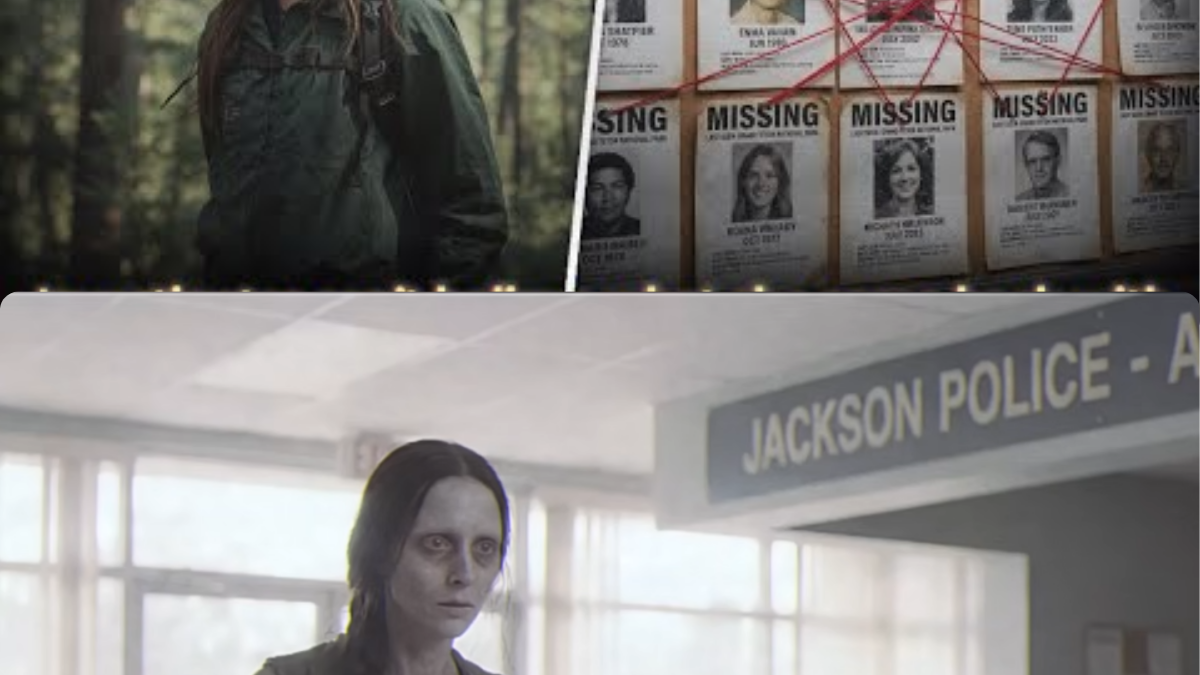
Part 1: The Girl Who Vanished
August 14, 2014.
Seventeen-year-old Iris Callaway kissed her sister June goodbye, climbed into her beat-up Honda Civic, and drove to the Jenny Lake trailhead.
She was an experienced hiker — raised reading weather patterns before books, carrying GPS, first aid, and more water than she could possibly need.
Her plan: a solo day hike up Cascade Canyon, a route she’d done dozens of times before.
When dusk fell, her car remained locked in the lot — and Iris was gone.
For three weeks, hundreds of volunteers combed the Tetons.
Helicopters swept the peaks.
Thermal imaging picked up elk and deer, but no sign of her.
Not a scrap of clothing, not a water bottle, not a footprint.
Iris hadn’t just gotten lost — she had dissolved into the wilderness like morning mist.
Her family and the whole town grieved.
After a month, the official search ended.
Her photo faded on the missing-person board.
Her parents moved away; June stayed, returning to the trails every weekend, calling her sister’s name into the silence, refusing to believe she was gone.
Ten years passed.
August 2024.
A woman walked into the Jackson Police Station — gaunt, hollow-eyed, her dark hair braided down her back, moving with the slow, careful economy of someone who had learned to hoard every calorie.
She carried a hand-drawn map on birch bark, marked with symbols no standard survey used.
“My name is Iris Callaway,” she whispered.
“I’ve been missing for ten years.
And I know where the bodies are.
”
The map marked 43 locations scattered across the Teton range — each with initials, dates, and notations: JM 1987 — rockfall / artificial.
AR 2019 — fall / pushed.
MP 2008 — bear attack / arranged.
Bodies that had never been found.
Deaths that had been ruled accidents, disappearances that had simply faded into legend.
FBI Agent Marcus Torres had spent years suspecting these cases were connected — too many experienced hikers vanishing in a well-patrolled park.
But he’d never imagined this: a living witness stepping forward with a map of the dead.
Iris told them what had happened.
She’d been lured off-trail by a woman feigning injury — a trap.
A man had stunned her from behind.
They’d taken her deep into the backcountry, to a cave compound hidden where no map showed.
The man she called the Keeper had lived there since the early 1970s — a survivalist who’d retreated so far from society he’d become part of the landscape itself.
He wasn’t just hiding.
He was documenting everything.
For fifty years, he’d watched, selected, and removed hikers he judged unworthy — those who disrespected the land, traveled alone, left trash, or carried themselves with too much pride.
Sometimes he merely observed; sometimes he engineered “accidents” — loosened rock faces, altered trails, timed encounters with wildlife.
He saw himself not as a killer, but as the mountains’ guardian — pruning what he called the ecosystem.
And he’d chosen Iris not just as a prisoner, but as his successor.
Part 2: The Apprentice
For ten years, Iris lived in the Keeper’s hidden world.
He taught her to read the mountains — weather, water, game trails, hidden routes — and he broke her down, day by day, until she no longer remembered life outside the peaks.
He showed her his journals: hundreds of volumes recording every death, every victim, every choice he’d made.
He took her with him — seven times — to watch him act.
“I watched him kill seven people,” she told Torres, her voice barely audible.
“And I helped him hide the evidence for all of them.
”
This was not a wild man’s rampage.
It was a system.
He built observation posts, supply caches, signal methods using reflected sunlight and stone markers — a parallel civilization invisible to the world below.
He selected victims with chilling calculation: solo travelers, those who ignored warnings, those who treated the wilderness as a playground.
And over time, he began preparing Iris to take his place — expanding her range, sending her alone to gather supplies, trusting her with routes and secrets.
Then, two years prior, he’d begun letting her go further — until one day, she simply walked.
But why? Why give her the freedom to leave? That question haunted Torres as he assembled a task force to storm the compound.
Iris could describe the interior in precise detail — the sound of water through tunnels, the way light filtered through ventilation shafts — but she’d never seen it from above.
She was a prisoner who knew the maze from the inside only.
The breakthrough came not from landmarks, but from sound.
Working with a trauma specialist, Iris described the acoustics of the caves — the way water sounded different in each chamber, how wind changed with the weather.
A geological acoustic analyst modeled her descriptions and narrowed the search to three remote locations.
At dawn on the fourth day, a tactical team found it — hidden behind a rockfall that looked entirely natural, an entrance so perfectly camouflaged they stood before it without seeing it.
Inside, they found not a crude shelter, but a sprawling, carved underground complex — and it was empty.
The Keeper was gone.
But he’d left everything else.
Hundreds of journals lined the shelves — not just records of deaths, but decades of ecological observation, weather tracking, animal migration, all woven together with his own twisted theology.
And deeper still, they found a shrine: personal items taken from victims — rings, photos, permits — arranged with reverence.
And one final camera, labeled with Iris’s initials and the year she’d been taken.
It contained photos of her — portraits taken over a decade, documenting her transformation from terrified teenager to hollow-eyed survivor.
He hadn’t just kept her; he’d curated her.
The final entries revealed his plan: he was old, and he’d been grooming her to continue.
The freedom he’d given her hadn’t been an oversight — it had been a test.
He’d let her go not because he was careless, but because he believed she would return.
Part 3: The Ascension
“He’s not running,” Iris told them, her voice steady.
“He’s ascending.
”
The Keeper had told her of a sacred place — a high plateau near the summit of Grand Teton itself, where he believed the mountains had first spoken to him.
If his work was threatened, he would go there to become one with the peaks he’d served.
A storm was approaching — the kind that could bury high ground in feet of snow and make rescue impossible for weeks.
They had hours.
Iris insisted on leading the way.
The ascent was brutal — following barely visible game trails and ledges that challenged even expert climbers.
She moved through the terrain with a terrible familiarity, reciting the markers he’d taught her, the codes and signs no one else knew.
At 11,000 feet, they found him — seated in lotus position on an exposed plateau, facing the rising sun, waiting.
He was gaunt, barely conscious, dying from deliberate exposure.
But his eyes were clear.
“You brought her back,” he whispered.
“She completed the circle.
”
He spoke as if her return was the fulfillment of his purpose — that she would carry his work forward.
“Fifty years I’ve protected these peaks,” he told them.
“She carries the knowledge now.
”
Iris stepped forward.
For ten years, he had shaped her reality, told her who she was, what she was meant to be.
Now she looked at him — and spoke clearly, without trembling.
“I didn’t come back to continue your work.
I came back to end it.
”
He smiled — certain, still, that she could not help but be what he’d made her.
“You escaped because I allowed it.
You returned because the mountains called you.
You are what I made you.
”
For a moment, doubt crossed her face — the fear that he was right, that a part of her had been irrevocably changed.
Then she hardened.
“You’re wrong.
I escaped because you got old and careless.
And I didn’t return to serve the mountains — I returned to make sure every family who lost someone to your madness finally gets answers.
”
The smile faltered.
In the growing light, the wilderness prophet was revealed as just a sick, delusional old man.
They carried him down, but he died during the descent — his final words a string of coordinates that matched no known map.
Using Iris’s map and the journals, recovery teams located 37 of the 43 missing.
Each discovery brought closure to families who’d waited decades — but six remained lost, in places altered by time or too remote to reach.
Iris was not charged; prosecutors recognized her participation had been survival, not choice.
But she could never shake the feeling that she had been both victim and instrument.
Her reunion with June was bittersweet.
The sister who left in 2014 did not return — only a woman who flinched at loud sounds, woke at night hearing water running through stone tunnels, and struggled to separate memory from guilt.
Letters of gratitude arrived from families, but she kept them unread.
Being called a hero felt like another cage.
The Keeper’s compound was sealed, buried under tons of rock — whether by his own pre-placed charges or by authorities, no one could say.
But the mountains remained.
On quiet nights, Iris still woke to the sound of wind through stone passages, to the drip of water in the dark.
Her therapist told her it was memory, not haunting — that the mountains had never spoken to anyone.
But Iris wondered.
Six bodies remained somewhere in the range.
And Agent Torres would sometimes study the map, wondering about those final coordinates the Keeper had whispered as he died — secrets taken to heights no search team would ever reach.
The Tetons rose above Jackson Hole as they always had — beautiful, indifferent, enduring.
They did not care about justice or closure.
They simply held their silence — patient, perfect, and utterly indifferent to the darkness that had sheltered in their shadows.
This story is a work of fiction created for narrative entertainment.
It does not represent real events, persons, or organizations.








