THE ARMY OF APACHE WOMEN CAME FOR HIS SPRING IN THE DEAD OF NIGHT… BUT THE LONELY EX-CAVALRY SOLDIER DID SOMETHING THAT STUNNED THEM, AND HIS OWN TOWN TURNED ON HIM FOR IT
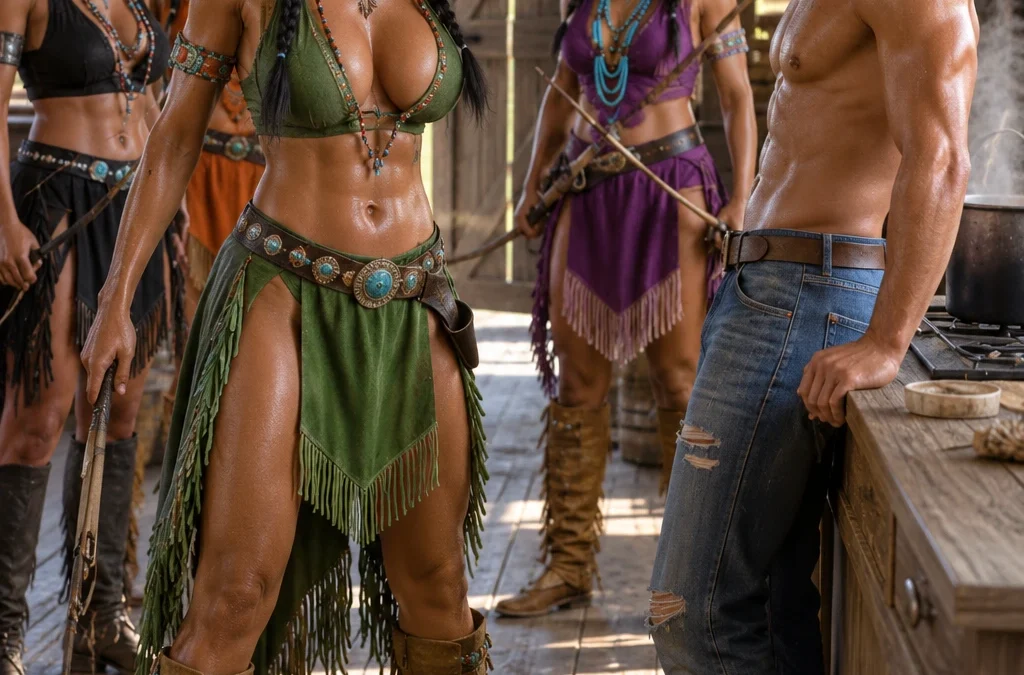
THE ARMY OF APACHE WOMEN CAME FOR HIS SPRING IN THE DEAD OF NIGHT… BUT THE LONELY EX-CAVALRY SOLDIER DID SOMETHING THAT STUNNED THEM, AND HIS OWN TOWN TURNED ON HIM FOR IT 😱🌵
Part 1
The Arizona frontier, late 1870s. 🌅
A strip of dry land stretched for miles beneath a pale, cloudless sky. The sun hit the sand hard enough to bleach the color out of everything: grass, boards, skin. The air was so dry it cracked lips and split timber. Out here, nothing moved fast. The world had slowed to the rhythm of the wind and the scrape of boots against dirt.
Elias Boon rode through the remains of what had once been a proud ranch.
It had been his father’s, before the war and the drought took it apart piece by piece. The fences stood crooked, half-buried in sand. A few starving cows lingered in the shade of dead cottonwoods, ribs showing, too tired to kick at the flies. The well pump groaned when he worked it, coughing up water that smelled faintly of metal.
It was enough to keep him and the animals alive. Not much more.
He was in his mid-thirties, lean from habit rather than hunger, with hands built for work and scars that never told their full stories. On his left shoulder, a faded cavalry tattoo marked the years he had ridden under orders across Apache lands with his rifle ready.
He never spoke of those years.
There was a look in his eyes: steady, quiet, but not peaceful. The stillness of a man whose guilt had learned how to live inside him without breaking him completely.
He owed no one. He trusted almost no one. His purpose was simple: keep the land alive long enough to matter again. Most nights he ate beans by lantern light and listened to the coyotes. He had not spoken to another person in weeks, and that suited him fine.
But lately, something about the land had changed.
Footprints near the spring. Faint smoke from a distant ridge. The echo of children’s voices carried on the wind.
Elias knew that ridge. It was an old Apache hunting ground, taken by settlers decades ago and fenced without a thought. He figured whoever had returned was not looking for a fight. They were looking to survive.
And though he had been trained to see trespass and threat, he felt neither. What he felt, crouching beside the spring, was unease mixed with curiosity.
He touched one of the prints. Barefoot. Small. A woman’s, or a child’s. The edges had not yet blown over. They had been here this morning.
His hand drifted to his revolver out of habit. He did not draw it.
If they are Apache, they will be desperate. Every rancher within fifty miles guards his well with a rifle. I can drive them off. Or I can let them drink.
One choice kept him safe. The other kept his conscience intact.
He was not sure which he wanted more.
That night, he lay awake in the cabin he had built with his own hands, its walls patched with mud and pine, its roof leaking when it rained. The wind carried the smell of the spring, and something else. Wood smoke, from a fire that was not his.
He thought about the faces he had once seen through rifle sights. Women and children running as the cavalry rode through the canyons. He told himself he had only followed orders.
The memories did not care. They came anyway, like dust under a door you could never seal. 🕯️
Miles away, hidden among the rocks, a woman named Naira knelt beside a small fire. She was twenty-eight, sharp-featured and steady-eyed, her hair braided tight with turquoise beads. Around her sat four women and a child, survivors of scattered Apache bands driven south by raids and relocation orders.
They had come north again, not out of defiance, but out of need. Their food was almost gone. The only reliable spring within reach lay on land now marked by white fences.
Her people looked to her for decisions. She had no clear path.
She had seen the man who owned that ranch from a distance. A white man, living alone. He did not patrol with a rifle. He did not set dogs loose. That might mean something.
Or it might mean he was waiting for them to make a mistake.
At dawn, she sent two women to scout the spring.
Below, Elias walked toward the same water. Same quiet pace. Same hard line in his jaw. As the wind rose and the light struck the rocks just right, he looked up and saw a figure standing on top of the ridge.
A woman. Standing still. Watching him.
She did not hide.
Neither did he.
Two people separated by history and fence posts, studying each other across the same patch of water and dust, both wounded by what this land had taken from them. Both unsure whether this meeting would end in peace or in blood.
The next morning, six women walked out of the trees toward his spring. No men among them.
And when the one in front, the same woman from the ridge, stopped just a few yards from him and looked straight at the tattoo on his shoulder, Elias realized she knew exactly what kind of man he had once been.
Part 2
…Elias realized she knew exactly what kind of man he had once been.
He did not speak first. His face stayed unreadable, though his heartbeat was heavy as a drum beneath his ribs.
The women paused several yards away. At the front stood Naira, chin lifted, shoulders squared, like someone walking into an argument she already expected to lose. Behind her, an older woman with gray streaks in her braids carried two empty gourds. A young girl trailed at the rear, eyes darting from the spring to the cowboy’s boots.
“You live here,” said Naira, her voice low but firm.
“Since before the drought.”
“The spring is old. Before this fence, my mother’s people drank here.”
“Then they knew where the water runs best,” he answered slowly.
A muscle moved in her jaw. She could not tell if he was mocking her.
Elias stepped back half a pace. Not enough to look afraid. Just enough to clear the way.
They filled their gourds. The rhythm of water against clay was the only sound between them. The young girl knelt to wash her hands and gasped softly at the cold. Elias watched, realizing how long it had been since a child had touched this water.
He should have said something about the fence, the cattle, the law. The words stayed in his throat. Instead, he picked up a loose plank and began mending a corner post, just to keep his hands busy.
“You will not tell the others in town?” Naira asked when she finished.
“There is no reason I should.”
She did not thank him. He did not expect her to.
Three days later, the air turned heavy with the static smell of a dust storm, and the horizon went a sickly yellow. Elias nailed the shutters tight and ran for the barn.
Halfway there, through the flying grit, he saw two figures fighting the wind down the slope. A tall woman shielding a smaller one.
He did not hesitate. He ran straight into the storm, head down, sand stinging like hot needles.
“This way!”
Naira looked up, eyes narrowed, and recognized him. She pushed the younger girl toward him. The girl, no more than sixteen, was coughing hard, clutching a small wrapped bundle to her chest. Elias dragged them both into the half-collapsed barn just as the storm hit full force. 💨
The door slammed. Dust poured through every crack. The roar made the walls tremble.
Naira’s arm was bleeding through a torn piece of deerskin. When Elias reached for it, she flinched, her eyes full of mistrust. He stopped his hand halfway and waited, without a word, until she gave a small nod.
He cleaned the gash and bound it with strips of clean cloth. She bit the inside of her cheek and did not make a sound.
“You were a soldier,” she said quietly, her gaze drifting to the tattoo.
“I was. Not anymore.”
“You fought us.”
The question was not really a question.
“I did what they told me,” Elias said at last. “Doesn’t mean I believed in it.”
Her face tightened. “Belief did not stop bullets.”
“No,” he said. “It didn’t.”
The silence that followed was not comfortable. But it was honest. 🤍
By morning, the storm had passed. He told them they could stay until the air cleared. When they left, he pressed a burlap sack of cornmeal and beans into Naira’s hand.
“We do not beg,” she said.
“Didn’t say you did. It’s a trade.”
“For what?”
“For leaving the barn cleaner than you found it.”
She almost laughed. “You are a strange man, Elias Boon.”
“I’ve heard worse.”
Later, he found a strip of braided leather threaded with a single turquoise bead, hanging from a nail by the barn door. He hung it from his porch beam, where it swayed in the wind.
But Tate’s men had noticed the footprints.
Harlon Tate, the loudest rancher in Silver Creek, rode up to the gate with five armed men and a cold smile.
“Heard you’ve been feeding Apache women, Boon. You protecting them?”
“You’ve seen what men like you made them do,” said Elias evenly.
A rifle rose. And from behind the men came the sound of a lone rider, galloping hard.
Part 3
The rider was Deputy Rhodes, one of the few men in Silver Creek who still thought before pulling a trigger. He swung between them with his rifle already unshouldered.
“That’s far enough. Put the guns down.”
Tate laughed coldly. “You taking his side again?”
“I’m taking the side that keeps this county from turning into a graveyard. The sheriff heard what you planned. You fire on Boon’s land and you’re finished.”
Tate’s grin faltered. He was not brave enough to shoot a lawman with witnesses. After a bitter silence, he spat in the dirt and turned his horse.
“You’ll regret this, Boon. You and your pet savages both.”
The dust of their leaving hung in the air a long time.
Elias said nothing. But his heart did not slow. He knew Tate would not let it rest. Word of Apache women hiding in the hills could raise a mob faster than any common sense could stop it. 🔥
By sundown he walked the ridge, following the faint crackle of a fire between the rocks. Naira knelt beside it, her face lit by the flicker. Two women mended clothes behind her while Tala slept against a saddle blanket.
“You need to move,” he said, his hands open. “Tate will come back with more rifles.”
Frustration crossed her face. “And where do you think we should go? Every piece of this land belongs to someone else.”
“I know. But I know places they don’t. A dry wash east of here, behind the black rocks. I rode it once during the war. The water runs shallow, but it’s hidden.”
“Why do you care what happens to us?”
He hesitated, searching for the truth that fit.
“Because once, I didn’t. And I’m still paying for that.”
Something in her face softened. She nodded once. “We will move when it is dark.”
He left a canteen by the fire. “Take the trail behind the junipers. It’s quiet even in moonlight. I’ll ride out at dawn and cover your tracks.”
In the morning, the camp was empty. The ashes had been buried, the prints brushed away. Only a small carved hawk hung from the juniper where he had left the grain weeks ago. Wings spread. A mark of trust.
He closed his fist around it.
Days later, Naira appeared again at the edge of his land by a small hidden fire, and pressed a folded scrap of paper into his hand. A rough map. A dry creek bed twisting north into the foothills.
“This is where we will go if the men come. There is a spring near the rock ledge. My people used it long ago.”
“You trust me with this?”
“You earned it.”
The words caught him off guard. Neither spoke for a moment.
“The others still think you will turn us in,” she said.
“And you?”
The corner of her mouth tightened. “I think you are tired of doing what other men expect of you.”
He let out a breath that was almost a laugh. “You’re not wrong.”
Before she left, she stepped closer. “If Tate comes, do not stand alone.”
“I never do,” he said, meaning it both ways. 🌙
The sun rose hard and white the next morning. Elias saddled his horse in silence, checked his rifle, and leaned it against the porch beam beside the turquoise braid. That small piece of color had come to mean more than he could admit. It was not a token. It was a promise.
By mid-morning, he saw them. A dark smudge crossing the southern plain. Six men, with Tate at the front, rifles hanging low in their saddles.
They had not come to talk.
Elias did not run for his rifle. He stepped off the porch and stood in plain view.
“Told you I’d come back,” said Tate, stopping twenty yards out. “One last chance. Tell me where they went.”
“They’re gone. You won’t find them.”
“You think helping them escape makes you a hero?”
“No,” said Elias quietly. “Just makes me a man who can still look in the mirror.”
The words landed heavier than any insult. Some of the men behind Tate shifted. They did not look like they wanted this fight. But Tate could not back down now. He raised his rifle.
Elias did not flinch.
“If you fire that, you start something you can’t stop. You’ll draw blood for nothing, and you’ll answer for it when the law rides through here.”
“There ain’t no law out here that matters!”
Then, from the north, the sound of fast hoofbeats rolled across the heat.
Deputy Rhodes pulled in hard between them, and behind him rode two more men with the sheriff’s star.
“Sheriff’s ordered you off Boon’s land, Tate,” said Rhodes. “Fire here, and you hang.”
Tate’s face worked. He looked at the star-wearing men. He looked at Elias. He lowered his rifle and rode away without another word, his men following, muttering. The dust of their retreat settled slowly over the silent ranch.
Rhodes dismounted and wiped his brow. “They’ll talk. But they won’t be back. The sheriff made sure.”
“That’s good enough for me.”
“You did right by those people, Boon.”
Elias gave a small, tired smile. “Doesn’t always feel like it.”
“It will,” said Rhodes, and rode away.
That evening, Elias followed the dry wash north to where the black rocks rose from the earth like broken teeth. He needed to see for himself whether Naira’s people had made it.
The trail was faint. But he found the signs: old ashes, stone markers, footprints pressed deep into the dirt, all leading toward higher ground.
At the edge of the canyon, he saw it. A narrow spring trickling between the rocks, glinting in the sun. And beside it, a thin line of clean smoke rising from a new camp.
They had made it. 💛
He did not ride closer. He only sat and watched. After a moment, a small figure appeared at the edge of the rocks. Tala. She spotted him, froze, then ran back toward the camp.
A minute later, Naira stepped out, standing tall in the sunlight. She did not wave. But she did not hide either.
They looked at each other across the canyon. No words. No need. Just a nod, quiet and certain.
Elias turned his horse and rode home as the desert glowed orange and gold. He hung his hat on the porch beam and sat on the step, listening to the crickets and the soft trickle of the spring. Above him, the turquoise braid caught the last of the sunset and shimmered faintly.
He smiled. Not from joy, exactly. From peace. The peace of a man who has finally laid his ghosts to rest.
He had spent years trying to rebuild what the world had taken: land, pride, the quiet inside his own head. Now he understood he had not been rebuilding for himself at all.
He had been holding the ground for someone else to survive on.
And for the first time in a long while, the sound of running water did not remind him of loss. It reminded him of life. 🌟
Tomorrow, the land would be the same: dry, wide, and merciless. But it would no longer feel empty.
And for a man like Elias Boon, that was enough.
His story of war, guilt, and loneliness had ended not with blood, not with vengeance, but with something far quieter, and far rarer.
A simple, honest peace.
💬 Which moment hit you hardest: the water at the spring, the barn during the storm, or Elias standing alone in front of Tate’s rifle? Tell me in the comments, and share this with someone who believes it is never too late to choose the right side! 👇
This story is entirely fictional and created for entertainment purposes only. It does not represent any organization or individual, nor does it encourage inappropriate behavior. The content was generated with AI assistance.








