THE DUCHESS SMILED AND CONGRATULATED HER BEST FRIEND FOR STEALING HER HUSBAND, THEN WHISPERED SEVEN WORDS THAT SHE WOULD NEVER FORGET…
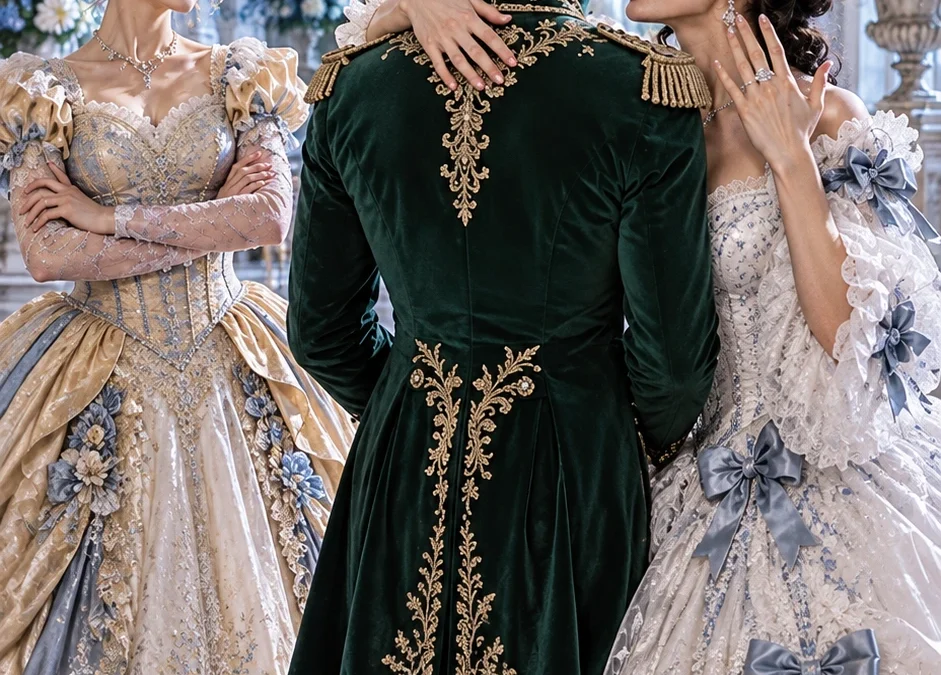
THE DUCHESS SMILED AND CONGRATULATED HER BEST FRIEND FOR STEALING HER HUSBAND, THEN WHISPERED SEVEN WORDS THAT SHE WOULD NEVER FORGET… 😱👑
Part 1
“Your grace, she’s here.”
The maid’s voice trembled. The Duchess slowly closed the book she had been reading. She did not even look up.
“Show her in.”
A few moments later, her childhood best friend swept into the drawing room wearing the brightest smile in the kingdom. She lifted her left hand on purpose. A magnificent ring sparkled in the afternoon light.
“I came to tell you myself. His grace has asked me to become his duchess.”
Everyone waited for the Duchess to cry. To scream. To slap the woman standing before her.
Instead, she stood, crossed the room, took both of her friend’s hands, and smiled.
“Congratulations!”
The best friend blinked. “You’re not angry?”
The Duchess laughed softly. “Why would I be?”
She leaned close, until only the two of them could hear.
“You think you’re taking my place. But you’re only taking my problems.”
The best friend laughed. She thought the Duchess was only hiding her heartbreak. She had no idea those would become the most terrifying words she would ever remember. 🥀
Every autumn, the royal palace hosted the Harvest Ball, the grandest celebration in the kingdom. Crystal chandeliers lit the ballroom while an orchestra filled the air with waltzes.
When the master of ceremonies announced Duke Ambrose Blackmore and Duchess Theodosia Blackmore, every conversation faded.
Ambrose entered first, tall and commanding in a black military coat trimmed with silver. Beside him walked Theodosia, breathtaking in ivory silk embroidered with sapphire flowers that matched the necklace at her throat. Even the Queen smiled as they approached.
All evening, unmarried noblewomen begged the Duke for a dance. One by one, he refused them with his famous smile. “Every dance belongs to my duchess.”
A wave of admiration swept the ballroom. Two countesses by the refreshment tables watched with envy. “If my husband loved me half as much as Duke Ambrose loves his wife, I would never complain again.” Her companion nodded. “She was born in a poor cottage with nothing to her name. Now she wears jewels queens would envy.”
Not far away stood Theodosia’s childhood best friend, Lady Lettice Ashworth. She applauded politely, but her smile hid a growing bitterness. She watched Ambrose’s tender gaze. She admired the necklace. She noticed how every noble bowed when Theodosia passed.
Why does she deserve this life instead of me?
When Theodosia came to embrace her, Lettice forced a smile. “You truly have everything.”
Theodosia hesitated. “Not everything.”
Lettice laughed, assuming it was modesty. She never imagined those two words carried far more pain than gratitude.
Hours later, Ambrose helped his wife into their carriage and wrapped a wool blanket around her shoulders. The stable boys exchanged admiring glances. “Have you ever seen a husband so devoted?”
The old coachman smiled. “His grace has never allowed her grace to step onto the ground without offering his hand first.”
Inside, Theodosia thanked him with a gentle smile. Only she knew it was forced. She counted every passing mile. The closer they came to Blackwood Estate, the heavier her heart became.
The great oak doors closed behind them with a deep echo that swallowed every trace of warmth. The servants vanished into the corridors.
Without warning, Ambrose’s fingers closed around the sapphire necklace. One violent pull, and the clasp snapped. Stones scattered across the marble.
“You smiled too much at Prince Adrien.”
“He only congratulated us on the harvest…”
Her sentence never ended. His hand struck her face so hard that she lost her balance.
Outside the doorway, the elderly housekeeper lowered her head and gently closed the door. She had heard that sound countless times.
Inside, he ordered his wife to kneel. She obeyed without protest. He criticized the way she greeted the royal family, the way she walked, the way she smiled. Nothing she ever did pleased him.
At the door, he paused. “Tomorrow morning, the kingdom will once again see a happy duchess.”
Theodosia swallowed the tears burning behind her eyes. “Yes, your grace.”
Far away, in a farming village, her parents, Barnaby and Dorothea Fairmont, proudly told their neighbors how the Duke’s generosity had sent their son Leopold to the Royal Noble Academy and their youngest daughter Thomasina to finishing school. Every season, wagons from Blackwood arrived with grain and money. They believed their daughter’s marriage had rescued them all.
That night, Theodosia sat on the edge of her bed and placed a trembling hand over her stomach. For the first time that day, a real smile appeared.
“Maybe our child will change him.”
She was carrying a secret. And she had no idea how violently that hope would be torn from her.
👇 Want Part 2? Comment any word and I’ll send it to you privately, or look for it in the comments!
Part 2
In the weeks after the ball, hope returned to Theodosia’s life. She sewed tiny garments in her private sitting room. She embroidered flowers onto soft blankets and stitched a pair of white slippers no larger than her palm.
“Does his grace know?” the old estate seamstress whispered, finding her at work.
“Not yet. I want to surprise him.”
“I pray this child brings peace into your home.”
“So do I.”
Peace never came.
One evening Ambrose returned irritated from the king’s council. A kitchen servant had fallen ill, and the soup was no longer steaming. He tasted it once. “Cold.”
Theodosia reached for the bowl. “I’ll have them warm it immediately…”
He hurled the heavy silver serving dish across the dining room. It struck her violently. She collapsed beside the table. The servants froze when he glared at them.
Then a maid screamed. Blood was spreading across Theodosia’s gown.
The physician worked through the night. At sunrise, he lowered his head. “I’m deeply sorry, your grace. We couldn’t save the baby.”
No tears came. She only reached for the tiny embroidered blanket and held it against her chest. When Ambrose entered her room, she foolishly believed he had come to comfort her.
“Perhaps God knew you weren’t worthy of giving me an heir.”
He left. Something inside her had begun to break. 💔
Three days later, too weak to stand for long, she secretly traveled to her parents’ cottage and fell sobbing into her mother’s arms. She rolled back her sleeves. Dark bruises covered both arms.
“He killed my baby.”
Dorothea began to cry. Theodosia thought everything was finally going to change. Instead, Barnaby asked quietly, “Did anyone see you come here?”
“I came because I need your help.”
“If you leave the Duke, your brother loses his place at the Academy. Your sister will be expelled. The Duke will stop supporting this family. We will lose everything.”
Her mother gripped her hands. “My child, please endure just a little longer.”
The door opened. Leopold had heard every word. He knelt before her. “Please, just until I graduate. Don’t destroy my future.”
Those words hurt more than Ambrose ever had. That evening she returned to Blackwood. He was waiting.
“Your family reminded you where you belong, didn’t they?”
She lowered her head. She had nowhere left to run.
Months later, the physician confirmed what she had hardly dared to believe. She was expecting again. “I beg you,” she whispered. “Don’t tell his grace. If he doesn’t know, perhaps this child will live.”
Only the old housekeeper learned the secret. “This time we will protect this little one.”
Around then, Lettice began visiting every week with flowers, books, and pastries. Theodosia welcomed each visit with gratitude. They embroidered together, read novels beside the fireplace, and walked through the gardens.
She never noticed what everyone else observed. Whenever Ambrose entered the room, Lettice straightened her posture and smiled a little wider. She laughed more freely at his jokes. She praised his intelligence. Theodosia felt only relief at hearing laughter in the house again.
Then one afternoon, Ambrose entered her dressing room and found tiny garments hidden in an open chest.
“What is this?”
“I wanted to tell you…”
“You plan to keep my own child a secret?”
“I was afraid.”
He interpreted those words as an accusation. He shoved her violently away. Her foot caught the edge of the staircase outside the room, and she tumbled down the long marble steps.
Hours later, the physician’s face said everything. “The child is gone again.” He turned to Ambrose. “If this violence continues, her grace may never carry another child.”
“Then she has no purpose as my duchess.”
Theodosia heard every word through the half-open door. This time, she did not cry.
That night, she stood at the window and watched a carriage roll through the gates. Lettice stepped out carrying white roses. Ambrose walked out personally to greet her, smiling a gentle smile Theodosia could no longer remember receiving.
“So that’s where your kindness went.”
Unable to sleep, she saw a lantern flicker in the garden after midnight. She followed the sound of laughter, and stopped behind an old oak.
Ambrose stood beneath its branches, holding both of Lettice’s hands.
“If you were free, would you choose me?”
“Soon,” he said, “I’ll have no reason to keep her.”
“Then I’ll finally become Duchess.”
Theodosia waited for her heart to shatter. Instead she felt something she had not known in years.
Relief.
She closed her eyes. “Thank you,” she whispered. Not to them. To the door that had just opened. Someone else wanted her place.
And she had already begun to plan.
👇 Want to know what Theodosia did next? LIKE or COMMENT “REVEAL” and Part 3 will be posted once we reach enough comments!
Part 3
The next morning, Theodosia lifted a loose floorboard beneath her carpet. Inside lay a velvet pouch with a handful of gold sovereigns. Every week she added another coin. She sold forgotten bracelets and brooches. She asked the old seamstress to teach her the advanced embroidery used by royal dressmakers.
“Why would a duchess need to earn a living with her hands?”
“Because titles don’t always last forever.”
In the afternoons, she studied bookkeeping with the steward, learned how to negotiate prices, and listened closely to every supplier who visited. Every lesson had one purpose. If freedom came, she intended to survive it.
Then she invited Lettice to tea in the glass conservatory.
“I’ve failed his grace,” she sighed. “I do love him, but love isn’t always enough. He deserves someone who can stand proudly beside a powerful duke. I don’t think that woman is me anymore. He deserves someone stronger than I am.”
A spark flashed in Lettice’s eyes. She hid it and spoke words of comfort, but her heart had accepted an invitation Theodosia had never really offered.
That night, in the leather diary she had kept since her wedding day, Theodosia wrote a single sentence.
Today I stopped praying for my marriage to survive, and started preparing for my freedom.
Across the drawing room, Ambrose watched her and smiled, believing he had finally broken her spirit. He never imagined that she had decided to let him believe every victory was his own.
For months, Theodosia was quietly disappointing. The venison arrived slightly overcooked. She arrived a few minutes late with sincere apologies. When he criticized her, she lowered her head. “I’m sorry, your grace. I’ll do better tomorrow.” That answer frustrated him more than any argument.
Outside the house, she became an even more devoted wife. “My husband works harder for this kingdom than anyone realizes.” The admiration only made Ambrose more miserable, trapped inside an image he no longer wished to keep. And Lettice grew bolder. “You deserve a wife who inspires you instead of disappointing you.”
The breaking point came at his annual banquet. Nobles, merchants, and members of the king’s council filled the great dining room. A servant poured wine into the wrong glass. Theodosia corrected it at once, but Ambrose had decided he wanted an audience. He rose.
“This household has become an embarrassment. You cannot manage servants. You cannot manage this estate. And after all these years, you still cannot give me the heir this family deserves. From this day forward, you are no longer my wife.”
The orchestra stopped playing. Theodosia fell to her knees, tears filling her eyes. “Please don’t cast me aside. I’ll become the wife you deserve.” An old earl muttered, “This is too cruel.” Ambrose felt triumphant.
Only Theodosia knew the truth. Behind those tears, her heart was lighter than it had been in years. The prison door had finally opened.
A servant packed a small trunk. At the entrance, Lettice stepped into her path in an emerald gown and a diamond necklace Theodosia had never seen. “I finally have everything.”
Theodosia almost warned her. She almost told her the truth. Instead, she lifted her friend’s hand, now wearing the ring, and smiled.
“Congratulations.”
She leaned close. “You think you’re taking my place. But you’re only taking my problems.”
Then, softly: “Take good care of him.”
Lettice mistook the sadness in her voice for defeat. She walked proudly past into the house. Theodosia never looked back.
At her parents’ cottage that sunset, there was no welcome. “Go back. Fall at his feet,” her mother begged. Leopold said, “You promised you wouldn’t ruin everything.” Not one person asked if she had eaten, or where she would sleep, or whether she was safe.
Before sunrise, she picked up her trunk. Without knocking, without saying goodbye, she walked away from the only family she had ever known.
She rented a tiny room above a baker’s shop, where buckets caught the rain. Her savings vanished quickly. Most days she lived on bread and vegetable soup. Yet every night she slept more peacefully than she ever had at Blackwood.
A poor woman with peace is richer than a duchess living in fear.
She embroidered late into the night beneath a single oil lamp. Needles pierced her swollen fingers. Her first handkerchief sold for a few silver coins, proof that someone would pay for her work. Then came gloves, then a shawl in golden thread. A merchant’s wife ordered a table runner. A baroness ordered pillow covers. Soon the noble ladies of the capital whispered about the mysterious seamstress whose work rivaled the royal artisans.
She never used her title. Within a year she rented a larger workshop and hired two widows who desperately needed work. Then six women. Before long, carriages lined the street outside her shop.
At Blackwood Estate, Lettice’s wedding was the biggest event of the season. For the first week, life felt exactly as she imagined. In the second, Ambrose grew quiet, his patience shorter. He criticized her flowers, her laughter, the timing of tea.
By the third week, the illusion ended. She brought him tea while he read estate reports.
“I didn’t ask for tea.”
“I’m sorry, I only wanted…”
The slap came without warning. She stood frozen, hand pressed to her cheek, and the room felt painfully familiar. She was standing where Theodosia had stood countless times.
Fragments rushed back. The forced smiles. The hesitation whenever anyone praised Ambrose. Take good care of him. 🥀
When ladies at court asked about a bruise, she smiled. “I bumped into a door.” Soon she wore high collars and long sleeves, and powder beneath her eyes. Without realizing it, she had become exactly what Theodosia used to be: a woman the kingdom envied and no one truly knew.
A year later, after another violent argument, she stared into her dressing room mirror at a swollen eye and a split lip. Theodosia’s face rose in her memory, with that strange pity in her eyes on the day she left. For the first time, Lettice understood those words had never been spoken with jealousy.
They had been spoken with compassion.
The next morning, disguised in a plain cloak, she slipped out and found a modest, elegant embroidery shop in the capital. Theodosia appeared, healthier, confident, peaceful. Lettice expected anger. Instead, Theodosia said gently, “You’ve come a long way.” She poured tea into two porcelain cups. They sat in silence.
“I thought I had won,” Lettice wept. “Why didn’t you stop me?”
“Would you have believed me?”
Lettice searched her own heart. She remembered how desperately she had wanted the title and the estate and Ambrose.
“No.”
Theodosia took her hand. “I don’t hate you. I stopped hating you the day I walked out of that estate.”
“I stole your life.”
“No. You took the prison I no longer wanted.”
That night, Lettice wrote to her father, Lord Ashworth. She confessed everything: the beatings, the lies, the bruises. Father, if you don’t come now, I don’t think I’ll survive much longer. Before dawn, she handed the sealed letter to a young stable boy.
He never reached the gates. Ambrose intercepted him in the courtyard.
Minutes later, he stood in Lettice’s room holding the opened letter. “So you’ve been begging for rescue?” He tore it into pieces. “I gave you everything, and now you wish to disgrace my name.”
She ran for the door. He blocked her, grabbed her arm. “Please let me leave.” His answer was a violent shove. Her heels slipped on the marble. She fell down the long staircase.
The sound echoed through Blackwood. Doctors fought for hours to save her life, and by evening they succeeded, at a terrible cost. The injury to her neck could not be repaired. She would never move below her shoulders.
The next morning, she did not ask for Ambrose. She refused priests and noble visitors. She whispered to the old housekeeper, “Please bring me my friend.”
Theodosia came through the gates of Blackwood for the first time since she had been cast out. The fountain still stood in the courtyard. The gardens were perfectly trimmed. Yet the estate no longer felt powerful. It felt haunted.
The housekeeper embraced her, tears running down her wrinkled cheeks. “I prayed you would never have to return here.”
“I’m not here for him. I’m here for her.”
In the dim room, Lettice lay motionless, only her eyes moving. Theodosia took her cold hand.
“I stole your husband,” Lettice whispered.
“You took my prison.”
“I thought I had won.”
“You did. You won everything I had prayed to lose.”
“Can you forgive me?”
Theodosia brushed a strand of hair from her forehead. “I forgave you the day I walked away. You were never my greatest enemy. We were both victims of the same man.”
“Thank you.”
Those were the last clear words Lettice ever spoke. Two days later, she passed away peacefully before sunrise.
Lord Ashworth arrived hours after her death, having come because of troubling rumors, and found his only child gone. Grief quickly became determination. The stable boy admitted Ambrose had intercepted the letter. The old housekeeper finally told of years of abuse. One by one, the servants found the courage to speak. The physician confirmed that both miscarriages had resulted from violent assaults. Kitchen maids described countless nights of shouting. Footmen testified about broken furniture and terrified women.
The carefully crafted image of the perfect duke collapsed piece by piece. Ambrose was arrested and charged with years of brutal violence that had led to the death of his second wife. His title was stripped by royal decree. Blackwood was seized by the crown.
The man once praised as the kingdom’s model noble became a warning whispered to young ladies across the realm. Parents who once pointed to his portrait with admiration now pointed with sorrow.
Years passed. Theodosia never returned to noble life. Her embroidery house became the most respected in the kingdom. Queens, princesses, and foreign ambassadors commissioned gowns bearing her signature craftsmanship. More importantly, she employed dozens of women who had once struggled as she had: widows, women who had fled cruel marriages, women with nowhere else to go. She gave them honest work, fair wages, and dignity.
One quiet afternoon, her assistant came to the workshop. “My lady, there are visitors.”
Barnaby, Dorothea, Leopold, and Thomasina stood near the entrance, aged by time. Barnaby, once so proud, dropped to his knees. Dorothea covered her face. Leopold’s head was bowed. “We failed you. We chose comfort over our own daughter. We have regretted it every day.”
Theodosia listened without interrupting.
“I forgave all of you long ago.”
Relief spread across their faces. Dorothea reached out hopefully.
“But forgiveness does not restore trust. I wish you peace. I wish you health. And if hardship ever finds you again, I will never allow you to go hungry. But I cannot return to the life we once had. My heart healed because I walked away. I will not open wounds that finally closed.”
They understood. There was no angry farewell, only acceptance.
Theodosia watched them leave, then returned to her workshop, where the women greeted her with warm smiles and laughter filled the room. For the first time in many years, she realized she no longer measured her worth by the title she had lost. She measured it by the life she had rebuilt.
She had once believed that surviving was enough.
Now she understood something greater. Sometimes the greatest revenge is not destroying the people who hurt you. It is refusing to let them decide who you become. 🧵✨
And that was the one victory no one could ever take away from her.
This story is entirely fictional and created for entertainment purposes only. It does not represent any organization or individual, nor does it encourage inappropriate behavior. The content was generated with AI assistance.








