The Duke Gave Three Sisters £100 To Spend Before Sunset… Two Came Back With Gifts. The Third Came Back With Every Single Pound, And Her Reason Left The Whole Manor Silent
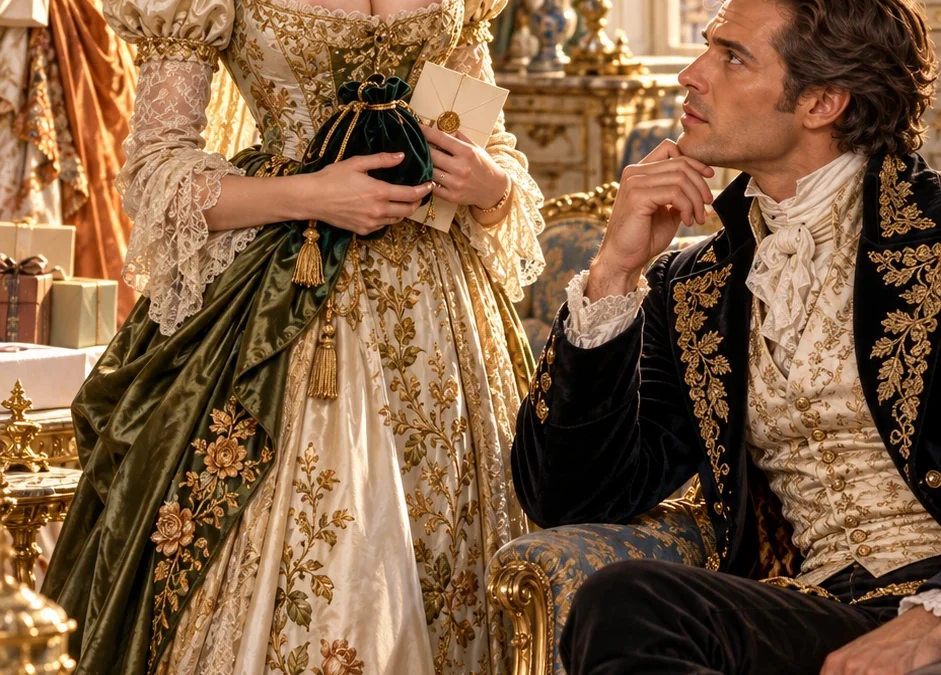
The Duke Gave Three Sisters £100 To Spend Before Sunset… Two Came Back With Gifts. The Third Came Back With Every Single Pound, And Her Reason Left The Whole Manor Silent 😱
Part 1
By the time Duke Adrian Blackmere decided to finally consider marriage, he had already grown deeply skeptical of the whole process by which men of his rank were expected to choose a wife.
Every dinner seemed to yield the same admiration. Every eligible woman somehow found an interest in whatever topic he happened to mention. Every ambitious family acted as if compatibility could be arranged as neatly as a seating chart.
At forty-two, Adrian did not think himself cynical. But he had learned to be wary of enthusiasm that arrived too quickly. 🤔
That was why the arrival of the three Harcourt sisters intrigued him more than he had expected.
Their father, Lord Harcourt, came from an old family whose fortunes had steadily declined over the past decade. The eldest daughter, Beatrice, had been raised to see society as both battlefield and performance, and she navigated Blackmere with the confidence of someone who knew exactly how much appearances mattered.
Helena, the second sister, had a practical mind. She could discuss estate expenses with a fluency that made Adrian’s steward visibly rethink several assumptions.
And Clara, the youngest, seemed to have no particular interest in being impressive at all. She answered questions when asked. She listened more than she spoke. And once she told Adrian, quite calmly, that a speech he admired in Parliament had been twice as long as the idea deserved.
He nearly laughed.
His mother, however, did not find Clara amusing. She found her inconvenient.
Perhaps that was part of why Adrian decided to conduct the experiment that became the subject of gossip for weeks afterward.
At breakfast on the third morning of the Harcourts’ visit, he placed three leather purses on the table, one before each sister. Inside each was £100, a sum large enough to reveal something about preference without being so extravagant that it lost all meaning.
“You may spend it however you wish before sunset,” Adrian said. “Tomorrow, I would like to know why.”
Beatrice smiled at once. Helena looked intrigued. Clara touched the purse but did not open it.
“Is there a correct answer?”
Adrian almost smiled. “If there were, the exercise would be less interesting.”
Clara’s expression suggested she was not convinced the exercise was interesting at all.
Their father, by contrast, understood exactly what the opportunity might mean and urged all three daughters to use the day wisely. Adrian did not miss the tension beneath that advice. The Harcourts needed a good marriage badly enough that even an afternoon with £100 could become an audition.
Beatrice returned first, near sunset.
She had bought silk gloves, perfume, a jeweled comb, and several small items from fashionable merchants. Her explanation was polished but not foolish. A duchess represented her household publicly, and appearance, however superficial people pretended it was, shaped how a family was received.
Adrian found the reasoning sensible.
Helena returned next, with receipts rather than parcels. She had noticed a damaged footbridge used by estate workers and paid a mason to begin repairs. She had also ordered winter blankets for tenant cottages where supplies were poor. Money, she explained, was most useful when it solved something likely to become more expensive if ignored.
Again, Adrian could not fault her.
Then Clara walked into the drawing room carrying nothing. 😳
Her father’s expression changed before anyone spoke.
Clara crossed to the table and placed the leather purse in front of Adrian. It landed with the unmistakable weight of money. Beatrice glanced at Helena. Helena looked genuinely puzzled.
Adrian opened the purse. Every pound remained.
“You spent nothing.”
“No.”
Lord Harcourt shifted in his chair with visible embarrassment. Adrian, however, was more curious than disappointed.
“Why?”
Clara looked toward the windows, as though arranging the answer into a form she could tolerate saying aloud.
“I tried. I went to the village. I looked at books, a winter coat, a watercolor set, even a writing desk I liked very much. But every time I considered buying something, I found myself wondering what you wanted the purchase to say about me.”
The room grew quiet.
“If I bought something beautiful, you might think me vain. If I gave the money away, you might think me performing kindness. If I invested it, practical. If I spent it on tenants, perhaps virtuous. None of those choices felt honest once I realized I was making them for an audience.”
“So you chose nothing?”
“I chose not to guess what answer you wanted.”
There was no insolence in the words, which made them harder to dismiss. Lord Harcourt tried to interrupt, but Clara continued.
“And there was another problem.”
Adrian waited.
“It was your money. You gave me permission to spend it. But permission and ownership are not the same thing.”
Her father closed his eyes. Clara pushed the purse a little closer to Adrian.
“If you had wanted to know what I would do with my own money, you might have asked me.”
For the first time that day, Adrian felt the exercise turn back on him. 😮
He had wanted to discover what kind of women the three sisters were. Beatrice had shown him how she understood society. Helena had shown him how she understood usefulness.
Clara had shown him the flaw in the question.
And as he looked at the untouched £100 between them, he realized the youngest Harcourt sister had not failed his test.
She had refused to let it define her.
But within days, that same purse would vanish from a locked drawer in his study, and the man who took it would be someone Clara could never have imagined. 😨
💬 Part 2 is waiting in the comments! Can’t find it? Leave any word below and I’ll send it to you privately.
Part 2
By the next morning, Clara’s untouched purse had become the most discussed object in Blackmere.
Lord Harcourt treated it as though his daughter had publicly burned £100 instead of returning it. Beatrice tried to defend Clara by calling the decision restrained. Helena, less concerned with diplomacy, simply asked why she had not at least bought the winter coat she had mentioned.
“Wanting something does not automatically make it a useful answer to someone else’s question,” said Clara.
Adrian heard the remark from the far end of the table and found himself thinking about it long after breakfast ended.
He invited each sister to speak with him separately. Beatrice did not apologize for her purchases. Women of rank, she explained, were judged constantly by standards they had not created, and refusing to participate did not make those standards disappear. Adrian respected the honesty. Helena was equally practical. Neglect, she believed, was rarely cheaper in the long run. He respected that too.
Then Clara arrived. She sat opposite him with the expression of someone prepared to be told she had disappointed another person.
Instead, Adrian asked what she had done with her day. She seemed surprised. She told him about the village, the bookseller, the hour she spent considering a watercolor set before deciding against it.
“You make the entire exercise sound poorly designed.”
“It was.”
Adrian laughed before he could stop himself.
“What question would you have preferred?”
She thought a moment. “What do you value when no one is watching?”
The answer stayed with him.
Over the following days, he stopped creating situations designed to reveal character and let the household become ordinary again. That was when he began to see the sisters clearly. Beatrice was not merely polished; she was genuinely attentive to elderly relatives. Helena had spent years learning finance because someone had to understand how badly the Harcourt estate was failing.
And Clara possessed no dramatic hidden talent. She read, walked, painted poorly, preferred small dinners to crowded ones, and seemed happiest when nobody expected her to be useful.
Adrian found that unexpectedly compelling.
One evening in the conservatory, he asked what she would have bought if the £100 had truly been hers.
“The coat,” she said at once. “The green one.”
“You complained about the price twice.”
“It was overpriced. And three used books, possibly four, if I could persuade the bookseller that mildewed does not mean rare. The rest I would keep.”
“No charity? No investment?”
“I would make a terrible investor. You asked what I would do, not what would sound best.”
That was the moment his interest shifted. 🥹
Then, four days later, he opened the locked drawer in his study to return her purse. It was gone.
He learned that Lord Harcourt had made a payment to a creditor that very morning. The amount was almost exactly £100.
Adrian’s first reaction was not anger. It was a sinking suspicion that Clara had handed the money to her father after making such a point of returning it. He found her in the library.
“Did you give your father the £100?”
Clara looked up slowly from her book. “No.”
“Your father paid a creditor today.”
She closed the book and set it aside. “And you came to ask me first.”
He heard the accusation then, quiet and entirely deserved.
“He is your father.”
“Yes. Which makes me somehow responsible for every decision made by the man who happens to share my name.” She stood. “I am tired of being the least powerful person in a room and somehow the one expected to answer for everyone.”
Adrian felt the rebuke without resisting it. “You are right. I should not have asked you first.”
Her expression softened, just slightly.
He dealt with Lord Harcourt privately. The man admitted taking the purse, defending himself with the same explanation that governed much of the family’s behavior: desperation, obligation, the need to protect three daughters from the consequences of his failures. Adrian asked him to repay it, and he refused to involve Clara in the settlement.
That small decision mattered more than he expected.
But pressure from his own family was growing. His mother wanted clarity. The Harcourts could not remain indefinitely without society assuming one daughter would leave engaged. And one evening, Adrian overheard Beatrice and Helena speaking privately. Beatrice admitted she was exhausted from wondering whether every choice looked too fashionable or not fashionable enough. Helena admitted she had enjoyed Blackmere far more once she stopped worrying whether Adrian thought her practical.
Neither sounded like a competitor. They sounded like people relieved whenever the competition briefly disappeared.
That embarrassed him more than Clara’s criticism ever had. His test had not revealed authenticity. It had created a performance. 😔
The next morning, Clara did not appear at breakfast. He found her upstairs, closing a suitcase.
“You are leaving?”
“Yes.”
“Because of your father?”
“No.” She met his gaze. “Because I no longer want to be here while everyone waits for you to choose one of us. And if you chose me now, I would always wonder whether you loved me, or whether I simply gave the answer you found most interesting.”
The words struck deeper than he expected, because they named the very mistake he had not yet known how to name.
“What if there were no more tests?”
She gave him a tired smile. “Then perhaps you should stop choosing among us.”
She closed the case. And Adrian left the room without asking her to stay.
Because for the first time, he understood exactly what had to change. Not the winner. The entire game.
And what he did that afternoon, in front of the whole Harcourt family, was something no duke had ever done. 😱
💬 Want to know what the Duke announced, and whether Clara ever came back? LIKE or COMMENT “REVEAL” to unlock Part 3! It will be posted as soon as we have enough comments. 🔥
Part 3
That afternoon, Adrian gathered the Harcourt family in the drawing room.
He did not announce an engagement. Instead, he apologized.
Beatrice looked wary. Helena looked as though she had suspected something like this might happen. Lord Harcourt appeared genuinely alarmed. And Clara, whose carriage had been delayed by rain, stood near the window with the stillness of someone already halfway gone.
Adrian did not dramatize the moment. He simply admitted that inviting three sisters into his house under the implied possibility of marriage had turned them into candidates before he had allowed himself to know them as people. What he had called curiosity had become judgment. What he had hoped would reveal character had pressured all three women into performing under observation.
“I will not choose among you.”
Lord Harcourt began to protest. Adrian stopped him gently.
“This is not a punishment.”
Beatrice’s purchases remained hers. Helena’s expenses were absorbed into the Blackmere estate accounts, because the bridge and the blankets had been genuinely useful. And Clara received nothing that afternoon: no special praise, no secret declaration that she had won.
That, he knew, mattered most.
By evening, the Harcourts left. Adrian did not follow. He understood that arriving at Clara’s door a week later with flowers would only turn his withdrawal into another tactic to get what he wanted.
So he wrote instead. ✉️
The first letters were ordinary. He sent her the address of a London bookseller after recalling her complaints about prices. She replied that his recommendations were still suspicious. He answered that criticism seemed to be the basis of their friendship and should therefore be maintained.
Gradually, the letters grew easier. Books. Estate troubles. Family annoyances. The weather. The odd fact that Clara’s watercolor landscapes improved whenever she stopped trying to paint trees.
Months passed. By spring, Adrian visited the Harcourts. The family finances were still tight, but the atmosphere around Clara had changed. She was no longer being presented to him. She wore the dark green coat she had once desired, spent mornings managing correspondence, and painted poorly with enough enthusiasm that he began to suspect she enjoyed being mediocre at something simply because no one demanded excellence from her. 🌿
During a walk, he handed her a small leather purse.
Clara stopped. “You cannot possibly be serious. Another £100?”
“I have learned something.”
She opened it. Inside was the money. No instructions. No note. No deadline.
“What am I supposed to do with this?”
“Whatever you want. And afterward, you do not have to tell me.”
She studied him for several moments. The old Adrian would have wanted to explain the symbolism before she could misunderstand it. This time, he let the silence be hers.
At last, she smiled. “That must be hard for you.”
“Extremely.”
She kept the money. Weeks later, she bought the watercolor set she had once denied herself, several used books, and put most of the remainder aside. Adrian never asked what happened to it. 🥹
Their courtship began only after that. Not formally at first. He visited. She sometimes refused invitations. They disagreed often enough that neither could mistake compatibility for obedience. Adrian discovered that Clara disliked being shielded from information. Clara discovered that Adrian’s instinct to solve problems was not always arrogance. Sometimes it was simply the way he had learned to show concern.
Neither tried to change the other quickly.
Beatrice eventually married a man who valued the social world she knew so well. Helena remained unmarried for several years while helping stabilize the Harcourt finances, enjoying the freedom of being useful without having usefulness turned into courtship. And Clara remained the least convenient sister, which Adrian increasingly saw as one of her best qualities.
Nearly a year after the original visit, they returned together to the village where Clara had once carried £100 all day without spending a penny.
They passed the bookseller. They passed the shop where the green coat had hung. Finally, Adrian stopped beside the small bridge Helena had repaired.
There was no test waiting. No purse. No family watching.
He had rehearsed several elegant versions of what he wanted to say, then discarded them all because they sounded too much like another carefully designed exercise.
So he asked only whether she could imagine building a life with him. Not whether she would make a good duchess. Not whether she had proved herself sensible, kind, economical, or independent.
Whether she wanted him.
Clara looked at him for a long time.
This time, Adrian did not try to read the silence as an answer. He waited until she chose to give him one. 💍
The first time he had handed Clara £100, Adrian had wanted to discover what kind of woman she was.
By the time he loved her, he had learned something far more difficult.
Her life was never an answer to a question he had asked. ❤️
💬 If this story spoke to you, tell us in the comments: what would YOU have done with the £100? Like and share this with someone who needs to be loved without having to perform. 🙏
This story is entirely fictional and created for entertainment purposes only. It does not represent any organization or individual, nor does it encourage inappropriate behavior. The content was generated with AI assistance.








